In July 2015 there are 4,242 applications submitted by people in Great Britain compared to 7,321 in July 2016. Meanwhile 6,638 passport requests are submitted from Northern Ireland.
Within in a day of the Brexit vote there is a surge in online interest in Irish passports and moving to Ireland. While the UK as a whole vote to leave the EU in the referendum, Northern Ireland votes to remain by a majority of 56 percent to 44 percent. The Department of Foreign Affairs says there is “an increase in queries in respect of entitlements to Irish passports” the very next day. The year-on-year figures for January show a 20 percent increase in applications prior to the vote.
Google Trends says UK searches for “getting an Irish passport” jump more than 100% after the Brexit result comes through. And while the data analysts do not reveal the exact number of searches for information on the Republic of Ireland‘s citizenship rules, they say most interest is shown in Northern Ireland with the normally unionist heartland of Holywood, County Down, taking top spot.
Sinn Féin repeatedly says that Northern Ireland must not be “dragged out of Europe.” Up to this point the British government dismisses calls from its representatives and others for a border poll in Irish unity.
In August 2005, it is announced that in response to the Provisional IRA declaration that its campaign is over, and in accordance with the Good Friday Agreement provisions, Operation Banner would end by August 1, 2007. This involves troops based in Northern Ireland being reduced to 5,000, and only for training purposes. Security is entirely transferred to the police. The Northern Ireland Resident battalions of the Royal Irish Regiment, which had grown out of the Ulster Defence Regiment, stand down on September 1, 2006. The operation officially ends at midnight on July 31, 2007, making it the longest continuous deployment in the British Army’s history, lasting over 38 years.
While the withdrawal of troops is welcomed by the nationalist parties Social Democratic and Labour Party and Sinn Féin, the unionist Democratic Unionist Party and Ulster Unionist Party oppose the decision, which they regard as premature. The main reasons behind their resistance are the continuing activity of republican dissident groups, the loss of security-related jobs for the protestant community and the perception of the British Army presence as an affirmation of the political union with Great Britain.
According to the Ministry of Defence, 1,441 serving British military personnel die in Operation Banner, 722 of whom are killed in paramilitary attacks and 719 of whom die as a result of other causes. The British military kills 307 people during the operation, about 51% of whom are civilians and 42% of whom are members of republican paramilitaries.
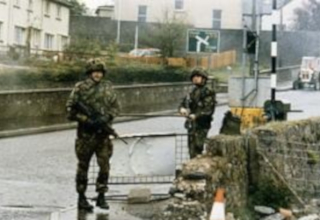
(Pictured: Two British soldiers on duty at a vehicle checkpoint near the A5 Omagh/Armagh road junction)
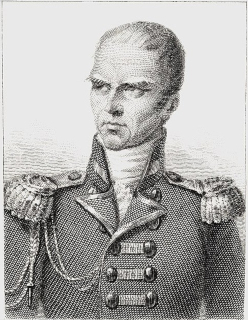
Lowe is the son of John Lowe, an army surgeon. His childhood is spent in various garrison towns, particularly in the West Indies, but he is educated chiefly at Salisbury Grammar. He obtains a post as ensign in the East Devon Militia when he is eleven. In 1787 he enters his father’s regiment, the 50th Regiment of Foot, which is then serving in Gibraltar under Governor-GeneralCharles O’Hara. In 1791, he is promoted to lieutenant. The same year he is granted eighteen months’ leave and chooses to spend the time traveling through Italy rather than return to Britain. He chooses to avoid traveling to France as the French Revolution had recently broken out.
Lowe holds several important commands in the war with France from 1793. He is knighted in 1814. He arrives on the island of Saint Helena, Napoleon’s last place of exile, in April 1816. Many persons, notably Arthur Wellesley, 1st Duke of Wellington, consider the choice ill advised, for Lowe is a conscientious but unimaginative man who takes his responsibility with excessive seriousness. Overwhelmed by the magnitude of the charge given him, he adheres rigorously to orders and treats Napoleon with extreme punctiliousness. After October 1816, the news that rescue operations are being planned by Bonapartists in the United States causes Lowe to impose even stricter regulations. The next month he deports Emmanuel, comte de Las Cases, Napoleon’s confidant and former imperial chamberlain, for writing letters about Lowe’s severity.
When, in late 1817, Napoleon first shows symptoms of his fatal illness, Lowe does nothing to mitigate the emperor’s living conditions. Yet he recommends that the British government increase its allowance to Napoleon’s household by one-half. After the emperor’s death on May 5, 1821, Lowe returns to England, where he receives the thanks of King George IV but is met with generally unfavourable opinion and is widely criticized for his unbending treatment of the former emperor. He later commands the British forces on Ceylon (1825–30) but is not appointed governor of that island when the office falls vacant in 1830.
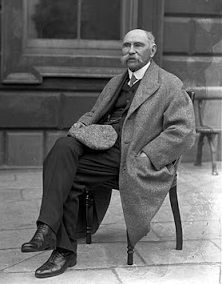
Hyde is born at Longford House in Castlerea, County Roscommon, on January 17, 1860. In 1867, his father is appointed prebendary and rector of Tibohine, and the family moves to neighbouring Frenchpark, in County Roscommon. He is home schooled by his father and his aunt due to a childhood illness. While a young man, he becomes fascinated with hearing the old people in the locality speak the Irish language.
Rejecting family pressure to follow previous generations with a career in the Church, Hyde instead becomes an academic. He enters Trinity College, Dublin, where he gains a great facility for languages, learning Latin, Greek, Hebrew, French, and German, but his great passion in life is the preservation of the Irish language.
After spending a year teaching modern languages in Canada, Hyde returns to Ireland. For much of the rest of his life he writes and collects hundreds of stories, poems, and folktales in Irish, and translates others. His work in Irish helps to inspire many other literary writers, such as W.B. Yeats and Lady Gregory.
In 1892, Hyde helps establish the Gaelic Journal and in November of that year writes a manifesto called The necessity for de-anglicising the Irish nation, arguing that Ireland should follow her own traditions in language, literature, and even in dress.
In 1893, Hyde founds the Gaelic League (Conradh na Gaeilge) along with Eoin MacNeill and Fr. Eugene O’Growney and serves as its first president. Many of the new generation of Irish leaders who play a central role in the fight for Irish independence in the early twentieth century, including Patrick Pearse, Éamon de Valera, Michael Collins, and Ernest Blythe first become politicised and passionate about Irish independence through their involvement in the Gaelic League. Hyde does not want the Gaelic League to be a political entity, so when the surge of Irish nationalism that the Gaelic League helps to foster begins to take control of many in the League and politicize it in 1915, Hyde resigns as president.
In 1938, Hyde is unanimously elected to the newly created position of President of Ireland, a post he holds until 1945. He is inaugurated on June 26, 1938, in the first inaugural ceremony in the nation’s history. He sets a precedent by reciting the Presidential Declaration of Office in Irish. His recitation, in Roscommon Irish, is one of a few recordings of a dialect of which Hyde is one of the last speakers. Upon inauguration, he moves into the long vacant Viceregal Lodge in Phoenix Park, since known as Áras an Uachtaráin.
Despite being placed in a position to shape the office of the presidency via precedent, Hyde by and large opts for a quiet, conservative interpretation of the office.
In April 1940 Hyde suffers a massive stroke and plans are made for his lying-in-state and state funeral, but to the surprise of everyone he survives, albeit paralysed and confined to a wheelchair. One of Hyde’s last presidential acts is a visit to the German ambassador Eduard Hempel on May 3, 1945, to offer his condolences on the death of Adolf Hitler, a visit which remains a secret until 2005.
Hyde leaves office on June 25, 1945, opting not to nominate himself for a second term. He opts not return to his Roscommon home due to his ill-health but rather moves into the former Secretary to the Lord Lieutenant’s residence in the grounds of Áras an Uachtaráin, where he lived out the remaining four years of his life.
Hyde dies in Dublin on July 12, 1949, at age 89. As a former President of Ireland, he is accorded a state funeral which, as a member of the Church of Ireland, takes place in Dublin’s Church of Ireland St. Patrick’s Cathedral. Since contemporary rules of the Roman Catholic Church in Ireland at the time prohibit Roman Catholics from attending services in non-Catholic churches, all but one member of the Catholic cabinet remains outside the cathedral grounds while Hyde’s funeral takes place. Hyde is buried in Frenchpark, County Roscommon at Portahard Church.
Gaughan, the eldest of six children, is born in Ballina, County Mayo, on October 5, 1949. He grows up at Healy Terrace and is educated at St. Muredach’s College, Ballina. After finishing his schooling, he emigrates from Ireland to England in search of work.
While in London, Gaughan becomes a member of the Official Irish Republican Army through Official Sinn Féin‘s English wing Clann na hÉireann and becomes an IRA volunteer in a London-based Active Service Unit. In December 1971, he is sentenced at the Old Bailey to seven years imprisonment for his part in an IRA fundraising mission to rob a bank in Hornsey, north London, which yields just £530, and for the possession of two revolvers.
Gaughan is initially imprisoned at Wormwood Scrubs, where he spends two years before being transferred to the top security HM Prison Albany on the Isle of Wight. While at Albany Prison, he requests political status, which is refused, and he is then placed in solitary confinement. He is later transferred to Parkhurst Prison, where four of the Belfast Ten are on hunger strike for political status.
On March 31, 1974, Gaughan, along with current Sinn Féin MLA Gerry Kelly, Paul Holme, Hugh Feeney and fellow Mayoman Frank Stagg, go on hunger strike to support the fight of Dolours and Marion Price to obtain political status and to be transferred to a jail in Ireland. The prisoners’ demands are as follows:
The right to political status
The right to wear their own clothes
A guarantee that they would not be returned to solitary confinement
The right to educational facilities and not engage in penal labour
The setting of a reasonable date for a transfer to an Irish prison
British policy at this time is to force-feed hunger strikers. According to the National Hunger Strike Commemoration Committee, “six to eight guards would restrain the prisoner and drag him or her by the hair to the top of the bed, where they would stretch the prisoner’s neck over the metal rail, force a block between his or her teeth and then pass a feeding tube, which extended down the throat, through a hole in the block.”
After visiting Gaughan in jail, his brother John describes his condition, “His throat had been badly cut by force feeding and his teeth loosened. His eyes were sunken, his cheeks hollow and his mouth was gaping open. He weighed about six stone.”
During his hunger strike, Gaughan’s weight drops from 160 lbs. to 84 lbs. He is force-fed for the first time on April 22, and this occurs 17 times during course of his hunger strike. The last time he is force-fed is the night before his death. After a hunger strike that lasts 64 days, Michael Gaughan dies on Monday, June 3, 1974, at the age of 24.
The cause of Gaughan’s death is disputed. The British government states that he died of pneumonia. The Gaughan family state that he died after prison doctors injured him fatally when food lodged in a lung punctured by a force-feeding tube. His death causes controversy in English medical circles, as some forms of treatment can be classed as assault if given without the express permission of the patient.
The timing of Gaughan’s death comes just one week after the British Government had capitulated to the demands of Ulster loyalist hunger strikers. After his death, the British government’s policy of force-feeding ends and the remaining hunger strikers are given assurances that they will be repatriated to Irish prisons. However, these promises are reneged on by the British government.
Gaughan’s body is initially removed from London and on June 7-8 over 3,000 mourners line the streets of Kilburn and march behind his coffin, which is flanked by an IRA honour guard, to a Requiem Mass held in the Church of the Sacred Heart of Jesus.
Following the Requiem Mass, his body is transported to Dublin, where again it is met by mourners and another IRA honour guard who bring it to the Church of the Immaculate Conception on Merchant’s Quay, where thousands file past as it lay in state. The following day, his body is removed to Ballina, County Mayo. A funeral mass takes place on June 9, at St. Muredach’s Cathedral, and the procession then leads to Leigue Cemetery. Gaughan is given a full IRA funeral and is laid to rest in the republican plot, where Frank Stagg would join him after being reburied in November 1976. His funeral is attended by over 50,000 people and is larger than the funeral of former president Éamon de Valera the following year.
Following the outbreak of the rebellion, signaled in Meath by the prearranged signal of the ceasing of a mail coach near Turvey hill, road blocks are posted on the Navan road. Members of the Society of United Irishmen and rebels in Meath begin to assemble at the Hill of Tara. Tara is chosen as it provides strategic control of road access to the capital of Dublin and cultural significance as the former seat of the High Kings of Ireland. Between 4,000-7,000 rebels gather at the hill. Following the outbreak of the rebellion on May 23, there are incidents of violent encounters throughout the countryside as rallying rebels make their way to Tara.
Picking up yeomanry reinforcements along the way, the combined fencible, yeoman and militia force forms up at the bottom of the hill in advance of the attack on the rebels who have established a large camp on the hill. The lack of any cannon or cavalry places the rebels at a great disadvantage despite their numbers. Disciplined volley fire and flanking cavalry action combined with withering grapeshot delivered from a 6 pounder cannon drive the rebels to within the graveyard walls at the summit. There, at dusk, the rebels make their last stand on the hill until a final grenadier assault finishes them.
The loss to the fencibles, yeomen and militia is minimal. However rebel casualties have estimates running from several hundred to several thousand dead and many wounded. Many bodies are removed during the night of the 26th and 350 dead are counted still lying on the battlefield the following day. Witnesses to the burial recollect many more bodies of those rebels who died of their wounds during the night being collected from the surrounding countryside in carts. It is noted by the witnesses that the bodies are universally disembowelled by the victors. The dead are buried in a mass grave marked by the Lia Fáil stone which is moved to mark the burial site. The defeat effectively ends the United Irishmen’s rising in Meath.
(Pictured: The high cross at the site of the Battle of the Hill of Tara, County Meath)
The Real IRA broke off from the main Irish Republican Army and its political wing Sinn Féin in 1998 to oppose the decision by Sinn Féin to support the Northern Ireland peace process and work to end 30 years of fighting in Northern Ireland.
As a result of the FTO designation many activities, including fund-raising, of the Real IRA or its two so-called “front groups” or “political pressure groups” — the “32 County Sovereignty Movement” and the “Irish Republican Prisoner Welfare Association” — are now illegal.
A senior State Department official notes that this is the first time a group with “heavy ties” to the United States, with sympathizers and supporters coming from the United States, has been designated as a terrorist organization. But, in the words of this official, the “British and Irish government publicly asked us to look into this.” The “rigorous” review, begun in the fall of 2000, included volumes of evidence and was an inner-agency process that required the signature of the Secretary of the Treasury, the Attorney General and the Secretary of State.
According to the State Department Patterns of Global Terrorism report in 2000, the Real IRA was formed in February-March 1998, has between 150-200 hard-line members and is dedicated to removing British forces from Northern Ireland and unifying Ireland.
State Department officials say they absolutely anticipate the Real IRA to challenge the FTO designation in court. The designation comes as the Irish Republic prepares to prosecute Michael McKevitt, the Real IRA’s alleged leader.
Widgery receives promotion to the Court of Appeal in 1968. He has barely gotten used to his new position when Lord Parker of Waddington, who had been Lord Chief Justice of England and Wales since 1958, announces his retirement. There is no obvious successor and Widgery is the most junior of the possible appointees. The Lord Chancellor, Quintin Hogg, Baron Hailsham of St. Marylebone, chooses Widgery largely on the basis of his administrative abilities. On April 20, 1971, he is created a life peer taking the title Baron Widgery, of South Molton in the County of Devon.
Shortly after taking over, Widgery is handed the politically sensitive job of conducting an inquiry into the events of January 30, 1972, in Derry, where troops from 1st Battalion, Parachute Regiment had murdered 13 civil rights marchers, commonly referred to as Bloody Sunday. A 14th person dies shortly after Widgery’s appointment. He hears testimony from the paratroopers, who claim they had been shot at, while the marchers insist that no one from the march was armed. Widgery produces a report that takes the British Army‘s side. He placed the main blame for the deaths on the march organisers for creating a dangerous situation where a confrontation was inevitable. His strongest criticism of the Army is that the “firing bordered on the reckless.”
The Widgery Report is accepted by the British government and Northern Ireland‘s unionists but is immediately denounced by Irish nationalist politicians, and people in the Bogside and Creggan areas are disgusted by his findings. The British Government had acquired some goodwill because of its suspension of the Stormont Parliament, but that disappears when Widgery’s conclusions are published. The grievance with Widgery’s findings lingers and the issue remains live as the Northern Ireland peace process advances in the 1990s.
In January 1998, on the eve of the 26th anniversary of Bloody Sunday, Prime MinisterTony Blair announces a new inquiry, criticising the rushed process in which Widgery failed to take evidence from those wounded and did not personally read eyewitness accounts. The resulting Bloody Sunday Inquiry lasts 12 years before the Saville Report is published on June 15, 2010. It demolishes the Widgery Report, finding that soldiers lied about their actions and falsely claimed to have been attacked.
Prime Minister David Cameron, on behalf of the United Kingdom, formally apologises for the “unjustified and unjustifiable” events of Bloody Sunday. As a result of the Saville Report, even observers who are natural supporters of the British Army now regard Widgery as discredited. The conservative historian and commentator Max Hastings describes the Widgery report as “a shameless cover-up.”
At the start of the twentieth century, the people of Ireland are divided into two mutually hostile factions. Nationalists, the much larger group, are mostly Roman Catholic, identify primarily as Irish, and want some form of Irish home rule or independence from Britain. Unionists, the smaller group, concentrates primarily in the province of Ulster, are mostly Protestant, identify primarily as British (although many see themselves as Irish and British), and are committed to remaining within the United Kingdom.
Partition is formally established with the Government of Ireland Act 1920. This also establishes the Parliament of Northern Ireland, which comes into being the following year. Partition is followed by high levels of inter-communal violence, especially in Belfast. The Irish Republican Army (IRA), although it spends most of these years fighting in the Irish Civil War, aims to use armed force to end partition and compel the United Kingdom to withdraw sovereignty from Northern Ireland.
The Act is presented as being necessary to re-establish peace and law and order in Northern Ireland and enables the government to “take all such steps and issue all such orders as may be necessary for preserving the peace and maintaining order,” although it is specified that the ordinary course of law should be interfered with as little as possible. Because it is presented as emergency legislation, the Act is initially current only for one year and has to be renewed annually. In 1928, however, it is renewed for five years and when this period expires in 1933 the Act is made permanent.
Despite rhetoric accompanying the Act which asserts that it is for the purpose of restoring public order, its provisions continue to be used for the entire period of the Northern Irish parliament’s existence. Because the Ulster Unionist Party is the only party ever to form a government in this parliament, the Act is used “almost exclusively on the minority population.” Initially, regulations under the Act are used mostly to curb immediate violence and disorder. One of the most controversial of these is internment without trial.
After the troubles of the early 1920s dies down, the provision for internment is not used until the IRA’s Border Campaign of the 1950s, in which several hundred republicans are interned. Following the outbreak of The Troubles in 1968, many within the Protestant community call for the reintroduction of internment. This occurs in 1971 and authorises internment of those suspected to be involved in terrorism. Although there are loyalist as well as republican terrorists at this time, of the 1,981 men interned, only 107 are loyalists. Due to inadequate intelligence-gathering, many of the interned republicans are members of the Official Irish Republican Army rather than the recently formed Provisional Irish Republican Army (PIRA), which is much more heavily involved in terrorist activity at the time.
Internment ends in 1975 but is credited with increasing support and sympathy for the PIRA amongst the Catholic community and outside of Northern Ireland. It helps to create political tensions which culminate in the 1981 Irish Hunger Strike and the death of MPBobby Sands. Imprisonment under anti-terrorism laws specific to Northern Ireland continue until the 1998 Good Friday Agreement, but these laws require the right to a fair trial be respected.
Rosemary Nelson, née Magee, obtains her law degree at Queens University Belfast. She works with other solicitors for a number of years before opening her own practice. She represents clients in a number of high-profile cases, including Michael Caraher, one of the South Armagh Snipers, as well as a republican paramilitary accused of killing two Royal Ulster Constabulary (RUC) officers. She also represents the Garvaghy Road Residents’ Coalition in nearby Portadown in the long-running Drumcree conflict against the Orange Order and RUC.
Nelson claims she has received death threats from members of the RUC as a result of her legal work. Some RUC officers make abusive and threatening remarks about her to her clients, which become publicly known. In 1998, the United Nations Special Rapporteur on the Independence of Judges and Solicitors, Param Cumaraswamy, notes these threats in his annual report, and states in a television interview that he believes her life could be in danger. He makes recommendations to the British government concerning threats from police against Solicitors, which are not acted upon. Later that year, Nelson testifies before a committee of the United States Congress investigating human rights in Northern Ireland, confirming that death threats have been made against her and her three children.
Nelson is assassinated, at the age of 40, by a car bomb outside her home in Lurgan on March 15, 1999. A loyalist paramilitary group calling itself the Red Hand Defenders claim responsibility for the killing. She is survived by her husband and their three children.
In 2004, the Cory Collusion Inquiry recommends that the UK Government hold an inquiry into the circumstances of Nelson’s death. She is posthumously awarded the Train Foundation‘s Civil Courage Prize, which recognises “extraordinary heroes of conscience.”
The resulting inquiry into her assassination opens at the Craigavon Civic Centre, Craigavon, County Armagh, in April 2005. In September 2006 the British Security Service MI5 announces it would be represented at the inquiry. This move provokes criticism from Nelson’s family, who reportedly express concerns that MI5 would remove sensitive or classified information.
The results of the inquiry are published on May 23, 2011. The inquiry finds no evidence that state agencies (the RUC, British Army and MI5) had “directly facilitated” her murder, but “could not exclude the possibility” that individual members had helped the perpetrators. It finds that state agencies had failed to protect her and that some RUC intelligence about her had been leaked. Both of these, it says, increased the danger to her life. The report also states that RUC officers had publicly abused and assaulted her in 1997, and made threatening remarks about her to her clients, which became publicly known. It concludes that this helped “legitimise her as a target in the eyes of loyalist terrorists.”



 The
The 


 seamus dubhghaill