seamus dubhghaill

Promoting Irish Culture and History from Little Rock, Arkansas, USA


Leave a comment

Lt. Edward O’Hare Becomes First WWII Navy Fighter Ace

On February 20, 1942, Lieutenant Edward Henry O’Hare becomes the first United States Navy fighter ace of World War II when he single-handedly attacks a formation of nine medium bombers approaching his aircraft carrier. Even though he has a limited amount of ammunition, he is credited with shooting down five enemy bombers and becomes the first naval aviator recipient of the Medal of Honor in World War II.

O’Hare is born in St. Louis, Missouri on March 13, 1914, the son of Edward Joseph O’Hare and Selma Anna (née Lauth). He is of Irish and German descent. When his parents divorce in 1927, he and his sisters, Patricia and Marilyn, stay with their mother in St. Louis while their father moves to Chicago. His father is a lawyer who works closely with Al Capone before turning against him and helping convict Capone of tax evasion.

O’Hare graduates from the Western Military Academy in 1932. The following year, he goes on to the United States Naval Academy at Annapolis, Maryland. After graduation and is commissioned as an ensign on June 3, 1937, serving two years on the battleship USS New Mexico. In 1939, he starts flight training at Naval Air Station Pensacola in Florida. When he finishes his naval aviation training on May 2, 1940, he is assigned to Fighter Squadron Three (VF-3) on board USS Saratoga.

On Sunday evening, January 11, 1942, as O’Hare and other VF-3 officers eat dinner in the wardroom, the USS Saratoga is damaged by a Japanese torpedo while patrolling southwest of Hawaii. She spends five months in repair on the west coast, so VF-3 squadron transfers to the USS Lexington on January 31.

At 15:42 on February 20, 1942, a jagged vee signal draws the attention of the USS Lexington‘s radar operator. The contact is then lost but reappears at 16:25 forty-seven miles west. O’Hare is one of several pilots launched to intercept nine Japanese Mitsubishi G4M “Betty” bombers from the 4th Kōkūtai‘s 2nd Chutai. His squadmates shoot down eight bombers but he and his wingman, Marion “Duff” Dufilho, are held back in the event of a second attack.

At 16:49, the USS Lexington‘s radar picks up a second formation of “Bettys” from the 4th Kōkūtai’s 1st Chutai, only 12 miles out, on the disengaged side of the task force. With the majority of VF-3 still chasing the 2nd Chutai, only O’Hare and Dufilho are available to intercept.

O’Hare’s initial maneuver is a high-side diving attack from the formation’s starboard side employing deflection shooting. He manages to hit the outside Betty’s right engine and wing fuel tanks. When the stricken aircraft abruptly lurches to starboard, he switches to the next plane up the line. The plane catches fire, but the crew manages to extinguish the flames with a fire-extinguisher. This plane catches up with the group before bomb release.

With two “Bettys” out of formation, O’Hare begins his second firing pass, this time from the port side. His first target is the outside plane. His bullets damage the right engine and left fuel tank, forcing the pilot to dump his bombs and abort his mission. O’Hare then targets another plane which becomes his first definite kill.

As O’Hare begins his third firing pass, again from the port side, the remaining “Bettys” are nearing their bomb release point. He shoots down another plane, leaving the lead plane exposed. His concentrated fire causes the plane’s port engine nacelle to break free from its mountings and fall from the plane. The resulting explosion leaves a gaping hole in the left wing, and the plane falls out of formation.

Shortly afterward, O’Hare makes a fourth firing pass, likely against the plane that had caught fire during his initial pass but runs out of ammunition. Frustrated, he pulls away to allow the ships to fire their anti-aircraft guns. The four surviving bombers drop their ordnance, but all their 250 kg bombs miss. O’Hare believes he has shot down six bombers and damaged a seventh. Captain Frederick C. Sherman later reduces this to five, as four of the reported nine bombers are still overhead when he pulls off.

In fact, O’Hare destroys only three “Bettys.” One of the planes, however, is not yet finished. The command pilot regains enough control to level his damaged plane and attempts to crash it into USS Lexington. He misses and crashes into the water near the carrier at 17:12. Another three “Bettys” are damaged by O’Hare’s attacks. Two safely land at Vunakanau Airfield at 19:50, while the third becomes lost in a storm and eventually ditches at Simpson Harbour at 20:10.

On March 26, O’Hare is greeted at Pearl Harbor by a horde of reporters and radio announcers. Credited with shooting down five bombers, he becomes a flying ace, is selected for promotion to lieutenant commander, and becomes the first naval aviator to receive the Medal of Honor. With President Franklin D. Roosevelt looking on, his wife Rita places the Medal around his neck. After receiving the Medal of Honor, he is described as “modest, inarticulate, humorous, terribly nice and more than a little embarrassed by the whole thing.”

O’Hare receives further decorations later in 1943 for actions in battles near Minamitorishima in August and subsequent missions near Wake Island in October.

O’Hare’s final action takes place on the night of November 26, 1943, while he is leading the U.S. Navy’s first-ever nighttime fighter attack launched from an aircraft carrier. During this encounter with a group of Japanese torpedo bombers, his Grumman F6F Hellcat is shot down. A radio message is sent out, but there is no response. The aircraft is never found. He is declared dead a year later, his widow Rita receiving her husband’s posthumous decorations, a Purple Heart and the Navy Cross on November 26, 1944. On January 27, 1945, the U.S. Navy names a Gearing-class destroyer, USS O’Hare (DD-889), in his honor.

On September 19, 1949, the Chicago-area Orchard Depot Airport is renamed O’Hare International Airport, six years after O’Hare perished. A Grumman F4F Wildcat, in a livery identical to the aircraft flown by O’Hare, is on display in Terminal 2. The display is formally opened on the seventy-fifth anniversary of his Medal of Honor flight.

(Pictured: Lieutenant Edward H. “Butch” O’Hare, USN, circa April-May 1942, official U.S. Navy photograph, now in the collections of the National Archives)

Leave a comment

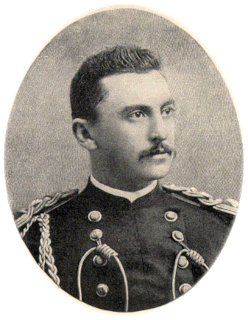
Birth of “Buckey” O’Neill, Sheriff, Editor & Member of the Rough Riders

William Owen “Buckey” O’Neill, a sheriff, newspaper editor, miner, politician, Georgist, gambler and lawyer, mainly in Arizona, is born the first of four children to John Owen, an Irish immigrant, and Mary O’Neill (nee McMenimin) in St. Louis, Missouri, on February 2, 1860.

O’Neill’s father most likely arrived in the United States during the 1850s. By Spring 1862, the family has moved to Philadelphia, Pennsylvania. When the American Civil War begins, his father joins the 116th Pennsylvania Volunteers. On December 13, 1862, during the Battle of Fredericksburg, he is wounded and serves the rest of the war as a member of the Invalid Corps. The younger O’Neill is educated at Gonzaga College High School and Georgetown Law School.

During the first part of 1879, O’Neill responds to an item in The Washington Star calling for men to migrate to the Arizona Territory. He arrives in Phoenix, riding a burro, in September of the same year. Upon his arrival in town, he is hired as a printer by the Phoenix Herald. By late 1880, he has become bored with the position and seeks to experience the “Real West” in the boomtown of Tombstone, Arizona.

In Tombstone, O’Neill takes the opportunity to experience the local saloons before taking a job with The Tombstone Epitaph. By mid-1881 he again feels a wanderlust and leaves town. Where he goes next is unknown, one story having him journey to Hawaii, unlikely due to the travel time, and then traveling through California. He is known to visit Santa Fe before going to Albuquerque, New Mexico and works briefly as a court reporter. In early 1882, he is back in Phoenix working as a deputy to Marshal Henry Garfias. Several weeks later he moves to Prescott, his home for the next fifteen years.

In Prescott O’Neill rapidly progresses in his journalistic career. Starting as a court reporter, he soon founds his own newspaper, Hoof and Horn, a paper for the livestock industry. He becomes the editor of the Arizona Miner weekly newspaper in 1884 to February 1885.

In 1886, O’Neill becomes captain of the Prescott Grays, the local unit of the Arizona Militia. On February 5, 1886, Dennis Dilda, a convicted murderer, is hanged. O’Neill and the Prescott Grays stand honor guard for the event. When the trap drops, O’Neill faints, which causes him severe embarrassment. He later writes a story called “The Horse of the Hash-Knife Brand.” In it, a member of a posse admits to nearly fainting at the hanging of a horse thief.

On April 27, 1886, O’Neill marries Pauline Schindler. They have a son, but he dies shortly after being born premature.

In 1888, while serving as Yavapai County, Arizona judge, O’Neill is elected county sheriff, running on the Republican ticket.

On March 20, 1889, four masked men, William Sterin, John Halford, Daniel Harvick, and J. J. Smith, rob the Atlantic and Pacific Railroad passenger train in Canyon Diablo. A four-man posse, made up of O’Neill, Jim Black, Carl Holton, and Ed St. Clair, is soon formed and they take off after the robbers. On April 1, the posse catches up with the robbers. After exchanging rifle shots, the posse captures the four men. During the fight, no men are injured, but one of the robber’s horses is killed. All four are sent to the Yuma Territorial Prison but are pardoned eight years later. There is unfounded speculation that, in 1898, Sterin enlists under a false name in the Rough Riders and is killed in action in the Battle of San Juan Hill.

After his term is up, O’Neill is unanimously elected mayor of Prescott. In 1894 and 1896 he runs for Delegate to the United States House of Representatives from Arizona Territory, running on the People’s Party ticket.

In 1897, after years of speculating on mines, O’Neill sells a group of claims near the Grand Canyon to Chicago backers, who also propose building a railroad from Williams to the mines and the South Rim. He becomes a director of the development companies, and soon begins railroad surveys, mine developments, and building a smelter. He also uses profits to begin building rental buildings, leading him to financial independence.

O’Neill also helps introduce a bill allowing women to vote in municipal elections in 1897. Although he convinces his Populist friends to sign the bill into law, the high court dismisses the bill in 1899.

In 1898, war breaks out between the United States and Spain. O’Neill joins Theodore Roosevelt‘s Rough Riders and becomes Captain of Troop A. First Lieutenant Frank Frantz serves as O’Neil’s Deputy Commander. Along with Alexander Brodie and James McClintock, he tries to make an entire regiment made up of Arizona cowboys. Eventually though, only three troops are authorized.

The Rough Riders land at Daiquirí on June 22, 1898. Two Buffalo Soldiers of the 10th Cavalry Regiment fall overboard. Upon seeing this, O’Neill jumps into the water in full uniform and sabre. He searches for the men for two minutes before having to come up for breath.

On June 25, 1898, the Rough Riders see their first action. O’Neill leads his men at the front of the line in the Battle of Las Guasimas, capturing the Spanish flank. During the action he sees several men, who he believes to be Spaniards, across the road from him, and shouts “Hostiles on our right, fire at will!” He learns after the firing ceases that the men he exchanged shots with were Cuban rebels.

On July 1, 1898, at about 10:00 a.m., the Rough Riders and the 10th Cavalry are stationed below Kettle Hill. The Spaniards, who are on top of the hill, pour Mauser rifle fire down on the Americans. O’Neill is killed in action.

Before the fighting is over, O’Neill’s men bury him on the slope of San Juan Hill. After the war, his family and friends enlist help from the United States Department of War to find and recover his body. After six men fail to find the site, the War Department sends Henry Alfred Brown, the Rough Riders’ Chaplain, to find him. Despite it being eight months since O’Neill’s death, Chaplain Brown locates the site within two hours after arriving in Santiago de Cuba. The well-preserved body is exhumed, placed in a coffin, and returned to the United States on the Army transport Crook. He is buried at Arlington National Cemetery, in Arlington County, Virginia. The epitaph on his gravestone reads, “Who would not die for a new star on the flag?”

On July 3, 1907, a monument by sculptor Solon Borglum is dedicated to O’Neill and the other Rough Riders in their memory in Prescott, Arizona. Seven thousand people gather to witness the unveiling.

O’Neill Spring, in the Pumphouse Wash wetlands south of Flagstaff, Arizona, is named after O’Neill, as is O’Neill Butte in the Grand Canyon and Bucky O’Neill Hill in Bisbee, Arizona. Bucky (sic) O’Neill is a main character in the TNT movie Rough Riders, portrayed by Sam Elliott.


Leave a comment

Birth of Molesworth Phillips, Companion of Captain Cook

molesworth-phillips

Molesworth Phillips, sailor and companion of Captain James Cook, is born in Swords, County Dublin on August 15, 1755.

Phillips is the son of John Phillips of Swords. His father is a natural son of Richard Molesworth, 3rd Viscount Molesworth, whence Phillips acquires his Christian name. He first enters the Royal Navy, but on the advice of his friend Sir Joseph Banks he accepts a commission as second lieutenant in the Royal Marines on January 17, 1776. In this capacity he is selected to accompany Captain Cook on his last voyage, extending over nearly three years. He sails with Cook from Plymouth on July 12, 1776, and is with the marines who escort Cook when he lands at Hawaii on February 14, 1779.

In John Webber‘s painting “The Death of Captain Cook” Phillips is represented kneeling and firing at a native who is clubbing Cook. Phillips is himself wounded, but, after swimming back to the boat, he turns back and helps another wounded marine to the boats.

On November 1, 1780, Phillips is promoted to captain. On January 10, 1782, he marries Susanna Elizabeth, third daughter of Dr. Charles Burney (1726-1814), and sister of Frances Burney and of James Burney, Phillips’s friend, who, like him, had accompanied Cook on his last voyage. He has no further active service, but is promoted brevet major on March 1, 1794, and brevet lieutenant colonel on January 1, 1798. From 1784, for the sake of his wife’s health, he lives for a time at Boulogne, but after the French Revolution he resides chiefly at Mickleham, Surrey, not far from Juniper Hall, where Frances Burney entertains numbers of French emigres. From 1796 to 1799, during the alarm of a French invasion of Ireland, Phillips feels it his duty to reside on the Irish estates at Beleotton, which he had inherited from an uncle. On January 6, 1800, his wife dies.

After the Treaty of Amiens, Phillips visits France in 1802, and he is one of those who are seized by Napoleon on the renewal of the war. He is detained in France until the peace of 1814. During this detention he makes friends with the Prince of Talleyrand and other well-known Frenchmen. After his return to England, he becomes acquainted with Robert Southey, Mary and Charles Lamb, who describe him as “the high-minded associate of Cook, the veteran colonel, with his lusty heart still sending cartels of defiance to old Time,” and with John Thomas Smith (1766-1833), whom he supplies with various anecdotes for his Nollekens and his Times.

Phillips dies of cholera at his house in Lambeth on September 11, 1832, and is buried in St. Margaret’s, Westminster, where an inscription commemorates him and James and Martin Burney (1788-1852).

(Pictured: Etching of Molesworth Phillips by Andrew Geddes, circa 1825, bequeathed by Frederick Leverton Harris, 1927, National Portrait Gallery, London)


Leave a comment

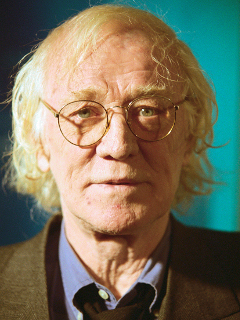
Death of Richard Harris, Actor & Singer

richard-harris

Richard St. John Harris, Irish actor and singer, dies in London from complications of Hodgkin’s lymphoma and pneumonia on October 25, 2002.

Harris is born to a farming family on October 1, 1930, in Limerick, County Limerick. He is the son of Mildred Josephine (Harty) and Ivan John Harris. He is an excellent rugby player with a strong passion for literature. Unfortunately, a bout of tuberculosis as a teenager ends his aspirations to a rugby career. He becomes fascinated with the theater and skips a local dance one night to attend a performance of Henry IV. He is hooked and goes on to learn his craft at the London Academy of Music and Dramatic Art, followed by several years in stage productions.

Harris makes his film debut in 1959 in the film Alive and Kicking and plays the lead role in The Ginger Man in the West End in 1959. His second film, Shake Hands with the Devil (1959), quickly scores regular work in films, including The Wreck of the Mary Deare (1959), The Night Fighters (1960) and a good role as a frustrated Australian bomber pilot in The Guns of Navarone (1961).

Harris’ breakthrough performance is as the quintessential “angry young man” in the sensational drama This Sporting Life (1963), for which he receives an Academy Award nomination. He then appears in the World War II commando tale The Heroes of Telemark (1965) and in the Sam Peckinpah-directed western Major Dundee (1965). He next shows up in Hawaii (1966) and plays King Arthur in Camelot (1967), a lackluster adaptation of the famous Broadway play. Better performances follow, among them a role as a reluctant police informer in The Molly Maguires (1970) alongside Sean Connery. He takes the lead role in the violent western A Man Called Horse (1970), which becomes something of a cult film and spawns two sequels.

As the 1970s progress, Harris continues to appear regularly on screen, however, the quality of the scripts vary from above average to woeful. His credits during this period include directing himself as an aging soccer player in the delightful The Hero (1971), the western The Deadly Trackers (1973), the big-budget “disaster” film Juggernaut (1974), the strangely-titled crime film 99 and 44/100% Dead (1974), with Connery again in Robin and Marian (1976), Gulliver’s Travels (1977), a part in the Jaws (1975) ripoff Orca (1977) and a nice turn as an ill-fated mercenary with Richard Burton and Roger Moore in the popular action film The Wild Geese (1978).

The 1980s kick off with Harris appearing in the silly Bo Derek vanity production Tarzan, the Ape Man (1981) and the remainder of the decade has him appearing in some very forgettable productions.

However, the luck of the Irish once again shines on Harris’ career and he scores rave reviews and another Oscar nomination for The Field (1990). He then locks horns with Harrison Ford as an Irish Republican Army sympathizer in Patriot Games (1992) and gets one of his best roles as gunfighter English Bob in the Clint Eastwood western Unforgiven (1992). He is firmly back in vogue and rewards his fans with more wonderful performances in Wrestling Ernest Hemingway (1993), Cry, the Beloved Country (1995), The Great Kandinsky (1995) and This Is the Sea (1997). Further fortune comes his way with a strong performance in the blockbuster Gladiator (2000) and he becomes known to an entirely new generation of film fans as Albus Dumbledore in the mega-successful Harry Potter and the Sorcerer’s Stone (2001) and Harry Potter and the Chamber of Secrets (2002). His final screen role is as “Lucius Sulla” in Julius Caesar (2002).

Harris is diagnosed with Hodgkin’s lymphoma in August 2002, reportedly after being hospitalised with pneumonia. He dies at University College Hospital in Fitzrovia, London on October 25, 2002, after spending his final three days in a coma. His body is cremated, and his ashes are scattered in the Bahamas, where he had owned a home.


Leave a comment

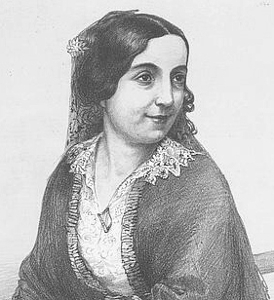
Birth of Soprano Catherine Hayes

Catherine Hayes, world-famous Irish soprano of the Victorian era, is born in Limerick, County Limerick, on October 25, 1818. According to London‘s Daily Express, “Hayes was the ‘Madonna‘ of her day; she was the 19th-century operatic equivalent of the world’s most famous pop star.”

Hayes is born into abject poverty. After five years of vocal study in Paris and Milan she makes her debut at the Italian Opera in Marseilles, in Vincenzo Bellini‘s I Puritani in May 1845, followed by performances of Gaetano Donizetti‘s Lucia di Lammermoor and Gioachino Rossini‘s Mosé in Egitto.

Her debut at La Scala in Milan quickly followed in 1845 with phenomenal success. Shortly thereafter the young Giuseppe Verdi becomes interested in her for one of his new operas. Her great success continues in Vienna, as well as in Venice, Florence, Genoa, Rome and other cities in Italy, where she becomes the most sought after Lucia di Lammermoor.

Early in 1849, Hayes accepts a contract to sing at the Royal Opera House, Covent Garden, London where she makes her debut in Linda di Chamounix in April. In June 1849, she receives an invitation to sing at Buckingham Palace for Queen Victoria and 500 guests. After an evening of Italian music, when the Queen requests an encore, Hayes with a smile sings the beautiful Irish rebel songKathleen Mavourneen.”

During Ireland’s Great Famine in November 1849, her emotional return to her native country results in rave notices for her performance in Lucia di Lammermoor and other operas and concerts in Dublin, Limerick and Cork. Her success is now almost complete.

In 1851 Hayes goes to the United States, where Jenny Lind is creating such a wave of success. Hayes gives concerts in New York City, Boston, Toronto, Philadelphia, Washington, D.C., Charleston, Savannah and New Orleans and forty-five other places including the river towns along the Mississippi River, with equal success. She meets presidents, statesmen and business leaders along the way. She is also destined to meet her future lover and husband in America, Jenny Lind’s former manager. Her travels take her to the “gold rush” in the San Francisco area in the 1850s, where her presence creates a furor, singing for the miners and the elite of San Francisco. The great showman P.T. Barnum sponsors her tour.

She sings in opera and concerts in Peru and Chile, then travels to Hawaii where she gives a concert before continuing on to Australia. Hayes is the first great European opera star to visit Australia. She is mentioned in most Australian history books about early culture in the young colony.  She also travels to Calcutta, India where she performs for the British Military and then on to Singapore and Batavia (Java) before returning to Australia for more opera and concerts.

Hayes returns to England in August 1856, after an absence of five years.  On October 8, 1857, at St. George’s, Hanover Square, she marries William Avery Bushnell. He soon falls into ill-health and dies at Biarritz, France, on July 2, 1858. After her husband’s death she takes part in concerts in London and the country towns.

Catherine Hayes dies in the house of a friend, Henry Lee, at Roccles, Upper Sydenham, Kent, on August 11, 1861, and is buried in Kensal Green Cemetery.