Deegan studies architecture at Cooper Union. He marries Violet Secor (1889-1969) and has one son, William Secor Deegan (1909-85). At the age of 35 he serves in World War I as a staff officer in the 105th Field Artillery, rising to the rank of major.
Deegan later joins the United States Army Corps of Engineers as a major, where he supervises the construction of military bases in the New York area under the command of GeneralGeorge Washington Goethals. After the war he helps organize the American Legion in 1919, advancing to State Commander in 1921. In 1922 he is considered a strong candidate to become national commander of the Legion at their convention in New Orleans but is defeated due to his strong advocacy for admitting Black veterans into the organization. Advocacy for the rights of Black people is a strong theme throughout Deegan’s career, including during his position as Tenement House Commissioner.
Deegan works as an architect at a number of distinguished firms, including McKim, Mead & White, Post, Magnicke and Franke, and Starrett and van Vleck. Later in life he holds a number of political positions, most of them in the Bronx. He is President of the Bronx Chamber of Commerce until the chamber grows critical of MayorJimmy Walker, at which point he resigns. In 1928, Mayor Walker appoints him Tenement House Commissioner of New York City, a post he holds for the rest of his life, and in 1930, chairman of the Mayor’s Committee on Receptions to Distinguished Guests, or “official greeter,” a job in which he is preceded by his friend Rodman Wanamaker and eventually succeeded by Grover Whalen.
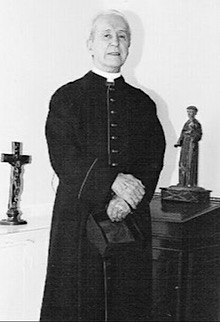
Martin is born on July 23, 1921, in Ballylongford, County Kerry, to a middle-class family in which the children are raised speaking Irish at the dinner table. His parents, Conor and Katherine Fitzmaurice Martin, have five sons and five daughters. Four of the five sons become priests, including his younger brother, Francis Xavier Martin.
Martin participates in the research on the Dead Sea Scrolls and publishes 24 articles on Semitic palaeography. He does archaeological research and works extensively on the Byblos syllabary in Byblos, in Tyre, and in the Sinai Peninsula. He assists in his first exorcism while working in Egypt for archaeological research. In 1958, he publishes a work in two volumes, The Scribal Character of the Dead Sea Scrolls.
In 1964, Martin requests a release from his vows and from the Jesuit Order. He receives a provisional release in May 1965 and a dispensation from his vows of poverty and obedience on June 30, 1965. Even if dispensed from his religious vow of chastity, he remains under the obligation of chastity if still an ordained secular priest. He maintains that he remains a priest, saying that he had received a dispensation from Paul VI to that effect.
Martin moves to New York City in 1966, working as a dishwasher, a waiter, and taxi driver, while continuing to write. He co-founds an antiques firm and is active in communications and media for the rest of his life.
In 1967, Martin receives his first Guggenheim Fellowship. In 1970, he publishes the book The Encounter: Religion in Crisis, winning the Choice Book Award of the American Library Association. He then publishes Three Popes and the Cardinal: The Church of Pius, John and Paul in its Encounter with Human History (1972) and Jesus Now (1973). In 1970, he becomes a naturalizedU.S. citizen.
In 1969, Martin receives a second Guggenheim Fellowship, allowing him to write his first of four bestsellers, Hostage to the Devil: The Possession and Exorcism of Five Living Americans (1976). In the book, he calls himself an exorcist, claiming he assisted in several exorcisms. According to McManus Darraugh, William Peter Blatty “wrote a tirade against Malachi, saying his 1976 book was a fantasy, and he was just trying to cash in.” Darraugh also says that Martin became “an iconic person in the paranormal world.”
Martin is a periodic guest on Art Bell‘s radio program, Coast to Coast AM, between 1996 and 1998. The show continues to play tapes of his interviews on Halloween.
The Vatican restores Martin’s faculty to celebrate Mass in 1989, at his request. He is strongly supported by some Traditionalist Catholic sources and severely criticized by other sources, such as the National Catholic Reporter. He serves as a guest commentator for CNN during the live coverage of the visit of Pope John Paul II to the United States in October 1995.
On July 27, 1999, Martin dies in Manhattan of an intracerebral haemorrhage, four days after his 78th birthday. It is caused by a fall in his Manhattan apartment. The documentary Hostage to the Devil claims that Martin says he was pushed from a stool by a demonic force.
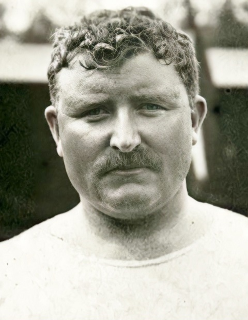
McDonald was born Patrick Joseph McDonnell in Killard, County Clare, on July 29, 1878. When his sister lands at Ellis Island after her sea voyage from Ireland, immigration officials pin a name tag on her with her name spelled “McDonald.” Taking no chances of being deported, she and all the McDonnells who come after her, accept the name McDonald.
McDonald competes for the United States in the 1912 Summer Olympics held in Stockholm, Sweden, in the shot put where he once again defeats Rose and wins the gold medal. He also takes part in the shot put competition where the distance thrown with each hand is added together. This is the only time this event is held in the Olympic program, and he finishes second behind Rose.
McDonald continues to be a nationally competitive athlete well into his 50s. At the age of 54, he beats his old rival Matt McGrath to win the weight throw for distance at the 1933 USA Outdoor Track and Field Championships. It is his 26th senior national championship meet, and the Omaha World-Herald notes that he has gray hair at the time of his last victory.
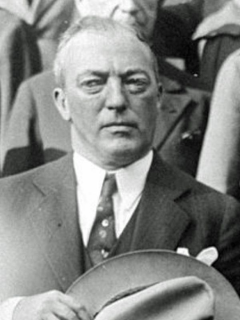
Deegan is born in the Bronx, Bronx County, New York, on December 28, 1882, to Irish immigrants. He studies architecture at Cooper Union. He marries Violet Secor (1889-1969) and has one son, William Secor Deegan (1909-85). At the age of 35 he serves in World War I as a staff officer in the 105th Field Artillery, rising to the rank of major.
Deegan later joins the United States Army Corps of Engineers as a major, where he supervises the construction of military bases in the New York area under the command of GeneralGeorge Washington Goethals. After the war he helps organize the American Legion in 1919, advancing to State Commander in 1921. In 1922 he is considered a strong candidate to become national commander of the Legion at their convention in New Orleans but is defeated due to his strong advocacy for admitting Black veterans into the organization. Advocacy for the rights of Black people is a strong theme throughout Deegan’s career, including during his position as Tenement House Commissioner.
Deegan works as an architect at a number of distinguished firms, including McKim, Mead & White, Post, Magnicke and Franke, and Starrett and van Vleck. Later in life he holds a number of political positions, most of them in the Bronx. He is President of the Bronx Chamber of Commerce until the chamber grows critical of MayorJimmy Walker, at which point he resigns. In 1928, Mayor Walker appoints him Tenement House Commissioner of New York City, a post he holds for the rest of his life, and in 1930, chairman of the Mayor’s Committee on Receptions to Distinguished Guests, or “official greeter,” a job in which he is preceded by his friend Rodman Wanamaker and eventually succeeded by Grover Whalen.
In 1926, Quill emigrates to New York City. After a series of brief jobs, in 1929 he secures employment with the Interborough Rapid Transit Company (IRT) as a subway station change-maker. Attracted to socialism and militant industrial unionism by his reading of James Connolly, in 1933 he is one of a small group of workers seeking to initiate a trade union independent of the IRT’s complacent company union. Comprised largely of ex-IRA men linked by membership of Clan na Gael and the leftist Irish Workers’ Clubs, his group soon joins forces with a New York transit-industry organising effort by the Communist Party, resulting in the launch in April 1934 of the Transport Workers Union (TWU).
With a convivial personality and a flair for oratory, Quill quickly emerges as one of the union’s most effective organisers. During 1935 he leaves his IRT job to work full-time as union organiser. In December 1935 he is elected TWU president, a position he holds until his death. By autumn 1936 the TWU has established a solid base on the IRT and intensifies organisation on New York’s other transit lines: subways, buses, elevated trains, and trolleys. In May 1937 the TWU affiliates with the incipient Congress of Industrial Organizations (CIO). After winning, mostly by large majorities, a series of union representation elections in May–June 1937, the TWU negotiates closed-shop contracts with various New York transit companies, obtaining for its 30,000 members substantial wage increases and benefits and a work-week reduction to forty-eight hours. The ethnic profile of the TWU, which is colloquially nicknamed “the Irish union,” reflects that of New York’s transit workforce, about half of which is Irish born.
First elected to the New York City Council in November 1937 as candidate of the American Labor Party, Quill serves on the body intermittently until 1949. After 1940 he leads the TWU into expansion outside New York, organising in mass transit in other cities, in airlines, and in railroads. Despite modest membership numbers (135,000 by the mid-1960s), the TWU is the United States‘ largest transit union, and Quill maintains a high public profile, owing to his union’s situation in a key economic sector, its base in the country’s largest city, and the colourful and the controversial features of his personality and politics. The 1940 municipal buy-out of New York’s private subway companies and subsequent evolution of a unified civically operated transport system precipitates a lengthy TWU struggle to establish collective bargaining rights and procedures for the transport workforce as public employees. This campaign, by setting precedents for public-sector union organisation nation-wide, marks Quill’s most enduring legacy to the American labour movement.
Quill denies repeated charges that he is a Communist, while retorting that he would “rather be called a Red by the rats than a rat by the Reds.” Communists hold influential positions at all levels in the TWU until the union’s December 1948 convention, when, after months of rancorous conflict over policy, he secures the expulsion from union office of all Communist Party members. His own politics, nevertheless, remain conspicuously leftist in the America of the 1950s and 1960s, as he condemns both the McCarthyite anti-Red witch-hunt and the Vietnam War. Elected a CIO vice-president in 1950, he eschews redefinition as “a labour statesman,” and advocates a national labour party and nationalisation of major industries. A strenuous opponent of racial discrimination by employers and within trade-union structures, he actively supports the black civil rights movement. He is the only top CIO official to oppose its 1955 merger with the conservative, craft-dominated American Federation of Labor (AFL), which he accuses of “the three Rs” of raiding, racketeering, and racism.
Quill’s final battle is his most dramatic. On January 1, 1966, he defies public-sector anti-strike legislation and a court injunction and leads TWU Local 100 into the first total subway-and-bus strike in New York City history, paralysing traffic for twelve days. Arrested on January 4, Quill, who has a history of serious heart disease, collapses during admission to prison and is transferred to hospital under police custody. On January 13 the strike is settled with a 15 percent wage increase, the highest of Quill’s TWU presidency. On January 28, several days after discharge from hospital, he dies of heart failure in his home. He is interred at Gate of Heaven Cemetery in Hawthorne, New York, after a funeral Mass at St. Patrick’s Cathedral, his casket draped by the Irish tricolor.
Speaking after his death, Martin Luther King Jr. eulogises Quill with the following: “Mike Quill was a fighter for decent things all his life—Irish independence, labor organization, and racial equality. He spent his life ripping the chains of bondage off his fellowman. When the totality of a man’s life is consumed with enriching the lives of others, this is a man the ages will remember—this is a man who has passed on but who has not died. Negroes had desperately needed men like Mike Quill who fearlessly said what was true even when it offended. That is why Negroes shall miss Mike Quill.”
Quill marries Maria Theresa O’Neill of Cahersiveen, County Kerry, in 1937. They have one son. Maria dies in 1959. He then marries Shirley Garry (née Uzin) of Brooklyn, New York, his long-serving administrative assistant, in 1961. They have no children. The Michael J. Quill Centre at Ardtully, Kilgarvan, County Kerry, houses a commemorative museum.
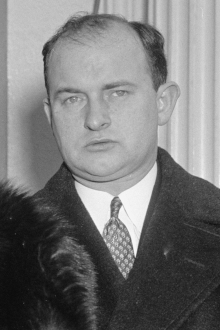
(From: “Quill, Michael Joseph” by Lawrence William White, Dictionary of Irish Biography, http://www.dib.ie | Pictured: Irish-American Trade Unionist Mike Quill during a visit to the White House in 1938)


 seamus dubhghaill