seamus dubhghaill

Promoting Irish Culture and History from Little Rock, Arkansas, USA


Leave a comment

Henry II Returns to England After Granting Charter to Dublin

Henry II returns to England on April 17, 1172, having granted a charter to Dublin, the first granted to an Irish town.

Toward the end of 1171, Henry II, the first king of England to set foot on Irish soil, lands at Crook, County Waterford. His visit to Ireland serves two purposes. Firstly, it allows him to bring his adventurous English barons to heel and put the royal seal on their conquests in Ireland. Secondly, it means he can avoid meeting the cardinal legates who have been dispatched from Rome to investigate his complicity in the murder of the Archbishop of Canterbury, Thomas Becket, in 1170.

When the King of Leinster, Diarmait Mac Murchada, finds himself exiled in the late 1160s, he quickly finds help across the Irish Sea. He finds Henry II on the banks of the Loire in 1166 and is then pointed in the direction of south Wales by a Bristol merchant to find Richard FitzGilbert de Clare, more commonly known as Strongbow, who is then out of royal favour due to his prior support of Henry II’s competition for the kingship, Stephen of Blois.

Bolstered by English forces, Diarmait returns to Ireland and retakes his kingdom with Strongbow’s help, the latter earning the hand in marriage of Diarmait’s daughter, Aoife, in return. None of this has greatly concerned Henry II, until Diarmait dies, and Strongbow seizes the Kingdom of Leinster for himself in 1171. Leinster encompasses not only the counties of Carlow, Kilkenny, Wexford, Kildare, and parts of Wicklow, Laois, and Offaly, but the kings of Leinster are often the overlords of the flourishing Hiberno-Norse ports of Wexford and Dublin, both of which have considerable trading links with England and wider Europe.

Concerned with the growing power of Strongbow in Ireland, Henry II decides to head across the Irish Sea. He originally intends to arrive in Ireland in September 1171, but unfavourable winds on the coast of southwest Wales delay his journey for 17 days. He finally embarks from Pembroke on October 16 and arrives on the County Waterford coast the following day.

Naturally, Henry does not come alone and is at the head of an estimated 4,000 strong army comprised of 500 knights and their esquires and a large body of archers, all of which are carried, along with horses, in 400 ships. The undertaking is vast, and a large quantity of supplies are gathered to provision this considerable force. These ingredients include salted meats and fish, 1,000 lbs. of wax to ensure that Henry can seal charters and mandates, and, of course, the oil on which the medieval war machine runs, wine.

With the arrival of Henry II in Ireland, Strongbow surrenders the kingdom of Leinster and the Hiberno-Norse towns of Dublin, Wexford, and Waterford. Henry II regrants Leinster to Strongbow as a lordship, and later grants him Wexford. However, Waterford and Dublin become, and remain, royal ports.

Henry II then tours Ireland, showing the clergymen and native kings who their new lord is. He first visits Lismore and Cashel, then back to Waterford for a brief rest, before journeying by way of Kilkenny to Dublin, where he arrives around November 11. At all of his stop he collects the submissions of the Irish kings, with the probable exception of Ruaidrí Ua Conchobair (Rory O’Connor), who is the claimant to the high kingship of Ireland at the time.

Outside the city walls of Dublin, Henry II constructs a palace at the present-day southern side of Dame Street, where he celebrates the winter festivities until February 2. At this time, he also grants Dublin its first charter, on a piece of parchment measuring only 121 x 165 mm, which, extraordinarily, survives to this day. Henry’s charter to Dublin grants the right to live in the city to the men of Bristol, with whom the men of Dublin have enjoyed pre-existing economic relations.

About March 1, 1172, Henry II makes his way to Wexford, before finally departing for England on Easter Sunday, April 17, after celebrating Mass. It is probable that he had intended to stay in Ireland longer than he did, but events in England and Normandy divert his attention. In Normandy, Henry II’s son, Henry, has gone into rebellion against his father, while in England, the cardinal legates are threatening to interdict Henry’s lands unless he comes to meet with them regarding Becket’s murder.

The circumstances which lead to Henry II’s departure are more telling for Ireland’s future than any member of contemporary society could have realised. Now, Ireland has to compete with the other segments of a vast transnational realm, with lands stretching across England, Wales and France. Although Henry II is the first king of England to arrive in Ireland, his visit does not mean that royal visits would become a routine occurrence. Throughout the Middle Ages, the kings of England only directly visit Ireland in 1185, 1210, 1394–5, and 1399. As such, Henry’s visit and departure marks the beginning of absentee lordship over Ireland.

(From: “The royal visit: what did Henry II do in Ireland 850 years ago?” by John Marshall, PhD student in the Department of History at Trinity College Dublin, RTÉ, http://www.rte.ie | Pictured: Henry at Waterford, Ireland, October 18, 1172. Illustration by James E. Doyle (1864). Image: Historical Picture Archive/ Corbis via Getty Images)


Leave a comment

Edward Bruce Proclaimed Last High King of Ireland

Edward Bruce is proclaimed the last High King of Ireland on June 29, 1315. He is crowned in 1316. He reigns between 1315 and 1318. The English colonists in Ireland vehemently oppose him.

Bruce, the brother of the King of Scots, Robert the Bruce, leads a three-year military campaign, known as the Bruce campaign, against the Anglo-Norman lordship of Ireland. This invasion, which lasts from 1315 to 1318, ultimately gives rise to the two nations we recognize now as Ireland and Scotland.

In May 1315, a Scots army of up to six thousand soldiers lands on the Antrim coast. That June, near Carrickfergus, many Gaelic lords led by Donnell O’Neill of Ulster join Bruce. “All the Gaels of Ireland agreed to grant him lordship and they called him King of Ireland,” declares the Irish annals.

The invasion coincides with the Great European Famine (1315-1317), which brings hardship and disillusionment among Bruce’s followers. The annals ruefully comment, “falsehood and famine and homicide filled the country, and undoubtedly men ate each other in Ireland.”

In February 1317, Dublin, the capital of the English royal administration in Ireland, comes close to being captured by the Bruce brothers. The brothers encamp at Castleknock within sight of the city walls. The panicking Dubliners burn the suburbs of the city. In order to re-fortify the city walls, they dismantle the Dominican priory north of the River Liffey and tear down the bridge across the river. The Bruce brothers do not lay siege to the city and instead move south to Munster.

In 1318, the invasion is brought to an end when, after marching south from Ulster for one last push, Bruce risks an open battle with an English army north of Dundalk at Faughart and is killed. His corpse is dismembered, and portions of it hung over the gates of various Irish towns. His decapitated head is brought to King Edward II of England by the victor, John de Bermingham, a minor Anglo-Irish baron who is elevated to the status of “Earl of Louth” for bringing the Bruce campaign in Ireland to an end.

A conference at Trinity College Dublin, in 2015, entitled The Irish-Scottish World in the Middle Ages, explores this key moment in the history of Ireland and Scotland. “The Bruce Invasion was a watershed moment in that story,” says Seán Duffy, Professor of Medieval Irish History and one of the organizers of the conference.

“Although Edward Bruce was defeated and killed in 1318, the effect of the invasion was far-reaching. The tide of Anglo-Norman expansion in Ireland turned back and the late Middle Ages saw the flowering of a Gaelic literary and cultural revival. Scotland, meanwhile, was galvanized by its victory over the English at Bannockburn which secured its path to independent nationhood.”

“Few peoples have as much in common as the Irish and the Scots. The very name Scotland is an ever-present reminder of that connection, because, in the Latin of the early Middle Ages, a Scotus was an Irishman, and the homeland of the Scoti was Ireland. That the name came to be applied to the northern part of Britain is testament to the strength of Irish influence on what we now know today as Scotland.”

(From: “On This Day: Edward Bruce, the last High King of Ireland, dies in 1318” by IrishCentral Staff, http://www.irishcentral.com, October 2022 | Pictured: Grave of Edward de Bruce, High King of Ireland, in Faughart Cemetery, County Louth)


Leave a comment

Death of Brian O’Neill, High King of Ireland

Brian O’Neill (Irish: Brian Chatha an Dúna Ó Néill), the High King of Ireland from 1258 to 1260, is defeated and killed by the forces of Roger des Auters at the Battle of Down on May 14, 1260.

O’Neill is the son of Niall Roe O’Neill, and grandson of Áed in Macáem Tóinlesc. His wife is Nuala O’Connor (Ní Conchobair), a daughter of Rory O’Connor (Irish: Ruaidrí Ua Conchobair), the last High King of Ireland before the Norman invasion. Therefore, through his mother, he is descended from Brian Boru (Irish: Brian Bóramha).

In 1230, Hugh O’Neill (Irish: Aedh Ó Néill), king of Tyrone, dies and is succeeded by Donnell MacLaughlin. MacLaughlin, however, is removed in 1238 by the Justiciar of Ireland, Maurice FitzGerald, 2nd Lord of Offaly, and Hugh de Lacy, 1st Earl of Ulster, who install “the son of O’Neill”, presumed to have been Brian, and take the hostages of the Cenel Owen and Cenel Connell. However, it may have been Brian’s cousin Donnell, who afterwards is killed by MacLaughlin. After this, O’Neill claims the kingship of the O’Neill dynasty as well as Tyrone, possibly with the aid of Hugh de Lacy, 1st Earl of Ulster.

In revenge, O’Neill with the aid of Melaghlin O’Donnell, king of Tyrconnell, defeat MacLoughlin and ten of his closest kinsmen at the Battle of Camergi, somewhere within Tyrone north of Omagh, in 1241. This ends the long rivalry between the MacLoughlin’s and O’Neill’s, with the MacLoughlin’s afterwards excluded from the kingship of Tyrone and Ailech.

In 1244, Henry III of England sends letters to various Gaelic Irish lords, including O’Neill, requesting their aid in a military campaign against the Kingdom of Scotland. In the end the issue is sorted out diplomatically. Copies of the letter are also distributed to O’Neill’s sub-chiefs including his tánaiste, Hugh Boy O’Neill.

A consequence of this infighting between the rival factions of the Cenél Eoghain allows the Normans to advance deeper into Gaelic Ulster, however, in 1243 de Lacy dies. Thus the Earldom of Ulster reverts to the English Crown and is taken over by royal administrators. John FitzGeoffrey, the king’s chief governor in Ireland, erects a bridge across the River Bann and builds castles at Coleraine and Ballyroney in Iveagh. From here FitzGeoffrey is able to penetrate deeper into Tyrone.

Despite ending MacLoughlin aspirations to the kingship, O’Neill forms a marriage alliance with them, however, this results in a war with the O’Donnells of Tyrconnell. Subsequently in 1248 O’Neill backs the king of Tyrconnell, Rory O’Cannon (Irish: Ruaidri Ua Canannáin), against the claims of O’Donnell. O’Cannon had been set up in the kingship by FitzGerald, however, rather than backing him, enters Tyrconnell and removes him in favour of Gofraid O’Donnell.

O’Cannon, who had been expelled to Tyrone, and O’Neill once again lead their forces into Tyrconnell to confront O’Donnell, however they are defeated and O’Cannon is killed.

That same year, John FitzGeoffrey, who replaced FitzGerald as Justiciar in 1246, enters Tyrone and takes the submission and hostages of O’Neill. A resolution had been adopted at a meeting of the Cenel Owen that “since the power of the Foreigners was over the Gaeidhel of Erinn, to give hostages to the Foreigners, and to make peace with them, for the sake of their country.”

In 1249, the king of Connacht, Felim O’Connor, is given refuge from the Normans by O’Neill. In 1252, O’Neill and his brother give their submissions to the Justiciar of Ireland, who had marched to Armagh with a large force. A Rory O’Neill is given as hostage.

In 1253, as a sign of defiance against his vassal status with the Earldom of Ulster, O’Neill withholds his tribute to it and raids Iveagh, destroying the castle at Ballyroney. He also launches an offensive against the Normans in Leinster. That same year, the son of Maurice FitzGerald leads his forces into Tyrone to attack O’Neill, however he fails to take his submission or hostages and after battle suffers a heavy defeat at the hands of O’Neill.

In 1255, O’Neill makes a pact with Felim O’Connor’s son Hugh, whereby allowing Hugh free rein in the Kingdom of Breifne, he would aid O’Neill against the Normans of the earldom who are eroding his territory.

In 1257, the king of Tyrconnell, Gofraid O’Donnell, is mortally wounded in battle against the FitzGeralds and O’Neill uses this opportunity to try to exact Tyrconnell’s submission. As the Cenel Connell discuss what to do, Gofraid’s youngest brother, Donnell Óg, returns from fosterage and is conferred the chieftainship of Tyrconnell. He refuses to submit O’Neill stating the Scottish proverb “Every man should have his own world.”

FitzGerald in 1252 had built a castle at Caoluisce, on the banks of Lough Erne, near modern day Belleek, County Fermanagh, Northern Ireland, however, in 1258 it is the site where O’Neill, in the presence of his ally O’Connor, is inaugurated as “King of the Gael of Erin.” While he receives hostages from O’Connor and from O’Brien of Thomond, along with several other minor Kings from Meath and Munster, his claim is not recognised by those of the Irish closest to him including the other O’Neill factions, the O’Donnell’s of Tyrconnell, the MacMahon’s of Airgíalla, and the O’Rourkes of Breifne. The following year O’Donnell leads an attack into Tyrone.

In 1260, O’Neill, along with his O’Connor allies, launch an attack on the Normans of the Earldom of Ulster at Drumderg, near its capital at Downpatrick in modern County Down, Northern Ireland. The Normans levy the town, and with the aid of forces brought by Sir Roger des Auters, O’Neill and his allies are decisively defeated at the subsequent Battle of Down. The Annals of Inisfallen state that the forces recruited by the Normans consist mostly of native Irish and that the Normans play only a minor role.

In the battle, O’Neill is killed along with many other Irish nobles including over a dozen members of the O’Cahans. O’Neill’s head is cut off by the Normans and sent to King Henry III of England, a sign of how dangerous his coalition is believed to be.

After this battle, O’Neill becomes known in Irish as Brian Chatha an Dúna, meaning “Brian of the Battle of Down.”

After O’Neill’s death, the kingship of the Cenel Owen, and with it Tyrone, is taken by his cousin’s son, Hugh Boy O’Neill, ancestor of the Clandeboye O’Neill’s, who also has the support of the earldom of Ulster. Upon Hugh’s death in 1283 O’Neill’s son Donnell seizes the kingship, which until 1295 is highly contested between him and his second-cousin Niall Culanach O’Neill and Hugh Boy’s son Brian, until he wins outright control by killing his opponents.


Leave a comment

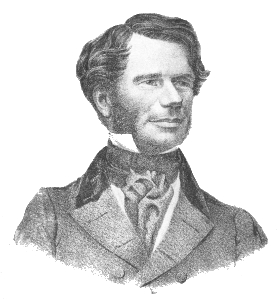
Birth of William Smith O’Brien, Young Ireland Leader

William Smith O’Brien, Irish nationalist Member of Parliament (MP) and leader of the Young Ireland movement, is born in Dromoland, Newmarket-on-Fergus, County Clare, on October 17, 1803.

O’Brien is the second son of Sir Edward O’Brien, 4th Baronet, of Dromoland Castle. His mother is Charlotte Smith, whose father owns a property called Cahirmoyle in County Limerick. He takes the additional surname Smith, his mother’s maiden name, upon inheriting the property. He lives at Cahermoyle House, a mile from Ardagh, County Limerick. He is a descendant of the eleventh century Ard Rí (High King of Ireland), Brian Boru. He receives an upper-class English education at Harrow School and Trinity College, Cambridge. Subsequently, he studies law at King’s Inns in Dublin and Lincoln’s Inn in London.

From April 1828 to 1831 O’Brien is Conservative MP for Ennis. He becomes MP for Limerick County in 1835, holding his seat in the House of Commons of the United Kingdom until 1849.

Although a Protestant country-gentleman, O’Brien supports Catholic emancipation while remaining a supporter of British-Irish union. In 1843, in protest against the imprisonment of Daniel O’Connell, he joins O’Connell’s anti-union Repeal Association.

Three years later, O’Brien withdraws the Young Irelanders from the association. In January 1847, with Thomas Francis Meagher, he founds the Irish Confederation, although he continues to preach reconciliation until O’Connell’s death in May 1847. He is active in seeking relief from the hardships of the famine. In March 1848, he speaks out in favour of a National Guard and tries to incite a national rebellion. He is tried for sedition on May 15, 1848 but is not convicted.

On July 29, 1848, O’Brien and other Young Irelanders lead landlords and tenants in a rising in three counties, with an almost bloodless battle against police at Ballingarry, County Tipperary. In O’Brien’s subsequent trial, the jury finds him guilty of high treason. He is sentenced to be hanged, drawn, and quartered. Petitions for clemency are signed by 70,000 people in Ireland and 10,000 people in England. In Dublin on June 5, 1849, the sentences of O’Brien and other members of the Irish Confederation are commuted to transportation for life to Van Diemen’s Land (Tasmania in present-day Australia).

O’Brien attempts to escape from Maria Island off Tasmania, but is betrayed by the captain of the schooner hired for the escape. He is sent to Port Arthur where he meets up with John Mitchel.

O’Brien is a founding member of the Ossianic Society, which is founded in Dublin on St. Patrick’s Day 1853, whose aim is to further the interests of the Irish language and to publish and translate literature relating to the Fianna. He writes to his son Edward from Van Diemen’s Land, urging him to learn the Irish language. He himself studies the language and uses an Irish-language Bible, and presents to the Royal Irish Academy Irish-language manuscripts he has collected.

In 1854, after five years in Tasmania, O’Brien is released on the condition he never returns to Ireland. He settles in Brussels. In May 1856, he is granted an unconditional pardon and returns to Ireland that July. He contributes to The Nation newspaper, but plays no further part in politics.

In 1864 he visits England and Wales, with the view of rallying his failing health, but no improvement takes place and he dies in Bangor, Gwynedd, Wales on June 18, 1864.

A statue of William Smith O’Brien stands in O’Connell Street, Dublin. Sculpted in Portland limestone, it is designed by Thomas Farrell and erected in D’Olier Street, Dublin, in 1870. It is moved to its present position in 1929.

(Pictured: Portrait of William Smith O’Brien by George Francis Mulvany, National Gallery of Ireland)


Leave a comment

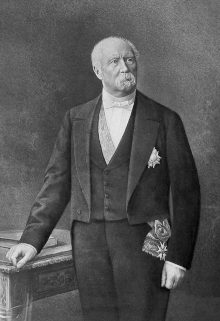
Patrice de MacMahon Resigns As President of France

Patrice de MacMahon, a descendant of an Irish family, resigns as president of France on January 30, 1879, and retires to private life. His resignation comes after he dissolves the Chamber of Deputies, resulting in public outrage and a Republican electoral victory earlier in the month.

Born Marie Edme Patrice Maurice de MacMahon on July 13, 1808, in Sully, France, he serves as Marshal of France and second president of the French Third Republic. During his presidency the Third Republic takes shape, the new constitutional laws of 1875 are adopted, and important precedents are established affecting the relationship between executive and legislative powers.

The MacMahon family is of Irish origin. They were Lords of Corcu Baiscind in Ireland and descended from Mahon, the son of Muirchertach Ua Briain, High King of Ireland. After losing much of their land in the Cromwellian confiscations, a branch moved to Limerick for a time before settling in France during the reign of William III of England because of their support of the deposed King James II in the Glorious Revolution. They applied for French citizenship in 1749. After the definitive installation of the family in France, their nobility was recognised by the patent letter of King Louis XV of France.

MacMahon begins his army career in 1827 in Algeria and distinguishes himself during the Siege of Constantine (1837) and in the Crimean War (1853–56). The climax of his military career comes in the Italian campaign of 1859, when his victory at Magenta results in his being created Duke of Magenta. In 1864 he becomes Governor General of Algeria. Commanding the I Army Corps in Alsace during the Franco-Prussian War (1870–71), he is wounded and defeated at the Battle of Wörth. After a short convalescence at Sedan, he is appointed head of the army of the French Third Republic, which defeats the Paris Commune revolt in May 1871.

When Adolphe Thiers resigns as president of the republic on May 24, 1873, French rightists turn to MacMahon as his successor. He is elected president the same day. On November 20, 1873, the National Assembly passes the Law of the Septennate, conferring upon him presidential power for seven years. He assumes his presidential duties somewhat reluctantly, for he dislikes publicity and lacks an understanding of the complex political issues of his day.

During MacMahon’s term the French Constitutional Laws of 1875 are promulgated. The National Assembly dissolves itself, and the elections of 1876 returns a large majority of republicans to the new chamber. The first crisis comes in December 1876, when the republican chamber compels him to invite the moderate republican Jules Simon to form a government. The conservative Senate disapproves of Simon because he had purged some rightist officials, and, on May 16, 1877, MacMahon posts a letter to Simon that is tantamount to dismissal. Premier Simon’s resignation precipitates the crise du seize mai. When MacMahon commissions conservative Albert de Broglie to form a ministry and wins the Senate’s assent to dissolve the chamber on June 25, 1877, the question of whether the President or Parliament would control the government is squarely posed.

The new elections to the chamber return a majority of republicans, and the de Broglie ministry is given a vote of “no confidence.” The succeeding ministry, headed by Gaëtan de Rochebouët, also collapses. By December 13, 1877, MacMahon gives in to the extent of accepting a ministry led by conservative republican Jules Dufaure and composed mostly of republicans. On January 5, 1879, the republicans gain a majority in the Senate, and MacMahon resigns on January 30. The constitutional crisis during his presidency is resolved in favour of parliamentary as against presidential control, and thereafter during the Third Republic the office of president becomes largely an honorific post.

From 1887 to 1893, MacMahon directs the Société de secours aux blessés militaires (S.S.B.M) – Rescue Society of Wounded Military, which in 1940 becomes the French Red Cross.

MacMahon dies on October 17, 1893, at the Château de la Forêt at Montcresson, after having written his memoirs. He is buried on October 22 at the Hôtel des Invalides after a state funeral and a religious mass at La Madeleine, Paris.


Leave a comment

Death of Saint Gelasius of Armagh

Saint Gelasius of Armagh B (AC), also known as Giolla Iosa and Gioua-Mac-Liag, dies on March 27, 1174. The son of the Irish poet Diarmaid, Saint Gelasius (meaning `servant of Jesus’) is the learned abbot of Derry for sixteen years. He is consecrated Archbishop of Armagh c. 1137, when Saint Malachy resigns and serves as Primate of Ireland until 1174.

During his long episcopacy, Gelasius has to deal with the events before and after the Norman invasion, including the alleged Donation of Ireland by Pope Adrian IV to Henry II of England, Henry’s arrival in Ireland in 1171, and Pope Alexander III’s confirmation of everything granted by Adrian IV.

Gelasius reconstructs the Cathedral of Armagh and, in 1162, consecrates Saint Laurence O’Toole as Archbishop of Dublin, although the invasion and settlement of Dublin by Norsemen means that the Christians of that see are looking more to Canterbury than Armagh. That same year, during the Synod of Clane in County Kildare, a uniform liturgy is ensured throughout Ireland by requiring that only Armagh-trained or Armagh-accredited teachers of divinity may teach in any school attached to the Irish Church.

Gelasius is an indefatigable prelate. He makes constant visitations throughout Ireland, reorganizes old monasteries, and convenes synods. He is said to be the first Irish bishop to whom the pallium is sent. Pope Eugene III’s papal legate, Cardinal Giovanni Paparoni, brings four pallia with him to the Synod of Kells in 1152 for the archbishops of Armagh, Cashel, Dublin, and Tuam. The records of this synod include the first mention of tithes in Irish annals, which Cardinal Paparoni proposes but none of the participants support. The matter of tithes and the Peter’s Pence is an important consideration in subsequent negotiations between Pope Adrian IV and Henry II of England.

Gelasius convenes another synod at Armagh in 1170 in the hope of finding some means to expel the Anglo-Normans, who had invaded the country the previous year, before they become too entrenched. In 1171, Henry II of England arrives, lavishly entertains the civic and ecclesiastic Irish leaders, and requests the convening of the Synod of Cashel, during which he presents a plan for improving the Church of Ireland. At this time there is no mention of any claim of Canterbury or the Donation. However, the eighth canon of the synod decrees that the Irish Church will celebrate the Divine Office according to the usage of the Church of England, which is still Catholic at the time.

The bishop of Armagh does not attend the Synod of Cashel. At the time he is occupied in a visitation of Connacht and Ulster in an attempt (in concert with the high king) to organize a defense of Ireland. He realizes that Henry II has duped many Irish princes by masking his true intentions.

The following year Henry II falls under interdict for his murder of Saint Thomas Becket. When news of HenryII’s penitential, bare-foot walk to the shrine of Saint Thomas and his plans for the `uplift’ of the Irish Church reaches Rome, Pope Alexander III confirms the Donation of Ireland made by Pope Adrian IV. Shortly thereafter the Church of Ireland became English, the School of Armagh is closed (c. 1188) and the last native bishop of Armagh until the Reformation dies in 1313.

(From: “Saints of the Day – Gelasius of Armagh” by Katherine I Rabenstein, CatholicSaints.Info (www.catholicsaints.info) | Pictured: Arms of the Archbishop of Armagh, in the Church of Ireland)


Leave a comment

The Treaty of Windsor (1175)

The Treaty of Windsor, a territorial agreement made during the time of the Norman invasion of Ireland, is signed in Windsor, Berkshire on October 6, 1175, by King Henry II of England and the High King of Ireland, Rory O’Connor (Ruaidrí Ua Conchobair). The witnesses are Richard of Ilchester, Bishop of Winchester; Geoffrey Ridel, Bishop of Ely; Lorcán Ua Tuathail, Archbishop of Dublin; William de Mandeville, 3rd Earl of Essex; Justiciar Richard de Luci; Geoffrey de Purtico, Reginald de Courtenea (Courtenay) and three of Henry’s court chaplains.

Under the Treaty, O’Connor recognizes King Henry II as his overlord and agrees to collect tribute for him from all parts of Ireland. Henry agrees that O’Connor can be king of the areas not conquered by the Normans. But O’Connor cannot control the territories of which he is nominally king. Henry and his barons annex further land without consulting O’Connor.

Overall, the agreement leaves O’Connor with a kingdom consisting of Ireland outside the provincial kingdom of Leinster (as it was then), Dublin and a territory from Waterford Dungarvan, as long as he paid tribute to Henry II, and owed fealty to him. All of Ireland is also subject to the new religious provisions of the papal bull Laudabiliter and the Synod of Cashel (1172).

O’Connor is obliged to pay one treated cow hide for every ten cattle. The other “kings and people” of Ireland are to enjoy their lands and liberties so long as they remain faithful to the kings of England and are obliged to pay their tribute in hides through O’Connor.

The Annals of Tigernach record that: “Cadla Ua Dubthaig came from England from the Son of the Empress, having with him the peace of Ireland, and the kingship thereof, both Foreigner and Gael, to Ruaidhrí Ó Conchobhair, and to every provincial king his province from the king of Ireland, and their tributes to Ruaidhrí.” The Annals also list the ongoing violence in Ireland at the time. The text reveals a misunderstanding of the scope of the treaty and the matters agreed by the two kings that soon prove fatal to the peace of Ireland. Henry sees O’Connor as his subordinate within the feudal system, paying him an annual rent on behalf of all his sub-kings. O’Connor sees himself as the restored High King of Ireland, subject only to a very affordable annual tribute to Henry.

The treaty breaks down very quickly, as O’Connor is unable to prevent Norman knights from carving out new territories on a freelance basis, starting with assaults on Munster and Ulaid in 1177. For his part Henry is by now too distant to suppress them and is preoccupied with events in France. In 1177 he replaces William FitzAldelm with his 10-year-old son Prince John and names him as Lord of Ireland.


1 Comment

Edward the Bruce Appointed High King of Ireland

grave-of-king-edward-de-bruce

Edward Bruce of Scotland is crowned High King of Ireland at Dundalk on May 2, 1316. He is the younger brother of Robert the Bruce, King of Scotland. He is also sometimes known as Edward de Brus or Edward the Bruce.

Edward is the second of five sons of Robert de Brus, 6th Lord of Annandale and Marjorie, Countess of Carrick. His date of birth, believed to be around 1280, is unknown but King Robert is obviously the firstborn. He has eleven siblings, of whom nine survive childhood. One of his older sisters, Lady Christina Bruce, also plays an active role in the wars of independence against England.

By 1307 Edward fights alongside Robert throughout his struggle for the Scottish throne and accompanies him during his flight from Scotland and subsequent guerilla campaign against the English. The three younger Bruce brothers Nigel, Thomas, and Alexander are all captured and executed by the English during this period. Some time between 1309 and 1313, Edward is created Earl of Carrick, a title previously held by his maternal grandfather Niall of Carrick, his mother and his elder brother.

As the Scots become more dominant, Edward commands a number of successful sieges of English-held castles across the country. By November 1313 he commands the siege of the last remaining English outpost in Scotland, Stirling Castle. Without Robert’s knowledge, he makes a deal with the English Constable of the castle that should an English army not arrive to relieve it by June 24, 1314, the castle will surrender, so making an aggressive siege unnecessary. Robert is deeply unhappy, but has little choice but to confront the English army sent by Edward II to relieve Stirling in June 1314. The armies meet at the Battle of Bannockburn, and the result is a decisive victory for the Scots which leaves Robert in fairly unopposed control of Scotland.

Robert decides to open a second front against the English and dispatches an army of 6,000 men under the command of Edward to Ireland. The aim is to challenge English dominance of the British Isles by drawing together Scottish and Irish interests. Scottish and Irish forces are initially successful in defeating the English and on May 2, 1316 Edward is appointed High King of Ireland.

A famine in 1317 proves a setback to Edward and greatly reduces his popularity. This allowed time for an English army under John de Bermingham to be assembled. The English army meets the Scots-Irish army under King Edward Bruce at the Battle of Faughart on October 14, 1318. The Scots-Irish army is badly defeated by de Bermingham’s forces. Edward is killed, his body being quartered and sent to various towns in Ireland, and his head being delivered to King Edward II.

Edward Bruce is the last High King of Ireland.

(Pictured: Grave of King Edward De Bruce, located in Faughart Cemetery)


Leave a comment

Death of William Smith O’Brien, Young Ireland Leader

william-smith-obrien

William Smith O’Brien, Irish nationalist Member of Parliament (MP) and leader of the Young Ireland movement, dies in Bangor, Gwynedd, Wales on June 18, 1864.

Born in Dromoland, Newmarket-on-Fergus, County Clare, O’Brien is the second son of Sir Edward O’Brien, 4th Baronet, of Dromoland Castle. His mother is Charlotte Smith, whose father owns a property called Cahirmoyle in County Limerick. He takes the additional surname Smith, his mother’s maiden name, upon inheriting the property. He lives at Cahermoyle House, a mile from Ardagh, County Limerick. He is a descendant of the eleventh century Ard Rí (High King of Ireland), Brian Boru. He receives an upper-class English education at Harrow School and Trinity College, Cambridge. Subsequently, he studies law at King’s Inns in Dublin and Lincoln’s Inn in London.

From April 1828 to 1831 O’Brien is Conservative MP for Ennis. He becomes MP for Limerick County in 1835, holding his seat in the House of Commons of the United Kingdom until 1849.

Although a Protestant country-gentleman, O’Brien supports Catholic emancipation while remaining a supporter of British-Irish union. In 1843, in protest against the imprisonment of Daniel O’Connell, he joins O’Connell’s anti-union Repeal Association.

Three years later, O’Brien withdraws the Young Irelanders from the association. In January 1847, with Thomas Francis Meagher, he founds the Irish Confederation, although he continues to preach reconciliation until O’Connell’s death in May 1847. He is active in seeking relief from the hardships of the famine. In March 1848, he speaks out in favour of a National Guard and tries to incite a national rebellion. He is tried for sedition on May 15, 1848, but is not convicted.

On July 29, 1848, O’Brien and other Young Irelanders lead landlords and tenants in a rising in three counties, with an almost bloodless battle against police at Ballingarry, County Tipperary. In O’Brien’s subsequent trial, the jury finds him guilty of high treason. He is sentenced to be hanged, drawn, and quartered. Petitions for clemency are signed by 70,000 people in Ireland and 10,000 people in England. In Dublin on June 5, 1849, the sentences of O’Brien and other members of the Irish Confederation are commuted to transportation for life to Van Diemen’s Land (Tasmania in present-day Australia).

O’Brien attempts to escape from Maria Island off Tasmania but is betrayed by the captain of the schooner hired for the escape. He is sent to Port Arthur where he meets up with John Mitchel.

O’Brien is a founding member of the Ossianic Society, which is founded in Dublin on St. Patrick’s Day 1853, whose aim is to further the interests of the Irish language and to publish and translate literature relating to the Fianna. He writes to his son Edward from Van Diemen’s Land, urging him to learn the Irish language. He himself studies the language and uses an Irish-language Bible and presents to the Royal Irish Academy Irish-language manuscripts he has collected.

In 1854, after five years in Tasmania, O’Brien is released on the condition he never returns to Ireland. He settles in Brussels. In May 1856, he is granted an unconditional pardon and returns to Ireland that July. He contributes to the Nation newspaper but plays no further part in politics.

In 1864 he visits England and Wales, with the view of rallying his failing health, but no improvement takes place, and he dies at Bangor, in Wales on June 16, 1864.

A statue of William Smith O’Brien stands in O’Connell Street, Dublin. Sculpted in Portland limestone, it is designed by Thomas Farrell and erected in D’Olier Street, Dublin, in 1870. It is moved to its present position in 1929.


Leave a comment

Earliest Verifiable Viking Invasion of Ireland

The earliest verifiable date of a Viking invasion of Ireland is September 9, 872, in Dunrally in what is now County Laois.

The Vikings conduct extensive raids in Ireland and found many towns, including Dublin, Limerick, Wexford, Waterford, Wicklow, Arklow and Leixlip. Literature, crafts, and decorative styles in Ireland and Britain reflect Scandinavian culture. Vikings trade at Irish markets in Dublin. Excavations find imported fabrics from England, Byzantium, Persia, and Central Asia. Dublin becomes so crowded by the 11th century that houses are built outside the town walls.

The Vikings pillage monasteries on Ireland’s west coast in 795 and then spread out to cover the rest of the coastline. The north and east of the island are most affected. During the first 40 years, the raids are conducted by small, mobile Viking groups. From 830 on, the groups consist of large fleets of Viking ships. From 840, the Vikings begin establishing permanent bases at the coasts. Dublin is the most significant settlement in the long term. The Irish become accustomed to the Viking presence and culture. In some cases, they become allies and also intermarry.

In 832, a Viking fleet of about 120 ships under Turgesius invades kingdoms on Ireland’s northern and eastern coasts. Some believe that the increased number of invaders coincides with Scandinavian leaders’ desires to control the profitable raids on the western shores of Ireland. During the mid-830s, raids begin to push deeper into Ireland. Navigable waterways make this deeper penetration possible. After 840, the Vikings have several bases in strategic locations throughout Ireland.

In 838, a small Viking fleet enters the River Liffey in eastern Ireland, probably led by the chieftain Saxolb, who is killed later that year. The Vikings set up a base, which the Irish call longphorts. This longphort would eventually become Dublin. After this interaction, the Irish experience Viking forces for about 40 years. The Vikings also establish longphorts in Cork, Limerick, Waterford, and Wexford. The Vikings are driven out of Ireland for a short period around 900 but return to Waterford in 914 to found what would become Ireland’s first city. The other longphorts are soon re-occupied and developed into cities and towns.

The last major Irish battle involving Vikings is the Battle of Clontarf in 1014, in which a large force from the pan-Viking world and their Irish allies oppose Brian Boru, then the High King of Ireland and his forces, a small contingent of which are Viking defectors. The battle is fought in what is the now Dublin suburb of Clontarf on Good Friday of that year. Boru, the Irish High King has allowed the Viking King of Dublin, Sigtrygg Silkbeard, one year to prepare for his coming assault. Silkbeard responds by offering the bed of his mother to several Viking lords from Scandinavia, Ireland and Britain. The savage mêlée between the heavily mailed Norse and the unarmoured, yet undaunted Gaels ends in a rout of the Vikings and their Irish allies. Careful accounts are taken by both sides during the battle, and thus many famous warriors seek each other out for personal combat and glory. High King Brian, who is nearly eighty, does not personally engage in the battle but retires to his tent where he spends the day in quiet prayer.

The Viking Brodir of Man chances upon Brian’s tent as he flees the field. He and a few followers seize the opportunity, and surprise the High King, killing the aged Brian before being captured. Brian’s foster son Ulf the Quarrelsome later tracks down and dispatches Brodir by disembowelment. The battle is fairly matched for most of the day and each side has great respect for the prowess of the other, however, in the end, the Irish forces the Norse to return to the sea. Many of the fleeing Vikings are drowned in the surf due to their heavy mail coats as they struggled for the safety of their longships. Others are pursued and slain further inland.

After the battle, Viking power is broken in Ireland forever, though many settled Norse remain in the cities and prosper greatly with the Irish through trade. With Brian dead, Ireland returns to the fractured kingdom it had once been but is now cleared of further Viking predation.

(Pictured: Guest from Overseas, Nicholas Roerich, 1901)