seamus dubhghaill

Promoting Irish Culture and History from Little Rock, Arkansas, USA


Leave a comment

Bill Clinton Receives Honorary Doctorate at DCU

bill-clinton-receives-honorary-doctorate-dcu

Former United States president Bill Clinton is conferred with an honorary doctorate at Dublin City University on October 17, 2017, for his crucial role in the Northern Ireland peace process.

“It was really quite something, there’s never been any peace agreement exactly like it before,” says Clinton on the Good Friday Agreement. “It broke like a thunder cloud across the world and other people were fighting in other places and they had this talk to say ‘well really do I want to put our children’s generation through this? Or if they can pull this off after all those decades maybe we could too.’”

Clinton says universities should be a place for open discussion about if people should live in individual tribes, or as communities with shared values and respect for one another, especially in today’s political climate.

“It is no exaggeration to say that the success of the Northern Ireland peace process is in very many ways due to the fact that President Clinton took the view that it was a conflict that could be resolved by his personal input and by the power and influence of the United States of America,” said Gary Murphy, from the School of Law and Government in the president’s introductory citation.

“There can be little doubt that the conflict in Northern Ireland was ultimately resolved because that great beacon of liberty, the United States of America, decided that it could use its influence to make a vital difference. That fateful decision was taken in the Oval Office by President Bill Clinton.”

“There was no electoral gain for him taking it. If anything, his initial forays into the Northern Ireland peace process were greeted with skepticism by both republicans and unionists in Northern Ireland and by downright distrust and suspicion in the corridors of power in London. But Bill Clinton persevered, and thanks to that perseverance we have peace in Ireland today.”

Also celebrated at the ceremony is Dr. Martin Naughton, KBE, founder of Glen Electric and one of Ireland’s most successful entrepreneurs and business leaders. From humble roots in Newry, County Down he becomes the global leader in electric heating and credits his success to his family ethos of honesty, morality, decency and integrity.

Sr. Stanislaus Kennedy is awarded the honorary doctorate for her longstanding work with the homeless and marginalised. She is the founder of Focus Ireland, which is now the largest voluntary organisation in Ireland, and has written many books on mindfulness and the importance of spirituality.

“As president I am often asked why DCU awards honorary doctorates, but Ireland has no national honours system, so it’s important that we recognise and honour outstanding achievements and role model individuals,” says Brian MacCraith.

(From The College View, http://www.thecollegeview.com, October 22, 2017)


Leave a comment

Death of Actress Maureen Toal

maureen-toal

Maureen Toal, stage and television actress whose professional career lasts for more than sixty years, dies on August 24, 2012.

Toal is born in Fairview, Dublin on September 7, 1930. She begins performing at the Abbey Theatre in Dublin in 1946, when she is just sixteen years old. She becomes a fixture at the theater, portraying some of the strongest roles on the stage including Bessie Burgess in The Plough and the Stars and the Widow Quinn in The Playboy of the Western World. She also appears in several one woman shows, including Baglady, which is written by Irish playwright Frank McGuinness.

In 1952, Toal marries fellow Irish actor Milo O’Shea. They divorce in 1974.

Playwright John B. Keane writes the role of Mame Fadden in his play The Change in Mame Fadden specifically for Toal. Hugh Leonard also pens characters in his plays A Life and Great Big Blonde with the intention of casting Toal in the roles. Toal is best known to Irish television audiences for her role as Teasy McDaid on RTÉ One‘s Glenroe during the 1990s.

In 2010, Toal is awarded an honorary doctorate in literature at University College Dublin for which McGuinness delivers the citation, describing her as “our greatest actress.” He also praises her performances including Maggie in Arthur Miller‘s After the Fall and particularly her lead roles in his own plays, The Factory Girls and Baglady, where, he says, she tells the toughest of stories with devastating honesty. “Hers is the look out of which were fashioned the masks of comedy and tragedy.”

Maureen Toal dies in her sleep at her home in Sandycove, Dublin, on August 24, 2012, two weeks before her 82nd birthday. She is survived by her son, Colm O’Shea, two sisters, one brother, and three grandchildren.


Leave a comment

Birth of John Ireland, First Archbishop of St. Paul

John Ireland, the third Roman Catholic bishop and first Roman Catholic archbishop of Saint Paul, Minnesota, is born in Burnchurch, County Kilkenny, on September 11, 1838. He becomes both a religious as well as civic leader in Saint Paul during the turn of the 20th century.

Ireland is known for his progressive stance on education, immigration and relations between church and state, as well as his opposition to saloons and political corruption. He promotes the Americanization of Catholicism, especially in the furtherance of progressive social ideals. He is a leader of the modernizing element in the Roman Catholic Church during the Progressive Era. He creates or helps to create many religious and educational institutions in Minnesota. He is also remembered for his acrimonious relations with Eastern Catholics.

Ireland’s family immigrates to the United States in 1848 and eventually moves to Saint Paul, Minnesota, in 1852. One year later Joseph Crétin, first bishop of Saint Paul, sends Ireland to the preparatory seminary of Meximieux in France. Ireland is consequently ordained in 1861 in Saint Paul. He serves as a chaplain of the Fifth Minnesota Volunteer Infantry Regiment in the American Civil War until 1863 when ill health leads to his resignation. Later, he is famous nationwide in the Grand Army of the Republic.

Ireland is appointed pastor at Saint Paul’s cathedral in 1867, a position which he holds until 1875. In 1875, he is made coadjutor bishop of St. Paul and in 1884 he becomes bishop ordinary. In 1888 he becomes archbishop with the elevation of his diocese and the erection of the ecclesiastical province of Saint Paul. Ireland retains this title for thirty years until his death in 1918. Before Ireland dies, he burns all of his personal papers.

Ireland is awarded an honorary doctorate (LL.D.) by Yale University in October 1901, during celebrations for the bicentenary of the university.

Ireland is personal friends with Presidents William McKinley and Theodore Roosevelt. At a time when most Irish Catholics are staunch Democrats, Ireland is known for being close to the Republican party. He opposes racial inequality and calls for “equal rights and equal privileges, political, civil, and social.” Ireland’s funeral is attended by eight archbishops, thirty bishops, twelve monsignors, seven hundred priests and two hundred seminarians.

A friend of James J. Hill, Archbishop Ireland has his portrait painted in 1895 by the Swiss-born American portrait painter Adolfo Müller-Ury almost certainly on Hill’s behalf, which is exhibited at M. Knoedler & Co., New York, January 1895 and again in 1897.


Leave a comment

Birth of James Hamilton, First Governor of Northern Ireland

james-hamilton

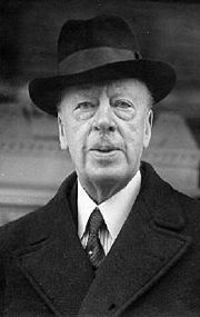
James Albert Edward Hamilton, 3rd Duke of Abercorn, is born in Hamilton Place, Piccadilly, London, on November 30, 1869. Styled Marquess of Hamilton between 1885 and 1913, he is a British peer and Unionist politician. He serves as the first Governor of Northern Ireland, a post he holds between 1922 and 1945. He is a great-grandfather of Diana, Princess of Wales.

Hamilton is the eldest son of James Hamilton, 2nd Duke of Abercorn, and godson of the Prince of Wales. His mother, Lady Mary Anna, is the fourth daughter of Richard Curzon-Howe, 1st Earl Howe. He is educated at Eton College and subsequently serves first in the Royal Inniskilling Fusiliers until 1892 when he joins the 1st Life Guards. He is later transferred as major to the North Irish Horse.

In early 1901 he accompanies his father on a special diplomatic mission to announce the accession of King Edward to the governments of Denmark, Sweden and Norway, Russia, Germany, and Saxony.

In the 1900 general election, Hamilton stands successfully as Unionist candidate for Londonderry City, and three years later he becomes Treasurer of the Household, a post he holds until the fall of Arthur Balfour‘s Conservative administration in 1905. After serving for a time as an Opposition whip, Hamilton succeeds his father as third Duke of Abercorn in 1913. In 1922, he is appointed governor of the newly created Northern Ireland. He also serves as Lord Lieutenant of Tyrone from 1917 until his death, having previously been a Deputy Lieutenant for County Donegal. Abercorn proves a popular royal representative in Northern Ireland and is reappointed to the post in 1928 after completing his first term of office. In 1931, he declines the offer of the governor generalship of Canada, and three years later he is again reappointed governor for a third term. He remains in this capacity until his resignation in July 1945.

Abercorn is made the last non-royal Knight of the Most Illustrious Order of Saint Patrick in 1922. In 1928 he becomes a Knight of the Most Noble Order of the Garter and is also the recipient of an honorary degree from the Queen’s University Belfast. He receives the Royal Victorian Chain in 1945, the same year he is sworn of the Privy Council.

Abercorn marries Lady Rosalind Cecilia Caroline Bingham, only daughter of Charles Bingham, 4th Earl of Lucan and his wife Lady Cecilia Catherine Gordon-Lennox at St. Paul’s Church, Knightsbridge, on November 1, 1894. They have three daughters and two sons.

Abercorn dies at his London home on September 12, 1953, and is buried at Baronscourt in County Tyrone.