The Irish Catholic Hierarchy formally endorses Home Rule on February 16, 1886, a significant moment in the Irish political landscape.
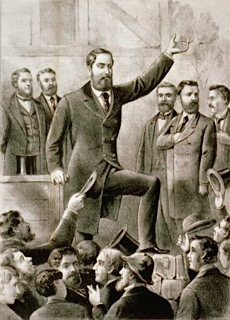
The Home Rule movement, led by Charles Stewart Parnell (pictured) and the Irish Parliamentary Party (IPP), seeks to establish a separate Irish parliament to handle domestic affairs while remaining within the British Empire. The campaign gains significant momentum throughout the late 19th century, but opposition from the British government and Irish unionists make progress difficult. Up to this point, the Catholic Church in Ireland had largely remained cautious about taking an overtly political stance on Home Rule. However, their endorsement on this day in 1886 changes the dynamic of the movement, giving it an unprecedented boost in legitimacy and support among the Irish people.
The Catholic Church plays a central role in Irish society, wielding immense influence over the daily lives of the majority Catholic population. Many of the clergy are already sympathetic to nationalist aspirations, but an official endorsement from the hierarchy signals a unified front that cannot be ignored. By formally backing Home Rule, the bishops strengthen nationalist demands and provide moral authority to the movement, reinforcing the argument that Home Rule is not just a political necessity but also a just and rightful cause.
This endorsement comes at a critical time. British Prime MinisterWilliam Ewart Gladstone is preparing to introduce the Government of Ireland Bill 1886, commonly known as the First Home Rule Bill, in April 1886, a legislative measure that, if passed, would grant Ireland limited self-government. The backing of the Catholic hierarchy is instrumental in rallying public support and reinforcing Parnell’s leadership. While the bill ultimately fails in the House of Commons on June 8, 1886, due to strong opposition from Conservative and Unionist factions, the Catholic Church’s stance ensures that Home Rule remains a dominant political issue for decades to come.
Despite the failure of the 1886 bill, the endorsement by the Catholic bishops has long-term implications. It solidifies a powerful alliance between Irish nationalism and the Church, an influence that persists well into the 20th century. The endorsement also helps to counteract Protestant unionist claims that Home Rule is merely a radical or sectarian endeavor, presenting it instead as a moderate and just political cause with widespread backing.
Over the following years, Home Rule remains a contentious issue, with subsequent attempts to pass similar legislation met with resistance. The Government of Ireland Bill 1893, commonly known as the Second Home Rule Bill, is again defeated in the House of Lords, and it is not until the Government of Ireland Act 1914, commonly referred to as the Third Home Rule Bill, that significant progress is made. Even then, implementation is delayed by World War I and ultimately overshadowed by the 1916 Easter Rising and the Irish War of Independence.
Looking back, the Catholic Church’s endorsement of Home Rule on February 16, 1886, is a defining moment in Ireland’s political history. It reinforces the nationalist cause, legitimizes the demand for self-governance, and plays a crucial role in shaping Ireland’s path toward eventual independence. While Home Rule itself is never fully realized in the form originally envisioned, its legacy influences the Irish Free State’s establishment in 1922 and Ireland’s eventual emergence as a fully independent republic.
(From: “February 16, 1886 – The Catholic Church Embraces Home Rule,” by Bagtown Clans, This Day in Irish History Substack, http://www.thisdayinirishhistory.substack.com, February 2025)
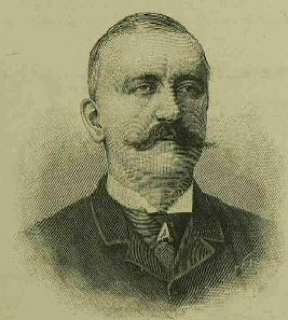
Williams is born on May 4, 1838, in Coleraine, County Londonderry. He claims to be descended on his father’s side from Worcestershireyeomen living in the parishes of Tenbury and Mamble. On his mother’s side he descends from Scottish settlers who planted Ulster in 1610. He is educated at Belfast Academy in Belfast under Dr. Reuben John Bryce and at a Greenwich private school under Dr. Goodwin. Later on, he goes to the southern United States for his health and takes part in a filibustering expedition to Nicaragua, where he sees some hard fighting and reportedly wins the reputation of a blockade runner. He is separated from his party and is lost in the forest for six days. Fevered, he discovers a small boat and manages to return to the nearest British settlement. He serves in the London Irish Rifles and has the rank of sergeant.
Williams returns to England in 1859, where he becomes a volunteer, and a leader writer for the London Evening Herald. In October 1859, he begins a connection with The Standard which lasts until 1884. From 1860 until 1863, he works as a first editor for the London Evening Standard and from 1882 until 1884, as editor of The Evening News.
Williams is best known for being a war correspondent. He is described as an admirable war correspondent, a daring rider as well as writer. For The Standard, he is at the headquarters of the Armée de la Loire, a French army, during the Franco-Prussian War in 1870. He is also one of the first correspondents in Strasbourg, where the French forces are defeated. In the summer and autumn of 1877, he is a correspondent to Ahmed Muhtar Pasha who commands the Turkish forces in Armenia during the Russo-Turkish War of 1877 and 1878. He remains constantly at the Turkish front, and his letters are the only continuous series that reaches England. In 1878, he publishes this series in a revised and extended form as The Armenian Campaign: A Diary of the Campaign on 1877, in Armenia and Koordistan, which is a large accurate record of the war, even though it is pro-Turkish. From Armenia, he follows Muhtar Pasha to European Turkey and describes his defence of the lines of Constantinople against the Imperial Russian Army. He is with General Mikhail Skobelev at the headquarters of the Imperial Russian Army when the Treaty of San Stefano is signed in March 1878. He reports this at the Berlin Congress.
At the end of 1878, Williams is in Afghanistan reporting the war, and in 1879 publishes the Notes on the Operations in Lower Afghanistan, 1878–9, with Special Reference to Transport.
In 1887, Williams meets with then General of the United States Army, Philip Sheridan, in Washington, D.C. to update the general on European affairs and the prospects of upcoming conflicts.
Williams is said to possess a voice of thunder and expresses with terrific energy. He conducts a lecture tour of the United States where he describes the six campaigns, illustrated by limelight photographs. His audience in Brooklyn, New York, is described by The New York Times as highly delighted by his lecture about the hardships and adventures. His presentation is “a feast for the eyes and ears and was highly appreciated by the large audience assembled.” He later tours England, Scotland, and Ireland speaking about his then seven campaigns.
Williams also writes fiction, including his book John Thaddeus Mackay, a tale about religious tolerance and understanding. With the sanction of Commander in Chief, Field MarshalGarnet Wolseley, he edits a book Songs for Soldiers for the March The Camp and the Barracks to improve morale and relieve boredom. Included in the book are a number of songs that he composed. He also writes about ecclesiastical questions, and contributes articles and stories to different periodicals.
Williams is a strong adherent to Wolseley’s military views and policy, and has considerable military knowledge. He also publishes military subjects in several publications such as the United Service Magazine, the National Review, and other periodicals. In 1892, he publishes Life of Sir H. Evelyn Wood, which is controversial as he defends the actions of Wood after the Battle of Majuba Hill in 1881. In 1902, he publishes a pamphlet, entitled Hush Up, in which he protests against the proposed limited official inquiry into the South African War and calls for an investigation.
Early in his career, Williams shares an office with friend and colleague Robert Gascoyne-Cecil, who later becomes Prime Minister of the United Kingdom. They have a standing tradition of always sending out for two beers with payment alternating between each man. Many years later, Williams is in the lobby of the House of Lords and Gascoyne-Cecil approaches him with an outstretched hand and asks, “By the way, Mr. Williams, whose turn is it to stand the beer?”
In 1884, the steamer carrying Williams and colleague Frederic Villiers of The Graphic overturns in the Nile River. Their rescue leads Williams to later commission a unique ivory and gold mitre for the Bishop of London as a thank-offering to God for his safe return from Khartoum.
Williams receives a personal invitation from King Edward VII to attend the funeral of his mother, Queen Victoria.
Both of Williams‘a sons became journalists. Frederick is a noted parliamentary reporter, writer, and historian in Canada. Francis Austin Ward Williams practices journalism in Sydney, Australia.
In the Nile Campaign of 1884-85, application is made to the War Office with the support of the Commander in Chief Lord Wolseley for medals for Willams and correspondent Bennet Burleigh. Williams has been twice requested to take command of some of the men by senior officers on the spot. The Secretary of War is unable to grant the recognition under the rules of the day but writes a letter saying that he regrets that this must be his decision.
Williams is a recipient of the Queen’s Sudan Medal, an award given to British and Egyptian forces which took part in the Sudan campaign between 1896 and 1898.
Field Marshall Garnet Wolseley recognizes the contributions of Williams on the battlefield. He says in a speech that from “Charles Williams, he had at various times received the greatest possible help in the field.”
Williams dies in Brixton, London, on February 9, 1904. He is buried in Nunhead Cemetery in London. His son, journalist Fred Williams, first learns of his father’s death on the wire service he is monitoring at his newspaper in Toronto, Ontario, Canada.
Williams’s funeral is well attended by the press as well as members of the military including Field Marshal Sir Evelyn Wood. Colleague Henry Nevison writes a long reflection on Williams. It includes, “On the field he possessed a kind of instinctive sense of what was going to happen. When I went to big field-days with him he was already an elderly man, and much broken down with the hardships of a war correspondent’s life; but he invariably appeared at the critical place exactly at the right moment, and I once heard the Duke of Connaught, who was commanding, say, ‘When I see Charlie Williams shut up his telescope, I know it’s all over.’ And now he is gone, with his rage, his generosity, his innocent pride, his faithful championship of every friend, and his memories of so many a strange event. His greatest joy was to encourage youth to follow in his steps, and the world is sadder and duller for his going.”
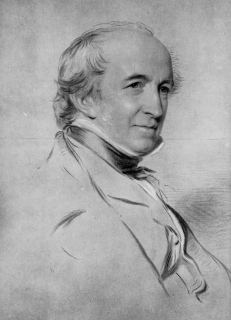
Spring Rice is educated at Trinity College, Cambridge, and later studies law at Lincoln’s Inn, but is not called to the Bar. His family is politically well-connected, both in Ireland and Great Britain, and he is encouraged to stand for Parliament by his father-in-law, Lord Limerick.
Spring Rice first stands for election in Limerick City in 1818 but is defeated by the Tory incumbent, John Vereker, by 300 votes. He wins the seat in 1820 and enters the House of Commons. He positions himself as a moderate unionist reformer who opposes the radical nationalist politics of Daniel O’Connell and becomes known for his expertise on Irish and economic affairs. In 1824 he leads the committee which establishes the Ordnance Survey in Ireland.
Spring Rice’s fluent debating style in the Commons brings him to the attention of leading Whigs and he comes under the patronage of the Marquess of Lansdowne. As a result, he is made Under-Secretary of State for the Home Department under George Canning and Lord Goderich in 1827, with responsibility for Irish affairs. This requires him to accept deferral of Catholic emancipation, a policy which he strongly supports. He then serves as joint Secretary to the Treasury from 1830 to 1834 under Lord Grey. Following the Reform Act 1832, he is elected to represent Cambridge from 1832 to 1839. In June 1834, Grey appoints him Secretary of State for War and the Colonies, with a seat in the cabinet, a post he retains when Lord Melbourne becomes Prime Minister in July. A strong and vocal unionist throughout his life, he leads the Parliamentary opposition to Daniel O’Connell’s 1834 attempt to repeal the Acts of Union 1800. In a six-hour speech in the House of Commons on April 23, 1834, he suggests that Ireland should be renamed “West Britain.” In the Commons, he also champions causes such as the worldwide abolition of slavery and the introduction of state-supported education.
The Whig government falls in November 1834, after which Spring Rice attempts to be elected Speaker of the House of Commons in early 1835. When the Whigs return to power under Melbourne in April 1835, he is made Chancellor of the Exchequer. As Chancellor, he has to deal with crop failures, a depression and rebellion in North America, all of which create large deficits and put considerable strain on the government. His Church Rate Bill of 1837 is quickly abandoned and his attempt to revise the charter of the Bank of Ireland ends in humiliation. Unhappy as Chancellor, he again tries to be elected as Speaker but fails. He is a dogmatic figure, described by Lord Melbourne as “too much given to details and possessed of no broad views.” Upon his departure from office in 1839, he has become a scapegoat for the government’s many problems. That same year he is raised to the peerage as Baron Monteagle of Brandon, in the County of Kerry, a title intended earlier for his ancestor Sir Stephen Rice. He is also Comptroller General of the Exchequer from 1835 to 1865, despite Lord Howick‘s initial opposition to the maintenance of the office. He differs from the government regarding the exchequer control over the treasury, and the abolition of the old exchequer is already determined upon when he dies.
From 1839 Spring Rice largely retires from public life, although he occasionally speaks in the House of Lords on matters generally relating to government finance and Ireland. He vehemently opposes John Russell, 1st Earl Russell‘s policy regarding the Irish famine, giving a speech in the Lords in which he says the government had “degraded our people, and you, English, now shrink from your responsibilities.”
Spring Rice is well regarded in Limerick, where he is seen as a compassionate landlord and a good politician. An advocate of traditional Whiggism, he strongly believes in ensuring society is protected from conflict between the upper and lower classes. Although a pious Anglican, his support for Catholic emancipation wins him the favour of many Irishmen, most of whom are Roman Catholic. He leads the campaign for better county government in Ireland at a time when many Irish nationalists are indifferent to the cause. During the Great Famine of the 1840s, he responds to the plight of his tenants with benevolence. The ameliorative measures he implements on his estates almost bankrupts the family and only the dowry from his second marriage saves his financial situation. A monument in honour of him still stands in the People’s Park in Limerick.
Even so, Spring Rice’s reputation in Ireland is not entirely favourable. In a book regarding assisted emigration from Ireland, a process in which a landlord pays for their tenants’ passage to the United States or Australia, Moran suggests that Spring Rice was engaged in the practice. In 1838, he is recorded as having “helped” a boat load of his tenants depart for North America, thereby allowing himself the use of their land. However, he is also recorded as being in support of state-assisted emigration across the British Isles, suggesting that his motivation is not necessarily selfish.
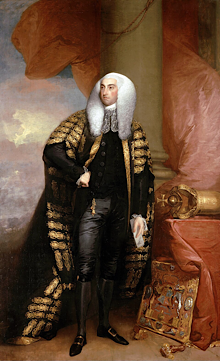
Fitzgibbon is an early and extremely militant opponent of Catholic emancipation. The Earl is possibly the first person to suggest to King George III that granting royal assent to any form of Catholic Emancipation will violate his coronation oath.
FitzGibbon is born in 1748 near Donnybrook, Dublin, the son of John FitzGibbon of Ballysheedy, County Limerick, and his wife Isabella Grove, daughter of John Grove, of Ballyhimmock, County Cork. His father is born a Catholic but converts to the state religion in order to become a lawyer, and amasses a large fortune. He has three sisters, Arabella, Elizabeth, and Eleanor.
When appointed Lord Chancellor for Ireland in 1789, FitzGibbon is granted his first peerage as Baron FitzGibbon, of Connello Lower in County Limerick, in the peerage of Ireland that year. This does not entitle him to a seat in the British House of Lords, only in the Irish House of Lords. His later promotions come mostly in the peerage of Ireland, being advanced to a Viscountcy (1793) and the Earldom of Clare in 1795. He finally achieves a seat in the British House of Lords in 1799 when created Baron FitzGibbon, of Sidbury in the County of Devon, in the Peerage of Great Britain.
FitzGibbon is a renowned champion of the Protestant Ascendancy and an opponent of Catholic emancipation. He despises the Parliament of Ireland‘s popular independent Constitution of 1782. He is also personally and politically opposed to the Irish politician Henry Grattan who urges a moderate course in the Irish Parliament, and is responsible for defeating Grattan’s efforts to reform the Irish land tithe system (1787–1789) under which Irish Catholic farmers (and all non-Anglican farmers) are forced to financially support the minority Anglican Church of Ireland. These are not fully repealed until 1869 when the Church of Ireland is finally disestablished, although Irish tithes are commuted after the Tithe War (1831–1836).
FitzGibbon opposes the Irish Roman Catholic Relief Act 1793, for which, in a “magnificently controlled vituperation in vigorous, colloquial heroic couplets,” The Gibbonade, he is pilloried by the satirist Henrietta Battier. But acceding to pressure exerted through the Irish executive by government of William Pitt in London, intent, in advance of war with the new French Republic, to placate Catholic opinion, he is persuaded to recommend its acceptance in the Irish House of Lords. Pitt, and King George III, who had been petitioned by delegates from the Catholic Committee in Dublin, expects Ireland to follow the British Roman Catholic Relief Act 1791 and admit Catholics to the parliamentary franchise (although not to Parliament itself), enter the professions and assume public office.
FitzGibbon’s role in the recall, soon after his arrival, of the popular pro-Emancipation Lord Lieutenant of Ireland, William Fitzwilliam, 4th Earl Fitzwilliam, is debatable. Although he is probably politically opposed to the Lord Lieutenant of Ireland, Fitzwilliam is recalled, apparently due to his own independent actions. Fitzwilliam is known to be friendly to the Ponsonby family (he is married to one of their daughters), and is generally a Foxite liberal Whig. His close association with and patronage of Irish Whigs led by Grattan and Ponsonby during his short tenure, along with his alleged support of an immediate effort to secure Catholic emancipation in a manner not authorized by the British cabinet is probably what leads to his recall. Thus, if any is to blame in the short-lived “Fitzwilliam episode” it is the great Irish politician Henry Grattan and the Ponsonby brothers – presumably William Ponsonby, later Lord Imokilly, and his brother John Ponsonby—not to mention Lord Fitzwilliam himself. Irish Catholics at the time and later naturally see things very differently and blame hardline Protestants such as FitzGibbon.
Irish Catholics and FitzGibbon agree on one point apparently – Irish political and economic union with Great Britain, which eventually takes place in 1801. Pitt wants Union with Ireland concomitantly with Catholic emancipation, commutation of tithes, and the endowment of the Irish Catholic priesthood. Union is opposed by most hardline Irish Protestants, as well as liberals such as Grattan. FitzGibbon has been a strong supporter of the Union since 1793 but refuses to have Catholic emancipation with the Union.
In a speech to the Irish House of Lords on February 10, 1800, FitzGibbon elucidates his point of view on union: “I hope and feel as becomes a true Irishman, for the dignity and independence of my country, and therefore I would elevate her to her proper station, in the rank of civilised nations. I wish to advance her from the degraded post of mercenary province, to the proud station of an integral and governing member of the greatest empire in the world.”
In the end, FitzGibbon’s views win out, leading to the Union of Ireland with Great Britain to form the United Kingdom of Great Britain and Ireland without any concessions for Ireland’s Catholic majority (or for that matter, Catholics in the rest of the new United Kingdom). He later claims that he had been duped by the way in which the Act was passed with the new Viceroy Charles Cornwallis, 1st Marquess Cornwallis, promising reforms to Irish Catholics, and is bitterly opposed to any concessions during the short remainder of his life.
The role of the Earl of Clare (as FitzGibbon becomes in 1795) as Lord Chancellor of Ireland during the period of the Irish Rebellion of 1798 is questionable. According to some, he supports a hardline policy which uses torture, murder and massacre to crush the rebellion, or that as Lord Chancellor, he has considerable influence on military affairs, and that martial law cannot be imposed without his consent. Others allege that as Lord Chancellor, he has no say in military affairs and the Encyclopædia Britannica states that he is “neither cruel nor immoderate and was inclined to mercy when dealing with individuals.” However, the same source also states that “(FitzGibbon)… was a powerful supporter of a repressive policy toward Irish Catholics”. His former side is displayed by sparing the lives of the captured United Irish leaders, “State prisoners,” in return for their confession of complicity and provision of information relating to the planning of the rebellion. However, this willingness of the prisoners to partake of the agreement is spurred by the execution of the brothers John and Henry Sheares on July 14, 1798.
In contrast to the leniency shown to the largely upper-class leadership, the full weight of military repression is inflicted upon the common people throughout the years 1797–98 with untold thousands suffering imprisonment, torture, transportation and death. FitzGibbon is inclined to show no mercy to unrepentant rebels and, in October 1798, he expresses his disgust upon the capture of Wolfe Tone that he has been granted a trial, and his belief that Tone should be hanged as soon as he set foot on land.
FitzGibbon is quick to recognise that sectarianism is a useful ally to divide the rebels and prevent the United Irishmen from achieving their goal of uniting Protestant, Catholic and Dissenter, writing in June 1798, “In the North nothing will keep the rebels quiet but the conviction that where treason has broken out the rebellion is merely popish.”
Another anecdote is to the effect of FitzGibbon’s callousness. Supposedly, upon being informed during a debate in the Irish Parliament that innocent as well as guilty are suffering atrocities during the repression, he replies, “Well suppose it were so…,” his callous reply purportedly shocking William Pitt.
FitzGibbon is noted by some as a good, improving landlord to both his Protestant and Catholic tenants. Some claim that the tenants of his Mountshannon estate call him “Black Jack” FitzGibbon. There is, however, no evidence to support this claim, although there is little to no evidence on his dealings as a landlord. Irish nationalists and others point out that while he might be interested in the welfare of his own tenants on his own estate, he treats other Irish Catholics very differently. Without further evidence, his role as a Protestant landowner in mainly Catholic Ireland is of little importance against his known dealings as Lord Chancellor.
FitzGibbon dies at home, 6 Ely Place near St. Stephen’s Green, Dublin, on January 28, 1802, and is buried in St. Peter’s Churchyard. A hero to Protestant hardliners, but despised by the majority Catholic population, his funeral cortege is the cause of a riot and, according to a widespread story, a number of dead cats are thrown at his coffin as it departs Ely Place.
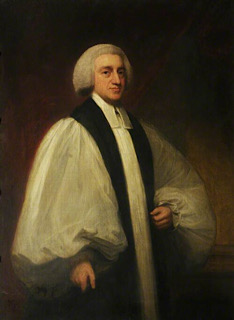
Agar is known to have held particularly marked Calvinistic positions. He serves as Dean of Kilmore from 1765 to 1768, and then as Bishop of Cloyne until 1779.
In 1794, Agar is raised to the Peerage of Ireland as Baron Somerton. In 1801, he is translated to become Archbishop of Dublin and is created Viscount Somerton. In 1806, he is further honoured when he is made Earl of Normanton. These titles are all in the Peerage of Ireland. He remains as Archbishop of Dublin until his death in 1809, and from the beginning of 1801 onward, sits in the House of Lords as one of the twenty-eight original Irish representative peer, following the Acts of Union 1800 which unites Ireland and Great Britain.
Agar dies on July 14, 1809, aged 72, and is succeeded in his secular titles by his son Welbore Ellis Agar. He is buried in the north transept of Westminster Abbey. His widow Jane, Countess of Normanton, is buried alongside him following her death in 1826. His tomb dates from 1815 and is created by John Bacon.
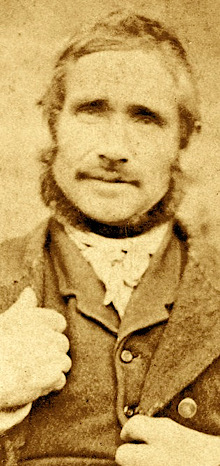
Maolra Seoighe (English: Myles Joyce), is an Irish man who is wrongfully convicted and hanged on December 15, 1882. He is found guilty of the Maumtrasna Murders and is sentenced to death. Though he can only speak Irish, the case is heard in English without any translation service. He is posthumously pardoned in 2018.
Seoighe is the most prominent figure in a controversial trial in 1882 that takes place while Ireland is part of the United Kingdom. Three Irish language speakers are condemned to death for the murder of a local family (John Joyce, his wife Brighid, his mother Mairéad, his daughter Peigí and son Mícheál) in Maumtrasna, on the border between County Mayo and County Galway. It is presumed by the authorities to be a local feud connected to sheep rustling and the Land War. Eight men are convicted on what turns out to be perjured evidence and three of them condemned to death: Maolra Seoighe (a father of five children), Pat Casey and Pat Joyce.
Covering the incident, The Spectator writes the following:
“The Tragedy at Maumtrasna, investigated this week in Dublin, almost unique as it is in the annals of the United Kingdom, brings out in strong relief two facts which Englishmen are too apt to forget. One is the existence in particular districts of Ireland of a class of peasants who are scarcely civilised beings, and approach far nearer to savages than any other white men; and the other is their extraordinary and exceptional gloominess of temper. In remote places of Ireland, especially in Connaught, on a few of the islands, and in one or two mountain districts, dwell cultivators who are in knowledge, in habits, and in the discipline of life no higher than Maories or other Polynesians.”
The court proceedings are carried out in a language the accused do not understand (English), with a solicitor from Trinity College Dublin (TCD), who does not speak Irish. The three are executed in Galway by William Marwood for the crime in 1882. The role of John Spencer, 5th Earl Spencer, who is then Lord Lieutenant of Ireland, is the most controversial aspect of the trial, leading most modern scholars to characterise it as a miscarriage of justice. Research carried out in The National Archives by Seán Ó Cuirreáin, has found that Spencer “compensated” three alleged eyewitnesses to the sum of £1,250, equivalent to €157,000 (by 2016 rates).
As of 2016, nobody has issued an apology or pardon for the executions, though the case has been periodically taken up by various political figures. The then MP for Westmeath, Timothy Harrington, takes up the case, claiming that the Crown Prosecutor for the case George Bolton, had deliberately withheld evidence from the trial. In 2011, two sitting members of the House of Lords, the Liberal Democrat life peers David Alton and Eric Lubbock, request a review of the case. Crispin Blunt, ToryParliamentary Under-Secretary of State for Prisons and Youth Justice, states that Seoighe was “probably an innocent man,” but he does not seek an official pardon.
Seoighe’s final words are: “Feicfidh mé Iosa Críost ar ball beag – crochadh eisean san éagóir chomh maith. … Ara, tá mé ag imeacht … Go bhfóire Dia ar mo bhean agus a cúigear dílleachtaí.” (I will be seeing Jesus Christ soon – he too was also unjustly hanged … I am leaving … the blessings of God on my wife and her five orphans.)
On April 4, 2018, Michael D. Higgins, the President of Ireland, issues a pardon on the advice of the government of Ireland saying “Maolra Seoighe was wrongly convicted of murder and was hanged for a crime that he did not commit”. It is the first presidential pardon relating to an event predating the foundation of the state in 1922 and the second time a pardon has been issued after an execution. Seoighe’s case is not an isolated one, and there are strong similarities with the case of Patrick Walsh who was hanged in the Galway jail on September 22, 1882, just three months before Seoighe for the murders of Martin and John Lydon. The same key players and political factors are active in both cases and his conviction is just as questionable as that of Seoighe.
In September 2009, the story is featured on RTÉ‘s CSI programme under an episode entitled CSI Maamtrasna Massacre. A dramatised Irish language film regarding the affair, entitled Murdair Mhám Trasna, produced by Ciarán Ó Cofaigh is released in 2017.
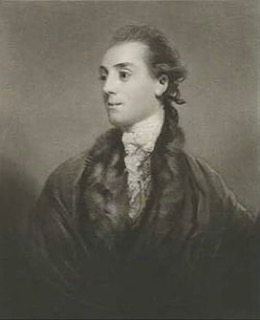
Luttrell was a captain in the Royal Navy but retires in 1789. He is returned to Parliament for Stockbridge in 1774, a seat he holds until 1775, and again between 1780 and 1785. Between 1785 and 1826 he is a commissioner of HM Customs and Excise. He succeeds his elder brother to the earldom in 1821. This is an Irish peerage and does not entitle him to an automatic seat in the House of Lords.
In 1766, Lord Carhampton marries the Honorable Elizabeth Olmius (1742-97), daughter of John Olmius, 1st Baron Waltham. In 1787, out of respect after the death of his father-in-law, he assumes by Royal Licence the additional surname of “Olmius.” In 1798, he sells the Olmius family seat of Newhall to the founding nuns of New Hall School. There are three children from his first marriage (however only his daughter survives to adulthood):
Lady Frances Maria Luttrell (b. 1768), married Sir Simeon Stuart, 4th Baronet
James Luttrell (d. 1772)
John Luttrell (d. 1769)
Lord Carhampton marries secondly Maria Morgan, daughter of John Morgan, in 1798. They have one child:
Lady Maria Anne Luttrell (1799–1857), married Lieutenant-Colonel Hardress Robert Saunderson
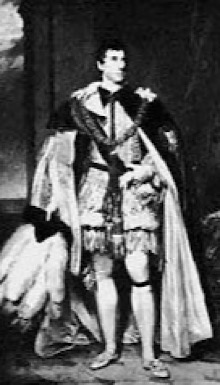
Cuffe is the son of John Otway Cuffe, 2nd Earl of Desart, and Catherine, daughter of Maurice O’Connor. He succeeds in the earldom in November 1820, aged two, on the early death of his father. He is educated at Eton College and enters Christ Church, Oxford in 1836 but takes no degree.
Cuffe marries Lady Elizabeth Lucy Campbell, daughter of John Campbell, 1st Earl Cawdor, in 1842. They have three sons and a daughter. He dies at the age of 46 at his home in Belgravia, City of Westminster, Greater London on April 1, 1865, due to a fall suffered during an attack of paralysis. He is buried in Castleinch Cemetery, Kilkenny, County Kilkenny. He is succeeded in the earldom by his son, William. The Countess of Desart dies in April 1898, aged 76.
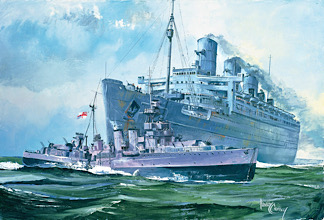
Twenty miles off the coast of County Donegal on October 2, 1942, the luxury Cunard liner RMS Queen Mary, converted into a troop carrier for World War II, smashes into her escort ship, the British Royal NavycruiserHMS Curaçoa (D41). The HMS Curacoa, which had connected with the RMS Queen Mary to escort her for the final two hundred miles to the port of Greenock, Scotland, sinks with the loss of 338 men. As are his orders, Captain Cyril Illingworth of the RMS Queen Mary, which is carrying an estimated 15,000 U.S. troops, does not stop to mount a rescue operation.
On a near perfect afternoon, the RMS Queen Mary is off the Irish coast. The vessel is setting a zigzag course to help evade U-boats and long-range Germanbombers. The RMS Queen Mary has caught up with her 4,290 tonne escort vessel, the HMS Curacoa, and is set to overtake her.
Aboard the HMS Curacoa, seaman Ernest Watson is admiring the RMS Queen Mary’s majestic lines when he notices the bow is swinging toward the cruiser. To his horror, she continues to swing and is soon on a collision course. The gap narrows inexorably as the stunned Watson finally finds his vocal cords and screams, “She’s going to ram us.” Later Watson describes how many of his mates are so shocked they cannot move.
Within seconds, there is a screech of twisted metal followed by the hiss of steam and the screams of those injured or trapped below. The RMS Queen Mary, twenty times larger than the cruiser, has been traveling at top revs giving her a speed of 28.5 knots. The impact swings the HMS Curacoa broadside on and the troopship slices through her 10 cm armour plating. It is all over in seconds, and the troopship continues on her zigzag course leaving the HMS Curacoa cut in two with the forward and aft sections separated by 100 metres of ocean.
At the moment of impact, as the HMS Curacoa reels in the water, Watson and many other seaman on deck are thrown into the freezing water. Even as they surface they watch in horror as the stern quickly sinks, taking with it the men trapped behind the water-tight doors. The forward section follows soon after, leaving the men in the murky water surrounded by debris, oil and drowned or mutilated bodies. It is every man for himself as survivors cling to floating wreckage. They are about 20 nautical miles off the Irish coast which, had boats or rafts been launched, would put them within easy reach of safety.
The survivors believe the RMS Queen Mary will turn back to pick them up, however, it is with obvious despair that they watch her disappear over the horizon. To sail on is probably the toughest decision Captain Illingworth ever has to make. The World War I veteran has many years of experience by the time he has risen to become Cunard-White Star Line’s senior commander and master of the RMS Queen Mary. He is obeying orders that under no circumstances is he to stop until the RMS Queen Mary has safely delivered the troops to Britain. His only option is to signal nearby British destroyers to rescue survivors.
Two destroyers react to Captain Illingworth’s message and steam toward the wreckage where two hours after the collision, they find many bodies of sailors who have died of hypothermia. Only the hardiest live long enough to land in Londonderry, County Londonderry, Northern Ireland, the next day. Of the HMS Curacoa’s 430 personnel, only 99 seamen and two officers survive. Because of war-time security the official inquiry is delayed until the war in Europe is over. Then, in June 1945, only a few weeks after VE Day, the Admiralty Commissioners sued Cunard-White Star Line claiming the RMS Queen Mary had been responsible.
It appears to be a clear-cut case. The HMS Curacoa’s captain, John Boutwood, gives evidence to a Royal Navy inquiry and is acquitted without a reprimand. Later he gains the Distinguished Service Order (DSO). Boutwood says the HMS Curacoa steamed at some 3 knots slower than the larger vessel which had been in the process of overtaking at the time of the collision. He says he had been amazed when the troopship continued turning to starboard and closed the gap between the vessels. When the collision occurred he, and all others on the bridge, had clung to whatever was nearest.
At first, Boutwood vainly hopes the damaged ship will stay afloat. He also says it was impossible to give orders because of the noise of escaping steam from the boiler room. The RMS Queen Mary’s first officer gives evidence that he had taken over the helm less than two minutes before she rams the cruiser. She is about 500m away and on the starboard bow. He is unconcerned at the narrow gap because he expects HMS Curacoa to take evasive action. He believes the cruiser, a more manoeuvrable vessel, would change course.
The first officer had also been reassured by Captain Illingworth, that the cruiser was “experienced in escorting and would keep out of the way.” At a later hearing some months after the opening, Illingworth says he had felt a bump at the time of the collision and had asked the quartermaster if they had been hit by a bomb. The answer was: “No sir, we have hit the cruiser.”
The judge holds the cruiser responsible saying the normal rules of an overtaking vessel keeping clear of the other does not apply in this case. He says the cruiser could have avoided the collision up to seconds before it occurred. The Admiralty, faced with huge compensation to the families of the dead sailors, appeals. In appeal the ruling is that the cruiser was responsible for two-thirds of the damage and the RMS Queen Mary for one-third. Still not satisfied, the case goes to the House of Lords where the verdict of the Appeal Court is upheld in February 1949. No survivor comes out unscathed but above all others, Illingworth has to live with the memory of leaving British sailors to fight for their lives in the ocean.
However, when asked at the first hearing if he felt Illingworth had made the right decision, the captain of the HMS Curacoa says, “I would say, yes.” The RMS Queen Mary continues as a troopship until August 11, 1945. The vessel is now a floating attraction at Long Beach, California.
(From: “SS Queen Mary & the loss of HMS Curacoa 1942” by A. N. Other and NHSA Webmaster, Naval Historical Society of Australia, https://navyhistory.au)
MacDermott is born in Belfast on April 12, 1896, the third surviving son and sixth of seven children of the Reverend John MacDermott DD, a Presbyterian clergyman who is minister of Belmont and moderator of the Presbyterian Church in Ireland, and of his wife Lydia Allen MacDermott (née Wilson), the daughter of a Strabane solicitor. He is educated at Campbell College, Belfast, from where he wins a scholarship to read Law at the Queen’s University Belfast (QUB) in 1914.
Eight years later MacDermott is appointed to determine industrial assurance disputes in Northern Ireland, and in 1931 becomes a lecturer in Jurisprudence at Queen’s University Belfast, teaching for four years.
In 1940, MacDermott is appointed Minister of Public Security in the Government of Northern Ireland, and the following year becomes the Attorney General for Northern Ireland. He is succeeded in this post by William Lowry, whose son, Lord Lowry, would eventually succeed MacDermott as Lord Chief Justice. In 1944, he resigns his parliamentary seat on appointment as a High Court Judge for Northern Ireland, and three years later, on April 23, 1947, is made a Lord of Appeal in Ordinary, becoming a life peer as Baron MacDermott, of Belmont in the city of Belfast.
MacDermott returns from the House of Lords to take up his appointment as Lord Chief Justice of Northern Ireland. His successors to the latter office become Law Lords subsequently. Whilst Lord Chief Justice, he is affectionately known as “the Baron.”
In 1977, aged over eighty, MacDermott offers to redeliver a lecture at the Ulster College, which had been interrupted by a bomb meant for him and which had severely wounded him.
Having been made a Northern Ireland Privy Counsellor seven years earlier, MacDermott is sworn of the British Privy Council in 1947.
Four years later, in 1951, MacDermott is appointed Lord Chief Justice of Northern Ireland, a post he holds for twenty years. He is also Pro-Chancellor of his alma mater from 1951 to 1969. In 1958, he chairs the commission on the Isle of ManConstitution. He dies at his home in Belfast on July 13, 1979.
In 1926, MacDermott weds Louise Palmer Johnston, later Lady MacDermott. Their son, Sir John MacDermott, is also sworn into the British Privy Council in 1987, as a Lord Justice of Appeal in Northern Ireland. He later became a Surveillance Commissioner for Northern Ireland.


 seamus dubhghaill