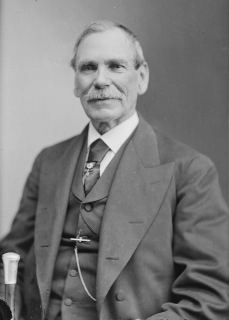
Born and initially educated in Ireland, Shields emigrates to the United States in 1826. He is briefly a sailor and spends time in Quebec before settling in Kaskaskia, Illinois, where he studies and practices law. In 1836, he is elected to the Illinois House of Representatives, and later as State Auditor. His work as auditor is criticized by a young Abraham Lincoln, who with his then fiancée, Mary Todd, publishes a series of inflammatory pseudonymous letters in a local paper. Shields challenges Lincoln to a duel, and the two nearly fight on September 22, 1842, before making peace and eventually becoming friends.
In 1848, Shields is appointed to and confirmed by the Senate as the first governor of the Oregon Territory, which he declines. After serving as Senator from Illinois, he moves to Minnesota and there founds the town of Shieldsville. He is then elected as Senator from Minnesota. He serves in the American Civil War and, at the Battle of Kernstown, his troops inflict the only tactical defeat of Stonewall Jackson in the war. He resigns his commission shortly thereafter. After moving multiple times, he settles in Missouri and serves again for three months in the Senate.
Shields dies unexpectedly in Ottumwa, Iowa on June 1, 1879, while on a lecture tour, after reportedly complaining of chest pains. His body is transferred to Carrollton, Missouri by train, where a funeral is held at the Catholic church, and his body escorted to St. Mary’s Cemetery by two companies of the Nineteenth Infantry, the Craig Rifles, and a twenty-piece brass band. His grave remains unmarked for 30 years, until the local government and the U.S. Congress fund a granite and bronze monument there in his honor.
Ford is born to Edward Ford (1805-1880) and Ann Ford (1815-1893), emigrating with his parents to Boston, Massachusetts in 1845, never returning to Ireland. He writes in the Irish World in 1886 that “I might as well have been born in Boston. I know nothing of England. I brought nothing with me from Ireland — nothing tangible to make me what I am. I had consciously at least, only what I found and grew up with in here.”
Ford leaves school at the age of thirteen and two years later is working as a printer’s devil for William Lloyd Garrison‘s The Liberator. He credits Garrison for his advocacy for social reform. He begins writing in 1855 and by 1861 is editor and publisher of the Boston Tribune, also known as the Boston Sunday Tribune or Boston Sunday Times. He is an abolitionist and pro-union.
Ford spends four years after the war in Charleston, South Carolina, editing the Southern Carolina Leader, printed to support newly freed slaves. He settles in New York City in 1870 and founds the Irish World, which becomes the principal newspaper of Irish America. It promises “more reading material than any other paper in America” and outsells John Boyle O’Reilly‘s The Pilot.
In 1878, Ford re-titles his newspaper, the Irish World and American Industrial Liberator. During the early 1880s, he promotes the writings of land reformer, Henry George in his paper.
In 1880, Ford begins to solicit donations through the Irish World to support Irish National Land League activities in Ireland. Funds received are tabulated weekly under the heading “Land League Fund.” Between January and September 1881 alone, more than $100,000 is collected in donations. British Prime MinisterWilliam Ewart Gladstone later states that without the funds from the Irish World, there would have been no agitation in Ireland.”
John Millington Synge, a leading figure in the Irish Literary Revival, dies in Dublin, on March 24, 1909. He is a poetic dramatist of great power who portrays the harsh rural conditions of the Aran Islands and the western Irish seaboard with sophisticated craftsmanship.
After studying at Trinity College and at the Royal Irish Academy of Music in Dublin, Synge pursues further studies from 1893 to 1897 in Germany, Italy, and France. In 1894 he abandons his plan to become a musician and instead concentrates on languages and literature. He meets William Butler Yeats while studying at the Sorbonne in Paris in 1896. Yeats inspires him with enthusiasm for the Irish renaissance and advises him to stop writing critical essays and instead to go to the Aran Islands and draw material from life. Already struggling against the progression of Hodgkin’s lymphoma which is untreatable at the time and eventually leads to his death, Synge lives in the islands during part of each year between 1898 and 1902, observing the people and learning their language, recording his impressions in The Aran Islands (1907) and basing his one-act plays In the Shadow of the Glen and Riders to the Sea (1904) on islanders’ stories. In 1905 his first three-act play, The Well of the Saints, is produced.
Synge’s travels on the Irish west coast inspire his most famous play, The Playboy of the Western World (1907). This morbid comedy deals with the moment of glory of a peasant boy who becomes a hero in a strange village when he boasts of having just killed his father but who loses the villagers’ respect when his father turns up alive. In protest against the play’s unsentimental treatment of the Irishmen’s love for boasting and their tendency to glamorize ruffians, the audience riots at its opening at Dublin’s Abbey Theatre. Riots of Irish Americans accompany its opening in New York City in 1911, and there are further riots in Boston and Philadelphia. Synge remains associated with the Abbey Theatre, where his plays gradually win acceptance, until his death. His unfinished Deirdre of the Sorrows, a vigorous poetic dramatization of one of the great love stories of Celtic mythology, is performed there in 1910.
In the seven plays he writes during his comparatively short career as a dramatist, Synge records the colourful and outrageous sayings, flights of fancy, eloquent invective, bawdy witticisms, and earthy phrases of the peasantry from County Kerry to County Donegal. In the process he creates a new, musical dramatic idiom, spoken in English but vitalized by Irish syntax, ways of thought, and imagery.
Grace is born on May 10, 1832, in Ireland in Riverstown near the Cove of Cork to James Grace and Eleanor May Russell (née Ellen) while the family is away from home. He is raised on Grace property at Ballylinan in Queens County, now County Laois, near the town of Athy. He is a member of a prominent and well-to-do family. In 1846, he sails for New York against the wishes of his father and works as a printer’s devil and a shoemaker’s helper before returning to Ireland in 1848.
His nephew, Cecil Grace, attempts a crossing of the English Channel in December 1910 in an airplane, flying from Dover to Calais. However, in coming back he becomes disoriented and over Dover flies northeast over the Goodwin Sands toward the North Sea and is lost.
Grace and his father travel to Callao, Peru, in 1851, seeking to establish an Irish agricultural community. While his father returns home, William remains and begins work with the firm of John Bryce and Co., as a ship chandler. In 1854, the company is renamed Bryce, Grace & Company, in 1865, to Grace Brothers & Co., and ultimately to W. R. Grace and Company.
On September 11, 1859, Grace is married to Lillius Gilchrist, the daughter of George W. Gilchrist, a prominent ship builder of Thomaston, Maine, and Mary Jane (née Smalley) Gilchrest. Together, they have eleven children.
Opposing the famous Tammany Hall, Grace is elected as the first Irish American Catholic mayor of New York City in 1880. He conducts a reform administration attacking police scandals, patronage and organized vice, reduces the tax rate, and breaks up the Louisiana State Lottery Company. Defeated in the following election, he is re-elected in 1884 on an Independent ticket but loses again at the following election. During his second term, he receives the Statue of Liberty as a gift from France.
William R. Grace dies on March 21, 1904, at his residence, 31 East 79th Street, in New York City. His funeral is held at St. Francis Xavier Church on West 16th Street, and he is buried at the Holy Cross Cemetery in Brooklyn. At the time of his death his estate is valued at $25,000,000.
Coll is born in Gweedore, County Donegal, on July 20, 1908. When he is not quite one year old, the Coll family emigrates to New York in search of a better life. At age 12, he is sent to a reform school. After being expelled from multiple Catholic reform schools, he joins The Gophers street gang. He joins up with Dutch Schultz‘s gang and quickly rises through the ranks. By the late 1920s he is working as an armed guard for the illegal beer delivery trucks of Schultz’s mob.
Coll is a loose cannon, and Schultz soon grows tired of his reckless behavior. In 1929, Coll robs a dairy in the Bronx of $17,000 without Schultz’s permission. When Schultz confronts him about the robbery, rather than being apologetic, Coll demands he be made an equal partner.
By January 1930 Coll has formed his own gang and is engaged in a shooting war with Schultz. One of the earliest victims is Peter Coll, shot dead on May 30, 1931, while driving down a Harlem street. Coll goes into a rage of grief and vengeance. Over the next three weeks he guns down four of Schultz’s men. In all, around 20 men are killed in the bloodletting. The exact figure is hard to pin down as New York is also in the midst of the vicious Castellammarese War at the same time. It is mayhem on the streets of Manhattan and the police often have difficulty in deciding which corpse belongs to which war.
On July 28, 1931, Coll allegedly participates in a kidnapping attempt that results in the shooting death of a child. His target is bootleggerJoseph Rao, a Schultz underling who is lounging in front of a social club. Several children are playing outside a nearby apartment house. A large touring car pulls up to the curb, and several men point shotguns and submachine guns towards Rao and start shooting. Rao throws himself to the sidewalk, however, and four young children are wounded in the attack. One of them, five-year-old Michael Vengalli, later dies at Beth David Hospital. After the Vengalli killing, New York City MayorJimmy Walker dubs Coll a “Mad Dog”.
On October 4, 1931, after an extensive manhunt, New York police arrest Coll at a hotel in the Bronx. He surrenders peacefully. On October 5, a grand jury in New York city indicts Coll in the Vengalli murder. The trial begins in December 1931. He retains famed defense lawyer Samuel Leibowitz. The prosecution case soon falls apart. At the end of December, the judge issues a directed verdict of not guilty.
It was said that both Dutch Schultz and Owney Madden put a $50,000 bounty on Coll’s head. On February 1, 1932, four or five gunmen invade a Bronx apartment which Coll is rumored to frequent and open fire with pistols and submachine guns. Three people, Coll gangsters Patsy Del Greco and Fiorio Basile and bystander Emily Tanzillo, are killed. Three others are wounded. Coll himself does not show up until 30 minutes after the shooting.
At 12:30 AM on February 8, one week after the Bronx shootings, Coll is using a phone booth at a drug store at Eighth Avenue and 23rd Street in Manhattan. He is reportedly talking to Madden, demanding $50,000 from the gangster under the threat of kidnapping his brother-in-law. Madden keeps Coll on the line while it is traced. Three men in a dark limousine soon arrive at the drug store. While one waits in the car, two others step out. One man waits outside while the other walks inside the store. The gunman tells the cashier to stay calm, draws a Thompson submachine gun from under his overcoat and opens fire on Coll in the glass phone booth. He dies instantly. The killers take off in their car and are chased unsuccessfully up Eighth Avenue.
A total of 15 bullets are removed from Coll’s body at the morgue and even more may have passed through him. He is buried next to his brother Peter at Saint Raymond’s Cemetery in the Bronx. Dutch Schultz sends a floral wreath bearing a banner with the message, “From the boys.”
Galvin serves as the publicity director for the New York-based NORAID, an Irish American group fundraising organization which raises money for the families of Irish republican prisoners, but is also accused by the American, British, and Irish governments to be a front for the supply of weapons to the Provisional Irish Republican Army
Galvin becomes a publisher of The Irish People in the 1980s. He is banned from Northern Ireland because of a speech he gives that seems to endorse terrorism. In August 1984 he defies the ban and enters Northern Ireland from the Republic of Ireland. The following year he returns to Northern Ireland to attend a funeral for an IRA member killed when a makeshift grenade launcher he is trying to fire at a Royal Ulster Constabulary barracks explodes. In 1989 Galvin is arrested and deported for violating the exclusion ban yet again.
The Anglo-Irish Agreement, an accord that gives the government of Ireland an official consultative role in the affairs of Northern Ireland, is signed by TaoiseachGarret FitzGerald and British Prime MinisterMargaret Thatcher on November 15, 1985, at Hillsborough Castle in County Down, Northern Ireland. Considered one of the most significant developments in British-Irish relations since the establishment of the Irish Free State in 1922, the agreement provides for regular meetings between ministers in the Irish and British governments on matters affecting Northern Ireland. It outlines cooperation in four areas: political matters, security and related issues, legal matters, including the administration of justice, and the promotion of cross-border cooperation.
The agreement is negotiated as a move toward easing long-standing tension between Britain and Ireland on the subject of Northern Ireland, although Northern Irish unionists, who are in favour of remaining part of the United Kingdom, are themselves strongly opposed to giving their southern neighbour a say in domestic matters. Many political leaders, including Thatcher, who has been strongly committed to British sovereignty in Northern Ireland, have come to believe that a solution to years of sectarian violence in Northern Ireland can only be achieved by means of an all-Ireland arrangement.
Such an attempt had previously been made in 1973. A power-sharing executive, composed of Irish nationalists as well as unionists, was set up in Northern Ireland, and Taoiseach Liam Cosgrave participated in talks with British Prime Minister Edward Heath that resulted in the Sunningdale Agreement. That accord recognized that Northern Ireland’s relationship with Britain could not be changed without the agreement of a majority of its population, and it provided for the establishment of a Council of Ireland composed of members from both the Dáil Éireann (the lower chamber of the Oireachtas) and the Northern Ireland Assembly. That agreement collapsed in May 1974 because of a general strike inspired by unionist opponents of power sharing.
In 1981 FitzGerald launches a constitutional crusade to make the reunification of Ireland more attractive to Northern Ireland’s Protestants. At the end of the year, the Irish and British governments set up an Anglo-Irish intergovernmental council to discuss matters of common concern, especially security. In 1984 the report of the New Ireland Forum, a discussion group that includes representatives of political parties in Ireland and Northern Ireland, sets out three possible frameworks for political development in Ireland: a unitary state, a federal state, and joint sovereignty. Of Ireland’s major political parties, Fianna Fáil prefers a unitary state, which Fine Gael and the Irish Labour Party regard as unrealistic. They prefer the federal option.
In the improved political climate between Britain and Ireland, leaders of the two countries sit down to negotiations. Ireland and Britain agree that any change in the status of Northern Ireland would come about only with the consent of the majority of the people of Northern Ireland, and an intergovernmental conference is established to deal with political, security, and legal relations between the two parts of the island. The agreement is a blow to Northern Ireland’s unionists, because it establishes a consultative role for the government of Ireland in the affairs of Northern Ireland through the Anglo-Irish Secretariat. The Ulster Unionist Party (UUP) and other unionists denounce the agreement, and UUP members of Parliament resign their seats over the issue, although 14 are returned in by-elections in 1986. The party organizes mass protests and boycotts of local councils and files a lawsuit challenging the legality of the agreement. However, these efforts, which are joined by the Democratic Unionist Party, fail to force abrogation of the agreement.
Contacts between the Irish and British governments continue after February 1987 within the formal structure of the intergovernmental conference. Fears that the violence in Northern Ireland would spill into Ireland as a consequence of closer Anglo-Irish cooperation in the wake of the agreement proves unfounded, and the UUP decides to participate in new negotiations on the constitutional future of Northern Ireland in 1990–93. After republican and unionist forces declare cease-fires in 1994, the UUP reluctantly joins discussions with the British and Irish governments and other political parties of Northern Ireland. No deal accepted by all sides is reached until the Good Friday Agreement in April 1998, which creates the Northern Ireland Assembly and new cross-border institutions.
Allgood joins Inghinidhe na hÉireann (“Daughters of Ireland”), where she first begins to study drama under the direction of Maud Gonne and William Fay. She begins her acting career at the Abbey Theatre and is in the opening of the Irish National Theatre Society. Her first big role is in December 1904 at the opening of Lady Gregory‘s Spreading the News. By 1905 she is a full-time actress, touring England and North America.
In 1915 Allgood is cast as the lead in Peg o’ My Heart which tours Australia and New Zealand in 1916. She marries her leading man, Gerald Henson, in September 1916 in Melbourne, however, her happiness is short lived. She gives birth to a daughter named Mary in January 1918, who dies just a day later. Her husband dies of influenza during an outbreak in November 1918. After her return to Ireland, she continues to perform at the Abbey Theatre. Her most memorable performance is in Seán O’Casey‘s Juno and the Paycock in 1923. She wins acclaim in London when she plays Bessie Burgess in O’Casey’s The Plough and the Stars in 1926.
Allgood is frequently featured in early Alfred Hitchcock films, such as Blackmail (1929), Juno and the Paycock (1930), and Sabotage (1936). She also has a significant role in Storm in a Teacup (1937).
(Note: Many accounts give October 31, 1879, as her date of birth. Her headstone also gives 1879 as her year of birth. However, her sister Margaret is born on August 1, 1879, meaning she could not have been born in that year. Sara Allgood may have been born on October 31, 1880, but her parents may have been late registering her.)
In tribute to emigrants who sailed to the New World on coffin ships, Coillte, a state-sponsored company in Ireland, announces on October 29, 1998 plans for the establishment of a forest plantation, the Forest of Dunbrody, on the outskirts of New Ross, County Wexford. The public, and particularly Irish Americans, are invited to buy a tree in the name of their loved ones. A total of 25,000 trees are planted, comprising species such as ash, oak, larch and Douglas fir.
The purpose of the plantation is to replace timbers used in the construction of the Dunbrody, a 176-foot-long replica of the Famine emigrant ships which left Ireland in the 1840s. The ship, which weighs 458 tonnes, is the culmination of a two-year, £4 million project, the inspiration of the JFK Trust.
The ship is a reconstruction of the original Dunbrody which operated out of New Ross, in all but its electrical and navigational equipment. It immediately proves to be a tourist attraction with over 30,000 visitors witnessing the traditional skills of 19th-century shipbuilding being carried out by a team of 30 trainees of Foras Áiseanna Saothair (FÁS), the Irish National Training and Employment Authority, and an international team of shipwrights.
Coillte, which had up to this point already sponsored much of the timber for the project, decides to establish a plantation of the same name as the ship after members of the building crew express an interest and as a demonstration of wood as a renewable resource.
After years of tireless effort the Dunbrody is finally ready to launch. Early on the morning of February 11, 2001 the gates of the dry dock are opened and the Dunbrody floats to her lines, ready to take her pace at the Quay of New Ross. The launch ceremony is attended by TaoiseachBertie Ahern and former United States Ambassador to IrelandJean Kennedy Smith.
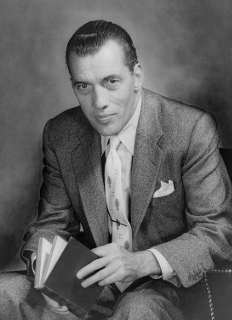
Sullivan is born on September 28, 1901, in Harlem, New York City, the son of Elizabeth F. (née Smith) and Peter Arthur Sullivan, a customs house employee, and grows up in Port Chester, New York. He is a gifted athlete in high school, earning 12 athletic letters at Port Chester High School.
Sullivan lands his first job at The Port Chester Daily Item, a local newspaper for which he had written sports news while in high school and then joins the paper full-time after graduation. In 1919, he joins The Hartford Post. The newspaper folds in his first week there but he lands another job on The New York Evening Mail as a sports reporter. After The Evening Mail closes in 1923, he bounced through a series of news jobs. In 1927, he joins The Evening Graphic as sportswriter and eventually sports editor. In 1929, when Walter Winchell moves to the New York Daily Mirror, he is made Broadway columnist.
Throughout his career as a columnist, Sullivan dabbles in entertainment, producing vaudeville shows with which he appears as master of ceremonies in the 1920s and 1930s, directing a radio program over the original WABC (now WCBS) and organizing benefit reviews for various causes. In 1941, he is host of the Summer Silver Theater, a variety program on CBS radio, with Will Bradley as bandleader and a guest star featured each week.
In 1948, producer Marlo Lewis gets the CBS network to hire Sullivan to do a weekly Sunday night TV variety show, Toast of the Town, which later becomes The Ed Sullivan Show. Debuting in June 1948, the show is originally broadcast from the Maxine Elliott’s Theatre on West 39th Street in New York City. In January 1953, it moves to CBS-TV Studio 50, at 1697 Broadway in New York City, which in 1967 is renamed the Ed Sullivan Theater. The theater is later the home of the Late Show with David Letterman and The Late Show with Stephen Colbert. Television critics initially give the new show and its host poor reviews.
In the 1950s and 1960s, Sullivan is a respected starmaker because of the number of performers who become household names after appearing on the show, including Elvis Presley, The Beatles, The Dave Clark Five, B.J. Thomas and the Jackson Five. He has a knack for identifying and promoting top talent and pays a great deal of money to secure that talent for his show.
By 1971, the show’s ratings have plummeted. In an effort to refresh its lineup, CBS cancels the program along with some of its other longtime shows. Sullivan is angered and refuses to do a final show, although he remains with the network in various other capacities and hosts a 25th anniversary special in June 1973.
In early September 1974, X-rays reveal that Sullivan has an advanced growth of esophageal cancer. Doctors give him very little time to live, and the family chooses to keep the diagnosis secret from him. Sullivan, still believing his ailment to be yet another complication from a long-standing battle with gastric ulcers, dies five weeks later on October 13, 1974, at New York’s Lenox Hill Hospital. His funeral is attended by 3,000 at St. Patrick’s Cathedral, New York, on a cold, rainy day. He is interred in a crypt at the Ferncliff Cemetery in Hartsdale, New York.



 seamus dubhghaill