seamus dubhghaill

Promoting Irish Culture and History from Little Rock, Arkansas, USA


Leave a comment

The Battle of Oulart Hill

battle-of-oulart-hill

The Battle of Oulart Hill takes place on May 27, 1798 when a rebel gathering of between 4,000 and 5,000 massacre a detachment of 110 militia sent from Wexford town to stamp out the spreading rebellion in County Wexford.

When news of the long expected rising on May 23 of the Society of United Irishmen in the midlands reaches County Wexford, it is already in an unsettled condition due to fears brought by the recently instituted anti-insurgent disarmament campaign in the county. The measures used included pitchcapping, half-hanging, and house burnings to uncover rebel conspirators. The recent arrival in Wexford of the North Cork Militia, who are notorious for their brutality in the “pacification” of Ulster, terror raids by local yeomen and finally news of the massacres at Dunlavin Green, Carlow and Carnew, have the effect of drawing people together in large groups for security, especially at night.

One such group of one hundred or so gather on the evening of May 26 at The Harrow, near the parish of Boolavogue under the tutelage of Fr. John Murphy, when they encounter a patrol of about 20 yeomen on their way to the house of a suspected rebel. They burn the suspect’s dwelling but, returning empty-handed, they encounter Fr. Murphy’s band again. The patrol are pushing their way through when a skirmish begins in which they lose two of their number, the rest fleeing with news of the killings.

The reaction on both sides is rapid. Vengeful yeomanry patrols roam, burning and killing indiscriminately, while the rebels rouse the countryside and make several raids on manors and other houses holding arms, killing more loyalists and yeomen. News of the skirmish and raids has by now reached Wexford town and, on the morning of May 27, the bulk of its garrison, 110 of the North Cork militia under Colonel Foote, are ordered north to crush the nascent rebellion. They are joined en route by some 16 yeomen cavalry under Colonel Le Hunt. However, these yeomanry are of doubtful loyalty, many (including their sergeant) having joined the rebels that morning.

The militia reaches the village of Oulart at 2:00 PM on May 27. Finding a mass of “from four to five thousand combatants” occupying the high ground of Oulart hill, they rashly advance and pursue the rebels to the summit. The rebel leaders mistakenly believe a large body of yeoman cavalry is waiting to intercept their flight, so their forces desperately turn to face their enemy and kill the whole detachment in an instant, leaving only the commanding officer, Colonel Foote, and four other survivors to escape to their base at Wexford.

Foote reports that, contrary to his orders, the militia had advanced incautiously and were surrounded and overpowered by the overwhelming rebel numbers, mostly armed with pikes, and that “great numbers” of the rebels were killed.

Following the rebel victory, almost all of North Wexford joins the rebellion. Crown forces and loyalist civilians cede control of the countryside, withdrawing to towns such as Enniscorthy, Gorey and Wexford.

(Pictured: The Battle of Oulart Hill by Fr. Edward Foran OSA (1861-1938) who also designed the 1898 Monument in Oulart Village)


Leave a comment

The Battle of the Hill of Tara

battle-of-tara-hillThe Battle of the Hill of Tara is fought on the evening of May 26, 1798 between British forces and Irish rebels involved in the Irish Rebellion of 1798, resulting in a heavy defeat for the rebels and the end of the rebellion in County Meath.

Following the outbreak of the rebellion, signaled in Meath by the prearranged signal of the ceasing of a mail coach near Turvey hill, road blocks are posted on the Navan road. Members of the Society of United Irishmen and rebels in Meath begin to assemble at the Hill of Tara. Tara is chosen as it provides strategic control of road access to the capital of Dublin and cultural significance as the former seat of the High Kings of Ireland. Between 4,000-7,000 rebels gather at the hill. Following the outbreak of the rebellion on May 23, there are incidents of violent encounters throughout the countryside as rallying rebels make their way to Tara.

Picking up yeomanry reinforcements along the way, the combined fencible, yeoman and militia force forms up at the bottom of the hill in advance of the attack on the rebels who have established a large camp on the hill. The lack of any cannon or cavalry places the rebels at a great disadvantage despite their numbers. Disciplined volley fire and flanking cavalry action combined with withering grapeshot delivered from a 6 pounder cannon drive the rebels to within the graveyard walls at the summit. There, at dusk, the rebels make their last stand on the hill until a final grenadier assault finishes them.

The loss to the fencibles, yeomen and militia is minimal. However rebel casualties have estimates running from several hundred to several thousand dead and many wounded. Many bodies are removed during the night of the 26th and 350 dead are counted still lying on the battlefield the following day. Witnesses to the burial recollect many more bodies of those rebels who died of their wounds during the night being collected from the surrounding countryside in carts. It is noted by the witnesses that the bodies are universally disembowelled by the victors. The dead are buried in a mass grave marked by the Lia Fáil stone which is moved to mark the burial site. The defeat effectively ends the United Irishmen’s rising in Meath.

(Pictured: The high cross at the site of the Battle of the Hill of Tara, County Meath)


Leave a comment

The Battle of Carlow

battle-of-carlow-monument

The Battle of Carlow takes place in Carlow, County Carlow on May 25, 1798, when Carlow rebels rise in support of the Irish Rebellion of 1798 which had begun the day before in County Kildare.

The Society of United Irishmen organisation in Carlow, led by a young brogue-maker named Mick Heydon who had taken over the leadership following the arrest of the previous leader, Peter Ivers, who was arrested with several other leading United Irishmen at Oliver Bond‘s house in March of that year, assemble on the night of May 24 and set off at dawn to attack the county town. Picking up more volunteers along the way, their numbers swell to around 1,200 and they march completely unopposed.

The attack on the town is planned to take place simultaneously from four different directions, through the four main streets. All are to converge on Potato Market.

As the various contingents advance, they are unaware that Colonel Mahon of the Ninth Dragoons has the military in the barracks and the town on the highest alert. Their every move is known to him. A strong party of military is stationed in the courthouse, which is now known as the Deighton Hall, situated immediately to the north of the bridge across the River Burren. Another party with two small cannon is stationed on the bridge. On Graigue bridge, there is an officer’s guard of yeomen. In Dublin Street and to the north, well-armed loyalists fill some large strong houses, but without military support, as the attack is known to be weak from that quarter. Tullow Street is left open and to all appearances undefended against what is expected to be the strongest attack of all. The trap is laid.

When the Rebels enter the town of Carlow, they are joined not only by the Catholic inhabitants but also by people who have secretly arrived there during the previous day and night. A crowd of approximately two hundred people break away and march through Tullow Street but when they reach Potato Market their fortunes change.

The forewarned garrison had prepared a deadly ambush, posting men at every window and rooftop. As the rebels relax after their apparently easy victory, the concealed soldiers pour volley after volley of gunfire into the masses of exposed rebels. Taken completely by surprise, the shocked and poorly armed rebels break and flee only to run into another army ambush. The survivors try to escape by breaking through adjoining houses and cabins which are set afire by the pursuing soldiers causing the deaths of 200 of the inhabitants.

In the meantime, the County Laois Rebels, on their way to aid the Carlow rebels having heard mixed reports of the battle and hearing the fate of their comrades, decide it is too late to help and change their plans. They are led by men called Redmond and Brennan. They proceed to Ballickmoyler instead, some miles outside Carlow in County Laois and there they set fire to many loyalist houses and attack the home of John Whitty, a Protestant clergyman. Twenty-one of the Rebels are killed in the fray but despite this they eventually overcome the loyalist inhabitants.

An estimated 500 rebels and civilians are killed in the streets of the town with no reported losses to the military. Another 150 are executed in the repression over the following ten days. A local man who becomes known as “Paddy the Pointer” is reported to have helped to identify escaped rebels to the military by riding around the town and pointing them out.

A memorial, pictured above, is located at Carlow-Graigue, or Graigue-Cullen as it is now known, where remains of many of those who perished that day were flung into a mass grave.


Leave a comment

Premiere of “Cathleen ni Houlihan”

cathleen-ni-houlihan

Cathleen ni Houlihan, a one-act play written by William Butler Yeats and Lady Gregory, is first performed in Dublin on April 2, 1902, with Maud Gonne in the leading role. It is first published in the October 1902 number of Samhain magazine.

The play centers on the Irish Rebellion of 1798. The play is startlingly nationalistic, in its last pages encouraging young men to sacrifice their lives for the heroine Cathleen ni Houlihan, who represents an independent and separate Irish state. The title character first appears as an old woman at the door of a family celebrating their son’s wedding. She describes her four “beautiful green fields,” representing the four provinces of Ireland, that have been unjustly taken from her. With little subtlety, she requests a blood sacrifice, declaring that “many a child will be born and there will be no father at the christening” and that “they that have red cheeks will have pale cheeks for my sake, and for all that, they will think they are well paid.” She convinces the future groom, Michael, to give up the wedding and go fight.

After the youth leaves the safety of his home to fight for her, she appears as an image of youth with “the walk of a queen,” professing of those who fight for her: “They shall be remembered forever, They shall be alive forever, They shall be speaking forever, The people shall hear them forever.”

Death is common during the time around the rising, but becoming a martyr is somethings that is admirable, so oftentimes people welcome death so they can create themselves a heroic memory. The martyrs will be remembered forever, which is why this theme is so ingrained into this play.

Cathleen ni Houlihan is such a simple play that contains many symbols and has the goal of convincing men to fight for Ireland. While the play is written about the rising of 1798, it is meant to inspire people for the 1916 Easter Rising. Throughout the whole play, there is constant reference to memory and its influence on the public. The men that die while fighting for Ireland are considered heroes, which is why memory and martyrdom are such important themes that are incorporated into works about revolution.

Cathleen ni Houlihan is about Irish Independence, but there are themes of martyrdom in other works, like the musicals about American Independence, Hamilton and 1776.

(Pictured: Scene from a production of “Cathleen ni Houlihan,” circa 1912)


Leave a comment

Death of Thomas Moore, Poet, Singer & Songwriter

thomas-moore

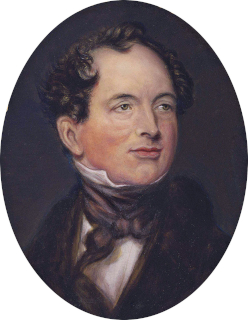
Thomas Moore, Irish poet, singer, songwriter, and entertainer, dies at Sloperton Cottage, Bromham, Wiltshire, England on February 25, 1852. He is best remembered for the lyrics of “The Minstrel Boy” and “The Last Rose of Summer.” He is a close friend of Lord Byron and Percy Bysshe Shelley.

The son of a Roman Catholic wine merchant, Moore is born at 12 Aungier Street in Dublin on May 28, 1779. From a relatively early age he shows an interest in music and other performing arts. He attends several Dublin schools including Samuel Whyte’s English Grammar School in Grafton Street where he learns the English accent with which he speaks for the rest of his life. In 1795 he graduates from Trinity College, Dublin in an effort to fulfill his mother’s dream of his becoming a lawyer.

Upon graduation from Trinity, Moore studies law in London. His major poetic work, Irish Melodies (1807–34), earns him an income of £500 annually for a quarter of a century. It contains such titles as “The Last Rose of Summer” and “Oft in the Stilly Night.” The Melodies, a group of 130 poems set to the music of Moore and Sir John Andrew Stevenson and performed for London’s aristocracy, arouses sympathy and support for the Irish nationalists, among whom Moore is a popular hero.

Lalla-Rookh (1817), a narrative poem set in an atmosphere of Oriental splendour, gives Moore a reputation among his contemporaries rivaling that of Byron and Sir Walter Scott. It is perhaps the most translated poem of its time, and it earns what is up until then the highest price paid by an English publisher for a poem (£3,000). His many satirical works, such as The Fudge Family in Paris (1818), portray the politics and manners of the Regency era.

In 1824 Moore becomes a participant in one of the most celebrated episodes of the Romantic era. He is the recipient of Byron’s memoirs, but he and the publisher John Murray burn them, presumably to protect Byron. He later brings out the Letters and Journals of Lord Byron: With Notices of his Life (1830), in which he includes a life of the poet. His lifelong espousal of the Catholic cause leads him to produce such brilliant works as his parody of agrarian insurgency, The Memoirs of Captain Rock (1824), and his courageous biography of the revolutionary leader of the Irish Rebellion of 1798, The Life and Death of Lord Edward Fitzgerald (1831).

Moore finally settles in Sloperton Cottage at Bromham, Wiltshire, England, and becomes a novelist and biographer as well as a successful poet. Around the time of the Reform Act he is invited to stand for parliament, and considers it, but nothing comes of it. In 1829 he is painted by Thomas Lawrence, one of the last works completed by the artist before his death.

Moore’s personal life is dogged by tragedy including the deaths of all five of his children within his lifetime and a stroke in later life, which disables him from performances – the activity for which he is most renowned. He dies being cared for by his wife at Sloperton on February 25, 1852. His remains are in a vault at St. Nicholas churchyard, Bromham, within view of his cottage-home, beside his daughter Anastasia.


Leave a comment

Death of Robert John Kane, Chemist & Educator

robert-john-kane

Sir Robert John Kane, chemist and educator, dies at the age of 80 in Dublin on February 16, 1890. In a distinguished career, he founds the Dublin Journal of Medical  & Chemical Science, is Vice-Chancellor of Royal University of Ireland and is director of the Museum of Irish Industry.

Kane is born at 48 Henry Street, Dublin on September 24, 1809 to John and Eleanor Kean (née Troy). His father is involved in the Irish Rebellion of 1798 and flees for a time to France where he studies chemistry. Back in Dublin, Kean (now Kane) founds the Kane Company and manufactures sulfuric acid.

Kane studies chemistry at his father’s factory and attends lectures at the Royal Dublin Society as a teenager. He publishes his first paper in 1828, Observations on the existence of chlorine in the native peroxide of manganese, in the London Quarterly Journal of Science, Literature and Art. The following year, his description of the natural arsenide of manganese results in the compound being named Kaneite in his honour. He studies medicine at Trinity College, Dublin, graduating in 1834 while working in the Meath Hospital. He is appointed Professor of Chemistry at the Apothecaries’ Hall, Dublin in 1831, which earns him the moniker of the “boy professor.” In the following year he participates in the founding of the Dublin Journal of Medical & Chemical Science.

On the strength of his book Elements of Practical Pharmacy, Kane is elected to the Royal Irish Academy in 1832. He studies acids, shows that hydrogen is electropositive, and proposes the existence of the ethyl radical. In 1836 he travels to Giessen in Germany to study organic chemistry with Justus von Liebig. In 1843 he is awarded the Royal Irish Academy’s Cunningham Medal for his work on the nature and constitution of compounds of ammonia.

Kane publishes a three-volume Elements of Chemistry in 1841–1844, and a detailed report on the Industrial Resources of Ireland. This includes the first assessment of the water power potential of the River Shannon, which is not realised until the 1920s at Ardnacrusha.

Kane becomes a political adviser on scientific and industrial matters. He serves on several commissions to enquire into the Great Irish Famine, along with Professors Lindley and Taylor, all more or less ineffective. His political and administrative work means that his contribution to chemistry ceases after about 1844.

Kane’s work on Irish industry leads to his being appointed director of the Museum of Irish Industry in Dublin in 1845. The Museum is a successor to the Museum of Economic Geology, and is housed at 51 St. Stephen’s Green.

Also in 1845 Kane becomes the first President of Queen’s College, Cork (now University College Cork). He does not spend a lot of time in Cork as he has work in Dublin, and his wife lives there. The science building on the campus is named in his honour. He is knighted in 1846.

In 1873 Kane takes up the post of National Commissioner for Education. He is elected president of the Royal Irish Academy in 1877, holding the role until 1882. In 1880 he is appointed the first chancellor of the newly created Royal University of Ireland. After a motion to admit women to the University, put forward by Prof. Samuel Haughton at Academic Council in Trinity College Dublin, March 10, 1880, Kane is appointed to a committee of ten men to look into the matter. He is opposed to the admission of women, and nothing is reported from the committee in the Council minutes for the next ten years.


Leave a comment

Death of General Jean Joseph Amable Humbert

jean-joseph-amable-humbert

General Jean Joseph Amable Humbert, French soldier and French Revolution participant who leads a failed invasion of Ireland to assist Irish rebels in the Irish Rebellion of 1798, dies on January 3, 1823, in New Orleans, Louisiana.

Born in the townland of La Coâre Saint-Nabord, outside Remiremont Vosges, Humbert is a sergeant in the National Guard of Lyon. He rapidly advances through the ranks to become brigadier general on April 9, 1794, and fights in the Western campaigns before being allocated to the Army of the Rhine.

In 1794, after serving in the Army of the Coasts of Brest, Humbert serves under Louis Lazare Hoche in the Army of the Rhin-et-Moselle. Charged to prepare for an expedition against Ireland, he takes command of the Légion des Francs under Hoche, sailing in the ill-fated Expédition d’Irlande against Bantry Bay in 1796, and is engaged in actions at sea against the Royal Navy. Contrary weather and enemy action force this expedition to withdraw. The trip home ends in a naval battle, the Action of 13 January 1797, during which Humbert, on the French ship Droits de l’Homme (1794), narrowly escapes death. As the ship is destroyed and sinks, hundreds of men perish, but Humbert is among the last to escape.

On his return to France, Humbert serves in the Army of the Sambre-et-Meuse, before being appointed to command the troops in another attempt to support a rising in Ireland in 1798. His command chiefly consists of infantry of the 70th demi-brigade with a few artillerymen and some cavalry of the 3rd Hussars, however by the time he arrives off the Irish coast the United Irish rising has already suffered defeat. The expedition is able to land in Ireland at Killala on Thursday August 23, 1798, meeting with initial success in the Battle of Castlebar where he routs the Irish Militia. Humbert subsequently declares a Republic of Connacht, with hopes of taking Dublin. However, Humbert’s small force is defeated at the Battle of Ballinamuck by the Irish Royal Army, and he is taken as a prisoner of war by the authorities. The British send the French officers home in two frigates and then massacre their Irish supporters. Humbert makes no attempt to save the Irish who bravely supported him.

Humbert is shortly repatriated in a prisoner exchange and appointed in succession to the Armies of Mayence, Danube and Helvetia, with which he serves at the Second Battle of Zurich. He then embarks for Santo Domingo and participates in several Caribbean campaigns for Napoleon Bonaparte before being accused of plundering by General Brunet. It is also rumored that he engages in an affair with Pauline Bonaparte, the wife of his commanding officer Charles Leclerc. He is returned to France by order of General Leclerc in October 1802, for “prevarications, and liaison relationships with organisers of the inhabitants and with leaders of brigands.” A committed Republican, his displeasure at Napoleon’s Imperial pretensions lead to him being dismissed in 1803 and he retires to Morbihan in Brittany.

In 1810, after brief service in the Army of the North, Humbert emigrates to New Orleans, where he makes his acquaintance with French pirate Jean Lafitte. In 1813, Humbert joins the revolutionary Juan Bautista Mariano Picornell y Gomila in an unsuccessful attempt to foment rebellion in Spanish Mexico, but the effort fails. In 1814, Humbert again leaves New Orleans and joins the rebelling forces of Buenos Aires, briefly commanding a corps, before returning home. Humbert last fights the British at the Battle of New Orleans, as a volunteer private soldier in U.S. ranks, in the War of 1812, wearing his Napoleonic uniform. General Andrew Jackson thanks him for his assistance there after the American victory in January 1815. Thereafter Humbert lives peacefully as a schoolteacher until his death on January 3, 1823.

A monument to General Humbert depicting Mother Ireland stands on Humbert Street, Ballina, County Mayo. In 1989, sculptor Carmel Gallagher unveils a bust of General Humbert in Killala, Ireland, to mark the upcoming bicentennial of the Irish Rebellion of 1798.


Leave a comment

The Death of Theobald Wolfe Tone

theobald-wolfe-tone

Theobald Wolfe Tone, Irish republican and rebel who sought to overthrow English rule in Ireland and who led a French military force to Ireland during the Irish Rebellion of 1798, dies at Provost’s Prison, Dublin on November 19, 1798, from a stab wound to his neck which he inflicted upon himself on November 12. His attempted suicide is the result of being refused a soldier’s execution by firing squad and being sentenced to death by hanging.

Wolfe Tone is born in Dublin on June 20, 1763. The son of a coach maker, he studies law and is called to the Irish bar in 1789 but soon gives up his practice. In October 1791 he helps found the Society of United Irishmen, initially a predominantly Protestant organization that works for parliamentary reforms, such as universal suffrage and Roman Catholic emancipation. In Dublin in 1792 he organizes a Roman Catholic convention of elected delegates that forces Parliament to pass the Catholic Relief Act of 1793. He himself, however, is anticlerical and hopes for a general revolt against religious creeds in Ireland as a sequel to the attainment of Irish political freedom.

By 1794 Wolfe Tone and his United Irishmen friends begin to seek armed aid from Revolutionary France to help overthrow English rule. After an initial effort fails, he goes to the United States and obtains letters of introduction from the French minister at Philadelphia to the Committee of Public Safety in Paris. In February 1796 he arrives in the French capital, presents his plan for a French invasion of Ireland, and is favourably received. The Directory then appoints one of the most brilliant young French generals, Lazare Hoche, to command the expedition and makes Tone an adjutant in the French army.

On December 16, 1796, Wolfe Tone sails from Brest with 43 ships and nearly 14,000 men. But the ships are badly handled and, after reaching the coast of west Cork and Kerry, are dispersed by a storm. He again brings an Irish invasion plan to Paris in October 1797, but the principal French military leader, Napoleon Bonaparte, takes little interest. When insurrection breaks out in Ireland in May 1798, Wolfe Tone can only obtain enough French forces to make small raids on different parts of the Irish coast. In September he enters Lough Swilly, Donegal, with 3,000 men and is captured there.

At his trial in Dublin on November 10, Wolfe Tone defiantly proclaims his undying hostility to England and his desire “in fair and open war to produce the separation of the two countries.” He is found guilty and is sentenced to be hanged. Early in the morning of November 12, 1798, the day he is to be hanged, he cuts his throat with a penknife and dies at the age of 35 in Provost’s Prison, Dublin, not far from where he was born. He is buried in Bodenstown, County Kildare, near his birthplace, and his grave is in the care of the National Graves Association.


Leave a comment

Execution of Thomas Russell, United Irishmen Co-founder

thomas-russell

Thomas Paliser Russell, co-founder and leader of the Society of United Irishmen, is executed for his part in Robert Emmet‘s rebellion on October 21, 1803.

Born in Dromahane, County Cork to an Anglican family, Russell joins the British army in 1783 and serves in India. He returns to Ireland in 1786 and commences studies in science, philosophy and politics. In July 1790 he meets Theobald Wolfe Tone in the visitors’ gallery in the Irish House of Commons and they become firm friends.

In 1790 Russell resumes his military career as a junior officer in the 64th Regiment of Foot and is posted to Belfast. The French Revolution in 1789 is warmly greeted in Belfast as are its ideals of liberty, equality, and fraternity. With his keen mind and radical ideas, Russell soon becomes a confidante of Henry Joy McCracken, James Hope, Samuel Neilson and others who are to play a prominent role in the United Irish movement. With them he develops ideas of parliamentary reform, to include the bulk of the people, and Catholic emancipation.

Russell leaves the army in July 1791 and attends a convention of the Whig Club in Belfast to mark Bastille Day. The convention is addressed by William Drennan, who proposes a brotherhood promoting separation from England and co-operation with the increasingly radical Cisalpine Club in the pursuit of political and social reforms. However, Russell notes the lack of trust between Dissenters and Catholics which is due to fears that Catholic radicalism can be bought off by religious concessions. Informing Wolfe Tone of his observations, within weeks leads to Wolfe Tone’s publication of Argument on Behalf of the Catholics of Ireland to address these suspicions. The pamphlet is extremely well received and provides the impetus for the founding of the Society of United Irishmen in Belfast on October 18, 1791.

Pressure from Dublin Castle later forces the United Irish movement to become a clandestine organisation as the would-be revolutionaries seek to continue their slow progress towards challenging the occupying British.

In 1795 Russell, Andrew Henderson, Henry Joy McCracken and Samuel Neilson lead a band of United Irishmen to the top of Cavehill overlooking the town of Belfast where they swear an oath “never to desist in our effort until we have subverted the authority of England over our country and asserted her independence” prior to Wolfe Tone’s exile to the United States. The event is noted in Dublin Castle although there is no immediate move to disband or arrest the members of the United Irishmen.

In 1796, Russell publishes an ambitious and far-sighted document, Letter to the People of Ireland, which lays out his vision of social and economic reform for the Irish nation. In addition to his stance on religious freedom, he makes clear his anti-slavery views in the Northern Star on March 17, 1792.

Russell takes an active part in organising the Society of United Irishmen becoming the United Irish commander in County Down. However, the outbreak of the French Revolution in 1793 leads to an ongoing campaign against the United Irishmen and in 1796 he is arrested and imprisoned as a “state prisoner” in Dublin. In March 1799 he and the other state prisoners are transferred to Fort George in Scotland, an extensive fortress some miles north of Inverness built in the wake of the failed Jacobite rebellion of 1745-46. He is released on condition of exile to Hamburg in June 1802 following a brief cessation in the war with France.

Not content to sit things out in Hamburg, Russell soon makes his way to Paris where he meets Robert Emmet who is planning another insurrection pending the French renewal of the war against England. He agrees to return to Ireland in March 1803 to organise the North in conjunction with James Hope. However, he meets with little success as much of the north is subdued following the suppression of the Irish Rebellion of 1798 and displays little appetite for a renewed outbreak. Finally, finding some support in the vicinity of Loughinisland, he prepares to take to the field on July 23, 1803, the date set by Emmett.

However, the plan is badly thought out and quickly collapses, forcing Russell to flee to Dublin before a shot is fired in anger. He manages to hide for a number of weeks, but Dublin is a hard place in which to hide in the days following the failure of Emmett’s rebellion as the shocked authorities have launched a massive campaign of raids and arrests in an effort to finally eradicate the United Irishmen.

Thomas Russell is promptly arrested and sent to Downpatrick Gaol where he is executed by hanging then beheaded on October 21, 1803.


Leave a comment

Execution of Bartholomew Teeling

bartholomew-teeling

Bartholomew Teeling, Irish republican who is leader of the Irish forces during the Irish Rebellion of 1798, is executed at Arbour Hill Prison in Dublin on September 24, 1798.

Teeling is born in Lisburn, County Antrim in what is now Northern Ireland in 1774 and is educated at the Dubordieu School in Lisburn and at Trinity College Dublin. His younger brother, Charles Teeling, goes on to be a writer. In 1796 he enlists in the Society of United Irishmen and travels to France to encourage support for a French invasion of Ireland.

Teeling returns to Ireland on August 22, 1798 as chief aide-de-camp to General Jean Joseph Amable Humbert and lands at Killala Bay between County Sligo and County Mayo with French troops. On August 28 the combined forces capture Castlebar and declare the Republic of Connacht. The Franco-Irish troops then push east through County Sligo but are halted by a cannon which the British forces have installed above Union Rock near Collooney.

On September 5, 1798, Teeling clears the way for the advancing Irish-French army by single handedly disabling a British gunner post during the Battle of Collooney in Sligo when he breaks from the French ranks and gallops towards Union Rock. He is armed with a pistol and shoots the cannon’s marksman and captures the cannon. The French and Irish advance and the British, after losing the cannon position, retreat towards their barracks at Sligo, leaving 60 dead and 100 prisoners.

During the Battle of Ballinamuck at Longford, Teeling and approximately 500 other Irishmen are captured along with their French allies. The French troops are treated as prisoners of war and later returned to France, however the Irish troops are executed by the British.

Teeling is court-martialled by Britain as an Irish rebel and for committing treason. To positively identify him, the authorities enlist William Coulson, a damask manufacturer from Lisburn, who identifies him as a son of Luke Teeling, a linen merchant who lived in Chapel Hill, Lisburn. Bartholomew Teeling is hanged at Arbour Hill Prison in Dublin on September 24, 1798.

In 1898, the centenary year of the battle, a statue of Teeling is erected in Carricknagat. One of the main streets in Sligo, which accommodates the Sligo Courthouse and main Garda Síochána barracks, is later named Teeling Street also in honour of Bartholomew Teeling.