seamus dubhghaill

Promoting Irish Culture and History from Little Rock, Arkansas, USA


Leave a comment

Death of General Jean Joseph Amable Humbert

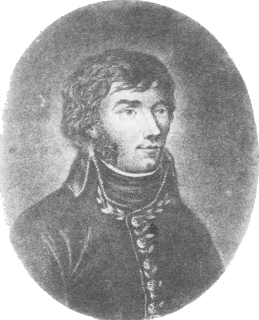
jean-joseph-amable-humbert

General Jean Joseph Amable Humbert, French soldier and French Revolution participant who leads a failed invasion of Ireland to assist Irish rebels in the Irish Rebellion of 1798, dies on January 3, 1823, in New Orleans, Louisiana.

Born in the townland of La Coâre Saint-Nabord, outside Remiremont Vosges, Humbert is a sergeant in the National Guard of Lyon. He rapidly advances through the ranks to become brigadier general on April 9, 1794, and fights in the Western campaigns before being allocated to the Army of the Rhine.

In 1794, after serving in the Army of the Coasts of Brest, Humbert serves under Louis Lazare Hoche in the Army of the Rhin-et-Moselle. Charged to prepare for an expedition against Ireland, he takes command of the Légion des Francs under Hoche, sailing in the ill-fated Expédition d’Irlande against Bantry Bay in 1796, and is engaged in actions at sea against the Royal Navy. Contrary weather and enemy action force this expedition to withdraw. The trip home ends in a naval battle, the Action of 13 January 1797, during which Humbert, on the French ship Droits de l’Homme (1794), narrowly escapes death. As the ship is destroyed and sinks, hundreds of men perish, but Humbert is among the last to escape.

On his return to France, Humbert serves in the Army of the Sambre-et-Meuse, before being appointed to command the troops in another attempt to support a rising in Ireland in 1798. His command chiefly consists of infantry of the 70th demi-brigade with a few artillerymen and some cavalry of the 3rd Hussars, however by the time he arrives off the Irish coast the United Irish rising has already suffered defeat. The expedition is able to land in Ireland at Killala on Thursday August 23, 1798, meeting with initial success in the Battle of Castlebar where he routs the Irish Militia. Humbert subsequently declares a Republic of Connacht, with hopes of taking Dublin. However, Humbert’s small force is defeated at the Battle of Ballinamuck by the Irish Royal Army, and he is taken as a prisoner of war by the authorities. The British send the French officers home in two frigates and then massacre their Irish supporters. Humbert makes no attempt to save the Irish who bravely supported him.

Humbert is shortly repatriated in a prisoner exchange and appointed in succession to the Armies of Mayence, Danube and Helvetia, with which he serves at the Second Battle of Zurich. He then embarks for Santo Domingo and participates in several Caribbean campaigns for Napoleon Bonaparte before being accused of plundering by General Brunet. It is also rumored that he engages in an affair with Pauline Bonaparte, the wife of his commanding officer Charles Leclerc. He is returned to France by order of General Leclerc in October 1802, for “prevarications, and liaison relationships with organisers of the inhabitants and with leaders of brigands.” A committed Republican, his displeasure at Napoleon’s Imperial pretensions lead to him being dismissed in 1803 and he retires to Morbihan in Brittany.

In 1810, after brief service in the Army of the North, Humbert emigrates to New Orleans, where he makes his acquaintance with French pirate Jean Lafitte. In 1813, Humbert joins the revolutionary Juan Bautista Mariano Picornell y Gomila in an unsuccessful attempt to foment rebellion in Spanish Mexico, but the effort fails. In 1814, Humbert again leaves New Orleans and joins the rebelling forces of Buenos Aires, briefly commanding a corps, before returning home. Humbert last fights the British at the Battle of New Orleans, as a volunteer private soldier in U.S. ranks, in the War of 1812, wearing his Napoleonic uniform. General Andrew Jackson thanks him for his assistance there after the American victory in January 1815. Thereafter Humbert lives peacefully as a schoolteacher until his death on January 3, 1823.

A monument to General Humbert depicting Mother Ireland stands on Humbert Street, Ballina, County Mayo. In 1989, sculptor Carmel Gallagher unveils a bust of General Humbert in Killala, Ireland, to mark the upcoming bicentennial of the Irish Rebellion of 1798.


Leave a comment

The Death of Theobald Wolfe Tone

theobald-wolfe-tone

Theobald Wolfe Tone, Irish republican and rebel who sought to overthrow English rule in Ireland and who led a French military force to Ireland during the Irish Rebellion of 1798, dies at Provost’s Prison, Dublin on November 19, 1798, from a stab wound to his neck which he inflicted upon himself on November 12. His attempted suicide is the result of being refused a soldier’s execution by firing squad and being sentenced to death by hanging.

Wolfe Tone is born in Dublin on June 20, 1763. The son of a coach maker, he studies law and is called to the Irish bar in 1789 but soon gives up his practice. In October 1791 he helps found the Society of United Irishmen, initially a predominantly Protestant organization that works for parliamentary reforms, such as universal suffrage and Roman Catholic emancipation. In Dublin in 1792 he organizes a Roman Catholic convention of elected delegates that forces Parliament to pass the Catholic Relief Act of 1793. He himself, however, is anticlerical and hopes for a general revolt against religious creeds in Ireland as a sequel to the attainment of Irish political freedom.

By 1794 Wolfe Tone and his United Irishmen friends begin to seek armed aid from Revolutionary France to help overthrow English rule. After an initial effort fails, he goes to the United States and obtains letters of introduction from the French minister at Philadelphia to the Committee of Public Safety in Paris. In February 1796 he arrives in the French capital, presents his plan for a French invasion of Ireland, and is favourably received. The Directory then appoints one of the most brilliant young French generals, Lazare Hoche, to command the expedition and makes Tone an adjutant in the French army.

On December 16, 1796, Wolfe Tone sails from Brest with 43 ships and nearly 14,000 men. But the ships are badly handled and, after reaching the coast of west Cork and Kerry, are dispersed by a storm. He again brings an Irish invasion plan to Paris in October 1797, but the principal French military leader, Napoleon Bonaparte, takes little interest. When insurrection breaks out in Ireland in May 1798, Wolfe Tone can only obtain enough French forces to make small raids on different parts of the Irish coast. In September he enters Lough Swilly, Donegal, with 3,000 men and is captured there.

At his trial in Dublin on November 10, Wolfe Tone defiantly proclaims his undying hostility to England and his desire “in fair and open war to produce the separation of the two countries.” He is found guilty and is sentenced to be hanged. Early in the morning of November 12, 1798, the day he is to be hanged, he cuts his throat with a penknife and dies at the age of 35 in Provost’s Prison, Dublin, not far from where he was born. He is buried in Bodenstown, County Kildare, near his birthplace, and his grave is in the care of the National Graves Association.


Leave a comment

Execution of Thomas Russell, United Irishmen Co-founder

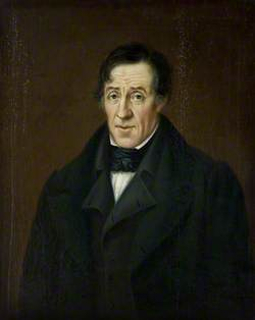
thomas-russell

Thomas Paliser Russell, co-founder and leader of the Society of United Irishmen, is executed for his part in Robert Emmet‘s rebellion on October 21, 1803.

Born in Dromahane, County Cork to an Anglican family, Russell joins the British army in 1783 and serves in India. He returns to Ireland in 1786 and commences studies in science, philosophy and politics. In July 1790 he meets Theobald Wolfe Tone in the visitors’ gallery in the Irish House of Commons and they become firm friends.

In 1790 Russell resumes his military career as a junior officer in the 64th Regiment of Foot and is posted to Belfast. The French Revolution in 1789 is warmly greeted in Belfast as are its ideals of liberty, equality, and fraternity. With his keen mind and radical ideas, Russell soon becomes a confidante of Henry Joy McCracken, James Hope, Samuel Neilson and others who are to play a prominent role in the United Irish movement. With them he develops ideas of parliamentary reform, to include the bulk of the people, and Catholic emancipation.

Russell leaves the army in July 1791 and attends a convention of the Whig Club in Belfast to mark Bastille Day. The convention is addressed by William Drennan, who proposes a brotherhood promoting separation from England and co-operation with the increasingly radical Cisalpine Club in the pursuit of political and social reforms. However, Russell notes the lack of trust between Dissenters and Catholics which is due to fears that Catholic radicalism can be bought off by religious concessions. Informing Wolfe Tone of his observations, within weeks leads to Wolfe Tone’s publication of Argument on Behalf of the Catholics of Ireland to address these suspicions. The pamphlet is extremely well received and provides the impetus for the founding of the Society of United Irishmen in Belfast on October 18, 1791.

Pressure from Dublin Castle later forces the United Irish movement to become a clandestine organisation as the would-be revolutionaries seek to continue their slow progress towards challenging the occupying British.

In 1795 Russell, Andrew Henderson, Henry Joy McCracken and Samuel Neilson lead a band of United Irishmen to the top of Cavehill overlooking the town of Belfast where they swear an oath “never to desist in our effort until we have subverted the authority of England over our country and asserted her independence” prior to Wolfe Tone’s exile to the United States. The event is noted in Dublin Castle although there is no immediate move to disband or arrest the members of the United Irishmen.

In 1796, Russell publishes an ambitious and far-sighted document, Letter to the People of Ireland, which lays out his vision of social and economic reform for the Irish nation. In addition to his stance on religious freedom, he makes clear his anti-slavery views in the Northern Star on March 17, 1792.

Russell takes an active part in organising the Society of United Irishmen becoming the United Irish commander in County Down. However, the outbreak of the French Revolution in 1793 leads to an ongoing campaign against the United Irishmen and in 1796 he is arrested and imprisoned as a “state prisoner” in Dublin. In March 1799 he and the other state prisoners are transferred to Fort George in Scotland, an extensive fortress some miles north of Inverness built in the wake of the failed Jacobite rebellion of 1745-46. He is released on condition of exile to Hamburg in June 1802 following a brief cessation in the war with France.

Not content to sit things out in Hamburg, Russell soon makes his way to Paris where he meets Robert Emmet who is planning another insurrection pending the French renewal of the war against England. He agrees to return to Ireland in March 1803 to organise the North in conjunction with James Hope. However, he meets with little success as much of the north is subdued following the suppression of the Irish Rebellion of 1798 and displays little appetite for a renewed outbreak. Finally, finding some support in the vicinity of Loughinisland, he prepares to take to the field on July 23, 1803, the date set by Emmett.

However, the plan is badly thought out and quickly collapses, forcing Russell to flee to Dublin before a shot is fired in anger. He manages to hide for a number of weeks, but Dublin is a hard place in which to hide in the days following the failure of Emmett’s rebellion as the shocked authorities have launched a massive campaign of raids and arrests in an effort to finally eradicate the United Irishmen.

Thomas Russell is promptly arrested and sent to Downpatrick Gaol where he is executed by hanging then beheaded on October 21, 1803.


Leave a comment

Execution of Bartholomew Teeling

bartholomew-teeling

Bartholomew Teeling, Irish republican who is leader of the Irish forces during the Irish Rebellion of 1798, is executed at Arbour Hill Prison in Dublin on September 24, 1798.

Teeling is born in Lisburn, County Antrim in what is now Northern Ireland in 1774 and is educated at the Dubordieu School in Lisburn and at Trinity College Dublin. His younger brother, Charles Teeling, goes on to be a writer. In 1796 he enlists in the Society of United Irishmen and travels to France to encourage support for a French invasion of Ireland.

Teeling returns to Ireland on August 22, 1798 as chief aide-de-camp to General Jean Joseph Amable Humbert and lands at Killala Bay between County Sligo and County Mayo with French troops. On August 28 the combined forces capture Castlebar and declare the Republic of Connacht. The Franco-Irish troops then push east through County Sligo but are halted by a cannon which the British forces have installed above Union Rock near Collooney.

On September 5, 1798, Teeling clears the way for the advancing Irish-French army by single handedly disabling a British gunner post during the Battle of Collooney in Sligo when he breaks from the French ranks and gallops towards Union Rock. He is armed with a pistol and shoots the cannon’s marksman and captures the cannon. The French and Irish advance and the British, after losing the cannon position, retreat towards their barracks at Sligo, leaving 60 dead and 100 prisoners.

During the Battle of Ballinamuck at Longford, Teeling and approximately 500 other Irishmen are captured along with their French allies. The French troops are treated as prisoners of war and later returned to France, however the Irish troops are executed by the British.

Teeling is court-martialled by Britain as an Irish rebel and for committing treason. To positively identify him, the authorities enlist William Coulson, a damask manufacturer from Lisburn, who identifies him as a son of Luke Teeling, a linen merchant who lived in Chapel Hill, Lisburn. Bartholomew Teeling is hanged at Arbour Hill Prison in Dublin on September 24, 1798.

In 1898, the centenary year of the battle, a statue of Teeling is erected in Carricknagat. One of the main streets in Sligo, which accommodates the Sligo Courthouse and main Garda Síochána barracks, is later named Teeling Street also in honour of Bartholomew Teeling.


Leave a comment

Birth of James Hope, United Irishmen Leader

james-hope

James “Jemmy” Hope, Society of United Irishmen leader who fights in the Irish Rebellions of 1798 and 1803 against British rule in Ireland, is born in Templepatrick, County Antrim on August 25, 1764.

Hope is born to a Presbyterian family originally of Covenanter stock. He is apprenticed as a linen weaver but attends night school in his spare time. Influenced by the American Revolution, he joins the Irish Volunteers, but upon the demise of that organisation and further influenced by the French Revolution, he joins the Society of the United Irishmen in 1795.

Hope quickly establishes himself as a prominent organiser and is elected to the central committee in Belfast, becoming close to leaders such as Samuel Neilson, Thomas Russell, and Henry Joy McCracken. He is almost alone among the United Irish leaders in targeting manufacturers as well as landowners as the enemies of all radicals. In 1796, he is sent to Dublin to assist the United Irish organisation there to mobilise support among the working classes, and he is successful in establishing several branches throughout the city and especially in The Liberties area. He also travels to counties in Ulster and Connacht, disseminating literature and organizing localities.

Upon the outbreak of the 1798 rebellion in Leinster, Hope is sent on a failed mission to Belfast by Henry Joy McCracken to brief the leader of the County Down United Irishmen, Rev. William Steel Dickson, with news of the planned rising in County Antrim, unaware that Dickson had been arrested only a couple of days before. He manages to escape from Belfast in time to take part in the Battle of Antrim where he plays a skillful and courageous role with his “Spartan Band,” in covering the retreat of the fleeing rebels after their defeat.

Hope manages to rejoin McCracken and his remaining forces after the battle at their camp upon Slemish mountain, but the camp gradually disperses, and the dwindling band of insurgents are then forced to go on the run. He successfully eludes capture, but his friend McCracken is captured and executed on July 17. Upon the collapse of the general rising, he refuses to avail of the terms of an amnesty offered by Charles Cornwallis, 1st Marquess Cornwallis on the grounds that to do so would be “not only a recantation of one’s principles, but a tacit acquiescence in the justice of the punishment which had been inflicted on thousands of my unfortunate associates.”

Hope lives the years following 1798 on the move between counties Dublin, Meath and Westmeath but is finally forced to flee Dublin following the failure of Robert Emmet‘s rebellion in 1803. He returns to the north and evades the authorities attentions in the ensuing repression by securing employment with a sympathetic friend from England. He is today regarded as the most egalitarian and socialist of all the United Irish leadership.

James Hope dies in 1846 and is buried in the Mallusk cemetery, Newtownabbey. His gravestone features the outline of a large dog, which supposedly brought provisions to him and his compatriots when they were hiding following the Battle of Antrim.


Leave a comment

Birth of Elizabeth Gurley Flynn, Activist & Feminist

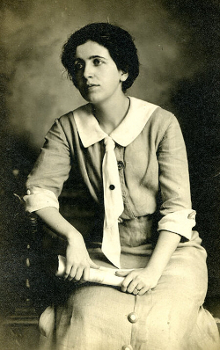
elizabeth-gurley-flynn

Elizabeth Gurley Flynn, labor leader, activist, and feminist who played a leading role in the Industrial Workers of the World (IWW), is born in Concord, New Hampshire on August 7, 1890. She is a founding member of the American Civil Liberties Union and a visible proponent of women’s rights, birth control, and women’s suffrage.

Flynn’s family moves to New York in 1900, where she is educated in the local public schools. She grows up being regaled by tales of Irish revolutionaries. According to their oral tradition all four of her great-grandfathers, Flynn, Gurley, Conneran, and Ryan, are members of the Society of United Irishmen, with grandfather Flynn being one of the leaders in County Mayo when the French fleet lands there during the Irish Rebellion of 1798. Her parents introduce her to socialism. When she is only fifteen, she gives her first public speech, “What Socialism Will Do for Women,” at the Harlem Socialist Club.

In 1907, Flynn becomes a full-time organizer for the Industrial Workers of the World. Over the next few years, she organizes campaigns among garment workers in Pennsylvania, silk weavers in New Jersey, restaurant workers in New York, miners in Minnesota, Missoula, Montana, and Spokane, Washington and textile workers in Massachusetts. She is arrested ten times during this period but is never convicted of any criminal activity. It is a plea bargain, on the other hand, that results in her expulsion from the IWW in 1916, along with fellow organizer Joe Ettor.

A founding member of the American Civil Liberties Union (ACLU) in 1920, Flynn plays a leading role in the campaign against the conviction of Nicola Sacco and Bartolomeo Vanzetti. She is particularly concerned with women’s rights, supporting birth control and women’s suffrage. She also criticizes the leadership of trade unions for being male-dominated and not reflecting the needs of women.

Between 1926 and 1936, Flynn lives in southwest Portland, Oregon with birth control activist, suffragette, and Wobbly Marie Equi where she is an active and vocal supporter of the 1934 West Coast Longshoremen’s Strike. In 1936, she joins the Communist Party and writes a feminist column for its journal, the Daily Worker. Two years later, she is elected to the national committee. Her membership in the Party leads to her ouster from the board of the ACLU in 1940.

During World War II, Flynn plays an important role in the campaign for equal economic opportunity and pay for women and the establishment of day care centers for working mothers. In 1942, she runs for the United States Congress at-large in New York and receives 50,000 votes. In July 1948, a dozen leaders of the Communist Party are arrested and accused of violating the Smith Act by advocating the overthrow of the U.S. government by force and violence. After they are convicted in the Foley Square trial they appeal to the Supreme Court, which upholds their conviction in Dennis v. United States.

Flynn launches a campaign for their release but, in June 1951, is herself arrested in the second wave of arrests and prosecuted under the Smith Act. After a nine-month trial, she is found guilty and serves two years in Federal Prison Camp, Alderson near Alderson, West Virginia. She later writes a prison memoir, The Alderson Story: My Life as a Political Prisoner.

After her release from prison, Flynn resumes her activities for leftist and Communist causes. She runs for the New York City Council as a Communist in 1957, garnering a total of 710 votes. She becomes national chairwoman of the Communist Party of the United States in 1961 and makes several visits to the Soviet Union.

Elizabeth Gurley Flynn dies on September 5, 1964, while on one of her visits to the Soviet Union. The Soviet government gives her a state funeral in Red Square with over 25,000 people attending. In accordance with her wishes, her remains are flown to the United States for burial in Chicago‘s German Waldheim Cemetery, near the graves of Eugene Dennis, Bill Haywood, Emma Goldman, and the Haymarket Riot Martyrs.

In 1978, the ACLU posthumously reinstates her membership.


Leave a comment

First Horse-Drawn Coach Service in Ireland

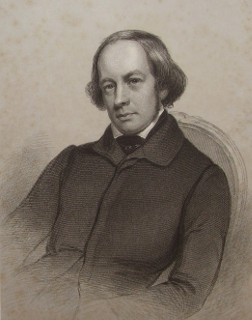
charles-bianconi

Charles Bianconi, Italo-Irish entrepreneur, opens his first horse-drawn coach service, between Clonmel and Cahir, County Tipperary, a distance of 10 miles, on July 6, 1815.

Born Carlo Bianconi, in Tregolo, Costa Masnaga, Italy on September 24, 1786, he moves from an area poised to fall to Napoleon and travels to Ireland via England in 1802, just four years after the Irish Rebellion of 1798. At the time, British fear of continental invasion results in an acute sense of insecurity and additional restrictions on the admission of foreigners. He is christened Carlo but anglicises his name to Charles when he arrives in Ireland in 1802.

At the age of 16, Bianconi works as an engraver and printseller in Dublin, near Essex Street, under his sponsor, Andrea Faroni. In 1806 he sets up an engraving and print shop in Carrick-on-Suir, moving to Clonmel in 1815.

Bianconi eventually becomes famous for his innovations in transport and is twice elected mayor of Clonmel. He is the founder of public transportation in Ireland, at a time preceding railways. He establishes regular horse-drawn carriage services on various routes beginning in 1815. These are known as “Bianconi coaches” and the first service, Clonmel to Cahir, which takes five to eight hours by boat, takes only two hours by Bianconi’s carriage. Travel on a coach costs one penny farthing a mile.

Bianconi’s carriage services continue into the 1850s and later, by which time there are a number of railway services in the country. The Bianconi coaches continue to be well-patronised, by offering connections from various termini, one of the first and few examples of an integrated transport system in Ireland. By 1865 Bianconi’s annual income is about £35,000.

Bianconi also establishes a series of inns, the Bianconi Inns, some of which still exist; in Piltown, County Kilkenny and Killorglin, County Kerry.

In 1832 Bianconi marries Eliza Hayes, the daughter of a wealthy Dublin stockbroker. They have three children. Bianconi dies on September 22, 1875 at Longfield House, Boherlahan, County Tipperary.

Having donated land to the parish of Boherlahan for the construction of a parish church, Bianconi wishes to be buried on the Church grounds. He, and his family, are buried in a side chapel, separate from the parish church in Boherlahan, approximately 5 miles from Cashel, County Tipperary.


2 Comments

Execution of Father John Murphy

father-john-murphy

John Murphy, Irish Roman Catholic priest and one of the leaders of the Irish Rebellion of 1798 in Wexford, is executed by British soldiers on July 2, 1798.

Murphy is born at Tincurry in the Parish of Ferns, County Wexford in 1753, the youngest son of Thomas and Johanna Murphy. Studying for the priesthood is then illegal in Ireland and so priests are trained abroad. He sails for Spain in early 1772 and studies for the priesthood in Seville, where many of the clergy in Ireland receive their education due to the persecution of Catholics as a result of the Penal Laws.

Fr. Murphy is initially against rebellion and actively encourages his parishioners to give up their arms and sign an oath of allegiance to the British Crown. On May 26, 1798, a company of men armed with pikes and firearms gather under Fr. Murphy to decide what to do for safety against the regular yeomanry patrols at a townland called the Harrow. At about eight o’clock that evening, a patrol of some twenty Camolin cavalry spot the group and approach them, demanding to know their business. They leave after a brief confrontation, having burned the cabin of a missing suspected rebel whom they had been tasked to arrest. As the patrol returns, they pass by Fr. Murphy’s group, who are now angry at the sight of the burning cabin. As the cavalry passes by the men an argument develops, followed by stones being thrown and then an all-out fight between the men and the troops. Most of the cavalry quickly flees, but two of the yeomen are killed. The Wexford Rebellion has begun and Fr. Murphy acts quickly. He sends word around the county that the rebellion has started and organises raids for arms on loyalist strongholds.

Parties of mounted yeomen respond by killing suspects and burning homes, causing a wave of panic. The countryside is soon filled with masses of people fleeing the terror and heading for high ground for safety in numbers. On the morning of May 28, a crowd of some 3,000 gather on Kilthomas Hill but is attacked and put to flight by Crown forces who kill 150. At Oulart Hill, a crowd of over 4,000 combatants gather, plus many women and children. Spotting an approaching North Cork Militia party of 110 rank and file, Fr. Murphy and the other local United Irishmen leaders such as Edward Roche, Morgan Byrne, Thomas Donovan, George Sparks and Fr. Michael Murphy organise their forces and massacre all but five of the heavily outnumbered detachment.

The victory is followed by a successful assault on the weak garrison of Enniscorthy, which swells the Irish rebel forces and their weapon supply. However, defeats at New Ross, Arklow, and Bunclody mean a loss of men and weapons. Fr. Murphy returns to the headquarters of the rebellion at Vinegar Hill before the Battle of Arklow and is attempting to reinforce its defences. Twenty thousand British troops arrive at Wexford with artillery and defeat the rebels, armed only with pikes, at the Battle of Vinegar Hill on June 21. However, due to a lack of coordination among the British columns, the bulk of the rebel army escapes to fight on.

Eluding the crown forces by passing through the Scullogue Gap, Fr. Murphy and other leaders try to spread the rebellion across the country by marching into Kilkenny and towards the midlands. On June 26, 1798, at the Battle of Kilcumney Hill in County Carlow, their forces are tricked and defeated. Fr. Murphy and his bodyguard, James Gallagher, become separated from the main surviving group. Fr. Murphy decides to head for the safety of a friend’s house in Tullow, County Carlow, when the path clears. They are sheltered by friends and strangers. One Protestant woman, asked by searching yeomen if any strangers have passed, answers “No strangers passed here today.” When she is later questioned about why she had not said Murphy and Gallagher had not passed, she explains that they had not passed because they were still in her house when she was questioned.

After a few days, some yeomen capture Murphy and Gallagher in a farmyard on July 2, 1798. They are brought to Tullow later that day where they are brought before a military tribunal, charged with committing treason against the British crown, and sentenced to death. Both men are tortured in an attempt to extract more information from them. Fr. Murphy is stripped, flogged, hanged, decapitated, his corpse burned in a barrel of tar and his head impaled on a spike. This final gesture is meant to be a warning to all others who fight against the British Crown.

Fr. John Murphy’s remains are buried in the old Catholic graveyard with Fr. Ned Redmond in Ferns, County Wexford.


Leave a comment

Death of John Kelly, United Irish Leader

john-kelly-marker

John Kelly, also known as Kelly of Killanne, a leader of the Society of United Irishmen, is hanged along with seven other rebel leaders on Wexford bridge on June 22, 1798.

Kelly lives in the town of Killanne in the parish of Rathnure and is a United Irish leader who fights in the Irish Rebellion of 1798.

While Kelly is obviously well known to rebel and loyalist alike during the short duration of the Wexford Rebellion, almost nothing is known of him outside this time. He is one of the leaders of the rebel victory at the Battle of Three Rocks which leads to the capture of Wexford town but is later seriously wounded while leading a rebel column at the Battle of New Ross.

Kelly is under orders from the Wexford commander Bagenal Harvey to attack the British outposts around New Ross but on no account to attack the town itself.

The rebels outnumber the British forces, and so Harvey sends a messenger to give them an opportunity to surrender. The messenger is shot while carrying a white flag. This angers the rebels who begin the attack without receiving the official order from Harvey.

Kelly’s column of 800 men attacks and breaks through Ross’s “Three Bullet Gate” and proceeds into the town itself. After initial success, they are eventually beaten back by British troops and Kelly is wounded in the leg. He is moved to Wexford to recuperate but, after the fall of Wexford on June 21, he is dragged from his bed, tried and sentenced to death.

John Kelly is hanged on June 22, 1798, along with seven other rebel leaders on Wexford bridge, after which his body is decapitated, the trunk thrown into the River Slaney and the head kicked through the streets before being set on display on a spike.

Kelly’s exploits are commemorated in the famous Irish ballad Kelly the Boy From Killanne written by Patrick Joseph McCall (1861–1919). Don Partridge records a solo acoustic version of the song in 1964, and later regularly plays the song during street busking, before and after his hit records in the late 1960s.

(Pictured: The grave of John Kelly, Kelly of Killanne, in Saint Anne’s Churchyard, Killanne, County Wexford)


1 Comment

The Battle of New Ross

battle-of-new-ross

The Battle of New Ross takes place in County Wexford in southeastern Ireland on June 5, 1798, during the Irish Rebellion of 1798. It is fought between the Irish Republican insurgents called the United Irishmen and British Crown forces composed of regular soldiers, militia and yeomanry. The attack on the town of New Ross on the River Barrow, is an attempt by the recently victorious rebels to break out of County Wexford across the River Barrow and to spread the rebellion into County Kilkenny and the outlying province of Munster.

On June 4, 1798, the rebels advance from their camp on Carrigbyrne Hill to Corbet Hill, just outside the town of New Ross. The battle, the bloodiest of the 1798 rebellion, begins at dawn on June 5 when the Crown garrison is attacked by a force of almost 10,000 rebels, massed in three columns outside the town. The attack has been expected since the fall of Wexford to the rebels on May 30 and the British garrison of 2,000 has prepared defences both outside and inside the town. Trenches are dug and manned by skirmishers on the approaches to the town while cannon are stationed facing all the rapidly falling approaches and narrow streets of the town to counter the expected mass charges by the rebels, who are mainly armed with pikes.

Bagenal Harvey, the United Irish Leader recently released from captivity following the rebel seizure of Wexford, attempts to negotiate surrender of New Ross but the rebel emissary Matt Furlong is shot down by Crown outposts while bearing a flag of truce. His death provokes a furious charge by an advance guard of 500 insurgents led by John Kelly who has instructions to seize the Three Bullet Gate and wait for reinforcements before pushing into the town. To aid their attack, the rebels first drive a herd of cattle through the gate.

Another rebel column attacks the Priory Gate but the third pulls back from the Market Gate intimidated by the strong defences. Seizing the opportunity, the garrison sends a force of cavalry out the Market Gate to attack and scatter the remaining two hostile columns from the flanks. However, the rebel rump has not yet deployed and upon spotting the British manoeuvre, rally the front ranks who stand and break the cavalry charge with massed pikes.

The encouraged rebel army then sweeps past the Crown outposts and seizes the Three Bullet Gate causing the garrison and populace to flee in panic. Without pausing for reinforcement, the rebels break into the town attacking simultaneously down the steeply sloping streets but meet with strong resistance from well-prepared second lines of defence of the well-armed soldiers. Despite horrific casualties the rebels manage to seize two-thirds of the town by using the cover of smoke from burning buildings and force the near withdrawal of all Crown forces from the town. However, the rebels’ limited supplies of gunpowder and ammunition force them to rely on the pike and blunts their offensive. The military manages to hold on and, following the arrival of reinforcements, launches a counterattack before noon which finally drives the exhausted rebels from the town.

No effort to pursue the withdrawing rebels is made but when the town has been secured, a massacre of prisoners, trapped rebels and civilians of both sympathies alike begins which continues for days. Hundreds are burned alive when rebel casualty stations are torched by victorious troops. More rebels are believed to have been killed in the aftermath of the battle than during the actual fighting. Reports of such atrocities brought by escaping rebels are believed to have influenced the retaliatory murder of over 100 loyalists in the flames of Scullabogue Barn.

Casualties in the Battle of New Ross are estimated at 2,800 to 3,000 Rebels and 200 Garrison dead. Most of the dead Rebels are thrown in the River Barrow or buried in a mass grave outside the town walls a few days after the Battle. The remaining rebel army reorganises and forms a camp at Sliabh Coillte some five miles to the east but never attempts to attack the town again. They later attack General John Moore‘s invading column but are defeated at the Battle of Foulksmills on June 20, 1798.

(Pictured: The 1845 illustration “The Battle of Ross” by George Cruikshank)