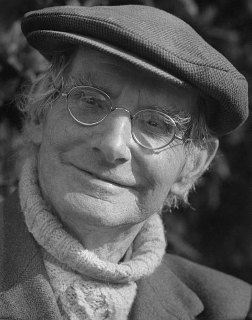
James Plunkett Kelly, known by the pen name James Plunkett, Irish novelist, playwright, and short-story writer, dies in Dublin on May 28, 2003. His works, which deal with Ireland’s political and labour problems, contain vivid portraits of working-class and middle-class Dubliners.
Plunkett is born in Sandymount, Dublin on May 21, 1920, and grows up among the Dublin working class and they, along with the petite bourgeoisie and lower intelligentsia, make up the bulk of the dramatis personæ of his oeuvre. He is educated at Synge Street CBS, a Christian Brothers school located on Synge Street in Dublin. He leaves school at the age of seventeen. He later studies violin and viola at the Dublin College of Music and plays professionally in Dublin. He serves for a time as an official in the Workers’ Union of Ireland.
Plunkett’s best-known works are the novel Strumpet City, set in Dublin in the years leading up to the Dublin lock-out of 1913 and during the course of the strike, and the short stories in the collection The Trusting and the Maimed. His other works include a radio play on James Larkin, who figures prominently in his work.
During the 1960s, Plunkett works as a producer at Telefís Éireann. He wins two Jacob’s Awards, in 1965 and 1969, for his TV productions. In 1971 he writes and presents “Inis Fail – Isle of Destiny,” his very personal appreciation of Ireland. It is the final episode of the BBC series Bird’s Eye View, shot entirely from a helicopter, and the first co-production between the BBC and RTÉ. Plunkett is a member of Aosdána.
James Plunkett dies in a Dublin nursing home on May 28, 2003, just a week after his 83rd birthday. He is cremated at Mount Jerome Cemetery and Crematorium in Dublin.
A second-year class, “2 Plunkett” at Synge Street CBS, is named in honour of James Plunkett.
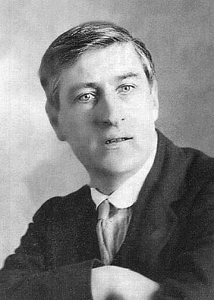
Seán O’Casey, Irish playwright renowned for realistic dramas of the Dublin slums in war and revolution, in which tragedy and comedy are juxtaposed in a way new to the theatre of his time, is born at 85 Upper Dorset Street in Dublin on March 30, 1880.
Born as John Casey into a lower middle-class Irish Protestant family, his father dies when he is six, and thereafter the family becomes progressively poorer. With only three years of formal schooling, he educates himself by reading. He starts work at 14, mostly at manual labour, including several years with the Irish railways.
O’Casey becomes caught up in the cause of Irish nationalism, and he changes his name to its Irish form and learns the Irish language. His attitudes are greatly influenced by the poverty and squalor he witnesses in Dublin’s slums and by the teachings of the Irish labour leader Jim Larkin. He becomes active in the labour movement and writes for The Irish Worker. He also joins the Irish Citizen Army, a paramilitary arm of the Irish labour unions, and draws up its constitution in 1914. At this time, he becomes disillusioned with the Irish nationalist movement because its leaders put nationalist ideals before socialist ones. He does not take part in the 1916 Easter Rising against the British authorities.
Disgusted with the existing political parties, he turns his energies to drama. His tragicomedies reflect in part his mixed feelings about his fellow slum dwellers, seeing them as incapable of giving a socialist direction to the Irish cause but at the same time admirable for their unconquerable spirit.
After several of his plays have been rejected, the Abbey Theatre in Dublin produces The Shadow of a Gunman (1923), set during the guerrilla warfare between the Irish Republican Army and British forces. In 1924 the Abbey stages Juno and the Paycock, his most popular play, set during the period of civil war over the terms of Irish independence. The Plough and the Stars (1926), with the 1916 Easter Rising as its background, causes riots at the Abbey by patriots who think the play denigrates Irish heroes. When first produced in the 1920s, these plays have an explosive effect on the audiences at the Abbey and help to enlarge the theatre’s reputation.
O’Casey goes to England in 1926, meets the Irish actress Eileen Carey Reynolds, marries her, and henceforth makes England his home. His decision to live outside Ireland is motivated in part by the Abbey’s rejection of The Silver Tassie, a partly Expressionist antiwar drama produced in England in 1929. Another Expressionist play, Within the Gates (1934), follows, in which the modern world is symbolized by the happenings in a public park. The Star Turns Red (1940) is an antifascist play, and the semiautobiographical Red Roses for Me (1946) is set in Dublin at the time of the Irish railways strike of 1911.
O’Casey’s later plays, given to fantasy and ritual and directed against the life-denying puritanism he believes has beset Ireland, include Cock-a-Doodle Dandy (1949), The Bishop’s Bonfire (1955), and The Drums of Father Ned (1958). His last full-length play is a satire on Dublin intellectuals, Behind the Green Curtains, published in 1961.
O’Casey’s three indisputably great plays are The Shadow of a Gunman, Juno and the Paycock, and The Plough and the Stars. All are tragicomedies set in the slums of Dublin during times of war and revolution. Violent death and the everyday realities of tenement life throw into relief the blustering rhetoric and patriotic swagger of men caught up in the struggle for Irish independence. The resulting ironic juxtapositions of the comic and tragic reveal the waste of war and the corrosive effects of poverty. His gifts are for vivid characterization and working-class language and, though he portrays war and poverty, he writes some of the funniest scenes in modern drama. His later plays are not considered as powerful or moving as his earlier realistic plays. In his later plays he tends to abandon vigorous characterization in favour of expressionism and symbolism, and sometimes the drama is marred by didacticism.
Six volumes of O’Casey’s autobiography appeared from 1939 to 1956. They are later collected as Mirror in My House (1956) in the United States and as Autobiographies (1963) in Great Britain. O’Casey’s letters from 1910 to 1941 are edited by David Krause in two volumes (1975, 1980).
William Martin Murphy, Irish businessman, journalist and politician, is born on January 6, 1845, in Castletownbere, County Cork. A member of parliament (MP) representing Dublin from 1885 to 1892, he is dubbed “William Murder Murphy” among Dublin workers and the press due to the Dublin Lockout of 1913. He is arguably both Ireland’s first “press baron” and the leading promoter of tram development.
Murphy is educated at Belvedere College. When his father, the building contractor Denis William Murphy dies in 1863, he takes over the family business. His enterprise and business acumen expand the business, and he builds churches, schools and bridges throughout Ireland, as well as railways and tramways in Britain, West Africa and South America.
When the Irish Parliamentary Party splits in 1890 over Charles Stewart Parnell‘s leadership, Murphy sides with the majority Anti-Parnellites. However, Dublin emerges as a Parnellite stronghold and in the bitter general election of 1892, Murphy loses his seat by over three to one to a Parnellite newcomer, William Field.
Murphy is the principal financial backer of the “Healyite” newspapers the National Press and the Daily Nation. His support for Tim Healy attracts the hostility of the majority anti-Parnellite faction led by John Dillon. He makes two attempts to return to Parliament, at South Kerry in 1895 and North Mayo in 1900, but both are unsuccessful because of Dillonite opposition.
In 1900, Murphy purchases the insolvent Irish Daily Independent from the Parnellites, merging it with the Daily Nation. He re-launches this as a cheap mass-circulation newspaper, which rapidly displaces the Freeman’s Journal as Ireland’s most popular nationalist paper. In 1906, he founds the Sunday Independent newspaper.
Murphy is highly critical of the Irish Parliamentary Party. From 1914 he uses the Irish Independent to oppose the partition of Ireland and advocate Dominion Home Rule involving full fiscal autonomy.
Worried that the trade unions would destroy his Dublin tram system, Murphy leads Dublin employers against the trade unions led by James Larkin, an opposition that culminates in the Dublin Lockout of 1913. This makes him extremely unpopular with many, being depicted as a vulture or a vampire in the workers’ press.
After the 1916 Easter Rising, he purchases ruined buildings in Abbey Street as sites for his newspaper offices, however it is his viewpoints that make him even more unpopular, by calling for the executions of Seán MacDiarmada and James Connolly at a point when the Irish public is beginning to feel sympathy for their cause. He privately disavows the editorial, claiming it had been written and published without his knowledge.
In 1917 Murphy is invited to take part in talks during the Irish Convention which is called to agree terms for the implementation of the suspended 1914 Home Rule Act. However, he discovers that John Redmond is negotiating agreeable terms with Unionists under the Midleton Plan to avoid the partition of Ireland but at the partial loss of full Irish fiscal autonomy. This infuriates Murphy who criticises the intention in his newspaper, which severely damages the Irish Parliamentary Party. However, the Convention remains inconclusive, and the ensuing demise of the Irish party results in the rise of Sinn Féin, whose separatist policies Murphy also does not agree with.
William Martin Murphy dies in Dublin on June 26, 1919. His family controls Independent Newspapers until the early 1970s, when the group is sold to Tony O’Reilly.
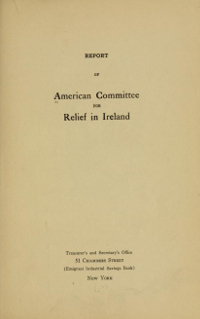
The American Committee for Relief in Ireland (ACRI) is founded through the initiative of Dr. William J. Maloney and others on December 16, 1920, with the intention of giving financial assistance to civilians in Ireland who have been injured or suffer severe financial hardship due to the ongoing Irish War of Independence.
The Committee is only one of several U.S. based philanthropic organisations that emerge following World War I with a view to influencing the post-war settlement from their perspective of social justice, economic development and long term stability in Europe. Some of them concentrate their efforts on events in Ireland, and while activists of Irish ethnicity are well represented, membership is far from confined to Americans of Irish heritage. Apart from the ACRI, bodies such as the American Commission on Irish Independence and the American Commission on Conditions in Ireland raise money and attempt to influence U.S. foreign policy in a manner sympathetic to the goal of Irish secession from the United Kingdom.
This period of Irish political radicalism coincides with a Red Scare in the United States. Jim Larkin, an Irish trade unionist, who has been closely associated with James Connolly in Ireland and with the Wobblies in the U.S., is serving a five-year sentence in Sing Sing prison for promoting his socialist agenda. While his political views differ fundamentally from most of the Sinn Féin leadership, Irish republicanism is seen by many of the American establishment as based on a questionable ideology. During the Irish War of Independence, the activities of Irish-American fund-raising organisations are viewed with suspicion and kept under close scrutiny by the intelligence services including J. Edgar Hoover, head of the General Intelligence Division of the Federal Bureau of Investigation. U.S. policy towards Irish concerns, initially hostile or at best indifferent, become somewhat less so following the 1920 U.S. presidential election and the landslide victory of Warren G. Harding over James M. Cox.
Following the burning of parts of Cork on December 11, 1920 by elements of the British security forces known as the Black and Tans, approaches are made by the city’s Lord Mayor, Donal O’Callaghan, to the American Red Cross for humanitarian assistance. The society, having taken advice from President Woodrow Wilson, the British embassy, the Foreign Office and the British Red Cross, decline at this time to act on his appeal. Numerous organisations and committees across the United States, operating independently in raising humanitarian aid money for Ireland realise that their funds will not be channelled through the U.S. Committee of the Red Cross and so another distribution channel is needed.
Five days after the inferno at Cork, a widely publicised meeting takes place at the Banker’s Club in New York City. It is organised by William Maloney with the intention of establishing a single nationwide organisation. It will have as its goal, explicitly and solely for the purpose of humanitarian relief, the raising and distribution in Ireland of $10 million. The body which soon emerges styles itself “The American Committee for Relief in Ireland.” One of its founding members, Levi Hollingsworth Wood, approaches a Dublin-based businessman and fellow Quaker, James Douglas, requesting his assistance in the local distribution of the funds on a non-partisan basis. In Ireland, Douglas speaks with Laurence O’Neill, the Lord Mayor of Dublin, who in turn contacts senior members of Sinn Féin to inform them of the wishes of the American Committee. These meetings culminate in the establishment of the Irish White Cross, for the purpose of local distribution of the Committee’s funds.
The Irish Citizen Army (ICA) is formed on November 23, 1913, at the height of the Dublin Lockout. Its purpose is to enable the locked-out men to defend themselves in clashes with the Dublin Metropolitan Police and to counteract the demoralizing effects of unemployment by providing discipline, cohesion and purpose. The idea of forming a force apparently is first formally proposed in 1913 by Captain James Robert “Jack” White, an ex-army officer from County Antrim, who had been educated at Winchester College and Royal Military College, Sandhurst. During a speech in August, James Larkin had already suggested that the workers form a force. He publicly repeats this instruction on November 13. James Connolly likewise urges the men to train “as they are doing in Ulster.” Two weeks later drilling begins. According to the ICA constitution, its members are to “work for an Irish republic and for the emancipation of labour.” Larkin is anxious that those who enlist should not only espouse these principles but also be members of unions recognised by the Irish Trades Union Congress.
Despite competition from the Irish Volunteers, which launches on November 25, 1913, ICA membership quickly surpasses 1,000. However, after the dispute is over in January 1914 and the men return to work, the “army” all but disappears. But it is Connolly above all who, after his appointment as its commandant and as leader of the Irish Transport and General Workers Union, rescues it from terminal decline and welds it into a potent force and potential weapon for his own use. He determines its structure, vets its officers and imposes a rigid discipline. He also demands an ideological commitment to revolution and the goal of an independent Irish socialist republic. The force’s guiding principle is that “the ownership of Ireland, moral and material, is vested by right in the people of Ireland.” Its membership remains small, but it is otherwise superior to the much larger Irish Volunteers in its unity of purpose, lack of factional and ideological division and in the quality of its training.
After the outbreak of World War I, Connolly has become increasingly committed to fomenting an insurrection in Ireland. This is reflected in his military preparations with the ICA. He uses its headquarters, Liberty Hall, as his base. Fearing he might act on his own, and recognising the merits of collaboration, the Irish Republican Brotherhood Military Council informs him of their own clandestine plans for a rising and an agreement is reached.
During Easter week of 1916, 219 ICA men fight alongside over 1,300 from the Irish Volunteers. As the appointed leader of both forces in Dublin, Connolly skillfully ensures that the ideological and social divisions and personality clashes, which have hitherto blighted their relationship, are largely overcome. ICA forces are mainly concentrated at the General Post Office (GPO), the College of Surgeons and Dublin’s City Hall. They win volunteer admiration for their professionalism, dedication, and ruthlessness. Two of their leaders are subsequently executed – Connolly and Michael Mallin, the ICA Chief of Staff. Constance Markievicz, Mallin`s second-in command, is reprieved. Others are imprisoned or interned. The ICA is not revived after the insurrection. The new leadership of the ITGWU focuses instead on building up the union, safeguarding members’ wages and improving working conditions.
Connolly has an education up to the age of about ten in the local Catholic primary school. He then leaves and works in labouring jobs. Due to economic difficulties, he joins the British Army at age 14, falsifying his age and giving his name as Reid. He serves in Ireland with the 2nd Battalion of the Royal Scots Regiment for nearly seven years, during a turbulent period in rural areas known as the Land War.
Connolly develops a deep hatred for the British Army that lasts his entire life. Upon hearing that his regiment is being transferred to India, he deserts. He meets a young woman by the name of Lillie Reynolds, and they marry in April 1890, settling in Edinburgh. There, Connolly begins to get involved in the Scottish Socialist Federation, but with a young family to support, he needs a way to provide for them. He briefly establishes a cobbler‘s shop in 1895, but this fails after a few months.
By 1892 Connolly is involved in the Scottish Socialist Federation, acting as its secretary from 1895. During this time, he becomes involved with the Independent Labour Party which Keir Hardie had formed in 1893.
Connolly and his family move to Dublin, where he takes up the position of full-time secretary for the Dublin Socialist Club. At his instigation, the club quickly evolved into the Irish Socialist Republican Party (ISRP). The ISRP is regarded by many Irish historians as a party of pivotal importance in the early history of Irish socialism and republicanism.
When the Easter Rising begins on April 24, 1916, Connolly is Commandant of the Dublin Brigade. As the Dublin Brigade has the most substantial role in the rising, he is de factocommander-in-chief. His leadership in the Easter Rising is considered formidable. Michael Collins says of Connolly that he “would have followed him through hell.”
Connolly is sentenced to death by firing squad for his part in the rising. On May 12, 1916, he is taken by military ambulance to Royal Hospital Kilmainham, across the road from Kilmainham Gaol, and from there taken to the gaol, where he is to be executed.
Connolly has been so badly injured from the fighting that he is unable to stand before the firing squad. He is carried to a prison courtyard on a stretcher. Instead of being marched to the same spot where the others had been executed, at the far end of the execution yard, he is tied to a chair and then shot.
His body, along with those of the other leaders, is put in a mass grave without a coffin. The executions of the rebel leaders deeply anger the majority of the Irish population, most of whom had shown no support during the rebellion. It is Connolly’s execution that causes the most controversy. The executions are not well received, even throughout Britain, and draw unwanted attention from the United States, which the British Government is seeking to bring into the war in Europe. Prime Minister H. H. Asquith orders that no more executions are to take place, an exception being that of Roger Casement as he has not yet been tried.
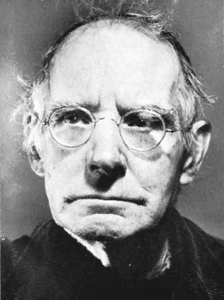
O’Grady is born on March 22, 1846, at Castletown, County Cork, the son of Reverend Thomas O’Grady, the scholarly Church of Ireland minister of Castletown Berehaven, County Cork, and Susanna Doe. After a rather severe education at Tipperary Grammar School, O’Grady follows his father to Trinity College, Dublin, where he wins several prize medals and distinguishes himself in several sports.
O’Grady proves too unconventional of mind to settle into a career in the church and earns much of his living by writing for the Irish newspapers. Reading Sylvester O’Halloran‘s General history of Ireland sparks an interest in early Irish history. After an initial lukewarm response to his writing on the legendary past in History of Ireland: Heroic Period (1878–81) and Early Bardic Literature of Ireland (1879), he realizes that the public wants romance, and so follows the example of James Macpherson in recasting Irish legends in literary form, producing historical novels including Finn and his Companions (1891), The Coming of Cuculain (1894), The Chain of Gold (1895), Ulrick the Ready (1896) and The Flight of the Eagle (1897), and The Departure of Dermot (1913).
O’Grady also studies Irish history of the Elizabethan period, presenting in his edition of Sir Thomas Stafford‘s Pacata Hibernia (1896) the view that the Irish people have made the Tudors into kings of Ireland in order to overthrow their unpopular landlords, the Irish chieftains. His The Story of Ireland (1894) is not well received, as it sheds too positive a light on the rule of Oliver Cromwell for the taste of many Irish readers. He is also active in social and political campaigns in connection with such issues as unemployment and taxation.
Until 1898, he works as a journalist for the Daily Express of Dublin, but in that year, finding Dublin journalism in decline, he moves to Kilkenny to become editor of the Kilkenny Moderator. It is here he becomes involved with Ellen Cuffe, Countess of Desart and Captain Otway Cuffe. He engages in the revival of the local woolen and woodworking industries. In 1900 he founds the All-Ireland Review and returns to Dublin to manage it until it ceases publication in 1908. O’Grady contributes to James Larkin‘s The Irish Worker paper.
O’Grady’s works are an influence on William Butler Yeats and George Russell and this leads to him being known as the “Father of the Celtic Revival.” Being as much proud of his family’s Unionism and Protestantism as of his Gaelic Irish ancestry, identities that are increasingly seen as antithetical in the late 1800s, he is described by Augusta, Lady Gregory as a “fenian unionist.”
Advised to move away from Ireland for the sake of his health, O’Grady passes his later years living with his eldest son, a clergyman in England, and dies on the Isle of Wight on May 18, 1928.
O’Grady’s eldest son, Hugh Art O’Grady, is for a time editor of the Cork Free Press before he enlists in World War I early in 1915. He becomes better known as Dr. Hugh O’Grady, later Professor of the Transvaal University College, Pretoria, who writes the biography of his father in 1929.
James (Jim) Larkin, Irish trade union leader and socialist activist, is born to Irish parents in Liverpool, England, on January 21, 1876. He and his family later move to a small cottage in Burren, County Down. Growing up in poverty, he receives little formal education and begins working in a variety of jobs while still a child.
In 1905, Larkin is one of the few foremen to take part in a strike on the Liverpool docks. He is elected to the strike committee, and although he loses his foreman’s job as a result, his performance so impresses the National Union of Dock Labourers (NUDL) that he is appointed a temporary organiser.
Larkin moves to Belfast in 1907 to organise the city’s dock workers for the NUDL. He succeeds in unionising the workforce, and as employers refuse to meet the wage demands, he calls the dockers out on strike in June. Carters and coal men soon join in, the latter settling their dispute after a month.
In 1908, Larkin moves south and organises workers in Dublin, Cork, and Waterford, with considerable success. His involvement, against union instructions, in a dispute in Dublin results in his expulsion from the NUDL. The union later prosecutes him for diverting union funds to give strike pay to Cork workers engaged in an unofficial dispute. After trial and conviction for embezzlement in 1910, he is sentenced to prison for a year. This is widely regarded as unjust, and the Lord Lieutenant of Ireland, Lord Aberdeen, pardons him after he has served three months in prison.
After his expulsion from the NUDL, Larkin founds the Irish Transport and General Workers’ Union (ITGWU) at the end of December 1908. The organisation exists today as the Services Industrial Professional & Technical Union (SIPTU). In early 1909, Larkin moves to Dublin, which becomes the main base of the ITGWU and the focus of all his future union activity in Ireland.
In early 1913, Larkin achieves some successes in industrial disputes in Dublin. Two major employers, Guinness and the Dublin United Tramway Company, are the main targets of Larkin’s organising ambitions. The chairman of the Dublin United Tramway Company, industrialist and newspaper proprietor William Martin Murphy, is determined not to allow the ITGWU to unionise his workforce. On August 15, he dismisses 40 workers he suspects of ITGWU membership, followed by another 300 over the next week. On August 26, 1913, the tramway workers officially go on strike.
The resulting industrial dispute is the most severe in Ireland’s history. Employers in Dublin engage in a sympathetic lockout of their workers when the latter refuses to sign the pledge, employing blackleg labour from Britain and from elsewhere in Ireland. Guinness, the largest employer in Dublin, refuses the employers’ call to lock out its workers but it sacks 15 workers who struck in sympathy.
For seven months the lockout affects tens of thousands of Dublin workers and employers, with Larkin portrayed as the villain by Murphy’s three main newspapers, the Irish Independent, the Sunday Independent, and the Evening Herald, and by other bourgeois publications in Ireland. The lock-out eventually concludes in early 1914 when calls by James Connolly and Larkin for a sympathetic strike in Britain are rejected by the British Trades Union Congress (TUC). Larkin’s attacks on the TUC leadership for this stance also lead to the cessation of financial aid to the ITGWU.
Some months after the lockout ends, Larkin leaves for the United States. He intends to recuperate from the strain of the lockout and raise funds for the union. Once there he becomes a member of the Socialist Party of America and is involved in the Industrial Workers of the World union (the Wobblies). He becomes an enthusiastic supporter of the Soviet Union and is expelled from the Socialist Party of America in 1919 along with numerous other sympathisers of the Bolsheviks during the Red Scare of that year.
Upon his return to Ireland in April 1923, Larkin receives a hero’s welcome and immediately sets about touring the country meeting trade union members and appealing for an end to the Irish Civil War. In September 1923, Larkin forms the Irish Worker League (IWL), which is soon afterwards recognised by the Communist International as the Irish section of the world communist movement.
James Larkin dies in his sleep on January 30, 1947, in the Meath Hospital. Fr. Aloysius Travers, OFM, who had administered last rites to James Connolly in 1916, also administers extreme unction to Larkin. His funeral mass is celebrated by the Catholic Archbishop of Dublin, John Charles McQuaid, who had visited him in hospital before he died, and thousands line the streets of the city as the hearse passes through on the way to Glasnevin Cemetery.
The first edition of the Irish Independent, flagship publication of Independent News & Media (INM) and Ireland’s largest-selling daily newspaper, is printed on January 2, 1905.
The Irish Independent is formed in 1905 as the direct successor to the Daily Irish Independent, an 1890s pro-Parnellite newspaper, and is launched by William Martin Murphy, a controversial Irish nationalist businessman, staunch anti-Parnellite and fellow townsman of Charles Stewart Parnell‘s most venomous opponent, Bantry’s Timothy Michael Healy.
During the Great Dublin Lockout of 1913, in which Murphy is the leading figure among the employers, the Irish Independent vigorously sides with its owner’s interests, publishing news reports and opinion pieces hostile to the strikers, expressing confidence in the unions’ defeat and launching personal attacks on the leader of the strikers, James Larkin. The Irish Independent describes the 1916 Easter Rising as “insane and criminal” and famously calls for the shooting of its leaders. In December 1919, during the Irish War of Independence, a group of twenty Irish Republican Army (IRA) men destroy the printing works of the paper, angered at its criticism of the IRA’s attacks on members of the Dublin Metropolitan Police and British government officials. In 1924, the traditional nationalist newspaper, the Freeman’s Journal, merges with the Irish Independent. Until October 1986 the paper’s masthead over the editorial contains the words “incorporating the Freeman’s Journal.”
For most of its history, the Irish Independent is seen as a nationalist, Catholic, anti-Communist, newspaper which gives its political allegiance to the Pro-Treaty party Cumann na nGaedheal and later its successor party, Fine Gael. During the Spanish Civil War, the Irish Independent‘s coverage is strongly pro-Franco, and the paper criticizes the De Valera government for not intervening on behalf of the Spanish Nationalists.
In the 1970s, the Irish Independent is taken over by former Heinz chairman Tony O’Reilly. Under his leadership, it becomes a more populist, market liberal newspaper — populist on social issues but economically right-wing. By the mid-nineties its allegiance to Fine Gael has ended. In the 1997 general election, it endorses Fianna Fáil under a front-page editorial entitled “It’s Payback Time.” While it suggests its headline refers to the fact that the election offers a chance to “pay back” politicians for their failings, its opponents suggest that the “payback” actually refers to its chance to get revenge for the refusal of the Rainbow Coalition to award the company a mobile phone licence.
In late 2004, Independent Newspapers moves from their traditional home in Middle Abbey Street to a new office, “Independent House” in Talbot Street, with the printing facilities already relocated to the Citywest business park near Tallaght.
On September 27, 2005, a fortnight after the paper publishes its centenary edition, it is announced that editor Vinnie Doyle will step down after 24 years in the position. He is replaced by Gerry O’Regan, who has until then been editor of the Irish Independent‘s sister paper, the Evening Herald. The newspaper’s previous editor Stephen Rae is also formerly editor of the Evening Herald and is appointed editor in September 2012. Fionnan Sheahan is appointed editor in January 2015.
In January 2008, at the same time as completing the purchase of Today FM, Ireland’s last national radio station independent of Denis O’Brien and state broadcaster RTÉ, O’Brien increases his INM shareholding to become the company’s second-largest shareholder behind Tony O’Reilly. In May 2008, O’Brien ousts O’Reilly and acquires a majority shareholding. Traditionally a broadsheet newspaper, it introduces an additional compact size in 2004 and in December 2012, following O’Brien’s takeover, it is announced that the newspaper will become compact only.
(Pictured: the first edition of the Irish Independent)
Seán O’Casey, Irish dramatist and memoirist, dies of a heart attack in Torquay, Devon, England on September 18, 1964. A committed socialist, he is the first Irish playwright of note to write about the Dublin working classes.
O’Casey is born John Casey at 85 Upper Dorset Street, in the northern inner-city area of Dublin on March 30, 1880. He is a member of the Church of Ireland, baptised on July 28, 1880 in St. Mary’s parish and confirmed at St. John the Baptist Church in Clontarf. He is an active member of Saint Barnabas until his mid-twenties, when he drifts away from the church.
In 1917, his friend Thomas Ashe dies in a hunger strike and it inspires him to write. He spends the next five years writing plays. O’Casey’s first accepted play, The Shadow of a Gunman, is performed at the Abbey Theatre in 1923. This is the beginning of a relationship that is to be fruitful for both theatre and dramatist but which ends in some bitterness. It is followed by Juno and the Paycock (1924) and The Plough and the Stars (1926).
The Plough and the Stars is not well received by the Abbey audience. There is a riot reported on the fourth night of the show. His depiction of sex and religion offends some of the actors who refused to speak their lines. W.B. Yeats intervenes and describes the audience as “shaming themselves.”
In 1928, Yeats rejects O’Casey’s fourth play, The Silver Tassie, for the Abbey. It is an attack on imperialist wars and the suffering they cause. The Abbey refuses to perform it. The plays O’Casey writes after this include the darkly allegorical and highly controversial Within the Gates (1934), which is set within the gates of a busy city park based on London’s Hyde Park. It closes not long after opening and is another box office failure.
Over the next twenty years, O’Casey writes The Star Turns Red (1940), Purple Dust (1943), Red Roses for Me (1943), Oak Leaves and Lavender (1945), Cock-a-Doodle Dandy (1949), The Bishop’s Bonfire (1955), and The Drums of Father Ned (1958). In 1959, O’Casey gives his blessing to a musical adaptation of Juno and the Paycock by American composer Marc Blitzstein. The musical, retitled Juno, is a commercial failure, closing after only 16 Broadway performances. Also in 1959, George Devine produces Cock-a-Doodle Dandy at the Royal Court Theatre and it is also successful at the Edinburgh International Festival and has a West End run.
On September 18, 1964, at the age of 84, O’Casey dies of a heart attack, in Torquay, Devon. He is cremated at the Golders Green Crematorium.






 seamus dubhghaill