seamus dubhghaill

Promoting Irish Culture and History from Little Rock, Arkansas, USA


Leave a comment

Beginning of the Battle of Kilmallock

The Battle of Kilmallock begins on July 25, 1922, in County Limerick, ending on August 5. It is one of the largest engagements of the Irish Civil War.

The battle consists of ten days of fighting in the countryside around Kilmallock in County Limerick, in which the National Army of the Irish Free State, advancing south from Limerick city, find their path blocked by anti-Treaty IRA troops, dug into a number of villages at BruffBruree and Patrickswell. The fighting end with the retreat of the anti-Treaty fighters and the occupation of Kilmallock by Free State forces.

The prelude to the battle is the fall of Limerick city to Free State forces. The Republican forces in the city under Liam Deasy withdraw from their positions after a week of fighting and concentrate in Kilmallock and the nearby towns of Bruff and Bruree. The Free State forces, advancing south from the city, find their path blocked by the Republicans dug in at the three hilltop towns.

The National Army’s attempt to break through this position produces the only “line battle” of the war with the two sides facing each other along clear front-lines. The Kilmallock-Bruff-Bruree triangle sees some of the war’s most intense fighting.

Whereas in the fighting in Dublin, Limerick and Waterford, Free State troops equipped with artillery overcome Anti-Treaty resistance relatively easily, at Kilmallock they have a much harder time. The main reason for this is that the Free State troops, most of whom are new recruits, are facing some of the best of the IRA forces without an advantage in numbers or firepower. General Eoin O’Duffy complains of shortage of arms and ammunition. He estimates that while his forces have about 1,300 rifles, the Republicans could muster over 2,000. He is also critical of the quality of the troops at his disposal, whom he describes as, “a disgruntled, undisciplined and cowardly crowd.”

The Republicans know this and are confident of success. Nevertheless, the Republican commanders have their own issues with logistical support and lack of co-operation between forces from different counties. Deasy’s command includes Volunteers from counties Limerick itself, Cork and Kerry, all of whom have their own commanders. They have three improvised armoured cars, some mortars and heavy machine guns but no artillery.

O’Duffy draws up plans for the advance on Kilmallock with the assistance of his second-in-command Major General W. R. E. Murphy who had been a lieutenant colonel in World War I. His experience in the trenches has a major effect on his approach – pre-disposing him to cautious advances and use of trenches for cover.

The Republican forces have the better of the first clashes. On Sunday, July 23, Free State forces take Bruff and begin their advance on Kilmallock, but are twice beaten back by determined Republican resistance. The following day, the Republicans manage to retake Bruff in a counter-attack, taking 76 prisoners. As a result of this setback, O’Duffy calls off the advance for the time being and waits for reinforcements.

National Army forces quickly retake Bruff after reinforcements arrive. However, things get worse for the National Army as the week goes on. They make slow progress in taking the Republican strongpoints, and their casualties also mount. On Tuesday, July 25, a unit of the Dublin Guard under Tom Flood is ambushed on a narrow road. They fight their way clear, but only after losing four men. Three more Free State soldiers are killed two days later. On July 30, Major General Murphy launches an attack to take Bruree. The Dublin Guards attack the town from the southeast, supported by armoured cars and an 18-pound field gun. The Republicans hold out for five hours until Free State artillery is brought into action. At least 13 Free State soldiers and nine Anti-Treaty fighters are killed in the action and more are wounded before the Free State troops secure Bruree.

The Republican commander, Deasy, knows how important Bruree is to the defence of Kilmallock and draws up plans to recapture the town using three armoured cars, trench mortars and machine guns. On August 2, Republicans capture Patrickswell south of Limerick. The armoured cars then attack Bruree, taking Free State forces by surprise. One car attacks Commandant Flood’s headquarters at the Railway Hotel. The Commandant and his men manage to escape out the back of the building under the cover of Lewis gun fire. The second armoured car rams the front door of another post in the school house, which persuades the twenty-five troops inside to surrender.

However, when Free State reinforcements, along with armoured cars arrive, the Republican counter-attack stalls. The Free State reinforcements are led by Commandant General Seamus Hogan, who personally leads his forces, riding in the armoured car nicknamed “The Customs House.” Having failed to secure the surrender of the town, Republican forces retreat.

Having held Bruree against a Republican counterattack, Free State forces prepare to capture Kilmallock itself, but anticipate there will be heavy fighting. Republican Adjutant General Con Moloney comments on August 2, “Up to yesterday we have had the best of the operations there [the Kilmallock area]. There will, I fear, be a big change there now as the enemy have been reinforced very considerably.” In the 3rd Western Division area they have all but disbanded, unwilling to fight Free Staters, destroy roads, and now discouraged by the Catholic church.

On Thursday, August 3, a force of 2,000 Free State troops, backed up by armoured cars and artillery, advance on Kilmallock from Bruree, Dromin and Bulgaden. Seven hundred troops arrive the next day with an armoured car and a field gun. By Saturday, the town is surrounded by Free State forces. The Dublin Guard are also on hand to prevent Republican forces from escaping. Three miles away, Free State artillery is deployed and shells Republican forces on Kilmallock Hill and Quarry Hill. The two hills are soon controlled by Free State forces.

The National Army has, therefore, assembled sufficient force to smother resistance at Kilmallock. They are still, however, expecting hard fighting before they take the town. To their surprise, when the Free State troops enter the town, they encounter only light resistance from a Republican rearguard (volunteers from Cork). Most of the Republican troops have already abandoned their positions and retreated to Charleville.

They departed not because the Free State troops are stronger, but because they have been outflanked by Free State seaborne landings on the coasts of County Kerry and County Cork on August 2 and 8 respectively. The landings in Cork and Kerry force Commandant General Deasy to release units from this area to return home to their own areas. Although the landings in Cork occur after the retreat from Kilmallock, the subsequent loss of brigades from Cork adds to Commandant General Deasy’s problems. The final phase of the fighting in County Limerick comes when the Free State advance south is held up at Newcastle West. Another day of heavy fighting ensues in which the National Army troops have to bring up armoured cars and artillery to dislodge the Republicans, who reportedly lose up to 12 men before they retreat in the direction of Cork.

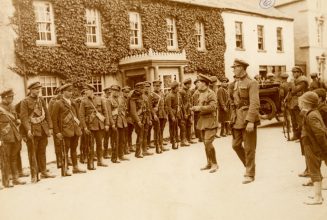
(Pictured: National Army troops lined up for a roll call during the Irish Civil War with local children casting an eye over the proceedings)

Leave a comment

Death of W. R. E. Murphy, Soldier & Policeman

William Richard English-Murphy, DSO MC, Irish soldier and policeman known as W. R. E. Murphy, dies on March 5, 1975, in Ardee, County Louth. He serves as an officer with the British Army in World War I and later in the National Army. In the Irish Civil War, he is second in overall command of the National Army from January to May 1923. He is first Irish Commissioner of the Dublin Metropolitan Police (DMP) and the last Commissioner of the force before its merger with the Garda Síochána in 1925. Thereafter he is the Deputy Commissioner of the Gardaí until his retirement in 1955.

Murphy is born in Danecastle, Bannow, County Wexford, on January 26, 1890. His parents die when he is four years old. His grandparents also die during his childhood. He and his sister Mae (Mary Sarah) are separately raised by relatives in Belfast and Waterford. He is completing his master’s degree at Queens University Belfast (QUB) when he follows the call of John Redmond to join the war effort and ensure Irish independence. Ulster regiments reject him because he is Catholic. Seeking a regiment that treats Irish volunteers with respect, he joins the British Army in Belfast in 1915 as an officer cadet in the South Staffordshire Regiment.

Murphy serves in the Battle of Loos in 1915 and is wounded but returns to action for the start of the Battle of the Somme in July 1916. He becomes commanding officer of the 1st Battalion, the South Staffordshire Regiment in August 1918, reaching the rank of temporary lieutenant colonel. In 1918, his regiment is posted to the Italian Front, at the Piave River, where they are when the armistice is declared on November 4, 1918. He is granted the rank of substantive lieutenant colonel on the retired list on May 16, 1922.

After he returns to Ireland, Murphy resumes his career as a teacher. At some point, he joins the Irish Republican Army (IRA), an organisation fighting to end British rule in Ireland.

In December 1921, the Anglo-Irish Treaty is signed between British and Irish leaders, resulting in the setting up of the Irish Free State. Conflict over the Treaty among Irish nationalists ultimately leads to the outbreak of the Irish Civil War in June 1922. Murphy enlists as a general in the new National Army of the Irish Free State. After the start of the Irish Civil War, he is put in command of troops charged with taking posts held by the anti-Treaty IRA in Limerick.

At the Battle of Kilmallock in July–August 1922, Murphy is second in command to Eoin O’Duffy. His troops successfully dislodge the anti-Treaty IRA from positions around Kilmallock in County Limerick, but he is criticised for his tendency to “dig in” and resort to trench warfare rather than rapid offensive action.

Afterward, Murphy is put in overall command of Free State forces in County Kerry until January 1923. He lobbies Richard Mulcahy, commander in chief, for 250 extra troops, to bring his command up to 1,500 and help to put down the guerrilla resistance there. In the early stages of the guerrilla war, he organises large-scale “sweeps” to break up the republican concentrations in west Cork and east Kerry. These meet with little success, however. He exercises overall command in the county, but day-to-day operations are largely run by Brigadier Paddy Daly, of the Dublin Guard.

In October, in response to continuing guerrilla attacks on his troops, Murphy orders a nightly curfew to be put into place in Tralee.

In December, Murphy writes to Mulcahy that the “Irregular [Anti-Treaty] organisation here is well-nigh broken up,” and suggests the end of the war in the county is in sight. His optimistic prediction, however, proves premature.

On December 20, Murphy sentences four captured republican fighters to death under the fictitious “Public Safety Act” for possession of arms and ammunition. However, the sentences are to be called off if local guerrilla activity ceases. Humphrey Murphy, the local IRA Brigade commander, threatens to shoot eight named government supporters in reprisal if the men are executed. Eventually, their sentence is commuted to penal servitude.

In January 1923, Murphy is promoted from his command in Kerry to “responsibility for operations and organisation at the national level” in the army. Paddy Daly takes over as commanding officer in Kerry. Murphy later voices the opinion that Daly had been a bad choice, given his implication in the Ballyseedy massacre and other events of March 1923, in which up to 30 anti-Treaty prisoners were killed in the county.

Murphy leaves the National Army after the end of the Irish Civil War in May 1923 and becomes the first Irish commissioner of the Dublin Metropolitan Police. He later becomes deputy commissioner of the Garda Síochána, when DMP is merged with the new national police force in 1925. He holds this post until his retirement in 1955.

Murphy is at the forefront of efforts to close down Dublin’s red-light district, the Monto, in the early 1920s. Between 1923 and 1925, religious missions led by Frank Duff of the Legion of Mary, a Roman Catholic organisation, and Fr. R.S. Devane work to close down the brothels. They receive the cooperation of Murphy in his role as Dublin Police Commissioner, and the campaign ends with 120 arrests and the closure of the brothels following a police raid on March 12, 1925.

Murphy also holds the post for a time of president of the Irish Athletic Boxing Association.

Murphy lives with his daughter, Joan McMahon, in Ardee, County Louth, after his wife, Mary Agnes Fortune, dies on July 31, 1958. He dies on March 5, 1975, and is buried in St. Peter’s Churchyard, Bray, County Wicklow.

(Pictured: Major-General W. R. E. Murphy, as depicted on a Wills’ Irish Sportsmen cigarette card, from their boxing series)


Leave a comment

Birth of Brendan Bracken, Politician & Businessman

Brendan Bracken, Irish-born businessman, politician and a Minister of Information and First Lord of the Admiralty in Winston Churchill‘s War Cabinet, is born on February 15, 1901, in Church Street, Templemore, County Tipperary.

Bracken is the third child and second of three sons of Joseph Kevin (J. K.) Bracken and Hannah Bracken (née Ryan). The family moves to Kilmallock, County Limerick, in 1903, the year before his father’s death. By 1908, his mother takes the family to live in Glasnevin, a new suburb in north Dublin, and subsequently off the North Circular Road. He is educated in St. Patrick’s National School, Drumcondra, and at the Christian BrothersO’Connell School in North Richmond Street. He is a mischievous, delinquent child, one time throwing a schoolfellow into the Royal Canal. In February 1915 he is sent to Mungret College, a Jesuit boarding school near Limerick. He is not amenable to the regime and runs away on several occasions, finding accommodation in local hotels under a false name.

At the end of 1915 Bracken goes to Australia with £14 in his pocket. He is first based in Echuca, Victoria, where he is put up in a convent. Later he moves to other houses run by religious orders. A voracious reader, he claims that he is doing research for a life of Cardinal Patrick Francis Moran, and signs himself “Brendan Newman Bracken.” He seeks admission as a pupil to Riverview, the fashionable Jesuit school in Sydney, claiming that he had been educated at Clongowes Wood College. Unfortunately for him, a priest who had just come out from Clongowes exposes him. Opinionated and argumentative, he does not conceal his skepticism about the Catholic religion. For a time, he teaches in a Protestant school in Orange, New South Wales.

Bracken returns to Ireland in 1919. By this time his mother has remarried and is living with her new husband, Patrick Laffan, on a farm in Beauparc, County Meath. After a short stay there, he moves to Liverpool and finds employment as a teacher at the Liverpool Collegiate School, claiming that he had been to the University of Sydney. He teaches at the school for two terms in 1920, earning extra money as tutor to a young boy. With his savings he is able to gain admission to Sedbergh School, a public school in the town of Sedbergh in Cumbria, North West England, giving his name as Brendan Rendall Bracken, born 1904, and stating that his parents had perished in a bush fire in Australia, leaving him money to complete his education. He remains only one term but distinguishes himself by winning a prize for history. After Sedbergh, Bracken teaches at Rottingdean preparatory school and then at Bishops Stortford School. He cuts a flamboyant figure and drops the name of famous acquaintances with gay abandon. He stands over 6 feet and has a powerful presence and a domineering personality; his mop of red hair and pale freckled skin combine with black teeth to give him a bizarre appearance.

In 1922 Bracken moves to London. He takes charge of the Illustrated Review when its editor, Hilaire Belloc, resigns. Renamed English Life and covering political and social events, it affords Bracken an opportunity to meet prominent people, including J. L. Garvin, editor of The Observer. In autumn 1923 Garvin introduces him to Winston Churchill, who had lost his parliamentary seat in 1922 and decided to contact Leicester West in the 1923 United Kingdom general election. Bracken offers his services as campaign manager. The friendship between Churchill and Bracken is soon so close that Bracken is rumoured to be Churchill’s natural son. Churchill’s wife Clementine dislikes Bracken and discourages the friendship.

Meanwhile Bracken enjoys the life of a ubiquitous socialite and builds up his career in publishing. He becomes a director of Eyre & Spottiswoode in 1926, starting The Banker, a monthly magazine, for them, and acquiring the Financial News in 1928 and a half-share in The Economist. To these are added in due course the Investors Chronicle and The Practitioner. His success in business enables him to acquire a home in North Street in 1928, near the Houses of Parliament. He is driven about in a chauffeured Hispano-Suiza car.

In 1929, Bracken has himself adopted as conservative candidate for Paddington North, a marginal seat. After a hard-fought campaign characterised by minor violence provoked by Bracken’s intemperate language, he wins the seat by 528 votes. At one point a rumour is put about that Bracken is in reality a Polish Jew, which he has to disprove by exhibiting a copy of his birth certificate. His background is a subject of speculation among acquaintances, and in throwaway remarks he gives different fictitious versions of it, Ireland figuring in none of them. He does however remain in constant touch with his mother, to whom he seems to have been deeply devoted, until her death in 1928. However, he has as little contact as possible with his brother and sisters, although he does give assistance to some of them and their families at various times.

In parliament Bracken voices right-wing views on economic issues and is an enthusiastic imperialist. After Churchill resigns from the conservative front bench in 1930 because they would not oppose the Labour government’s proposal for Indian self-government, he is supported by Bracken. During the 1930s, when Churchill is in the wilderness, disagreeing with the party leadership on India and on what he sees as a policy of appeasement toward Hitler‘s Germany, Bracken is his sole political ally. Stanley Baldwin calls him Churchill’s “faithful chela.”

In September 1939, Churchill joins Neville Chamberlain‘s war cabinet as First Lord of the Admiralty. Bracken is appointed his parliamentary private secretary, continuing in that role when Churchill becomes Prime Minister. Despite the king’s opposition, Churchill insists in June 1940 that Bracken should be appointed a privy councillor. Bracken shuts up his house and moves to the Prime Minister’s residence for the duration of the war. As a confidant of the Prime Minister, he often acts as a go-between with other politicians and newspapermen. He is allowed to oversee patronage and takes a special interest in ecclesiastical appointments. In July 1941, he is persuaded by Lord Beaverbrook and Churchill to become Minister for Information. He wins over most of the proprietors by giving them more news, often on a confidential basis, and censorship is kept to a minimum. The BBC is also allowed a fair measure of freedom as long as it behaves responsibly; under the leadership of Cyril Radcliffe, the civil service head of the ministry, it operates more smoothly. Bracken was generally acclaimed for that success.

After the resignation of the Labour ministers from the government at the end of the war in Europe, Bracken joins the cabinet as First Lord of the Admiralty. He is prominent in the general election campaign that follows and is the only conservative minister apart from Churchill to give more than one radio broadcast. He is accused, probably unjustly, of provoking Churchill to take extreme positions, and blamed when the conservatives are heavily defeated at the polls. Bracken himself loses Paddington North to Lt. Gen. Sir Noel Mason-MacFarlane. However, he is soon back in parliament representing Bournemouth, and as front-bench spokesman is an uncompromising opponent of the nationalisation measures of the Labour government (1945–51). He is out of sympathy with the leftward drift of the conservative party associated with Rab Butler and Harold Macmillan.

In December 1951, when Churchill is again Prime Minister, Bracken declines an invitation to serve as Colonial Secretary, pleading that his recurring sinusitis makes it impossible. He resigns his seat in the House of Commons and is created a peer, Viscount Bracken of Christchurch in Hampshire, but never takes his seat in the House of Lords. Although he retires from politics, he remains close to political events through his friendship with Churchill. He is deeply involved in concealing the severe stroke that Churchill suffers in 1953, so that he can carry on as Prime Minister.

In the postwar period, Bracken has important business interests. The Financial News group acquires the Financial Times in 1945, and he is returned as chairman of the expanded company. He writes a weekly Financial Times column until 1954. He oversees the building near St. Paul’s of a new head office, named “Bracken House” after his death. He is also chairman of the Union Corporation mining house, with interests in South Africa, which he frequently visits. From 1950 he is chairman of the board of governors of Sedbergh School, where he goes frequently and often walks for miles across the fells. He organises and finances the restoration of the eighteenth-century school building as a library, with a commemoratory inscription, “Remember Winston Churchill.”

From 1955 Bracken is a trustee of the National Gallery. He is an unrelenting opponent of the proposal to return to Ireland the impressionist paintings bequeathed to it by Hugh Lane, because a codicil willing them to Dublin has not been witnessed. Throughout the postwar period he carries on a prolific correspondence with friends such as Lord Beaverbrook, the American ambassador Lewis Douglas, and the Australian entrepreneur W. S. Robinson. These are a valuable and entertaining source on the political history of the time.

In January 1958, Bracken, who has always been a heavy smoker, is diagnosed with throat cancer. He lingers on until August 8, 1958, when he dies at the flat of his friend Sir Patrick Hennessy in Park Lane. He resists efforts made to reconcile him to the church of Rome. By his own wish he is cremated, and his ashes are scattered on Romney Marsh, Kent. On his instructions his papers are burned by his chauffeur. His estate comes to £145,032.

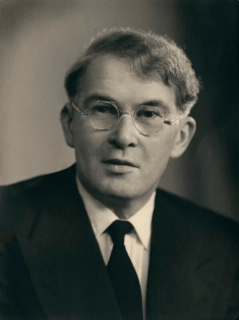
(From: “Bracken, Brendan” by Charles Lysaght, Dictionary of Irish Biography, www. dib.ie, October 2009 | Pictured: Brendan Bracken, bromide print by Elliott & Fry, January 13, 1950, National Portrait Gallery, London)


Leave a comment

Death of John Daly, Leading Member of the Irish Republican Brotherhood

John Daly, Irish republican and a leading member of the Irish Republican Brotherhood (IRB), dies in Limerick, County Limerick, on June 30, 1916. He is uncle to Kathleen Clarke, wife of Tom Clarke who is executed for his part in the 1916 Easter Rising and who is a leading member of the IRB, and her brother Edward “Ned” Daly who is also executed in 1916. Daly briefly serves as a member of the British Parliament but is resented for having previously been convicted for treason against the British state. He also serves as Mayor of Limerick for three years at the turn of the century.

Daly is born in Limerick on October 18, 1845. His father works in James Harvey & Son’s Timber Yard. At the age of sixteen, he joins his father working as a lath splitter. At eighteen he is sworn in as a member of the IRB, also known as the Fenians, and becomes fully involved in Republican activities. When he is refused absolution in confession because he admits to being a Fenian, he decides that from then on, his loyalty will no longer be to “faith and Fatherland” but to “God and Fatherland.”

On November 22, 1866, Daly and his brother Edward are arrested at their family home having been betrayed by an informer, for running a munitions factory in the Pennywell district close to their home. He is released on bail in February 1867 toughened and more dedicated by the experience.

On March 5, 1867, the ill-prepared Fenian Rising takes place. Daly takes charge of the Limerick detachment of the IRB. Limerick is one of the few areas where the Fenians are able to make some show of force, however weak. Through lack of numbers, they fail to make a significant impact on the vastly superior forces arrayed against them. Moving out of the city, he moves his men into the country and joins up with other Fenians in an attack on the Royal Irish Constabulary (RIC) barracks at Kilmallock. The attack is repelled, and Daly disperse his men.

After this Daly flees the country by stowing away first on a boat, the Hollywood, to England, and from London then on board the Cornelius Grenfel to the United States.

Life in America for working class immigrants is particularly tough and Daly’s first job on leaving the ship is digging a cellar. He then obtains work in a white lead factory and works for a while as a mason’s helper before getting a reasonably good job as a brakeman on a tram system. He is to recall these experiences in his Recollections of Fenians and Fenianism.

In 1869, Daly return to Ireland and takes up his old job in the timber yard, and also his Republican activities. He begins to help reorganise the IRB and takes part in a number of agitations to keep the IRB agenda in the public view. He becomes a leading voice in the Amnesty Association to help in the release of those Fenians still in jail.

In November 1869, a major tenants’ right meeting takes place in the city. The IRB objects to the meeting because the issue of the prisoners is not on the agenda. In what comes to be known as “The Battle of the Markets,” the IRB charges the platform and succeeds in dismantling it. Though the organisers of the meeting attempt to hold some form of gathering, Daly and the IRB refuse to relent. It is Daly’s opinion that “it was one of the greatest moral victories ever achieved.” The issue of the political prisoners is to keep him occupied for much of the 1870s. In 1876, he is again arrested for disturbing another home rule gathering, though on being brought before the court he is acquitted.

During the Land War Daly is a member of the Supreme Council of the IRB and becomes organiser for Connacht and Ulster.

In the summer of 1883, Daly moved to Birmingham, England, and settles in the home of James Egan, an old friend from Limerick and a generally inactive IRB man. E.G. Jenkinson, head of Special Branch, is informed that Daly is on his way to Britain from the United States. He has been asked by the Supreme Council to deliver the graveside oration at the funeral of Charles J. Kickham while in the United States. When he arrives, a plain-clothes detective is assigned to follow him at all times. As a result of this, Special Branch are alerted to the importance of John Torley in Glasgow, Robert Johnston in Belfast and Mark Ryan in London of the IRB.

Jenkinson uses agent provocateurs in his attempts to convict Republicans. One such recruit is a publican and local IRB man named Dan O’Neill. Both Jenkinson and a Major Nicholas Gosselin persuade O’Neill to betray Daly. O’Neill then asks Daly to deliver sealed cases to some associates in London, and on April 11, he is arrested as he is about to board the train for London, and explosives are found in the case he is carrying. The police then raid the home of James Egan where explosives are “allegedly found buried” in Egan’s garden in addition to some documents.

In Chatham prison Daly becomes friends with Tom Clarke, who would later marry his niece Kathleen and who was a leader of the 1916 Easter Rising. While in prison he claims that he is being poisoned with belladonna which causes an investigation by a commission of inquiry in 1890. It is admitted by prison officials as an error by a warder. A series of articles in the Daily Chronicle in 1894 analyse prison methods. Daly gives an interview to the Chronicle which appears on September 12, 1896.

Daly is elected unopposed as a member of parliament (MP) for Limerick City at the 1895 United Kingdom general election in Ireland, as a member of the Parnellite Irish National League (INL). However, he is disqualified on August 19, 1895, as a treason-felon. In August 1896, he goes on a lecture tour of England with Maud Gonne and in 1897 on a tour of the United States which is organised by John Devoy. He later founds a prosperous bakery business in Limerick and goes on to become Mayor of his native city.

Daly is elected three times as Mayor of Limerick City, from 1899 to 1901. He jointly finances with Patrick McCartan the IRB newspaper Irish Freedom in 1910.

Daly dies on June 30, 1916, at his home, 15 Barrington Street, Limerick. He never marries. A tall, energetic, and gregarious man, he is a simple but often effective propagandist for the separatist cause.

In 1928, Madge Daly, a niece of Daly, presents the Daly cup to William P. Clifford, the then-chairman of the Limerick GAA county board. Since then, the Daly cup is presented to the winners of the Limerick Senior Hurling Championship.

(Pictured: Irish Republican and Fenian John Daly in the ceremonial garb of the Mayor of Limerick, circa 1900)


Leave a comment

Death of James FitzMaurice

James FitzMaurice, a member of the 16th century ruling Geraldine dynasty in the province of Munster, dies on August 18, 1579. He rebels against the crown authority of Queen Elizabeth I of England in response to the onset of the Tudor conquest of Ireland. He leads the first of the Desmond Rebellions in 1569, spends a period in exile in continental Europe, but returns with an invasion force in 1579. He dies shortly after landing.

FitzMaurice is the son of Maurice Fitzjohn of Totane, a brother of John FitzGerald, de facto 12th Earl of Desmond, and Julia O’Mulryan of County Tipperary, cousin of Gerald FitzGerald, 14th Earl of Desmond. Totane had been granted the barony of Kerricurrihy in County Cork, but Gerald fell out with Totane and wars are fought between the families.

After the Desmond defeat at Battle of Affane in 1565, the 14th Earl and his brother, John of Desmond, are detained in England. During their absence, FitzMaurice becomes captain general of County Desmond with the warrant of the Earl. This means he has authority over the soldiers retained in the service of the Desmond Fitzgeralds. In July 1568, he enters Clanmaurice, the territory of the lord of Lixnaw, to distrain for rent and assert the Desmond authority. Having seized 200 head of cattle and wasted the country, he is confronted by Lixnaw on the way home and utterly defeated.

At the end of 1568, the absent Earl of Desmond grants Sir Warham St. Leger a lease of the barony of Kerricurrihy, which cast FitzMaurice’s inheritance into confusion. In 1569 the Lord Deputy of Ireland, Sir Henry Sidney, is informed by FitzMaurice that he has assembled the people of Desmond to tell them that the Lord Deputy was unable to procure the release of the captive earl, who would be executed or perpetually imprisoned, and that the people should proclaim a new earl or captain. With one voice, the people cry out for FitzMaurice to be captain. The earl’s wife, Eleanor Butler, writes to her husband in November that FitzMaurice is seeking to bring the earl into further disrepute and to usurp his inheritance, “by the example of his father.”

To reassert Geraldine authority, FitzMaurice then launches what becomes known as the first of the Desmond Rebellions. The southern part of Ireland erupts into a general rebellion, owing in part to attempts at establishing plantations. In June 1569, FitzMaurice and the Earl of Clancarty (MacCarthy Mor) invade Kerrycurrihy, spoil the inhabitants, take the castle-abbey of Tracton, hang the garrison, and refuse to depart without the surrender to them of the custody of Lady St. Leger and Lady Grenville, the wives of the principal English colonists. FitzMaurice then joins in league with the turbulent brothers of the Earl of Ormond and enters a bond with the Earl of Thomond and John Burke, son of the Earl of Clanricard. He writes to the mayor and corporation of Cork in July ordering the abolition of the new heresy of Protestantism, at a time when he appears to have been taking instruction from Irish Jesuits.

By September 1569, Sidney has broken the back of the rebellion and leaves Sir Humphrey Gilbert behind to suppress FitzMaurice, who seeks refuge in the woods of Aherlow, and after Gilbert’s departure FitzMaurice raises a new force in February 1570 and by a surprise night attack, takes Kilmallock and after hanging the chief townsmen at the market cross, plunders its wealth and burns the town. In February 1571, Sir John Perrot lands at Waterford as Lord President of Munster and challenges FitzMaurice to a duel, which FitzMaurice declines with the remark, “For if I should kill Sir John Perrot the Queen of England can send another president into this province; but if he do kill me there is none other to succeed me or to command as I do.”

FitzMaurice attacks Perrot but retires on mistaking a small cavalry company for the advance party of a larger force. After a second and successful siege by Perrot of the Geraldine stronghold of Castlemaine, FitzMaurice sues for pardon, which is granted in February 1573, after he prostrates himself in Kilmallock church with the president’s sword point next to his heart. He swears fealty to the crown and gives up his son as hostage.

On the return to Ireland of the Earl of Desmond in 1573, FitzMaurice leaves for the continent, offering his reasons variously as a desire to gain pardon from the Queen through the French court, and the unkindness of the earl. In March 1575 he and his family, along with the Geraldine Seneschal of Imokilly, James Fitzedmund Fitzgerald, and the White Knight, Edmund FitzGibbon, sail on the La Arganys for Saint-Malo, Brittany where they are received by the governor. He has several interviews with Catherine de’ Medici in Paris, offering to help make Henry III of France king of Ireland, and is granted a pension of 5,000 crowns in 1576.

Early in the following year FitzMaurice leaves for the Spanish court, where he offers the crown to the brother of King Philip II, Don John. The king is cautious, however. FitzMaurice leaves his sons Maurice and Gerald with Cardinal Antoine Perrenot de Granvelle, and travels to Italy to meet Pope Gregory XIII.

At the papal court FitzMaurice meets adventurer Captain Thomas Stukley, and together they persuade the pope to underwrite the cost of 1,000 troops to invade Ireland, most of whom, according to Philip O’Sullivan Beare, are desperadoes the pope wishes to get out of Italy. Fitzmaurice and Stukley are to rendezvous in Lisbon and proceed to Ireland, however, Stukley decides to throw his troops and support to King Sebastian‘s expedition to Morocco, where he dies.

Following the diversion of Stukley to Morocco, FitzMaurice sets out with the nuncio Nicholas Sanders, and Matthew de Oviedo from Ferrol in Galicia, Spain on June 17, 1579, with a few troops on his vessel and three Spanish shallops. They capture two English vessels in the channel and arrive at Dingle on July 16, 1579, launching the Second Desmond Rebellion.

On July 18 they cast anchor in Ard na Caithne, where they garrison at Dún an Óir (Fort of Gold), and are joined on July 25 by two galleys with 100 troops. Four days later their ships are captured by the English fleet under the command of Sir William Wynter. Having exhorted the Earl of Desmond and the Earl of Kildare, as Geraldine leaders, to fight the heretics, FitzMaurice leaves the fort to await the arrival of Stukley who, unknown to him, had been killed at the Battle of Alcácer Quibir in the previous year, during a campaign by King Sebastian of Portugal.

FitzMaurice goes to make a vow at the monastery of the Holy Cross in County Tipperary but becomes caught in a skirmish with the forces of his cousin, Theobald Burke, during which he is shot with a ball in the hollow of the chest, but cuts his way through to Burke and his brother William, both of whom he kills with single strokes of his sword.

The battle is won, but close to the scene his injuries overcome him. He makes his will and orders his friends to cut off his head after death in order that his enemies might not mutilate his body. He begs his attendants to attest that he had not turned tail on the enemy. They assure him and wish him to be quiet because hostile soldiers are closing in, but he insists, “My wounds are clear, my wounds are clear.” Upon his death, a kinsman orders the decapitation and then wraps the head in cloth. An attempt is made to conceal his trunk under a tree, but it is discovered by a hunter and brought to the town of Kilmallock. For weeks, the trunk is nailed to the gallows, until it is shattered by musket fire and collapses.


Leave a comment

Assassination of Sinn Féin County Councilor John Lynch

cairo-gang

Sinn Féin County Councilor John Lynch of Kilmallock, County Limerick, is assassinated by British agents at the Exchange Hotel in Dublin on September 23, 1920.

Captain Geoffrey Thomas Baggallay, a “one-legged” courts-martial officer, phones Dublin Castle at 1:15 AM telling of John Lynch’s presence at the Exchange Hotel. A group of 12 soldiers, believed to be members of the Cairo Gang, enter the hotel wearing military caps and long black Burberry coats. They hold the hotel porter, William Barrett, at gunpoint. After consulting the register, they proceed to Lynch’s room on the third floor, where Lynch has been staying since September 12.

They shoot Lynch and then leave, claiming that Lynch had fired a shot at them when they attempted to arrest him. The military reports a death at the hotel at 2:15 AM. The Royal Irish Constabulary (RIC) arrives after the military reports the death to them. The coroner’s verdict is that Lynch is shot by a soldier in self-defence. No evidence is given by any soldiers at the inquiry. The Irish Republican Army (IRA) believe that the actual murder is carried out by Henry James Angliss and Charles Ratsch Peel working undercover. The group of khaki-clad men who shoot Lynch number about twelve, and the IRA certainly believes that Angliss and Peel are among them based on inside information received from “Lt G” at Dublin Castle. Lt G is believed to be Lily Mernin who works as a typist at army headquarters.

Michael Collins believes that many of the British officers that are later killed on “Bloody Sunday” shot John Lynch in the Exchange Hotel. Lynch is the local Sinn Féin organiser of a loan and is in Dublin to hand over £23,000 in subscriptions to Collins. Altogether £370,163 is raised in the loan effort in Ireland by September 1920 when it closes down.

It is impossible to know who the twelve men of the raiding party are, however, apparently Lt. Angliss, under the influence of drink, divulges his participation in the shooting to a girl who passes this information on to an Irish Intelligence Service informant. Peel escapes death on “Bloody Sunday” by barricading himself in his room. George Osbert Smyth is understood to have been part of the raiding party, from information given to his family on a visit home. Osbert Smyth is shot dead in October 1920 while trying to arrest IRA suspects Dan Breen and Sean Treacy at a house in Drumcondra.

(Pictured: The Cairo Gang)