seamus dubhghaill

Promoting Irish Culture and History from Little Rock, Arkansas, USA


Leave a comment

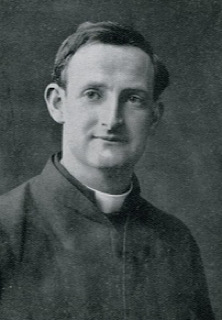
Birth of Father Willie Doyle

William Joseph Gabriel DoyleSJMC, an Irish Catholic priest, is born in Dalkey, County Dublin, on March 3, 1873. He is killed in action while serving as a military chaplain to the Royal Dublin Fusiliers during the World War I. He is a candidate for sainthood in the Catholic Church.

Doyle is the youngest of seven children of Hugh and Christine Doyle (née Byrne). He is educated at Ratcliffe College, a Catholic boarding school in Leicester, England.

After reading St. Alphonsus‘ book Instructions and Consideration on the Religious State, he is inspired to enter the priesthood. In March 1891, he enters the Society of Jesus (Jesuits) in Ireland. He then enters St. Stanislaus College in Tullabeg, Rahan, County Offaly. Having completed his novitiate, for his regency he is assigned to teach. He teaches at Belvedere College, Dublin, and at Clongowes Wood College, County Kildare, between 1894 and 1898. He then studies philosophy at Collège Saint-Augustin in Enghien, Belgium, and Stonyhurst College, England. From 1904 to 1907, he studies theology at Milltown College and University College Dublin (UCD).

He was ordainedCatholic priest on July 28, 1907. He then undertakes his tertianship at Drongen AbbeyDrongen, Belgium. He takes his final vows on February 2, 1909. From 1909 until 1915 he serves on the Jesuit mission team, traveling around Ireland and Britain preaching parish missions and conducting retreats. In 1914 he is involved in the foundation of a Colettine Poor Clares monastery in Cork, County Cork. He is an early member of the Pioneer Total Abstinence Association and is considered a future leader of the organisation by its founder, Fr. James Cullen.

Doyle volunteers to serve in the Royal Army Chaplains’ Department of the British Army during World War I. He is appointed as a chaplain with the 16th (Irish) Division. He is assigned to the 8th Battalion, Royal Irish Fusiliers, and is posted with them to the Western Front. During the Battle of Loos he is caught in a German gas attack and for his conduct is mentioned in dispatches. A recommendation for a Military Cross is rejected as “he had not been long enough at the front.” He is presented with the “parchment of merit” of the 49th (Irish) Brigade instead. On August 16, 1917, he is killed in action at the Battle of Langemarck “while administering the last rites to his stricken countrymen.”

Doyle is awarded the Military Cross for his bravery during the assault on the village of Ginchy during the Battle of the Somme in 1916. He is also posthumously recommended for both the Victoria Cross and the Distinguished Service Order, but is awarded neither. It is possible that  anti-Catholicism played a role in the British Army’s decision not to grant him both awards.

General William Hickie, the commander-in-chief of the 16th (Irish) Division, describes Father Doyle as “one of the bravest men who fought or served out here.”

Doyle’s body is never recovered but he is commemorated at Tyne Cot Commonwealth War Graves Cemetery and Memorial to the Missing in the Ypres Salient on the Western Front.

Doyle is proposed for canonisation in 1938, but this is not followed through. His papers can be found in the Jesuit archives, Leeson Street, Dublin.

A stained glass window dedicated to Doyle’s memory is present in St. Finnian’s Church, Dromin, County Louth.

Despite his troubled relationship with the Catholic Church in Ireland, Irish author and playwright Brendan Behan is known to have always felt a great admiration for Doyle. He praises Doyle in his 1958 memoir Borstal BoyAlfred O’Rahilly‘s biography of the fallen chaplain is known to have been one of Behan’s favorite books.

Irish folk singer Willie ‘Liam’ Clancy is named after Doyle due to his mother’s fondness for him, although they never meet.

In August 2022, the Father Willie Doyle Association is established to petition the Catholic Church to introduce a cause for canonisation for Doyle. In January 2022, the Supplex Libellus, the formal petition, is presented to Bishop Thomas Deenihan. Having consulted with the Irish Bishops’ Conference and the Dicastery for the Causes of Saints, Deenihan issues an edict on October 27, 2022, announcing the opening of a cause. The Opening Session takes place on November 20, 2022, at the Cathedral of Christ the King, Mullingar.

Leave a comment

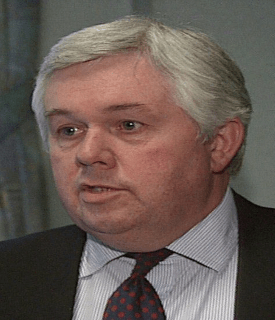
Birth of David Cook, Northern Ireland Solicitor & Politician

David Somerville Cook, English-born solicitor and politician, is born on January 25, 1944. He is a founding member of the nonsectarian, liberal-centre Alliance Party of Northern Ireland (APNI). He serves on Belfast City Council from 1973 to 1986, and in 1978 he becomes the first non-Unionist Lord Mayor of Belfast since 1898. He is elected as a member of the Northern Ireland Assembly of 1982 and serves on that body until its abolishment in 1986. He is appointed Chair of the Police Authority of Northern Ireland in 1994 and holds that position until his resignation from the role in 1996.

Cook is born to Francis John Granville Cook and Jocelyn McKay (née Stewart) in Leicester, England. As a child, he moves to Northern Ireland with his parents and sisters after his father is appointed headmaster of Campbell College in 1954.

Cook works as a solicitor, eventually becoming a senior partner at Sheldon and Stewart Solicitors.

In 1970, Cook is a founder member of the Alliance Party of Northern Ireland, a nonsectarian party, while he is elected to the party’s Central Executive in 1971.

Cook is elected to Belfast City Council in 1973, a position he holds until 1985. In 1978, he becomes the first non-Unionist Lord Mayor of Belfast since William James Pirrie, a Home Rule Liberal, in 1896–1898.

Cook stands for APNI in Belfast South in the February 1974 United Kingdom general election, taking just under 10% of the vote. He is able to improve to 27% of the vote at the 1982 Belfast South by-election. Following this, he wins a seat on the Northern Ireland Assembly representing Belfast South.

In the 1983 United Kingdom general election, 1986 Belfast South by-election and 1987 United Kingdom general election, Cook consistently wins over 20% of the votes cast in Belfast South. He also stands for Alliance in the 1984 European Parliament election but takes only 4% of the vote. From 1980 to 1984, he serves as the Deputy Leader of APNI.

In 1994, Cook becomes the Chairman of the Police Authority of Northern Ireland, but he is sacked from this role in 1996 after losing a vote of confidence. After a critical account of his role in an internal row in that authority appears in newspapers in 1998, he undertakes a lengthy libel case which is ultimately settled out of court. He subsequently sits on the Craigavon Health and Social Services Trust.

On September 20, 2020, it is announced that Cook has died after being diagnosed with COVID-19 during the pandemic. According to his family, he dies on September 19, 2020, at Craigavon Area Hospital. He had had a stroke two years earlier. He is survived by his wife Fionnuala, his sisters Alison and Nora, his daughter Barbary, his sons John, Patrick, Julius, and Dominic, and his granddaughters Romy and Imogen.


Leave a comment

Birth of Mildred Anne Butler, Animal & Genre Painter

Mildred Anne Butler, Irish artist who works in watercolour and oil of landscape, genre and animal subjects, is born on January 11, 1858, in Kilmurry, a Georgian house near Thomastown, County Kilkenny.

The youngest daughter of Captain Henry Butler, a grandson of the Edmund Butler, 11th Viscount Mountgarret, and Clara Butler (née Taylor) of the Newarke, Leicester, England. Her father is himself an enthusiastic painter, known for his publication South African sketches: illustrative of the wildlife of a hunter on the frontier of Cape Colony (1841). Her early artistic efforts are mainly copies of romantic subjects, but the influence of the London artist Paul Jacob Naftel, with whom she begins corresponding in the early 1880s, proves to be crucial to her artistic development. Studies with William Frank Calderon, an expert in animal painting, are also significant. She subsequently spends the summers of 1894 and 1895 in Newlyn, Cornwall, England, with the Irish artist Norman Garstin, who introduces her to contemporary French painting.

In 1885, Butler makes her first visit to the continent, traveling through France, Switzerland, and Italy. From 1905 to 1914 she travels regularly to Europe, most particularly Aix-les-Bains and Wiesbaden, during which time she produces genre views of French and German villages. After 1914 her life at the family home is interrupted only by visits to London exhibitions. She is best known for her paintings of Kilmurry and its environs, many of which display an interest in botany. Much of her work is dominated by detailed representations of animals and birds, often drawn from photographs and stuffed specimens.

Butler’s career as an exhibitor begins in 1882 with the Irish Fine Arts Society, later known as the Water Colour Society of Ireland (WCSI), with which she has a long association. She exhibits regularly with the society from 1892 onward and is a member of its committee for many years. She is also closely associated with the Dudley Museum and Art Gallery in London. Her work is first shown there in 1888, and on this evidence, she is elected to their society. The purchase by the Chantrey bequest for the Tate Gallery of The Morning Bath for £50 in 1896 is a high point in her career. The first painting by a woman to be selected by the council, its purchase is followed by almost consistently good press reviews for her work. The Athenaeum of May 5, 1897, writes: “The young lady knows how to look at her subjects with the eyes of a well-trained artist.”

Butler also comes to the attention of the American artistic press. She contributes to the portfolio of drawings given by the Society of Lady Artists to Princess May on her marriage to the Duke of York in 1893, while in 1922 her work is included in the portfolio presented to Princess Mary on her marriage. Her patrons include Queen Alexandra, and the grand duke of Hesse, who purchases two of her paintings after she is invited to exhibit in Hesse Darmstadt in 1911. In 1914 she is made a member of the Union Internationale des Beaux Arts, and in 1921 her paintings are shown in Japan. She regularly exhibits with the Belfast Ramblers, the Royal Ulster Academy, the Royal Academy of Arts (RA), the Royal Hibernian Academy (RHA), the Society of Lady Artists, and the Royal Watercolour Society, of which she is made an associate member in 1896, and a full member in 1937.

In her later years, severe rheumatism prevents Butler from painting. She has a keen interest in music. She survives all five of her siblings, and inherits Kilmurry, where she dies on October 11, 1941. She is buried at Thomastown, County Kilkenny. Her paintings are represented in the collections of the National Gallery of Ireland, Dublin City Gallery the Hugh Lane, the Ulster Museum, and the Tate, London.

(From: “Butler, Mildred Anne” by Frances Clarke, Dictionary of Irish Biography, http://www.dib.ie, October 2009)


Leave a comment

Birth of Kevin Myers, Journalist & Writer

Kevin Myers, English-born Irish journalist and writer, is born in Leicester, England on March 30, 1947. He has contributed to the Irish Independent, the Irish edition of The Sunday Times, and The Irish Times‘s column An Irishman’s Diary. He is known for his controversial views on a number of topics, including single mothers, aid for Africa, and the Holocaust.

Myers grows up in England. His father, an Irish GP, dies when he is 15 and away at Ratcliffe College, a Catholic boarding school. His father’s early death creates financial difficulties, though he manages to stay at the school with the help of both the school and the Local Education Authority (LEA). He moves to Ireland to go to university, and graduates from University College Dublin (UCD) in 1969.

Myers subsequently works as a journalist for Irish broadcaster RTÉ, and reports from Northern Ireland during the height of the Troubles. He later works for three of Ireland’s major newspapers, The Irish Times, the Irish Independent, and the Irish edition of The Sunday Times. In 2000, a collection of his An Irishman’s Diary columns is published, with a second volume following in 2007. He is also a presenter of the Challenging Times television quiz show on RTÉ during the 1990s.

In 2001, Myers publishes Banks of Green Willow, a novel, which is met with negative reviews. In 2006, he publishes Watching the Door, about his time as a journalist in Northern Ireland during the 1970s. The book receives positive reviews in The Times, The Guardian, and the New Statesman, while The Independent publishes a more mixed review that wonders whether there is “an element of hyperbole” in Myers’ account.

Myers is a regular contributor to radio programmes on News Talk 106, particularly Lunchtime with Eamon Keane and The Right Hook. He regularly appears on The Last Word on Today FM. He is also a member of the Film Classification Appeals Board, formerly known as the Censorship Board.

Myers is a fervent critic of physical-force Irish republicanism. In 2008, he writes a column condemning the anniversary commemorations of the 1916 Easter Rising. He describes the Larne gun-running by Ulster Volunteers in 1914 as “high treason, done in collaboration with senior figures in the British army and the Conservative Party.” He has also written that it is a “myth” to say, when discussing Irish republicanism and Ulster loyalism, that “one side is as bad as the other.”

In 2005, Myers attracts considerable criticism for his column, An Irishman’s Diary, in which he refers to children of unmarried mothers as “bastards.” Former Minister of State Nuala Fennell describes the column as “particularly sad.” She says the word “bastard” is an example of pejorative language that is totally unacceptable. Myers issues an unconditional apology two days later. The Irish Times editor, Geraldine Kennedy, also apologises for having agreed to publish the article.

In July 2008, Myers writes an article arguing that providing aid to Africa only results in increasing its population, and its problems. This produces strong reactions, with the Immigrant Council of Ireland making an official complaint to the Garda Síochána alleging incitement to hatred. Hans Zomer of Dóchas, an association of NGOs, and another complainant, take a complaint to the Press Council on the grounds that it breaches four principles of the Council’s Code of Practice: accuracy, fairness and honesty, respect for rights, and incitement to hatred.

At the end of July 2017, Myers contributes an article entitled “Sorry, ladies – equal pay has to be earned” to the Irish edition of The Sunday Times about the BBC gender-pay-gap controversy. He further alleges that Claudia Winkleman and Vanessa Feltz are higher paid than other female presenters because they are Jewish. The editor of the Irish edition, Frank Fitzgibbon, issues a statement saying in part “This newspaper abhors anti-Semitism and did not intend to cause offence to Jewish people.” Martin Ivens, editor of The Sunday Times, says the article should not have been published. Ivens and Fitzgibbon apologise for publishing it. After complaints from readers and the Campaign Against Antisemitism, the article is removed from the website. The newspaper announces that Myers will not write for The Sunday Times again. Myers is defended by the chair of the Jewish Representative Council of Ireland, Maurice Cohen, who states, “Branding Kevin Myers as either an antisemite or a Holocaust denier is an absolute distortion of the facts.”

Myers is married to Rachel Nolan and lives in County Kildare. He is the brother-in-law of TV presenter, producer and UK Big Brother housemate Anna Nolan.


Leave a comment

Birth of Arthur Colahan, Doctor & Songwriter

Arthur Nicholas Whistler Colahan, Irish doctor, British Army officer and songwriter, is born in Enniskillen, County Fermanagh, on August 12, 1884. The eldest child of Professor Nicholas Whistler Colahan and Elisabeth Quinn of Limerick, the family moves to Galway, and he grows up there.

After completing his secondary education at St. Joseph’s College, Galway, he enrolls at University College Dublin in 1900 where he receives an arts degree and then studies medicine. He transfers to University College, Galway and graduates in 1913. He is a member of the college Literary and Debating Society and participates in drama.

He begins his medical career in the County Infirmary in Galway and then moves to Holles Street Hospital. He joins the Royal Army Medical Corps and is badly affected by mustard gas in India. After the war he settles in Leicester, where he spends the rest of his career as a neurological specialist.

Colahan is also a composer of popular songs. He is a quiet man who is often homesick for his beloved Galway Bay. These feelings lead him to write his most famous work, “Galway Bay.” Popularised by Bing Crosby, it becomes the biggest selling record of all time at one point. Theories abound as to where the song is written or where it is first heard. Some say it is in the home of Dr. Morris at 1 Montpelier Terrace, while others believe it is in The Vicars Croft on Taylor’s Hill, from where one can see Galway Bay.

Other songs written by Colahan include “Maccushla Mine,” “Asthoreen Bawn,” “Until God’s Day,” “The Kylemore Pass” and “The Claddagh Ring.” Sadly, before his music is selling in the High Street he dies on September 15, 1952, and is buried in an unmarked grave back in his Irish birthplace.


Leave a comment

Last British Troops Leave the Irish Free State

british-troops-leave-ireland

The last British troops leave the Irish Free State on December 17, 1922. They are the remnants of a 5,000 strong garrison maintained up to that point in Dublin, commanded by Nevil Macready.

It appears to be a friendly farewell, even while Ireland is embroiled in its own Civil War. The Union Jack is lowered at the hospital and Macready goes to review the final contingent of troops as they leave the Royal barracks, later known as the Collins barracks. He then motors to Kingstown, now Dún Laoghaire, where he receives a 17-gun salute and joins Admiral Cecil Fox, the Sligo-born naval commander in the area, on board the cruiser HMS Dragon to sail home to England and retirement.

Meanwhile, the troops, 3,500 men mostly from the Leicester, Worchester, and Border regiments, march to the port. At Beresford Place they are greeted by 500 members of the Legion of Irish Ex-Servicemen, in civilian clothes but wearing their decorations. Thousands of other people line the quays and the armoured cars and the Dublin Metropolitan Police stand by, but there is no trouble. Embarkation onto six ships begins around 1:15 PM. At 3:10 PM, the last ship to leave, the steamer Arvonia chartered from the London and North Western Railway, weighs anchor while a band on deck plays “God Save the King” and a crowd breaks into the North Wall Extension to wave a final farewell as it enters Alexandra Basin.

The armoured cars them drive north to Ulster and the evacuation of the Irish Free State, apart from the Treaty ports, is over. General Richard Mulcahy, who takes over the Royal barracks that day, claims “the incubus of occupation that has lain as a heavy hand on the country for years has been removed.”

In his memoirs, Macready expresses annoyance that a photograph of Fox and himself published in The Irish Times on December 18 has the caption “two gallant Irishmen.” Although he has an Irish grandfather, he cordially loathes Ireland.

The British leave fully outfitted barracks to the Irish Army and artifacts including a large card in the Headquarters in Parkgate Street printed with the admonition “LOVE ONE ANOTHER.”


Leave a comment

Death of Father Willie Doyle

father-willie-doyle

Father Willie Doyle, an Irish Jesuit priest, is killed in action on August 16, 1917, during the World War I.

Born William Joseph Gabriel Doyle in Dalkey, County Dublin, on March 3, 1873, Doyle is the youngest of seven children of Hugh and Christine Byrne Doyle. He is educated at Ratcliffe College, Leicester. After reading St. Alphonsus’ book Instructions and Consideration on the Religious State he is inspired to enter the priesthood and is ordained a Jesuit priest in 1907. He serves for five years on the mission staff.

Doyle serves in the Royal Army Chaplains’ Department of the British Army during World War I, appointed as a chaplain to 48 Brigade of the 16th Irish Division. During the Battle of Loos Doyle is caught in a German gas attack and for his conduct is mentioned in dispatches. A recommendation for a Military Cross is rejected as “he had not been long enough at the front.” Instead, Doyle is presented with the parchment of merit of the 49th Infantry Brigade (Irish). He is killed in the Battle of Langemarck, on August 16, 1917. Father Doyle’s body is never recovered but he is commemorated at Tyne Cot Memorial in Belgium.

General William Bernard Hickie, the commander-in-chief of the 16th Irish Division, describes Doyle as “one of the bravest men who fought or served out here.” Doyle is awarded the Military Cross for his bravery during the assault on the village of Ginchy. He is recommended for a posthumous Victoria Cross and Distinguished Service Order but is awarded neither. Doyle is proposed for canonisation in 1938, but this is not followed through.

A stained-glass window dedicated to his memory is present in St. Finnian’s Church, Dromin, County Louth.