The Treaty of Limerick, which actually consists of two treaties, is signed on October 3, 1691, ending the Williamite War in Ireland between the Jacobites and the supporters of William III of England, widely known as William of Orange. Reputedly they are signed on the Treaty Stone, an irregular block of limestone which once served as a mounting block for horses. This stone is now displayed on a pedestal in Limerick, put there to prevent souvenir hunters from taking pieces of it. Because of the treaty, Limerick is sometimes known as the Treaty City.
After his victory at the Battle of the Boyne in July 1690, William III issues the Declaration of Finglas which offers a pardon to Jacobite soldiers but excludes their senior officers from its provisions. This encourages the Jacobite leaders to continue fighting and they win a major victory during the 1691 Siege of Limerick. However, defeats the following year at the Battle of Aughrim and the second siege of Limerick leave the Williamites victorious. Nonetheless the terms they offer to Jacobite leaders at Limerick are considerably more generous than those a year earlier at Finglas.
One treaty, the Military Articles, deals with the treatment of the disbanded Jacobite army. This treaty contains twenty-nine articles. Under the treaty, Jacobite soldiers in formed regiments have the option to leave with their arms and flags for France to continue serving under James II of England in the Irish Brigade. Some 14,000 Jacobites choose this option. Individual soldiers wanting to join the French, Spanish or Austrian armies also emigrate in what becomes known as the Flight of the Wild Geese. The Jacobite soldiers also have the option of joining the Williamite army. One thousand soldiers chose this option. The Jacobite soldiers thirdly have the option of returning home which some 2,000 soldiers choose.
The second treaty, the Civil Articles, which contains thirteen articles, protects the rights of the defeated Jacobite landed gentry who choose to remain in Ireland, most of whom are Catholics. Their property is not to be confiscated so long as they swear allegiance to William III and Mary II, and Catholic noblemen are to be allowed to bear arms. William requires peace in Ireland and is allied to the Papacy in 1691 within the League of Augsburg.
It is often thought that the Treaty of Limerick is the only treaty between Jacobites and Williamites. A similar treaty had been signed on the surrender of Galway on July 22, 1691, but without the strict loyalty oath required under the Treaty of Limerick. The Galway garrison had been organised by the mostly Catholic landed gentry of counties Galway and Mayo, who benefited from their property guarantees in the following century.
(Pictured: The Treaty Stone on which the Treaty of Limerick may have been signed)
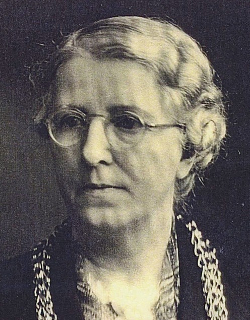
Kathleen Daly is born into a prominent Fenian family in Limerick on April 11, 1878, the third daughter of Edward and Catherine Daly. Her paternal uncle, John Daly, is at the time imprisoned for his political activities in Chatham and Portland Prisons in England. He is released in 1896 and returns home to Limerick. When Tom Clarke, who had been imprisoned with her uncle, is released in 1898 he travels to Limerick to receive the Freedom of the City and stays with the Daly family.
In 1901 Daly decides to emigrate to the United States to join Tom, who had been there since 1900, having secured work through his Fenian contacts. They marry on July 16, 1901, in New York City. Through his contacts in the Clan na Gael and the Irish Republican Brotherhood (IRB), Tom Clarke continues to be involved in nationalist activity. Kathleen joins the Gaelic League while in the United States and they return to Ireland in November 1907.
In 1914 Clarke becomes a founder member of Cumann na mBan. Her husband forbids her permission to take an active part in the 1916 Easter Rising as she has orders regardless of how the events pan out. As Tom Clarke is the first signatory of the Proclamation of the Irish Republic, he is chosen to be executed for his part in the Easter Rising. Her younger brother, Ned Daly, is also executed for taking part in the rising. She visits both of them before they are executed. After the Rising, Michael Collins establishes contact with her while in prison in his attempts to re-build the IRB network. She also sets up the Irish National Aid Fund to aid those who had family members killed or imprisoned as a result of the Easter Rising, closely aided by Sorcha MacMahon.
Clarke becomes a member of Sinn Féin and in 1917 is elected a member of the party’s Executive. During the German Plot she is arrested and imprisoned in Holloway Prison for eleven months. During the Irish War of Independence, she serves as a District Judge on the Republican Courts in Dublin. In 1919 she is elected as an Alderman for the Wood Quay and Mountjoy Wards of Dublin Corporation and serves until the Corporation is abolished in 1925.
Clarke is elected unopposed as a Sinn Féin TD to the Second Dáil at the 1921 elections for the Dublin Mid constituency. She is not re-elected at the 1922 Irish general election, however, and supports the Anti-Treaty forces during the Irish Civil War. In 1926 she becomes a founder member of Fianna Fáil and has to resign from Cumann na mBan. She is re-elected to the short-lived 5th Dáil at the June 1927 Irish general election as a Fianna Fáil member for the Dublin Mid constituency but loses her seat at the September 1927 Irish general election and does not regain it. She is elected as one of six Fianna Fáil Senators to the Free State Seanad for nine years at the 1928 Seanad election under the leadership of Joseph Connolly. She remains a member of the Seanad until it is abolished in 1936.
In 1930 Clarke is elected to the re-constituted Dublin Corporation for Fianna Fáil along with Robert Briscoe, Seán T. O’Kelly, Thomas Kelly and Oscar Traynor. She serves as the first Fianna Fáil Lord Mayor of Dublin as well as the first female Lord Mayor, from 1939 to 1941. She opposes the Constitution of Ireland as she feels that several of its sections would place women in a lower position that they had been afforded in the Proclamation of the Irish Republic. She is criticised by many in the Fianna Fáil organisation as a result and, while she resigns from the Thomas Clarke Cumann, she remains a member of the Fianna Fáil Ard Chomhairle.
While Clarke does not support the Irish Republican Army (IRA) bombing in England during World War II, she appeals for those sentenced to death by the Irish Government to be given clemency. Ultimately this leads to her breaking with the party completely after her term as Lord Mayor finishes in 1941. She declines to stand as a Fianna Fáil candidate at the 1943 Irish general election.
In 1966, as part of the celebrations of the Easter Rising, Clarke and other surviving relatives are awarded honorary Doctor of Law by the National University of Ireland. Following her death on September 29, 1972, she receives the rare honour of a state funeral. She is buried at Deans Grange Cemetery, Dublin.
Keating studies drawing at the Limerick Technical School before a scholarship arranged by William Orpen allows him to go study at the Metropolitan School of Art in Dublin at the age of twenty. Over the next few years, he spends two weeks or so during the late summer on the Aran Islands and his many portraits of island people depict them as rugged heroic figures.
In 1914 he wins the RDS Taylor award with a painting titled The Reconciliation. The prize includes £50.00 which allows him to go to London to work as Orpen’s studio assistant in 1915. In late 1915 or early 1916, he returns to Ireland where he documents the Irish War of Independence and the subsequent Irish Civil War. Examples include Men of the South (1921–22) which shows a group of Irish Republican Army (IRA) men ready to ambush a military vehicle and An Allegory (first exhibited in 1924), in which the two opposing sides in the Irish Civil War are seen to bury the tri-colour covered coffin amid the roots of an ancient tree. The painting includes a self-portrait of the artist.
Keating is elected an Associate of the Royal Hibernian Academy (RHA) in 1918, and a full member in 1923. One of the cardinal achievements of the Irish Free State in the 1920s is the building, in partnership with Siemens, of a hydro-electric power generator at Ardnacrusha, near Limerick. Between 1926 and 1927, at his own volition, he produces a considerable number of paintings related to this scheme. He exhibits several examples of the paintings in the RHA exhibitions in 1927 and 1928. Most of the paintings are now in the collection of ESB Group.
In 1936 group of prominent Limerick politicians, artists and patrons establish the first Limerick City Collection of Art from various donations and bequests. Keating is part of this artist-led initiative to form a municipal art gallery in Limerick similar to those already in Dublin and Cork. The collection is formed primarily out of donations and bequests. As a pivotal member of the committee, Keating himself donates many works to the collection which is first exhibited as a municipal collection in the Savoy Cinema, Limerick City on November 23, 1937. It is not until 1948 that an extension to the rear of Limerick Free Library and Museum becomes the home to the City Collection as the Limerick Free Art Gallery. In 1985 the Library and Museum are transferred to larger buildings.
In 1939 Keating is commissioned to paint a mural for the Irish pavilion at the New York World’s Fair. He is President of the RHA from 1950 to 1962, and shows at the annual exhibition for 61 years from 1914. Although he is an intellectual painter in the sense that he consciously sets out to explore the visual identity of the Irish nation, and his paintings show a very idealised realism, he fears that the modern movement will bring back a decline in artistic standards. Throughout his career, he exhibits nearly 300 works at the RHA and also shows at the Oireachtas.
Seán Keating dies on December 21, 1977 at the Adelaide Hospital in Dublin and is buried at Cruagh Cemetery, Rathfarnham. The 1978 RHA Exhibition features a small memorial collection of his work.
Posthumous exhibitions of his work are mounted by The Grafton Gallery, Dublin (1986) and the Electricity Supply Board (1987). Sean Keating – The Pilgrim Soul, a documentary presented and written by his son Justin Keating, airs on RTÉ in 1996.
(Pictured: Photograph of Keating’s “An Allegory” painted between 1922 and 1924. The painting represents Keating’s own disillusionment and loss of idealism resulting from the outbreak of the Irish Civil War. The only figure of the group addressing the observer is a self-portrait of the artist.)
O’Riordan is the youngest of nine children, two of whom die in infancy. Her father, Terence Patrick “Terry” O’Riordan (1937–2011), is a farm labourer who is left unable to work due to brain damage caused by a motorbike accident in 1968. Her mother, Eileen, is a school caterer. She attends Laurel Hill Coláiste FCJ school in Limerick. She leaves school without any qualifications.
In 1989, brothers Mike and Noel Hogan form The Cranberry Saw Us with drummer Fergal Lawler and singer Niall Quinn, in Limerick. Less than a year later, Quinn leaves the band. The remaining band members then place an advertisement for a female singer. O’Riordan responds to the advertisement and auditions by writing lyrics and melodies to some existing demos. When she returns with a rough version of “Linger,” she is hired, and they record Nothing Left At All, a three-track EP released on tape by local record label Xeric Records, which sells 300 copies. The group changes their name to “The Cranberries.” The owner of Xeric Studios, Pearse Gilmore, becomes their manager and provides the group with studio time to complete another demo tape, which he produces. It features early versions of “Linger” and “Dreams,” which are sent to record companies throughout the United Kingdom (UK).
Are You Listening? is released in Ireland on May 4, 2007, in Europe on May 7, and in North America on May 15. In 2008, O’Riordan wins a European Border Breakers Award (EBBA) which is presented annually to recognize the success of ten emerging artists or groups who reach audiences outside their own countries with their first internationally released album in the past year. Her second album, No Baggage, featuring eleven tracks, is released in August 2009.
In January 2009, the University Philosophical Society at Trinity College, Dublin invites The Cranberries to reunite for a concert celebrating O’Riordan’s appointment as an honorary member of the Society, which leads the band members to consider reuniting for a tour and a recording session. On August 25, 2009, while promoting her solo album No Baggage in New York City on 101.9 RXP radio, O’Riordan announces the reunion of the Cranberries for a world tour. The tour begins in North America in mid-November, followed by South America in mid-January 2010 and Europe in March 2010. She remains in the band until her unexpected death.
She appears as a judge on RTÉ‘s The Voice of Ireland during the 2013–2014 season. In April 2014, O’Riordan joins and begins recording new material with the trio D.A.R.K.
On January 15, 2018, at the age of 46, while in London for a recording session, O’Riordan dies suddenly at the London Hilton on Park Lane hotel in Mayfair. The cause of death is not immediately made public. Police say it is not being treated as suspicious. The coroner’s office says the results of its inquiry would not be released until April 3 at the earliest. On April 3 the inquest is cancelled with no new date announced.
A three-day memorial in her hometown, with O’Riordan lying in repose, lasts from January 20-22 at St. Joseph’s church. On January 23, she is buried after a service at Saint Ailbe’s Roman Catholic Church, Ballybricken, County Limerick. It begins with the studio recording of “Ave Maria” as sung by O’Riordan and Luciano Pavarotti. She is buried alongside her father.
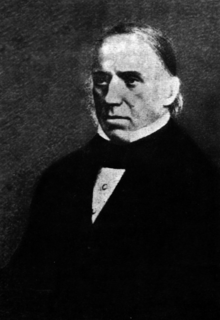
O’Curry is born at Doonaha, near Carrigaholt, County Clare, the son of Eoghan Ó Comhraí, a farmer, and his wife Cáit. Eoghan has spent some time as a traveling peddler and has developed an interest in Irish folklore and music. Unusual for someone of his background, he is literate and is known to possess a number of Irish manuscripts. It is likely that Eoghan is primarily responsible for his son’s education.
Having spent some years working on his father’s farm and as a school teacher, O’Curry moves to Limerick in 1824 and spends seven years working there at a psychiatric hospital. He marries Anne Broughton, daughter of John Broughton of Killaderry near Broadford, County Limerick on October 3, 1824. He is a supporter of Catholic emancipation and in 1828 writes a poem congratulating Daniel O’Connell on his election as an MP.
During this period O’Curry is establishing a reputation for his knowledge of the Irish language and Irish history, and, by 1834, is in correspondence with the antiquary John O’Donovan. He is employed, from 1835 to 1842, on O’Donovan’s recommendation, in the topographical and historical section of Ordnance Survey Ireland. O’Donovan goes on to marry O’Curry’s sister-in-law, Mary Anne Broughton, in 1840. O’Curry spends much of the remainder of his life in Dublin and earns his living by translating and copying Irish manuscripts. The catalogue of Irish manuscripts in the British Museum (1849) is compiled by him for a fee of £100. He is responsible for the transcripts of Irish manuscripts from which O’Donovan edits the Annals of the Four Masters between 1848 and 1851.
In 1851 O’Curry is elected a member of the Royal Irish Academy and, on the founding of the Catholic University of Ireland in 1854, he is appointed professor of Irish history and archaeology. He works with George Petrie on the Ancient Music of Ireland (1855). In 1852, he and O’Donovan propose the Dictionary of the Irish Language, which is eventually begun by the Royal Irish Academy in 1913 and finally completed in 1976.
O’Curry’s lectures are published by the university in 1860, and give a better knowledge of Irish medieval literature than can be obtained from any other one source. Three other volumes of lectures are published posthumously, under the title On the Manners and Customs of the Ancient Irish (1873). His voluminous transcripts, notably eight huge volumes of early Irish law, testify to his unremitting industry. The Celtic Society, of the council of which he is a member, publishes two of his translations of medieval tales.
Eugene O’Curry dies of a heart attack at his home in Dublin on July 30, 1862, and is survived by two sons and two daughters. He is buried at Glasnevin Cemetery in Dublin. O’Curry Road in the Tenters area of Dublin 8 is named in his honour.
The play receives its world premiere when the Druid Theatre Company opens the production at the Town Hall Theatre, Galway on February 1, 1996. It then tours Ireland, stopping off in Longford, Kilkenny and Limerick. It transfers to London‘s West End, where it opens at the Royal Court Theatre on February 29, 1996.
The Druid production returns to Ireland to embark on an extensive national tour, playing in Galway, Cork, Kerry, Limerick, Fermanagh, Donegal and Derry amongst others. The play returns to London where it is revived at the Duke of York’s Theatre on November 29, 1996, for several months.
The play is produced as part of Druid’s Leenane Trilogy, which includes two other plays by Martin McDonagh, in 1997 where it plays as part of another Irish and UK tour, which includes stops at the Olympia Theatre, Dublin and the Royal Court Theatre in London again.
The play receives its American premiere opening Off-Broadway on February 11, 1998, presented by the Atlantic Theatre Company at the Linda Gross Theater. It transfers to the Walter Kerr Theater on Broadway where it opens on April 14, 1998. It receives six Tony Award nominations, winning four for Best Supporting Actor (Tom Murphy), Best Actress (Marie Mullen), Best Supporting Actress (Anna Manahan), and Best Director (Garry Hynes), the first female recipient of a Tony Award for directing a play.
The play is produced in Australia in 1998 and again in 1999. The 1999 production is a tour by the Royal Court Theatre Company, appearing at the Adelaide Festival Centre (May – June 1999) and Wharf 1 (July 1999) and directed by Garry Hynes. The production returns to Ireland in 2000 as part of a final national tour.
The play is revived in July 2010 at the Young Vic Theatre in the West End, starring Irish actress Rosaleen Linehan. The production transfers to Dublin’s Gaiety Theatre where Linehan reprises her role opposite Derbhle Crotty. It then returns to the Young Vic for another run, closing in September 2011.
The Druid Theatre Company presents a revival in 2016–2017. The production starts in Ireland in Galway at the Town Hall Theatre in September 2016, and then tours to The Everyman in Cork, the Lime Tree Theatre in Limerick and the Gaiety Theatre, Dublin. The play then tours in the United States starting in November 2016. The play runs at the Mark Taper Forum in Los Angeles in November 2016 then opens at the Brooklyn Academy of Music in New York City, running from January 11, 2017, to February 5. The production returns to Ireland, playing at The Gaiety Theatre from March 28 to April 15, 2017.
The last barge on the Grand Canal makes its final journey to Limerick on May 27, 1960 carrying a cargo of Guinness. The impressive broad-beamed barge carrying the number 51M casts off from Dublin‘s James Street Harbour marking the end of a way of life on the canal which has existed since the construction of the waterway in the early 1800s.
For some 160 years freight barges ply the canal bringing cargoes to and from Dublin, Limerick, Waterford and canal-side villages across the midlands from Sallins to Shannon Harbour. The spine of the waterways system is the Grand Canal which crosses mid-Kildare in a southwest direction from Hazelhatch to west of Ticknevin.
Typically a crew of four men live on the boats on voyages which can take up to four days from Dublin to Limerick. The crew is comprised of the Master or skipper, the Engineman, Deck man and Greaser. Although a seemingly idyllic job the boatmen worked hard in all weather, sometimes sailing through the night.
The canal cargo business is always under pressure from the railways but tonnages of bulk goods (barrels of porter, turf, coal, sand, gravel, and grain and flour) where speed is not important remain high. Competition from the motor lorry in the 1920s and 1930s causes tonnages to fall severely. The canals get a brief respite during the Emergency years (1939-45) when they are pressed into service to transport turf from the Bog of Allen to Dublin city where it is stored in massive clamps at Phoenix Park.
As part of a rationalisation in the post-war decades, the Government brings out the shareholders of the Grand Canal Company and amalgamates its operations with Córas Iompair Éireann (CIÉ), a newly formed semi-state entity with a mandate to take over all transport services in Ireland. CIÉ has enough on its hands trying to keep the railway system viable and it is clear that the days of canal freight are numbered. In November 1959 CIÉ announces that the Grand Canal will close to cargo boats on December 31 of that year.
The Guinness brewery asks for a stay of a few months so it can complete alternative arrangements for road deliveries. The definitive final voyage from Dublin begins on the afternoon of May 27, 1960 when 51M casts off at James Street Harbour bound for the Guinness depot in Limerick.
51M escapes the wrecker’s torch and is kept in service though a succession of canal authorities as a maintenance boat for the canals. In May 2010, fifty years after it carried the last commercial cargo from Dublin to Limerick, the canal boat 51M retraces its historic journey, once again carrying a number of original Guinness casks as its cargo.
Manning, a 25-year-old carter from Johnsgate in Limerick, County Limerick, is found guilty of the rape and murder of Catherine Cooper, a 65-year-old nurse who works at Barrington’s Hospital in the city, in February 1954. Nurse Cooper’s body is discovered on November 18, 1953, in the quarry under the New Castle, Dublin Road, Castletroy. She is found to have choked on grass stuffed into her mouth to keep her from screaming during the committal of the crime.
Manning expresses remorse at the crime which he does not deny. By his own account, he is making his way home on foot after a day’s drinking in The Black Swan, Annacotty when he sees a woman he does not recognise walking alone. “I suddenly lost my head and jumped on the woman and remember no more until the lights of a car shone on me.” He flees at this point but is arrested within hours, after his distinctive hat is found at the scene of the crime.
Although Manning makes an impassioned plea for clemency in a letter to Minister for JusticeGerald Boland, his request is denied despite it also being supported by Nurse Cooper’s family. The execution by hanging is duly carried out on April 20, 1954, in Mountjoy Prison, Dublin by Albert Pierrepoint, who has traveled from Britain where he is one of three Senior Executioners.
Frank Prendergast, subsequently Teachta Dála (TD) for Limerick East who knew Manning well, recalls later, “Friends of mine who worked with me, I was serving my time at the time, went up to visit him on the Sunday before he was hanged. And they went to Mass and Holy Communion together and they played a game of handball that day. He couldn’t have been more normal.”
Manning leaves a wife who is pregnant at the time of the murder. His body is buried in an unmarked grave in a yard at Mountjoy Prison.
The death penalty is abolished in 1964 for all but the murder of gardaí, diplomats and prison officers. It is abolished by statute for these remaining offences in 1990 and is finally expunged from the Constitution of Ireland by approval by referendum of the Twenty-First Amendment on June 7, 2001.
The hanging of Michael Manning inspires a play by Ciaran Creagh. Creagh’s father, Timothy, is one of the two prison officers who stays with Michael Manning on his last night and Last Call is loosely based on what happened. It is shown in Mountjoy Prison’s theatre for three nights in June 2006.
Whelan is best known for composing a piece for the interval of the 1994 Eurovision Song Contest. The result, Riverdance, is a seven-minute display of traditional Irish dancing that becomes a full-length stage production and spawns a worldwide craze for Irish dancing and Celtic music and also wins him a Grammy Award. It is released as a single in the United Kingdom in 1994, credited to “Bill Whelan and Anúna featuring the RTÉ Concert Orchestra.” It reaches number 9 and stays in the charts for 16 weeks. The album of the same title reaches number 31 in the album charts in 1995. He also composes a symphonic suite version of Riverdance, with its premiere performed by the Ulster Orchestra on BBC Radio 3 in August 2014.
Nearly 150,000 people take to the streets on December 9, 2005, as the Irish Ferries protest mushrooms into the largest public demonstration the country has seen for two decades.
An Garda Síochána estimate that 40,000 people take part in the march in Dublin, although organisers claim the figure is far higher. Gerry Adams of Sinn Féin, Pat Rabbitte of the Labour Party and John Gormley of the Green Party participate in the march in the capital. Staff on board the MS Isle of Inismore in Pembroke and the four engineers holed up in the ships control room say they are overwhelmed by the level of support shown by marchers in the rallies.
Bus and rail services are disrupted during the protest but return to normal for evening rush hour.
The Irish Small & Medium Enterprises Association (ISME) strongly criticises the National Day of Protest. In a statement, ISME Chief Executive Mark Fielding says the protest is undermining the industrial relations process in this country and has very little to do with the Irish Ferries dispute and is in fact an attempt by the unions to influence negotiations in advance of any new national pay agreement.
Director General of the Irish Business and Employers Confederation (IBEC) Turlough O’Sullivan says there is nothing to be gained from disrupting business and the general public. He adds that whatever one’s views on the Irish Ferries dispute, nothing can justify calling a national work stoppage when discussions are already underway in a bid to resolve the row.






 seamus dubhghaill