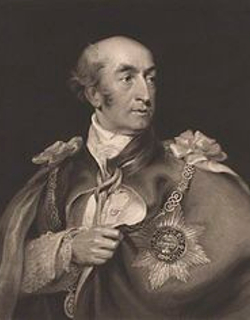
John Blaquiere, 1st Baron de Blaquiere, British soldier, diplomat and politician of French descent, is born on May 15, 1732. He serves as Chief Secretary for Ireland between 1772 and 1776. He is the fifth son of Jean de Blaquiere, a French merchant who had emigrated to England in 1685, and his wife Marie Elizabeth de Varennes.
Blaquiere at first serves in the Army, in the 18th Dragoons, later renumbered the 17th Dragoons, where he achieves the rank of Lieutenant Colonel. In 1771 he is appointed Secretary of Legation at the British Embassy in Paris, a post he holds until 1772. The latter year Simon Harcourt, 1st Earl Harcourt, the British Ambassador in Paris, is appointed Lord Lieutenant of Ireland, and Blaquiere joins him as Chief Secretary for Ireland. He is admitted to the Privy Council of Ireland the same year and made a Knight Companion of the Order of the Bath two years later.
Blaquiere is to remain Chief Secretary until December 6, 1776. He is elected to the Irish House of Commons for Old Leighlin in 1773, a seat he holds until 1783. After representing Enniskillen for a few months in 1783, he sits then for Carlingford from 1783 to 1790, for Charleville from 1790 to 1798 and for Newtownards from 1798 until the Act of Union comes into force in 1801. He is created a Baronet, of Ardkill in County Londonderry, in 1784, and is raised to the Peerage of Ireland as Baron de Blaquiere, of Ardkill in the County of Londonderry, in 1800, for his support for the Act of Union. Lord de Blaquiere also sits as a Member of the British House of Commons for Rye from 1801 to 1802 and for Downton from 1802 to 1806. He is elected a Fellow of the Royal Society in 1803.
Lord de Blaquiere marries Eleanor, daughter of Robert Dobson, in 1775. They have four sons, including Peter de Blaquière, and three daughters. Lord de Blaquiere dies at the age of 80 in Bray, County Wicklow, on August 27, 1812. He is succeeded in his titles by his eldest son, John. Lady de Blaquiere dies at Regent’s Park, Marylebone, London, in December 1833.
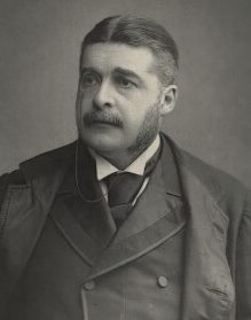
In 1866 Sullivan composes a one-act comic opera, Cox and Box, which is still widely performed. He writes his first opera with W. S. Gilbert, Thespis, in 1871. Four years later, the impresarioRichard D’Oyly Carte engages Gilbert and Sullivan to create a one-act piece, Trial by Jury (1875). Its box office success leads to a series of twelve full-length comic operas by the collaborators. After the extraordinary success of H.M.S. Pinafore (1878) and The Pirates of Penzance (1879), Carte uses his profits from the partnership to build the Savoy Theatre in 1881, and their joint works become known as the Savoy operas. Among the best known of the later operas are The Mikado (1885) and The Gondoliers (1889). Gilbert breaks from Sullivan and Carte in 1890, after a quarrel over expenses at the Savoy. They reunite in the 1890s for two more operas, but these do not achieve the popularity of their earlier works.
Sullivan’s infrequent serious pieces during the 1880s included two cantatas, The Martyr of Antioch (1880) and The Golden Legend (1886), his most popular choral work. He also writes incidental music for West End productions of several Shakespeare plays and holds conducting and academic appointments. Sullivan’s only grand opera, Ivanhoe, though initially successful in 1891, has rarely been revived. In his last decade Sullivan continues to compose comic operas with various librettists and writes other major and minor works.
Sullivan’s health is never robust. From his thirties kidney disease obliges him to conduct sitting down. He dies at the age of 58 of heart failure, following an attack of bronchitis, at his flat in London on November 22, 1900. Sullivan’s wishes are to be buried in Brompton Cemetery with his parents and brother, but by order of the Queen he is buried in St. Paul’s Cathedral.
Arthur Sullivan is regarded as Britain’s foremost composer. His comic opera style serves as a model for generations of musical theatre composers that follow, and his music is still frequently performed, recorded and pastiched.
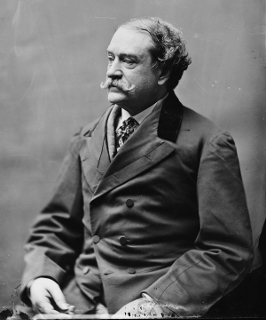
Brougham’s father is an amateur painter and dies young. His mother is the daughter of a Huguenot, whom political adversity has forced into exile. He is the eldest of three children. Both of his siblings die in youth, and the father being dead, and the widowed mother left penniless, he is reared in the family and home of an uncle.
Brougham is prepared for college at an academy at Trim, County Meath, twenty miles from Dublin, and subsequently is sent to the University of Dublin. There he acquires classical learning and forms interesting and useful associations and acquaintances. He also becomes interested in private theatricals. He falls in with a crowd that puts on their own shows, cast by drawing parts out of a hat. Though he most always trades off larger roles so he can pay attention to his studies, he takes quite an interest in acting. He is a frequent attendant, moreover, at the Theatre Royal in Hawkins Street.
Brougham is educated with the intention of his becoming a surgeon and walks the Peth Street Hospital for eight months. However, misfortune comes upon his uncle, so he is obliged to provide for himself. Before leaving the university he, by chance, becomes acquainted with the actress Lucia Elizabeth Vestris.
Brougham goes to London in 1830 and, after a brief experience of poverty, suddenly determines to become an actor. He is destitute of everything except fine apparel, and he has actually taken the extreme step of offering himself as a cadet in the service of the East India Company. But, being dissuaded by the enrolling officer, who lends him a guinea and advises him to seek other employment, and happening to meet with a festive acquaintance, he seeks recreation at the Tottenham Theatre where Madame Vestris is acting.
Brougham’s acquaintance with Madame Vestris leads to him being engaged at the theatre, and he thus makes his first appearance on the London stage in July in Tom and Jerry, in which he plays six characters. In 1831 he is a member of Madame Vestris’s company and writes his first play, a burlesque. He remains with Madame Vestris as long as she and Charles Mathews retain Covent Garden Theatre, and he collaborates with Dion Boucicault in writing London Assurance, the role of Dazzle being one of those with which he becomes associated. His success at small or “low” comic roles such as Dazzle earn him the nickname “Little Johnny Brougham,” a moniker which he embraces, and which boosts his popularity with working-class audiences.
In 1840 Brougham manages the Lyceum Theatre, for which he writes several light burlesques, but in 1842 he moves to the United States, where he becomes a member of William Evans Burton‘s company, for which he writes several comedies, including Met-a-mora; or, the Last of the Pollywogs, a parody of John A. Stone and Edwin Forrest’s Metamora; or The Last of the Wamponoags, and Irish Yankee; or, The Birthday of Freedom.
In 1860 Brougham returns to London, where he adapts or writes several plays, including The Duke’s Motto for Charles Fechter. In November 1864 he appears at the Theatre Royal in his native Dublin in the first performance of Dion Boucicault’s Arrah-na-Pogue with Boucicault, Samuel Johnson and Samuel Anderson Emery in the cast.
After the American Civil War Brougham returns to New York City. Brougham’s Theatre is opened in 1869 with his comedies Better Late than Never and Much Ado About a Merchant of Venice, but this managerial experience is also a failure due to disagreements with his business partner, James Fisk. He then takes to playing the stock market. His last appearance onstage is in 1879 as “O’Reilly, the detective” in Boucicault’s Rescued.
The Richmond Tower at the end of the formal avenue leading to the Royal Hospital is designed by Francis Johnston, one of the leading architects of the day. This gateway originally stands beside the River Liffey at Bloody Bridge (now Rory O’More Bridge) but has to be moved after the arrival of the railway in 1844 increases traffic congestion. Johnston places his personal coat of arms above the arch, concealed by a piece of wood painted to match the stone, his idea being that his arms would be revealed to future generations after the wood becomes rotten. However, his little trick is uncovered when the gateway is taken down for removal. The coat of arms currently on the gateway is that of the Royal Hospital.
The Royal Hospital Kilmainham graveyards, including Bully’s Acre, are 400 metres to the west. A cross-shaft in the former cemetery may be the remains of a boundary cross associated with a ninth-century monastery located at this site.
Following the creation of the Irish Free State the Royal Hospital is considered as a potential home for Oireachtas Éireann, the new Irish national parliament. Eventually it is decided to keep parliament in its temporary home in Leinster House. The Hospital remains the home of a dwindling number of soldiers, before being variously used by the Garda Síochána and as a storage location for property belonging to the National Museum of Ireland. The large statue Queen Victoria which used to stand in the forecourt of Leinster House, before its removal in 1947, is stored in the main courtyard of the Hospital, as are various state carriages, including the famously spectacular State Coach of the Lord Chancellor of Ireland. The Royal Hospital Kilmainham is finally restored by the Irish Government in 1984 and controversially opens as the Irish Museum of Modern Art (IMMA). Some people working in heritage organisations criticise the decision to demolish the eighteenth-century barrack rooms in one section of the quadrangle to create open spaces for the IMMA.
In recent years, Royal Kilmainham Hospital has become a popular location for concerts during the summer months. Acts such as Blur, Leonard Cohen, The Flaming Lips, Jack White and Public Enemy have played within the grounds in the past.
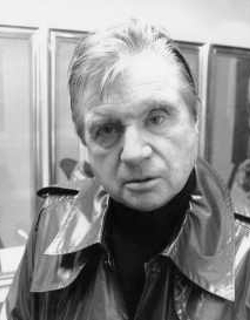
Bacon is born in Dublin on October 28, 1909. He is best known for his depictions of popes, crucifixions and portraits of close friends. His abstracted figures are typically isolated in geometrical cage like spaces, set against flat, nondescript backgrounds. Bacon says that he sees images “in series,” and his work typically focuses on a single subject for sustained periods, often in triptych or diptych formats. His output can be broadly described as sequences or variations on a single motif, beginning with the 1930s Pablo Picasso-informed Furies, moving on to the 1940s male heads isolated in rooms or geometric structures, the 1950s screaming popes, and the mid-to-late 1950s animals and lone figures, the 1960s portraits of friends, the nihilistic 1970s self-portraits, and the cooler more technical 1980s late works.
Bacon takes up painting in his late 30s, having drifted as an interior decorator, bon vivant and gambler. He says that his artistic career was delayed because he spent too long looking for subject matter that could sustain his interest. His breakthrough comes with the 1944 triptych Three Studies for Figures at the Base of a Crucifixion, which seals his reputation as a uniquely bleak chronicler of the human condition. From the mid-1960s he mainly produces portraits of friends and drinking companions, either as single or triptych panels. Following the 1971 suicide of his lover, George Dyer, his art becomes more sombre, inward-looking and preoccupied with the passage of time and death. The climax of this later period is marked by masterpieces, including Study for Self-Portrait (1982) and Study for a Self-Portrait—Triptych, 1985–86.
Despite his bleak existentialist outlook, solidified in the public mind through his articulate and vivid series of interviews with David Sylvester, Bacon in person is highly engaging and charismatic, articulate, well-read and unapologetically gay. He is a prolific artist, but nonetheless spends many of the evenings of his middle age eating, drinking and gambling in London‘s Soho with like-minded friends such as Lucian Freud, John Deakin, Muriel Belcher, Henrietta Moraes, Daniel Farson, Tom Baker, and Jeffrey Bernard.
After Dyer’s suicide he largely distances himself from this circle, and while his social life is still active and his passion for gambling and drinking continues, he settles into a platonic and somewhat fatherly relationship with his eventual heir, John Edwards. The art critic Robert Hughes describes him as “the most implacable, lyric artist in late 20th-century England, perhaps in all the world” and along with Willem de Kooning as “the most important painter of the disquieting human figure in the 50’s of the 20th century.” Bacon is the subject of two Tate retrospectives and a major showing in 1971 at the Grand Palais.
While on holiday in Madrid in 1992, Francis Bacon is admitted to the Handmaids of Maria, a private clinic, where he is cared for by Sister Mercedes. His chronic asthma, which has plagued him all his life, has developed into a respiratory condition and he is unable to talk or breathe very well. He dies of a heart attack on April 28, 1992, after attempts to resuscitate him fail.
Bacon bequeaths his estate, then valued at £11 million, to John Edwards and Brian Clark, executors. In 1998 the director of the Hugh Lane Gallery in Dublin secures the donation of the contents of Bacon’s chaotic studio at 7 Reece Mews, South Kensington. The contents of his studio are moved and reconstructed in the gallery. Most of his works remain in the Hugh Lane in Dublin today.
Since his death his reputation and market value have grown steadily, and his work is among the most acclaimed, expensive and sought-after. In the late 1990s a number of major works, previously assumed destroyed, including early 1950s popes and 1960s portraits, reemerge to set record prices at auction. In 2013 his Three Studies of Lucian Freud sets the world record as the most expensive piece of art sold at auction.
McCarthy is born in Cork, County Cork on November 22, 1830, and is educated there. He begins his career as a journalist at the age of 18 in Cork. From 1853 to 1859 he is in Liverpool, on the staff of the Northern Daily Times. In March 1855, he marries Charlotte Ailman. In 1860 he moves to London, as parliamentary reporter to the Morning Star, of which he becomes editor in 1864. He gives up his post in 1868 and, after a lecturing tour in the United States, joins the staff of The Daily News as leader-writer in 1870. In this capacity he becomes one of the most useful and respected upholders of the liberal politics of the time. He lectures again in America in 1870–71 and in 1886–87.
McCarthy is first elected to Parliament at a by-election on April 4, 1879, when he is returned unopposed as a Home Rule League MP for County Longford. He is re-elected unopposed as a Parnellite Home Ruler in 1880, and when the two-seat Longford constituency is split into two divisions under the Redistribution of Seats Act 1885, he is elected as an Irish Parliamentary Party member for the new single-seat Northern division of Longford. His sole opponent, a Conservative, wins only 6% of the votes.
At the 1886 general election, he is returned unopposed in North Longford, but also stands in Londonderry City, where he is declared the loser to the Irish Unionist Alliance candidate by the narrow margin of 1778 votes to 1781. However, the result is later overturned on petition and McCarthy opts to sit for Derry City. During the divorce controversy surrounding Charles Stewart Parnell in November 1890, the British Prime MinisterWilliam Ewart Gladstone expresses a warning, given to McCarthy as intermediary, that if Parnell retains leadership of the Irish Parliamentary Party it will mean the loss of the next election, the end of their alliance and Home Rule. When the annual party leadership election meeting is called later that month, the threat is somehow not conveyed to the members, who re-elect Parnell leader of the Party.
After a further historical meeting of the Irish Party MPs in early December, Parnell refuses to retire and the Party divides. McCarthy becomes chairman of the Anti-Parnellite group, the Irish National Federation, for a year in 1891–1892. His nationalism is of a temperate and orderly kind, and though his personal distinction singles him out for the chairmanship during the party dissensions of this period, he is in no active sense the political leader.
At the 1892 general election, McCarthy again stands both in North Longford and in Derry City. In each seat there is a two-way contest between the Anti-Parnellite McCarthy and a Unionist candidate, but the narrow Unionist victory in Derry is not overturned, and McCarthy sits for North Longford, where he wins over 93% of the votes. He is returned unopposed for North Longford in 1895 United Kingdom general election in Ireland and stands down from Parliament at the 1900 United Kingdom general election in Ireland.
It is claimed that McCarthy’s true vocation is literature. His earliest publications are novels, some of which, such as A Fair Saxon (1873), Dear Lady Disdain (1875), Miss Misanthrope (1878), and Donna Quixote (1879), attain considerable popularity. His most important work is his History of Our Own Times, which treats of the period between Queen Victoria‘s accession and her Diamond Jubilee. He begins a History of the Four Georges (1884–1901) and the latter half is written by his son, Justin Huntly McCarthy.
Justin McCarthy dies at the age of 81 in Folkestone, Kent, England on April 24, 1912.
In 1824 the four eldest Brontë daughters are enrolled as pupils at the Clergy Daughters’ School at Cowan Bridge. The following year Maria and Elizabeth, the two eldest daughters, become ill, leave the school and ultimately die. Charlotte and sister Emily, understandably, are brought home. Charlotte ultimately uses the school as the basis for Lowood School in Jane Eyre.
In 1826 Patrick Brontë brings home a box of wooden soldiers for son Branwell. Charlotte, Emily, Branwell, and Ann, playing with the soldiers, conceive of and begin to write in great detail about an imaginary world which they call Angria.
In 1831 Charlotte becomes a pupil at the school at Roe Head in Mirfield, but she leaves school the following year to teach her sisters at home. She returns to Roe Head School in 1835 as a governess, leaving in 1838. The following year she accepts a position as governess in the Sidgewick family, but leaves after three months and returns to Haworth. In 1841 she becomes governess in the White family, but leaves, once again, after nine months.
Upon her return to Haworth the three sisters, led by Charlotte, decide to open their own school after the necessary preparations have been completed. In 1842 Charlotte and Emily go to Brussels to complete their studies. After a trip home to Haworth, Charlotte returns alone to Brussels, where she remains until 1844.
Upon her return home the sisters embark upon their project for founding a school, which proves to be an abject failure. Their advertisements do not elicit a single response from the public. The following year Charlotte discovers Emily’s poems and decides to publish a selection of the poems of all three sisters. The poems, written under the pseudonyms of Currer, Ellis and Acton Bell, are published in 1846. She also completes The Professor, which is rejected for publication. The following year, however, Charlotte’s Jane Eyre, Emily’s Wuthering Heights, and Ann’s Agnes Grey are all published, still under the Bell pseudonyms.
In 1848 Charlotte and Ann visit their publishers in London, and reveal the true identities of the “Bells.” In the same year Branwell Brontë, by now an alcoholic and a drug addict, dies, and Emily dies shortly thereafter. Ann dies the following year.
In 1849 Charlotte, visiting London, begins to move in literary circles, making the acquaintance, for example, of William Makepeace Thackeray. In 1850 she edits her sister’s various works, and meets Elizabeth Gaskell. In 1851 she visits The Great Exhibition in London, and attends a series of lectures given by Thackeray.
The Rev. Arthur Bell Nicholls, curate of Haworth since 1845, proposes marriage to Charlotte in 1852. Her father objects violently, and Charlotte, who, though she may have pitied him, is not in love with him and refuses the proposal. Nicholls leaves Haworth in the following year, the same in which Charlotte’s Villette is published. By 1854, however, her father’s opposition to the proposed marriage has weakened, and Charlotte and Nicholls become engaged. Nicholls returns as curate at Haworth and they are married, though it seems clear that Charlotte, though she admires him, still does not love him.
Charlotte becomes pregnant soon after her wedding, but her health declines rapidly. She dies at the age of 38, with her unborn child, on March 31, 1855, three weeks before her 39th birthday, at Haworth, West Yorkshire, England. Her death certificate gives the cause of death as tuberculosis, but biographers including Claire Harman suggest that she died from dehydration and malnourishment due to vomiting caused by severe morning sickness.
The Professor is published postumously in 1857, having been written in 1845-1846. In that same year, Elizabeth Gaskell’s Life of Charlotte Brontë is published.
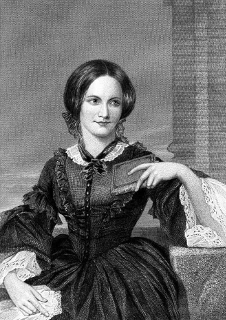
(Pictured: An idealised posthumous portrait by Duyckinick, 1873, based on a drawing by George Richmond)
The Glorious Revolution of 1688 is a relatively bloodless revolution in which James II, King of England, Ireland and Scotland and a Roman Catholic convert, is ousted from power by the Parliament of England. The English throne is then offered to his Protestant daughter Mary and her husband William III of England, also known as William of Orange. In Scotland, the privy council asks William III to assume responsibility for the government in January 1689, and he and Mary are formally offered the Scottish throne in March. The situation is different in Ireland where most of the population are Catholics. Irish Catholics are hoping that James will re-grant them lands, which had been seized from them after the Cromwellian conquest of Ireland (1649–53). James thus looks to Ireland to muster support in regaining his kingdoms just as his father, Charles I, had done in the English Civil War of the 1640s.
On December 10, James flees London. He is caught but flees a second time on December 23 and makes his way to France. On March 12, James I lands in Kinsale with 6,000 French soldiers. He takes Dublin and marches north with an army of Irish and French Catholics.
In April 1689 reinforcements from England arrive under the command of Colonel John Cunningham, who is a native of the city. He is under instructions to take his orders from the Derry City Governor, Lieutenant Colonel Robert Lundy. Lundy advises Colonel Cunningham to leave as arrangements have been made for the city to be surrendered. Lundy calls a meeting with several of his most loyal supporters to discuss surrender. News of the meeting spread, angering many of the citizens. That night, Lundy and many others leave the city aboard a ship to Scotland. The city’s defence is overseen by Major Henry Baker, Colonel Adam Murray, and Major George Walker, also an Anglican priest. Their slogan is “No Surrender.”
As the Jacobite army nears, all the buildings outside the city walls are set alight by the defenders to prevent them being used as cover by the besiegers.
The Jacobite army reaches Derry on April 18. James and his retinue ride to within 300 yards of Bishop’s Gate and demand the surrender of the city. He is rebuffed with shouts of “No surrender!” and some of the city’s defenders fire at him. James asks for surrender three more times but is refused each time. This marks the beginning of the siege. Cannon and mortar fire are exchanged, and disease takes hold within the city. James returns to Dublin and leaves his forces under the command of Richard Hamilton.
Royal Navy warships under Admiral George Rooke arrive in Lough Foyle on June 11 but initially decline to ram through the heavily defended defensive boom across the River Foyle at Culmore.
On July 28, two armed merchant ships, Mountjoy and Phoenix, sail toward the boom, protected by the frigate HMS Dartmouth under Captain John Leake. Mountjoy rams and breaches the boom, and the ships move in, unloading many tons of food to relieve the siege. The city had endured 105 days of siege during which some 4,000 Protestants of a population of 8,000 are said to have died.
The siege is commemorated yearly by the Protestant Apprentice Boys of Derry who stage the week-long Maiden City Festival culminating in a parade around the walls of the city by local members, followed by a parade of the city by the full Association. Although violence has attended these parades in the past, those in recent years have been largely peaceful.
The song “Derry’s Walls” is written to commemorate the siege.
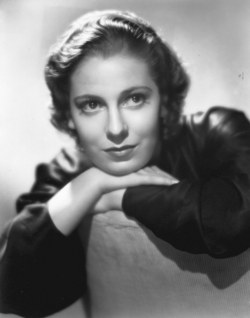
Valerie Hobson, Irish-born actress who appears in a number of films during the 1930s, 1940s and 1950s, is born Babette Valerie Louise Hobson in Larne, County Antrim, Northern Ireland on April 14, 1917. Her second husband is John Profumo, 5th Baron Profumo, a government minister who becomes the subject of a sensational sex scandal in 1963.
In 1952 she divorces her first husband, film producer Sir Anthony Havelock-Allan. In 1954, she marries Brigadier John, 5th Baron Profumo, an MP, giving up acting shortly afterwards. Baron Profumo is a prominent politician of Italian descent. Hobson’s last starring role is in the original London production of Rodgers and Hammerstein‘s musical play The King and I, which opens at the Theatre Royal, Drury Lane, on October 8, 1953. She plays Mrs. Anna Leonowens opposite Herbert Lom‘s King. The show runs for 926 performances.
After Profumo’s ministerial career ends in disgrace in 1963, following revelations he had lied to the House of Commons about his affair with Christine Keeler, Hobson stands by him. They worked together for charity for the remainder of her life, though she does miss their more public personas.
Hobson’s eldest son, Simon Anthony Clerveaux Havelock-Allan, is born in May 1944 with Down syndrome. Her middle child, Mark Havelock-Allan, is born on April 4, 1951, and becomes a judge. Her youngest child is the author David Profumo, who writes Bringing the House Down: A Family Memoir (2006) about the scandal. In it, he writes his parents told him nothing of the scandal and that he learned of it from another boy at school.
Valerie Hobson dies on November 13, 1998, at the age of 81 at a Westminster, London Hospital following a heart attack. After her death, her body is cremated in accordance with her wishes. Half her ashes are interred in the family vault in Hersham. The rest are scattered on January 1, 1999, by her sons David Profumo and Mark Havelock-Allan, near the family’s farm in Scotland.
Mulhare, one of three brothers, is born at 22 Quaker Road, Cork, County Cork, in what is then known as the Irish Free State, to John and Catherine Mulhare. As a child, he receives his education at St. Nessan’s Christian Brothers School, and later North Monastery. As a young adult, he begins schooling at the National University of Ireland in medicine, but eventually decides upon a career in theatre. After acting in various Irish venues including the Gate Theatre in Dublin, he moves to London, where he works with Orson Welles and John Gielgud.
His best-known stage role is as Professor Higgins in the original Broadway production of My Fair Lady, having taken over the role from Rex Harrison in 1957.
Mulhare’s first television appearance is in 1956 in a production of The Adventures of Robin Hood. He is a guest panelist in 1958 on the CBS television game show What’s My Line? By 1965, he is back in Hollywood appearing in films and television shows. He earns a role in the films Von Ryan’s Express in 1965, Our Man Flint in 1966, and Caprice in 1967. He guest-stars in television programs, including the Twelve O’Clock High episode “Siren Voices” as Luftwaffe Colonel Kurt Halland. He also guest-stars in “Experiment In Terra,” an episode of the original Battlestar Galactica series. In The Ghost & Mrs. Muir, a supernatural sitcom that runs from 1968 to 1970, he stars as Captain Daniel Gregg, and again is something of a successor to Rex Harrison, who had originated the role of “The Ghost” in the original 1947 film. In the mid-1980s, Mulhare hosts the television series Secrets & Mysteries, also called Secrets of the Unknown, a magazine show that examines historical mysteries and the paranormal. His most famous role is probably as Devon Miles in the Knight Rider series.
Edward Mulhare dies of lung cancer on May 24, 1997, age 74, at his home in Van Nuys, California. He had been battling the cancer for five months prior to his death. He is buried in St. Joseph’s Cemetery, Tory Top Road, Cork. Team Knight Rider dedicates an episode titled “K.R.O.” to Mulhare’s memory which is broadcast on October 27, 1997.





 seamus dubhghaill