seamus dubhghaill

Promoting Irish Culture and History from Little Rock, Arkansas, USA


Leave a comment

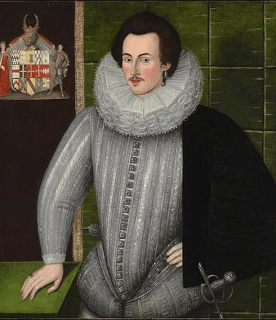
Charles Blount, 8th Baron Mountjoy, Becomes Lord Deputy of Ireland

Charles Blount, 8th Baron Mountjoy, English nobleman and soldier, becomes Lord Deputy of Ireland under Queen Elizabeth I on January 21, 1600.

Blount is born in 1563, the second son of James, 6th Baron Mountjoy, and Catherine, only daughter of Sir Thomas Legh. He is among the most distinguished of the family, succeeding as 8th Baron Mountjoy on the death in 1594 of his unmarried elder brother William, 7th Baron Mountjoy. The good fortune of his youthful and handsome looks find favour with Queen Elizabeth I which arouses the jealousy of Robert Devereux, 2nd Earl of Essex, leading to a duel between the two courtiers, who later become close friends.

Blount is returned to the House of Commons as MP for St. Ives, Cornwall in 1584 and for Bere Alston in 1586 and 1593, before entering the House of Lords in 1594. Between 1586 and 1598, he spends most of his time on the Continent, serving in the Netherlands and Brittany. He joins Lord Essex and Sir Walter Raleigh in their expedition to the Azores in 1597, along with his distant cousin, Sir Christopher Blount.

The downfall of Lord Essex does not damage Blount’s career. After the failure of his rebellion, Essex shocks many by denouncing his sister Penelope, who is Blount’s mistress, as a traitor, which inevitably raises the question of his own possible involvement. But the Crown, anxious to retain Blount’s services, and also to show as much leniency as possible to the defeated rebels, simply ignore the accusation.

On February 24, 1600, Blount lands in Ireland as Lord Deputy following Lord Essex and in the ensuing years brings the Nine Years’ War to an end. The leader of the rebellion, Hugh O’Neill, Earl of Tyrone, writes about Blount’s “refined manners” that he would lose a whole season of campaigning “while waiting until breakfast is prepared to his mind!” Despite this, Blount proves that he is quite qualified to pursue the war.

In early 1600, Blount dispatches Sir Henry Docwra with an army of 4,200 troops to land at Culmore to erect a fortress commanding the shores of Lough Foyle in the northwest of Ulster. To prevent Hugh O’Neill from sending a strong force to repulse Dowcra’s forces, Blount advances in force from Dublin to Newry causing O’Neill to fear a southern advance into Tyrone.

Blount aims to avoid the mistakes of previous Lords-Deputy. After the Battle of Moyry Pass, he has it cleared, and a garrison is established there. It had long been a problem for English forces advancing into Ulster from the south. He also establishes posts with garrisons at Mountnorris and Armagh.

On July 13, 1601, Blount and his army along with Turlough McHenry O’Neill of the Fews who had recently switched to the English side in the war, have a stand-off with Hugh O’Neill’s forces at the River Blackwater. After a few shots in vain from either side, O’Neill’s forces withdraw, and Blount sends his forces to occupy the ruined Blackwater fort destroyed by O’Neill in 1595. Later O’Neill’s forces attack Blount’s camp before withdrawing. In response, the Lord-Deputy sends his forces across the river where they find strong artificially fortified fords, which would have held out against the English.

By July 15, 1601, the Lord-Deputy has secured the surrender of O’Neill’s ally Hugh Magennis. That month, he has a new fort near the old Blackwater fort erected.

Blount reports to the council in England that O’Neill is determined to prevent his forces from advancing into Tyrone and toward Dungannon. As such, he initiates a policy of burning large quantities of corn to induce a famine to drive the rebels out of their strongholds.

Blount sets about trying to entice Hugh’s forces to come out and attack by fetching some materials for the new fort from the Tyrone side of the river as well as burning more corn. Further skirmishes between Blount and O’Neill’s forces ensue during the summer of 1601.

Spanish forces land in Munster in August 1601, forcing Blount to send his forces southward leaving O’Neill remaining in his unbroken heartland of Tyrone. The Spanish arrival culminates in the Siege of Kinsale that December, which sees a major defeat of the rebels and their allies.

O’Neill during this time has also moved south to assist some of his allies, however, after some serious defeats at the hands of the forces of Richard Burke, 4th Earl of Clanricarde of Connacht, he is in no place to offer any effective resistance once Blount marches once more to Tyrone in the summer of 1602.

Blount advances to the location he found the previous summer at the River Blackwater, which commands safe and secure passage into Tyrone, previously inaccessible, and sets about erecting a new fort. Having observed this, O’Neill burns his capital at Dungannon and flees to his last refuge in Glenconkeyne.

Advancing northward through Tyrone, Blount erects a fort in the townland of Magheralamfield, afterward known as Mountjoy Castle. He also christens the new fort at the Blackwater Charlemont Fort after himself.

Once in Tyrone, Blount carries out a campaign of devastation throughout it resulting in the mass hunting of rebels, spoiling of corn, the burning of houses and the killing of churls so as to force the submission of O’Neill and his remaining allies. Most symbolically, Blount has the inauguration site of the O’Neill’s at Tullyhogue Fort destroyed.

On March 30, 1603, six days after the death of Elizabeth and the accession of James I, O’Neill makes peace with Blount, signing the Treaty of Mellifont. Blount continues in office with the more distinguished title of Lord-Lieutenant. He declares amnesty for the rebels and grants them honourable terms, which causes some severe criticism from England. He shows similar moderation in putting down the abortive risings in Cork, Waterford and Wexford, where the aldermen, apparently with some vague idea of gaining greater toleration for Roman Catholics, refuse to proclaim the new King. In Cork, three insurgents are hanged after a summary trial, but the rest are acquitted or pardoned.

As part of the Plantation of Ulster, the majority of the barony of Loughinsholin is detached from County Tyrone and made part of the newly created County Londonderry. The rest of Loughinsholin along with the northern parts of Dungannon barony are merged to create the short-lived barony of Mountjoy. It is later amalgamated with the barony of Dungannon.

On his return to England, Blount serves as one of Sir Walter Raleigh’s judges in 1603, and in the same year King James I appoints him Master-General of the Ordnance as well as creating him Earl of Devonshire, granting him extensive estates. He is one of the founder members of the Spanish Company re-founded by royal charter in 1605.

Toward the end of Blount’s life, on December 26, 1605, at Wanstead House near London, in a ceremony conducted by his chaplain William Laud, afterward Archbishop of Canterbury, he marries his long-time mistress Lady Penelope, formerly wife of Robert Rich, 3rd Baron Rich (later 1st Earl of Warwick) and sister of Robert Devereux, 2nd Earl of Essex.

Blount leaves no legitimate children, and so his hereditary titles become extinct at his death on April 3, 1606, at Savoy House, London.


Leave a comment

Mary Peters Becomes First Irish Woman to Win an Olympic Gold Medal

Lady Mary Elizabeth Peters, LG, CH, DBE, Northern Irish former athlete and athletics administrator, wins the women’s pentathlon on September 3, 1972, at the 1972 Summer Olympics in Munich, West Germany, becoming the first Irish woman to win an Olympic Gold medal.

Peters is born on July 6, 1939, in Halewood, Lancashire, England, later living at 5 Mere Avenue in Alkrington, where she goes to primary school. She moves to Ballymena (and later Belfast) at the age of eleven when her father’s job is relocated to Northern Ireland. As a teenager, her father encourages her athletic career by building her home practice facilities as birthday gifts. She qualifies as a teacher and works while training.

After Ballymena, the family moves to Portadown where she attends Portadown College. The headmaster, Donald Woodman, and the PE teacher, Kenneth McClelland, introduce her to athletics, McClelland being her first coach. She is head girl of the school in 1956.

At the 1972 Summer Olympics in Munich, competing for Great Britain and Northern Ireland, Peters wins the gold medal in the women’s pentathlon. She had finished 4th in 1964 and 9th in 1968. To win the gold medal, she narrowly beats the local favourite, West Germany’s Heide Rosendahl, by 10 points, setting a world record score. After her victory, death threats are phoned into the BBC: “Mary Peters is a Protestant and has won a medal for Britain. An attempt will be made on her life, and it will be blamed on the IRA … Her home will be going up in the near future.” But Peters insists she will return home to Belfast. She is greeted by fans and a band at the airport and paraded through the city streets but is not allowed back in her flat for three months. Turning down jobs in the United States and Australia, where her father lives, she insists on remaining in Northern Ireland.

In 1972, Peters wins the BBC Sports Personality of the Year award: “Peters, a 33-year-old secretary from Belfast, won Britain’s only athletics gold at the Munich Olympics. The pentathlon competition was decided on the final event, the 200m, and Peters claimed the title by one-tenth of a second.”

She represents Northern Ireland at every Commonwealth Games between 1958 and 1974. In these games she wins two gold medals for the pentathlon, plus a gold and silver medal for the shot put.

Peters establishes a charitable Sports Trust in 1975 (now known as the Mary Peters Trust) to support talented young sportsmen and -women, both able-bodied and disabled, from across Northern Ireland in a financial and advisory capacity. The trust has made a large number of awards and has a list of well-known alumni that includes Graeme McDowell, Rory McIlroy, Jonathan Rea, Darren Clarke, David Humphreys, Bethany Firth, Ryan Burnett, Carl Frampton, Paddy Barnes, Michael Conlan, Kelly Gallagher, and Michael McKillop.

In May 2001, following her athletic career, Peters becomes a Trustee of The Outward Bound Trust and is Vice-President of the Northern Ireland Outward Bound Association. She is also Patron of Springhill Hospice in Rochdale, Greater Manchester.

Peters is appointed a Member of the Order of the British Empire (MBE) for services to athletics in the 1973 New Year Honours. For services to sport, she is promoted in the same Order to Commander (CBE) in the 1990 Birthday Honours and again to Dame Commander (DBE) in the 2000 Birthday Honours. In the 2015 New Year Honours, she is awarded as Member of the Order of the Companions of Honour (CH), also for services to sport and the community in Northern Ireland, and in 2017, she is made a Dame of the Order of Saint John (DStJ). She is appointed a Lady Companion of the Order of the Garter (LG) on February 27, 2019, and therefore granted the title Lady. She represents the Order at the 2023 coronation.

Northern Ireland’s premier athletics track, on the outskirts of Belfast, is named after Peters. A statue of her stands within it.

In April 2009, Peters is named the Lord Lieutenant of the City of Belfast; she retires from the post in 2014, being succeeded by Fionnuala Jay-O’Boyle. She is a Freeman of the Cities of Lisburn and Belfast.

Peters now lives in Derriaghy, within the Lisburn and Castlereagh district, just outside Belfast.


Leave a comment

Birth of Henry Lawes Luttrell, 2nd Earl of Carhampton

General Henry Lawes Luttrell, 2nd Earl of Carhampton PC, Anglo-Irish politician and soldier, who both in public and private life attracts scandal, is born on August 7, 1743. He is spurned by colleagues in the British House of Commons who believe that in the election of 1769 he played an underhand role in denying his seat to the popular choice, the reformer John Wilkes. In 1788 he is publicly accused in Dublin of raping a twelve-year-old girl. Ten years later, his command in the suppression of the Irish Rebellion of 1798 is criticised by fellow officers for its savagery, and not least against women. His last years in Parliament are marked by his opposition to Catholic Emancipation, and to parliamentary reform.

Luttrell is the scion of an Anglo-Irish landed family, descendants of Sir Geoffrey de Luterel, who established Luttrellstown Castle, County Dublin, in the early 13th century. His grandfather, Henry Luttrell, had been a pardoned Jacobite commander murdered on the street in Dublin in 1717 supposedly by his former comrades. His father, Simon Luttrell, is successively titled Baron Irnham, Viscount Carhampton and Earl Carhampton, all in the Peerage of Ireland. His mother, Maria, is the daughter of Sir Nicholas Lawes, Governor of Jamaica, and the eventual heir to a slave plantation on the West Indian Island which, on her husband’s death in 1787, passes to her son.

Educated at Westminster School and Christ Church, Oxford, Luttrell is commissioned into the 48th (Northamptonshire) Regiment of Foot in 1757. Two years later he becomes lieutenant of the 34th (Cumberland) Regiment of Foot.

Father and son, both accounted “notorious womanizers,” have a bitter relationship. His father once challenges him to a duel, but he declines, observing that his father is not a gentleman.

Luttrell, described as “strong in body, if not in mind,” achieves a reputation for bravery as a soldier during the Seven Years’ War, becoming Deputy Adjutant-General of the British Forces in Portugal. In 1768 he becomes a Tory Member of Parliament representing Bossiney.

With the support of the Grafton ministry and of the Court, in 1769 Luttrell stands in Middlesex against John Wilkes, the radical and popular figure who had already been the constituency’s three-time democratic choice. He loses the poll (1,143 votes to 269) but is seated in Parliament, Wilkes having once again been barred as an adjudged felon. As a result of the affair, for some months, Luttrell dares not appear in the street and is “the most unpopular man in the House of Commons.”

The government rewards Luttrell by appointing him Adjutant General for Ireland in 1770. He continues to sit in the Commons, where he describes the Whigs in their opposition to the conduct of the American War, as “the abetters of treason and rebellion combined purposely for the ruin of their country.”

Luttrell becomes active in Irish politics and between 1783 and 1787, he sits in the Irish House of Commons for Old Leighlin. On his father’s death in 1787, he succeeds to the earldom of Carhampton and other titles. He becomes Colonel of the 6th Dragoon Guards and Lieutenant-General of the Ordnance in Ireland.

In 1788, Luttrell is publicly accused in Dublin of the rape of a 12-year-old girl. Having been paid to deliver a message, Mary Neal claims she is bundled into a brothel and there assaulted throughout the night by Luttrell. The keeper of the house, Maria Llewellyn, is charged in a case marked by accusations of witness tampering, the death in prison of Mary’s mother and newborn baby sister and by the insinuation that Mary was already working as a prostitute. The affair becomes a cause célèbre with the public intervention of Archibald Hamilton Rowan, later a founding member of the Dublin Society of United Irishmen. To clear Mary’s name he brings her to Dublin Castle to see the Lord Lieutenant, John Fane, 10th Earl of Westmorland. Westmorland, unmoved, pardons Llewellyn and sets her at liberty. Luttrell is never asked to answer for raping Mary Neal. In 1790 he re-enters the British Parliament as Member for Plympton Erle.

In 1791 and 1792, Luttrell helps vote down bills to abolish the slave trade. Negroes, he proposes, only want “to murder their masters, ravish their women, and drink all their rum.” At the same time, he opposes lifting civil disabilities on Roman Catholics by abolishing the Test Act in Scotland and speaks scathingly of parliamentary reform.

In October 1793, a younger brother, Temple Simon Luttrell, is arrested in Boulogne and, until February 1795, is held in Paris where, on the strength of their sister Anne Luttrell being married to Prince Henry, Duke of Cumberland, he is publicly exhibited as the brother of the king of England.

In 1795, Luttrell is entrusted with the breakup and disarming of Defenders, the agrarian semi-insurgency, in Connacht. His proceedings and impressment of some 1,300 “rebels” into the British navy elicits criticism in otherwise loyal circles.

In 1796, with the leaders of the democratic party, the United Irishmen, preparing for a French-assisted insurrection, Luttrell is given overall command of the Crown forces in Ireland. He demonstrates still greater ruthlessness in attempting to “pacify” the country and suppress the eventual rising in the summer of 1798. His command has the unusual distinction of being upbraided by his successor as Commander in Chief, Sir Ralph Abercromby, for an army “in a state of licentiousness, which must render it formidable to everyone but the enemy.”

Luttrell is seen by his critics as having “fanned the flame of disaffection into open rebellion” by “the picketings, the free quarters, half hangings, flogging and pitch-cappings” he directs.

In July 1799, Luttrell sells his Irish property and by his own later account, he takes no part in the Acts of Union. He claims to be “disgusted at the scene that was passing before me”, and to abandon Ireland because, under a “cowardly” government, he sees “the country likely to become Catholic.” When the Dublin Post of May 2, 1811, erroneously reports his death, he demands a retraction which they print under the headline Public Disappointment.

Luttrell purchases an estate at Painshill Park in Surrey and lives for several years in relative obscurity. From 1813 he harries the government of Robert Jenkinson, 2nd Earl of Liverpool, with the claim that George III had promised him a secure seat in the Commons. In June 1817, five weeks short of his eightieth birthday, he finds his own way back to Parliament as Member for Ludgershall and revenges himself, in the four years remaining to him, by voting with the opposition. This, however, does not extend to joining in the attacks on the domestic spy system in 1818 nor to voting for parliamentary reform in 1819. Moreover, in the wake of the Peterloo Massacre, he supports the government, lauding the use of deadly force against “the Radicals and their system.”

Luttrell dies at his home at Bruton Street, London, on April 25, 1821.


Leave a comment

Birth of William Ireland de Courcy Wheeler, Surgeon

William Ireland de Courcy Wheeler, surgeon, is born on May 9, 1879, in Dublin, fourth son among six sons and four daughters of William Ireland de Courcy Wheeler, a distinguished doctor, and Frances Victoria Wheeler (née Shaw), cousin of George Bernard Shaw.

Wheeler is educated at Trinity College Dublin (TCD) and loses an eye as a result of an accident but overcomes the disability. He wins a moderatorship, a medal, and prizes and graduates BA (1899) in anatomy, natural science, and experimental science and, following postgraduate study in Berne, an MB, B.Ch., and MD (1902). The following year he receives the Dublin University Biological Association’s medal for his paper Deaths under chloroform. He is appointed demonstrator and assistant to the professor of the TCD anatomy department before becoming honorary surgeon (1904–32) to Mercer’s Hospital, Dublin. He is also attached to several other institutions including the Rotunda Hospital and the National Children’s Hospital. An outstanding teacher, he attracts large numbers to his clinical classes and lectures in surgery to postgraduates at TCD.

Ambitious and abounding in self-confidence, Wheeler dedicates all his indomitable energy and time to his work, is a frequent visitor to foreign clinics, becomes a skilled general surgeon and a specialist in orthopaedics, and earns an international reputation. During World War I he serves in the Royal Army Medical Corps (RAMC) and from 1915 converts his private hospital, 33 Upper Fitzwilliam Street, into the Dublin Hospital for Wounded Officers and makes it available to the St. John’s Ambulance brigade and the British Red Cross. He acts as honorary officer in charge and is also surgeon to the Duke of Connaught‘s Hospital for Limbless Soldiers, and honorary surgeon to the forces in Ireland.

In 1916, Wheeler visits the western front, tours the hospitals in Boulogne, and is attached to a casualty clearing station at Remy Siding near Ypres. Returning to Dublin on the request of Robert Jones, he organises the Dublin Military Orthopaedic Centre, Blackrock, where he serves as surgeon (1916–21). His advice is widely sought, and he serves on several committees, including the War Office Council of Consulting Surgeons (1917) and the Ministry of Pensions Medical Advisory Council on Artificial Limbs. Promoted to lieutenant colonel in 1918, he receives the General Service Medal and is twice mentioned in dispatches, having courageously treated wounded soldiers under fire during the 1916 Easter Rising. Appointed surgeon-in-ordinary to the lord-lieutenant, he is knighted in 1919.

Principal founder of the Dublin Hospitals’ Club (1922), Wheeler publishes two textbooks, A Handbook of Operative Surgery (1906) and Selected Papers on Injuries and Diseases of Bone (1928). He contributes numerous authoritative papers on a variety of surgical subjects to professional journals and edits the chapter on general surgery in the Medical Annual from 1916 to 1936. Inspector of examinations for the Medical Research Council of Ireland, he is external examiner to universities in Ireland and Scotland. Interested in hospital policy and nursing, he advocates the federation of the smaller hospitals and is chairman of the City of Dublin Nursing Institute. Fellow (1905) and council member (1906), he follows in his father’s footsteps and is elected president (1922–24) of the Royal College of Surgeons in Ireland. He is also president of the Dublin University Biological Association and of the surgical section of the Royal Academy of Medicine in Ireland and is awarded an honorary ChM from Cairo University in 1928.

Troubled and bewildered by the political situation in Ireland, Wheeler is persuaded by Rupert Guinness, 2nd Earl of Iveagh, to accept the position of visiting surgeon (1932) to the new hospital at Southend-on-Sea, Essex, to which Iveagh had donated £200,000. The departure of such a leading figure in Irish medical circles is widely regretted. His posts in London include surgeoncies to All Saints Hospital for Genito-Urinary Diseases and to the Metropolitan Ear, Nose, and Throat Hospital. The diversity of his interests and his general competence make him a valued member of the editorial staff of several journals including the British Journal of Surgery, the British Journal of Urology, and the American Journal of Surgery, Gynaecology, and Obstetrics. He is also a member of the American Editors Association. He enjoys many affiliations with America, where he is well known and honoured by being elected honorable fellow of the American College of Surgeons and selected as their John B. Murphy orator (1932), and by election as honorary member and president of the Post Graduate Assembly of North America. An active member of the British Medical Association, he is president of the Leinster branch (1925–26) and of the Orthopaedic section (1933), vice-president of the Surgical section (1930, 1932), and chairman of the council and president of the Metropolitan Counties Branch (1938). President of the Irish Medical Schools and Graduates Association, he is awarded their Arnott gold medal in 1935.

During World War II Wheeler serves as consultant surgeon to the Royal Navy in Scotland, with the rank of rear admiral (1939–43) and is posted to Aberdeen. Strong-minded, unconventional, and often controversial, he has a gift for friendship, is charming and good-humoured, and excels in the art of the after-dinner speech. Immensely proud of Dublin’s medical and surgical traditions, he always eagerly returned to Ireland, where he planned to retire and write his memoirs.

Wheeler dies suddenly on September 11, 1943, at his home in Aberdeen and is cremated at the Aberdeen crematorium. As a memorial to his father, he bequeaths his library and that of his father to the Royal College of Surgeons in Ireland, and also leaves a fund for the Sir William Wheeler memorial medal in surgery.


Leave a comment

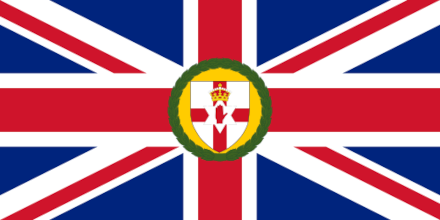
Office of Governor of Northern Ireland Abolished

The mainly ceremonial office of Governor of Northern Ireland is abolished on July 18, 1973 under Section 32 of the Northern Ireland Constitution Act 1973. The Secretary of State for Northern Ireland, a cabinet office created in 1972, takes over the functions of the Governor on December 20, 1973 under Letters Patent.

The office of the Governor of Northern Ireland is established on 9 December 9, 1922 under Letters Patent to “do and execute in due manner as respects Northern Ireland all things which by virtue of the [1920] Act and our said Letters Patent of 27 April 1921 or otherwise belonged to the office of Lord Lieutenant at the time of the passing of the Irish Free State Constitution Act 1922.”

The 1922 “Instructions” sent alongside the letters patent establishing the office require the Governor of Northern Ireland to get the monarch’s permission to leave Northern Ireland, and empowers the Governor in such cases to issue letters patent under the Great Seal of Northern Ireland appointing a “Deputy or Deputies, Justice or Justices” during his absence. This emulates the practice of appointing Lords Justices of Ireland when the Lord Lieutenant is absent from Ireland. Each new Governor upon taking office selects a slate of eligible deputies from among the Privy Council of Northern Ireland, and at each of his subsequent absences a subset of these are sworn in for its duration. Many are Lord Chief Justice or Lord Justice of Appeal, including Denis Henry, William Moore, James Andrews, Anthony Babington, John MacDermott, Baron MacDermott, and Samuel Clarke Porter. Others are Senators and/or county lieutenants, including Robert Sharman-Crawford, Robert David Perceval-Maxwell, Henry Armstrong, Sir Thomas Dixon, 2nd Baronet, Maurice McCausland, and Francis Needham, 4th Earl of Kilmorey.

The Governor has possession of the Great Seal of Northern Ireland and is the successor to the Lord Lieutenant of Ireland in Northern Ireland, itself established on May 3, 1921. The official residence of the Governor of Northern Ireland is Hillsborough Castle in County Down. Following refurbishment of the Castle, James Hamilton, 3rd Duke of Abercorn, takes up residence in 1925. It remained the official residence until the abolition of the office of governor in 1973. Henceforth it has been the official residence of the Secretary of State for Northern Ireland.


Leave a comment

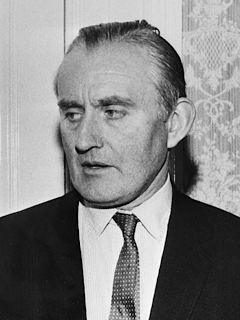
Assassination of Lord Louis Mountbatten

assassination-of-lord-mountbatten

Lord Louis Mountbatten is killed on August 27, 1979, when Provisional Irish Republican Army (IRA) terrorists detonate a 50-pound bomb hidden on his fishing vessel, Shadow V. Mountbatten, a war hero, elder statesman, and second cousin of Queen Elizabeth II, is spending the day with his family in Donegal Bay off Ireland’s northwest coast when the bomb explodes. Three others are killed in the attack, including Mountbatten’s 14-year-old grandson, Nicholas. Later that day, an IRA bombing attack on land kills 18 British paratroopers in County Down, Northern Ireland in what becomes known as the Warrenpoint ambush.

The assassination of Mountbatten is the first blow struck against the British royal family by the IRA during its long terrorist campaign to drive the British out of Northern Ireland and unite it with the Republic of Ireland to the south. The attack hardens the hearts of many British against the IRA and convinces Prime Minister Margaret Thatcher’s government to take a hardline stance against the terrorist organization.

Mountbatten, the son of Prince Louis of Battenberg and a great-grandson of Queen Victoria I, enters the Royal Navy in 1913, when he is in his early teens. He sees service during World War I and at the outbreak of World War II is commander of the 5th Destroyer Flotilla. His destroyer, the HMS Kelly, is sunk during the Battle of Crete early in the war. In 1941, he commands an aircraft carrier, and in 1942 he is named Chief of Combined Operations Headquarters. From this position, he is appointed Supreme Allied Commander for South East Asia Command in 1943 and successfully conducts the campaign against Japan that leads to the recapture of Burma.

In 1947, Mountbatten is appointed the last Viceroy of India, and he conducts the negotiations that lead to independence for India and Pakistan later that year. He holds various high naval posts in the 1950s and serves as chief of the United Kingdom Defense Staff and chairman of the Chiefs of Staff Committee. Meanwhile, he is made Viscount Mountbatten of Burma and a first earl. He is the uncle of Philip Mountbatten and introduces Philip to the future Queen Elizabeth. He later encourages the marriage of the two distant cousins and becomes godfather and mentor to their first born, Charles, Prince of Wales.

Made Governor and then Lord-Lieutenant of the Isle of Wight in his retirement, Mountbatten is a respected and beloved member of the royal family. His assassination is perhaps the most shocking of all horrors inflicted by the IRA against the United Kingdom. In addition to his grandson Nicholas, 15-year-old boat hand Paul Maxwell and the Dowager Lady Brabourne, Nicholas’ grandmother, are also killed. Mountbatten’s grandson Timothy, Nicholas’ twin brother, is injured as is his daughter, Lady Brabourne, and the twins’ father, Lord Brabourne.

The IRA immediately claims responsibility for the attack, saying it detonated the bomb by remote control from the coast. It also takes responsibility for the same-day bombing attack against British troops in County Down, which claims eighteen lives.

IRA member Thomas McMahon is later arrested and convicted of preparing and planting the bomb that destroyed Mountbatten’s boat. A near-legend in the IRA, he is a leader of the IRA’s notorious South Armagh Brigade, which kills more than 100 British soldiers. He is one of the first IRA members to be sent to Libya to train with detonators and timing devices and is an expert in explosives. Authorities believe the Mountbatten assassination is the work of many people, but McMahon is the only individual convicted. Sentenced to life in prison, he is released in 1998 along with other IRA and Unionist terrorists under a controversial provision of the Good Friday Agreement.

(From: This Day In History: Mountbatten killed by IRA, by the editors of History.com, July 21, 2010, http://www.history.com)


Leave a comment

Birth of Watercolourist Michael Angelo Hayes

Painter Michael Angelo Hayes is born in Waterford on July 25, 1820. Probably the best 19th century painter of animals in Ireland, Hayes is most accomplished as a watercolourist, although he occasionally uses oils.

Hayes is the son and pupil of Tipperary watercolour miniaturist Edward Hayes RHA. It is clear from his christening that he is expected to become an artist.  Fortunately, the younger Hayes is a talented draughtsman, and by his late teens has acquired something of a reputation as a painter of horses and military subjects.

Hayes begins showing at the Royal Hibernian Academy (RHA) in 1837, then for three years 1840-1842.  In 1842, he is appointed Military Painter-in-ordinary to the Lord Lieutenant.  He passes the next few years in London, where he exhibits watercolours at the New Society of Painters in Water Colours, of which he is elected an Associate Member in 1848, the same year he makes his one and only contribution to the Royal Academy of Arts.

Returning to Dublin, Hayes resumes exhibiting at the RHA, at the same time becoming involved in its administration.  He is elected an Associate member in 1853, a full Academician the following year, and Secretary in 1856.  The affairs of the Academy are totally disorganized at the time, inducing Hayes and others to resolve the situation.  His efforts to reform the institution and secure its finances meets with entrenched opposition from older members, which results in Hayes being removed from his post, although he is successfully reinstated in 1861.

Not long afterwards he is appointed secretary to the Lord Mayor of Dublin, Peter McSwiney, who happens to be his brother-in-law, and later becomes City Marshal in 1867.  He continues as Secretary of the RHA until he resigns in 1870, and continues showing until 1874.

Hayes makes a special study of horses in motion, and in 1876 publishes his conclusions in an illustrated pamphlet, The Delineation of Animals in Rapid Motion.  One of his Dublin paintings, Sackville Street, Dublin, depicts a view of Dublin’s premier street in the 1850s. The painting is a documentary of social life in Dublin. It achieves widespread popularity when reprinted as a lithograph.

Michael Angelo Hayes dies prematurely in 1877 in a tragic drowning accident at his home.


1 Comment

Fenian James Carey Killed by Patrick O’Donnell

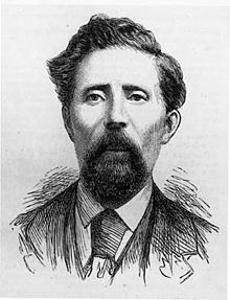
james-careyJames Carey, a Fenian and informer most notable for his involvement in the Phoenix Park Murders, is shot and killed by Patrick O’Donnell aboard the Melrose on July 29, 1883.

Carey is born in James Street, Dublin, in 1845. He becomes a bricklayer and builder as well as the leading spokesman of his trade and obtains several large building contracts. During this period Carey is engaged in an Irish nationalist conspiracy, but to outward appearance he is one of the rising men of Dublin. He is involved in religious and other societies, and at one time is spoken of as a possible lord mayor. In 1882 he is elected a town councillor.

About 1861 Carey joins the Irish Republican Brotherhood, soon becoming treasurer. In 1881 he breaks with the IRB and forms a new group which assumes the title of the Irish National Invincibles and establishes their headquarters in Dublin. Carey takes an oath as one of the leaders. The object of the Invincibles is to remove all “tyrants” from the country.

The secret head of the Invincibles, known as No. 1, gives orders to kill Thomas Henry Burke, the under-secretary to the lord-lieutenant. On May 6, 1882, nine of the conspirators proceed to the Phoenix Park where Carey, while sitting on a jaunting-car, points out Burke to the others. At once they attack and kill him with knives and, at the same time, also kill Lord Frederick Cavendish, the newly appointed chief secretary, who happens to be walking with Burke.

For a long time no clue can be found to identify the perpetrators of the act. However, on January 13, 1883, Carey is arrested and, along with sixteen other people, charged with a conspiracy to murder public officials. On February 13, Carey turns queen’s evidence, betraying the complete details of the Invincibles and of the murders in the Phoenix Park. His evidence, along with that of getaway driver Michael Kavanagh, results in the execution of five of his associates by hanging.

His life being in great danger, he is secretly put onboard the Kinfauns Castle with his wife and family, which sails for the Cape on July 6. Carey travels under the name of Power. Aboard the same ship is Patrick O’Donnell, a bricklayer. Not knowing his true identity, O’Donnell becomes friendly with Carey. After stopping off in Cape Town, he is informed by chance of Carey’s real identity. He continues with Carey on board the Melrose for the voyage from Cape Town to Natal. On July 29, 1883, when the vessel is twelve miles off Cape Vaccas, O’Donnell uses a pistol he has in his luggage to shoot Carey dead.

O’Donnell is brought to England and is tried for murder. After being found guilty, he is executed on December 17 at Newgate.