seamus dubhghaill

Promoting Irish Culture and History from Little Rock, Arkansas, USA


Leave a comment

Birth of Joseph Shanahan, Bishop for Southern Nigeria

joseph-shanahan

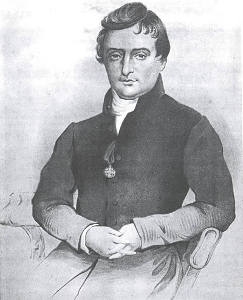
Joseph Ignatius Shanahan B.Sc., C.S.Sp., priest of the Congregation of the Holy Spirit (Spiritans), is born on June 6, 1871 in Glankeen, Borrisoleigh, County Tipperary. He serves as a bishop in Nigeria, first as prefect apostolic of Lower Niger and then as vicar apostolic of Southern Nigeria.

Shanahan joins the Holy Ghost Order in France in 1886, where his uncle Pat Walsh (Brother Adelm) had also joined the Holy Ghost Fathers. In 1889, he is transferred to the French Juniorate of the Congregation in Cellule in the Auvergne. He makes his profession on Easter Sunday 1898 and his ordination takes place on April 22, 1900 in the Blackrock College chapel.

By mid-July 1902, Shanahan has received his appointment for Nigeria to help Fr. Léon Lejeune make bricks to build the first proper mission house in Onitsha.

Shanahan is instrumental in the setting up of the Saint Patrick’s Society for the Foreign Missions, sometimes known as the Kiltegan Fathers, when in 1920, following his ordination in Maynooth as Bishop for Southern Nigeria (then a British protectorate), he appeals to students in Maynooth College for missionaries to Nigeria and Africa.

In 1924 Bishop Shanahan founds a missionary society for women, the Missionary Sisters of the Holy Rosary, in Killeshandra, County Cavan.

Bishop Shanahan dies at Nairobi, Kenya, on Christmas Day 1943 aged 72 years, and is initially buried in the community cemetery in St. Mary’s School in Nairobi. However, in January 1956 his remains are brought back to Nigeria for the “second burial” in the Cathedral Basilica of the Most Holy Trinity, Onitsha.

Always revered as a saint by those in close contact with him, Shanahan’s cause for Beatification is introduced officially on November 15, 1997 in Onitsha cathedral.


Leave a comment

First Priests Ordained at St. Patrick’s College, Maynooth

The ordination of the first priests at St. Patrick’s College, Maynooth takes place on June 6, 1800. The college is the “National Seminary for Ireland” and a Pontifical university located in the village of Maynooth, fifteen miles from Dublin.

The college is established on June 5, 1795, as The Royal College of St. Patrick, by act of the Parliament of Ireland, to provide “for the better education of persons professing the popish or Roman Catholic religion.” The College in Maynooth is originally established to provide a university education for Catholic lay and ecclesiastical students and is based in Riverstown House on the south campus from 1802. With the opening of Clongowes Wood College in 1814, the lay college is closed and the college functions solely as a Catholic seminary for almost 150 years.

The college is particularly intended to provide for the education of Catholic priests in Ireland, who until this Act have to go to the continent for training. The added value in this is the reduction of the number of priests returning from training in revolutionary France, with whom Great Britain is at war, thus hindering potential revolution. The value to the government is proved by the condemnation by the Catholic Church hierarchy of the Irish Rebellion of 1798 and later support for the Act of Union.

In 1800, John Butler, 12th Baron Dunboyne, dies and leaves a substantial fortune to the College. Butler had been a Roman Catholic, and Bishop of Cork, who had embraced Protestantism in order to marry and guarantee the succession to his hereditary title. However, there are no children to his marriage, and it is alleged that he had been reconciled to the Catholic Church at his death. Were this the case, a Penal law demands that the will is invalid, and his wealth will pass to his family. Much litigation follows before a negotiated settlement in 1808 that leads to the establishment of a Dunboyne scholarship fund.

The land is donated by William FitzGerald, 2nd Duke of Leinster, who has argued in favour of Catholic emancipation in the Irish House of Lords. He lives nearby at Carton House and also at Leinster House. The building work is paid for by the British Government and parliament continues to give it an annual grant until the Irish Church Act 1869. When this law is passed the College receives a capital sum of £369,000. The trustees invest 75% of this in mortgages to Irish landowners at a yield of 4.25% or 4.75% per annum. This is considered a secure investment at the time but agitation for land reform and the depression of the 1870s erodes this security. The largest single mortgage is granted to the Earl of Granard. Accumulated losses on these transactions reached £35,000 by 1906.

The first building to go up on the site is designed by, and named after, John Stoyte. Stoyte House, which can still be seen from the entrance to the old campus, is a well-known building to Maynooth students and stands very close to the very historic Maynooth Castle. Over the next 15 years, the site at Maynooth undergoes rapid construction so as to cater to the influx of new students, and the buildings which now border St. Joseph’s Square are completed by 1824.

The Rev. Laurence F. Renehan (1797–1857), a noted antiquarian, church historian, and cleric, serves as president of St. Patrick’s from 1845 until 1857. Under Renehan, many of the college’s most important buildings are constructed by Augustus Pugin.

In 2015–16 there are approximately 80 men studying for the priesthood at Maynooth, 60 resident seminarians and approximately 20 non-residents.


Leave a comment

Construction Begins on the Royal Canal

royal-canal-old-mill-dublin

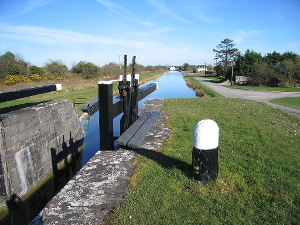
Construction begins on the Royal Canal on October 24, 1789. The canal is originally built for freight and passenger transportation from the River Liffey in Dublin to Longford.

In 1755, Thomas Williams and John Cooley make a survey to find a suitable route for a man-made waterway across north Leinster from Dublin to the River Shannon. They originally plan to use a series of rivers and lakes, including the Boyne, Blackwater, Deel, Yellow, Camlin, and Inny and Lough Derravaragh.

Work commences in 1789 and lasts 27 years before finally reaching the River Shannon in 1817, at a total cost of £1,421,954. Construction is unexpectedly expensive, and the project is riven with problems. In 1794 the Royal Canal Company is declared bankrupt. The Duke of Leinster, a board member, insists that the new waterway take in his local town of Maynooth. The builders have to deviate from the planned route and necessitate the construction of a ‘deep sinking’ between Blanchardstown and Clonsilla. The diversion also calls for the building of the Ryewater Aqueduct, at Leixlip.

royal-canal-kinnegad

The canal passes through Maynooth, Kilcock, Enfield, Mullingar and Ballymahon has a spur to Longford. The total length of the main navigation is 145 kilometres (90 miles), and the system has 46 locks. There is one main feeder, from Lough Owel, which enters the canal at Mullingar.

In 200 years, it has been maintained by eight successive agencies – the Royal Canal Company, the Commissioners of Inland Navigation, the New Royal Canal Company, Midland Great Western Railway Company, Great Southern Railways, CIÉ, and the Office of Public Works.

The canal falls into disrepair in the late 20th century, but much of the canal has since been restored for navigation. The length of the canal to the River Shannon is reopened on October 1, 2010, but the final spur branch of the canal to Longford Town remains closed.

(Pictured: Royal Canal as it enters Dublin city centre (left) and Royal Canal in rural County Westmeath north of Kinnegad (right)


Leave a comment

Birth of Catholic Teetotalist Reformer Theobald Mathew

theobald-mathew

Theobald Mathew, Irish Catholic teetotalist reformer popularly known as Father Mathew and “The Apostle of Temperance,” is born at Thomastown, near Golden, County Tipperary, on October 10, 1790.

Mathew receives his schooling in Kilkenny, then moves for a short time to Maynooth. From 1808 to 1814 he studies in Dublin, where in the latter year he is ordained to the priesthood. Having entered the Capuchin order, after a brief period of service at Kilkenny, he joins the mission in Cork.

The movement with which his name is associated begins on April 10, 1838, with the establishment of the Cork Total Abstinence Society, which in less than nine months enrolls no fewer than 150,000 names. It rapidly spreads to Limerick and elsewhere, and some idea of its popularity may be formed from the fact that at Nenagh 20,000 persons are said to take the pledge in one day, 100,000 at Galway in two days, and 70,000 in Dublin in five days. At its height, just before the Great Famine, his movement enrolls some 3 million people, or more than half of the adult population of Ireland. In 1844 he visits Liverpool, Manchester, and London with almost equal success.

His work has a remarkable impact on the condition of the people in Ireland. The number committed to jail falls from 12,049 in 1839 to 9,875 by 1845. Sentences of death fall from 66 in 1839 to 14 in 1846, and transportations fall from 916 to 504 over the same period.

Mathew visits the United States in 1849, returning in 1851. While there, he finds himself at the center of the Abolitionist debate. Many of his hosts are pro-slavery and want assurances that their influential guest will not stray outside his remit of battling alcohol consumption. But Mathew has signed a petition encouraging the Irish in the U.S. to not partake in slavery in 1841 during Charles Lenox Remond‘s tour of Ireland. Now however, in order to avoid upsetting his slave-owning friends in the U.S., he snubs an invitation to publicly condemn chattel slavery, sacrificing his friendship with that movement. He defends his position by pointing out that there is nothing in the scripture that prohibits slavery. He is condemned by many on the abolitionist side, including the former slave and abolitionist Frederick Douglass who had received the pledge from Mathew in Cork in 1845.

Mathew dies on December 8, 1856, in Queenstown, County Cork, after suffering a stroke. He is buried at St. Joseph’s Cemetery, Cork City, which he had established himself.

Statues of Mathew stand on St. Patrick’s Street, Cork by John Henry Foley (1864), and on O’Connell Street, Dublin by Mary Redmond (1893). There is also a Fr. Mathew Bridge in Limerick, County Limerick, which is named after the temperance reformer when it is rebuilt in 1844-1846.


Leave a comment

Pope John Paul II’s Visit to Ireland

pope-john-paul-ii

Pope John Paul II becomes the first pontiff to set foot on Irish soil with his pastoral visit to the Republic of Ireland beginning on September 29, 1979. Over 2.5 million people attend events in Dublin, Drogheda, Clonmacnois, Galway, Knock, Limerick, and Maynooth during what is one of Pope John Paul’s first foreign visits. The visit is occasioned by the centenary of the reputed apparition of Blessed Virgin Mary, Saint Joseph, and Saint John the Evangelist in Knock, County Mayo.

An Aer Lingus Boeing 747, named the St. Patrick, brings Pope John Paul II from Rome to Dublin Airport. The Pope kisses the ground as he disembarks. After being greeted by the President of Ireland, Dr. Patrick Hillery, the Pope flies by helicopter to the Phoenix Park where he celebrates Mass for 1,250,000 people, one quarter of the population of the island of Ireland, one third of the population of the Republic of Ireland. Afterwards he travels to Killineer, near Drogheda, where he leads a Liturgy of the Word for 300,000 people, many from Northern Ireland. There the Pope appeals to the men of violence, “on my knees I beg you to turn away from the path of violence and return to the ways of peace.” The Pope has hopes of visiting Armagh, but the security situation in Northern Ireland renders it impossible. Drogheda is selected as an alternative venue as it is situated in the Catholic Archdiocese of Armagh. Returning to Dublin that evening, the Pope is greeted by 750,000 people as he travels in an open top popemobile through the city centre and visits Aras an Uachtarain, the residence of the Irish President.

The Pope begins the second day of his tour with a short visit to the ancient monastery at Clonmacnois in County Offaly. With 20,000 in attendance, he speaks of how the ruins are “still charged with a great mission.” Later that morning he celebrates a Youth Mass for 300,000 at Ballybrit Racecourse in Galway. It is here that the Pope utters perhaps the most memorable line of his visit, “Young people of Ireland, I love you.” That afternoon, he travels by helicopter to Knock Shrine in County Mayo which he describes as “the goal of my journey to Ireland.” The outdoor Mass at the shrine is attended by 450,000. The Pope meets with the sick and elevates the church to the title of Basilica.

The final day of the visit begins with a trip to St. Patrick’s College, Maynooth, the National Seminary, in County Kildare. Some 80,000 people pack the grounds of the college for the brief visit. A dense fog delays the Pope’s arrival from Dublin by helicopter. The final Mass of the Pope’s visit to Ireland is celebrated at Greenpark Racecourse in Limerick before 400,000 people, many more than had been expected. The Mass is offered for the people of Munster. Pope John Paul leaves Ireland from nearby Shannon Airport travelling to Boston where we begins a six-day tour of the United States.