seamus dubhghaill

Promoting Irish Culture and History from Little Rock, Arkansas, USA


Leave a comment

Birth of Uinseann MacEoin, Architect & Republican Campaigner

Uinseann Ó Rathaille MacEoin, Irish architect, journalist, republican campaigner and historian, is born in Pomeroy, County Tyrone, on July 4, 1920.

MacEoin is born Vincent O’Rahilly McGuone to Malachy McGuone, owner of the Central Hotel in Pomeroy and a wine and spirit merchant, and Catherine (née Fox). He has three siblings. Both of his parents are nationalists, and name all their children after leaders of the Easter Rising in 1916. Under the First Dáil in 1918, his father is appointed a judge. This results in him being interned on the prison ship Argenta on Larne Lough from 1922 to 1923. The family moves to Dublin after his release. His father dies in 1933, which leads to his wife running a workingmen’s café in East Essex Street. The family later lives on Marlborough Road, Donnybrook.

MacEoin attends boarding school at Blackrock College and is then articled to the architectural practice of Vincent Kelly in Merrion Square. As an active republican, he lives in a house on Northumberland Road from late 1939 to May 1940 where he helps in the production and distribution of an Irish Republican Army (IRA) weekly newspaper, War News. The IRA is banned by the Irish government in 1936, and its bombing campaign in Britain in 1939 is viewed by the government as a threat to Irish neutrality. MacEoin is among a group of republicans arrested in June 1940 and imprisoned in Arbour Hill Prison for a year. Once released, he is rearrested and interned at the Curragh for three years. He is sentenced to 3-months imprisonment in October 1943 for possession of incriminating documents. He is also charged with possession of ammunition, but testifies he was given the rounds against his will and never appears to have engaged in any violence. During his internment, he is taught the Irish language by Máirtín Ó Cadhain and is exposed to the socialist views of his fellow inmates. It is at this time that he adopts the Irish form of his name, Uinseann MacEoin.

While imprisoned in the 1940s, MacEoin continues his studies by correspondence and qualifies as an architect in 1945 at University College Dublin (UCD). His designs for a memorial garden in 1946 to those who died during the Irish War of Independence are commended. In 1959, he designs the site in Ballyseedy, County Kerry, for a monument by Yann Goulet commemorating those killed in the Irish Civil War and members of the IRA from Kerry who died. In 1948, he qualifies in town planning and takes up a position with Michael Scott‘s architectural practice. He works for a short time with Dublin Corporation, with their housing department, before establishing his own practice in 1955.

During the 1950s, MacEoin is a contributing editor on interior design in Hugh McLaughlin‘s magazine Creation, becoming editor of Irish Architect and Contractor in 1955. He enters into a partnership with Aidan Kelly in 1969 as MacEoin Kelly and Associates. In the early 1970s, he designs a shopping and housing development outside Dundalk, called Ard Easmuinn. Throughout the 1960s and 1970s, he continues as an influential architectural journalist, founding and editing Build from 1965 to 1969, and later Plan. His company, Pomeroy Press, publishes Plan along with other serials such as Stream and Field. He writes a large proportion of the copy in these periodicals, much under his own name, but he also uses pseudonyms, in particular in Plan as “Michael O’Brien.” He writes about his strong views on social housing, national infrastructure, and foreign and slum landlords, often libelously.

Despite his republican and socialist views, MacEoin is a staunch advocate for the preservation of Georgian Dublin, and campaigns for their preservation. On this topic, he writes letters to newspapers, takes part in television and radio discussions, writes comment pieces and editorials, speaks at public hearings, and takes part in direct protests such as sit-ins in buildings including those on Baggot Street, Pembroke Street, Hume Street, and Molesworth Street. He is also an active member of the Irish Georgian Society, and he campaigns actively against the road widening schemes in Dublin the 1970s and 1980s.

MacEoin and his wife purchase five Georgian houses on Mountjoy Square and three on Henrietta Street in the 1960s, all almost derelict. They refurbish them and lease them out, under the company name Luke Gardiner Ltd. He renames the 5 Henrietta Street property James Bryson House. His architectural practice moves into one of the Mountjoy Square houses. Along with fellow campaigners, Mariga Guinness and Deirdre Kelly, this demonstrates that these buildings can be salvaged and are not the dangerous structures other architects and developers claim them to be. He also purchases and saves Heath House, near Portlaoise, County Laois, living there toward the end of his life. He offers free conservation and architectural advice to community groups and is a volunteer on the renovation works on projects including Tailors’ Hall.

MacEoin remains politically active, joining Clann na Poblachta, the Wolfe Tone Societies (WTS), the Dublin Civic Group, the Northern Ireland Civil Rights Association (NICRA) and the Irish Anti-Apartheid Movement. To what extent he is involved in republican or IRA activities after 1945 is not clear. However, in March 1963, he is called a witness to a case in Scotland involving a Glasgow bookmaker by the name of Samuel Docherty and the Royal Bank of Scotland. Docherty claims the bank owes him £50,000. MacEoin testifies that in February 1962 he had travelled with £50,000 in cash from Dublin to lodge to Docherty’s account in the Royal Bank of Scotland in Belfast, as a loan. When asked about the origin of this large sum of money, he states it was supplied by another person but does not divulge that person’s name. This immediately triggers the court’s suspicions, and the judge warns MacEoin he will be contempt of court if he does not name the supplier of the money. He is placed in police custody for the day, and eventually he agrees to give the name in writing in confidence to the judge. The judge ultimately rules that Docherty is guilty of attempted fraud and perjury and that MacEoin’s involvement reeks of criminality. However, no further action is ever brought forward against Docherty or MacEoin.

In Sinn Féin‘s 1971 Éire Nua social and economic programme, MacEoin writes the chapter on “Planning,” and attends meetings in Monaghan in the early 1970s on the Dáil Uladh, a parliament for the 9-county Ulster province. In 1981, during the republican hunger strikes, one of his Mountyjoy Square houses is used as the national headquarters of the National H-Block Committee. Following the 1986 Sinn Féin split, he supports Republican Sinn Féin. He is a founding member of the Constitutional Rights Campaign in 1987, a group which aims to protect the rights of Irish citizens in the European Economic Community (EEC), having campaigned against Ireland joining the EEC in the early 1970s. In 1978, he is sentenced to two weeks in Mountjoy Prison for non-payment of a fine issued for not having a television licence. He had refused to buy one to protest the lack of Irish language programming.

As an environmentalist, MacEoin opposes private car ownership, and advocates for cycleways and the redevelopment of the railway lines. He writes about the “greenhouse effect” as early as 1969. As a hill walker and mountaineer, he claims to be the first Irishman to register successful climbs of all 284 Scottish peaks, known as the Munros, in 1987. He also climbs in the Alps and the Pyrenees.

MacEoin writes three books on his memories, and those of his former comrades: Survivors (1980), on the lives of leading Irish republicans, Harry (1986), a part biography part autobiography of Harry White, and The IRA in the twilight years 1923–48 (1997). He also publishes a novel, Sybil: a tale of innocence (1992) with his publishing house, Argenta, under the name Eoin O’Rahilly. He also interviews and records dozens of Republicans as part of his research for his books. These recordings are later converted into a digital oral history archive held in trust by the Irish Defence Forces.

MacEoin marries Margaret Russell in 1956 in Navan, County Meath. They have a daughter and two sons.

MacEoin dies in a nursing home in Shankill, Dublin, on December 21, 2007. His estate at the time of his death is valued at over €3 million. His son, Nuada, takes over his father’s architectural practice.

Leave a comment

Death of Charles Donnelly, Poet & Republican Political Activist

Charles Patrick Donnelly, Irish poet, republican and left-wing political activist, is killed on February 27, 1937, fighting on the republican side during the Spanish Civil War.

Donnelly is born in Killybrackey, near Dungannon, County Tyrone, on July 10, 1914, into a family of cattle breeders. His father, Joseph Donnelly, sells his farm in 1917 and the family moves to Dundalk and opens a greengrocer‘s shop. Joseph Donnelly becomes quite prosperous, running his shop, dealing cattle and buying and selling property in the Dundalk area. In addition to Charles, the Donnellys have five other sons and two daughters. His mother, Rose, dies in 1927, when he is 13 years old.

Donnelly receives his early education in the Christian Brothers school in Dundalk. When he is fourteen in 1928, the family moves again, this time to Dublin, where his father purchases a house on Mountjoy Square in the north inner city. He enrolls in O’Connell School on North Frederick Street but is expelled after only a few weeks. He spends the next few months wandering the streets of Dublin during school time before his father discovers what had happened. Also at this time, he meets and is befriended by radical political activists from the Irish Republican Army (IRA), the Communist Party of Ireland and the left-Republican group Saor Éire.

Donnelly’s father and aunts get him an apprenticeship with a carpenter, but he gives this up after a year to enroll in University College Dublin (UCD) in 1931, where he studies Logic, English, History and the Irish language. In university he begins writing poetry and prose for student publications but fails his first-year examinations. At this time, he also becomes deeply involved in radical left-wing and republican politics. He drops out of university in 1934, having failed his first-year exams three times and joins the radical group, the Republican Congress. There he befriends veteran republicans Frank Ryan and George Gilmore. He also becomes involved in a romantic relationship with another republican activist, Cora Hughes, Éamon de Valera‘s goddaughter and later partner of George Gilmore. In July 1934, he is arrested and imprisoned for two weeks for his role in picketing a Dublin bakery with other Congress members. After this, his father expells him from the family home and he spends a period sleeping in parks around Dublin.

The Republican Congress splits at its first annual meeting in September 1934, but the 20-year-old Donnelly is elected to the National Executive of the truncated organisation. Thereafter, he writes for the Congress newspaper on political and social questions. In January 1935, he is again arrested for assaulting a Garda at a Congress demonstration and is imprisoned for a month. In February 1935, he leaves Ireland for London. In the British capital he forms the first Republican Congress branch in London and becomes its first chairman. He finds employment variously as a dishwasher in pubs and cafes and as a reporter with an international news agency. While in London he remains a regular contributor to the Republican Congress newspaper and various left-wing publications. Together with two other poets, Leslie Daiken and Ewart Milne, he is one of the founders of a duplicated publication called Irish Front, the London journal of the Republican Congress. Daiken admits that many of the Irish Front editions are written almost entirely by Donnelly.

Eoin McNamee recalls Donnelly as “a frail looking Dublin man with a Tyrone background…he was something of an intellectual and clearly the theorist of the Irish Republican Congress in London at that time. He was well versed in Marxism, wrote for the Congress and Communist press, and frequently appeared on left-wing public platforms.”

In July 1936, on the outbreak of the Spanish Civil War, Donnelly urges the Republican Congress to send fighters to the International Brigades. He himself returns to Dublin with the intention of organising such a force. By the end of 1936, he has gone again to London and joins the Brigades. He reaches Spain on January 7, 1937, and at Albacete, meets up with an Irish contingent, led by Frank Ryan, known as the Connolly Column, who had come to Spain to fight on the Republican side. He and his comrades are attached to the American Lincoln Battalion. On February 15, after receiving only rudimentary military training, the Lincoln Battalion is thrown into the Battle of Jarama, near Madrid. Donnelly reaches the front on February 23, where he is promoted to the rank of field commander. On February 27, his unit is sent on a frontal assault on the Nationalist positions on a hill named Pingarrón. The object of the attack is to take the enemy trenches and ultimately to drive them across the Jarama River. He and his unit are pinned down by machine gun fire all day. In the evening, the Nationalists launch a counterattack.

A Canadian veteran recalls, “We ran for cover, Charlie Donnelly, the commander of an Irish company is crouched behind an olive tree. He has picked up a bunch of olives from the ground and is squeezing them. I hear him say something quietly between a lull in machine gun fire: Even the olives are bleeding.” The line later becomes famous.

A few minutes later, as his unit retreats, Donnelly is caught in a burst of gunfire. He is struck three times, in the right arm, the right side and the head. He collapses and dies instantly. His body lay on the battlefield until it is recovered by fellow Irish Brigadier Peter O’Connor on March 10. He is buried at Jarama in an unmarked grave with several of his comrades.

Written by Donnelly’s brother Joseph, a collection of his work, Charlie Donnelly: the Life and Poems, is published in 1987 by Dedalus Press. On the eve of the 71st anniversary of his death, February 26, 2008, he is commemorated with the unveiling of a plaque at his alma mater, UCD, attended by 150 people. The commemoration, organised jointly by a group of UCD students and the Donnelly family, is hosted by the School of English and also includes a lecture by Gerald Dawe on Donnelly’s life and poetry. In April 2008, the UCD branch of the Labour Party is renamed the Charlie Donnelly Branch in his honour.

Donnelly’s friend Blanaid Salkeld commemorates him in her poem “Casualties,” writing “That Charlie Donnelly small and frail/ And flushed with youth was rendered pale/ But not with fear, in what queer squalor/ Was smashed up his so-ordered valour.” A 1976 documentary about the Civil War by Cathal O’Shannon is entitled Even the Olives are Bleeding.

Donnelly is survived by a brother, Joseph, who manages to get many of his poems published in 1987; only five or six are published during his lifetime. Discussing his work, Colm Tóibín says it “mixed an Audenesque exactitude with a youthful romanticism… his poem “The Tolerance of Crows” belongs in any anthology of modern poetry.” In 1992, Donnelly has work included in Dedalus Irish Poets: An Anthology from Dedalus Press.

In 1992 New Island Books publishes Even the Olives Are Bleeding: The Life and Times of Charles Donnelly by Joseph O’Connor. The book is launched by future Irish President Michael D. Higgins.

Donnelly is commemorated in the Christy Moore song Viva La Quinta Brigada.


Leave a comment

Birth of RTÉ Broadcaster Joe Duffy

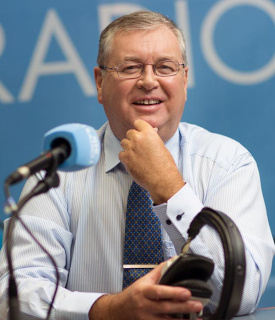
Joseph Duffy, Irish broadcaster employed by Raidió Teilifís Éireann (RTÉ), is born in Mountjoy Square, Dublin, on January 27, 1956. One of RTÉ’s highest-earning stars, he is the current presenter of Liveline, an interview and phone-in chat show broadcast on RTÉ Radio 1.

Duffy is brought up in Ballyfermot, one of five siblings. His father is Jimmy and his mother Mabel. His father, who has problems with alcohol, dies aged 58 in 1984. His 25-year-old brother Aidan is killed in a road accident on the Maynooth Road in 1991, with Duffy first learning of the “horrific accident” on the news on RTÉ Radio. His brother Brendan is described by him as “crippled, ruined and wrecked by a savage addiction” to sniffing glue which he develops as a teenager.

Duffy attends De La Salle Boys’ primary school, St. Lorcan’s B.N.S and St. John’s De La Salle College. He enrolls at Trinity College, Dublin (TCD) in 1977 to study Social Work and is elected President of Trinity College Students’ Union in 1979, becoming President of the Union of Students in Ireland (USI) four years later.

Duffy considers resigning from RTÉ in 2007 after the broadcaster forces him to give Minister for Justice Michael McDowell a platform on Liveline to make a “party political broadcast.” He considers it “direct party-political interference” in Liveline. However, he goes ahead with the broadcast and does not resign or make any protest on air.

In October 2008, Duffy is proactive as a supporter of Irish pensioners who march on Leinster House to protest at the proposed means testing of their medical cards in the Government Budget. However, earlier that month, he is reportedly censored by the government when he attempts to continually discuss the effects of the global financial crisis in Ireland. This follows on from the outrage caused when he is held responsible by Minister for Finance Brian Lenihan Jnr for inciting widespread public fear that Irish citizens are on the verge of losing their savings. Several callers freely speak of their lack of confidence in the banking system, of how they have withdrawn their money from banks, some of which are identified, and are either carrying it around on their person, or considering keeping it “under the mattress,” or burying it in their garden. Lenihan personally calls Cathal Goan, the Director-General of RTÉ, to express his outrage at the sudden increase in potentially disastrous speculation following the show.

The extent of the Finance Minister’s concern first publicly emerges the following morning when he is interviewed by RTÉ’s economics editor George Lee. In that interview, Lenihan insists that deposits are not in any danger and says that people should not be going to banks to shift their deposit accounts “on the basis of unfounded allegations made on radio programmes.”

Rival broadcaster TV3 accuses Raidió Teilifís Éireann (RTÉ) and Duffy of waging a “dirty tricks” war against them after a late-night game show run by TV3 is berated by callers to Liveline and saying several times on air that he has been unable to get a representative from the station to reply to callers’ concerns. TV3 says a lengthy statement is sent to the Liveline office almost two hours before the September 2009 show goes on air but is ignored, despite the fact that it clarifies some of the issues. The Play TV service is discontinued by TV3 in March 2010 after 29 complaints to the Broadcasting Authority of Ireland (BAI), though TV3 says it is because of a decline in viewership.

Duffy is famous for taking up the causes of the disadvantaged on Liveline, and examples of this include Berry Fleming who lost her job in 2010, and Aubrey McCarthy, who is trying desperately to get his removal business off the ground in 2012/2013.

Duffy is frequently lampooned at length on the satirical TV programme The Savage Eye. It portrays him as a fetish garment clad sado-masochist who derives perverse pleasure by urging his call-in radio listeners in a strong working-class Dublin accent, to express excesses of degradation and misery as he “empathizes” verbally and plays with his nipple clamps. He has since questioned viewership figures for The Savage Eye on his daily radio show and has questioned whether it is “blasphemous” on his Sunday afternoon religious affairs TV show Spirit Level.

Duffy is married and is the father of triplets. He currently resides on Dublin’s Northside. His autobiography, Just Joe, is launched by Gay Byrne in Harry’s Bar in October 2011. In 2014, he makes a cameo in Mrs. Brown’s Boys D’Movie as himself. The film is negatively received but is a moderate box office success.

In 1992, Duffy wins a Jacob’s Award for his reports on RTÉ Radio 1’s The Gay Byrne Show. He is named 11th most influential person of 2009 by Village.


Leave a comment

Birth of Mariga Guinness, Co-founder of the Irish Georgian Society

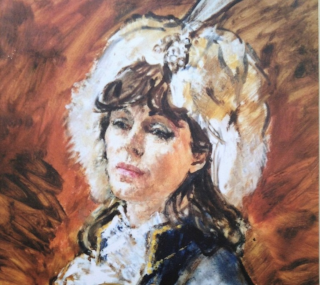
Mariga Guinness, architectural conservationist and socialite, and co-founder of the Irish Georgian Society, is born in London on September 21, 1932.

Guinness is born Hermione Maria-Gabrielle von Urach, the only child of the marriage of Albrecht von Urach, from Lichtenstein Castle, a member of the royal house of Wurtemberg, and Rosemary Blackadder (1901–1975) from Berwickshire in Scotland, a journalist and artist, who are married in Oslo, Norway in 1931. For the first few months of her life, she is very ill. In 1934, her parents, both working as journalists, move the family to Venice. They later move again to Japan. Her mother develops depression, and in 1937 tries to gain uninvited access to Emperor Hirohito‘s palace with her daughter. This results in her mother being arrested, sedated, and deported, which is the beginning of a decline in her mental health which culminates in a lobotomy in 1941 and spending the rest of her life in private mental institutions. Urach is returned to Europe, where she is raised by her godmother, Hermione Ramsden, in Surrey and Norway. She is educated by as many as seventeen governesses, with brief spells in boarding schools. Until the age of eighteen she is known as Gabrielle.

Urach meets Desmond Guinness in 1951, when she is nineteen, and they are married in Oxford in 1954. They have two children, Patrick (born 1956) and Marina (born 1957).

The couple moves to Ireland in 1955 where they rent Carton House, County Kildare. They share a love of Georgian architecture which results in them buying Leixlip Castle in 1958 and establishing the Irish Georgian Society on February 21 of the same year. Through the society they campaign for the restoration and protection of architectural sites such as Mountjoy Square, the gateway to the Dromana estate in County Waterford, the Tailors’ Hall in Dublin, and Conolly’s Folly in County Kildare. In 1967 they purchase Castletown House, also in County Kildare, with a plan to restore it, and make it a base for the Irish Georgian Society.

During the 1960s Leixlip Castle is a hub for those interested in architecture and conservation, and the Guinnesses work hands-on on a range of projects. By 1969, their marriage is in difficulties and Guinness moves to London. She later moves to Glenarm, County Antrim to live with Hugh O’Neill, and when that relationship ends, she returns to Leixlip Castle, but a divorce is finalised in 1981. Having lived in Dublin for a time, she rents Tullynisk House, the dower house of Birr Castle in County Offaly in 1983. Guinness becomes isolated and develops a problem with alcohol. While returning to Ireland from Wales on a car ferry on May 8, 1989, she has a massive heart attack which is compounded by a reaction to an injection of penicillin. She is buried at Conolly’s Folly.

Through Patrick, Guiness becomes grandmother of the fashion model Jasmine Guinness. Her daughter Marina is a patron of the arts and of Irish musicians including Glen Hansard, Damien Rice, and the band Kíla. Marina has three children of her own: Patrick (by Stewart Copeland of The Police), Violet (by photographer Perry Ogden), and Finbar (by record producer Denny Cordell).

In 2020, a new film on Guinness’s life and work, entitled Memory of Mariga, receives its United States premiere as part of the Elizabethtown Film Festival on Saturday, September 19, at the Crowne Pointe Theatre in Elizabethtown, Kentucky. In 2021, the same film receives its Irish premiere at the Fastnet Film Festival.


1 Comment

Death of Arthur Guinness

arthur-guinness

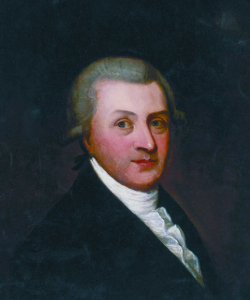
Arthur Guinness, entrepreneur, visionary, philanthropist, brewer, and the founder of the Guinness brewery business, dies at Mountjoy Square, Dublin, on January 23, 1803.

Arthur Guinness is believed to be born in Celbridge, County Kildare on September 25, 1725, into the Protestant Guinness family, part of the Anglo-Irish aristocracy. They claim to descend from the Gaelic Magennis clan of County Down. However, recent DNA evidence suggests descent from the McCartans, another County Down clan, whose spiritual home lay in the townland of “Guiness” near Ballynahinch, County Down.

Guinness’s place and date of birth are the subject of speculation. His gravestone in Oughter Ard, County Kildare, reads that he dies on January 23, 1803, at the age of 78, and that he is born some time in 1724 or very early in 1725. This contradicts the date of September 28, 1725, chosen by the Guinness company in 1991, apparently to end speculation about his birthdate. The place of birth is perhaps his mother’s home at Read homestead at Ardclough, County Kildare.

In 2009 it is claimed that Guinness is born in nearby Celbridge where his parents live in 1725 and where his father later becomes land steward for the Archbishop of Cashel, Dr. Arthur Price. In his will, Dr. Price leaves £100 each to “his servant” Arthur and his father in 1752.

Guinness leases a brewery in Leixlip in 1755, brewing ale. Guinness also purchases a long lease of an adjacent site from George Bryan of Philadelphia in 1756 that is developed as investment property. He leaves his younger brother in charge of the Leixlip enterprise in 1759 and moves on to another at St. James’ Gate, Dublin. He signs a 9,000-year lease for the brewery, effective from December 31, 1759. The lease is presently displayed in the floor at St. James’ Gate. By 1767 he is the master of the Dublin Corporation of Brewers. His first actual sales of porter are listed on tax data from 1778. From the 1780s his second son, Arthur, works at his side and becomes the senior partner in the brewery in 1803.

Guinness’ major achievement is the expansion of his brewery in 1797–1799. Thereafter he brews only porter and employs members of the Purser family who have brewed porter in London from the 1770s. The Pursers become partners in the brewery for most of the 19th century. By the time of his death in 1803, the annual brewery output is over 20,000 barrels. Subsequently Arthur and/or his beer is nicknamed “Uncle Arthur” in Dublin. Guinness’ florid signature is still copied on every label of bottled Guinness.

From 1764, Guinness and his wife Olivia, whom he marries in 1761, live at Beaumont House, which Guinness has built on a 51-acre farm which is now a part of Beaumont Convalescent Home, behind the main part of Beaumont Hospital, between Santry and Raheny in north County Dublin. His landlord is Charles GardinerBeaumont, meaning beautiful hill, is named by Arthur and the later Beaumont parish copies the name. From March 1798 he lives at Mountjoy Square in Dublin, which is then in the process of being built in the style of elegant Georgian architecture. Three of his sons are also brewers, and his other descendants eventually include missionaries, politicians, and authors.

Sir Arthur Guinness dies in Mountjoy Square, Dublin, on January 23, 1803, and is buried in his mother’s family plot at Oughter Ard, County Kildare.

To further honour Arthur Guinness’s legacy, in 2009 Guinness & Co. established the Arthur Guinness Fund (AGF). An internal fund set up by the Company, its aim is to enable and empower individuals with skills and opportunities to deliver a measured benefit to their communities. Guinness has donated more than €7 million to the Fund since its inception. Arthur Guinness is also one of a handful of Irish people commemorated twice on stamps, in 1959 and 2009.


Leave a comment

Death of George Petrie, Painter & Musician

george-petrie

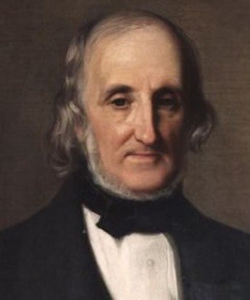
George Petrie, Irish painter, musician, antiquary and archaeologist of the Victorian era dies on January 17, 1866.

Petrie is born and grows up in Dublin, living at 21 Great Charles Street, just off Mountjoy Square. He is the son of the portrait and miniature painter James Petrie, a native of Aberdeen, Scotland, who had settled in Dublin. He is interested in art from an early age. He is sent to the Royal Dublin Society‘s schools, being educated as an artist, where he wins the silver medal in 1805 at the age of fourteen.

After an abortive trip to England in the company of Francis Danby and James Arthur O’Connor, both of whom are close friends of his, he returns to Ireland where he works mostly producing sketches for engravings for travel books including among others, George Newenham Wright‘s guides to Killarney, Wicklow and Dublin, Thomas Cromwell‘s Excursions through Ireland, and James Norris Brewer‘s Beauties of Ireland.

In the late 1820s and 1830s, Petrie significantly revitalises the Royal Irish Academy‘s antiquities committee. He is responsible for their acquisition of many important Irish manuscripts, including an autograph copy of the Annals of the Four Masters, as well as examples of insular metalwork, including the Cross of Cong. His writings on early Irish archaeology and architecture are of great significance, especially his essay on the Round Towers of Ireland, which appear in his 1845 book titled The Ecclesiastical Architecture of Ireland. He is often called “the father of Irish archaeology.” His survey of the tombs at Carrowmore still informs study of the site today.

From 1833 to 1843 Petrie is employed by Thomas Frederick Colby and Thomas Larcom as head of the Topographical Department of the Irish Ordnance Survey. Amongst his staff are John O’Donovan, one of Ireland’s greatest ever scholars, and Eugene O’Curry. A prizewinning essay submitted to the Royal Irish Academy in 1834 on Irish military architecture is never published, but his seminal essay On the History and Antiquities of Tara Hill is published by the Academy in 1839. During this period Petrie is himself the editor of two popular antiquarian magazines, the Dublin Penny Journal and, later, the Irish Penny Journal.

Another major contribution of Petrie’s to Irish culture is the collection of Irish traditional airs and melodies which he records. William Stokes’s contemporary biography includes detailed accounts of Petrie’s working methods in his collecting of traditional music: “The song having been given, O’Curry wrote the Irish words, when Petrie’s work began. The singer recommenced, stopping at a signal from him at every two or three bars of the melody to permit the writing of the notes, and often repeating the passage until it was correctly taken down …”

As an artist, Petrie’s favourite medium is watercolour which, due to the prejudices of the age, is considered inferior to oil painting. Nonetheless, he can be considered as one of the finest Irish Romantic painters of his era. Some of his best work is in the collections of the National Gallery of Ireland, such as his watercolour painting Gougane Barra Lake with the Hermitage of St. Finbarr, County Cork (1831).

Petrie is awarded the Royal Irish Academy’s prestigious Cunningham Medal three times: firstly in 1831 for his essay on the round towers, secondly in 1834 for the now lost essay on Irish military architecture, and thirdly in 1839 for his essay on the antiquities of Tara Hill.

The closing years of Petrie’s life are devoted to the publication of a portion of his collection of Irish music. He dies at the age of 77 at Rathmines, Dublin, on January 17, 1866. He is buried in Mount Jerome Cemetery.


Leave a comment

Birth of Arthur Guinness, Founder of the Guinness Brewery

arthur-guinness

Arthur Guinness, Irish brewer and the founder of the Guinness brewery, is born in Celbridge, County Kildare, on September 28, 1725. He is also an entrepreneur and philanthropist.

Arthur Guinness is born into the Protestant Guinness family, part of the Anglo-Irish aristrocracy. They claim to descend from the Gaelic Magennis clan of County Down. However, recent DNA evidence suggests descent from the McCartans, another County Down clan, whose spiritual home lay in the townland of “Guiness” near Ballynahinch, County Down.

Guinness’s place and date of birth are the subject of speculation. His gravestone in Oughter Ard, County Kildare, reads that he dies on January 23, 1803, at the age of 78, and that he is born some time in 1724 or very early in 1725. This contradicts the date of September 28, 1725, chosen by the Guinness company in 1991, apparently to end speculation about his birthdate. The place of birth is perhaps his mother’s home at Read homestead at Ardclough, County Kildare.

In 2009 it is claimed that Guinness is born in nearby Celbridge where his parents live in 1725 and where his father later becomes land steward for the Archbishop of Cashel, Dr. Arthur Price. In his will, Dr. Price leaves £100 each to “his servant” Arthur and his father in 1752.

Guinness leases a brewery in Leixlip in 1755, brewing ale. Guinness also purchases a long lease of an adjacent site from George Bryan of Philadelphia in 1756 that is developed as investment property. He leaves his younger brother in charge of the Leixlip enterprise in 1759 and moves on to another at St. James’ Gate, Dublin. He signs a 9,000-year lease for the brewery, effective from December 31, 1759. The lease is presently displayed in the floor at St. James’ Gate. By 1767 he is the master of the Dublin Corporation of Brewers. His first actual sales of porter are listed on tax data from 1778. From the 1780s his second son, Arthur, works at his side and becomes the senior partner in the brewery in 1803.

Guinness’ major achievement is the expansion of his brewery in 1797–1799. Thereafter he brews only porter and employs members of the Purser family who have brewed porter in London from the 1770s. The Pursers become partners in the brewery for most of the 19th century. By the time of his death in 1803, the annual brewery output is over 20,000 barrels. Subsequently Arthur and/or his beer is nicknamed “Uncle Arthur” in Dublin. Guinness’ florid signature is still copied on every label of bottled Guinness.

From 1764, Guinness and his wife Olivia, whom he marries in 1761, live at Beaumont House, which Guinness has built on a 51-acre farm which is now a part of Beaumont Convalescent Home, behind the main part of Beaumont Hospital, between Santry and Raheny in north County Dublin. His landlord is Charles Gardiner. Beaumont, meaning beautiful hill, is named by Arthur and the later Beaumont parish copies the name. From March 1798 he lives at Mountjoy Square in Dublin, which is then in the process of being built in the style of elegant Georgian architecture. Three of his sons are also brewers, and his other descendants eventually include missionaries, politicians, and authors.

Sir Arthur Guinness dies in Mountjoy Square, Dublin, on January 23, 1803, and is buried in his mother’s family plot at Oughter Ard, County Kildare.


Leave a comment

Birth of James Gandon, Influential Irish Architect

james-gandon

James Gandon, possibly the most influential architect in Irish history, is born in New Bond Street, London, on February 20, 1743. His better known works include The Custom House, the Four Courts, King’s Inns in Dublin, and Emo Court in County Laois.

Gandon is the only son of Peter Gandon, a gunmaker, and Jane Burchall. He is educated at Shipley’s Drawing Academy where he studies the classics, mathematics, arts, and architecture. Upon leaving the drawing academy he is articled to study architecture in the office of Sir William Chambers. Chambers’s palladian and neoclassical concepts greatly influence the young Gandon.

In 1765, Gandon leaves William Chambers to begin practice on his own. His practice always remains small but is successful. His first commission is on Sir Samuel Hellier’s estate at The Wodehouse, near Wombourne. Around 1769 he enters an architectural competition to design the new Royal Exchange in Dublin. The plan submitted by Thomas Cooley is eventually chosen but Gandon’s design comes in second and brings him to the attention of the politicians who are overseeing the large-scale redevelopment of Dublin.

During the following years in England, Gandon is responsible for the design of the County Hall in Nottingham. Between 1769 and 1771, he collaborates with John Woolfe on two additional volumes of Vitruvius Britannicus, a book of plans and drawings of Palladian revival buildings by such architects as Inigo Jones and Colen Campbell. During his English career he is awarded the Gold medal for architecture by the Royal Academy, London in 1768.

In 1781, at the age of 38, Gandon accepts an invitation to Ireland from Lord Carlow and John Beresford, the Revenue Commissioner for Ireland, to supervise the construction of the new Custom House in Dublin. The original architect on that project, Thomas Cooley, had died and Gandon is chosen to assume complete control. The Irish people are so opposed to the Custom House and its associated taxes that Beresford has to smuggle Gandon into the country and keeps him hidden in his own home for the first three months. The project is eventually completed at a cost of £200,000, an enormous sum at the time.

This commission proves to be the turning point in Gandon’s career and Dublin is to become Gandon’s home for the remainder of his life. The newly formed Wide Streets Commission employs Gandon to design a new aristocratic enclave in the vicinity of Mountjoy Square and Gardiner Street. Gandon also designs Carlisle Bridge, now O’Connell Bridge, over the River Liffey to join the north and south areas of the city. In 1786, he is charged with completing the Four Courts in 1786, which is also originally a Thomas Cooley project.

The success of Gandon’s designs and commissions are not reflected in personal popularity as he attracts huge criticism from his enemies. The taxation symbolised by the Custom House is to taint the appreciation of his work throughout his lifetime. It is even claimed that Gandon designs buildings to boost his self-esteem.

In 1798, revolution breaks out on the streets of Ireland and Gandon, an unpopular figure, hurriedly flees to London. Upon returning to Dublin he finds a much changed city. James Gandon dies in 1823 at his home in Lucan, County Dublin, having spent forty-two years in the city. He is buried in the church-yard of Drumcondra Church.