He has been invited by the Protestant noblemen of the country to come and usurp the English throne. Led by Lord Monmouth, a group of Protestant nobles have unsuccessfully attempted to prevent the Catholic James from ascending to the throne on the death of Charles II in 1685. Since then, James has been disturbing the Protestant noblemen who have remained loyal to him in 1685 by giving Catholics more and more freedoms in both England and Ireland.
On May 7, 1688, James II issues a “Declaration of Indulgence” pledging religious toleration. Still the Protestant nobles are comforted by the fact that all the possible heirs to James are Protestant. Thus the country will be safely returned to a Protestant monarch in time and many of James’ reforms will be reversed. All that changes on June 10, 1688, when the Queen gives birth to a male heir, one who is to be raised as a Catholic.
Soon thereafter, an invitation is sent across to William, who is married to James’ sister Mary, to come and save England for Protestantism. This, William is more than happy to do, for Louis XIV of France is threatening to invade the Netherlands and what better way to ensure the support of England in that coming war than to become the King of that country.
The “Glorious Revolution,” as the British would come to call it, is now underway. In less than two months, James II flees for his life and goes into exile in France, never to return. For the native population of Ireland, the eventual results of this revolution are far from “glorious.” The results are death, destruction, poverty, hundreds of years of second-class citizenship in their own land, and a legacy of hatred between Protestant and Catholic in the north of Ireland that persists to this day.
(Pictured: “William III Landing at Brixham, Torbay, 5 November 1688” by Jan Wyck, National Maritime Museum)
The Treaty on European Union, commonly known as the Maastricht Treaty, comes into effect on November 1, 1993, formally establishing the European Union (EU).
Concluded in 1992 between the then-twelve member states of the European Communities, the treaty announces “a new stage in the process of European integration.” The treaty establishes a European Union (EU), with EU citizenship granted to every person who is a citizen of a member state. EU citizenship enables people to vote and run for office in local and European Parliament elections in the EU country in which they live, regardless of their nationality. The treaty also provides for the introduction of a central banking system and a common currency (the euro), commits members to implement common foreign and security policies, and calls for greater cooperation on various other issues, including the environment, policing, and social policy.
Although these provisions are widely seen to presage a “federal Europe,” the focus of constitutional debate shifts to the later 2007 Treaty of Lisbon. In the wake of the European debt crisis unfolding from 2009, the most enduring reference to the Maastricht Treaty has been to the rules of compliance – the “Maastricht criteria” – for the currency union.
Against the background of the end of the Cold War and the reunification of Germany, and in anticipation of accelerated globalisation, the treaty negotiates tensions between member states seeking deeper integration and those wishing to retain greater national control. The resulting compromise faces what is to be the first in a series of EU treaty ratification crises.
The twelve members of the European Communities signing the Treaty are represented by:
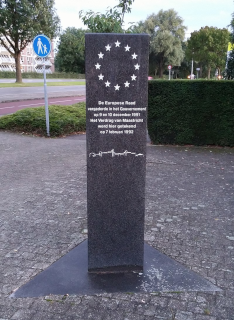
(Pictured: Stone memorial in front of the entry to the Limburg Province government building in Maastricht, Netherlands, commemorating the signing of the Maastricht Treaty)
A Luftwaffe bomb kills thirteen people in Belfast, Northern Ireland, on the night of April 7, 1941. Ultimately, the city is devastated by air raids. Seven hundred people are killed and 400 seriously injured in what becomes known as the Belfast Blitz. The Blitz consists of four German air raids on strategic targets in Belfast, in April and May 1941 during World War II.
There had been a number of small bombings, probably by planes that missed their targets over the River Clyde in Glasgow or the cities of North West England. On March 24, 1941, John MacDermott, Minister for Public Security, writes to the Prime Minister of Northern Ireland, John Andrews, expressing his concerns that Belfast is so poorly protected. “Up to now we have escaped attack. So had Clydeside until recently. Clydeside got its blitz during the period of the last moon. There [is] ground for thinking that the … enemy could not easily reach Belfast in force except during a period of moonlight. The period of the next moon from say the 7th to the 16th of April may well bring our turn.” MacDermott is proved right.
The first deliberate raid takes place on the night of April 7. It targets the docks. Neighbouring residential areas are also hit. Six Heinkel He 111 bombers, from Kampfgruppe 26, flying at 7,000 feet, drop incendiaries, high explosive and parachute mines. By British mainland blitz standards, casualties are light. Thirteen die, including a soldier killed when an anti-aircraft gun at the Balmoral show-grounds misfires. The most significant loss is a 4.5-acre factory floor for manufacturing the fuselages of Short Stirling bombers. The Royal Air Force (RAF) announces that Squadron Leader J.W.C. Simpson shot down one of the Heinkels over Downpatrick. The Luftwaffe crews return to their base in Northern France and report that Belfast’s defences are “inferior in quality, scanty and insufficient.” This raid overall causes relatively little damage, but a lot is revealed about Belfast’s inadequate defences.
On Easter Tuesday, April 15, 1941, spectators watching a football match at Windsor Park notice a lone LuftwaffeJunkers Ju 88 aircraft circling overhead. That evening over 150 bombers leave their bases in northern France and the Netherlands and head for Belfast. There are Heinkel He 111s, Junkers Ju 88s and Dornier Do 17s. At 10:40 p.m. the air-raid sirens sound. Accounts differ as to when flares are dropped to light up the city. The first attack is against the city’s waterworks, which had been attacked in the previous raid. High explosives are dropped. Initially it is thought that the Germans had mistaken this reservoir for the harbour and shipyards, where many ships, including HMS Ark Royal are being repaired. However, that attack is not an error. Three vessels nearing completion at Harland & Wolff are hit as is its power station. Wave after wave of bombers drop their incendiaries, high explosives and landmines. When incendiaries are dropped, the city burns as water pressure is too low for effective firefighting. There is no opposition. In the mistaken belief that they might damage RAF fighters, the anti-aircraft batteries cease firing. But the RAF does not respond. The bombs continued to fall until 5:00 a.m.
Outside of London, with some 900 dead, this is the greatest loss of life in a night raid during the Blitz. A stray bomber attacks Derry, killing fifteeen. Another attacks Bangor, County Down, killing five. By 4:00 a.m. the entire city seems to be in flames. At 4:15 a.m., John MacDermott, the Minister of Public Security, manages to contact Minister of AgricultureBasil Brooke seeking permission to seek help from the Irish government. Brooke notes in his diary, “I gave him authority as it is obviously a question of expediency.” Since 1:45 a.m. all telephones have been cut. Fortunately, the railway telegraphy link between Belfast and Dublin is still operational. The telegram is sent at 4:35 a.m. asking the Irish Taoiseach, Éamon de Valera, for assistance.
By 6:00 a.m., within two hours of the request for assistance, 71 firemen with 13 fire tenders from Dundalk, Drogheda, Dublin, and Dún Laoghaire are on their way to cross the Irish border to assist their Belfast colleagues. In each station volunteers are requested, as it is beyond their normal duties. In every instance, all step forward. They remain in Belfast for three days, until they are sent back by the Northern Ireland government. By then 250 firemen from Clydeside have arrived.
There is a second massive air raid on Belfast on Sunday, May 4-5, 1941, three weeks after the Easter Tuesday raid. Around 1:00 a.m., Luftwaffe bombers fly over the city, concentrating their attack on the Harbour Estate and Queen’s Island. Nearby residential areas in east Belfast are also hit when “203 metric tonnes of high explosive bombs, 80 land mines attached to parachutes, and 800 firebomb canisters containing 96,000 incendiary bombs” are dropped. Over 150 people die in what becomes known as the “Fire Blitz.” Casualties are lower than at Easter, partly because the sirens sound at 11:45 p.m. while the Luftwaffe attack more cautiously from a greater height. St. George’s Church in High Street is damaged by fire. Again, the Irish emergency services cross the border, this time without waiting for an invitation.
(Pictured: Rescue workers search through the rubble of Eglington Street in Belfast, Northern Ireland, after a German Luftwaffe air raid, May 7, 1941)
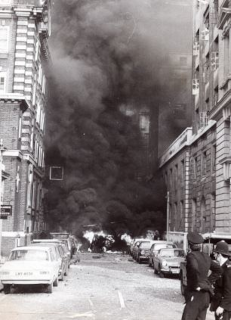
The 1973 Old Bailey bombing, a car bomb attack carried out by the Provisional Irish Republican Army (IRA) and dubbed as Bloody Thursday by newspapers in Britain, takes place outside the Central Criminal Court of England and Wales, commonly referred to as the Old Bailey, in London on March 8, 1973. This is the Provisional IRA’s first major attack in England since the Troubles began in the late 1960s. The unit also explodes a second bomb outside the Ministry of Agriculture building near Whitehall at around the same time the bomb at the Old Bailey explodes.
England had been relatively untouched by the violence up until the beginning of 1973, but the IRA Army Council draws up plans for a bombing campaign to take place in England some time early in 1973. In the late 1960s and early 1970s, loyalist paramilitaries had bombed Dublin and other parts of the Republic of Ireland a number of times before the IRA began its bombing campaign in England. Following the Dublin bombings in late 1972 and in January 1973 carried out by Loyalists which killed three people and injured over 150, the media attention these bombings received helped the IRA decide to take its campaign to Britain in return. The arrest of top IRA personnel in both the Republic and Northern Ireland like Máire Drumm, Seán Mac Stíofáin, Ruairí Ó Brádaigh and Martin McGuinness in late 1972 help to convince the IRA to bomb England to take the heat off of the IRA in Ireland.
The IRA selects the volunteers who constitute the Active Service Unit (ASU) for the England bombing operation, which is scheduled to take place on March 8, 1973, the same day that a border poll, boycotted by Nationalists and Roman Catholics, is being held in Belfast. Volunteers from all three of the IRA’s Belfast Brigade Battalions are selected for the bombing mission. The team includes Gerry Kelly (19), Robert “Roy” Walsh (24), an expert bomb maker from Belfast, Hugh Feeney, a Belfast-born IRA volunteer and explosives expert, and two sisters, Marian (19) and Dolours Price (22) from Belfast and are from a staunchly Republican family, along with five other lesser-known volunteers from Belfast: Martin Brady (22), William Armstrong (29), Paul Holmes (19), William McLarnon (19), and Roisin McNearney (18).
Several days before the bombing, the leaders of the IRA ASU, which includes sisters Marian and Dolours Price, go to London and pick out four targets: the Old Bailey, the Ministry of Agriculture, an army recruitment office near Whitehall and New Scotland Yard. They then report back to their Officer Commanding (OC) in Belfast, and the IRA Army Council gives the go ahead. The bombs are made in Ireland and transported to London via ferry, according to Marian Price.
The Royal Ulster Constabulary (RUC) warns the British that the ASU is traveling to England, but are unable to provide specifics as to the target.
The drivers and the volunteers who are to prime the bombs wake up at 6:00 a.m. and drive the car bombs to their various targets. Gerry Kelly and Roy Walsh drive their car bomb to the Old Bailey. It is planned that by the time the bombs go off around 3:00 p.m., the ASU will be back in Ireland. The bomb at New Scotland Yard is found at 8:30 a.m. by a policeman who notices a discrepancy in the licence plate. The bomb team starts lifting out 5-pound (2.3 kg) bags of explosives and separates them, so that if the bomb does go off, the force of the explosion will be greatly reduced. The bomb squad eventually finds the detonating cord leads, which run under the front passenger seat of the car. Peter Gurney, a senior member of New Scotland Yard, cuts the detonator cord leads, defusing the bomb.
However, at the Old Bailey the bomb explodes, injuring many and causing extensive damage. Scotland Yard states it had warned the City of London police at 2:01 p.m. to search near the Old Bailey for a green Ford Cortina. The car is not located until 2:35 p.m. and explodes at 2:49 p.m. while police are evacuating the area. Several more people are injured by the car bomb near the Ministry of Agriculture, which brings the total number injured to over two hundred. A British man, Frederick Milton (60), dies of a heart attack. Dolours Price writes in her memoir, “There were warnings phoned in but people had stood about, curious to see… If people ignored the warnings and stood around gawking, they were stupid. The numbers of injured came about through curiosity and stupidity.” The ASU is caught trying to leave the country at Heathrow Airport prior to the explosions, as the police had been forewarned about the bombings and are checking all passengers to Belfast and Dublin. All ten give false names that do not match their documents and they are detained. The IRA Volunteer who gave a warning about the bombs an hour before they exploded is the only one not captured.
The IRA volunteers have to be tried at Winchester Crown court in Winchester Castle as the Old Bailey is wrecked by the car bomb. The trial takes ten weeks and is set amid extremely strict security. William McLarnon pleads guilty to all charges on the first day of the trial. On November 14, 1973, a jury convicts six men and two women of the bombings. The jury acquits Roisin McNearney in exchange for information and she is given a new identity. As her verdict is handed down, the other defendants begin to hum the “Dead March” from Saul, and one throws a coin at her, shouting, “Take your blood money with you” as she leaves the dock in tears. Six of the nine people convicted admit to Provisional IRA membership.
The judge sentences the eight to life imprisonment for the bombings and 20 years for conspiracy, while William McLarnon, whose family was forced out of their home in August 1969, is sentenced to 15 years. When his sentence is read he shouts, “Up The Provisional IRA.” As the eight are led to the cells below the court, several give raised fist salutes to relatives and friends in the public gallery. The Price sisters immediately go on hunger strike, soon followed by Feeney and Kelly, for the right not to do prison work and to be repatriated to a jail in Ireland. The bombers on hunger strike are eventually moved to jails in Ireland as part of the 1975 IRA truce agreed with the British. In 1983, Kelly escapes from Maze Prison and becomes part of an IRA ASU in the Netherlands. He is recaptured three years later by the Dutch authorities and extradited.
The Old Bailey bomb is the beginning of a sustained bombing campaign in England. The next major bombing by the IRA in England is the King’s Cross station and Euston station bombings which injured 13 people and do widespread damage. Another significant attack that year is the 1973 Westminster bombing which injures 60 people. Two more people die in England from IRA bombings in 1973, bringing the total to three for the year in that part of United Kingdom. The next year, 1974, is the bloodiest year of the Troubles outside of Northern Ireland with over 70 people being killed in the Republic of Ireland and England combined. Thirty-four are killed in the Dublin and Monaghan bombings, 21 from the Birmingham pub bombings, 12 from the M62 coach bombing, and several people are killed by the IRA’s Balcombe Street Gang.
One of the Old Bailey bombers, Marian Price, explains the IRA’s reasoning for bombing England. “It doesn’t seem to matter if it’s Irish people dying.” So if the armed struggle was to succeed then it was necessary to “bring it to the heart of the British Establishment.” Hence symbolic targets such as the Old Bailey “were carefully chosen.”
Ryan emigrates to the United States in 1947 to work for Time, where he reports on the postwar tests of atomic weapons carried out by the United States in the Pacific. He then reports for Time on the Arab-Israeli war in 1948. This is followed by work for other magazines, including Collier’s Weekly and Reader’s Digest.
Ryan marries Kathryn Morgan, a novelist, and becomes a naturalized citizen of the United States in 1951.
On a trip to Normandy in 1949 Ryan becomes interested in telling a more complete story of Operation Overlord than has been produced to date. He begins compiling information and conducting over 1,000 interviews as he gathers stories from both the Allies and the Germans, as well as the French civilians.
In 1956 Ryan begins to write down his World War II notes for The Longest Day: 6 June 1944 D-Day, which tells the story of the D-Day Invasion of Normandy, published three years later in 1959. It is an instant success, and he assists in the writing of the screenplay for the 1962 film of the same name. Darryl F. Zanuck pays the author U.S.$175,000 for the screen rights to the book.
Ryan’s 1957 book One Minute to Ditch! is about the successful ocean ditching of a Pan AmericanBoeing 377 Stratocruiser. He had written an article about the ditching for Collier’s in their December 21, 1956, issue and then expanded it into the book.
Ryan’s next work is The Last Battle (1966), about the Battle of Berlin. The book contains detailed accounts from all perspectives: civilian, American, British, Russian and German. It deals with the fraught military and political situation in the spring of 1945, when the forces of the western allies and the Soviet Union contend for the chance to liberate Berlin and to carve up the remains of Germany.
This work was followed by A Bridge Too Far (1974), which tells the story of Operation Market Garden, the ill-fated assault by allied airborne forces on the Netherlands culminating in the Battle of Arnhem. It is made into a major 1977 film of the same name.
Ryan is awarded the French Legion of Honour and an honorary Doctor of Literature degree from Ohio University, where the Cornelius Ryan Collection is housed in the Alden Library. He is diagnosed with prostate cancer in 1970 and struggles to finish A Bridge Too Far during his illness. He dies in Manhattan on November 23, 1974, while on tour promoting the book, only two months after publication. He is buried in the Ridgebury Cemetery in northern Ridgefield, Connecticut.
Four years after his death, Ryan’s struggle with prostate cancer is detailed in A Private Battle, written by his widow, from notes he had secretly left behind for that purpose.
Scallon is born Rosemary Brown, the fifth of seven children of a King’s Cross railway station porter and trumpet player originally from Derry, Northern Ireland. When she is five, the family moves back to Derry where she grows up in the Creggan housing estate and Bogside. She attends St. Eugene’s Primary School and then enrolls at Thornhill College. A singing talent from childhood, she wins several local contests while also participating in local choirs and taking piano, violin and ballet lessons.
In the early 1960s Scallon forms a trio with two of her sisters, often performing at charity concerts organized by their father. When one sister leaves, the remaining duo lands a summer-long booking at the Palladium and a recording contract with Decca Records. Her other sister, however, leaves to join her new husband, a United States airman, in America. Stricken with stage fright, Scallon the solo singer manages to win a folk competition at the Embassy Ballroom with her eyes shut. The contest’s sponsor, teacher and music promoter Tony Johnston, helps her complete her equivalency degree and records a demo that convinces Decca Records to sign her on as a solo artist. She releases a single in 1967 that brings some attention from local TV and radio.
Performing under her school nickname “Dana,” Scallon becomes a fixture in Dublin‘s cabaret and folk clubs. She is crowned “Queen of Cabaret” and feted with a parade and a reception at Clontarf Castle on the Saturday before Easter 1968.
At the suggestion of Decca Record’s local agent, Phil Mitton, Scallon auditions for the Irish National Song Contest, a preliminary for the 1969 Eurovision competition. She reaches the finals in Dublin but comes in second.
RTÉ Television chief Tom McGrath invites Scallon back to compete the following year. She accepts even though she is preparing to retire from active performing to pursue teaching. The song, “All Kinds of Everything” by Derry Lindsay and Jackie Smith, is picked for her by McGrath and propels her to victory. She goes on to represent Ireland in the 1970 Eurovision contest, held in Amsterdam. She performs perched on a stool on stage and defeats England’s Mary Hopkin and Spain‘s Julio Iglesias to secure Ireland’s victory.
Scallon is given a hero’s welcome upon her return to Ireland, especially in Northern Ireland. “All Kinds of Everything” shoots to #1 on the Irish Singles Chart, as well as the UK Singles Chart. It is also successful in Australia, Austria, Germany, Israel, Malaysia, the Netherlands, New Zealand, Singapore, South Africa, Switzerland and Yugoslavia, on its way to passing 1 million sales. She quickly records an album, with orchestral accompaniment. Her follow-up single, “I Will Follow You,” fails to make much of a splash. Given the choice of giving up, she decides to fight for her recording career, and succeeds with Paul Ryan‘s “Who Put the Lights Out,” which spends eleven weeks on the UK charts.
In 1974 Scallon switches to GTO Records. Her first single on that label, “Please Tell Him That I Said Hello,” returns her to the top 10. Her 1975 holiday single “It’s Gonna be a Cold Cold Christmas” by Roger Greenaway and Geoff Stephens, reaches #4 and remains a classic. Now an established Irish singing star she appears in films and festivals and sells out a week of concerts at the London Palladium. She also maintains her “Queen of the Cabaret” reputation with regular appearances in top London clubs. The BBC gives her two shows of her own: a series called A Day with Dana in 1974 and four-part series of Wake Up Sunday in 1979. BBC Radio follows suit with a series of I Believe in Music in 1977.
Meanwhile, Scallon begins performing stage pantomime in a blockbuster production of Cinderella in Oxford. In September 1976, however, she is hospitalized with a non-malignant growth on her left vocal cord, requiring surgery. The single “Fairytale” is sustained in the charts with the publicity from her dire medical prognosis. The experience strengthens her religious faith. On October 5, 1978, she marries Damien Scallon, a hotel-owner from Newry, at St. Eugene’s Cathedral in Derry.
In 1979, recovered from her surgery, Scallon records a new album entitled The Girl is Back, which has modest success. Pope John Paul II‘s visit to Ireland that year inspires her to write a song based on his personal motto, “Totus Tuus,” which tops the Irish charts. Long associated with Christian causes and Sunday-morning programs, she and her husband look for opportunities to reach a broader market for Christian music and find one in the United States. They attend the National Religious Broadcasters conference in Washington, D.C. in 1980 and secure a contract with Word Records.
Scallon’s first album of Christian songs, Totally Yours, is released on Word Records in 1981. She continues to record pop music, including the 1982 album Magic and the official 1982 FIFA World Cup song for the Northern Ireland team, “Yer Man.” She also continues her stage career, starring in Snow White and the Seven Dwarfs at Hull and later in London’s West End and Wolverhampton. She tours the United States in 1984, including appearances at Billy Graham‘s Boston crusades. She pens an autobiography in 1985. She performs “Totus Tuus” before a packed Superdome crowd during John Paul II’s visit to New Orleans in 1987.
Also in 1987, after one of her husband’s hotels is damaged for the seventh time by a terrorist bomb, he takes a job managing retreats for EWTN and moves the family to Alabama. They rent a house in the Cherokee Bend area of Mountain Brook and enroll their children at Saint Rose Academy. Scallon is welcomed to the network as well, hosting the Say Yes and We Are One Body programs. She leaves Word Records and signs with Heart Beat Records for her later Catholic albums. In 1993 she again performs for the Pope at a World Youth Day event in Denver, Colorado.
Scallon is naturalized as a dual citizen of the United States and Northern Ireland in 1997 and moves back there a year later because she has been drafted as an independent candidate for President of Ireland. She garners 15% of the popular vote, finishing third in the race won by Mary McAleese, ahead of the Labour Party candidate. Most of her votes come from rural districts where conservative values are more strongly held.
In 1999 Scallon wins a seat on the European Parliament, representing Connacht-Ulster on a family values and anti-abortion platform. During her five-year term she opposes the development of a European constitution. She also speaks out against a 2001 proposal to amend the Irish constitution to legalize the “morning-after pill” and intrauterine contraceptive devices. With the support of the mainstream parties, the amendment is put to a popular referendum, which fails in 2002. That same year she is defeated in a campaign to represent Galway West in the Dáil Éireann, the lower house of the Irish parliament. In 2004 she fails to hold her seat in the European Parliament and also does not secure a nomination for President.
Leaving politics behind, Scallon joins a weight-loss challenge on RTÉ’s The Afternoon Show in 2005. In 2006 she competes with Ronan McCormack on Celebrity Jigs ‘n’ Reels, finishing second on the popular dance contest.
That same year, Scallon and her husband launch their own music label, DS Music Productions, and release a compilation of songs deidcated to John Paul II’s memory. That is followed by Good Morning Jesus: Prayers and Songs for Children of All Ages, which is featured in a special series on EWTN. Heart Beat Records files a lawsuit against DS Music Productions for alleged copyright violations.
In 2007 Scallon appears as a guest judge for Young Star Search, a Belfast CityBeat radio contest. In 2009 she is brought on as a judge for The All Ireland Talent Show. That same year she returns to EWTN as host of Dana and Friends.
Susan Jane Denham, SC (née Gageby), Irish judge who is the first woman to hold the position of Chief Justice of Ireland (2011-17), is born in Dublin on August 22, 1945. She serves as a Judge of the Supreme Court of Ireland (1992-2017) and is the longest-serving member of the court on her retirement. She also serves as a Judge of the High Court (1991-92).
Gageby is called to the bar in July 1971 and becomes a Senior Counsel in October 1987. She is the fourth woman to enter the Inner Bar. She becomes a senior counsel on the same day as future Supreme Court colleague Mary Laffoy. She works on the Midland circuit until 1979, following which she is based in Dublin. She is involved in a number of leading cases while a junior barrister and a Senior Counsel particularly in the area of judicial review. She becomes a High Court judge in 1991.
Gageby marries paediatrician Dr. Brian Denham in 1992. Also in 1992, at the age of 47, Denham is the first woman appointed to the Supreme Court. She is considered for appointment to the role of President of the High Court in 1994 but declines to have her name put forward. She makes two dissents early on in her period on the Court. Throughout her tenure as a judge, she is seen by commentators to be a “liberal” judge.
In Kelly v Hennessy in 1996, Denham outlines criteria for a court to consider the evidence of the existence of nervous shock in Ireland. In 2001, she is the sole member of the Supreme Court to dissent in TD v Minister for Education. The court overturns a decision of Peter Kelly in the High Court to direct the government to build secure care units for certain children.
From 1995 to 1998, Denham chairs the Working Group on a Courts Commission, which is responsible for a significant reform of the organisation of the courts since the foundation of the state. It leads to the establishment of the Courts Service. She is on the Interim Board of the Court Service and serves on the Board of the Court Service from its inception and chairs the board from 2001 to 2004. She chairs the Committee on Court Practice and Procedure which recommends in 2002 the establishment of a commercial court within the High Court.
From 2006, Denham chairs the Working Group on a Court of Appeal. The report of the group is published by the government in August 2009 and recommends the establishment of a general Court of Appeal. This is ultimately established in 2014, after a referendum in 2013.
Denham writes the judgment in McD v. L (2009), upholding the parental rights of a sperm donor.
On July 4, 2011, Denham is nominated by TaoiseachEnda Kenny to become Chief Justice of Ireland and is appointed as Chief Justice by PresidentMary McAleese on July 25, 2011. She is the first woman appointed to the office and as a member of the Church of Ireland, she is the first non-Catholic to hold the position. She is also the first graduate of Trinity College Dublin to have been appointed as Chief Justices have largely been graduates of University College Dublin. She succeeds John L. Murray.
During Denham’s tenure as Chief Justice, the Supreme Court issues suspended declarations of unconstitutionality for the first time. The possibility to delay the effect of a court declaration that a piece of legislation is contrary to the Constitution is first explored by Denham in A v Governor of Arbour Hill Prison. The court first adopts this approach in N.V.H. v Minister for Justice & Equality in May 2017.
As Chief Justice, Denham oversees changes in the operations of the Supreme Court and the courts generally. She oversees the removal of the requirement for judges to wear wigs while hearing cases. In 2015, the Supreme Court sits outside Dublin for the first time since 1931, sitting in Cork. She corresponds with the Office of Public Works over the lack of heating in the Four Courts, threatening to cancel sittings if the issue is not resolved. She advocates for the inclusion of a new courtroom for the Supreme Court in plans to develop a new family court complex on Hammond Lane.
In her capacity as Chief Justice, Denham oversees the administration of the Presidential Declaration of Office at the inauguration of President Michael D. Higgins in Dublin Castle in November 2011.
Denham retires from the position in July 2017 and is succeeded by Judge Frank Clarke. She is the third-longest serving Supreme Court judge ever at the time of her retirement. In her remarks on her retirement, she draws attention to the government’s failure to institute a judicial council, having first attempted to persuade the government to establish one in 1997.
In 2019, Denham is made an honorary fellow of Trinity College Dublin, where she was a Pro-Chancellor from 1996-2010.
The Courts Service announces on August 24, 2020, that the Supreme Court has appointed Denham to review the attendance of Supreme Court judge Séamus Woulfe at a dinner organised by the Oireachtas Golf Society. She is appointed on a non-statutory basis as the relevant section in the Judicial Council Act 2019 on judicial conduct has not yet been commenced.
Butler is one of ten siblings, eight brothers and two sisters, but five of the sons die in childhood. As the eldest living son, he is the heir apparent and is styled with the corresponding courtesy title, which at first is Viscount Thurles but changed to Earl of Ossory when his father becomes marquess in 1642. His early years are spent in Ireland until 1647 when he accompanies his father to England. In 1648 his father renews his support for the royalist cause and he and his son have to flee to France, arriving in Caen in February 1648. Lady Ormond also moves to Caen, where she arrives on June 23, 1648, with his siblings.
Butler is an accomplished athlete and a good scholar. Having come to London in 1652 he is rightly suspected of sympathising with the exiled royalists, and in 1655 is jailed by Oliver Cromwell. After his release about a year later he goes into exile to the Netherlands where Charles II has his exile court at the time.
In 1662 Butler is called to the Irish House of Lords under a writ of acceleration as the Earl of Ossory. His father holds the title “5th Earl of Ossory” as one of his subsidiary titles. The acceleration makes Thomas Butler the 6th Earl of Ossory. This is the only substantive title he ever holds, as he predeceases his father and therefore never succeeds to his father’s titles. His eldest son, however, would later become the 2nd Duke of Ormond and the 7th Earl of Ossory.
Butler holds several military appointments: lieutenant-general of the army in Ireland (appointed in 1665); created an English peer as Lord Butler (in 1666); Lord of the Bedchamber to Charles II (appointed in 1660), a post he holds until his death.
In 1665 a fortunate accident allows Butler to take part in the Battle of Lowestoft against the Dutch, and in May 1672, being now in command of a ship, he fights against the same enemies in the Battle of Solebay, serving with great distinction on both occasions. He is partly responsible for this latter struggle, as on March 12, 1672, before war is declared, he attacks the Dutch Smyrna fleet, an action which he greatly regrets later in life. While visiting France in 1672 he rejects the liberal offers made by Louis XIV to induce him to enter the service of France and returning to England he adds to his high reputation by his conduct during the Battle of Texel in August 1673. From 1677 until 1679, he serves alongside his father as a Lord of the Admiralty.
Butler is intimate with William, Prince of Orange, and in 1677 he joins the allied army in the Netherlands, commanding the British contingent and winning great fame at the siege of Mons in 1678. He acts as deputy for his father, who is Lord Lieutenant of Ireland, and in parliament he defends Ormond’s Irish administration with great vigour. In 1680 he is appointed governor of English Tangier, but his death prevents him from taking up his new duties.
Butler dies on July 30, 1680, at Arlington House in London. He is buried provisionally in Westminster Abbey on July 31, 1680. The ceremony of burial is performed belatedly on November 13, 1680. Some say Butler’s body is later taken to Ireland and reburied in the family vault in St. Canice’s Cathedral, Kilkenny. James, his eldest son, succeeds him as the 7th Earl of Ossory and in 1688 becomes the 2nd Duke of Ormond.
One of Butler’s most intimate friends is John Evelyn, who eulogises him in his Diary.
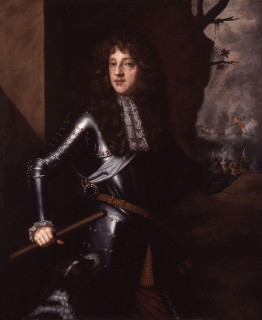
(Pictured: “Thomas Butler, Earl of Ossory” by Peter Lely, painting, circa 1678, National Portrait Gallery)
Rafferty is the third son of Irish miner and lorry driver Joseph Rafferty and his Scottish wife Mary Skeffington. His abusive alcoholic father dies when Gerry is only sixteen years old. He grows up in a council house on the town’s Glenburn estate and attends St. Mirin’s Academy. Inspired by his Scottish mother, who teaches him both Irish and Scottish folk songs, and the music of Bob Dylan and the Beatles, he starts writing his own material. In 1963 he leaves St. Mirin’s Academy and works in a butcher’s shop and as a civil service clerk while also playing with the local group Maverix on weekends.
In the mid-1960s Rafferty earns money busking on the London Underground. In 1966 he meets fellow musician Joe Egan and they are both members of the pop band the Fifth Column. In 1969 he becomes the third member of the folk-pop outfit the Humblebums, which also features comedian Billy Connolly and Tam Harvey. He and Connelly record two well-received albums on the Transatlantic Records label as a duo.
Rafferty releases his first solo album, Can I Have My Money Back?, in 1972. That same year he and Egan form the group Stealers Wheel. Stealers Wheel has a huge hit with the jaunty and witty song “Stuck in the Middle with You,” which peaks at #6 on the Billboard pop charts. Stealers Wheel has a lesser Top 40 hit with “Star” ten months later and eventually breaks up in 1975.
In 1978 Rafferty hits pay dirt with his second solo album, City to City, which soars to #1 on the Billboard album charts and sells over five million copies worldwide. The album also begets the hit song “Baker Street.” This haunting and poetic ballad is an international smash that goes to #2 in the United States, #3 in the United Kingdom, #1 in Australia, and #9 in the Netherlands.
Rafferty’s third album, Night Owl, likewise does well. Moreover, he has additional impressive chart successes with the songs “Right Down the Line,” “Home and Dry,” “Days Gone Down,” and “Get It Right Next Time.” Alas, a handful of albums he records throughout the 1980s and 1990s all prove to be commercial flops. He sings the vocal on the song “The Way It Always Starts” for the soundtrack of the movie Local Hero.
Rafferty is married to Carla Ventilla from 1970 to 1990. He records his last album, Another World, in 2000 and releases the compilation CD, Life Goes On, in 2009.
Rafferty has problems with alcoholism that directly contributes to his untimely death. In November 2010, he is admitted to the Royal Bournemouth Hospital where he is put on a life support machine and treated for multiple organ failure. After being taken off life support, he rallies for a short time, and doctors believe he might recover. He dies, however, of liver failure at the home of his daughter Martha in Stroud, Gloucestershire, on January 4, 2011.
Hopkirk is raised as a Catholic, and educated at Clongowes Wood College in County Kildare from 1945 to 1949 before attending Trinity College, Dublin until 1953. His academic career, however, is held back by his dyslexia. He first learns the basics of car control at the age of nine, when a local clergyman leaves him his invalid carriage in his will. He later graduates to a motorcycle with a sidecar, which is added at the insistence of his father who feels it would be safer, and upon attending Trinity to study engineering, acquires an Austin 7 “Chummy” Tourer which he uses to make his rally debut. Now bitten by the car bug, he drops out of university to start working for Dublin‘s Volkswagen assembler’s retail operation in Ballsbridge, where he purchases a string of used Volkswagen Beetles to enter in competitions.
Hopkirk’s first win comes in 1953 at the Cairncastle hillclimb at the wheel of a VW Beetle. He is offered a free Beetle for the 1953 Circuit of Ireland by Isaac Agnew of Belfast. It is the first of many Circuit entries. The following year he leads the Circuit on the first day of the competition.
Hopkirk starts his winning career in professional racing and rally driving in 1955, taking a class win at that year’s Circuit of Ireland Rally, and clinching his first Hewison Trophy, awarded to the most successful Irish rally driver of the year. He goes on to win the Trophy for three consecutive years. By this time he has graduated to a Triumph TR2. His success in the Triumph is noticed by the Standard Motor Company, who offers him his first factory drive in a Standard Ten at the 1956 RAC Rally in March of that year, where he takes the early lead before suffering problems later on. Two months later he takes a Standard Eight to third place in the Tulip Rally in the Netherlands, his first trip outside of Britain and Ireland. However he loses his drive with Standard in 1958, after overdriving his car at the Alpine Rally in an effort to make up time lost due to a puncture on the Stelvio Pass, damaging the engine and forcing him to retire from the competition.
In 1959 Hopkirk joins the Rootes Group as a works driver, initially picking up a drive in a Hillman Husky at the Safari Rally after reigning F1 World Champion Mike Hawthorn, who is originally meant to drive the car, is killed in a road accident. Later that year he places third overall and takes a class win at the Alpine Rally in a Sunbeam Rapier, and he leads the 1960 Safari Rally until his Rapier suffers a differential failure. He takes two Circuit of Ireland Rally wins in 1961 and 1962 and another third at the Alpine Rally in 1961. While at Rootes he also takes part in circuit racing, winning his class in a Rapier in the touring car race supporting the 1960 British Grand Prix.
Hopkirk finishes third at the 1962 Monte Carlo Rally in a Sunbeam Rapier. However, he becomes frustrated by the Rapier’s lack of reliability, culminating in all three works cars blowing their engines within the space of a kilometre at that year’s Acropolis Rally. After being impressed by a test drive of Pat Moss‘ Austin-Healey 3000, he sets his mind on a move, joining the British Motor Corporation and making his debut in a 3000 at the Liège-Sofia-Liège rally in August. In his second competition with the 3000, the RAC Rally, he finishes in second despite having to complete two miles of a special stage with a shredded tyre after a puncture. He first competes in a Mini at the 1963 Monte Carlo Rally, where he finishes sixth. That season he also finishes second on the Tulip Rally, sixth on Liège-Sofia-Liège, and fourth on the RAC Rally. In addition he takes the Mini to third place in the Tour de France Automobile‘s Touring Category behind two 3.8-litre Jaguars, winning his class and the overall on handicap.
Hopkirk also travels to Australia during his career to drive for the BMC Works Team in the annual Bathurst 500 race for standard production cars at the Mount Panorama Circuit. He drives at Bathurst in a Morris Cooper S from 1965 to 1967, obtaining a best result of 6th outright and 3rd in class in the 1965 Armstrong 500 when paired with Mäkinen. In 1965, he wins a Coupe d’Argent at the Alpine Rally. He wins the 1965 and 1967 Circuit of Ireland Rally, the 1966 and 1967 Alpine Rally, and the 1967 Rally Acropolis.
Hopkirk is elected as a life member of the British Racing Drivers’ Club in 1967, and is also president of the Historic Rally Car Register, and a patron of disability charity WheelPower.
In 1968 Hopkirk finishes second at the second edition of the Rally de Portugal. The following year, he finishes second in the Circuit of Ireland Rally and the RAC Rally, then fourth at the 1970 London to Mexico World Cup Rally with teammates Tom Nash and Neville Johnston in a Triumph 2.5 PI. He elects to step away from full-time competition at the end of that year, coinciding with British Leyland head Lord Stokes‘ decision to close down BL’s competition department.
In 1977, with co-driver Taylor Mike, Hopkirk takes part once again in a revived edition of the London-Sydney Marathon, the Singapore Airlines London to Sydney Rally, this time driving a Citroën CX 2400, taking third place overall in front of another CX driven by Claude Laurent and Jean-Claude Ogier.
In 1982, Hopkirk wins the RAC Golden 50, a historical anniversary race celebrating the 50th RAC Rally, with co-driver Brian Culcheth in the Mini Cooper with which Timo Mäkinen had won the 1965 Monte Carlo Rally. In 1990, he wins the Pirelli Classic Marathon with co-driver Alec Poole. In 1994, he enters the Monte Carlo Rally again, driving a current Mini Cooper, very similar to the original car, but now produced by Rover Group. He and his co-pilot Ron Crellin finish the race in 60th place against much more modern and powerful machines.
In 2010, Hopkirk is among the first four inductees into the Rally Hall of Fame, along with Timo Mäkinen, Rauno Aaltonen and Erik Carlsson.