seamus dubhghaill

Promoting Irish Culture and History from Little Rock, Arkansas, USA


Leave a comment

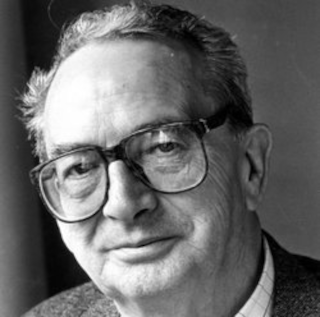
Death of John MacDermott

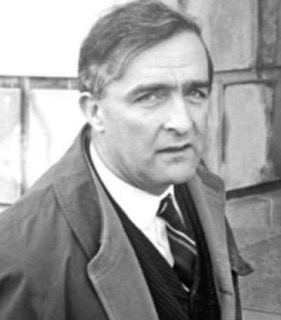
John Clarke MacDermott, Baron MacDermottMCPCPC (NI)Northern Irish politician, barrister, and judge, dies at his home in Belfast on July 13, 1979. He serves as Attorney General for Northern Ireland, a Lord of Appeal in Ordinary, and Lord Chief Justice of Northern Ireland. He is the first law lord to be appointed from Northern Ireland.

MacDermott is born in Belfast on April 12, 1896, the third surviving son and sixth of seven children of the Reverend John MacDermott DD, a Presbyterian clergyman who is minister of Belmont and moderator of the Presbyterian Church in Ireland, and of his wife Lydia Allen MacDermott (née Wilson), the daughter of a Strabane solicitor. He is educated at Campbell College, Belfast, from where he wins a scholarship to read Law at the Queen’s University Belfast (QUB) in 1914.

During the World War I, he serves with the machine gun battalion of the 51st (Highland) Division in France, Belgium and Germany, winning the Military Cross in 1918 and reaching the rank of Lieutenant. After the war he is called to the Bar of Ireland in 1921.

Eight years later MacDermott is appointed to determine industrial assurance disputes in Northern Ireland, and in 1931 becomes a lecturer in Jurisprudence at Queen’s University Belfast, teaching for four years.

In 1936, he is made a King’s Counsel, and two years later he is elected to the Northern Ireland House of Commons as an Ulster Unionist member for Queen’s University.

In 1940, MacDermott is appointed Minister of Public Security in the Government of Northern Ireland, and the following year becomes the Attorney General for Northern Ireland. He is succeeded in this post by William Lowry, whose son, Lord Lowry, would eventually succeed MacDermott as Lord Chief Justice. In 1944, he resigns his parliamentary seat on appointment as a High Court Judge for Northern Ireland, and three years later, on April 23, 1947, is made a Lord of Appeal in Ordinary, becoming a life peer as Baron MacDermott, of Belmont in the city of Belfast.

MacDermott returns from the House of Lords to take up his appointment as Lord Chief Justice of Northern Ireland. His successors to the latter office become Law Lords subsequently. Whilst Lord Chief Justice, he is affectionately known as “the Baron.”

In 1977, aged over eighty, MacDermott offers to redeliver a lecture at the Ulster College, which had been interrupted by a bomb meant for him and which had severely wounded him.

Having been made a Northern Ireland Privy Counsellor seven years earlier, MacDermott is sworn of the British Privy Council in 1947.

Four years later, in 1951, MacDermott is appointed Lord Chief Justice of Northern Ireland, a post he holds for twenty years. He is also Pro-Chancellor of his alma mater from 1951 to 1969. In 1958, he chairs the commission on the Isle of Man Constitution. He dies at his home in Belfast on July 13, 1979.

In 1926, MacDermott weds Louise Palmer Johnston, later Lady MacDermott. Their son, Sir John MacDermott, is also sworn into the British Privy Council in 1987, as a Lord Justice of Appeal in Northern Ireland. He later became a Surveillance Commissioner for Northern Ireland.


Leave a comment

Birth of Billy Wright, Founder of the Loyalist Volunteer Force

William Stephen Wright, known as King Rat, a Northern Irish loyalist paramilitary leader who founds the Loyalist Volunteer Force (LVF) during The Troubles, is born in WolverhamptonEngland, on July 7, 1960.

Wright is a prominent Ulster loyalist paramilitary during the ethno-nationalist conflict in Northern Ireland known as The Troubles. He joins the Ulster Volunteer Force (UVF) in 1975 and becomes commander of its Mid-Ulster Brigade in the early 1990s, taking over from Robin “The Jackal” Jackson. According to the Royal Ulster Constabulary, Wright is involved in the sectarian killings of up to twenty Catholics, although he is never convicted for any. It is alleged that Wright, like his predecessor, serves as a double agent of the British security forces.

Wright attracts considerable media attention at the Drumcree standoff, where he supports the Orange Order‘s desire to march its traditional route through the Catholic/Irish nationalist area of Portadown. In 1994, the UVF and other paramilitary groups call ceasefires. However, in July 1996, Wright’s unit breaks the ceasefire and carries out a number of attacks, including a sectarian killing. For this, Wright and his Portadown unit of the Mid-Ulster Brigade are stood down by the UVF leadership. He is expelled from the UVF and threatened with execution if he does not leave Northern Ireland. Wright ignores the threats and, along with many of his followers, defiantly forms the breakaway Loyalist Volunteer Force (LVF).

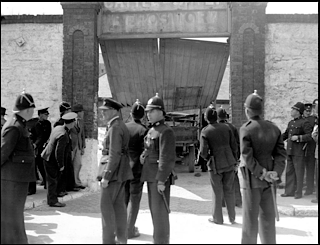
In March 1997, Wright is sent to the HM Maze Prison for having threatened the life of a woman. While imprisoned, he continues to direct the LVF’s activities. On December 27 of that year, he is assassinated at the prison by Irish National Liberation Army (INLA) prisoners as he is led out to a van for a visit with his girlfriend. The LVF carries out a wave of sectarian attacks in retaliation.

Owing to his uncompromising stance as an upholder of Ulster loyalism and opposition to the Northern Ireland peace process, Wright is regarded as a cult hero, cultural icon, and martyr figure by hardline loyalists. His image adorns murals in loyalist housing estates and many of his devotees have tattoos bearing his likeness.

Wright’s funeral procession moves at a snail’s pace on a grey and windy day. Groups of mourners take turns carrying the coffin. Women carry a wreath that simply says “Billy.” Twenty men with tight haircuts and white shirts with black armbands flank the cortège. There is heavy security. Troops stand guard on bridges and Royal Ulster Constabulary (RUC) Land Rovers prowl the housing estates. A spotter plane flies overhead. A lone piper plays “Abide with Me” before a banner bearing the letters “LVF.”

Wright is buried at Seagoe Cemetery, Portadown, Northern Ireland.


Leave a comment

Birth of George Simms, Archbishop in the Church of Ireland

George Otto Simms, an archbishop in the Church of Ireland, and a scholar, is born in Dublin on July 4, 1910.

AboutSimms is born to John Francis A. Simms and Ottilie Sophie Stange, who are both, according to his birth certificate, from LiffordCounty Donegal. He attends the Prior School in Lifford for a time and later Cheltenham College, a public school in England. He goes on to study at Trinity College Dublin, where in 1930 he is elected a Scholar and graduates with a BA in Classics in 1932 and a Bachelor of Divinity degree in 1936. He completes a PhD in 1950.

Simms is ordained a deacon in 1934 and a priest in 1936, beginning his ministry as a curate at St. Bartholomew’s Church, Clyde Road, Dublin, under Canon W. C. Simpson. In 1937, he takes a position in Lincoln Theological College but returns to Dublin in 1939 to become Dean of Residence in Trinity College Dublin and Chaplain Secretary of the Church of Ireland College of Education

He is appointed Dean of Cork in 1952. Consecrated a bishop, he serves as Bishop of Cork, Cloyne and Ross, between 1952 and 1956. At forty-two, he is the youngest Church of Ireland clergyman appointed to a bishopric since John Gregg in 1915. He serves as Archbishop of Dublin from 1956 to 1969. During this time, he maintains a courteous relationship with John Charles McQuaid, his Roman Catholic counterpart as Archbishop of Dublin. From 1969 to 1980, he serves as Archbishop of Armagh

Alongside Cardinal William Conway, Simms chairs the first official ecumenical meeting between the leaders of Ireland’s Protestant Churches and the Catholic Church in Ballymascanlon Hotel, DundalkCounty Louth, on September 26, 1973, an important meeting amidst the increasing violence in Northern Ireland. The meeting is protested by Ian Paisley.

Simms is a scholar, and publishes research on topics including the history of the Church of Ireland, and theological reflections on key texts including the Book of KellsSaint Patrick’s Breastplate, and the Sarum Primer. He is also a fluent speaker of the Irish language.

Simms is also an accomplished journalist, and the author of many newspaper obituaries. His weekly Thinking Aloud column in The Irish Times is a popular reflection, and runs continuously for thirty-eight years. He also works on the research, preparation, and even performs the presentation, of a number of television programmes.

In 1978, Simms is made an honorary fellow of Trinity College Dublin.

Simms is the uncle of mathematician David J. Simms. In 1941, he marries Mercy Felicia Gwynn. They have five children. He dies in Dublin on November 15, 1991. He is interred with his wife in the cemetery attached to St. Maelruain’s ChurchTallaghtCounty Dublin.


Leave a comment

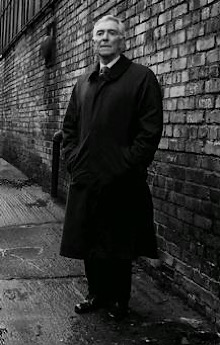
Birth of Dermot Ryan, Roman Catholic Archbishop of Dublin

Dermot Joseph Ryan, the Roman Catholic Archbishop of Dublin from 1972 until 1984, is born on June 26, 1924, in ClondalkinDublin.

Ryan is born to Andrew Ryan, a medical doctor, and Therese (née McKenna). In 1932, he goes to Belvedere College, Dublin. In 1942 he enters Holy Cross CollegeDrumcondra, and graduates with a first in Hebrew and Aramaic at University College Dublin in 1945. He spends a year at St. Patrick’s College, Maynooth before attending the Pontifical Irish College in Rome gaining his BD in 1948 at the Pontifical Lateran University, Rome. He returns to Clonliffe to complete his formation, and where he is ordained a priest on May 28, 1950. He returns to Rome to study at the Pontifical Gregorian University, gaining a Licentiate in Sacred Theology in 1952. In 1954 he is awarded an MA in Semitic Languages from the National University of Ireland (NUI), followed by a licentiate in sacred scripture at the Pontifical Biblical Institute.

Ryan is Professor of Oriental Languages at University College Dublin before his appointment by Pope Paul VI as Archbishop of Dublin and Primate of Ireland on December 29, 1971. Maintaining his connection and interest in oriental studies, he serves as chairman of the trustees of the Chester Beatty Library from 1978 to 1984.

Ryan is ordained a bishop by Pope Paul VI in Rome, assisted by Cardinals Bernardus Johannes Alfrink and William Conway (Archbishop of Armagh and Primate of All Ireland), on February 13, 1972. At the time of his appointment, he is seen as a liberal and a reformer in the Church.

During his term, Ryan consolidates much of the expansion of the archdiocese which had taken place during the term of his predecessor. He also oversees the fuller implementation of the reforms of Vatican II. He is particularly interested in liturgical reform.

Seen as a Liberal, following the episcopacy of John Charles McQuaid, in November 1972, Ryan becomes the first Roman Catholic archbishop to attend a Church of Ireland service in Christ Church Cathedral, Dublin, and holds an interdenominational service in St. Mary’s Pro-Cathedral. He also supports “Ballymascanlon talks,” an inter-church initiative to try to bring communities together and bring peace to Northern Ireland.

Ryan also takes a traditional stand on social issues, including poverty, family life and opposition to abortion. He strongly promotes the Eighth Amendment of the Constitution of Ireland in 1983, granting the equal right to life to mother and unborn.

As Archbishop, Ryan gives the people of Dublin a public park on a site earmarked by his predecessors for a proposed cathedral. It is named “Archbishop Ryan Park” in his honour. The land, at Merrion Square, is a gift from the archbishop to the city of Dublin.

Ryan dies at the age of 60 in Rome on February 21, 1985, following a heart attack. He is buried in St. Mary’s Pro-Cathedral.


Leave a comment

Mary McAleese Meets Bill Clinton in the Oval Office

On June 23, 1998, Irish president Mary McAleese pays a courtesy call on President Bill Clinton at the White House before he leaves for China. This is one of the highlights of her six-day visit to Washington, D.C. and New York.

As this is not a state visit, there is no formal welcome for President McAleese or official functions at the White House as there was for President Mary Robinson‘s state visit two years earlier. McAleese arrives the previous day by government jet, accompanied by her husband, Dr. Martin McAleese, and the Minister for Foreign Affairs, David Andrews, and his wife. The McAleese’s son, thirteen-year-old Justin McAleese, travels to the United States separately and joined his parents in Washington, D.C..

Within hours of her arrival, McAleese attends a reception in the Four Seasons Hotel mainly for the Irish American community and hosted by the Irish ambassador, Sean O Huiginn, and his wife. In her remarks to the several hundred guests, President McAleese praises the role of President Clinton in the Northern Ireland peace process and of former Senator George Mitchell. She says Clinton’s contribution has been “remarkable.” She says, “He was prepared to take risks for peace: without his courage and leadership we could not have made the progress we have.”

McAleese says many of those present “have descended from some of the first settlers of the early colonies – some of whom, like myself, come from the northern part of the island of Ireland. I am deeply honoured that all of you have retained such a close bond and pride in your Irish heritage and that you demonstrated your affection by the strength of the many vibrant organisations in this area.”

McAleese says when our forebears crossed the Atlantic Ocean they retained a yearning that someday the Ireland they left would be a better place. “Regrettably, they did not live to see a new Ireland but it is now a reality in the economic, cultural and social progress of the last number of years.” Arranging the meeting at the White House is a problem for U.S. and Irish officials because of Clinton’s extremely busy schedule, as he prepares for his China visit. But the fact that he makes time for it is an indication of the importance he attaches to U.S.-Irish relations.

Later in the day, McAleese has lunch at the U.S. Supreme Court with Chief Justice William Rehnquist. This is followed by a speech at Georgetown University, mainly dealing with Northern Ireland.

In the evening, McAleese attends a dinner in her honour at the Irish Embassy residence, to which leading political and administration figures are invited. On June 24, following a press conference at the National Press Club and a lunch on Capitol Hill with members of Congress, she flies to New York. There she pays a courtesy visit on the UN Secretary-General, Kofi Annan, and later attends a trade show organised by the Irish Business Organisation. In the evening she attends the “Dreamer of Dreams” awards ceremony organised by the Irish Voice newspaper.

On Thursday, June 25, McAleese has more engagements and prior to her return to Ireland on Friday, June 26.

(From: “McAleese for courtesy call on Clinton today” by Joe Carroll, The IrishTimes, http://www.irishtimes.com, July 23, 1998)


Leave a comment

Birth of Lydia Mary Foster, Writer & Teacher

Lydia Mary Foster, Irish writer and teacher, is born on June 18, 1867, in Newmills, County Tyrone, in what is now Northern Ireland. She writes three books drawing on the experiences of growing up in rural Ulster in the 19th century in the Kailyard school genre.

Foster is the fourth of the six children of Presbyterian minister of Newmills congregation, James Foster, and Lydia (née Harkness). She has three brothers and two sisters. She is educated at home and is later sent to board at Miss Black’s school in Holywood, County Down. She, with her sisters Jane and Bessie, move to Belfast to establish a girls’ school, the Ladies’ Collegiate School, in the Balmoral suburbs, first at Myrtlefield Park, at 434 Lisburn Road, and then in Maryfield Park. This is after Bessie graduates from Trinity College Dublin in 1896 having studied modern languages. Their school teaches boys and girls, both day pupils and boarders. Foster and Jane teach music, and possibly other subjects as well. Their brother Henry, who works in Belfast, lives with them. All four of the siblings attend the Malone Presbyterian Church and are members of the temperance movement. Throughout her life, Foster remains attached to Newmills, visiting regularly and laying the foundation stone for the new manse in 1910. Her brother, Nevin, is the only one of the six siblings to marry and is an Irish ornithological expert.

The school closes after the deaths of Bessie in December 1917 and Jane in October 1918. The death of Henry in December 1922 leaves Foster alone, and having lost her hearing almost completely, she is in difficult circumstances. To support herself, she begins to write literary sketches and dialect verse for a number of publications such as the Northern WhigIreland’s Own, and the annual miscellany Ulster Parade. A selection of these writings are published as a volume, Tyrone Among the Bushes, in 1933. She also writes plays, but these are not collected or produced. She is best known for her three books which are set in rural County Tyrone around the time of Foster’s parents and her childhood. The books, The Bush that Burned (1931), Manse Larks (1936), and Elders’ Daughters (1942) are published by Quota Press in Belfast and are seen as part of the Scottish Kailyard school genre of writing. The Bush that Burned details the story of a young man becoming a minister despite opposition, and is widely read in Ulster and beyond. Aodh de Blácam references the book as evidence that there is little difference between rural Ulster Protestants and their Catholic counterparts. Manse Larks recounts a rural childhood of six siblings growing up in the minister’s house. Foster’s fondness for animals is clear from the book, she is a supporter of the Royal Society for the Prevention of Cruelty to Animals (RSPCA), and her companion in later years is a dog named Stewart. Elders’ Daughters explores the experiences, romantic dreams and misadventures of young women subject to paternal authority in rural County Tyrone.

As Foster’s health declines and after the Belfast Blitz of April 1941, she goes to live with a married niece in Hollowbridge House near Royal Hillsborough, County Down. It is to this niece that she dictates the last chapters of Elders’ Daughters. She dies at Hollowbridge House on December 13, 1943. She is buried at Newmills Presbyterian Church, with her parents and siblings.


Leave a comment

Death of Robert Bates, Member of the Shankill Butchers

Robert William Bates, Northern Irish loyalist, dies in Belfast, Northern Ireland, on June 11, 1997. He is a member of the Ulster Volunteer Force and the infamous Shankill Butchers gang, led by Lenny Murphy.

Bates is born into an Ulster Protestant family and grows up in the Shankill Road area of Belfast. He has a criminal record dating back to 1966, and later becomes a member of the Ulster loyalist paramilitary organisation, the Ulster Volunteer Force (UVF). Bates, employed as a barman at the Long Bar, is recruited into the Shankill Butchers gang in 1975 by its notorious ringleader, Lenny Murphy. 

The gang uses The Brown Bear pub, a Shankill Road drinking haunt frequented by the UVF, as its headquarters. Bates, a “sergeant” in the gang’s hierarchy, is an avid participant in the brutal torture and savage killings perpetrated against innocent Catholics after they are abducted from nationalist streets and driven away in a black taxi owned by fellow Shankill Butcher, William Moore.

The killings typically involve grisly-throat slashings preceded by lengthy beatings and torture. Bates is said to have been personally responsible for beating James Moorhead, a member of the Ulster Defence Association (UDA), to death on January 30, 1977, and to have played a central role in the kidnapping and murder of Catholic Joseph Morrisey three days later.  He also kills Thomas Quinn, a derelict, on February 8, 1976, and the following day is involved in shooting dead Archibald Hanna and Raymond Carlisle, two Protestant workmen that Bates and Murphy mistake for Catholics.

Martin Dillon reveals that Bates is also one of the four UVF gunmen who carries out a mass shooting in the Chlorane Bar attack in Belfast city centre on June 5, 1976. Five people (three Catholics and two Protestants) are shot dead. The UVF unit bursts into the pub in Gresham Street and orders the Catholics and Protestants to line up on opposite ends of the bar before they open fire. He later recounts his role in the attack to police; however, he claims that he never fired any shots due to his revolver having malfunctioned. Forensics evidence contradicts him as it proves that his revolver had been fired inside the Chlorane Bar that night. Lenny Murphy is in police custody at the time the shooting attack against the Chlorane Bar takes place.

Bates is arrested in 1977, along with Moore and other “Shankill Butcher” accomplices. His arrest follows a sustained attack by Moore and Sam McAllister on Catholic Gerard McLaverty, after which they dump his body, presuming him dead. However, McLaverty survives and identifies Moore and McAllister to the Royal Ulster Constabulary who drive him up and down the Shankill Road during a loyalist parade until he sees his attackers. During questioning both men implicate Bates, and other gang members, leading to their arrests. Following a long period spent on remand, he is convicted in February 1979 of murder related to the Shankill Butcher killings and given ten life sentences, with a recommendation by the trial judge, Justice Turlough O’Donnell, that he should never be released.

At the start of his sentence, Bates is involved in a series of violent incidents involving other inmates. He later claims that he had perpetrated these acts in order to live up to his “Basher” nickname. He serves as company commander of the UVF inmates and becomes noted as a stern disciplinarian.

However, while in the Maze Prison, Bates is said to have “found God,” and as a result becomes a born again Christian. He produces a prison testimony, which is later reprinted in The Burning Bush, and, after publicly advocating an end to violence, is transferred to HM Prison Maghaberry.

In prison, Bates forms a friendship with Provisional IRA member and fellow detainee Brendan Hughes. Bates foil a UVF assassination plot on Hughes.

It has been alleged that his image appears on the cover of Searching for the Young Soul Rebels by Dexy’s Midnight Runners.

In October 1996, eighteen months prior to the signing of the Good Friday Agreement, Bates is cleared for early release by the Life Sentence Review Board. He is given the opportunity of participating in a rehabilitation scheme, spending the day on a work placement and returning to prison at night. As he arrives for work in his native Shankill area of Belfast early on the morning of June 11, 1997, he is shot dead by the son of a UDA man named James Curtis Moorehead, who Bates had killed in 1977. The killer identifies himself to Bates as the son of his victim before opening fire. The Sutton Index of Deaths attributes his assassination to a feud between the UVF and the UDA. Bates had been working at the Ex-Prisoners Interpretative Centre (EPIC), a drop-in centre for former loyalist prisoners.

Bates’s killing had not been sanctioned by the UDA leadership but nevertheless they refuse to agree to UVF demands that the killer should be handed over to them, instead exiling him from the Shankill. He is rehoused in the Taughmonagh area where he quickly becomes an important figure in the local UDA as a part of Jackie McDonald‘s South Belfast Brigade.

Bates’s name is subsequently included on the banner of a prominent Orange Lodge on the Shankill Road, called  Old Boyne Island Heroes. Relatives of Shankill Butchers victim Cornelius Neeson condemn the banner, stating that “it hurts the memory of those the butchers killed.” A fellow Lodge member and former friend of Bates defends the inclusion of his name to journalist Peter Taylor: “I knew him very well and he’d been a personal friend for twenty or thirty years and to me he was a gentleman.” He goes on to describe him as having been “an easy-going, decent fellow, and as far as the Lodge is concerned, a man of good-standing.”

Bates is buried in a Free Presbyterian Church of Ulster ceremony by Reverend Alan Smylie. His funeral is attended by a large representation from local Orange Lodges. Peace activist Mairead Maguire is also among the mourners, arguing that Bates had “repented, asked for forgiveness and showed great remorse for what he had done,” while a memorial service held at the spot of his killing two days after the funeral is attended by Father Gerry Reynolds of Clonard Monastery.[8]


Leave a comment

Death of Mark Fulton, Loyalist & Loyalist Volunteer Force Leader

Mark Fulton, a Northern Irish loyalist and leader of the Loyalist Volunteer Force (LVF), is found hanged in his cell at Maghaberry Prison on June 10, 2002, an apparent suicide, while awaiting trial on charges of conspiracy to murder a man from a rival loyalist paramilitary organisation.

Fulton is born in PortadownCounty Armagh in 1961, one of the children of Jim Fulton, a former British soldier who works as a window cleaner. His mother, Sylvia (née Prentice), comes from a family of wealthy car dealers. He grows up in the working class Protestant Killycomain area.

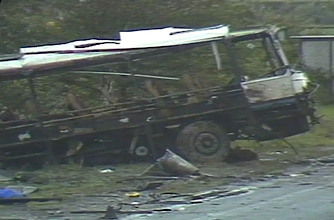
Following the outbreak of the Troubles in the late 1960s, Fulton’s father becomes a member of the Ulster Defence Association (UDA). According to journalist Susan McKay, senior Ulster Volunteer Force (UVF) members Robin “the Jackal” Jackson and Harris Boyle are frequent visitors to the Fulton home in the early 1970s. Jackson, one of the alleged leaders of the gang which carried out the 1974 Dublin car bombings, becomes the commander of the UVF’s Mid-Ulster Brigade in July 1975. Four days later, Boyle is blown up after placing a bomb on the Miami Showband’s minibus after the band is stopped at a bogus checkpoint by UVF gunmen, and three band members shot dead.

Fulton leaves school early and promptly joins the Mid-Ulster UVF, being sworn in at the age of 15. His early activity includes being part of the UVF gang that opens fire on a Craigavon mobile sweetshop on March 28, 1991, killing two teenaged girls and one man, all Catholics. The attack is allegedly planned by Robin Jackson.

In the early 1990s, Billy Wright, also from Portadown, takes over command of the UVF Mid-Ulster Brigade from Jackson. The Mid-Ulster Brigade, founded in 1972 by its first commander, Billy Hanna, operates mainly in the Lurgan and Portadown areas. Fulton soon becomes Wright’s closest associate and right-hand man and has an “extreme fixation and obsession over Wright.” He even has an image of Wright tattooed over his heart.

Fulton is alleged to have perpetrated twelve sectarian killings in the 1990s, and reportedly is implicated in many other attacks. His victims are often questioned about their religion prior to their killings, and sometimes they are killed in front of their families. He is very violent and has a quick temper. Wright is the only person who is able to control him. A Royal Ulster Constabulary (RUC) detective who knows both of them says that whenever they are stopped by the police in the 1990s, Wright is “coolness personified,” while Fulton rage’s, shouts and makes threats.

Although he is brought up in the Church of Ireland religion, Fulton is a follower of the Reverend Ian Paisley, founder and moderator of the Free Presbyterian Church of Ulster. In appearance he is heavily tattooed and is known for his habit of always wearing a waistcoat.

The Mid-Ulster Brigade calls themselves the “Brat Pack,” which journalist Martin O’Hagan of the Sunday World altered to “Rat Pack.” After the nickname of “King Rat” is given to Wright by local Ulster Defence Association commander Robert John Kerr as a form of pub bantering, O’Hagan takes to describing Wright by that term. This soubriquet is thereafter used by the media, much to Wright’s fury. This leads him to issue threats against O’Hagan and all journalists who work for the newspaper. The unit initially welcomes the Combined Loyalist Military Command ceasefire in October 1994; however, things change drastically over the next few years.

Following the order given in August 1996 by the UVF’s Brigade Staff (Belfast leadership) for Wright and the Portadown unit of the Mid-Ulster Brigade to stand down, Fulton remains loyal to Wright and defies the order. This comes after the Mid-Ulster UVF’s killing of a Catholic taxi driver, Michael McGoldrick, while the UVF are on ceasefire. After Wright defies a UVF order to leave Northern Ireland, he forms the breakaway Loyalist Volunteer Force, taking the members of the officially-disbanded Portadown unit with him, including Fulton.

Fulton, as Wright’s deputy, assumes effective control of the LVF when Wright is sent to the Maze Prison in March 1997. When Wright is shot dead by the Irish National Liberation Army (INLA) in December 1997, in a prison van while being taken to the Maze’s visitor block, Fulton assumes control of the LVF. He is deeply affected by Wright’s death, and reportedly spends many nights alone by his grave. In May 1998, the LVF calls a ceasefire. It is accepted by the Northern Ireland Office six months later.

Fulton is arrested in 1998 after shooting at an off-duty soldier in Portadown. He is heavily intoxicated at the time and sentenced to four years imprisonment. While he is out on compassionate leave in early 1999, he allegedly organises the killing of Catholic lawyer Rosemary Nelson. During the Drumcree standoff, Nelson had represented the Catholic Portadown residents who opposed the Orange Order‘s march through the predominantly nationalist Garvaghy area. She is blown up by a car bomb on March 15, 1999, outside her home in Lurgan. The bomb is allegedly made by a man from the Belfast UDA but planted by Fulton’s associates acting on his orders.

Colin Port, the Deputy Chief Constable of  Norfolk Constabulary who heads the investigation into Nelson’s death, says “without question” Fulton is the person who had masterminded her killing. Although he is back in prison at the time, he is excited when he hears the news of her death on the radio. He is linked to the killing by police informers but not forensics. It is also revealed that prior to his own death, Wright had threatened to kill Nelson in the belief she had defended Irish Republican Army (IRA) volunteers. Fulton is released from prison in April 2001.

On June 10, 2002, Fulton, who has been held on remand in HM Prison Maghaberry since December 2001, is found dead in his prison cell with a leather belt around his neck. He is found on his bed rather than hanging from the ceiling, leading to speculation that his death had been accidentally caused by autoerotic asphyxiation. Friends claim he had expressed suicidal thoughts due to both his failure to recover from his close friend Wright’s death, as well as his fears that he was suffering from stomach cancer. Some reports suggest his unstable mental state had seen him stand down as leader several weeks before his death, with the LVF’s power base transferred to Belfast. He was also afraid that rival loyalist inmates wished to kill him inside the prison.

At the time of his death, Fulton is awaiting trial, having been charged with conspiracy to murder Rodney Jennett, a member of a rival loyalist paramilitary organisation, in connection with an ongoing feud. He leaves behind his wife, Louise and two children, Lee and Alana. His funeral is attended by 500 mourners, including a number of senior loyalist paramilitaries, including Johnny Adair and John White, who act as pallbearers alongside Fulton’s brother Jim and son, Lee. After a service at St. Columba’s Parish Church, he is interred in Kernan Cemetery in Portadown.


Leave a comment

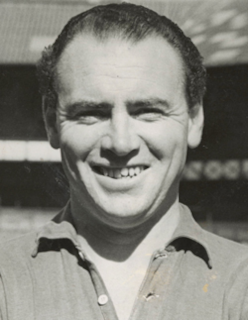
Birth of Eddie McGrady, SDLP Politician & Member of Parliament

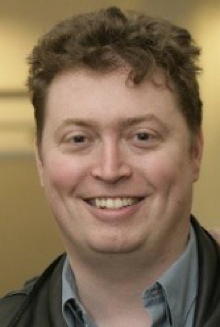
Edward Kevin McGradyIrish nationalist politician of the Social Democratic and Labour Party (SDLP), is born on June 3, 1935, in Downpatrick, County Down, Northern Ireland. He serves as the Member of Parliament (MP) for South Down from 1987 to 2010. He is also a Member of the Northern Ireland Assembly (MLA) for South Down from 1998 to 2003.

McGrady, one of eleven children, is educated at St. Patrick’s Grammar School, Downpatrick and at Belfast Technical College, where he trains as a chartered accountant, subsequently entering his family’s accountancy firm.

McGrady enters politics in 1961 as an Independent Nationalist councillor on Downpatrick Urban Council, serving as chairman from 1964 until the council is replaced by Down District Council in 1973.

In the late 1960s he joins the National Democrats and stands for the party in the 1969 Northern Ireland general election to the Parliament of Northern Ireland in East Down, losing to the sitting MP and future Prime Minister of Northern Ireland Brian Faulkner.

In 1970, McGrady becomes a founder member of the SDLP, later serving as its first chairman (1971–73). He sits on Down District Council from 1973 to 1989, serving as chairman from 1974–1975 and is also elected to all three regional assemblies in 19731975 and 1982 representing South Down. In the 1973 power-sharing executive he is appointed as Head of the Department of Executive Planning and Co-ordination, serving from January to May 1974.

In Westminster elections McGrady contests South Down unsuccessfully in 1979, 1983 and at the by-election of January 1986, losing on each occasion to Enoch Powell, the sitting MP. He succeeds at the fourth attempt in the 1987 United Kingdom general election and holds the seat until his retirement in 2010. His tenure is briefly threatened in the mid-1990s when the Boundary Commission suggests merging much of his constituency with the neighbouring Newry and Armagh constituency to form a new “Newry and Mourne” constituency. This is overturned during a local review, which preserves his seat and actually removes more Unionist sections such as Dromore. His support holds solid over the years despite talk of a slippage, and this is reinforced in the 2005 United Kingdom general election with his re-election to the House of Commons.

McGrady formerly sits on the Northern Ireland Policing Board and is a member of the Northern Ireland Assembly between 1998 and 2003.

On February 25, 2010, McGrady announces that he will stand down at the 2010 General Election. He continued to be chairperson of the Lecale Branch of the SDLP.

McGrady dies at the age of 78 in Downpatrick on November 11, 2013.


Leave a comment

Death of Colonel Robert David Perceval-Maxwell

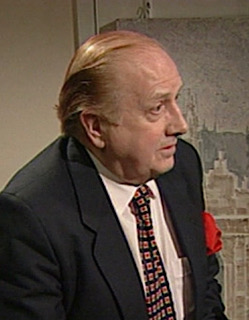
Colonel Robert David Perceval-Maxwell DSO JP DL PC (Ire), British soldier and Ulster Unionist Party politician, dies in Belfast, Northern Ireland, on May 24, 1932. He is a member of the Senate of Northern Ireland and Down County Council.

Perceval-Maxwell is born in 1870, the only son of John Perceval-Maxwell, eldest son of Robert Perceval-Maxwell DL (1813–1905), of Finnebrogue House, Downpatrick, County Down.

Perceval-Maxwell is educated at Eton College. He plays a significant part in the raising of the 36th (Ulster) Division on the outbreak of World War I. He is commissioned Major in the 13th (County Down) Battalion, Royal Irish Rifles, which he had raised, in September 1914, and is appointed second-in-command in December 1914. He is promoted to the temporary rank of Lieutenant-Colonel and commands a battalion from November 1916 and commands a battalion of the Royal Munster Fusiliers from May 1918. He is seriously wounded during the war. He resigns his commission in January 1919.

He is appointed to the Privy Council of Ireland in the honours for the opening of the Parliament of Northern Ireland in July 1921, entitling him to the style “The Right Honourable.” He serves in the Northern Ireland Senate from 1921 to 1925.

In 1895, Perceval-Maxwell marries Edith Grace Head. They have five sons: John Robert Perceval-Maxwell (born 1896), Richard Henry (born 1897, killed in action in 1916), Patrick Edward (born 1900), Brian Stephen (born 1908), and David (born 1911).

Perceval-Maxwell dies at the age of 62 on May 24, 1932, in a Belfast nursing home. He is buried in Inch Parish Churchyard, Downpatrick.