seamus dubhghaill

Promoting Irish Culture and History from Little Rock, Arkansas, USA


Leave a comment

Birth of Suffragist Winifred Carney

winifred-carney

Maria Winifred Carney, also known as Winnie Carney, suffragist, trade unionist and Irish independence activist, is born into a lower-middle class Catholic family in Bangor, County Down on December 4, 1887. Her father is a Protestant who leaves the family. Her mother and six siblings move to Falls Road in Belfast when she is a child.

Carney is educated at St. Patrick’s Christian Brothers School in Donegall Street in Belfast, later teaching at the school. She enrolls at Hughes Commercial Academy around 1910, where she qualifies as a secretary and shorthand typist, one of the first women in Belfast to do so. However, from the start she is looking towards doing more than just secretarial work.

In 1912 Carney is in charge of the women’s section of the Northern Ireland Textile Workers’ Union in Belfast, which she founds with Delia Larkin in 1912. During this period, she meets James Connolly and becomes his personal secretary. She becomes Connolly’s friend and confidant as they work together to improve the conditions for female labourers in Belfast. Carney then joins Cumann na mBan, the women’s auxiliary of the Irish Volunteers, and attends its first meeting in 1914.

Carney is present with Connolly in Dublin‘s General Post Office (GPO) during the Easter Rising in 1916. She is the only woman present during the initial occupation of the building. While not a combatant, she is given the rank of adjutant and is among the final group to leave the GPO. After Connolly is wounded, she refuses to leave his side despite direct orders from Patrick Pearse and Connolly. She leaves the GPO with the rest of the rebels when the building becomes engulfed in flames. They make their new headquarters in nearby Moore Street before Pearse surrenders.

After her capture, Carney is held in Kilmainham Gaol before being moved to Mountjoy Prison and finally to an English prison. By August 1916 she is imprisoned in HM Prison Aylesbury alongside Nell Ryan and Helena Molony. The three request that their internee status be revoked so that they could be held as normal prisoners with Countess Markievicz. Their request is denied, however Carney and Molony are released two days before Christmas 1916.

Carney is a delegate at the 1917 Belfast Cumann na mBan convention. She stands for Parliament as a Sinn Féin candidate for Belfast Victoria in the 1918 United Kingdom general election but loses to the Labour Unionists. Following her defeat, she decides to continue her work at the Irish Transport and General Workers’ Union until 1928. By 1924 she has become a member of the Labour Party. In the 1930s she joins the Socialist Party of Northern Ireland.

Following the Irish Civil War, Carney becomes much more disillusioned with politics. She is very critical and outspoken of Éamon de Valera and his governments.

In 1928 she marries George McBride, a Protestant Orangeman and former member of the Ulster Volunteers. Ironically, the formation of the Ulster Volunteers prompts the formation of the Irish Volunteers, of which Carney was a member. She alienates anyone in her life that does not support her marriage to McBride.

A number of serious health problems limit Carney’s political activities in the late 1930s. She dies in Belfast on November 21, 1943, and is buried in Milltown Cemetery. Her resting place is located years later, and a headstone is erected by the National Graves Association, Belfast. Because she married a Protestant and former Orangeman, she is not allowed to have his name on her gravestone due to the religious differences.

In 2013, the Seventieth Anniversary of Carney’s death is remembered by the Socialist Republican Party. Almost one hundred people attend as a short parade follows, marking and commemorating the work she did for the cause. She is placed in high esteem among the other hundreds of radical women, who stand up for what they believe in, regardless of the consequences they face.

Leave a comment

Death of Anglo-Irish Statesman Henry Flood

henry-flood

Henry Flood, Anglo-Irish statesman and founder of the Patriot movement that in 1782 wins legislative independence for Ireland, dies on December 2, 1791.

Flood is born in Dublin in 1732, the illegitimate son of Warden Flood, Lord Chief Justice of the Court of King’s Bench in Ireland. He is educated at Trinity College, Dublin, and afterwards at Christ Church, Oxford, where he becomes proficient in the classics.

Flood enters the Irish Parliament in 1759 as member for Kilkenny County. Irish Protestants are becoming impatient with the British Parliament’s right to legislate for Ireland over the wishes of the Irish Parliament. Moreover, the British government controls a majority in Ireland’s House of Commons through the distribution of crown patronage by the owners of parliamentary boroughs.

Flood’s outstanding oratorical powers soon enable him to create a small but effective opposition inside the Irish Parliament that agitates for political reforms. They demand provisions for new Irish parliamentary elections every eight years, instead of merely at the start of a new British king’s reign. Their long-range goal is legislative independence. In 1768 his Patriots engineer passage of a bill limiting the duration of Parliament to eight years, and in 1769 and 1771 they defeat measures to grant funds for the British administration in Ireland.

Although Flood had become the first independent Irish statesman, he sacrifices this position in 1775 by accepting the office of vice treasurer under the British viceroy, Lord Simon Harcourt, 1st Earl Harcourt. Henry Grattan, an even greater orator than Flood and who describes Flood as a man “with a metaphor in his mouth and a bribe in his pocket,” replaces him as leader of the Patriots.

Flood, however, leaves the Patriot cause at the wrong time. The movement grows rapidly as more and more Irish people are influenced by the North American colonists who are rebelling against the British in the American Revolution. In 1779 he rejoins his old party, and two years later he is officially dismissed from his government post. Although he has lost his following, he helps Grattan force the British government to renounce its restrictions on Irish trade (1779) and grant legislative independence to Ireland (1782).

Flood then decides to challenge Grattan’s leadership. Charging that Grattan has not gone far enough in his reforms, he obtains passage of a measure requiring the British Parliament to renounce all claims to control of Irish legislation. Nevertheless, his newly acquired popularity is destroyed upon the defeat of his attempt to reform the Irish Parliament in 1784.

Flood is a member of both the British and Irish parliaments from 1783 until he loses his seat in both parliaments in 1790, although in England he fails to achieve the kind of political successes that characterize his Irish parliamentary career.

Following the loss of his seats in parliament, Flood retires to Farmley, his residence in County Kilkenny, where he remains until his death on December 2, 1791. He and his wife Lady Frances Beresford, daughter of Marcus Beresford, 1st Earl of Tyrone, who survives until 1815, have no children, and his property passes to a cousin, John Flood. A large bequest to Trinity College Dublin is declared invalid.

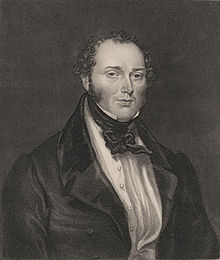
(Pictured: Portrait of Henry Flood (1732 – 1791) by Bartholomew Stoker (1763-1788). John Comerford later makes a sketch of the portrait, from which James Heath makes an engraving.)


Leave a comment

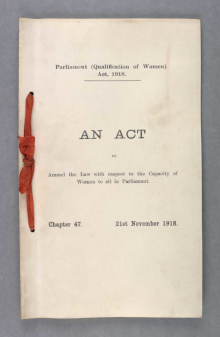
Enactment of the Parliament (Qualification of Women) Act 1918

parliament-qualifications-of-women-act-1918

The Parliament (Qualification of Women) Act 1918, an Act of the Parliament of the United Kingdom, is given royal assent on November 21, 1918. It gives women over the age of 21 the right to stand for election as a Member of Parliament (MP). At 27 words, it is the shortest UK statute.

The Representation of the People Act 1918, passed on February 6, 1918, extends the franchise in parliamentary elections, also known as the right to vote, to women aged 30 and over who reside in the constituency or occupied land or premises with a rateable value above £5, or whose husbands do.

In March 1918, the Liberal Party MP for Keighley dies, causing a by-election on April 26. There is doubt as to whether women are eligible to stand for parliament. Nina Boyle makes known her intention to stand as a candidate for the Women’s Freedom League at Keighley and, if refused, to take the matter to the courts for a definitive ruling. After some consideration, the returning officer states that he is prepared to accept her nomination, thus establishing a precedent for women candidates. However, he rules her nomination papers invalid on other grounds: one of the signatories to her nomination is not on the electoral roll and another lives outside the constituency. The Lords of Appeal in Ordinary are asked to consider the matter and conclude that the Great Reform Act 1832 had specifically banned women from standing as parliamentary candidates and the Representation of the People Act had not changed that.

Parliament hurriedly passes the Parliament (Qualification of Women) Act in time to enable women to stand in the general election of December 1918. The act consists of only 27 operative words: “A woman shall not be disqualified by sex or marriage for being elected to or sitting or voting as a Member of the Commons House of Parliament.”

In the December 14, 1918, election to the House of Commons, seventeen women candidates stand, among them well-known suffragette Christabel Pankhurst, representing the Women’s Party in Smethwick. The only woman elected is the Sinn Féin candidate for Dublin St. Patrick’s, Constance Markievicz. However, in line with Sinn Féin abstentionist policy, she does not take her seat.

The first woman to take her seat in the House of Commons is Nancy Astor on December 1, 1919. She is elected as a Coalition Conservative MP for Plymouth Sutton on November 28, 1919, taking the seat her husband had vacated.

As Members of Parliament, women also gain the right to become government ministers. The first woman to become a cabinet minister and Privy Council member is Margaret Bondfield who is Minister of Labour in the second MacDonald ministry (1929–1931).


Leave a comment

Mo Mowlam Presented International Woman of the Year Award

mo-mowlan

Marjorie “Mo” Mowlam, English Labour Party politician, is presented with the International Woman of the Year Award at a ceremony in Dublin on October 23, 2001. United Nations High Commissioner for Human Rights Mary Robinson wins the Overall Award at the Irish Tatler Women of the Year Awards.

Mowlam is born on September 18, 1949 in Watford, Hertfordshire, England but grows up in Coventry. She starts her education at Chiswick Girls’ grammar school in West London, then moves to Coundon Court school in Coventry which, at the time, is one of the first comprehensive schools in the country. She then studies at Trevelyan College, Durham University, reading sociology and anthropology. She joins the Labour Party in her first year.

Mowlam becomes the Secretary of the Durham Union Society in 1969 and later goes on to become the Vice-President of the Durham Student’s Union. She works for then-MP Tony Benn in London and American writer Alvin Toffler in New York, moving to the United States with her then-boyfriend and studying for a PhD in political science at the University of Iowa.

Mowlam is a lecturer in the Political Science Department at the University of Wisconsin–Milwaukee in 1977 and at Florida State University in Tallahassee from 1977 to 1979. During her time in Tallahassee, someone breaks into her apartment. She suspects that it is Ted Bundy, the serial killer and rapist who is thought to have murdered at least 35 young women and attacked several others. She returns to England in 1979 to take up an appointment at the University of Newcastle upon Tyne.

Having failed to win selection for the 1983 general election, Mowlam is selected as Labour candidate for the safe seat of Redcar after James Tinn stands down. She takes the seat in the 1987 general election, becoming the Labour spokesperson on Northern Ireland later that year. Together with Shadow Chancellor John Smith, she is one of the architects of Labour’s “Prawn Cocktail Offensive” dedicated to reassuring the UK’s financial sector about Labour’s financial rectitude.

Mowlam joins the Shadow Cabinet when John Smith becomes leader of the Labour Party in 1992, holding the title of Shadow Secretary of State for National Heritage. During this time, she antagonises both monarchists and republicans by calling for Buckingham Palace to be demolished and replaced by a “modern” palace built at public expense. Later, her willingness to speak her mind, often without regard to the consequences, is seen as her greatest strength by her supporters.

Following Smith’s death in 1994, Mowlam, alongside Peter Kilfoyle, becomes a principal organiser of Tony Blair‘s campaign for the Labour leadership. After his victory, Blair makes her Shadow Secretary of State for Northern Ireland. She initially resists being appointed to the position, preferring an economic portfolio, but, after accepting it, she throws her weight into the job.

Mowlam oversees the negotiations which lead to the 1998 Good Friday Agreement. She is successful in helping to restore an Irish Republican Army (IRA) ceasefire and including Sinn Féin in multi-party talks about the future of Northern Ireland. In an attempt to persuade the Ulster loyalists to participate in the peace process, she pays an unprecedented and potentially dangerous visit to loyalist prisoners in HM Prison Maze, meeting convicted murderers face-to-face and unaccompanied.

Mowlam witnesses the Good Friday Agreement signing in 1998, which leads to the temporary establishment of a devolved power-sharing Northern Ireland Assembly. However, an increasingly difficult relationship with Unionist parties means her role in the talks is ultimately taken over by Tony Blair and his staff.

Mowlam’s deteriorating relationship with Unionists is the key reason she is replaced by Peter Mandelson as Northern Ireland Secretary in October 1999. Her move to the relatively lowly position of Minister for the Cabinet Office possibly involves other factors, notably her health and her popularity. On September 4, 2000, she announces her intention to retire from Parliament and relinquishes her seat at the 2001 general election.

Five months before the 1997 general election, Mowlam is diagnosed with a brain tumor, a fact that she tries to keep private. She appears to suffer from balance problems as a result of her radiotherapy. According to her husband, she falls on July 30, 2005, receiving head injuries and never regaining consciousness. Her living will, in which she asks not to be resuscitated, is honoured. On August 12, 2005, Mowlan is moved to Pilgrims Hospice in Canterbury, Kent, where she dies seven days later, on August 19, 2005, aged 55.

Mowlam is an atheist and is cremated in Sittingbourne on September 1, 2005 at a non-religious service conducted by Reverend Richard Coles, formerly of the 1980s band The Communards. Half of her ashes were scattered at Hillsborough Castle, the Secretary of State for Northern Ireland’s official residence, and the other half in her former parliamentary constituency of Redcar.


Leave a comment

Birth of James Molyneaux, Northern Irish Politician

james-molyneaux

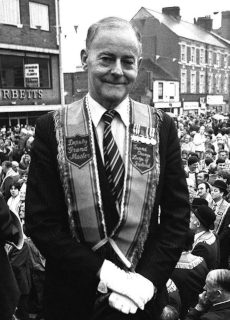
James Henry Molyneaux, Baron Molyneaux of Killead, Northern Irish unionist politician and leader of the Ulster Unionist Party (UUP) from 1979 to 1995, is born in Killead, County Antrim on August 27, 1920. He is a leading member and sometime Vice-President of the Conservative Monday Club. An Orangeman, he is also Sovereign Grand Master of the Royal Black Institution from 1971 to 1995. He is an unrelenting though peaceful supporter of the Protestant cause during the factional conflict that divides Northern Ireland from the 1960s until the early 21st century.

Molyneaux is educated at nearby Aldergrove School. Although he is raised an Anglican, as a child he briefly attends a local Catholic primary school. He leaves school at age 15 and works on his father’s poultry farm. When a Catholic church near his home is burned down by Ulster loyalist arsonists in the late 1990s, he helps to raise funds for its rebuilding.

In World War II Molyneaux serves in the Royal Air Force between 1941 and 1946. He participates in the D-Day landings in FranceFrance and in the liberation of the Belsen-Belsen concentration camp, and occasionally gives interviews about what he sees there. On April 1, 1947, he is promoted to flying officer.

After demobilization Molyneaux establishes a printing business with his uncle, and in 1946 he joins the UUP. He is first elected to local government in 1964 and enters Parliament six years later. He staunchly opposes all power-sharing deals, notably the Anglo-Irish Agreement (1985) between British Prime Minister Margaret Thatcher and Irish Taoiseach Garret FitzGerald, which gives Dublin an official consultative role in the affairs of Northern Ireland and paves the way for devolution.

Molyneaux lacks the firebrand public image of his longtime rival Ian Paisley, who in 1971 breaks with the UUP to form the Democratic Unionist Party (DUP). He never acquiesces to the Good Friday Agreement, which calls for the devolution of Northern Ireland’s government from London to Belfast, however, unlike Paisley and David Trimble, who in 1997 succeeds Molyneaux as the UUP leader and in April 1998 signs the devolution accord.

On retiring as UUP leader, Molyneaux is knighted as a Knight Commander of the Order of the British Empire (KBE) in 1996. The following year, after standing down as an MP at the 1997 general election, he is created a life peer on June 10, 1997, as Baron Molyneaux of Killead, of Killead in the County of Antrim.

James Molyneaux dies at the age of 94 in Antrim, County Antrim, Northern Ireland on March 9, 2015, Commonwealth Day.


Leave a comment

Birth of Chartist Leader Feargus O’Connor

feargus-edward-o-connor

Feargus Edward O’Connor, advocate of the Land Plan and prominent Chartist leader who succeeds in making Chartism the first specifically working-class national movement in Great Britain, is born near Castletown-Kinneigh, County Cork on July 18, 1796.

O’Connor is born into a prominent Irish Protestant family who claims to be the descendants of the 12th-century king Ruaidrí Ua Conchobair. He is educated mainly at Portarlington Grammar School and has some elementary schooling in England.

O’Connor practices law but exchanges law for politics when he enters the British Parliament in 1832 as a member for County Cork. Unseated in 1835, he turns to radical agitation in England, although he continues to press Irish grievances and to seek Irish support. As a result of his humour, invective, and energy, he becomes the best-known Chartist leader and the movement’s most popular speaker. His journal, the Northern Star (founded in 1837), gains a wide circulation.

O’Connor’s methods and views alienate other Chartist leaders, particularly William Lovett, but in 1841, after spending a year in prison for seditious libel, he acquires undisputed leadership of the Chartists. Failing to lead the movement to victory and vacillating in his attitude toward the middle class and toward the People’s Charter, a six-point bill drafted and published in May 1838, he begins to lose power, although he is elected to Parliament for Nottingham in 1847. The failure of the People’s Charter in 1848 marks the beginning of the end for O’Connor, whose egocentricity is already bordering on madness.

The circulation of the Northern Star falls steadily, and it loses money. O’Connor’s health is failing, and reports of his mental breakdown regularly appear in the newspapers. In the spring of 1852, he visits the United States, where his behaviour leaves no doubt that he is not a well man.

In 1852 in the House of Commons O’Connor strikes three fellow MPs, one of them Sir Benjamin Hall, a vocal critic of the Land Plan. Arrested by the Deputy Sergeant-at-Arms, he is sent by his sister to Dr. Thomas Harrington Tuke‘s private Manor House Asylum in Chiswick, where he remains until 1854, when he is moved to his sister’s house. He dies on August 30, 1855, at 18 Albert Terrace, Notting Hill Gate and is buried on September 10 in Kensal Green Cemetery. No fewer than 40,000 people witness the funeral procession. Most Chartists preferred to remember O’Connor’s strengths rather than his shortcomings.


Leave a comment

The 2017 Northern Ireland Elections

2017-northern-ireland-elections

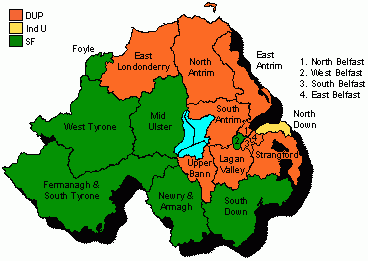
The 2017 United Kingdom general election in Northern Ireland takes place on June 8, 2017. All eighteen seats in Northern Ireland are contested. The Democratic Unionist Party (DUP) gain two seats for a total of ten, and Sinn Féin wins seven, an improvement of three. Independent Unionist Sylvia Hermon is also re-elected in her constituency of North Down. Meanwhile, the Social Democratic & Labour Party (SDLP) loses three seats, and the Ulster Unionist Party (UUP) loses two seats, meaning they both lose all their representation in the House of Commons. The two parties so central to the Good Friday Agreement are not represented in Westminster nineteen years after the signing of the historic deal.

As Sinn Féin maintains a policy of abstentionism in regard to the Parliament of the United Kingdom, the 2017 election marks the first parliament since 1964 without any Irish nationalist MPs who take their seats in the House of Commons in Westminster.

Nationally, the governing Conservative Party falls eight seats short of a parliamentary majority after the election, reduced to four if the absence of Sinn Féin is taken into account. The DUP thus holds the balance of power and announces on June 10 that it will support the Conservative government on a “confidence and supply” basis.

Five seats change hands in Northern Ireland. The SDLP loses its seats in Foyle and South Down to Sinn Féin and the constituency of Belfast South to the DUP. Meanwhile, the UUP loses South Antrim to the DUP and Fermanagh and South Tyrone to Sinn Féin. The number of unionist and nationalist representatives, eleven and seven respectively, remain unchanged from the 2015 United Kingdom general election, although none of the nationalist members are participating in the current Parliament.


Leave a comment

Birth of Alasdair Mac Cába, Revolutionary & Politician

alasdair-mac-caba

Alasdair Mac Cába, teacher, revolutionary, politician, and founder of the Educational Building Society, is born in Keash, County Sligo, on June 5, 1886.

Mac Cába is educated at Keash national school and Summerhill College, Sligo. He wins a scholarship to St. Patrick’s College of Education, Drumcondra, Dublin, qualifying as a primary schoolteacher. He later obtains a diploma in education from University College Dublin (UCD) and is appointed principal of Drumnagranchy national school in County Sligo in 1907.

Mac Cába is elected as a Sinn Féin Member of Parliament (MP) for the constituency of South Sligo at the 1918 general election. In January 1919, Sinn Féin MPs refuse to recognise the Parliament of the United Kingdom and instead assemble at the Mansion House in Dublin as a revolutionary parliament called Dáil Éireann. Mac Cába, however, does not attend as he is in prison at the time.

At the 1921 Irish elections, Mac Cába was re-elected for Sligo–Mayo East. He supports the Anglo-Irish Treaty and votes in favour of it. He is again re-elected for Sligo–Mayo East at the 1922 general election, this time as pro-Treaty Sinn Féin Teachta Dála (TD). During the Treaty debate he asserts that the counties of Ulster which comprise “Northern Ireland” can never be incorporated into an Irish Republic while the British Empire is what it is.

At the 1923 general election, Mac Cába is elected as a Cumann na nGaedheal TD for Leitrim–Sligo. He resigns from Cumann na nGaedheal in 1924 because of dissatisfaction with government attitude to certain army officers and joins the National Party led by Joseph McGrath.

Mac Cába resigns his Dáil seat in March 1925 along with several other TDs, and at the resulting by-election on March 11, 1925, Cumann na nGaedheal candidate Martin Roddy wins his seat. He does not stand for public office again and returns to his post as a schoolteacher.

In the 1930s Mac Cába is involved with the short-lived but widely followed Irish Christian Front, serving as the organisation’s secretary and announcing its creation to the public on August 22, 1936. He is also member of the Blueshirts during this period and later the Irish Friends of Germany during World War II, a would-be Nazi Collaborator group in the event Germany invades Ireland. He chairs their meetings, denies the group is a fifth column and expresses the belief that a German victory would lead to a United Ireland. He is interned in 1940–1941 because of his pro-German sympathies, which he claims results from the desire to “see the very lifeblood squeezed out of England.”

Mac Cába dies in Dublin on May 31, 1972, leaving his wife, son, and three daughters. There is a bronze bust of him in the headquarters of the Educational Building Society, Westmoreland Street, Dublin.


Leave a comment

The Baltic Exchange Bombing

IRA Bombing of the Baltic Exchange

The Baltic Exchange bombing, an attack by the Provisional Irish Republican Army (PIRA) on London‘s financial centre, takes place on April 10, 1992, the day after the General Election which re-elects John Major from the Conservative Party as Prime Minister. The one-ton bomb, concealed in a large white truck and consisting of a fertilizer device wrapped with a detonation cord made from 100 lbs. of Semtex, is the biggest detonated on mainland Britain since World War II. The bombing kills three people, injures 91 others, and causes massive damage, destroying the Baltic Exchange building and severely damaging surroundings.

Since the PIRA’s campaign in the early 1970s, many commercial targets are attacked on the mainland which cause economic damage and severe disruption. Since 1988, Gerry Adams of Sinn Féin and John Hume of the Social Democratic and Labour Party are engaged in private dialogue to create a broad Irish nationalist coalition. British Prime Minister John Major refuses to openly enter into talks with Sinn Féin until the IRA declares a ceasefire. The risk of an IRA attack on London increases due to the lack of progress with political talks, resulting in a warning being circulated to all police forces in Britain highlighting intelligence reports of a possible attack, as it is believed that the IRA has enough personnel, equipment and funds to launch a sustained campaign in England.

On April 10, 1992, at 9:20 PM, a huge bomb is detonated in front of the Baltic Exchange building at 24-28 St. Mary Axe. The façade of the offices is partially destroyed, and the rest of the building is extensively damaged. The bomb also causes heavy damage to surrounding buildings. It causes £800 million worth of damage, £200 million more than the total damage caused by the 10,000 explosions that had occurred during the Troubles in Northern Ireland up to that point.

The IRA gives a telephone warning twenty minutes before the explosion, saying there is a bomb inside a van outside the London Stock Exchange. This is a half mile away from the actual location by the Baltic Exchange.

The homemade explosive is inside a white Ford Transit van parked in St. Mary Axe. The components are developed in South Armagh, shipped from Ireland, and assembled in England. The attack is planned for months and marks a dangerous advance to the British of the IRA’s explosives manufacturing capabilities. The bomb is described as the most powerful to hit London since the Luftwaffe raids of World War II.

A few hours later another similarly large bomb goes off in Staples Corner in north London, also causing major damage.

The next day, the IRA claims responsibility in a statement from Dublin. It is believed the IRA are trying to send a message to the Conservative Party who won the election, which also sees Sinn Féin leader Gerry Adams lose his unused seat in the Westminster Parliament.

Many of the damaged buildings are once again badly damaged by the Bishopsgate bombing the following year. Both incidents contribute to the formation of the “Ring of Steel” in the city to protect it from further terrorism.

The Exchange sells its badly damaged historic building to be redeveloped under the auspices of English Heritage as a Grade II* site. However, the City and English Heritage later allow it to be demolished, seeking instead a new landmark building. The site, together with that of the UK Chamber of Shipping at 30–32 St. Mary Axe, is now home to the skyscraper commissioned by Swiss Re commonly referred to as The Gherkin.

The stained glass of the Baltic Exchange war memorial, which suffered damage in the bomb blast, has been restored and is in the National Maritime Museum in London.

(Pictured: The scene of devastation following the IRA bomb which destroyed London’s Baltic Exchange. Image credit: Gulf News Archives)


Leave a comment

Birth of Arthur Griffith, Founder of Sinn Féin

arthur-griffith

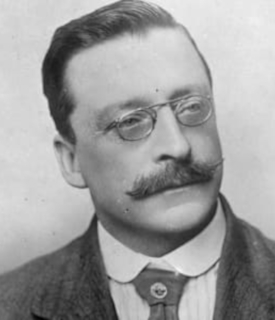
Arthur Joseph Griffith, writer, newspaper editor and politician who founded the political party Sinn Féin, is born in Dublin on March 31, 1871. He leads the Irish delegation at the negotiations that produce the 1921 Anglo-Irish Treaty and serves as President of Dáil Éireann from January 1922 until his death in August 1922.

Griffith, a Roman Catholic, is educated by the Irish Christian Brothers. He works for a time as a printer before joining the Gaelic League, which is aimed at promoting the restoration of the Irish language.

After a short spell in South Africa, Griffith founds and edits the Irish nationalist newspaper The United Irishman in 1899. In 1904, he writes The Resurrection of Hungary: A Parallel for Ireland, which advocates the withdrawal of Irish members from the Parliament of the United Kingdom and the setting up of the institutions of government at home, a policy that becomes known as Sinn Féin (ourselves). On November 28, 1905, he presents “The Sinn Féin Policy” at the first annual Convention of the National Council. The occasion is marked as the founding date of the Sinn Féin party. Although the organization is still small at the time, Griffith takes over as president of Sinn Féin in 1911.

Griffith is arrested following the Easter Rising of 1916, despite not having taken any part in it. On his release, he works to build up Sinn Féin, which wins a string of by-election victories. At the party’s Ardfheis (annual convention) in October 1917, Sinn Féin becomes an unambiguously republican party, and Griffith resigns the presidency in favour of the 1916 leader Éamon de Valera, becoming vice-president instead. Griffith is elected as a member of parliament (MP) in June 1918, and is re-elected in the 1918 general election, when Sinn Féin wins a huge electoral victory over the Irish Parliamentary Party and refusing to take their seats at Westminster, set up their own constituent assembly, Dáil Éireann.

In the Dáil, Griffith serves as Minister for Home Affairs from 1919 to 1921, and Minister for Foreign Affairs from 1921 to 1922. In September 1921, he is appointed chairman of the Irish delegation to negotiate a treaty with the British government. After months of negotiations, he and the other four delegates sign the Anglo-Irish Treaty, which creates the Irish Free State, but not as a republic. This leads to a split in the Dáil. After the Treaty is narrowly approved by the Dáil, de Valera resigns as president and Griffith is elected in his place. The split leads to the Irish Civil War.

Griffith enters St. Vincent’s Nursing Home, Leeson Street, Dublin, during the first week of August 1922, following an acute attack of tonsillitis. He is confined to his room by his doctors, who had observed signs of what they thought might be a subarachnoid hemorrhage. It is difficult to keep him quiet and he resumes his daily work in the government building. When about to leave for his office shortly before 10:00 AM on August 12, 1922, he pauses to retie his shoelace and falls down unconscious. He regains consciousness but collapses again with blood coming from his mouth. Three doctors render assistance, but to no avail. Father John Lee of the Marist Fathers administers extreme unction, and Griffith expires as the priest recites the concluding prayer. The cause of death, cerebral hemorrhage, is also reported as being due to heart failure. He dies at the age of 51, ten days before Michael Collins‘ assassination in County Cork and two months after the outbreak of the Irish Civil War. He is buried in Glasnevin Cemetery four days later.