seamus dubhghaill

Promoting Irish Culture and History from Little Rock, Arkansas, USA


Leave a comment

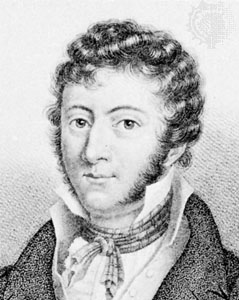
Birth of John Field, Pianist & Composer

John Field, pianist, composer, and teacher, is born in Dublin into a musical family on July 26, 1782. He is the eldest son of Irish parents who are members of the Church of Ireland. His father, Robert Field, earns his living by playing the violin in Dublin theatres.

Field first studies the piano under his grandfather, who is a professional organist, and later under Tommaso Giordani. He makes his debut at the age of nine, a performance that is well-received, on March 24, 1792 in Dublin. By late 1793, the Fields have settled in London, where the young pianist starts studying with Muzio Clementi.

Field continues giving public performances and soon becomes famous in London, attracting favourable comments from the press and the local musicians. Around 1795 his performance of a Jan Ladislav Dussek piano concerto is praised by Joseph Haydn. Field continues his studies with Clementi, also helping the Italian with the making and selling of instruments. He also takes up the violin, which he studies under Johann Peter Solomon. His first published compositions are issued by Clementi in 1795. The first historically important work, the Piano Concerto No. 1, H 27, is premiered by the composer in London on February 7, 1799, when he is 16 years old. Field’s first official opus is a set of three piano sonatas published by Clementi in 1801.

In summer 1802 Field and Clementi leave London and go to Paris on business. They soon travel to Vienna, where Field takes a brief course in counterpoint under Johann Georg Albrechtsberger, and in early winter arrive in Saint Petersburg. Field is inclined to stay, impressed by the artistic life of the city. Clementi leaves in June 1803, but not before securing Field a teaching post in Narva. After Clementi’s departure, Field has a busy concert season, eventually performing at the newly founded Saint Petersburg Philharmonia. In 1805 Field embarks on a concert tour of the Baltic states, staying in Saint Petersburg during the summer. The following year he gives his first concert in Moscow. He returns to Moscow in April 1807 and apparently does not revisit Saint Petersburg until 1811. In 1810 he marries Adelaide Percheron, a French pianist and former pupil.

In 1811 Field returns to Saint Petersburg where he spends the next decade of his life, more productive than ever before, publishing numerous new pieces and producing corrected editions of old ones. He is successful in establishing a fruitful collaboration with both H.J. Dalmas, the most prominent Russian publisher of the time, and Breitkopf & Härtel, one of the most important music publishing houses of Europe. By 1819 Field is sufficiently wealthy to be able to refuse the position of court pianist that is offered to him. His lifestyle and social behaviour are becoming more and more extravagant.

In 1818 Field revisits Moscow on business, prompted by his collaboration with the publisher Wenzel. He and his wife give a series of concerts in the city in 1821, the last of which marks their last appearance in public together. Adelaide leaves Field soon afterward and attempts a solo career, which is not particularly successful. Field stays in Moscow and continues performing and publishing his music. In 1822 he meets Johann Nepomuk Hummel and the two collaborate on a performance of Hummel’s Sonata for Piano 4-Hands, Op. 92.

Partly as a result of his extravagant lifestyle, Field’s health begins to deteriorate by the mid-1820s. From about 1823 his concert appearances started decreasing. By the late 1820s he is suffering from colorectal cancer. Field leaves for London to seek medical attention. He arrives in September 1831 and, after an operation, gives concerts there and in Manchester. He stays in England for some time, meeting distinguished figures such as Felix Mendelssohn and Ignaz Moscheles. After a series of concerts in various European cities, Field spends nine months in a Naples hospital. His Russian patrons rescue him. He briefly stays with Carl Czerny in Vienna, where he gives three recitals, and then returns to Moscow. He gives his last concert in March 1836 and dies in Moscow almost a year later, on January 23, 1837, from pneumonia. He is buried in the Vvedenskoye Cemetery.


Leave a comment

Birth of Walter Frederick Osborne, Landscape & Portrait Painter

Walter Frederick Osborne, impressionist and Post-Impressionism landscape and portrait painter, is born in Rathmines, Dublin on June 17, 1859.

Most of Osborne’s paintings are figurative and focus on women, children, the elderly, the poor, and the day-to-day life of ordinary people on Dublin streets, as well as series of rural scenes. He also produces city-scapes, which he paints from both sketches and photographs. A prolific artist, he produces oils, watercolours, and numerous pencil sketches. He is best known for his documentary depictions of late 19th century working class life.

Osborne is the second of three sons of William Osborne, a successful animal painter who specialises in portraying horses and dogs for the then prosperous Irish landlords. He is educated at Rathmines School and at the Royal Hibernian Academy school. He learns from his father that there is money to be earned from painting animals. He produces quite a few, including of children with their pets, notably his 1885 A New Arrival, and a series of impressionistic works on cows.

Osborne wins the Taylor Prize in 1881 and 1882, the highest student honour in Ireland of the time, while studying at the Royal Academy of Fine Arts in Antwerp. He is influenced by the Flemish painter Peter Paul Rubens, and the French realist, plein-air painter, Jules Bastien-Lepage, as well as Berthe Morisot.

In 1883, Osborne moves from Antwerp to Brittany where he paints his famous Apple Gathering, Quimperlé, now in the National Gallery of Ireland. Soon after, he moves to England where he works alongside Nathaniel Hill and Augustus Burke at Walberswick. During his period, he often returns to Dublin to make preparatory sketches for what becomes his most renowned series, of the everyday lives of the city’s poor. Although highly regarded today, these documentary street paintings are not commercially successful, and Osborne supplements his income through portrait paintings of the middle class, which are not as artistically satisfying.

In 1886, he is elected to the Royal Hibernian Academy and receives many commissions for portraits. This is an important source of income, as he has no private means of his own. After his sister dies, he is involved in looking after her daughter, and his own parents become increasingly financially dependent on him.

In 1892, he returns to Ireland to live in the family residence, and he also keeps a studio at No. 7 St. Stephen’s Green. He spends a considerable amount of time painting outdoors, in Dublin around St. Patrick’s Cathedral or in the country. He is well liked in social circles and counts the surgeon Sir Thornely Stoker, brother of Bram Stoker, among his best friends.

Osborne’s mother becomes ill in the early 1900s, and Walter spends significant periods caring for her. In 1903, while gardening, he overheats himself and catches a chill, which he neglects, and which develops into pneumonia. He dies prematurely from the illness at the age of 43 on April 24, 1903. He is buried in Mount Jerome Cemetery in Dublin.

Some critics have suggested that at the time of his death he is on the brink of his artistic maturity. His final work Tea in the Garden, a fusion of naturalism and impressionism, remains unfinished at his death and is now in the collection of the Hugh Lane Gallery in Dublin. Today his work is highly sought after by collectors.


Leave a comment

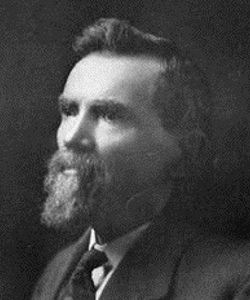
Birth of Merchant & Politician John Thomas Browne

John Thomas Browne, Irish-born merchant and politician, is born in BallylandersCounty Limerick, on March 23, 1845. He serves on the Houston City Council, serves two terms as Mayor of Houston, and serves three terms in the Texas House of Representatives.

Browne’s family emigrates to the United States in October 1851. His father dies not long after they arrive in New Orleans. In 1852, his mother relocates with her five children to HoustonTexas, to be closer to the family of her mother. Browne spends much of the 1850s on Spann Plantation in Washington County, Texas, at the behest of Father Gunnard, where he also receives an education. At age fourteen in 1859, he leaves the plantation and finds work hauling bricks in Madison County, Texas. He returns to Houston to first work as a baggage hauler, then performs messenger duties for Commercial and Southwestern Express Company before settling in at the Houston and Texas Central Railroad.

Browne joins the Confederacy, officially serving in Company A, 36 Texas Cavalry. He serves in Houston, detached from his unit, maintaining employment with the Houston and Texas Central Railroad, but in a new capacity as a fireman. He is briefly dispatched to the defense of Galveston, Texas. He is officially released from military duty in Houston on June 27, 1865.

Browne returns to messenger service in Houston after the Civil War. He works for Adams Express Company, then for Southern Express Company. He transitions into the grocery business first as a bookkeeper and clerk for H.P. Levy. Browne marries Mary Jane “Mollie” Bergin on September 13, 1871. They are the first marriage to be recorded at Annunciation Catholic Church. In 1872, Browne and Charles Bollfrass start a business as wholesale and retail grocers with $500 in capital. By the early 1890s, this grocery is amassing about $340,000 in annual sales. He is also a member of the Ancient Order of Hibernians and the Knights of Columbus.

Browne is elected to the Houston City Council, representing the Fifth Ward while chairing the Finance Committee in 1887. He runs for Mayor of Houston in 1892 and wins in a landslide. Browne’s first term as Mayor of Houston begins the same year as the Panic of 1893. He has campaigned on a platform of balancing the budget. The City of Houston runs budget deficits during Browne’s first term, but these deficits are proportionately lower than those in previous years. Browne had been an advocate for lowering municipal utility bills through municipal ownership of the utilities, however estimates for the City of Houston to build its own waterworks and electrical power plant go up to a range $500,000 to $900,000. Browne abandons this option while favoring a policy of dedicating all capital spending on street paving and sewerage. The Browne administration also hires a city planning expert to study demands based hypothetically on a population of 75,000.

Mayor Browne proposes converting the Houston Volunteer Firefighters to a professional department under municipal management. The City of Houston would have to buy existing equipment and horses from the volunteer department, but could lease firehouses and not be required to buy them. Houston City Council drafts an ordinance and passes it.

In April 1895, the Texas Supreme Court ruling in Higgins v. Bordages, “held that special assessment tax liens were unenforceable against urban homesteads.” The City of Houston imposes special tax levies for road and sewerage projects on owners of property abutting the sections of street being improved. The ruling effectively removes the only tool the city has for enforcing payment of the special assessments by homeowners. Road construction contractors stop all work because they fear the city will not pay them. Many homeowners stop paying their assessment bills.

To meet this immediate revenue crisis, the Browne administration devises a plan to issue $500,000 in municipal bonds to be sold over a three to four year period. The Labor Council opposes the bonding measure and organizes to defeat the measure when the referendum makes it to the ballot. The City of Houston has to find another way to compensate for $300,000 in uncollected taxes.

Browne represents Houston in the Texas House of Representatives from 1897 to 1899, and again in 1907.

John Thomas Browne dies August 19, 1941 died of pneumonia in Houston and is buried at Glenwood Cemetery.


Leave a comment

Birth of Snooker Champion Alex “Hurricane” Higgins

Alexander Gordon “Alex” Higgins, Northern Irish professional snooker player, who is remembered as one of the most iconic figures in the game, is born in Belfast on March 18, 1949. He is nicknamed “Hurricane Higgins” because of his fast play.

Higgins starts playing snooker at the age of eleven, often in the Jampot club in his native Sandy Row area of south Belfast and later in the YMCA in the nearby city centre. At age fourteen and weighing seven and a half stone (47.6 kg), he leaves for England and a career as a jockey. However, he never makes the grade because, in his youth, he drinks a lot of Guinness and eats a lot of chocolate, making him too heavy to ride competitively. He returns to Belfast and by 1965, at the age of sixteen, he has compiled his first maximum break. In 1968 he wins the All-Ireland and Northern Ireland Amateur Snooker Championships.

Higgins turns professional at the age of 22, winning the World Snooker Championship at his first attempt in 1972, against John Spencer winning 37–32. Higgins is then the youngest ever winner of the title, a record retained until Stephen Hendry‘s 1990 victory at the age of 21. In April 1976, Higgins reaches the final again and faces Ray Reardon. Higgins leads 11–9, but Reardon makes four centuries and seven breaks over 60 to pull away and win the title for the fifth time with the score of 27–16. Higgins is also the runner-up to Cliff Thorburn in 1980, losing 18–16, after being 9–5 up. Higgins wins the world title for a second time in 1982 after beating Reardon 18–15 (with a 135 total clearance in the final frame). It was an emotional as well as professional victory for him. Higgins would have been ranked No. 1 in the world rankings for the 1982-1983 season had he not forfeited ranking points following disciplinary action.

Throughout his career, Higgins wins 20 other titles, one of the most notable being the 1983 UK Championship. In the final he trails Steve Davis 0–7 before producing a famous comeback to win 16–15. He also wins the Masters twice, in 1978 and in 1981, beating Cliff Thorburn and Terry Griffiths in the finals respectively. Another notable victory is his final professional triumph in the 1989 Irish Masters at the age of 40 when he defeats a young Stephen Hendry, which becomes known as “The Hurricane’s Last Hurrah.”

Higgins comes to be known as the “People’s Champion” because of his popularity, and is often credited with having brought the game of snooker to a wider audience, contributing to its peak in popularity in the 1980s. He has a reputation as an unpredictable and difficult character. He is a heavy smoker, struggles with drinking and gambling, and admits to using cocaine and marijuana.

First diagnosed with throat cancer in 1998, Higgins is found dead in bed in his flat on July 24, 2010. The cause of death is a combination of malnutritionpneumonia, and a bronchial condition. Higgins’ funeral service is held in Belfast on August 2, 2010. He is cremated and his ashes are interred in Carnmoney Cemetery in NewtownabbeyCounty Antrim.


Leave a comment

Birth of Painter Daniel Maclise

daniel-maclise

Daniel Maclise, Irish history, literary and portrait painter, and illustrator, is born in Cork, County Cork, on January 25, 1806. He works in London, England for most of his life.

His early education is of the plainest kind, but he is eager for culture, fond of reading, and anxious to become an artist. He later studies at the Cork School of Art.

Maclise exhibits for the first time at the Royal Academy of Arts in 1829. Gradually he begins to confine himself more exclusively to subject and historical pictures, varied occasionally by portraits – such as those of Lord Campbell, novelist Letitia Landon, Charles Dickens, and other of his literary friends. In 1833, he exhibits two pictures which greatly increase his reputation and, in 1835, the Chivalric Vow of the Ladies and the Peacock procure his election as associate of the Academy, of which he becomes full member in 1840. The years that follow are occupied with a long series of figure pictures, deriving their subjects from history and tradition and from the works of William Shakespeare, Oliver Goldsmith, and Alain-René Lesage.

Maclise also designs illustrations for several of Dickens’s Christmas books and other works. Between the years 1830 and 1836 he contributes to Fraser’s Magazine, under the pseudonym of Alfred Croquis, a remarkable series of portraits of the literary and other celebrities of the time – character studies, etched or lithographed in outline, and touched more or less with the emphasis of the caricaturist, which are afterwards published as the Maclise Portrait Gallery (1871). During the rebuilding of the Houses of Parliament in London in 1834–1850 by Charles Barry, Maclise is commissioned in 1846 to paint murals in the House of Lords on such subjects as Justice and Chivalry.

In 1858, Maclise commences one of the two great monumental works of his life, The Meeting of Wellington and Blücher, on the walls of the Palace of Westminster. It is begun in fresco, a process which proves unmanageable. The artist wishes to resign the task, but, encouraged by Prince Albert, he studies in Berlin the new method of water-glass painting, and carries out the subject and its companion, The Death of Nelson, in that medium, completing the latter painting in 1864.

marriageaoifestrongbow

Maclise’s vast painting of The Marriage of Strongbow and Aoife (1854) hangs in the National Gallery of Ireland, Dublin. It portrays the marriage of the main Norman conqueror of Ireland “Strongbow” to the daughter of his Gaelic ally. By the grand staircase of Halifax Town Hall, which is completed in 1863, there is a wall painting by Maclise.

The intense application which he gives to these great historic works, and various circumstances connected with the commission, has a serious effect on Maclise’s health. He begins to shun the company in which he formerly delighted, his old buoyancy of spirits is gone, and in 1865, when the presidency of the Royal Academy is offered to him he declines the honour. He dies of acute pneumonia on April 25, 1870 at his home 4 Cheyne Walk, Chelsea, London.

(Pictured lower right: The Marriage of Strongbow and Aoife)


Leave a comment

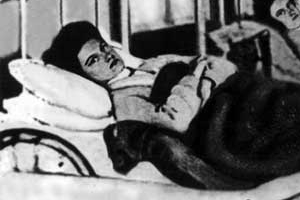
Death of Mary Mallon, Better Known as “Typhoid Mary”

typhoid-mary

Mary Mallon, better known as Typhoid Mary, dies in North Brother Island, East River, New York, on November 11, 1938. She is the first person in the United States identified as an asymptomatic carrier of the pathogen associated with typhoid fever. She is presumed to have infected 51 people, three of whom die, over the course of her career as a cook. She is twice forcibly isolated by public health authorities and dies after a total of nearly three decades in isolation.

Mallon is born on September 23, 1869, in Cookstown, County Tyrone, Northern Ireland. She immigrates to the United States in 1883 at the age of fifteen and lives with her aunt and uncle.

From 1900 to 1907, Mallon works as a cook in the New York City area for seven families. In 1900, she works in Mamaroneck, New York, where, within two weeks of her employment, residents develop typhoid fever. In 1901, she moves to Manhattan, where members of the family for whom she works develop fevers and diarrhea, and the laundress dies. Mallon then goes to work for a lawyer but leaves after seven of the eight people in that household become ill.

In 1906, she takes a position in Oyster Bay, Long Island, and within two weeks ten of the eleven family members are hospitalized with typhoid. She changed jobs again and similar occurrences happen in three more households. She works as a cook for the family of a wealthy New York banker, Charles Henry Warren. When the Warrens rent a house in Oyster Bay for the summer of 1906, Mallon goes along as well. From August 27 to September 3, six of the eleven people in the family come down with typhoid fever. The disease at that time is “unusual” in Oyster Bay, according to three medical doctors who practice there. Mallon is subsequently hired by other families and outbreaks follow her.

In late 1906, one family hires a typhoid researcher named George Soper to investigate. Soper publishes the results on June 15, 1907, in the Journal of the American Medical Association. He believes Mallon might be the source of the outbreak, but she repeatedly turns him away.

The New York City Health Department sends physician Sara Josephine Baker to talk to Mallon. A few days later, Baker arrives at Mallon’s workplace with several police officers, who take her into custody.

Mallon attracts so much media attention that she is called “Typhoid Mary” in a 1908 issue of the Journal of the American Medical Association. Later, in a textbook that defines typhoid fever, she is again called “Typhoid Mary.”

The New York City Health Inspector determines her to be a carrier. Under sections 1169 and 1170 of the Greater New York Charter, Mallon is held in isolation for three years at a clinic located on North Brother Island.

Upon her release, Mallon is given a job as a laundress. In 1915, Mallon starts another major outbreak, this time at Sloane Hospital for Women in New York City. Twenty-five people are infected and two die. She again leaves, but the police are able to locate and arrest her when she brings food to a friend on Long Island. After arresting her, public health authorities return her to quarantine on North Brother Island on March 27, 1915.

Mallon spends the rest of her life in quarantine at the Riverside Hospital. Six years before her death, she is paralyzed by a stroke. On November 11, 1938, at the age of 69, she dies of pneumonia. An autopsy finds evidence of live typhoid bacteria in her gallbladder. Mallon’s body is cremated, and her ashes are buried at Saint Raymond’s Cemetery in the Bronx.


Leave a comment

Birth of Actor Richard Harris

richard-harris

Richard St. John Harris, actor, singer, songwriter, producer, director, and writer, is born in Limerick, County Limerick, on October 1, 1930. He is brought up in a middle class and staunchly Roman Catholic family.

Harris is schooled by the Jesuits at Crescent College. He is a talented rugby player; however, his athletic career is cut short when he comes down with tuberculosis in his teens. After recovering from tuberculosis, Harris moves to Britain, wanting to become a director. Unable to find any suitable training courses, he enrolls in the London Academy of Music and Dramatic Art (LAMDA) to learn acting.

Harris makes his film debut in 1958 in the film Alive and Kicking and plays the lead role in The Ginger Man in the West End in 1959. Harris’ first starring role is in the film This Sporting Life (1963), as a bitter young coal miner, Frank Machin, who becomes an acclaimed rugby league football player. For his role, Harris wins Best Actor in 1963 at the Cannes Film Festival and an Academy Award nomination. He also wins notice for his role in Sam Peckinpah‘s Major Dundee (1965), as an Irish immigrant who becomes a Confederate cavalryman during the American Civil War.

Harris performs the role of King Arthur in the film adaptation of the musical play Camelot (1967). He continues to appear on stage in this role for many years, including a successful Broadway run in 1981–1982. In 1970 British exhibitors vote him the 9th most popular star at the UK box office.

Other film performances follow, among them a role as a reluctant police informant in the coal-mining tale The Molly Maguires (1970), also starring Sean Connery. Harris stars in Cromwell (1970), a film based on the life of Oliver Cromwell who leads the Parliamentary forces during the English Civil War and, as Lord Protector, ruled Great Britain and Ireland in the 1650s.

Harris’ film career collapses after the late 1970s and in the next decade he is rarely seen on screen, although he continues to act on stage. During his career Harris appears in two films which win the Academy Award for Best Picture. First, as the gunfighter “English Bob” in the Western Unforgiven (1992); second, as the Roman Emperor Marcus Aurelius in Ridley Scott‘s Gladiator (2000).

Harris is diagnosed with Hodgkin’s disease in August 2002, reportedly after being hospitalised with pneumonia. He dies at University College Hospital in Fitzrovia, London on October 25, 2002, at the age of 72. He was in a coma in his final three days. Harris’ body is cremated, and his ashes are scattered in the Bahamas, where he had owned a home.


Leave a comment

Final Concert by Phil Lynott & Thin Lizzy

thin-lizzy-1983

Although a version of the band still tours today, the definitive Thin Lizzy lineup, according to the official Thin Lizzy website, plays its last concert at the Monsters Of Rock festival in Nuremburg, Germany, on September 4, 1983. Afterwards the band members go their separate ways.

Formed in 1969 featuring bass guitarist and lead vocalist Phil Lynott and drummer Brian Downey, the band goes through various members including Gary Moore before Scott Gorham and Brian Robertson join the band in the mid-1970s. Thin Lizzy’s big breakthrough comes with the Jailbreak album in 1976 featuring the hit single The Boys Are Back In Town.

After the success of the Jailbreak album, Thin Lizzy’s popularity begins to subside in the United States, with each successive album finding less success. They manage, however, to maintain a presence in the United Kingdom. Another problem contributing to the band’s demise is Lynott’s drug use, which begins to escalate around this time and eventually ruins his marriage.

Two more Thin Lizzy albums, Renegade and Thunder and Lightning, follow over the next two and half years, as does a second solo offering by Lynott, The Phillip Lynott Album. Despite this, things continue to unravel for Lynott and company.

They plan a farewell tour to coincide with the March 1983 release of Thunder and Lightning, which features a heavier approach and proves to be their most popular album in some time. This ends up being a year-long adventure whose high point is a special performance at the legendary Hammersmith Odeon. For the show, Lynott brings in former band members Brian Robertson, Eric Bell, and Gary Moore as special guests.

The final concert in the United Kingdom takes place on August 28, 1983, at the Reading Festival, while their final concert with Lynott in the lineup finds them in Nuremberg on a bill that includes Whitesnake, Ozzy Osbourne, Blue Öyster Cult, Motörhead, and others. Lizzy’s set features old favorites along with a few new songs.

Lynott dies on January 4, 1986, of heart failure and pneumonia. Although the band eventually regroups with various ex-members trying to sail the ship, it never rekindles its past success without their leader.


Leave a comment

Death of Irish Songwriter Percy French

percy-french

Percy French, one of Ireland’s foremost songwriters and entertainers of his day, dies of pneumonia in Formby, England, on January 24, 1920.

French is born at Cloonyquin House, near Tulsk, County Roscommon. He is educated at Foyle College, Derry, and writes his first successful song, Abdul Abulbul Amir, while studying at Trinity College Dublin in 1877. The song is sold for £5 to an unscrupulous publisher and later becomes hugely popular and is falsely claimed by other authors.

He graduates from Trinity as a civil engineer in 1881 and joins the Board of Works in County Cavan as an “Inspector of Drains.” It is said that he writes his best songs during this period. French is also a prolific painter of landscape watercolours and during this period he considers art to be his true vocation. When he becomes well-known later in his life, his paintings from his time as a civil engineer become fashionable and sought after.

When the Board of Works reduces its staff around 1887, French turns to journalism as the editor of The Jarvey, a weekly comic paper. Upon the failure of the paper, he embarks on a long and successful career as a songwriter and entertainer. It is around this time that he marries Ethel Kathleen Armitage-Moore, second daughter of William Armytage-Moore, brother of Countess of Annesley. Tragically, at the age of 20, she dies during childbirth along with her daughter.

percy-french-statue

French becomes renowned for composing and singing comic songs and gains considerable distinction with such songs as Phil the Fluther’s Ball, Slattery’s Mounted Foot, and The Mountains of Mourne. One of his most famous songs is Are Ye Right There Michael, a song that ridicules the state of the rail system in rural County Clare. The song causes such embarrassment to the rail company that it lead to an ultimately unsuccessful libel action against French. It is said that he arrives late for the libel hearing and, when questioned by the judge on his lateness, he responds, “Your honour, I travelled by the West Clare Railway,” which results in the case being thrown out.

French takes ill while performing in Glasgow and dies of pneumonia on January 24, 1920, at the age of 65 at the home of his cousin, Canon Richardson of Green Lea, in Formby. He is buried in the churchyard of St. Luke’s Parish Church, Formby in Merseyside. A statue of him sitting on a park bench can be found in the town center of Ballyjamesduff in honour of him and his famous song, Come Back Paddy Reilly to Ballyjamesduff.


Leave a comment

Death of Phil Lynott

phil-lynott

Philip Parris “Phil” Lynott, Irish musician, singer, songwriter, and a founding member, principal songwriter, lead vocalist, and bassist of Thin Lizzy, dies on January 4, 1986, in Salisbury, Wiltshire, England.

Born in West Bromwich, Staffordshire, England on August 20, 1949, Lynott goes to live with his grandmother, Sarah Lynott, in Crumlin, Dublin, when he is four years old. He is introduced to music through his uncle Timothy’s record collection and becomes influenced by Motown and The Mamas and the Papas.

Growing up in Dublin in the 1960s, Lynott fronts several bands as a lead vocalist, most notably teaming up with bassist Brendan ‘Brush’ Shiels to form Skid Row in early 1968. It is during this period that Lynott learns to play the bass guitar.

Toward the end of 1969, Lynott, now confident enough to play bass himself in a band, teams with Brian Downey, Eric Bell, and Eric Wrixon to form Thin Lizzy. The band’s first top ten hit comes in 1973 with a rock version of the well-known Irish traditional song “Whiskey in the Jar.” With the release of the Jailbreak album in 1976, Lynott and Thin Lizzy become international superstars on the strength of the album’s biggest hit, “The Boys Are Back in Town.” The song reaches the Top 10 in the United Kingdom, No. 1 in Ireland, and is a hit in the United States and Canada.

Having finally achieved mainstream success, Thin Lizzy embarks on several consecutive world tours. However, the band suffers from personnel changes. By the early 1980s, Thin Lizzy is starting to struggle commercially and Lynott starts showing symptoms of drug abuse, including regular asthma attacks. After the resignation of longtime manager Chris O’Donnell, Lynott decides to disband Thin Lizzy in 1983.

phil-lynott-statue

In 1984, Lynott forms a new band, Grand Slam, with Doish Nagle, Laurence Archer, Robbie Brennan, and Mark Stanway. The band tours various clubs but suffers from being labeled a poor version of Thin Lizzy due to the inclusion of two lead guitarists. Grand Slam disbands at the end of the year due to a lack of money and Lynott’s increasing addiction to heroin.

Lynott’s last years are dogged by drug and alcohol dependency leading to his collapse on December 25, 1985, at his home in Kew. He is taken to Salisbury Infirmary where he is diagnosed as suffering from septicemia. His condition worsens by the start of the new year, and he is put on a respirator. He dies of pneumonia and heart failure due to septicemia in the hospital’s intensive care unit on January 4, 1986, at the age of 36.

Lynott’s funeral is held at St. Elizabeth of Portugal Church, Richmond, London, on January 9, 1986, with most of Thin Lizzy’s ex-members in attendance, followed by a second service at Church of the Assumption, Howth, on January 11. He is buried in St. Fintan’s Cemetery, Sutton, Dublin.