seamus dubhghaill

Promoting Irish Culture and History from Little Rock, Arkansas, USA


Leave a comment

James FitzGerald, Lord Ophaly, Wins Athy By-Election

At the Athy by-election on June 12, 1741, following the death of Sir Walter Dixon Borrowes, James FitzGerald, styled Lord Ophaly and later 1st Duke of Leinster, is returned. In the course of the election there is a duel between William Paul Warren and Jack Hardy, which leads to Hardy’s right hand and arm being shattered. It is thought that it might have to be amputated.

FitzGerald, an Anglo-Irish nobleman, soldier and politician, is the son of Robert FitzGerald, 19th Earl of Kildare, and Lady Mary, daughter of William O’Brien, 3rd Earl of Inchiquin.

FitzGerald is a member of the Irish House of Commons for Athy from the 1741 by-election until he succeeds his father as 20th Earl of Kildare in 1743. He is sworn of the Privy Council of Ireland in 1746 and in 1747, on the occasion of his marriage, he is created Viscount Leinster, of Taplow in the County of Buckingham, in the Peerage of Great Britain, and takes his seat in the British House of Lords that same year. From 1749 to 1755 he is one of the leaders of the Popular Party in Ireland and serves as the country’s Master-General of the Ordnance between 1758 and 1766, becoming Colonel of the Royal Irish Artillery in 1760. He is promoted to Major General in 1761 and to Lieutenant General in 1770.

In 1761 FitzGerald is created Earl of Offaly and Marquess of Kildare in the Peerage of Ireland and in 1766 he is further honoured when he is made Duke of Leinster, becoming by this time the Premier Duke, Marquess and Earl in the Peerage of Ireland.

FitzGerald marries the 15-year-old Lady Emily Lennox, daughter of Charles Lennox, 2nd Duke of Richmond, and one of the famous Lennox Sisters, in London on February 7, 1747. She is a great-granddaughter of King Charles II and is therefore a distant fifth cousin of King George III. Both of them are descended from King James VI and I. The couple has nineteen children.

FitzGerald dies at Leinster House, Dublin, on November 19, 1773, aged 51, and is buried in the city’s Christ Church Cathedral. He is succeeded by his second (but eldest surviving) son, William, Marquess of Kildare. The Duchess of Leinster causes a minor sensation by marrying her lover William Ogilvie in 1774 but continues to be known as The Dowager Duchess of Leinster. She has a further three children by him. She dies in London on March 27, 1814, aged 82.

In 1999, Irish Screen, BBC America and WGBH produce Aristocrats, a six-part limited television series based on the lives of Emily Lennox and her sisters. FitzGerald is portrayed by Ben Daniels.


Leave a comment

Death of Henry Capell, 1st Baron Capell of Tewkesbury

Henry Capell, 1st Baron Capell of Tewkesbury KB, PC, English politician who sits in the House of Commons of England between 1660 and 1692, dies in Chapelizod, Dublin, on May 30, 1696.

Capell is born in Little Hadham, Hertfordshire, England, in 1638. He is the son of Arthur Capell, 1st Baron Capell of Hadham, and Elizabeth Morrison. He is baptised on March 6, 1638. His father is raised to the peerage in 1641, and he dies fighting for the King in the English Civil War in 1649 as one of the commanders of the Colchester garrison. His eldest brother is Arthur Capell, 1st Earl of Essex.

Capell founds the Kew Gardens at Kew, a district in the London Borough of Richmond upon Thames. Later he is elected Member of Parliament for Tewkesbury in the Convention Parliament. He is invested as a Knight of the Order of the Bath, on April 23, 1661. In 1661, he is re-elected MP for Tewkesbury in the Cavalier Parliament. He is a member of the Privy Council of Ireland from April 1673 to March 1684/85. He is re-elected MP for Tewkesbury in the two elections of 1679, is a member of the Privy Council of England from April 22, 1679, to January 31, 1680, and is First Lord of the Admiralty, between 1679 and 1680.

In 1689, Capell is elected MP for Cockermouth and is Lord of the Treasury, between 1689 and 1690. He is invested again as Privy Councillor, on February 14, 1689. He is elected MP for Tewkesbury in 1690, and sits until April 11, 1692, when he is ennobled as Baron Capell of Tewkesbury, in the County of Gloucester. One year later, he becomes Lord Justice of Ireland and in turn a Privy Councillor of Ireland, in June 1693. In 1695 and 1696, he is Lord Deputy of Ireland. His term as Lord Deputy is not considered successful because of him being a firm Whig and presiding over an administration which is deeply divided between Whigs and Tories. He does nothing to help change this situation.

Capell dies at the age of 58 in Chapelizod, County Dublin, on May 30, 1696. He is buried on September 8, 1696, in Little Hadham, Hertfordshire. The barony dies with him.

On February 16, 1659, Capell marries Dorothy Bennet, daughter of Richard Bennet. The marriage is childless but does bring part of what later becomes Kew Palace into the Capell family, leading to its becoming known as Capel House. Dorothy dies in 1721, and through her will endows a number of charities.

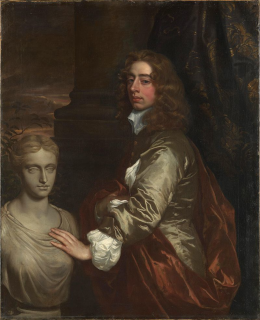
(Pictured: “Sir Henry Capel (1638-1696),” oil on canvas by Peter Lely, Metropolitan Museum of Art)


Leave a comment

Birth of Sir Richard Levinge, 1st Baronet

Sir Richard Levinge, 1st Baronet, Irish politician and judge who plays a leading part in Irish public life for more than 30 years, is born at Leek, Staffordshire, England, on May 2, 1656.

Levinge is the second son of Richard Levinge of Parwich Hall, Derbyshire, Recorder of Chester, and Anne Parker, daughter of George Parker of Staffordshire and his wife Grace Bateman. The Levinges (sometimes spelled “Levin”) are a long-established Derbyshire family with a tradition of public service. Through his mother he is a first cousin of Thomas Parker, 1st Earl of Macclesfield, Lord High Chancellor of Great Britain.

Levinge is educated at Audlem School, Derbyshire, and St. John’s College, Cambridge. He enters the Inner Temple in 1671 and is called to the Bar in 1678. He is a Member of Parliament (MP) of the House of Commons of England for City of Chester from 1690 to 1695. He is also, like his father, Recorder of Chester in 1686-87, but is summarily removed from this office by King James II of England.

Levinge is one of the first to declare for William III of England at the Glorious Revolution and is sent by the new Government to Ireland as Solicitor-General in 1689. In 1692 he is elected as a member of the Irish House of Commons for Belfast and for Blessington, but chooses to sit for Blessington, a seat he holds until 1695. During this time, he serves as Speaker of the Irish House of Commons. In politics he is a moderate Tory, noted throughout his career for his desire to conciliate. In an age of bitter political faction this earns him the uncharitable nickname “Tom Double.” Although he supports the Penal Laws, as no Irish officeholder then could do otherwise, he is very tolerant in religious matters and has several Roman Catholic friends, including his predecessor as Solicitor-General, Sir Theobald Butler.

Levinge later represents Longford Borough from 1698 to September 1713 and Kilkenny City from 1713 to November 1715 in the Irish Parliament. In 1713 he is also returned for Gowran but chooses to sit for Kilkenny. He is created a Baronet of High Park in the County of Westmeath, in the Baronetage of Ireland on October 26, 1704.

Levinge also serves as Solicitor-General for Ireland from 1689, from which office he is dismissed in 1695 following a quarrel with Henry Capell, 1st Baron Capell of Tewkesbury, the Lord Lieutenant of Ireland. He returns to office as Solicitor-General in 1705 through the good offices of James Butler, 2nd Duke of Ormonde, who has acted as his patron for some years past. History repeats itself when the Lord Lieutenant, Thomas Wharton, 1st Earl of Wharton, dismisses him from office in 1709 with what is regarded by many, including Jonathan Swift, as brutal suddenness. He once again becomes a member of the Parliament of Great Britain representing Derby from 1710 to 1711. He becomes Attorney-General for Ireland in 1711, after Ormonde replaces Wharton as Lord Lieutenant.

Levinge had expressed his interest in being appointed to the English Bench but meets with no success in his efforts to achieve office in England. Under George I of Great Britain, despite being of the “wrong” political persuasion, and his growing age, his famous moderation, and his 30 years’ experience of Irish public life make him acceptable as an Irish judge to the Government, in which he has a powerful supporter in his cousin Lord Macclesfield. In 1721 he becomes Chief Justice of the Irish Common Pleas for Ireland and a member of the Privy Council of Ireland. He complains bitterly of the poor quality of his junior judges, and asks for suitable replacements, although he complains equally about some of those whose names are put forward as possible replacements. Despite being in great pain from gout in his last years, he remains on the Bench until his death on July 13, 1724.

Levinge divides his time between his ancestral home, Parwich Hall, which he purchases from his childless elder brother, and his newly acquired property Knockdrin Castle, County Westmeath. Most of his estates passes to his eldest son, who extensively rebuilds Parwich.

(Pictured: Knockdrin Castle, County Westmeath, the main Levinge residence in Ireland)


Leave a comment

Birth of Thomas Butler, 6th Earl of Ossory

Vice Admiral Thomas Butler, 6th Earl of Ossory, KG, PC, PC (Ire), Irish soldier and politician, is born on July 8, 1634, at Kilkenny Castle. He is the eldest son of James Butler, 1st Duke of Ormond, and Elizabeth Preston. He predeceases his father and therefore never becomes duke.

When Butler is born, his father is then the 12th Earl of Ormond but is raised to marquess and duke. His family, the Butler dynasty, is Old English and descends from Theobald Walter, who had been appointed Chief Butler of Ireland by King Henry II in 1177. His mother is a second cousin once removed of his father as she is a granddaughter of Black Tom, 10th Earl of Ormond. Her father, however, is Scottish, Richard Preston, 1st Earl of Desmond, a favourite of James I. Both parents are Protestants. They married on Christmas Day 1629.

Butler is one of ten siblings, eight brothers and two sisters, but five of the sons die in childhood. As the eldest living son, he is the heir apparent and is styled with the corresponding courtesy title, which at first is Viscount Thurles but changed to Earl of Ossory when his father becomes marquess in 1642. His early years are spent in Ireland until 1647 when he accompanies his father to England. In 1648 his father renews his support for the royalist cause and he and his son have to flee to France, arriving in Caen in February 1648. Lady Ormond also moves to Caen, where she arrives on June 23, 1648, with his siblings.

Butler is an accomplished athlete and a good scholar. Having come to London in 1652 he is rightly suspected of sympathising with the exiled royalists, and in 1655 is jailed by Oliver Cromwell. After his release about a year later he goes into exile to the Netherlands where Charles II has his exile court at the time.

On November 17, 1659, while in exile, Butler marries Emilia van Nassau, the second daughter of Louis of Nassau, Lord of De Lek and Beverweerd. They have eleven children, including two sons: James (1665–1745), who becomes the 2nd Duke of Ormonde in 1688; Charles (1671–1758), who becomes the de jure 3rd Duke of Ormonde following his elder brother’s attainder in 1715; Elizabeth (died 1717), who marries William Stanley, 9th Earl of Derby in 1673; Amelia (died 1760), who inherits the estates of her brother Charles and never marries; and Henrietta (died 1724), who marries Henry de Nassau d’Auverquerque, 1st Earl of Grantham.

Butler accompanies Charles II back to England in 1660. In 1661 he becomes a member of both the English and the Irish houses of commons, representing in the former Bristol and Dublin University in the latter.

In 1662 Butler is called to the Irish House of Lords under a writ of acceleration as the Earl of Ossory. His father holds the title “5th Earl of Ossory” as one of his subsidiary titles. The acceleration makes Thomas Butler the 6th Earl of Ossory. This is the only substantive title he ever holds, as he predeceases his father and therefore never succeeds to his father’s titles. His eldest son, however, would later become the 2nd Duke of Ormond and the 7th Earl of Ossory.

Butler holds several military appointments: lieutenant-general of the army in Ireland (appointed in 1665); created an English peer as Lord Butler (in 1666); Lord of the Bedchamber to Charles II (appointed in 1660), a post he holds until his death.

In 1665 a fortunate accident allows Butler to take part in the Battle of Lowestoft against the Dutch, and in May 1672, being now in command of a ship, he fights against the same enemies in the Battle of Solebay, serving with great distinction on both occasions. He is partly responsible for this latter struggle, as on March 12, 1672, before war is declared, he attacks the Dutch Smyrna fleet, an action which he greatly regrets later in life. While visiting France in 1672 he rejects the liberal offers made by Louis XIV to induce him to enter the service of France and returning to England he adds to his high reputation by his conduct during the Battle of Texel in August 1673. From 1677 until 1679, he serves alongside his father as a Lord of the Admiralty.

Butler is intimate with William, Prince of Orange, and in 1677 he joins the allied army in the Netherlands, commanding the British contingent and winning great fame at the siege of Mons in 1678. He acts as deputy for his father, who is Lord Lieutenant of Ireland, and in parliament he defends Ormond’s Irish administration with great vigour. In 1680 he is appointed governor of English Tangier, but his death prevents him from taking up his new duties.

Butler dies on July 30, 1680, at Arlington House in London. He is buried provisionally in Westminster Abbey on July 31, 1680. The ceremony of burial is performed belatedly on November 13, 1680. Some say Butler’s body is later taken to Ireland and reburied in the family vault in St. Canice’s Cathedral, Kilkenny. James, his eldest son, succeeds him as the 7th Earl of Ossory and in 1688 becomes the 2nd Duke of Ormond.

One of Butler’s most intimate friends is John Evelyn, who eulogises him in his Diary.

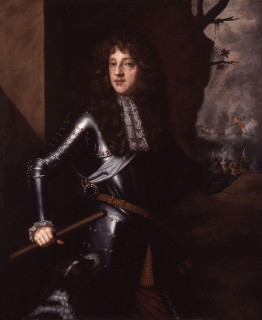
(Pictured: “Thomas Butler, Earl of Ossory” by Peter Lely, painting, circa 1678, National Portrait Gallery)


Leave a comment

Birth of James FitzGerald, 1st Duke of Leinster

Lieutenant-General James FitzGerald, 1st Duke of Leinster, PC (Ire), Irish nobleman, soldier and politician, is born on May 29, 1722. He is styled Lord Offaly until 1744 and known as The Earl of Kildare between 1744 and 1761 and as The Marquess of Kildare between 1761 and 1766.

FitzGerald is the son of Robert FitzGerald, 19th Earl of Kildare, and Lady Mary, daughter of William O’Brien, 3rd Earl of Inchiquin.

FitzGerald is a member of the Irish House of Commons for Athy from 1741 before succeeding his father as 20th Earl of Kildare in 1744. He is sworn of the Privy Council of Ireland in 1746 and in 1747, on the occasion of his marriage, he is created Viscount Leinster, of Taplow in the County of Buckingham, in the Peerage of Great Britain, and takes his seat in the British House of Lords that same year. From 1749 to 1755 he is one of the leaders of the Popular Party in Ireland and serves as the country’s Master-General of the Ordnance between 1758 and 1766, becoming Colonel of the Royal Irish Artillery in 1760. He is promoted to Major-General in 1761 and to Lieutenant-General in 1770.

In 1761 FitzGerald is created Earl of Offaly and Marquess of Kildare in the Peerage of Ireland and in 1766 he is further honoured when he is made Duke of Leinster, becoming by this time the Premier Duke, Marquess and Earl in the Peerage of Ireland.

FitzGerald marries the 15-year-old Lady Emily Lennox, daughter of Charles Lennox, 2nd Duke of Richmond and one of the famous Lennox sisters, in London on February 7, 1747. She descends from King Charles II and is therefore a distant fifth cousin of King George III (both of them are descended from King James VI and I). The couple has nineteen children.

FitzGerald dies at the age of 51 at Leinster House, Dublin, on November 19, 1773, and is buried in the city’s Christ Church Cathedral. He is succeeded by his second (but eldest surviving) son, William, Marquess of Kildare. The Duchess of Leinster causes a minor sensation by marrying her lover William Ogilvie in 1774, but continues to be known as The Dowager Duchess of Leinster. She has a further three children by him. She dies in London at the age of 82 in March 1814.

In 1999, Irish Screen, BBC America and WGBH produce Aristocrats, a six-part limited television series based on the lives of Emily Lennox and her sisters. FitzGerald is portrayed by Ben Daniels.

(Pictured: James FitzGerald, 1st Duke of Leinster, by Joshua Reynolds, 1753)


Leave a comment

Birth of Isaac Corry, Lawyer & Member of Parliament

Isaac Corry FRS, PC (I), PC, an Irish and British Member of Parliament and lawyer, is born on May 15, 1753, in Newry, County Down.

Corry is the son of Edward Corry, sometime Member of Parliament, and Catharine Bristow. His cousin is the writer Catherine Dorothea Burdett. He is educated at the Royal School, Armagh, where his contemporaries include Robert Stewart, Viscount Castlereagh, and later at Trinity College, Dublin, from which he graduates in 1773. On October 18, 1771, he is admitted to the Middle Temple and called to the bar at King’s Inns in 1779.

Corry succeeds his father as Member of Parliament for Newry in 1776, sitting in the Irish House of Commons until the Acts of Union 1800. From 1782 to 1789 he serves as equerry to Prince Henry, Duke of Cumberland, being described in 1794 by Rt. Hon. Sylvester Douglas as “a well-bred man…He has no brogue…He once acted as a sort of groom of the bedchamber to the late Duke of Cumberland.” In 1798, he is also elected for Randalstown, but chooses not to sit and, in 1802, he is returned to the British House of Commons for Newry. He serves as a Whig at Westminster until 1806. It is written in 1783 that he would expect to enter high office, given that “he lives expensively and does not pursue his profession, which is the law.” In 1788 he becomes Clerk of the Irish Board of Ordnance. The following year he is appointed a commissioner of the revenue. Finally in 1799 he is appointed Chancellor of the Exchequer of Ireland and a Lord High Treasurer of Ireland in place of Sir John Parnell, who quarreled violently with William Pitt the Younger over the projected union, which he categorically refuses to support. In 1795 he becomes a Privy Councillor.

In 1802 Corry is dismissed from the Exchequer and replaced by John Foster (later Lord Oriel), he is awarded, however, £2,000 p.a. in compensation. In 1806 the changes in ownership of the Newry estates alters his position. The lands pass to a senior line of the Needham family and they support General Francis Needham, 1st Earl of Kilmorey, at the general election. Corry does not have the funds needed, in excess of £5000, to purchase a seat elsewhere. However, Lady Downshire is inclined to support the Grenville ministry and comes to a formal agreement with Corry to give him £1000 towards his expenses should he be successful in Newry, and, if not, to bring him in for another borough. He fails against the Needham interest in Newry, but a seat at Newport, Isle of Wight, is purchased for him, with £4000 from Lady Downshire, and he is appointed to the Board of Trade. Six months later Grenville’s ministry has fallen and there is another general election. Corry stands, again unsuccessfully, for Newry.

Corry is unmarried but has a long-term relationship with Jane Symms. They have three sons and three daughters. His daughter Ann marries Lt. Col. Henry Westenra, the brother of Robert Cuninghame, 1st Baron Rossmore. His residence in Newry is the Abbey Yard, now a school, and Derrymore House, Bessbrook, County Armagh, which he had inherited from his father and sold in 1810. It is now the property of the National Trust. During his life, a road is constructed from near the main entrance of Derrymore House around Newry and links up with the Dublin Road on the southern side of the town primarily for his use. This road subsequently becomes known as “The Chancellor’s Road,” as a result of his term as the Irish Chancellor of the Exchequer. A local legend has it that the road is constructed after an incident in which Corry’s stagecoach is stoned while passing through Newry by people angry at an unpopular window tax he had introduced. The road has retained this name, but it is cut in half by the Newry by-pass in the mid-1990s, however, as a result of works associated with the new A1 dual carriageway, the two-halves of the road are now reconnected.

Corry dies at his house in Merrion Square, Dublin, on May 15, 1813, his 60th birthday. He is buried in St. Patrick’s Cathedral, Dublin.


Leave a comment

Birth of Hugh Holmes, MP & Judge of the Court of Appeal in Ireland

Hugh Holmes QC, an Irish Conservative Party, then after 1886 a Unionist Member of Parliament (MP) in the Parliament of the United Kingdom and subsequently a Judge of the High Court and Court of Appeal in Ireland, is born in Dungannon, County Tyrone, on February 17, 1840.

Holmes is the son of William Holmes of Dungannon and Anne Maxwell. He attends the Royal School Dungannon and Trinity College, Dublin. He is called to the English bar in 1864 and to the Bar of Ireland in 1865.

Holmes becomes a Queen’s Counsel (QC) in 1877. He is appointed Solicitor-General for Ireland on December 14, 1878, and serves until the Conservative government is defeated in 1880. He becomes Attorney-General for Ireland in 1885–1886 and 1886–1887. He is made a member of the Privy Council of Ireland on July 2, 1885. He is a MP for Dublin University from 1885 to 1887.

Holmes resigns from the House of Commons when he is appointed a Judge in 1887. He is a Justice of the Common Pleas division of the High Court of Justice in Ireland until 1888 when he becomes a Justice of the Queen’s Bench division. He is promoted to be a Lord Justice of Appeal in 1897. Ill health causes his retirement in 1914.

Holmes appears to be a stern judge, who does not suffer fools gladly and often imposes exceptionally severe sentences in criminal cases. Although the story is often thought to be apocryphal, Maurice Healy maintains that Holmes did once sentence a man of great age to 15 years in prison, and when the prisoner pleaded that he could not do 15 years, replied “Do as much of it as you can.” His judgments do however display some good humour and humanity, and the sentences he imposes often turned out to be less severe in practice than those he announces in Court.

The quality of his judgments is very high and Holmes, together with Christopher Palles and Gerald FitzGibbon, is credited with earning for the Irish Court of Appeal its reputation as perhaps the strongest tribunal in Irish legal history. His retirement, followed by that of Palles (FitzGibbon had died in 1909), causes a loss of expertise in the Court of Appeal from which its reputation never recovers. Among his more celebrated remarks is that the Irish “have too much of a sense of humour to dance around a maypole.” His judgment in The SS Gairloch remains the authoritative statement in Irish law on the circumstances in which an appellate court can overturn findings of fact made by the trial judge.

In 1869 Holmes marries Olivia Moule, daughter of J.W. Moule of Sneads Green House, Elmley Lovett, Worcestershire. She dies in 1901. Their children include Hugh junior, Sir Valentine Holmes KC (1888-1956), who like his father is a very successful barrister and a noted expert on the law of libel, Violet (dies in 1966), who married Sir Denis Henry, 1st Baronet, the first Lord Chief Justice of Northern Ireland, Elizabeth, who marries the politician and academic Harold Lawson Murphy, author of a well-known History of Trinity College Dublin, and Alice (dies in 1942), who marries the politician and judge Edward Sullivan Murphy, Attorney General for Northern Ireland and Lord Justice of Appeal of Northern Ireland.

Holmes dies on April 19, 1916, five days before the beginning of the Easter Rising.


Leave a comment

Birth of John Toler, 1st Earl of Norbury

John Toler, 1st Earl of Norbury PC, KC, Irish lawyer, politician and judge known as The Lord Norbury between 1800 and 1827, is born at Beechwood, Nenagh, County Tipperary, on December 3, 1745. A greatly controversial figure in his time, he is nicknamed the “Hanging Judge” and is considered to be one of the most corrupt legal figures in Irish history. He is Chief Justice of the Common Pleas for Ireland between 1800 and 1827.

Toler is the youngest son of Daniel Toler, MP, and Letitia, daughter of Thomas Otway (1665–1724), of Lissenhall, Nenagh, County Tipperary. His elder brother Daniel Toler is also a politician, serving as High Sheriff for Tipperary and also as MP for Tipperary. The Toler family is originally from Norfolk, East Anglia, England, but settles in County Tipperary in the 17th century. He is educated at Kilkenny College and at Trinity College, Dublin.

After graduating from university Toler enters the legal profession and is called to the Irish Bar in 1770. In 1781 he is appointed a King’s Counsel. He is returned to the Parliament of Ireland for Tralee in 1773, a seat he holds until 1780, and later represents Philipstown between 1783 and 1790 and Gorey from 1790 until the Acts of Union 1800. In 1789 he is appointed Solicitor-General for Ireland, which he remains until 1798 when he is promoted to Attorney-General for Ireland and sworn of the Privy Council of Ireland. In his role as Attorney-General he is responsible for the prosecution of those involved in the Irish Rebellion of 1798. According to the Dictionary of National Biography “his indifference to human suffering … disgusted even those who thought the occasion called for firmness on the part of government.” In 1799, he brings forward a law which gives the Lord Lieutenant of Ireland power to suspend the Habeas Corpus Act and to impose martial law.

In 1800 Toler is appointed Chief Justice of the Common Pleas for Ireland and raised to the Peerage of Ireland as Baron Norbury, of Ballycrenode in the County of Tipperary. His appointment to the bench is controversial and John FitzGibbon, 1st Earl of Clare, the Lord Chancellor of Ireland, is said to have quipped, “Make him a bishop, or even an archbishop, but not a chief justice.” His tenure as Chief Justice lasts for 27 years, despite the fact that, the Dictionary of National Biography opines, “his scanty knowledge of the law, his gross partiality, his callousness, and his buffoonery, completely disqualified him for the position. His court was in constant uproar owing to his noisy merriment. He joked even when the life of a human being was hanging in the balance.” This earns him the nickname the “Hanging Judge.” His most famous trial is that of Irish nationalist leader Robert Emmet. He interrupts and abuses Emmet throughout the trial before sentencing him to death. In spite of this, with his strong belief in the Protestant Ascendancy, he is considered to have had great influence over the government in Ireland in the early part of the nineteenth century.

However, Toler’s position eventually becomes untenable even to his strongest supporters, especially with the British government‘s aim of establishing a better relationship with the Catholic majority. His reputation is tainted in 1822, when a letter written to him by William Saurin, the Attorney-General for Ireland, is discovered, in which Saurin urges him to use his influence with the Irish Protestant gentry which makes up local juries against the Catholics. Saurin is dismissed soon afterwards. He finds his greatest adversary in Daniel O’Connell, to whom Toler is “an especial object of abhorrence.” At O’Connell’s instigation the case of Saurin’s letter is brought before the House of Commons of the United Kingdom by Henry Brougham. Toler survives this as well as an 1825 petition drawn up by O’Connell, which calls for his removal on the grounds of him falling asleep during a murder trial and later being unable to present any account of the evidence given. However, it is not until George Canning becomes Prime Minister in 1827 that Toler, then 82, is finally induced to resign. His resignation is sweetened by him being created Viscount Glandine and Earl of Norbury, of Glandine in King’s County, in the Peerage of Ireland. Unlike the barony of Norbury these titles are created with remainder to his second son Hector John. His eldest son Daniel is then considered mentally unsound.

Toler marries Grace, daughter of Hector Graham, in 1778. They have two sons and two daughters. In 1797 Grace is raised to the Peerage of Ireland as Baroness Norwood, of Knockalton in the County of Tipperary, in honour of her husband. She dies in 1822 and is succeeded in the barony by her eldest son, Daniel. Toler survives her by nine years and dies at the age of 85 at his Dublin home at 3 Great Denmark Street on July 27, 1831. He is succeeded in the barony of Norbury by his eldest son Daniel and in the viscountcy and earldom according to the special remainder by his second son, Hector. In 1832 the latter also succeeds his elder brother in the baronies of Norwood and Norbury. He is considered to be the father of the astronomer John Brinkley.

(Pictured: John Toler, 1st Earl of Norbury, coloured etching by unknown artist, early 19th century, National Portrait Gallery, NPG D9303)


Leave a comment

Death of Sir Denis Stanislaus Henry, 1st Baronet

Sir Denis Stanislaus Henry, 1st Baronet, KBE, PC (Ire), QC, Irish lawyer and politician who becomes the first Lord Chief Justice of Northern Ireland, dies in Belfast on October 1, 1925.

Henry is born on March 7, 1864, in Cahore, Draperstown, County Londonderry, the son of a prosperous Roman Catholic businessman. He is educated at Marist College, Dundalk, Mount St. Mary’s College, Chesterfield, Derbyshire (a Jesuit foundation) and Queen’s College, Belfast, where he wins every law scholarship available to a student in addition to many other prizes and exhibitions. In 1885, he is called to the Bar of Ireland.

During the 1895 United Kingdom general election in Ireland campaign, Henry speaks in support of unionist candidates in two constituencies: Thomas Lea in South Londonderry, Henry’s native constituency, and E. T. Herdman in East Donegal.

Henry’s legal career flourishes. He becomes Queen’s Counsel in 1896, a Bencher of the King’s Inns in 1898 and ultimately Father of the North-West Circuit – but his interest in politics does not diminish. In March 1905, he is a delegate at the inaugural meeting of the Ulster Unionist Council and in the 1907 North Tyrone by-election he is the Unionist candidate, losing by a mere seven votes.

On May 23, 1916, Henry is elected as an MP in the South Londonderry by-election, the first by-election to be held in Ireland after the Easter Rising, which occurred a month earlier. The rebellion has had no discernible impact on the contest.

In November 1918, Henry becomes Solicitor-General for Ireland and in July 1919, Attorney-General for Ireland. He later serves as the first Lord Chief Justice of Northern Ireland from 1921 to 1925. In 1923, he becomes a Baronet, of Cahore in the County of Londonderry.

Henry marries Violet Holmes, daughter of Hugh Holmes, a judge of the Court of Appeal in Ireland, and Olivia Moule. They have five children, including James Holmes Henry, who succeeds as second baronet. It is a mixed marriage as Violet is and remains a staunch member of the Church of Ireland. Despite their religious differences, the marriage is said to be happy.

Henry dies in Belfast on October 1, 1925, aged 61, and is buried near his native Draperstown.

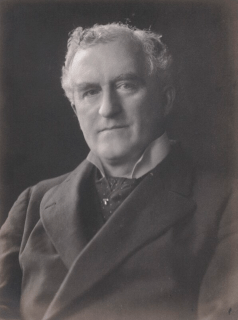
(Pictured: Sir Denis Stanislaus Henry, 1st Baronet, bromide print by Walter Stoneman, 1920, National Portrait Gallery, London)


Leave a comment

Death of Thomas Butler, 6th Earl of Ossory

Vice Admiral Thomas Butler, 6th Earl of Ossory, KG, PC, PC (Ire), Irish soldier and politician, dies in London on July 30, 1680.

Thomas is born on July 8, 1634, at Kilkenny Castle, the eldest son and one of ten siblings of James Butler, 1st Duke of Ormond and his wife Elizabeth Preston. His father is then the 12th Earl of Ormond but would be raised to marquess and duke. His family, the Butler dynasty, is Old English and descends from Theobald Walter, who had been appointed Chief Butler of Ireland by Henry II of England in 1177. His mother is a second cousin once removed of his father as she is a granddaughter of Thomas Butler, 10th Earl of Ormond. Her father, however, is Scottish, Richard Preston, 1st Earl of Desmond, a favourite of James I. Both parents are Protestants.

As the eldest living son, he is the heir apparent and is styled with the corresponding courtesy title, which at first is Viscount Thurles but changed to Earl of Ossory when his father becomes marquess in 1642. His early years are spent in Ireland until 1647 when he accompanies his father to England. In 1648 his father renews his support for the royalist cause and he and his son have to flee to France, arriving in Caen in February 1648. Lady Ormond also moves to Caen, where she arrives on June 23, 1648, with his siblings.

Butler is an accomplished athlete and a good scholar. Having come to London in 1652 he is rightly suspected of sympathising with the exiled royalists, and in 1655 is jailed by Oliver Cromwell. After his release about a year later he goes into exile to the Netherlands where Charles II has his exile court at the time.

On November 17, 1659, while in exile, Butler marries Emilia van Nassau, the second daughter of Louis of Nassau, Lord of De Lek and Beverweerd. They have eleven children.

Butler accompanies Charles II back to England in 1660. In 1661 he becomes a member of both the English and the Irish houses of commons, representing in the former Bristol and Dublin University in the latter.

In 1662 Butler is called to the Irish House of Lords under a writ of acceleration as the Earl of Ossory. His father holds the title “5th Earl of Ossory” as one of his subsidiary titles. The acceleration makes Thomas Butler the 6th Earl of Ossory. This is the only substantive title he ever holds, as he predeceases his father and therefore never succeeds to his father’s titles.

Butler holds several military appointments including lieutenant-general of the army in Ireland, created an English peer as Lord Butler in 1666, and Lord of the Bedchamber to Charles II (appointed in 1660 and held until his death).

In 1665 a fortunate accident allows Butler to take part in the Battle of Lowestoft against the Dutch, and in May 1672, being now in command of a ship, he fights against the same enemies in the Battle of Solebay, serving with great distinction on both occasions. While visiting France in 1672 he rejects the liberal offers made by Louis XIV to induce him to enter the service of France and returning to England he adds to his high reputation by his conduct during the Battle of Texel in August 1673. From 1677 until 1679, he serves alongside his father as a Lord of the Admiralty.

Butler is intimate with William II, Prince of Orange, and in 1677 he joins the allied army in the Netherlands, commanding the British contingent and winning great fame at the siege of Mons in 1678. He acts as deputy for his father, who is Lord Lieutenant of Ireland. In 1680 he is appointed governor of English Tangier, but his death prevents him from taking up his new duties.

Butler dies on July 30, 1680, at Arlington House in London. He is buried provisionally in Westminster Abbey on July 31, 1680. The ceremony of burial is performed belatedly on November 13, 1680. Some say his body is later taken to Ireland and reburied in the family vault in St. Canice’s Cathedral, Kilkenny. James, his eldest son, succeeds him as the 7th Earl of Ossory and becomes the 2nd Duke of Ormond in 1688.

(Pictured: “Thomas Butler, Earl of Ossory,” painting by Peter Lely, circa 1678, Source: National Portrait Gallery)