His brother, Richard Pennefather, has a longer and more successful career as a judge. Appointed a Baron of the Court of Exchequer in 1821, he serves for nearly 40 years and is held in universal regard. With the general support of the profession, he remains on the Bench until shortly before his death at eighty-six, by which time he is blind. Edward and Richard, “the two Pennefathers,” are leading practitioners in the Court of Chancery (Ireland).
Pennefather is generally regarded as more gifted, a master of the law of equity and also a skilled libel lawyer. In 1816, he is one of the lead counsels in the celebrated libel case of Bruce v. Grady, which arises from the publication of a scurrilous poem called “The Nosegay,” written by a barrister, Thomas Grady, about his former friend, the notably eccentric banker George Evans Brady of Hermitage House, Castleconnell, County Limerick. The quarrel is said to arise from a dispute over money which Bruce had loaned to Grady. The plaintiff claims £20000 but the jury awards £500.
According to Elrington Ball, Pennefather is considered to be one of the greatest Irish advocates of his time, and one with few rivals in any age, but he does not live up to expectations as a judge, due largely to his age and increasing ill-health. As a judge he is remembered mainly for presiding at the trial of Daniel O’Connell in 1843 for sedition, where his alleged bias against the accused damages his reputation: he is accused of acting as prosecutor rather than judge, and his summing-up is described as simply an extra speech for the prosecution. Further damage to his reputation is done by the majority decision of the House of Lords quashing the verdict in the O’Connell case: while many of the errors were the fault of the prosecution, the Law Lords do not spare Pennefather for his conduct of the proceedings, and in particular for his summing-up. The Law Lords comment severely that the course of the trial, if condoned, will make a mockery of trial by jury in Ireland.
The related trial of Sir John Gray descends into farce when the Attorney-General, Sir Thomas Cusack-Smith, who is noted for his hot temper, challenges one of the defence counsel, Gerald Fitzgibbon, to a duel, for having allegedly accused him of improper motives. Pennefather tells the Attorney-General severely that a man in his position has no excuse for such conduct, whereupon the Attorney-General agrees to let the matter drop. The public notes with interest that Fitzgibbon’s wife and daughter are present in Court during the contretemps.
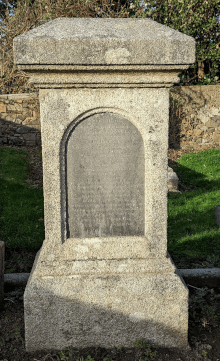
Following a long illness, Pennefather dies in Dunlavin, County Wicklow, on September 6, 1847. He is buried in Christ Church Cemetery, Delgany, County Wicklow.
When appointed Lord Chancellor of Ireland in 1789, FitzGibbon is granted his first peerage as Baron FitzGibbon, of Lower Connello in the County of Limerick, in the Peerage of Ireland that year. This does not entitle him to a seat in the British House of Lords, only in the Irish House of Lords. His later promotions come mostly in the Peerage of Ireland, being advanced to a Viscountcy in 1793 and the Earldom of Clare in 1795. He finally achieves a seat in the British House of Lords in 1799 when created Baron FitzGibbon, of Sidbury in the County of Devon, in the Peerage of Great Britain.
As Lord Chancellor for Ireland, FitzGibbon is a renowned champion of the Protestant Ascendancy and an opponent of Catholic emancipation. He despises the Parliament of Ireland‘s popular independent Constitution of 1782. He is also personally and politically opposed to the Irish politician Henry Grattan who urges a moderate course in the Irish Parliament and is responsible for defeating Grattan’s efforts to reform the Irish land tithe system under which Irish Catholic farmers (and all non-Anglican farmers) are forced to financially support the minority Anglican Church of Ireland. These are not fully repealed until 1869 when the Church of Ireland is finally disestablished, although Irish tithes are commuted after the Tithe War (1831–1836).
FitzGibbon opposes the Irish Roman Catholic Relief Act 1793 personally but apparently recommends its acceptance in the House of Lords, being forced out of necessity when that Act had been recommended to the Irish Executive by the British Cabinet led by William Pitt the Younger. Pitt expects Ireland to follow the British Roman Catholic Relief Act 1791 and allow Catholics to vote again and hold public offices. At the same time, FitzGibbon apparently denounces the policy this Act embodies, so it is probably safe to say that FitzGibbon’s own beliefs and principles conflict with his obligations as a member of the Irish executive of the time.
FitzGibbon’s role in the recall, soon after his arrival, of the popular pro-Emancipation Lord Lieutenant of Ireland, William Fitzwilliam, 4th Earl of Fitzwilliam, is debatable. Although he is probably politically opposed to the Lord Lieutenant of Ireland, Fitzwilliam is apparently recalled, because of his own independent actions. Fitzwilliam is known to be friendly to the Ponsonby family and is generally a Foxite liberal Whig. His close association with and patronage of Irish Whigs led by Grattan and Ponsonby during his short tenure, along with his alleged support of an immediate effort to secure Catholic emancipation in a manner not authorized by the British cabinet is likely what leads to his recall. Thus, if anyone is to blame in the short-lived “Fitzwilliam episode” it is Henry Grattan and the Ponsonby brothers – presumably William Ponsonby, later Lord Imokilly, and his brother George Ponsonby — not to mention Lord Fitzwilliam himself. Irish Catholics at the time and later naturally see things very differently and blame hardline Protestants such as FitzGibbon.
Irish Catholics and FitzGibbon apparently agree on one point – Irish political and economic union with Great Britain, which eventually takes place in 1801. Pitt wants Union with Ireland concomitantly with Catholic emancipation, commutation of tithes, and the endowment of the Irish Catholic priesthood. Union is opposed by most hardline Irish Protestants, as well as liberals such as Grattan. FitzGibbon is a strong supporter of the Union since 1793 but refuses to have Catholic emancipation with the Union.
In the end, FitzGibbon’s views wins out, leading to the Union of Ireland with Great Britain to form the United Kingdom of Great Britain and Ireland without any concessions for Ireland’s Catholic majority, or for that matter, Catholics in the rest of the new United Kingdom. He later claims that he has been duped by the way in which the Act is passed and is bitterly opposed to any concessions during the short remainder of his life.
FitzGibbon’s role as Lord Chancellor of Ireland during the period of the 1798 rebellion is questionable. According to some, he supports a hardline policy which uses torture, murder and massacre to crush the rebellion, or that as Lord Chancellor, he has considerable influence on military affairs, and that martial law cannot be imposed without his consent. Others allege that as Lord Chancellor, he has no say in military affairs. His former side is displayed by sparing the lives of the captured United Irish leaders in return for their confession of complicity and provision of information relating to the planning of the rebellion. However, this willingness of the prisoners to partake of the agreement is spurred by the execution of the Sheares brothers on July 14, 1798.
In contrast to the leniency shown to the largely upper-class leadership, the full weight of military repression is inflicted upon the common people throughout the years 1797–98 with untold thousands suffering imprisonment, torture, transportation and death. Fitzgibbon ss inclined to show no mercy to unrepentant rebels and in October 1798 he expressed his disgust upon the capture of Wolfe Tone that he had been granted a trial and his belief that Tone should have been hanged as soon as he set foot on land.
FitzGibbon is quick to recognise that sectarianism is a useful ally to divide the rebels and prevent the United Irishmen from achieving their goal of uniting Protestant, Catholic and Dissenter, writing in June 1798, “In the North nothing will keep the rebels quiet but the conviction that where treason has broken out the rebellion is merely popish.”
FitzGibbon is noted by some as a good, improving landlord to both his Protestant and Catholic tenants. Some claim that the tenants of his Mountshannon estate call him “Black Jack” FitzGibbon. However, there is no evidence to support this claim, although there is little to no evidence on his dealings as a landlord. Irish nationalists and others point out that while he might have been interested in the welfare of his own tenants on his own estate, he treats other Irish Catholics very differently. Without further evidence, his role as a Protestant landowner in mainly Catholic Ireland is of little importance against his known dealings as Lord Chancellor.
FitzGibbon dies at his home, 6 Ely Place near St. Stephen’s Green, Dublin, on January 28, 1802, and is buried in the churchyard at St. Peter’s Church, Aungier Street, Dublin. A hero to Protestant hardliners, but despised by the majority Catholic population, his funeral cortege is the cause of a riot and there is a widespread story that a number of dead cats are thrown at his coffin as it departs Ely Place.
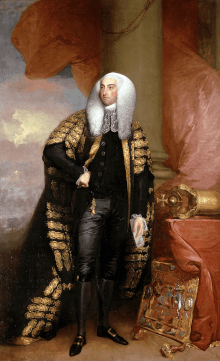
(Pictured: “Portrait of John FitzGibbon, 1st Earl of Clare,” painting by Gilbert Stuart, 1789)
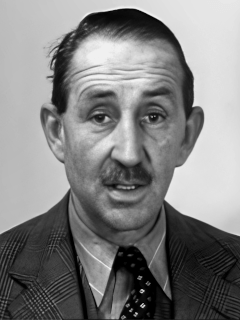
Brooke is born on June 9, 1888, at Colebrooke Park, his family’s neo-Classicalancestral seat on what is then the several-thousand-acre Colebrooke Estate, just outside Brookeborough, a village near Lisnaskea in County Fermanagh. He is the eldest son of Sir Arthur Douglas Brooke, 4th Baronet, whom he succeeds as 5th Baronet when his father dies in 1907. His mother is Gertrude Isabella Batson. He is a nephew of Field MarshalAlan Brooke, 1st Viscount Alanbrooke, Chief of the Imperial General Staff (CIGS) during World War II, who is only five years his senior. His sister Sheelah marries Sir Henry Mulholland, Speaker of the Stormont House of Commons and son of Lord Dunleath. He is educated for five years at St. George’s School in Pau, France, and then at Winchester College (1901–05).
Brooke is a very active Ulster Unionist Party member and ally of Edward Carson. He founds his own paramilitary group, Brooke’s Fermanagh Vigilance, from men returning from the war front in 1918. Although the umbrella Ulster Volunteers had been quiescent during the war, it is not defunct. It re-emerges strongly in 1920, subsuming groups like Brooke’s.
In 1920, having reached the rank of captain, Brooke leaves the British Army to farm the Colebrooke Estate, the family estate in west Ulster, at which point he turns toward a career in politics.
Brooke has a very long political career. When he resigns the Premiership of Northern Ireland in March 1963, he is Northern Ireland’s longest-serving prime minister, having held office for two months short of 20 years. He also establishes a United Kingdom record by holding government office continuously for 33 years.
On May 2, 1943, Brooke succeeds John M. Andrews as Prime Minister of Northern Ireland. In 1952, while Prime Minister, was raised to the peerage as Viscount Brookeborough, the title taken from the village named after the Brookes. Although a peer, he retained his seat in the House of Commons at Stormont and remained Prime Minister for another decade.
As the Northern Ireland economy begins to de-industrialise in the mid-1950s, leading to high unemployment amongst the Protestant working classes, Brooke faces increasing disenchantment amongst UUP backbenchers for what is regarded as his indifferent and ineffectual approach to mounting economic problems. As this disenchantment grows, British civil servants and some members of the UUP combine to exert discreet and ultimately effective pressure on Brooke to resign to make way for Captain Terence O’Neill, who is Minister of Finance.
Brooke is noted for his casual style toward his ministerial duties. Terence O’Neill later writes of him, “he was good company and a good raconteur, and those who met him imagined that he was relaxing away from his desk. However, they did not realise that there was no desk.”
In his retirement Brooke develops commercial interests as chairman of Carreras (Northern Ireland), a director of Devenish Trade, and president of the Northern Ireland Institute of Directors. He is also made an honorary LL.D. of Queen’s University Belfast.
From 1970 to 1973, years in which the Stormont institution comes under its greatest strain and eventually crumbles, Brooke makes only occasional forays into political life. In 1972, he appears next to William Craig MP on the balcony of Parliament Buildings at Stormont, a diminutive figure beside the leader of the Vanguard Unionist Progressive Party (VUPP) who is rallying right-wing Unionists against the Government of Northern Ireland. He opposes the Westminsterwhite paper on the future of Northern Ireland and causes some embarrassment to his son, Captain John Brooke, the UUP Chief Whip and an ally of Brian Faulkner, by speaking against the Faulkner ministry‘s proposals.
Brooke dies at his home, Colebrooke Park, on the Colebrooke Estate, on August 18, 1973. His remains are cremated at Roselawn Cemetery, East Belfast, three days later, and, in accordance with his wishes, his ashes are scattered on the demesne surrounding his beloved Colebrooke Park.
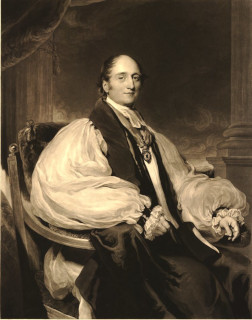
Beresford employs Lewis Nockalls Cottingham, one of the most skilled architects of the time, to restore St. Patrick’s Cathedral, Armagh. Cottingham removes the old, stunted spire and shores up the belfry stages while he rebuilds the piers and arches under it. The arcade walls which had fallen away as much as 21 inches from the perpendicular on the south side and 7 inches on the north side, are straightened by means of heated irons, and the clerestory windows which had long been concealed, are opened out and filled with tracery.
Beresford dies on July 18, 1862, at Woburn, Bedfordshire, England, the home of his niece, in the parish of Donaghadee and is buried in the cathedral. There is a memorial to him in the south aisle at St. Patrick’s Cathedral, Armagh.
Brownlow’s father, grandfather, and great-grandfather had been MPs, and in 1753 he wins a hotly contested by-election in which his opponents accuse him of papist and Jacobite sympathies. The unsuccessful candidate is Francis Caulfeild, brother of James, 1st Earl of Charlemont, his petition to parliament causing a furor and is defeated by only one vote in one of the most celebrated electoral struggles of the day. Brownlow represents the county for over forty years, from 1753 until his death. In 1753, he supports the government on the controversial money bill.
Brownlow marries Judith, daughter of the Rev. Charles Meredyth, Dean of Ardfert, of County Meath, on May 25, 1754. They have two sons. After her death in Lyon, France, in October 1763, he marries Catherine, daughter of Roger Hall of Newry, County Down, on November 25, 1765. They have two sons and five daughters, three who marry into the nobility. In 1758, he is one of the Wide Streets commissioners in Dublin and owns an imposing house in Merrion Square. He is a trustee of the linen board in Ulster, and makes many improvements to his estate, castle, and demesne, the local church, and the town of Lurgan. However, it is alleged that private roads in his demesne were built with public money. He is one of a few landowners in County Armagh who are believed to have misappropriated the unusually high county cess levied by the grand jury, of which he is a member. In 1758, he suggests that salaries be paid to government officials, and one official, Henry Meredyth, his first wife’s uncle, subsequently receives an annual salary of £500.
In June 1763, large numbers of Presbyterian farmers and weavers, calling themselves the Hearts of Oak, in a notable show of dissatisfaction with the privileges of landlords, march on the homes of the gentry to demand redress. Brownlow is in England and avoids a confrontation. Despite the allegations of abuse of public money, he is generally recognised as one of the more independent and reform-minded MPs of the day. He captains a Volunteer troop of dragoons which march from Lurgan to assist Belfast after the French commander François Thurot lands at Carrickfergus in 1760. As one of the supporters of Henry Grattan, he is prominent in the Volunteer movement of the 1780s. He is captain of the Lurgan Volunteer company and lieutenant-colonel of the northern battalion and backs the movement in parliament until displeased by the Volunteer national convention (November 10 – December 2, 1783), which seeks franchise reform and seems to challenge the authority of the existing parliament.
Brownlow subscribes £9,000 to help found the Bank of Ireland in 1783, and in parliament on February 7, 1785, vigorously opposes William Pitt‘s proposals on Ireland’s commercial relations with England, seeing in them the danger that Ireland would become a “tributary nation.” He is appointed a privy councilor in 1765. He organises horse races in his locality and is a talented harpsichord player. After his death on October 28, 1794, the Belfast News Letter prints an unusually long and glowing tribute, expressing admiration for his “incorruptible integrity” and patriotism, as well as two poetic elegies. He is succeeded by his son William Brownlow.
(From: “Brownlow, William” by Linde Lunney, Dictionary of Irish Biography, http://www.dib.ie, October 2009 | Pictured: Portrait of the Right Honorable William Brownlow, oil on canvas by Gilbert Stuart, circa 1790)
Kavanagh’s mother insists that he be brought up and have opportunities like any other child and places him in the care of the doctor Francis Boxwell, who believes that an armless and legless child can live a productive life. Kavanagh learns to ride horses at the age of three by being strapped to a special saddle and managing the horse with the stumps of his arms. With the help of the surgeon Sir Philip Crampton, Lady Harriet has a mechanical wheelchair constructed for her son, and encourages him to ride horses and engage in other outdoor activities. He also goes fishing, hunting, draws pictures and writes stories, using mechanical devices supplementing his physical capacities. His mother teaches him how to write and paint holding pens and brushes in his mouth.
In 1846, Lady Harriet takes three of her children, Thomas, Harriet and Arthur, traveling to the Middle East for two years. Kavanagh nearly drowns in the Nile when he falls in while fishing and is rescued by a local antiquities salesman who dives in to pull him out.
In 1849, Kavanagh’s mother discovers that he has been having affairs with girls on the family estate, so she sends him into exile to Uppsala, and then to Moscow with his brother and a clergyman, whom he comes to hate. He travels extensively in Egypt, Anatolia, Persia, and India between 1846 and 1853. In India, his letter of credit from his mother is cancelled when she discovers that he has spent two weeks in a harem, so he persuades the East India Company to hire him as a despatch rider. Other sources say that this is due to the death of his eldest brother, Charles, of tuberculosis in December 1851, which leaves him with only 30 shillings.
Kavanagh dies of pneumonia in London at the age of 58 on December 25, 1889. He is buried in Ballicopagan cemetery. He is succeeded in the title of The MacMurrough by his son, Walter MacMurrough Kavanagh, who also serves as MP for County Carlow from 1908 to 1910. The 1901 novel The History of Sir Richard Calmady, written by Lucas Malet (pseudonym of Mary St. Leger Kingsley), is based on his life.
Kavanagh marries his cousin, Mary Frances Forde-Leathley, in 1855. Assisted by his wife, he is a philanthropic landlord, active county magistrate, and chairman of the board of guardians. Together, they have seven children.
Lady Isabella Anne Beresford (1776–1850), marries Sir John William Head Brydges, MP, of Wootton Court, second son of Edward Brydges), in 1812.
Lady Catharine Beresford (1777–1843)
Lady Anne Beresford (1779–1842)
Lady Elizabeth Louisa Beresford (1783–1856), who marries Maj. Gen. Sir Denis Pack in 1816. After his death in 1823, she marries Sir Thomas Reynell, 6th Baronet, in 1831.
In January and February 1689, Butler votes against the motion to put William of Orange and Mary on the throne and against the motion to declare that James II has abdicated it. Nevertheless, he subsequently joins the forces of William of Orange, by whom he is made colonel of the 2nd Troop of Horse Guards on April 20, 1689. He accompanies William in his Irish campaign, debarking with him in Carrickfergus on June 14, 1690, and commands this troop at the Battle of the Boyne in July 1690. In February 1691 he becomes Lord Lieutenant of Somerset.
Butler serves on the continent under William of Orange during the Nine Years’ War and, having been promoted to major general, he fights at the Battle of Steenkerque in August 1692 and the Battle of Landen in July 1693, where he is taken prisoner by the French and then exchanged for the Duke of Berwick, James II’s illegitimate son. He is promoted to lieutenant general in 1694.
Butler plays a dramatic role at the notorious meeting of the Privy Council on March 8, 1711, when Antoine de Guiscard, a French double agent who is being questioned about his treasonable activities, attempts to assassinate Robert Harley, 1st Earl of Oxford, against whom he has a personal grudge for drastically cutting his allowance, by stabbing him with a penknife. Harley is wounded, but not seriously, due largely to the fact that he is wearing a heavy gold brocade waistcoat in which the knife gets stuck. Several Councillors, including Butler, stab Guiscard in return. Guiscard implores Butler to finish the deed, but he replies that it is not for him to play the hangman. In any case, he has the sense to see that Guiscard must be kept alive at least long enough to be questioned, although as it turns out Guiscard’s wounds are fatal, and he dies a week later.
On April 23, 1712, Butler leaves Harwich for Rotterdam to lead the British troops taking part in the war. Once there he allows himself to be made the tool of the Tory ministry, whose policy is to carry on the war in the Netherlands while giving secret orders to him to take no active part in supporting their allies under Prince Eugene. In July 1712, he advises Prince Eugene that he can no longer support the siege of Le Quesnoy and that he is withdrawing the British troops from the action and instead intends to take possession of Dunkirk. The Dutch are so exasperated at the withdrawal of the British troops that they close the towns of Bouchain on Douai to British access, despite the fact that they have plenty of stores and medical facilities available. Butler takes possession of Ghent and Bruges as well as Dunkirk, in order to ensure his troops are adequately provided for. On April 15, 1713, he becomes Lord Lieutenant of Norfolk.
Ormonde’s position as Captain-General makes him a personage of much importance in the crisis brought about by the death of Queen Anne and, during the last years of Queen Anne, he almost certainly has Jacobite leanings and corresponds with the Jacobite Court including his cousin, Piers Butler, 3rd Viscount Galmoye, who keeps barrels of gunpowder at Kilkenny Castle. King George I, on his accession to the throne in August 1714, institutes extensive changes and excludes the Tories from royal favour. Butler is stripped of his posts as Captain-General, as colonel of the 1st Regiment of Foot Guards and as Commander in Chief of the Forces with the first two posts going to the Duke of Marlborough and the role of Commander-in-Chief going to John Dalrymple, 2nd Earl of Stair. On November 19, 1714, Butler is instead made a member of the reconstituted Privy Council of Ireland.
Accused of supporting the Jacobite rising of 1715, Butler is impeached for high treason by Lord Stanhope on June 21, 1715. He might avoid the impending storm of Parliamentary prosecution, if he remains in England and stands trial but instead, he chooses to flee to France in August 1715 and initially stays in Paris with Lord Bolingbroke. On August 20, 1715, he is attainted, his estate forfeited, and honours extinguished. The Earl Marshal is instructed to remove the names and armorial bearings of Butler and Bolingbroke from the list of peers and his banner as Knight of the Garter is taken down in St. George’s Chapel.
On June 20, 1716, the Parliament of Ireland passes an act extinguishing the regalities and liberties of the county palatine of Tipperary; for vesting Butler’s estate in the crown and for giving a reward of £10,000 for his apprehension, should he attempt to land in Ireland. But the same parliament passes an act on June 24, 1721, to enable his brother, Charles Butler, 1st Earl of Arran, to purchase his estate, which he does accordingly.
Butler subsequently moves to Spain where he holds discussions with Cardinal Giulio Alberoni. He later takes part in a Spanish and Jacobite plan to invade England and puts James Francis Edward Stuart on the British throne in 1719, but his fleet is disbanded by a storm in the Bay of Biscay. In 1732, he moves to Avignon, where he is seen in 1733 by the writer Lady Mary Wortley Montagu. He dies at Avignon in exile on November 16, 1745, but his body is returned to London and buried in Westminster Abbey on May 22, 1746.
On July 20, 1682, Butler, then called Lord Ossory, marries Lady Anne Hyde, daughter of Laurence Hyde, who is then Viscount Hyde of Kenilworth but becomes Earl of Rochester in November. The couple has a daughter, Mary, who dies young in 1688.
Following the death of his first wife in 1685, Butler plans to marry again in order to secure a male heir. He gains permission from the House of Lords for the arranging of a jointure for another marriage in May 1685, and in August of that year, he marries Lady Mary Somerset, daughter of the Duke of Beaufort and Mary Capel. The couple has a son, Thomas (1686–1689), and two daughters, Elizabeth (1689–1750) and Mary (1690–1713). His second wife is a Lady of the Bedchamber to Queen Anne. Their younger daughter, Mary, marries John Ashburnham, 1st Earl of Ashburnham.
(Pictured: Portrait of James Butler, 2nd Duke of Ormonde, by Michael Dahl, National Portrait Gallery)
Hill vigorously exerts himself against the Union of Great Britain and Ireland in 1800 and is punished by the Government for his opposition by being dismissed from the Governorship of Down and the colonelcy of the Downshire Militia and struck off the roll of the Privy Council on February 12, 1800.
On June 29, 1786, Hill marries Mary Sandys, by whom he has seven children:
Hill’s last son, Lord George Hill, is born posthumously, as he dies by suicide on September 7, 1801. His widow, Mary, feels his early death is in part due to his humiliation by the Government, and thereafter is a bitter enemy to Robert Stewart, Viscount Castlereagh. She is the heiress of her uncle, Edwin Sandys, 2nd Baron Sandys, and to the estates of her grandfather, William Trumbull, including Easthampstead Park. In 1802, after Hill’s death, she is created Baroness Sandys, with a special remainder to her younger sons and their male heirs in succession and then to her eldest son and his male heirs.
Hill also has a son, William Arthur Dore-Hill, born in 1778, with his mistress Sarah Dore (who later marries William Garrow).
Lawless is the only surviving son of Nicholas Lawless, wool merchant, brewer, and banker, who becomes 1st Baron Cloncurry in 1789, and Margaret Lawless (née Browne), only daughter and heiress of Valentine Browne of Mount Browne, County Limerick. He is educated privately at Portarlington, Queen’s County (now County Laois), and at Blackrock, County Dublin. He enters Trinity College Dublin (TCD) in 1789, graduating BA in 1792. After completing a tour of Europe (1792–95) he returns to Ireland, where he joins the Society of United Irishmen and the loyalistyeomanry. Pressurized by his father, he decides to study law, and is at Middle Temple from 1795 to 1798. He later claims that at a dinner party in the spring of 1797 he hears the prime minister, William Pitt, discuss his plans for a legislative union with Ireland, prompting him to write an anti-union pamphlet in response. Like many of the claims in his published recollections, the story is unreliable.
During 1797 Lawless helps Arthur O’Connor form his United Irishman newspaper The Press, and Leonard McNally informs Dublin Castle that Lawless is its principal shareholder. In October 1797 Lawless attends a meeting of the executive directory of the United Irishmen, of which he is elected a member. Throughout this period and after his return to London he is carefully watched by the British secret service. His friendship with O’Connor, and the fact that he provides funds for Fr. James Coigly, arouse deep suspicion. After the outbreak of open rebellion in Ireland he is arrested at his lodgings in Pall Mall on May 31, 1798, on suspicion of high treason, and imprisoned for six weeks in the Tower of London. Arabella Jefferyes, sister of the Earl of Clare, apparently tries to extort money from Lawless in return for pleading his case to the Duke of Portland. He refuses the offer. On his release he tours England on horseback but is rearrested on April 14, 1799, and held until March 1801. His father votes for the Act of Union, hoping to secure his son’s release, and dies on August 28, 1799. Lawless succeeds him as 2nd Baron Cloncurry. His grandfather and his fiancée, Mary Ryal, also die while he is imprisoned.
Embittered by his experience, Lawless tours the Continent from 1801 to 1805 before returning to his family estate at Lyons Hill, Ardclough, County Kildare. Throwing himself into improving his estates and into local concerns, he founds the County Kildare Farming Society in 1814. He is also involved in canal developments and agricultural improvements in the country. Opposed to the rural constabulary bill of 1822, he supports Catholic emancipation and the attempts of Daniel O’Connell to repeal the Act of Union. He breaks with O’Connell in the 1830s when his friend, Henry Paget, 1st Marquess of Anglesey, is viceroy, because he believes repeal can now be achieved through official means. The rift is never healed.
In 1831, Lawless is admitted to the Privy Council of Ireland (PC) and an English peer but rarely attends the House of Lords. Involved in anti-tithe campaigns, he retires from politics in 1840. Travelling on the Continent in 1841 and 1842, he returns to defend O’Connell’s planned Clontarf meeting in the privy council but refuses to attend any further meetings after his advice on dealing with the Great Famine is ignored in 1846. In 1849 he publishes his personal reminiscences, which appear to have been ghost-written.
Lawless’s health begins to fail in 1851. He dies at the older family home, Maretimo House, Blackrock, on October 28, 1853, and is buried in the family vault at Lyons Hill.
Lawless first marries Elizabeth Georgiana, youngest daughter of Lieutenant-GeneralCharles Morgan, at Rome on April 16, 1803. They have one son and one daughter. The marriage ends in divorce in 1811 after her adultery with Sir John Piers. In 1811, he then marries Emily, daughter of Archibald Douglas of England, and widow of Joseph Leeson. They have two sons and a daughter. The elder son, Edward, succeeds as 3rd Baron Cloncurry. He commits suicide in 1869 by throwing himself out of a third-floor window at Lyons Hill. The younger, Cecil-John, is an MP, but catches a chill at his father’s funeral and dies on November 5, 1853.
(From: “Lawless, Valentine Browne” by Patrick M. Geoghegan, Dictionary of Irish Biography, http://www.dib.ie, October 2009 | Pictured: Lyons House, Lyons Hill, Ardclough, County Kildare)