seamus dubhghaill

Promoting Irish Culture and History from Little Rock, Arkansas, USA


Leave a comment

Formation of the Independent Orange Order

independent-orange-orderThe Independent Orange Order, a Protestant fraternal organisation, is formed in Belfast on June 11, 1903 by Thomas Sloan and others associated with the Belfast Protestant Association, who have been expelled from the Orange Order because they voice opposition to it being used for party political ends by Ulster Unionists. Originally it is associated with the labour movement, but it soon realigns itself with traditional unionist politics.

It takes its name in memory of King William of Orange of the house of Orange who fights at the Battle of the Boyne, brings about the Glorious Revolution and the Bill of Rights giving the Westminster parliament ultimate power of the country rather than the Monarch. The Independent Order is small compared to the main organisation with 1,500 to 2,000 members. It is largely based around north County Antrim in Northern Ireland but has lodges around the world, including England, Scotland, and Australia. Its annual main Twelfth of July demonstration is held in a north Antrim town or village.

The first notable effect after the formation of the Independent Order is a more liberal interpretation of the rules of the “Old Order.” In the early years of the Institution, many suffer the full wrath of the “powers that be,” who are opposed to any splitting of the Orange Order. Jobs are lost, homes are burned, and their headquarters in Belfast is bombed.

Independent Orangeism today maintains that it is essential for the Orange Institution to be kept free from politics and to guard the principles of Reformation Protestantism. They often express alarm when they believe these principles are endangered by conciliatory politicians. They are opposed to ecumenism and, while being opposed to Orangeism being linked to the Ulster Unionist Party, they are not apolitical and tend to work alongside unionist politicians and parties.

The Institution also promotes Ulster Protestant history and proclaims the principle of “Liberty of Conscience.” They declare their right to think and act independently without direction from political or clerical masters, they seek to strengthen the position of Orangeism, and they often warn of the danger of the development of a social and cultural Orangeism devoid of Protestant principle.


Leave a comment

First Public Unveiling of the Irish Tricolour

irish-flag

At a meeting in his native Waterford on March 7, 1848, the Young Ireland leader Thomas Francis Meagher first publicly unveils the flag from a second-floor window of the Wolfe Tone Club.

Following the Irish Rebellion of 1798, which pits the “green” United Irishmen against the Orange Order who are traditionally loyal to the British Crown, the ideal of making peace between both traditions in a self-governed Ireland is first mooted.

The oldest known reference to the use of green, white, and orange as a nationalist emblem date from September 1830 when the colours are used for rosettes and badges. Since that historical period the use of the tricolour becomes the preferred mark of a republic in national flags. However, widespread recognition is not accorded to the flag until 1848.

Presented to Meagher as a gift in 1848 by a small group of French women symathetic to the Irish cause, the flag flies proudly as Meagher addresses the Waterford crowd gathered on the street below who are celebrating news of the French Revolution. Speeches made at that time by Meagher suggest that it is regarded as an innovation and not as the revival of an older flag.

From March 1848 Irish tricolours appear side-by-side with French “tricolores” at meetings held all over the country. John Mitchel, referring to the provisional Irish banner which Meagher had presented at a meeting in Dublin on April 15, 1848, says, “I hope to see that flag one day waving as our national banner.”

Although the tricolour is not forgotten as a symbol of a free Ireland, it is rarely used between 1848 and 1916. Even up to the eve of the 1916 Easter Rising, the green flag featuring a harp holds undisputed sway. Neither the colours nor the arrangement of the early tricolours are standardised. All of the 1848 tricolours show green, white, and orange, but orange is sometimes put next to the staff, and, in at least one flag, the order is orange, green and white.

In 1850, a flag of green for the Roman Catholics, orange for the Protestants of the Established Church, and blue for the Presbyterians is proposed.

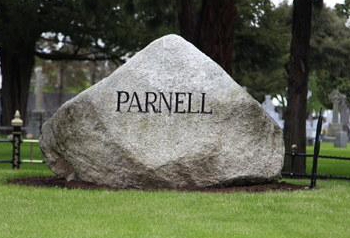
In 1883, a Parnellite tricolour of yellow, white, and green, arranged horizontally, is proposed. Down to modern times, yellow has occasionally been used instead of orange but such substitution tarnish’s the tricolour’s fundamental symbolism.

The flag is adopted by the rebels in the 1916 Easter Rising rebels and raised above the General Post Office in Dublin. This marks the first time that the tricolour is regarded as the national flag. It is subsequently adopted by the Irish Republic during the Irish War of Independence (1919–1921). Its use is continued by the Irish Free State (1922–1937) and is later given constitutional status under the 1937 Constitution of Ireland. The tricolour is used by nationalists on both sides of the border as the national flag of the whole island of Ireland since 1916.


Leave a comment

Pope Gregory XIII Commissions the Gregorian Calendar

pope-gregory-xiii

Pope Gregory XIII commissions the new Gregorian calendar on February 24, 1582, replacing the Julian calendar introduced by Julius Caesar in 45BCE.

The reason for the reform is that the average length of the year in the Julian calendar is too long. It treats each year as 365 days, 6 hours in length, whereas calculations show that the actual mean length of a year is 365 days, 5 hours, and 49 minutes. As a result, the date of the actual vernal equinox, over the course of 13 centuries, has slowly slipped to March 10, while the calculation of the date of Easter still follows the traditional date of March 21.

These calculations are verified by the observations of mathematician and astronomer Christopher Clavius, and the new calendar is instituted when Gregory decrees on February 24, 1582, that the day after Thursday, October 4, 1582 will not be Friday, October 5, but rather Friday, October 15, 1582. The new calendar duly replaces the Julian calendar and has since come into universal use. Because of Gregory’s involvement, the reformed Julian calendar comes to be known as the Gregorian calendar.

The switchover is bitterly opposed by much of the populace, who fear it is an attempt by landlords to cheat them out of a week and a half of rent. However, the Catholic countries of Spain, Portugal, Poland, and Italy comply almost immediately. France, some states of the Dutch Republic, and various Catholic states in Germany and Switzerland follow suit within a year or two, and Hungary follows in 1587.

More than a century passes before Protestant Europe accepts the new calendar. Denmark, the remaining states of the Dutch Republic, and the Protestant states of the Holy Roman Empire and Switzerland adopt the Gregorian calendar in 1700–1701. Ireland and Great Britain, along with its American colonies, reform in 1752, where Wednesday, September 2, 1752 is immediately followed by Thursday, September 14, 1752. They are joined by the last Protestant holdout, Sweden, on March 1, 1753.

The Gregorian calendar is not accepted in eastern Christendom for several hundred years, and then only as the civil calendar. The Gregorian Calendar is instituted in Russia by the Bolsheviks in 1917. Romania accepts it in 1919 and is followed by Turkey in 1923. The last Orthodox country to accept the calendar is Greece, also in 1923.


Leave a comment

Hugh O’Brien – First Irish Mayor of Boston

hugh-obrien

Hugh O’Brien is sworn in as Boston’s 31st mayor and first Irish mayor on January 5, 1885, marking the beginning of a new era in Boston politics.

Born in Ireland on July 13, 1827, O’Brien moves with his family to Boston when he is five years old, well before the potato famine sends waves of impoverished Irish men and women to Boston. He spends seven years in the Boston public schools and is apprenticed to a printer at the age of 12.

Working first for the newspaper Boston Courier and then for a Boston printer, O’Brien excels at the printing business, making foreman when he is only fifteen. He starts his own publication, Shipping and Commercial List, and is soon successful enough to become a respected member of the Boston business elite.

O’Brien’s business success draws the attention of Patrick Maguire, publisher of The Republic newspaper and the unofficial head of Irish politics in Boston. He orchestrates O’Brien’s election to the city’s Board of Aldermen.

Boston has long been controlled by native-born Protestants, generally called “Yankees,” most of whom have a stereotypical view of Irish immigrants as poor, ignorant, undisciplined, and under the thumb of the Catholic Church. But the Irish-born population of Boston is exploding, making up over 40% of the city’s population by 1885.

By 1883, Maguire decides that the time has come for Boston to elect an Irish-born mayor. He devises a two-part strategy. O’Brien will be the public face of the campaign, an able public official who criticizes the previous administration for increasing taxes. O’Brien’s pledge to reduce the tax rate without cutting city services appeals to the Yankee tradition of frugality. Meanwhile, behind the scenes, Maguire develops a system of Irish ward bosses who visit each household in the neighborhood and make sure that every eligible Irishman votes for O’Brien. O’Brien sweeps 15 of Boston’s 25 wards and, on December 10, 1884, becomes the first Irish Catholic to be elected Mayor of Boston.

O’Brien surprises the opposition by governing the city in a conservative and honest way during his four terms in office. He cuts tax rates as promised. He also widens streets, establishes the commission that hires Frederick Law Olmsted to design the Emerald Necklace park system, and builds the new Boston Public Library in Copley Square. He disarms his critics by enlisting Yankee and Republican businessmen to serve on the committees overseeing these projects.

Hugh O’Brien dies on August 1, 1895, and is buried at Holyhood Cemetery in Brookline, Massachusetts.