seamus dubhghaill

Promoting Irish Culture and History from Little Rock, Arkansas, USA


Leave a comment

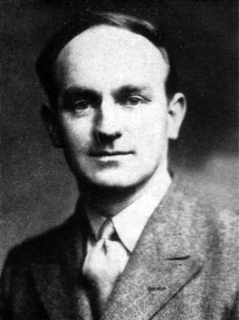
Death of Irish Writer Michael McLaverty

Michael McLaverty, Irish writer of novels and short stories, dies on March 22, 1992, in County Down, Northern Ireland.

McLaverty is born on July 5, 1904, at Magheross, near Carrickmacross, County Monaghan, the son of Michael McLaverty, a waiter, and Kathleen McLaverty (née Brady). His father works in a hotel in the town until they move to Rathlin Island, and later to Belfast, when he is five years old. He attends St. Malachy’s College in the city, where an inspiring teacher instills in him a love of William Shakespeare‘s writings. He entered Queen’s University Belfast (QUB) in October 1924 and studies physics. He obtains a B.Sc. in 1928 and immediately takes his H.Dip.Ed., completing his teaching practice in St. Mary’s University College, Strawberry Hill, London. The following year he begins teaching at St. John’s Primary School in Colinward Street, west Belfast. He is admitted to the degree of M.Sc. at QUB in 1933.

In 1933, McLaverty marries Mary Conroy (formerly Giles), a young widow and fellow teacher at St. John’s. They have two sons and two daughters.

During his time at St. John’s, McLaverty writes his first five novels and fifteen short stories. In the 1930s he has developed a distinctive style in precise, unsentimental, but compassionate short stories. By the late 1930s, however, he switches his energies from short stories to the novel. Call My Brother Back (1939) contrasts the traditional world of Rathlin Island with the northern troubles in a family context. Another novel, Lost Fields (1941), and his collection of short stories, The White Mare (1943), explore the Belfast of his childhood and deal with the underlying tensions in Irish rural life. In the period 1949–55 he publishes five other novels: Three Brothers (1948), Truth in the Night (1951), School for Love (1954), The Choice (1958), and Brightening Day (1965). These novels deal with ordinary people and the dilemmas they encounter in their families and communities. His writings are influenced by Anton Chekhov, Leo Tolstoy, Katherine Mansfield, Gerard Manley Hopkins, and the Irish short story writers Liam O’Flaherty and Daniel Corkery.

As headmaster of St. Thomas’s intermediate school, a large school for boys in Ballymurphy, off the Falls Road, McLaverty gives his first job to the young Seamus Heaney, in whom he cultivates an interest in the writings of Chekhov and Tolstoy and the Irish writers Mary Lavin and Patrick Kavanagh. He deems Heaney to be the only genius he has ever met, and his work and success are a great source of pride and joy to him. His encouragement of the young John McGahern is of as much benefit to McLaverty himself, as their short but intense correspondence give him the energy to resume his writings.

Between his resignation from St. Thomas’s in 1963 and the early 1970s he teaches part-time at St. Joseph’s training college and St. Dominic’s High School, one of Belfast’s best-known grammar schools. In 1981 his old alma mater recognises his contribution to literature by awarding him an honorary master’s degree. In the same year he wins the American Irish literary fellowship, a prestigious literary award of $10,000, in recognition of his “impressive body of work as a short story writer and novelist.”

McLaverty dies on March 22, 1992, in County Down, Northern Ireland.

(From: “McLaverty, Michael” by Éamonn Ó Ciardha, Dictionary of Irish Biography, http://www.dib.ie, October 2009)


1 Comment

The Irish Rebellion of 1641

Rory O’Moore and Sir Phelim Roe O’Neill initiate a major revolt in Armagh on October 23, 1641. The Irish Rebellion of 1641 results in the deaths of at least 4,000 Protestants with Catholics massacred in reprisals over the ensuing six months.

The Rebellion comes about because of the resentment felt by the Irish Catholics, both Gael and Old English, in regard to the loss of their lands to Protestant settlers from England and Scotland.

Irish Catholics are frightened by reports that the Covenanter army in Scotland is considering an invasion of Ireland in order to eradicate the Catholic religion. At the same time, there is also a threat of invasion by Oliver Cromwell’s Puritans who are at war against King Charles I. It is hoped that the King would redress the complaints of the Catholics and halt or even reverse the policy of plantation. It is not an act of rebellion against the Royal domain.

The uprising is led by Rory O’ Moore from Leix, with Sir Phelim Roe O’ Neill and his brother Turlough of Tyrone, the Maguires of Fermanagh, the Magennis, O’ Reilly and the MacMahons. They plan to begin the rebellion on October 23, 1641, with attacks on Dublin and various other British strongholds throughout the country. However, their plans are betrayed to the British by a native Irish convert to Protestantism, Owen O’ Connolly.

As a result of this betrayal, Dublin does not fall. However, the rebellion proceeds in the north with the towns of Dungannon, Newry, and Castleblayney, along with the fort at Charlemont falling to the rebels.

Most of the province of Ulster comes under the control of the rebel leaders. The rebel army, consisting of 30,000 men, has been instructed to take no life except in battle, to arrest the gentry and to spare the Scottish planters as they are considered kindred. For a week after the rebellion, these instructions are adhered to but many of the rebels have lost their lands to the Protestant planters, and they want revenge. They attack farms and settlements, killing and turning many people away, robbing and stripping them of all their goods.

Sir Phelim O’ Neill has been himself thought to have ordered the murder of Protestants in Tyrone and Armagh. It is believed that about 12,000 people are slaughtered although contemporary reports put the death toll as much higher. It is thought that up to 30% of the Ulster planters lost their lives while 10% is the figure for the whole of Ireland.

As the rebellion progresses in Ulster there are uprisings in Leinster by November and thereafter throughout the whole of Ireland. In Munster, where many English settlers are planted, the rebels do not shed much blood, but they do turn out these settlers, many of whom flee back to England.

In 1642 the Old English form an alliance with the Gaelic Lords at the Assembly of Killkenny. This alliance causes the rebellion to escalate into the Irish Confederate Wars which continue until Cromwell’s invasion and subjugation of Ireland (1649-53).

In 1642 the Scottish Covenanters invade the North and they, in turn, take to killing Catholics in revenge for the deaths of Protestants. The Covenanter Clan Campbell of Argyll takes the opportunity to attack and slaughter the Catholic Rathlin Islanders who belong to ancient enemies, Clan Mac Donald. The Covenanters also slaughter the approximately 3,000 Catholics on Islandmagee. Catholic prisoners and traders in Newry are murdered.

This ruthless slaughtering of civilians, by both sides, is only brought under control when Owen Roe O’ Neill arrives back from exile in France to take control of the Confederate army and, with Major General Robert Monroe in charge of the Covenanter Army, continues the war under the code of conduct that they had both learned on the Continent. However, the effects of the rebellion last to the present day, especially in Ulster where sectarian divide remains strong during The Troubles.

(Pictured: Depiction of the massacre of Ulster Protestants during the 1641 rebellion, The LIFE Picture Collection via Getty Images)


Leave a comment

Birth of Cosslett Quinn, Priest & Linguist

cosslett-o-cuinn-book

The Rev. Canon Cosslett Quinn (in Irish Cosslett Ó Cuinn), scholar, linguist, and priest of the Church of Ireland who translates the New Testament into Irish, is born in Derriaghy, County Antrim in what is now Northern Ireland on February 27, 1907.

Quinn is born to Charles Edward Quinn, rector of Derriaghy, and Edith Isobel Wadell. He studies at Campbell College in Belfast, and later at Trinity College Dublin, where he receives his Bachelor of Divinity in Theology in 1940.

Quinn is a poet, theologian, critic, biblical scholar, member of the ecumenical movement, and a scholar of the Irish language. During his studies, he develops a strong interest in Ulster Irish and often visits the Irish-speaking Gola Island and Derrybeg. He also publishes articles in Éigse: A Journal of Irish Studies on the dialects of Irish spoken on Rathlin Island and Kilkenny. He compiles the folklore of native Irish speakers from the islands of Tory and Arranmore off the coast of County Donegal.

While working in Belfast and Inishowen in 1931, Quinn is promoted to the post of deacon. In 1961, he is appointed professor of Biblical Greek at Trinity College and begins work on a new translation of the New Testament. He also translates the Book of Psalms and the Prayer Book of the Church of Ireland into Irish, as well as several Spanish works. Although it is unusual in his lifetime for Protestants to hold leading positions in the Irish language movement, Quinn is for a time President of Oireachtas na Gaeilge. He is made a canon of St. Patrick’s Cathedral in 1966, before retiring from the ministry in 1971.

Cosslett Quinn dies on December 6, 1995.


Leave a comment

Birth of Rose Maud Young, Writer & Scholar

rose-maud-young

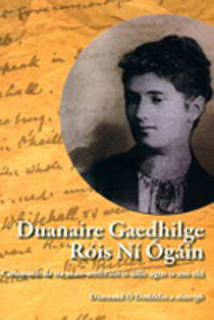
Rose Maud Young (Irish: Róis Ní Ógáin), writer, scholar and collector of Irish songs, is born in Galgorm Castle, Ballymena, County Antrim, in what is now Northern Ireland, on October 30, 1866. She is best known for her work to preserve the Irish language. Her books make lyrics from the Gaelic tradition accessible to the general public and are used in the Irish classroom for several decades.

Young is the daughter and seventh of twelve children born to Grace Charlotte Savage and John Young, who is a prosperous unionist and high sheriff. Despite his position he is a believer in tenant rights. Her younger sister is the writer Ella Young and her brother Willie Young is secretary of the Ulster Unionist League.

Young is educated by governesses until 1884 before completing training as a teacher through the University of Cambridge. She also attends Gaelic League classes in 1903 in London while visiting her sister who is living in the city at the time. After visiting the Bodleian Library she becomes committed to the study of the Irish language.

In the early 1900s Young returns to Ireland and continues her study of the Irish language in Belfast at Seán Ó Catháin‘s Irish College and in Donegal at Coláiste Uladh in Gort an Choirce. She also stays in Dublin and becomes friends with members of the Gaelic League and meets Margaret Dobbs. She works with Dobbs on the Feis na nGleann (The Glens Festival), a gathering dedicated to the Irish language.

Young is not involved in nationalism though she is strongly supportive of creating and maintaining a sense of “Irishness” through language and culture. She is also a friend and patron of Roger Casement. She also works with Ellen O’Brien and contributes to O’Brien’s book, The Gaelic Church. She keeps meticulous diaries and becomes interested in Rathlin Island and the Gaelic spoken there.

Rose Young dies on May 28, 1947 in Cushendun, County Antrim, where she resides with Dobbs. She is buried in the Presbyterian churchyard at Ahoghill, County Antrim.


Leave a comment

The Rathlin Island Massacre

bruces-castle-ruins

The Rathlin Island massacre takes place on Rathlin Island, off the coast of what is now Northern Ireland, on July 26, 1575. More than 600 Scots and Irish are killed.

Rathlin Island is used as a sanctuary because of its natural defences and rocky shores. In earlier times, when the wind blows from the west it is almost impossible to land a boat. It is also respected as a hiding place, as it is the one-time abode of Saint Columba. Installing themselves in Rathlin Castle (also known as Bruce’s Castle), the MacDonnells of Antrim make Rathlin their base for resistance to the Enterprise of Ulster. Their military leader, Sorley Boy MacDonnell (Scottish Gaelic: Somhairle Buidhe Mac Domhnaill) and other Scots have thought it prudent to send their wives, children, elderly, and sick to Rathlin Island for safety.

Acting on the instructions of Sir Henry Sidney and the Walter Devereux, 1st Earl of Essex, Sir Francis Drake and Sir John Norreys take the castle by storm. Drake uses two cannons to batter the castle and when the walls give in, Norreys orders direct attack on July 25, and the Garrison surrenders. Norreys sets the terms of surrender, whereupon the constable, his family, and one of the hostages are given safe passage and all other defending soldiers are killed. On July 26, 1575, Norreys’ forces hunt the old, sick, very young and women who are hiding in the caves. Despite the surrender, they kill all the 200 defenders and more than 400 civilian men, women and children. Sir Francis Drake is also charged with the task of preventing any Scottish reinforcement vessels from reaching the island.

The entire family of Sorley Boy MacDonnell perishes in the massacre. Essex, who orders the killings, boasts in a letter to Francis Walsingham, the Queen’s secretary and spymaster, that Sorley Boy MacDonnell watched the massacre from the mainland helplessly and was “like to run mad from sorrow.”

Norreys stays on the island and tries to rebuild the walls of the castle so that the English might use the structure as a fortress. As Drake is not paid to defend the island, he departs with his ships. Norreys realises that it is not possible to defend the island without intercepting Scottish galleys and he returns to Carrickfergus in September 1575.

(Pictured: the ruins of Rathlin Castle)


Leave a comment

Sinking of the SS Tuscania

ss-tuscania

The SS Tuscania, a luxury liner of the Cunard Line subsidiary Anchor Line converted for troop use, is torpedoed and sunk on February 5, 1918 off Rathlin Island, north of Ireland by the German U-boat UB-77. The ship is transporting over 2,000 American troops to the war in Europe. Over 200 people lose their lives.

SS Tuscania carries passengers between New York City and Glasgow while in service with the Anchor Line, on a route that had previously been assigned to her sister ship SS Transylvania. She continues to run this route even as World War I breaks out in Europe in August 1914 and Germany initiates a submarine campaign against merchant shipping in waters near the United Kingdom.

SS Tuscania makes international headlines for rescuing passengers and crew from the burning Greek steamer SS Athinai on September 20, 1915. In 1916, SS Tuscania is refitted and pressed into service as a troopship. She makes the news again in March 1917 by evading a submarine and a suspected Imperial German Navy armed merchant cruiser.

On January 24, 1918, SS Tuscania departs Hoboken, New Jersey, with 384 crew members and 2,013 United States Army personnel aboard. On the morning of February 5, 1918, she turns south for the North Channel en route to Liverpool. The German submarine UB-77 sights SS Tuscania′s convoy during the day and stalks it until early evening. Under the cover of darkness at about 6:40 PM, the submarine′s commanding officer, Korvettenkapitän Wilhelm Meyer, orders two torpedoes fired at SS Tuscania. The second of these strikes home, sending her to the bottom of the Irish Sea within about four hours. SS Tuscania sinks nearly three years to the day after her maiden voyage as a passenger liner. Approximately 210 of the troops and crew are lost, while many others are rescued by the Royal Navy destroyers HMS Mosquito and HMS Pigeon.

Three notable passengers who survive the sinking are British critic Sydney Brooks, Leonard Read, founder of the Foundation for Economic Education, and Harry Randall Truman who later dies in the 1980 eruption of Mount St. Helens.

The wreck of SS Tuscania lies between Scotland‘s Islay and Northern Ireland′s Rathlin Island, about 7 nautical miles north of Rathlin lighthouse, at roughly 55.41°N 06.185°W in 328 feet of water.


Leave a comment

Death of Rose Maud Young, Writer & Scholar

Rose Maud Young (Irish: Róis Ní Ógáin), writer, scholar and collector of Irish songs, best known for her work to preserve the Irish language, dies on May 28, 1947 in CushendunCounty Antrim.

Young is born in Galgorm Castle, Ballymena, County Antrim, daughter and seventh of twelve children born to Grace Charlotte Savage, and John Young who is a prosperous unionist and high sheriff. Despite his position he is a believer in tenant rights. Her younger sister is the writer Ella Young and her brother Willie Young is secretary of the Ulster Unionist League.

Young is educated by governesses until 1884 before completing training as a teacher through Cambridge University. Young also attends Gaelic League classes in 1903 in London while visiting her sister who is living in the city at the time. After visiting the Bodleian Library she becomes committed to the study of the Irish language.

In the early 1900s Young returns to Ireland and continues her study of the Irish language in Belfast at Seán Ó Catháin‘s Irish College and in County Donegal at Coláiste Uladh in Gort an Choirce. Young also stays in Dublin and becomes friends with members of the Gaelic League and meets Margaret Dobbs. Young works with Dobbs on the Feis na nGleann (The Glens Festival), a gathering dedicated to the Irish language.

Young is not involved in nationalism though she is strongly supportive of creating and maintaining a sense of “Irishness” through language and culture. She is also a friend and patron of Roger Casement. She also works with Ellen O’Brien and contributes to O’Brien’s book, The Gaelic Church. She keeps meticulous diaries and becomes interested in Rathlin Island and the Gaelic spoken there.

Rose Young is buried in the Presbyterian churchyard at Ahoghill, County Antrim.