seamus dubhghaill

Promoting Irish Culture and History from Little Rock, Arkansas, USA


Leave a comment

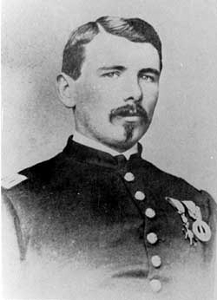
Birth of Myles Walter Keogh, Last Man Killed at the Battle of Little Big Horn

Myles Walter Keogh, soldier in the United States Army, is born in Orchard House in LeighlinbridgeCounty Carlow, on March 25, 1840. It is said by the Sioux that he is the last man killed at the Battle of Little Big Horn, where his horse is the only U.S. survivor.

Keogh attends the National School in Leighlinbridge and is long thought to have attended St. Patrick’s College in Carlow but that college has no record of his attendance. It is possible that he attends St. Mary’s Knockbeg College.

By 1860, a twenty-year-old Keogh volunteers, along with over one thousand of his countrymen, to rally to the defence of Pope Pius IX following a call to arms by the Catholic clergy in Ireland. By August 1860, Keogh is appointed second lieutenant of his unit in the Battalion of St. Patrick, Papal Army under the command of General Christophe Léon Louis Juchault de Lamoricière. Once the fighting is over and duties of the Pontifical Swiss Guard become more mundane, Keogh sees little purpose in remaining in Rome. In March 1862, with civil war raging in America, he resigns his commission in the Company of St. Patrick and sets out for New York City, arriving on April 2.

Keogh actively participates in several prominent American Civil War battles including the Shenandoah Valley, the Battle of Antietam, the Battle of Fredericksburg, and the Battle of Gettysburg.

Perhaps the strongest testimony to Keogh’s bravery and leadership ability comes at the Battle of the Little Bighorn, also known as Custer’s Last Stand, on June 25, 1876. The senior captain among the five companies wiped out with General George Armstrong Custer that day, and commanding one of two squadrons within the Custer detachment, Keogh dies in a “last stand” of his own, surrounded by the men of Company I. When the sun-blackened and dismembered dead are buried three days later, Keogh’s body is found at the center of a group of troopers. The slain officer is stripped but not mutilated, perhaps because of the “medicine” the Indians see in the Agnus Dei (“Lamb of God”) he wears on a chain about his neck or because many of Sitting Bull‘s warriors are believed to be Catholic. Keogh’s left knee has been shattered by a bullet that corresponds to a wound through the chest and flank of his horse, indicating that horse and rider may have fallen together prior to the last rally.

The badly injured animal is found on the fatal battlefield, and nursed back to health as the 7th Cavalry’s regimental mascot, which he remains until his death in 1890. This horse, Comanche, is considered the only U.S. military survivor of the battle, though several other badly wounded horses are found and destroyed at the scene. Keogh’s bloody gauntlet and the guidon of his Company I are recovered by the army three months after Little Bighorn at the Battle of Slim Buttes.

Originally buried on the battlefield, Keogh’s remains are disinterred and taken to Auburn, as he had requested in his will. He is buried at Fort Hill Cemetery on October 26, 1877, an occasion marked by citywide official mourning and an impressive military procession to the cemetery.

Tongue River Cantonment in southeastern Montana is renamed after him to be Fort Keogh. The fort is first commanded by Nelson A. Miles. The 55,000-acre fort is today an agricultural experiment station. Miles City, Montana is located two miles from the old fort.


Leave a comment

Death of Singer Delia Murphy Kiernan

delia-murphy

Delia Murphy Kiernan, singer and collector of Irish ballads, dies of a massive heart attack on February 11, 1971, five days before her 69th birthday. She records several 78 RPM records in the 1930s, 1940s, and 1950s. In 1962 she records her only LP record, The Queen of Connemara, for Irish Prestige Records, New York, on the cover of which her name appears alongside the LP title. Her notable voice gives her the nickname the “Queen of Connemara.”

Murphy is born on February 16, 1902, in Ardroe, Roundfort, County Mayo, to a well-off family. Her father, John Murphy, from nearby Hollymount, makes his fortune in the Klondike Gold Rush. While in America, he marries Ann Fanning from Roscrea, County Tipperary. They return to Ireland in 1901 and purchase the large Mount Jennings Estate in Hollymount. Murphy’s father encourages her interest in singing ballads from a young age. He also allows Irish travellers to camp on the estate. According to her own account, she learns her first ballads at their campfires.

Murphy is educated at Presentation Convent in Tuam, Dominican College in Dublin, and University College Galway (UCG), where she graduates with a Bachelor of Commerce degree. While at UCG she meets Dr. Thomas J. Kiernan, and they marry in 1924, on her 22nd birthday. Kiernan then joins the Irish diplomatic service, where his first posting is to London. While there Murphy sings at many venues including many gatherings of Irish emigrants and becomes quite well-known. In 1939 she records The Blackbird, The Spinning Wheel, and Three Lovely Lassies for HMV.

In 1941, Kiernan is appointed Irish Minister Plenipotentiary to the Holy See in Rome. The Irish legation is the only English-speaking legation to remain open after the United States enters World War II. Murphy becomes one of those who assist Monsignor Hugh O’Flaherty in saving the lives of 6,500 Allied soldiers and Jews. In 1943, when Italy changes sides, many escaped POWs are helped by the legation to leave Italy.

In 1946, Murphy is awarded to Dame Commander of the Equestrian Order of the Holy Sepulchre.

Kiernan later serves as Irish High Commissioner and later first Ambassador in Australia, and later to West Germany, Canada, and the United States. In 1961, while living in Ottawa, Murphy makes the recording of The Queen of Connemara produced by Ken Goldstein. Murphy and Kiernan purchase a farmhouse in Jasper, Ontario, near the Rideau Canal where she spends most of her time, even after Kiernan is posted to Washington, D.C. Tom Kiernan dies in December 1967.

By 1969 Murphy’s health is in decline. In November of that year, she sells her farmhouse in Canada and returns to Ireland. She lives in a cottage in Strawberry Beds, Chapelizod, County Dublin, until her death. During her lifetime she records upwards of 100 songs.


Leave a comment

Birth of John B. Bannon, Irish Catholic Jesuit Priest

john-bannon

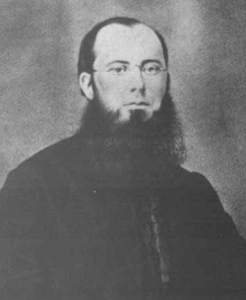
John B. Bannon, Irish Catholic Jesuit priest who serves as a Confederate chaplain during the American Civil War, is born in Roosky, County Roscommon, on December 29, 1829. He is also renowned as an orator.

Bannon is born to James Bannon, a Dublin grain dealer, and Fanny Bannon (née O’Farrell). He goes to the vincentian Castleknock College in Dublin. In 1846 he goes to study for the priesthood at St. Patrick’s Pontifical University, Maynooth, in the minor seminary until 1850 and completing his theology course in 1853. He is ordained on June 16, 1853, by Archbishop Paul Cullen for the Dublin Diocese. He soon applies to move to America.

Shortly after ordination he moves to the Archdiocese of St. Louis, Missouri. He becomes pastor to St. John the Apostle and Evangelist Church which he builds in 1858. He serves in the First Missouri Confederate Brigade, during the American Civil War. He ministers at the battles of Corinth, Fort Gibson, and at Big Black River Bridge, Vicksburg.

He is detained on July 4, 1863, when Vicksburg surrenders. After being released by Union forces, he goes to Richmond, Virginia in August 1863, where Jefferson Davis and Secretary of State Judah Benjamin ask him to go to Ireland to discourage recruitment for the Federal forces and try to get international help for the Confederacy.

In November 1863, Bannon returns to Ireland, writing and pamphleting to discourage people from emigrating and joining the Union side of the civil war. He makes two trips to Rome to try, unsuccessfully, to get the Vatican to side with the Confederacy. Following the American Civil War, he is banned from preaching in St. Louis, and stays in Ireland, becoming a Jesuit in 1865, spending some time in Milltown Park, Tullabeg College, and in Gardiner Street.

Bannon dies on July 14, 1913, in Upper Gardiner Street, and is buried in the Jesuit plot at Glasnevin Cemetery, Dublin.


Leave a comment

Founding of the Pontifical Irish College in Rome

pontifical-irish-college

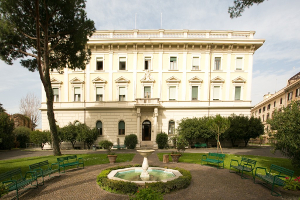
The Pontifical Irish College, a Roman Catholic seminary for the training and education of priests, is founded in Rome, Italy, on November 6, 1628.

Towards the close of the sixteenth century, Pope Gregory XIII sanctions the foundation of an Irish college in Rome and assigns a large sum of money as the nucleus of an endowment. However, the pressing needs of the Irish chieftains make him think that, under the circumstances, the money might as well be used for religion by supplying the Irish Catholics with the sinews of war in Ireland as by founding a college for them at Rome.

The project is revived in 1625 by the Irish bishops, in an address to Pope Urban VIII. Cardinal Ludovico Ludovisi, who is Cardinal Protector of Ireland, resolves to realize at his own expense the desire expressed to the pope by the Irish bishops. A house is rented opposite Sant’Isodoro a Capo le Case, and six students go into residence January 1, 1628. Eugene Callanan, Archdeacon of Cashel, is the first rector, Father Luke Wadding, OFM being a sort of supervisor. Cardinal Ludovisi dies in 1632 and as he is of a princely family with a large patrimony, he makes provision in his will for the college. It is to have an income of one thousand crowns a year, a house is to be purchased for it, and he leaves a vineyard as Castel Gandolfo where the students might pass their villeggiatura. The cardinal’s will directs that the college should be placed under the charge of the Jesuits. Both the heirs and Wadding suspect that provision and disputed it. A protracted lawsuit is finally decided in 1635 in favour of the Jesuits.

On February 8, 1635, the Jesuits take charge of the college and govern it until financial difficulties force them to give up control in September 1772. An Italian priest, Abbate Luigi Cuccagni, is made rector. The rectorate of Cuccagni comes to an end in 1798, when the college is closed by order of Napoleon.

Dr. Michael Blake, Bishop of Dromore, who is the last student to leave the college at its dissolution in 1798, returns a quarter of a century later to arrange for its revival, which is affected by a brief of Pope Leo XII, dated February 18, 1826. He becomes the first rector of the restored college, and among the first students who seek admission is Francis Sylvester Mahony of Cork, known to the literary world as Father Prout. Having set the college well to work, Blake returns to Ireland and is succeeded by Dr. Boylan, of Maynooth, who soon resigns and dies in 1830. He is succeeded by a young priest, later Cardinal Paul Cullen.

Dr. Cullen is succeeded by Dr. Tobias Kirby, known for his holiness of life. He governs the college for more than forty years. His successor is Michael Kelly, later coadjutor to the Archbishop of Sydney.

In 2011, under orders from Pope Benedict XVI, Cardinal Timothy Dolan, Archbishop of New York, leads a root and branch review of all structures and processes at the college. He is assisted in the visitation report by then Archbishop of Baltimore and now Cardinal Edwin O’Brien and Msgr. Francis Kelly of the Northern American College in Rome. The report is highly critical of the college and, as a result of which, three Irish members of the staff are sent home and a fourth resigns.

In 2012, four Irish archbishops, Cardinal Seán Brady, Archbishop of Armagh, Dr. Diarmuid Martin, Archbishop of Dublin, Dr. Michael Neary, Archbishop of Tuam, and Dr. Dermot Clifford, Archbishop of Cashel, are sent a copy of the visitation report by the Vatican. A response prepared for them says “a deep prejudice appears to have coloured the visitation and from the outset and it led to the hostile tone and content of the report.”

Today the Pontifical Irish College serves as a residence for clerical students from all over the world. Every year over 250 Irish couples choose the college chapel as a means to marry in Rome. It organises events for the Irish and wider international community who are currently residing in Rome and has over the years become an unofficial centre for Irish visitors to Rome seeking advice and information.


Leave a comment

Opening of the Catholic University of Ireland

The Catholic University of Ireland in Dublin is opened, and lectures commence on November 3, 1854, with the registration of seventeen students, the first being Daniel O’Connell, grandson of the notable Catholic politician Daniel O’Connell.

The university is founded in 1851 following the Synod of Thurles in 1850, and in response to the Queen’s University of Ireland and its associated colleges which are non-denominational. Cardinal Paul Cullen has previously forbidden Catholics from attending these “godless colleges.” On May 18, 1854, the university is formally established with five faculties of law, letters, medicine, philosophy, and theology with John Henry Newman as the Rector.

In 1861, Dr. Bartholomew Woodlock, the rector from 1860–1879, tries to secure land for a building near Holy Cross College Clonliffe, the establishment to be known as St. Patrick’s University. Plans are drawn up by architect J.J. McCarthy and a foundation stone laid. Cardinal Cullen is against the idea of educating lay and clerical students on the same premises. However, this plan is shelved because of the expansion of the railway line. A church and monastery are eventually built on the site. Under the name St. Patrick’s University night classes are advertised by the University under Dr. Woodlock’s name.

Some feeder secondary schools are established for the Catholic University of Ireland. The nearby Catholic University School is joined by St. Flannan’s College in County Clare and Catholic University High School in Waterford.

The Catholic University is neither a recognised university so far as the civil authorities are concerned, nor an institution offering recognised degrees. Newman has little success in establishing the new university, though over £250,000 has been raised from the laity to fund it. Though they hold the foundation money as trustees, the hierarchy in 1859 spends most of it to support an Irish Brigade led by Myles O’Reilly to help defend Rome in the Second Italian War of Independence. Newman leaves the university in 1857.

Subsequently the school goes into a serious decline, with only three students registered in 1879. The situation changes in 1880 when the recognised Royal University of Ireland comes into being and students at the Catholic University are entitled to sit the Royal University examinations and receive its degrees.

In 1909 the Catholic University essentially comes to an end with the creation of the National University of Ireland, with University College Dublin as a constituent, however the Catholic University of Ireland remains a legal entity until 1911.

(Pictured: J. J. McCarthy’s design for the Catholic University of Ireland)


Leave a comment

Canonisation of Sir Oliver Plunkett

oliver-plunkett

Sir Oliver Plunkett is canonised in Rome by Pope Paul VI on October 12, 1975, the first new Irish saint in almost seven hundred years, and the first of the Irish martyrs to be beatified. For the canonisation, the customary second miracle is waived.

Plunkett is born on November 1, 1625, in Loughcrew, County Meath, to parents with Hiberno-Norman ancestors. Until his sixteenth year, his education is entrusted to his cousin Patrick Plunkett, Abbot of St. Mary’s, Dublin, and brother of Luke Plunkett, the first Earl of Fingall, who later becomes successively Bishop of Ardagh and of Meath. As an aspirant to the priesthood, Plunkett sets out for Rome in 1647.

Plunkett is admitted to the Pontifical Irish College in Rome and proves to be an able pupil. He is ordained a priest in 1654 and deputed by the Irish bishops to act as their representative in Rome. Meanwhile, the Cromwellian conquest of Ireland (1649–1653) has defeated the Roman Catholic cause in Ireland. As a result, it is impossible for Plunkett to return to Ireland for many years, so he petitions to remain in Rome. At the Congregation of Propaganda Fide on July 9, 1669, he is appointed Archbishop of Armagh and is consecrated on November 30 at Ghent. He returns to Ireland on March 7, 1670, as the English Restoration of 1660 has begun on a basis of toleration.

Plunkett sets about reorganising the ravaged Roman Church and builds schools both for the young and for clergy. The Penal Laws have been relaxed in line with the Declaration of Breda in 1660 and he is able to establish a Jesuit College in Drogheda in 1670, which becomes the first Catholic-Protestant integrated school in Ireland.

On the enactment of the Test Act in 1673, to which Plunkett does not agree for doctrinal reasons, the college is closed and demolished. Plunkett goes into hiding, travelling only in disguise, and refuses a government edict to register at a seaport to await passage into exile.

In 1678 the so-called Popish Plot, concocted in England by clergyman Titus Oates, leads to further anti-Roman Catholic action. Archbishop Peter Talbot of Dublin is arrested, and Plunkett again goes into hiding. Despite being on the run and with a price on his head, Plunkett refuses to leave his flock.

Plunkett is arrested in Dublin in December 1679 and imprisoned in Dublin Castle. He is tried at Dundalk for conspiring against the state by allegedly plotting to bring 20,000 French soldiers into the country, and for levying a tax on his clergy to support 70,000 men for rebellion. The trial soon collapses as the prosecution witnesses are themselves wanted men and afraid to appear in court. Plunkett is moved to Newgate Prison in London in order to face trial at Westminster Hall. The first grand jury finds no true bill, but he is not released. The second trial is generally regarded as a serious miscarriage of justice as Plunkett is denied defending counsel.

Archbishop Plunkett is found guilty of high treason in June 1681 “for promoting the Roman faith,” and is condemned to death. Plunkett is hanged, drawn, and quartered at Tyburn on July 1, 1681, the last Roman Catholic martyr to die in England. His body is initially buried in two tin boxes in the courtyard of St. Giles in the Fields church. The remains are exhumed in 1683 and moved to the Benedictine monastery at Lamspringe, near Hildesheim in Germany. His head is brought to Rome, and from there to Armagh, and eventually to Drogheda where it has rested in St. Peter’s Church since June 29, 1921. Most of the body is brought to Downside Abbey, England, where the major part is located today, with some parts remaining at Lamspringe.


Leave a comment

Union of the Dioceses of Glendalough & Dublin

diocese-of-dublin-and-glendalough-arms

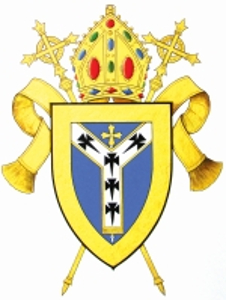
The union of the diocese of Glendalough with that of Dublin, having been promulgated by Pope Innocent III, is confirmed by Pope Honorius III on October 6, 1216.

The broad Dublin area is Christian long before Dublin has a distinct diocese, with monasteries such as Glendalough as well as at Finglas, Glasnevin, Rathmichael, Swords, and Tallaght. Several of these function as “head churches” and the most powerful of all is Glendalough.

In the early church in Ireland, the church has a monastic basis, with greatest power vested in the Abbots of the major communities. There are bishops but not organised dioceses in the modern sense, and the offices of abbot and bishop are often comprised in one person. Some early “Bishops of Dublin,” as far back as 633, are mentioned in Ware’s Antiquities of Ireland but the Diocese of Dublin is not considered to have begun until 1038.

The Kingdom of Dublin first seeks to have a bishop of their own in the 11th century, under Sitric MacAulaf, who has been on pilgrimage to Rome. He sends his chosen candidate, Donat, to be consecrated in Canterbury in 1038, and the new prelate sets up the Diocese of Dublin as a small territory within the walled city, over which he presides until 1074. The new diocese is not part of the Church in Ireland but of the Norse Province of Canterbury. Sitric also provides for the building of Christ Church Cathedral in 1038.

At the Synod of Ráth Breasail, convened in 1118 by Gillebert, Bishop of Limerick, on papal authority, the number of dioceses in Ireland is fixed at twenty-four. Dublin is not included as the city is described as lying within the Diocese of Glendalough and still attached to Canterbury.

In 1151, Pope Eugene III commissions Cardinal Giovanni Paparo to go to Ireland and establish four metropolitans. At the Synod of Kells in 1152, Armagh, Dublin, Cashel, and Tuam, are created archiepiscopal sees. In a document drawn up by the then Archbishop of Tuam in 1214, Cardinal Paparo states that he delivered the pallium to Dublin which he determines to be preferred over Glendalough and appoints that the Glendalough diocese should be divided, and that one part thereof should fall to the metropolitan.

The part of North County Dublin known as Fingall is taken from Glendalough Diocese and attached to Dublin City. The new Archdiocese has 40 parishes, in deanaries based on the old senior monasteries. All dependence upon English churches such as Canterbury is also ended.

The founding Archbishop of the larger Dublin Diocese is Gregory, with the Bishops of Kildare, Ossory, Leighlin, Ferns, and Glendalough reporting to him.

In 1185, the Lord of Ireland, John Lackland, grants the merger of the dioceses of Dublin and Glendalough. This is initially without effect as the charter lacks papal approval. When the bishop Macrobius dies in 1192, a synod is held in Dublin under the direction of the papal legate Metthew O Enna. William Piro is elected as Bishop of Glendalough and remains in office at least until 1212. Robert de Bedford is elected as successor in 1213 or 1214 but never has the opportunity to take possession of the diocesan seat. Instead, John, now King of England, reissues a grant to join Glendalough to Dublin which is finally approved in by Pope Innocent III in 1216 and confirmed by his successor Honorius III in the same year.


Leave a comment

Pope John Paul II’s Visit to Ireland

pope-john-paul-ii

Pope John Paul II becomes the first pontiff to set foot on Irish soil with his pastoral visit to the Republic of Ireland beginning on September 29, 1979. Over 2.5 million people attend events in Dublin, Drogheda, Clonmacnois, Galway, Knock, Limerick, and Maynooth during what is one of Pope John Paul’s first foreign visits. The visit is occasioned by the centenary of the reputed apparition of Blessed Virgin Mary, Saint Joseph, and Saint John the Evangelist in Knock, County Mayo.

An Aer Lingus Boeing 747, named the St. Patrick, brings Pope John Paul II from Rome to Dublin Airport. The Pope kisses the ground as he disembarks. After being greeted by the President of Ireland, Dr. Patrick Hillery, the Pope flies by helicopter to the Phoenix Park where he celebrates Mass for 1,250,000 people, one quarter of the population of the island of Ireland, one third of the population of the Republic of Ireland. Afterwards he travels to Killineer, near Drogheda, where he leads a Liturgy of the Word for 300,000 people, many from Northern Ireland. There the Pope appeals to the men of violence, “on my knees I beg you to turn away from the path of violence and return to the ways of peace.” The Pope has hopes of visiting Armagh, but the security situation in Northern Ireland renders it impossible. Drogheda is selected as an alternative venue as it is situated in the Catholic Archdiocese of Armagh. Returning to Dublin that evening, the Pope is greeted by 750,000 people as he travels in an open top popemobile through the city centre and visits Aras an Uachtarain, the residence of the Irish President.

The Pope begins the second day of his tour with a short visit to the ancient monastery at Clonmacnois in County Offaly. With 20,000 in attendance, he speaks of how the ruins are “still charged with a great mission.” Later that morning he celebrates a Youth Mass for 300,000 at Ballybrit Racecourse in Galway. It is here that the Pope utters perhaps the most memorable line of his visit, “Young people of Ireland, I love you.” That afternoon, he travels by helicopter to Knock Shrine in County Mayo which he describes as “the goal of my journey to Ireland.” The outdoor Mass at the shrine is attended by 450,000. The Pope meets with the sick and elevates the church to the title of Basilica.

The final day of the visit begins with a trip to St. Patrick’s College, Maynooth, the National Seminary, in County Kildare. Some 80,000 people pack the grounds of the college for the brief visit. A dense fog delays the Pope’s arrival from Dublin by helicopter. The final Mass of the Pope’s visit to Ireland is celebrated at Greenpark Racecourse in Limerick before 400,000 people, many more than had been expected. The Mass is offered for the people of Munster. Pope John Paul leaves Ireland from nearby Shannon Airport travelling to Boston where we begins a six-day tour of the United States.


Leave a comment

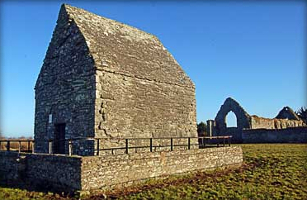
Death of Mochta of Louth, Disciple of St. Patrick

st-mochtas-house

Mochta of Louth, in Latin sources Maucteus or Mauchteus, the last surviving disciple of St. Patrick, dies on August 20, 535.

Mochta is, like Patrick, a native of Britain. His name is British and Adomnán‘s Life of Columba describes him as “a certain British stranger, a holy man and a disciple of the holy bishop Patrick.” Adomnán presents Mochta as having prophesied the birth of Colm Cille.

According to one account, Mochta is brought to Ireland as a child, along with his parents, by a druid named Hoam. The druid settles in County Louth, where Mochta is brought up as a member of the family. He goes to Rome to continue his studies and there the Pope consecrates him bishop and sends him back to Ireland with twelve companions. The first church he founds is at Kilmore. Departing from Kilmore, he leaves all his possessions to the monks, taking only “the fountain at the door.” He follows a stream, which becomes the River Fane, to Louth.

Mochta founds a monastery in Louth, originally the site of a shrine to the Celtic god Lugh. Mochta’s monastery gains a nationwide reputation. He is an accomplished scholar, especially learned in Sacred Scripture. He writes a rule for monks but no trace of it has survived. He begins a series of annals at Louth, which is continued by his successors, and becomes known as the Book of the Monks. In his old age, Patrick comes and spends some time with Mochta. After Patrick’s death, Mochta takes charge of Armagh for a brief period before turning it over to Benignus.

Both monastery and village are burned and plundered frequently by the Danes in the period 829-968. A round tower built for protection is blown down in 981. There are no physical remains of the early monastery. The ruined buildings at the site today (pictured) are the 13th century church of St. Mary’s Augustinian Priory and the stone roofed oratory known as St. Mochta’s House, which probably dates to the second half of the 12th century.

The Annals of Ulster report Mochta’s death twice, in 535 and 537, which indicates that he is considerably younger than Patrick, whose death the Annals date to 493. Scholars believe that he, the last of Patrick’s disciples then alive, dies at the age of 90. The entry for 535 dates his death to the 13th of the Calends of September, i.e. 20 August, and quotes the opening of a letter written by him: “Mauchteus, a sinner, priest, disciple of St. Patrick, sends greetings in the Lord.” However the remainder of this letter nor any other compositions of Mochta have survived.


Leave a comment

Birth of the Liberator, Daniel O’Connell

daniel-oconnell

Daniel O’Connell, Irish political leader often referred to as The Liberator or The Emancipator, is born on August 6, 1775, at Carhan near Cahersiveen, County Kerry, to the O’Connells of Derrynane, a once-wealthy Roman Catholic family, that has been dispossessed of its lands.

Raised by his uncle, Daniel learns the Irish language and Irish lore in Kerry. O’Connell does part of his schooling in France during the revolution. On May 19, 1798, O’Connell is called to the Irish Bar and becomes a barrister. Four days later, the United Irishmen stage their rebellion which is put down by the British with great bloodshed. O’Connell does not support the rebellion. He believes that the Irish need to assert themselves politically rather than by force. The violent excesses he witnesses in France, the slaughter of the 1798 Rising, and finally his own killing of a man in a duel in 1815 leads him to renounce violence forever.

Moving into politics, O’Connell founds the Catholic Association in 1823, creating one of the first massive political movements in Europe or the Americas. The Catholic Association embraces other aims to better Irish Catholics, such as electoral reform, reform of the Church of Ireland, tenants’ rights, and economic development.

When he is elected to Parliament in 1828, he is unable to take his seat as members of parliament have to take the Oath of Supremacy, which is incompatible with Catholicism.  Fear of the reaction of his millions of followers leads to the passage of the Roman Catholic Relief Act 1829. O’Connell works for Home Rule for Ireland for the rest of his days but never achieves it. The British ban his mass Repeal of the Union rallies in 1843 and jail him for a time. The movement loses momentum at that point and the long years of hard work wear “The Liberator” down.

O’Connell dies at the age of 71 of cerebral softening on May15, 1847, in Genoa, Italy, while on a pilgrimage to Rome. His time in prison seriously weakens him and the appallingly cold weather he has to endure on his journey is likely the final blow. According to his dying wish, his heart is buried in Rome at Sant’Agata dei Goti, then the chapel of the Irish College, and the remainder of his body in Glasnevin Cemetery in Dublin, beneath a round tower.