seamus dubhghaill

Promoting Irish Culture and History from Little Rock, Arkansas, USA


Leave a comment

Birth of Landscape Painter Francis Danby

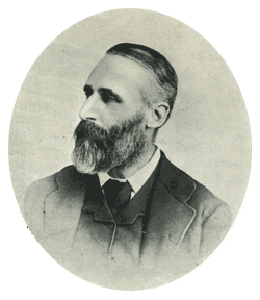
Francis Danby, Irish painter of the Romantic era, is born near Killinick, County Wexford, on November 16, 1793. His imaginative, dramatic landscapes are comparable to those of John Martin. Danby initially develops his imaginative style while he is the central figure in a group of artists who have come to be known as the Bristol School. His period of greatest success is in London in the 1820s.

The death of Danby’s father in 1807 causes the family to move to Dublin. He begins to practice drawing at the Royal Dublin Society‘s schools and, under an erratic young artist named James Arthur O’Connor, he begins painting landscapes. Danby also makes acquaintance with George Petrie.

In 1813 Danby leaves for London together with O’Connor and Petrie. This expedition, undertaken with very inadequate funds, quickly comes to an end, and they have to get home again by walking. At Bristol they make a pause and Danby, finding he can get trifling sums for watercolor drawings, remains there working diligently and sending pictures of importance to the London exhibitions. There his large oil paintings quickly attract attention.

Around 1819, Danby becomes a member of the informal group of artists which become known as the Bristol School, taking part in their evening sketching meetings and sketching excursions visiting local scenery. He remains connected with members of the Bristol School for about a decade, even after leaving Bristol in 1824.

The group initially forms around Edward Bird, and Danby eventually succeeds Bird as its central figure. The Bristol artists, particularly the amateur Francis Gold, are also important in influencing Danby towards a more imaginative and poetical style. George Cumberland, another of the amateurs, has influential London connections. In 1820 when Danby exhibits The Upas Tree of Java at the British Institution, Cumberland uses his influence to promote its favourable reception. Danby’s atmospheric work An Enchanted Island, successfully exhibited in 1825 at the British Institution and then back in Bristol at the Bristol Institution, is in turn particularly influential on other Bristol School artists.

The Upas Tree of Java (1820) and The Delivery of Israel (1825) bring him his election as an Associate Member of the Royal Academy of Arts. He leaves Bristol for London, and in 1828 exhibits his Opening of the Sixth Seal at the British Institution, receiving from that body a prize of 200 guineas.

In 1829 Danby’s wife deserts him, running off with the painter Paul Falconer Poole. Danby leaves London, declaring that he will never live there again. For a decade he lives on the Lake Geneva in Switzerland, becoming a Bohemian with boat-building fancies, painting only occassionaly. He later moves to Paris for a short period of time. He returns to England in 1840.

Francis Danby lives his final years at Exmouth in Devon, where he dies on February 9, 1861. Along with John Martin and J. M. W. Turner, Danby is considered among the leading British artists of the Romantic period.

Leave a comment

Birth of Artist Thomas James Carr

Thomas James Carr, British artist who is associated with the Euston Road School in the 1930s and has a long career as a painter of domestic scenes and landscapes, is born in Belfast to a well-to-do family on September 21, 1909.

Carr attends Oundle School where his art masters include E.M.O’R. Dickey and Christopher Perkins. In 1927 Carr moves to London where he studies at the Slade School of Fine Art. After two years at the Slade, he moves to Italy and spends six months in Florence. Upon returning to London, he establishes himself as a well-regarded painter of domestic scenes.

Although essentially a realist painter, Carr is included in the 1934 Objective Abstractionists exhibition at Zwemmer’s Gallery. In 1937, he shares an exhibition with Victor Pasmore and Claude Rogers at the Storran Gallery and subsequently becomes associated with the representational style of the Euston Road School. Starting in 1940, at Georges Wildenstein‘s gallery, he holds a series of one-man exhibitions at various galleries including at the Leicester Galleries, The Redfern Gallery and also at Thomas Agnew & Sons.

In 1939, Carr returns to Northern Ireland and settles in Newcastle, County Down. During the World War II, he receives a small number of commissions from the War Artists’ Advisory Committee to depict parachute manufacture and the Short Sunderland flying boats being built at the Short Brothers factory in Belfast.

After the war, Carr teaches at the Belfast College of Art and moves to Belfast in 1955. After the death of his wife in 1995, he moves to Norfolk, England to be nearer one of his three daughters and her family. He continues to paint into old age and tends to concentrate on landscape painting.

Carr is a regular exhibitor at the Royal Academy of Arts and is a member of the Royal Ulster Academy, the New English Art Club, the Royal Watercolour Society and is an honorary member of the Royal Hibernian Academy. Queen’s University awards him an honorary doctorate in 1991. For his services to art in Northern Ireland, he is awarded the MBE in 1974 and receives an OBE in 1993.

Thomas Carr dies at the age of 89 in Norwich, England on February 17, 1999.

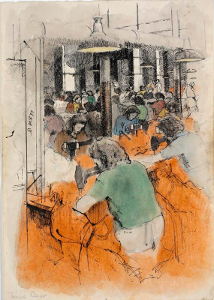
(Pictured: “Making Coloured Parachutes” by Thomas James Carr (http://www.iwm.org.uk/collections/item/object/4674) [Public domain], via Wikimedia Commons)


Leave a comment

Birth of Watercolourist Michael Angelo Hayes

Painter Michael Angelo Hayes is born in Waterford on July 25, 1820. Probably the best 19th century painter of animals in Ireland, Hayes is most accomplished as a watercolourist, although he occasionally uses oils.

Hayes is the son and pupil of Tipperary watercolour miniaturist Edward Hayes RHA. It is clear from his christening that he is expected to become an artist.  Fortunately, the younger Hayes is a talented draughtsman, and by his late teens has acquired something of a reputation as a painter of horses and military subjects.

Hayes begins showing at the Royal Hibernian Academy (RHA) in 1837, then for three years 1840-1842.  In 1842, he is appointed Military Painter-in-ordinary to the Lord Lieutenant.  He passes the next few years in London, where he exhibits watercolours at the New Society of Painters in Water Colours, of which he is elected an Associate Member in 1848, the same year he makes his one and only contribution to the Royal Academy of Arts.

Returning to Dublin, Hayes resumes exhibiting at the RHA, at the same time becoming involved in its administration.  He is elected an Associate member in 1853, a full Academician the following year, and Secretary in 1856.  The affairs of the Academy are totally disorganized at the time, inducing Hayes and others to resolve the situation.  His efforts to reform the institution and secure its finances meets with entrenched opposition from older members, which results in Hayes being removed from his post, although he is successfully reinstated in 1861.

Not long afterwards he is appointed secretary to the Lord Mayor of Dublin, Peter McSwiney, who happens to be his brother-in-law, and later becomes City Marshal in 1867.  He continues as Secretary of the RHA until he resigns in 1870, and continues showing until 1874.

Hayes makes a special study of horses in motion, and in 1876 publishes his conclusions in an illustrated pamphlet, The Delineation of Animals in Rapid Motion.  One of his Dublin paintings, Sackville Street, Dublin, depicts a view of Dublin’s premier street in the 1850s. The painting is a documentary of social life in Dublin. It achieves widespread popularity when reprinted as a lithograph.

Michael Angelo Hayes dies prematurely in 1877 in a tragic drowning accident at his home.


Leave a comment

Birth of Artist William Conor

Artist William Conor is born on May 6, 1881, in the Old Lodge Road area of north Belfast, the son of a wrought-iron worker.

Celebrated for his warm and sympathetic portrayals of working-class life in Ulster, Conor studies at the Government School of Design in Belfast in the 1890s. His artistic talents are recognized at the early age of ten when a teacher of music, Louis Mantell, notices the merit of his chalk drawings and arranges for him to attend the College of Art.

Conor initially works as a commercial artist, before being commissioned during World War I by the British government to produce official records of soldiers and munitions workers.

Conor moves to London in 1920 and there meets and socialises with such artists as Sir John Lavery and Augustus John. He exhibits at the Royal Academy of Arts in 1921 and in Dublin at the Royal Hibernian Academy (RHA) from 1918–1967, showing nearly 200 works.

Conor is one of the first Academicians when the Belfast Art Society becomes the Ulster Academy of Arts in 1930. He becomes an Associate RHA in 1938 and a full member in 1946. Exhibitions at the Victor Waddington Galleries are held in 1944 and 1948. In 1952 he is awarded the Order of the British Empire (OBE) and in 1957 he is elected President of the Royal Ulster Academy, an office he holds until 1964.

More than 50 works of his in crayon and watercolour are in the permanent collections of the Ulster Museum.

(Pictured: Bronze statue of William Conor at Conor’s Corner, Shankill Road, Belfast)


Leave a comment

Birth of Painter Daniel Maclise

daniel-maclise

Daniel Maclise, Irish history, literary and portrait painter, and illustrator, is born in Cork, County Cork, on January 25, 1806. He works in London, England for most of his life.

His early education is of the plainest kind, but he is eager for culture, fond of reading, and anxious to become an artist. He later studies at the Cork School of Art.

Maclise exhibits for the first time at the Royal Academy of Arts in 1829. Gradually he begins to confine himself more exclusively to subject and historical pictures, varied occasionally by portraits – such as those of Lord Campbell, novelist Letitia Landon, Charles Dickens, and other of his literary friends. In 1833, he exhibits two pictures which greatly increase his reputation and, in 1835, the Chivalric Vow of the Ladies and the Peacock procure his election as associate of the Academy, of which he becomes full member in 1840. The years that follow are occupied with a long series of figure pictures, deriving their subjects from history and tradition and from the works of William Shakespeare, Oliver Goldsmith, and Alain-René Lesage.

Maclise also designs illustrations for several of Dickens’s Christmas books and other works. Between the years 1830 and 1836 he contributes to Fraser’s Magazine, under the pseudonym of Alfred Croquis, a remarkable series of portraits of the literary and other celebrities of the time – character studies, etched or lithographed in outline, and touched more or less with the emphasis of the caricaturist, which are afterwards published as the Maclise Portrait Gallery (1871). During the rebuilding of the Houses of Parliament in London in 1834–1850 by Charles Barry, Maclise is commissioned in 1846 to paint murals in the House of Lords on such subjects as Justice and Chivalry.

In 1858, Maclise commences one of the two great monumental works of his life, The Meeting of Wellington and Blücher, on the walls of the Palace of Westminster. It is begun in fresco, a process which proves unmanageable. The artist wishes to resign the task, but, encouraged by Prince Albert, he studies in Berlin the new method of water-glass painting, and carries out the subject and its companion, The Death of Nelson, in that medium, completing the latter painting in 1864.

marriageaoifestrongbow

Maclise’s vast painting of The Marriage of Strongbow and Aoife (1854) hangs in the National Gallery of Ireland, Dublin. It portrays the marriage of the main Norman conqueror of Ireland “Strongbow” to the daughter of his Gaelic ally. By the grand staircase of Halifax Town Hall, which is completed in 1863, there is a wall painting by Maclise.

The intense application which he gives to these great historic works, and various circumstances connected with the commission, has a serious effect on Maclise’s health. He begins to shun the company in which he formerly delighted, his old buoyancy of spirits is gone, and in 1865, when the presidency of the Royal Academy is offered to him he declines the honour. He dies of acute pneumonia on April 25, 1870 at his home 4 Cheyne Walk, Chelsea, London.

(Pictured lower right: The Marriage of Strongbow and Aoife)


Leave a comment

Death of Irish Painter Sir John Lavery

john-lavery

Sir John Lavery, Irish painter best known for his portraits and wartime depictions, dies of natural causes at the age of 84 in Kilmoganny, County Kilkenny, on January 10, 1941.

Born in Belfast on March 20, 1856, Lavery attends Haldane Academy in Glasgow in the 1870s and the Académie Julian in Paris in the early 1880s. He returns to Glasgow and is associated with the Glasgow School. In 1888 he is commissioned to paint the state visit of Queen Victoria to the Glasgow International Exhibition of Science, Art and Industry. This launches his career as a society painter, and he moves to London soon thereafter. In London he becomes friends with James McNeill Whistler and is clearly influenced by him.

Like William Orpen, Lavery is appointed an official artist in World War I. Ill-health, however, prevents him from travelling to the Western Front. A serious car crash during a Zeppelin bombing raid also keeps him from fulfilling this role as war artist. He remains in Britain and mostly paints boats, aeroplanes, and airships. During the war years he is a close friend of H.H. Asquith‘s family and spends time with them at their Sutton Courtenay Thames-side residence, painting their portraits and idyllic pictures like Summer on the River (Hugh Lane Gallery).

After the war Lavery is knighted and in 1921 he is elected to the Royal Academy of Arts.

michael-collins-love-of-ireland

During this time, he and his wife, Hazel, are tangentially involved in the Irish War of Independence and the Irish Civil War. They give the use of their London home to the Irish negotiators during the negotiations leading to the Anglo-Irish Treaty. After Michael Collins is assassinated, Lavery paints Michael Collins, Love of Ireland, now in the Hugh Lane Gallery. In 1929, Lavery makes substantial donations of his work to both the Ulster Museum and the Hugh Lane Gallery and in the 1930s he returns to Ireland. He receives honorary degrees from the University of Dublin and Queen’s University Belfast. He is also made a free man of both Dublin and Belfast. A long-standing member of Glasgow Art Club, Lavery exhibits at the club’s annual exhibitions, including its exhibition in 1939 in which his The Lake at Ranelagh is included.

Sir John Lavery dies in Rossenarra House, Kilmoganny, County Kilkenny on January 10, 1941, and is interred in Putney Vale Cemetery.


Leave a comment

Death of Artist Augustus Joseph Nicholas Burke

augustus-nicholas-burke

Augustus Joseph Nicholas Burke, artist and a member of the Royal Hibernian Academy (RHA), dies on December 28, 1891, at 22 Via La Marmora, Florence, Italy.

Burke is born on July 28, 1838, into the Galway Burkes of Glinsk and is the sixth son of William Burke of Knocknagur, Tuam, County Galway. He is born at Waterslade House in the town. One of his brothers is Theobald Hubert Burke, 13th Baronet of Glinsk, while another brother is Thomas Henry Burke, Permanent Under Secretary at the Irish Office.

Burke shows an early interest in drawing, displaying a love for depicting the people and land of Connemara. His career in the arts is initiated at the Royal Academy of Arts in London. He exhibits at the Royal Academy and the Royal Hibernian Academy, where he is also Professor of Painting, from 1863 until his death. From 1870 to 1872 he resides in the Netherlands where he illustrates a handful of Dutch scenes. One of the earliest Irish artists to travel to Brittany, Burke exhibits fifteen Breton scenes at the Royal Hibernian Academy between 1876 and 1878. He paints further in his native Ireland, as well as Scotland and England. The 1880s bring Burke to Walberswick in Suffolk to an artist’s colony created by Philip Wilson Steer. A student of Burke, Walter Osborne, paints with him here.

Burke, overcome with grief by his brother Thomas’ murder during the Phoenix Park Murders in 1882, leaves the Royal Hibernian Academy and his position as Professor of Painting. He moves with the remaining members of his family first to England and then to Italy.

Two of Burke’s most famous paintings, Connemara Girl and A Connemara Landscape, hang at the National Gallery of Ireland. His work is relatively rare, mainly because the contents of his studio are destroyed during the fire that engulfs the Abbey Street buildings of the RHA in 1916. Furthermore, many of the paintings lay hidden in a cellar for over ninety years until their recent discovery.


Leave a comment

Birth of Sculptor John Edward Jones

john-edward-jones-busts

John Edward Jones, noted Irish civil engineer and sculptor in Dublin and London, is born in Dublin on May 2, 1806.

Jones is the son of miniature painter Edward Jones. Under the identity of “J. Jones,” architect, 7 Amiens Street, North Strand, Dublin, he exhibits several watercolors at the Royal Hibernian Academy in 1828 and 1829, including his View of the Town of Youghall, showing the proposed Chain Bridge (1828) and Design for a Viaduct (1829). He studies engineering under Alexander Nimmo and works for him on major engineering projects in Ireland including the building of the bridge at Waterford from 1829-1832, which he directs. He is listed as a civil engineer in Wilson’s Dublin Directory for the years 1833-35 with an office address at the Commercial Buildings, Dame Street. In 1839, he is awarded a Telford Medal in silver and 20 guineas for his paper and drawings on the sewage in Westminster.

In 1840, Jones ceases his engineering practice to become a sculptor in London, with considerable success, particularly in portrait busts of notables. Among his sitters are Queen Victoria, Albert, Prince Consort, Louis-Philippe, Napoleon III, the Duke of Cambridge, the Duke of Wellington, Lord Brougham, the Earl of Clarendon, Lord Palmerston, Daniel O’Connell, and Lord Gough. Among his few full-length statues is one of Sir R. Ferguson at Londonderry. He exhibits at the Royal Academy of Arts from 1854-1862.

Jones dies on July 25, 1862, while visiting Finglas, near Dublin, and is buried in Mount Jerome Cemetery.