seamus dubhghaill

Promoting Irish Culture and History from Little Rock, Arkansas, USA


Leave a comment

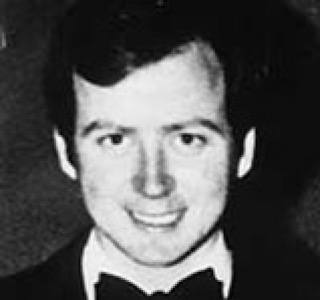
Death of Gerard Steenson, Leader of the IPLO

Gerard Steenson, an Irish republican paramilitary and a leader of the Irish People’s Liberation Organisation during the Troubles, is killed in an ambush in Ballymurphy, Belfast, on March 14, 1987.

Steenson, a Catholic and the son of Frank Steenson, is born in 1957 and raised in heavily republican West Belfast. He is nicknamed “Doctor Death” by the media and the Royal Ulster Constabulary (RUC) for the multiple assassinations he purportedly accomplishes according to The New York Times. However, Fortnight alleges that he got his nickname after he dressed up in a white coat to attack British soldiers guarding a patient at the Royal Victoria Hospital.

Steenson is widely associated with internecine violence between Irish republican groups. He joins the Official Irish Republican Army‘s Belfast Brigade in 1972 at the age of 14, becoming part of the Brigade’s C Company. Two years later, he leaves to join the Irish National Liberation Army (INLA) upon that paramilitary group’s formation, consequent to their split from the Official IRA. He becomes head of the INLA in Belfast.

Steenson first comes to notoriety as a teenager in 1975 for killing Billy McMillen, the Official IRA’s Belfast leader, during the feud between the INLA and the Official IRA. Jim Cusack, a journalist describes him as the “assassin-in-chief” of Hugh Torney.

During the 1981 Northern Ireland local elections, Steenson and Seán Mackin both lead efforts within the INLA to obstruct Irish Republican Socialist Party (IRSP) candidates which disrupts their votes, viewing the decision to run in the election as wasteful, believing that the allocated resources would be better spent on weapons. Following the election, Steenson later changes his mind with regards to elections, declaring that the party should have run more candidates.

In December 1981, Steenson, fearing that the Dublin INLA leadership will make a move on him following his efforts to set up a parallel organisation, plans an assassination attempt on the Dublin leader, Harry Flynn. Following a meeting of the Ard Comhairle on December 5, Flynn and others go out for drinks in the Flowing Tide pub at the corner of Sackville Place and Marlborough Street in Dublin. Shortly before 11 p.m., Steenson’s gunman enters the pub and fires shots at Flynn before his gun jams and he flees. Though seriously wounded, Flynn survives. After the botched assassination attempt, Steenson then unsuccessfully threatens Seán Flynn for his seat on Belfast City Council. Later, on January 25, 1982, a botched attempt is also made on Seán Flynn and Bernard Dorrian at a bar in the Short Strand area, provoking a feud where a unit from the Derry INLA comes to Belfast searching for Steenson. Failing to secure power, the attacks only demoralise the IRSP and INLA and begin a trend of internal feuds.

In 1985, Steenson is convicted of 67 terrorist offences (including six murders) after his former friend, Harry Kirkpatrick, testifies against him. Kirkpatrick and Steenson are rarely seen apart in public and are given the nicknames “Pinkie and Perky.”

In 1986, Steenson, Jimmy Brown, and Martin “Rook” O’Prey form the Irish People’s Liberation Organisation (IPLO), consisting of disaffected and expelled INLA members, with the express intention of wiping out the INLA and IRSP and replacing them with their own organisation. He argues in letters, written while he is in prison in the early 1980s, that the INLA has become militarily “inefficient” and that the IRSP leadership has become “ineffective” and requires “realignment.”

Steenson is involved in the Rosnaree Hotel shooting on January 20, 1987, where a meeting between the leadership of the INLA and IPLO is to take place to end hostilities. However, IPLO members ambush the four INLA members at the hotel, killing Thomas “Ta” Power and John “Jap” O’Reilly, while Hugh Torney and Peter Stewart manage to escape.

Steenson is viewed highly in the movement with Brown calling him a “committed and highly efficient military activist and a dedicated revolutionary.” However, he is described by Lord Justice Carswell as “a most dangerous and sinister terrorist. A ruthless and highly dedicated, resourceful and indefatigable planner of criminal exploits who did not hesitate to take a leading role in assassinations and other crimes.” Henry McDonald and Jack Holland write, “Both his friends and enemies spoke in a tone of awestruck at his paramilitary abilities.” Ken Wharton refers to him as a “notorious psychopath.” Sean O’Callaghan describes him as someone who “never took to orders.”

Terry George writes of Steenson that he “was extremely clever and even wittier than Billy McMillan. He had an angelic face and women adored him. He was also ruthless, cunning and fearless.”

On March 14, 1987, Steenson and Tony “Boot” McCarthy return to Ballymurphy after a night of drinking which is cut short by anger over the INLA GHQ faction’s show of force in the Divis Flats earlier in the day. After bringing their car to a stop on Springhill Avenue, they are killed in an ambush by an INLA active unit, with a member of the unit closing the security gate at the top of the street to trap the pair. An INLA spokesperson says Steenson was killed for being “actively involved in continuous and concerted efforts to undermine the authority of the … movement.” Jimmy Brown gives the graveside oration.

The IPLO later kills Emmanuel Gargan in the Hatfield Bar on the Lower Ormeau Road and Kevin Barry Duffy in Armagh, County Armagh, in retaliation for the killing of Steenson. The IPLO draws the ire of the Lower Ormeau community through the circumstances surrounding the killing of Gargan, with graffiti appearing in the area labeled “IPLOscum.”

On Halloween 1992, the Provisional Irish Republican Army carries out a large-scale operation (dubbed the “Night of Long Knives”) with the goal of neutralising the IPLO. Following the operation and execution of Jimmy Brown, both the Belfast Brigade and Army Council factions disband.

Leave a comment

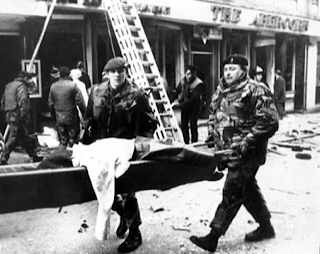
The Abercorn Restaurant Bombing

The Abercorn Restaurant bombing is a bomb attack that takes place in a crowded city centre restaurant and bar in BelfastNorthern Ireland, on March 4, 1972. The bomb explosion claims the lives of two young women and injures over 130 people. Many of the injuries are severe and include the loss of limbs and eyes. The Provisional Irish Republican Army is blamed, although no organisation ever claims responsibility and nobody is ever charged in connection with the bombing. According to Ed Moloney, an Irish journalist who has written extensively about the IRA, republican sources have unofficially confirmed the group’s involvement.

The Abercorn is on 7-11 Castle Lane in central Belfast and houses a ground-floor restaurant and upstairs bar. It is owned by 45-year-old Bill O’Hara, a Catholic businessman. On Saturday, March 4 1972, it is packed with late afternoon shoppers when an anonymous caller issues a bomb warning to 999 at 4:28 p.m. The caller does not give a precise location, but advises that a bomb will go off in Castle Lane in five minutes’ time. The street, located in the busy Cornmarket area, mills with crowds of people shopping and browsing as is typical on a Saturday in Belfast.

Two minutes later, at 4:30 p.m., a handbag containing a five-pound gelignite bomb explodes under a table inside the ground-floor restaurant. Two young Catholic friends are killed outright: Anne Owens (22), who is employed at the Electricity Board, and Janet Bereen (21), a hospital radiographer. The young women have been out shopping together and have stopped at the Abercorn to have coffee. They are seated at the table nearest the bomb and take the full force of the blast. Owens had survived a previous bombing at her workplace. More than 130 are injured in the explosion, which overturns tables and chairs, and brings the ceiling crashing down onto the ground floor restaurant. Many people are severely maimed. Some have their limbs blown off while others suffer terrible head and facial injuries, burns, deep cuts and perforated eardrums. Three have eyes destroyed by shards of flying glass. Two sisters, Jennifer and Rosaleen McNern (one of whom is due to be married), are both horrifically mutilated. Jennifer loses both legs and Rosaleen, the bride-to-be, loses her legs, right arm and one eye.

Witnesses describe a scene of panic and chaos as the bloodied survivors stumble through the smoke, broken glass, blood, and rubble, crawling over one another to get away, while firemen attempt to bring out the injured, many of whom lay with their bodies mangled, unable to move. A Royal Ulster Constabulary (RUC) officer is one of the first people to arrive on the scene. He describes the carnage that greets him as something he will never forget. “All you could hear was the moaning and squealing and the people with limbs torn from their bodies.”

A woman who had been inside the restaurant before the blast later tells an inquest that she had seen two teenaged girls walk out of the Abercorn leaving a handbag behind shortly before the explosion. This same woman was waiting at a bus stop when the bomb went off. A detective-sergeant establishes that the explosion’s epicentre is to the right of the table where the two girls had been sitting. The bomb is reportedly left behind inside a handbag.

Nobody is ever charged in connection with the bombing and no paramilitary organisation ever claims responsibility for it. Both wings of the IRA deny involvement and condemn the bombing. However, the RUC and British Military Intelligence blame the Provisional IRA First Battalion Belfast Brigade and it is now widely accepted that it was responsible. There is a public backlash against the organisation in Irish nationalist and Catholic areas such as West Belfast. The two dead women were both Catholic, along with many of the injured including the McNern sisters, and the Abercorn Bar was a popular venue with many young Catholics and nationalists.

Provisional IRA Chief of Staff Seán Mac Stíofáin claims the bombing is the work of loyalist paramilitaries. According to Mac Stíofáin, the Woodvale Defence Association (WDA) had made threats against the Abercorn in its weekly newsletter after the Abercorn management refused to play the British national anthem. The WDA denies the allegations, adding that one of its members had a friend who was badly injured in the blast. The day after the bombing, a leaflet allegedly circulated by the loyalist Vanguard Unionist Progressive Party (VUPP) declares: “We make no apologies for Abercorn. No apologies were made for Aldershot […] These premises were being used extensively by Southern Irish shoppers for the transmission of information vital to the terrorist campaign…” Vanguard leader Rev. Martin Smyth dismisses the statement as fake.

According to Ed Moloney in his book Voices from the Grave, IRA sources have since confirmed, albeit unofficially, that the Provisional IRA was responsible. Moloney suggests that, based on eyewitness accounts, two teenaged IRA girls were probably the bombers. Unnamed republican sources suggest that the Abercorn was targeted because the upstairs bar was frequented by off-duty British Army soldiers.

The detonation of a bomb in a city centre restaurant on a Saturday afternoon packed with shoppers, and the severity of the injuries—inflicted on mostly women and children—ensures that the attack causes much revulsion and leaves a lasting impression on the people of Belfast. It is condemned by both unionist and Irish nationalist politicians and also by church leaders. Ian Paisley calls on the government “to mobilise and arm every able-bodied volunteer to meet the enemy.” The extent of the injuries the blast inflicts results in the Royal Victoria Hospital implementing a “disaster plan” for the first time.

The sculptor F. E. McWilliam produces a series of bronzes (1972–73) known as Women of Belfast in response to the Abercorn bombing.

Unrelated to the bombing, the Abercorn features in a sectarian attack in July 1972, when Michael McGuigan, a Catholic working in the bar, is abducted by loyalist paramilitaries, shot and left for dead, but survives. He had been dating a Protestant waitress who also worked in the Abercorn, which is why the loyalist group targets him.

The Abercorn is demolished in 2007.

(Pictured: A victim’s body being removed from the scene by members of the security forces following the bomb explosion)


Leave a comment

Birth of David Ervine, Northern Ireland Unionist Politician

David Ervine, Northern Irish Unionist politician, is born into a Protestant working-class family in east Belfast on July 21, 1953. He serves as leader of the Progressive Unionist Party (PUP) from 2002 to 2007 and is also a Member of the Legislative Assembly (MLA) for Belfast East from 1998 to 2007. As a leading PUP figure, he helps to deliver the loyalist ceasefire of 1994.

Ervine leaves Orangefield High School at age 14 and joins the Orange Order at age 18, however his membership does not last long. The following year he joins the Ulster Volunteer Force (UVF), believing this to be the only way to ensure the defence of the Protestant community after the events of Bloody Friday.

Ervine is arrested in November 1974, while an active member of the UVF. He is driving a stolen car containing five pounds of commercial explosives, a detonator and fuse wire. After seven months on remand in Crumlin Road Gaol he is found guilty of possession of explosives with intent to endanger life. He is sentenced to 11 years and imprisoned at The Maze.

While in prison, Ervine comes under the influence of Gusty Spence who makes him question what his struggle is about and unquestionably changes Ervine’s direction. After much study and self-analysis, he emerges with the view that change through politics is the only option. He also becomes friends with Billy Hutchinson while in prison.

Ervine is released from prison in 1980 and takes up full-time politics several years later. He stands in local council elections as a Progressive Unionist Party (PUP) candidate in 1985 Northern Ireland local elections. In 1996, he is elected to the Northern Ireland Forum from the regional list, having been an unsuccessful candidate in the Belfast East constituency. In 1998, he is elected to the Northern Ireland Assembly to represent Belfast East and is re-elected in 2003. He is also a member of Belfast City Council from 1997.

Ervine plays a pivotal role in bringing about the loyalist ceasefire of October 1994. He is part of a delegation to Downing Street in June 1996 that meets then British Prime Minister John Major to discuss the loyalist ceasefire.

Ervine suffers a massive heart attack, a stroke and brain hemorrhage after attending a football match between Glentoran F.C. and Armagh City F.C. at The Oval in Belfast on Saturday January 6, 2007. He is taken to the Ulster Hospital in Dundonald and is later admitted to the Royal Victoria Hospital in Belfast, where he dies on Monday, January 8, 2007. His body is cremated at Roselawn Crematorium after a funeral service on January 12 in East Belfast attended by Mark Durkan, Gerry Adams, Peter Hain, Dermot Ahern, Hugh Orde and David Trimble among others.


Leave a comment

Death of Gerry Adams, Sr., Irish Republican Army Volunteer

Gerard Adams Sr., a Belfast Irish Republican Army (IRA) volunteer who takes part in its Northern Campaign in the 1940s, dies on November 17, 2003, at Royal Victoria Hospital in Belfast, Northern Ireland. He has also been described as “important in the emergence of the Provisional IRA in 1970.”

Adams is born in 1926. He marries Anne Hannaway, also a Republican from an established republican family, by whom he has thirteen children, three of whom die in infancy. His children include Gerry Adams, a former abstentionist MP for Belfast West and former TD who becomes a leading figure in Sinn Féin and serves as its president until 2018, as well as Liam Adams, who dies serving a prison sentence in Northern Ireland for raping his daughter.

Adams is captured after being shot and wounded during an IRA operation in 1942 after he shot a Royal Ulster Constabulary (RUC) police officer in the foot. He is sentenced to eight years in prison and serves five. He is interned in 1971 along with his son, Gerry Adams.

Adams dies “a lonely old man” on November 17, 2003. He is buried with the Irish tricolour, despite the private reservations of family members over alleged abuse that would only be made public some years later. His son, Gerry, says that he felt his father had “besmirched” the flag.

In December 2009, six years after Adams’s death, his family claims that he had subjected some members of his family to emotional, physical and sexual abuse over many years. The family says that this abuse “had a devastating impact” on the family, with which they are still then coming to terms. The family decides to go public about the abuse in order to help other families in similar circumstances.

(Pictured: Gerry Adams, Sr. (L) pictured with his son, Sinn Fein’s Gerry Adams)


Leave a comment

Death of Irish Writer Amanda McKittrick Ros

Anna Margaret Ross (née McKittrick), Irish writer known by her pen name Amanda McKittrick Ros, dies on February 2, 1939, at Larne, County Antrim, Northern Ireland. She publishes her first novel, Irene Iddesleigh, at her own expense in 1897. She writes poetry and a number of novels. Her works are not read widely, and her eccentric, over-written, “purple” circumlocutory writing is alleged by some critics to be some of the worst prose and poetry ever written.

Ros is born in Drumaness, County Down, on December 8, 1860, the fourth child of Eliza Black and Edward Amlave McKittrick, Principal of Drumaness High School. She is christened Anna Margaret at Third Ballynahinch Presbyterian Church on January 27, 1861. In the 1880s she attends Marlborough Teacher Training College in Dublin, is appointed Monitor at Millbrook National School, Larne, County Antrim, finishes her training at Marlborough and then becomes a qualified teacher at the same school.

During Ros’s first visit to Larne, she meets Andrew Ross, a widower of 35, who is station master there. She marries him at Joymount Presbyterian Church, Carrickfergus, County Antrim, on August 30, 1887.

Ros writes under the pen name Amanda McKittrick Ros, possibly in an attempt to suggest a connection to the noble de Ros family of County Down. She is strongly influenced by the novelist Marie Corelli. She writes, “My chief object of writing is and always has been, to write, if possible, in a strain all my own. This I find is why my writings are so much sought after.” She imagines “the million and one who thirst for aught that drops from my pen,” and predicts that she will “be talked about at the end of a thousand years.”

Ros’s “admirers” include Aldous Huxley, Siegfried Sassoon, C. S. Lewis and Mark Twain. The publication of her novel Irene Iddesleigh is financed by her husband in 1897 as a gift to her on their tenth wedding anniversary. Twain considers the novel “one of the greatest unintentionally humorous novels of all time.” A reader sends a copy of the novel to humorist Barry Pain, who in an 1898 review calls it “a thing that happens once in a million years,” and sarcastically terms it “the book of the century.” He reports that he is initially entertained, but soon “shrank before it in tears and terror.” Ros retorts in her preface to Delina Delaney by branding Pain a “clay crab of corruption,” suggesting that he is so hostile only because he is secretly in love with her. But Ros claims to make enough money from her second novel, Delina Delaney, to build a house, which she names Iddesleigh.

In Ros’s last novel, Helen Huddleson, all the characters are named after various fruits: Lord Raspberry, Cherry Raspberry, Sir Peter Plum, Christopher Currant, the Earl of Grape, Madame Pear. Of Pear, Ros writes, “she had a swell staff of sweet-faced helpers swathed in stratagem, whose members and garments glowed with the lust of the loose, sparkled with the tears of the tortured, shone with the sunlight of bribery, dangled with the diamonds of distrust, slashed with sapphires of scandals…”

Ros believes that her critics lack sufficient intellect to appreciate her talent and is convinced that they conspire against her for revealing the corruption of society’s ruling classes, thereby disturbing “the bowels of millions.”

Andrew Ross dies in 1917, and Ros marries Thomas Rodgers, a County Down farmer, in 1922.

Ros dies at the Royal Victoria Hospital in Belfast on February 2, 1939, under the name Hannah Margaret Rodgers.

Belfast Public Libraries have a large collection of manuscripts, typescripts and first editions of Ros’s work. Manuscript copies include Irene Iddesleigh, Sir Benjamin Bunn and Six Months in Hell. Typescript versions of all the above are held together with Rector Rose, St. Scandal Bags and The Murdered Heiress among others. The collection of first editions covers all her major works including volumes of her poetry, Fumes of Formation and Poems of Puncture, together with lesser-known pieces such as Kaiser Bill and Donald Dudley: The Bastard Critic. The collection includes hundreds of letters addressed to Ros, many with her own comments in the margins. Also included are typed copies of her letters to newspapers, correspondence with her admiring publisher T. S. Mercer, an album of newspaper cuttings and photographs, and a script for a BBC broadcast from July 1943.

A few enthusiasts have kept Ros’s legend alive. A biography, O Rare Amanda!, is published in 1954. A collection of her most memorable passages is published in 1988 under the title Thine in Storm and Calm. In 2007 her life and works are fêted at a Belfast literary festival.

Denis Johnston, the Irish playwright, writes a radio play entitled Amanda McKittrick Ros which is broadcast on BBC Home Service radio on July 27, 1943, and subsequently. The play is published in The Dramatic Works of Denis Johnston vol. 3. He acquires a collection of papers from Ros including the unfinished typescript of Helen Huddleson. These can now be seen as part of the Denis Johnston collection in the library of the Ulster University at Coleraine, Northern Ireland.


Leave a comment

Death of 1981 Hunger Striker Thomas McElwee

Thomas McElwee, Irish republican volunteer in the Provisional Irish Republican Army (IRA), dies on August 8, 1981, at the age of 23 after 62 days on hunger strike at Long Kesh Prison.

McElwee, the sixth of twelve children, is born on November 30, 1957, into the small, whitewashed home built by his father, along the Tamlaghtduff Road in Bellaghy, County Derry, Northern Ireland. He attended St. Mary’s primary in Bellaghy, and then Clady intermediate. After leaving school he goes to Magherafelt technical college for a while but later changes his mind and goes to Ballymena training centre to begin an apprenticeship as a motor mechanic. Harassment from loyalist workers there forces him to leave and he then goes to work with a local mechanic.

McElwee and his cousin Francis Hughes form an independent Republican unit, which for several years carries out ambushes on British Army patrols as well as bomb attacks in neighbouring towns such as Magherafelt, Castledawson, and Maghera.

In October 1976, McElwee takes part in a planned bombing blitz on the town of Ballymena. Along with several colleagues, he is transporting one of the bombs, which explodes prematurely and blinds him in his right eye. He is transferred from the Ballymena hospital to the Royal Victoria Hospital in Belfast for emergency surgery to save his remaining eye. It is three weeks before he is able to see at all.

After six weeks McElwee is transferred again, this time to the military wing of the Musgrave Park Hospital. One week before Christmas, he is charged and sent to Crumlin Road Gaol.

At McElwee’s subsequent trial in September 1977, having spent over eight months on remand in Crumlin Road, he is charged and sentenced to 20 years’ imprisonment for possession of explosives and the murder of Yvonne Dunlop, who is killed when one of the firebombs destroys the shop where she is employed. His murder charge is reduced to manslaughter on appeal, although the original jail term stands. He returns to the blanket protest he had joined immediately after his trial, in the H-Blocks of Long Kesh.

Imprisonment is particularly harsh for McElwee and his brother Benedict who are frequently singled out for brutality by prison warders, outraged at the stubborn refusal of the two to accept any form of criminal status. On one occasion he is put on the boards for fourteen days for refusing to call a prison warder ‘sir.’ In a letter smuggled out to his sister Mary, Benedict writes of the imprint of a warder’s boot on his back and arms after a typical assault. However, throughout the brutality and degradation they have to endure serves only to deepen yet further, and harder, their resistance to criminalisation.

McElwee joins the 1981 Irish hunger strike on June 7, 1981, and died on August 8, 1981, after 62 days on the strike. Indicative of the callousness of the British government towards prisoners and their families alike, he is denied the comfort of his brother’s presence at that tragic moment. He dies after 62 days of slow agonising hunger strike with no company other than prison warders – colleagues of those who had brutalised, degraded and tortured him for three-and-a-half years.

In 2009, Republican Sinn Féin (RSF) name their Waterford cumann after McElwee, replacing that of George Lennon, O/C of the Waterford Flying Column who led the IRA anti-Treaty Republicans into Waterford City in March 1922. The Waterford RSF had adopted the Lennon name without the permission of his son who noted that his father had, in later years, become a committed pacifist and opponent of the Vietnam War.

McElwee is the main subject of the song Farewell to Bellaghy, which also mentions his cousin Francis Hughes, other members of the independent Republican unit and deceased volunteers of the South Derry Brigade of the Provisional IRA. He is also the subject of The Crucifucks‘ song The Story of Thomas McElwee.


Leave a comment

Birth of William Whitla, Physician & Politician

william-whitla

Sir William Whitla, Irish physician and politician, is born at The Diamond, Monaghan, County Monaghan on September 15, 1851.

Whitla is the fourth son of Robert Whitla, a woolen draper and pawnbroker, and his wife Anne, daughter of Alexander Williams of Dublin. His first cousin is painter Alexander Williams. Educated at the town’s Model School, he is articled at fifteen to his brother James, a local pharmacist, completing his apprenticeship with Wheeler and Whitaker, Belfast‘s leading pharmaceutical firm. Proceeding to study medicine at Queen’s College, Belfast, he takes the LAH, Dublin, and the LRCP and LRCS of Edinburgh in 1873.

With his qualifications Whitla obtains a post as resident medical officer at the Belfast General Hospital. He next spends some time in London, at St. Thomas’s Hospital, where he meets his future wife, Ada Bourne, daughter of George Bourne, a prominent Staffordshire farmer. She is a ward sister and friend of Florence Nightingale and a member of The Salvation Army.

The pair are married in 1876, settling in Belfast where Whitla establishes a general medical practice. He is awarded the MD of the Queen’s University of Ireland in 1877, with first class honours, gold medal, and commendation.

Whitla is appointed physician to the Belfast Royal Hospital and the Ulster Hospital for Children and Women in 1882. He holds post at the Belfast Royal Hospital and in the Royal Victoria Hospital, of which it is the forerunner, until his retirement in 1918. He succeeds Seaton Reid as professor of materia medica at the Queen’s College in 1890 and is twice president of the Ulster Medical Society (1886–1887, 1901–1902). Appointed a Knight Bachelor in the 1902 Coronation Honours list published on June 26, 1902, he is knighted by the Lord Lieutenant of Ireland, George Cadogan, 5th Earl Cadogan, at Dublin Castle on August 11, 1902.

In 1906 Whitla is appointed a governor of Methodist College Belfast, and he takes a keen interest in the school’s affairs. In 1919, he retires as Professor of Materia Medica in the university.

A strong unionist, Whitla is elected to parliament in 1918, serving until 1923 as representative of the Queen’s University at Westminster. He is appointed honorary physician to the king in Ireland in 1919 and is subsequently university pro-chancellor.

During the 1920s Whitla’s public appearances are fewer and, after a stroke in 1929, he is confined to his room. Lady Whitla dies in 1932. He dies at their Belfast residence, Lennoxvale, on December 11, 1933, and is given a civic funeral two days later. He is buried at Belfast City Cemetery.

During Whitla’s lifetime his gifts to his profession include the Good Samaritan stained glass window erected in the Royal Hospital and a building to house the Ulster Medical Society. At his death Lennoxvale is bequeathed to Queen’s University as a residence for the Vice-Chancellor. The university also is his residuary legatee and acts on his suggestion that the available funds should provide an assembly hall. The Sir William Whitla Hall is opened in 1949.

Whitla also leaves £10,000 to Methodist College Belfast to build a chapel, library or hall. The Whitla Hall at the Methodist College is opened in 1935.


Leave a comment

The Murder of Benedict Hughes

File written by Adobe Photoshop? 4.0

Northern Ireland is plunged into a new crisis after Benedict Hughes, a Catholic, is shot dead on January 21, 1998, as he is getting into his car after finishing his work in a loyalist area of south Belfast. It is the latest murder aimed at wrecking the peace process and the eighth sectarian killing since Christmas.

Hughes, age 55, dies in a hail of bullets in Sandy Row shortly after 5:00 PM, as he is preparing to travel back to his Suffolk Crescent home in west Belfast. The father of three is shot at least five times in the neck and chest as he tries to get into his car which is parked in Utility Street off the Donegall Road. He is taken to the Royal Victoria Hospital where he later dies. The lone gunman makes off on foot in the direction of Felt Street.

The attack comes after the funeral of Fergal McCusker, a Catholic shot dead by the Loyalist Volunteer Force (LVF) just days earlier and ahead of the funerals of Catholic taxi driver Larry Brennan and prominent loyalist Jim Guiney held on January 22.

When forensic people arrive on the scene soon after the shooting, the area is packed with onlookers who believe the shot man is a Protestant.

As a recovery truck comes to remove Hughes’s car later that night, small groups of people are still watching the scene. The Rev. Richard Darmody, the rector of nearby St. Aidan’s Church in Sandy Row, who went to the scene thinking the victim was one of his parishioners, condemns the murder. “I’m shocked and horrified that the life of an innocent person has been taken and that another family has been plunged into grief and pain. I feel very concerned about where this is going to lead, and the possibility of more lives being taken, and more families being bereaved.”

There is no immediate admission of responsibility. However, the blame is placed firmly on loyalists, either the LVF, which has admitted being behind a series of recent killings, or the Ulster Freedom Fighters, which has remained silent, but which is suspected by the security forces of having joined the killings.

Social Democratic and Labour Party (SDLP) councillor Alex Attwood calls on mainstream loyalists to “clarify whether they are really on a ceasefire” because it is clear, he says, the LVF has received help from other loyalist groups, the Ulster Volunteer Force (UVF) or the Ulster Defence Association (UDA).

SDLP councillor Alastair McDonnell says the peace process is not in crisis. Hughes was “an innocent Catholic who was just trying to earn a living, who has no connections with any political or paramilitary grouping. If he had he wouldn’t have worked here.” He adds that there is a “small handful of evil people” who do not want to see peace.

Alliance spokesman Dr. Philip McGarry says there is “no excuse, no justification for causing pain to yet another family.”

(From: “Catholic shot dead leaving work in loyalist Sandy Row” by Louise McCall, The Irish Times, January 22, 1998)


Leave a comment

Death of Unionist Politician David Ervine

CREATOR: gd-jpeg v1.0 (using IJG JPEG v80), quality = 82

David Ervine, Northern Irish Unionist politician from Belfast and the leader of the Progressive Unionist Party (PUP), dies on January 8, 2007, following a massive heart attack, a stroke and brain hemorrhage.

Ervine is born into a Protestant working-class family in east Belfast on July 21, 1953. He leaves Orangefield High School at age 14 and joins the Orange Order at age 18, however his membership does not last long. The following year he joins the Ulster Volunteer Force (UVF), believing this to be the only way to ensure the defence of the Protestant community after the events of Bloody Friday.

Ervine is arrested in November 1974, while an active member of the UVF. He is driving a stolen car containing five pounds of commercial explosives, a detonator and fuse wire. After seven months on remand in Crumlin Road Gaol he is found guilty of possession of explosives with intent to endanger life. He is sentenced to 11 years and imprisoned in The Maze.

While in prison, Ervine comes under the influence of Gusty Spence who makes him question what his struggle is about and unquestionably changes Ervine’s direction. After much study and self-analysis, he emerges with the view that change through politics is the only option. He also becomes friends with Billy Hutchinson while in prison.

Ervine is released from prison in 1980 and takes up full-time politics several years later. He stands in local council elections as a Progressive Unionist Party (PUP) candidate in 1985 Northern Ireland local elections. In 1996 he is elected to the Northern Ireland Forum from the regional list, having been an unsuccessful candidate in the Belfast East constituency. In 1998, he is elected to the Northern Ireland Assembly to represent Belfast East and is re-elected in 2003. He is also a member of Belfast City Council from 1997.

Ervine plays a pivotal role in bringing about the loyalist ceasefire of October 1994. He is part of a delegation to Downing Street in June 1996 that meets then British Prime Minister John Major to discuss the loyalist ceasefire.

Ervine suffers a massive heart attack, a stroke and brain hemorrhage after attending a football match between Glentoran F.C. and Armagh City F.C. at The Oval in Belfast on Saturday January 6, 2007. He is taken to the Ulster Hospital in Dundonald and is later admitted to the Royal Victoria Hospital in Belfast, where he dies on Monday, January 8, 2007. His body is cremated at Roselawn Crematorium after a funeral service on January 12 in East Belfast attended by Mark Durkan, Gerry Adams, Peter Hain, Dermot Ahern, Hugh Orde and David Trimble among others.


Leave a comment

Birth of Professor James Francis “Frank” Pantridge

frank-pantridge

Professor James Francis “Frank” Pantridge, physician and cardiologist from Northern Ireland, is born in Hillsborough, County Down, on October 3, 1916. Pantridge transforms emergency medicine and paramedic services with the invention of the portable defibrillator.

Pantridge is educated at Friends’ School Lisburn and Queen’s University Belfast, graduating in medicine in 1939. During World War II he serves in the British Army and is commissioned into the Royal Army Medical Corps as a lieutenant on April 12, 1940. He is awarded the Military Cross during the Fall of Singapore, when he becomes a POW. He serves much of his captivity as a slave labourer on the Burma Railway. When he is freed at the end of the war, Pantridge is emaciated and has contracted cardiac beriberi. He suffers from ill-health related to the disease for the remainder of his life.

After Pantridge’s liberation he works as a lecturer in the pathology department at Queen’s University, and then wins a scholarship to the University of Michigan, where he studies under Dr. F.N. Wilson, a cardiologist and authority on electrocardiography.

Pantridge returns to Northern Ireland in 1950 and is appointed as cardiac consultant to the Royal Victoria Hospital, Belfast and professor at Queen’s University, where he remains until his retirement in 1982. There he establishes a specialist cardiology unit whose work becomes well known.

By 1957, Pantridge and his colleague, Dr. John Geddes, introduce the modern system of cardiopulmonary resuscitation (CPR) for the early treatment of cardiac arrest. Further study leads Pantridge to the realization that many deaths result from ventricular fibrillation which needs to be treated before the patient is admitted to hospital. This leads to his introduction of the mobile coronary care unit (MCCU), an ambulance with specialist equipment and staff to provide pre-hospital care.

To extend the usefulness of early treatment, Pantridge goes on to develop the portable defibrillator, and in 1965 installs his first version in a Belfast ambulance. It weighs 70 kg and operates from car batteries. By 1968 he has designed an instrument weighing only 3 kg, incorporating a miniature capacitor manufactured for NASA.

His work is backed up by clinical investigations and epidemiological studies in scientific papers, including an influential 1967 The Lancet article. With these developments, the Belfast treatment system, often known as the “Pantridge Plan”, becomes adopted throughout the world by emergency medical services. The portable defibrillator becomes recognised as a key tool in first aid, and Pantridge’s refinement of the automated external defibrillator (AED) allows it to be used safely by members of the public.

Although he is known worldwide as the “Father of Emergency Medicine,” Frank Pantridge is less acclaimed in his own country, and is saddened that it takes until 1990 for all front-line ambulances in the United Kingdom to be fitted with defibrillators.

He died in Hillsborough at the age of 88 on Boxing Day, December 26, 2004. He never married.