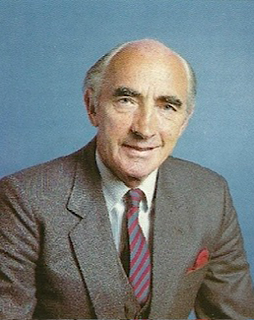
A snappy dresser who earns the nickname “the yellow rose of Finglas,” Tunney is sometimes seen as pompous, a perception possibly attributable to his acting background, which once leads to an audition at Dublin’s Abbey Theatre.
In 1963 Tunney joins Fianna Fáil, and stands for the party at the 1965 Irish general election but is not elected. He is elected to Dáil Éireann as a Fianna Fáil TD for the Dublin North-West constituency at the 1969 Irish general election. He serves continuously in the Dáil until losing his seat at the 1992 Irish general election, having been a TD for Dublin Finglas from 1977 to 1981 when Dublin constituencies are reconfigured as 3-seaters, before being returned for Dublin North-West in 1981.
During this period Tunney serves as Parliamentary Secretary to the Minister for Education (after 1978, Minister of State at the Department of Education) in three governments. He serves as Leas-Ceann Comhairle of Dáil Éireann from 1981 to 1982, and from 1987 to 1993. He is also chair of the Fianna Fáil parliamentary party for ten years. He is a member of Dublin City Council, and serves as Lord Mayor of Dublin from 1984 to 1985.
Following Tunney’s death, TaoiseachBertie Ahern describes him as “a parliamentarian and a gentleman who was passionately committed to serving his country.” Ahern adds, “he was not only a man of substance but one of style. From the flower that was always in his buttonhole to the elegance of his language in both Irish and English he had a commanding and stylish presence.”
Fine Gael leader Michael Noonan says Tunney had gained “the widespread affection and respect of colleagues of all political parties.”
Leader of the Labour PartyRuairi Quinn describes Tunney as a “thoughtful and courteous colleague” who carried out his duties with “fairness but also with wit and style.”
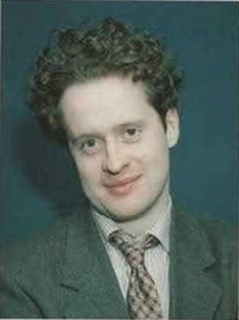
Bowman works mostly as a freelance journalist. He co-presents a radio show, The Rude Awakening, on Dublin’s FM104 with Scott Williams, George Hellis and Margaret Callanan for two years between 1993 and 1994 before joining the Sunday Independent newspaper as a columnist. He later presents television programmes on RTÉ, such as the quiz show Dodge the Question.
Bowman dies in a fall at his home on Fitzgerald Street in Harold’s Cross, Dublin, on March 6, 2000. He is found lying in the kitchen near the foot of the stairs. His death is believed to be the result of a fall down the stairs or from a stool, which is found nearby. He is buried in Glasnevin Cemetery, Glasnevin, County Dublin. Tributes are paid to him by party political leaders. He is survived by his parents, his sister Emma, his brothers Abie and Daniel and his only son Saul Philbin Bowman.
TaoiseachBertie Ahern says that he is deeply saddened on learning the news of Bowman’s death. His thoughts and prayers he says are with his family at this very sad time.
The leader of the Labour Party, Ruairi QuinnTD, expresses his shock and sadness on hearing of the death. He says that Bowman was without doubt one of the bright lights of Irish journalism. He extends his deepest sympathies to Bowman’s son, Saul, and to his parents John and Eimer.
The Fine Gael leader, John Bruton, says that few people he knew brought a smile to the face of anyone they met more readily. He says that his infectious good humour and iconoclastic attitude to life conveyed itself to all with whom he came into contact. He adds that Bowman will be missed for many years to come.
The editor of the Sunday Independent, Aengus Fanning, says that Bowman was one of the most brilliant journalists of his generation.
The treaty had been intended to enter into force on January 1, 2009, but has to be delayed following the Irish rejection. However, the Lisbon treaty is approved by Irish voters when the Twenty-eighth Amendment of the Constitution of Ireland is approved in the second Lisbon referendum, held in October 2009.
The Treaty of Lisbon is signed by the member states of the European Union on December 13, 2007. It is in large part a revision of the text of the Treaty establishing a Constitution for Europe (TCE) after its rejection in referendums in France in May 2005 and in the Netherlands in June 2005. The Treaty of Lisbon preserves most of the content of the Constitution, especially the new rules on the functioning of the European Institutions but gives up any symbolic or terminologic reference to a constitution.
Because of the decision of the Supreme Court of Ireland in Crotty v. An Taoiseach (1987), an amendment to the Constitution is required before it can be ratified by Ireland. Ireland is the only one of the then fifteen EU member states to put the Treaty to the people in a referendum. Ratification of the Treaty in all other member states is decided upon by national parliaments alone.
The government parties of Fianna Fáil and the Progressive Democrats are in favour of the treaty, but the other government party, the Green Party, is divided on the issue. At a special convention on January 19, 2008, the leadership of the Green Party fails to secure a two-thirds majority required to make support for the referendum official party policy. As a result, the Green Party itself does not participate in the referendum debate, although individual members are free to be involved in whatever side they chose. All Green Party members of the Oireachtas support the Treaty. The main opposition parties of Fine Gael and the Labour Party are also in favour. Only one party represented in the Oireachtas, Sinn Féin, is opposed to the treaty, while minor parties opposed to it include the Socialist Party, the Workers’ Party and the Socialist Workers Party. Independent TD’s Tony Gregory and Finian McGrath, Independent MEPKathy Sinnott, and Independent members of the Seanad from the universities David Norris, Shane Ross and Rónán Mullen advocate a “No” vote as well.
The Government sends bilingual booklets written in English and Irish, explaining the Treaty, to all 2.5 million Irish households. However, compendiums of the two previous treaties, of which the Lisbon Treaty is intended to be a series of reforms and amendments, remain unavailable in Ireland. Some commentators argue that the treaty remains essentially incomprehensible in the absence of such a compendium.
On March 12, 2008, the Libertas Institute, a lobby group started by businessman Declan Ganley, launches a campaign called Facts, not politics which advocates a “No” vote in the referendum. A month later, the German Chancellor, Angela Merkel, appeals to Irish people to vote “Yes” in the referendum while on a visit to Ireland. The anti-Lisbon Treaty campaign group accuses the government and Fine Gael of a U-turn on their previous policy of discouraging foreign leaders from visiting Ireland during the referendum campaign. The European Commissioner for Internal MarketCharlie McCreevy admits he had not read the Treaty from cover to cover and says, “he would not expect any sane person to do so.”
At the start of May, the Irish Alliance for Europe launches its campaign for a “Yes” vote in the referendum this consists of trade unionists, business people, academics and politicians. Its members include Garret FitzGerald, Ruairi Quinn, Pat Cox and Michael O’Kennedy. The TaoiseachBrian Cowen states that should any member of the Fianna Fáil parliamentary party campaign against the treaty, they will likely be expelled from the party.
On May 21, 2008, the executive council of the Irish Congress of Trade Unions votes to support a “Yes” vote in the referendum. Rank and file members of the individual unions are not balloted, and the Technical, Engineering and Electrical Union (TEEU) advises its 45,000 members to vote “No.” The Irish bishops conference states the Catholic Church‘s declaration that the treaty will not weaken Ireland’s constitutional ban on abortion, however the conference does not advocate either a “Yes” or “No” vote. By the start of June, Fianna Fáil, Fine Gael and the Labour Party have united in their push for a “Yes” vote despite earlier divisions. The two largest farming organisations, the Irish Creamery Milk Suppliers Association (ICMSA) and the Irish Farmers’ Association call for a “Yes” vote, the latter giving its support after assurances from Taoiseach Brian Cowen that Ireland will use its veto in Europe if a deal on World Trade reform is unacceptable.
There were 3,051,278 voters on the electoral register. The vast majority of voting takes place on Thursday, June 12, between 7:00 a.m. and 10:00 p.m. Counting begins at 9:00 a.m. the following morning. Several groups vote before the standard polling day, with some casting postal votes before June 9. These include members of the Irish Defence Forces serving in United Nations peacekeeping missions, Irish diplomats and their spouses abroad, members of the Garda Síochána, those unable to vote in person due to physical illness or disability, those who are unable to vote in person due to their employment (including students) and prisoners.
Votes are counted separately in each Dáil constituency. The overall verdict is formally announced by the Referendum Returning officer in Dublin Castle by accumulating the constituency totals.
(Pictured: Campaign posters in St. Stephen’s Green, Dublin)
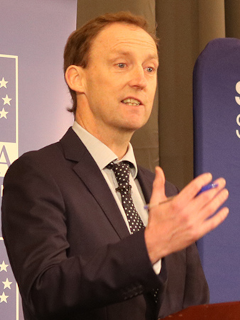
Andrews comes from a family with strong political connections. His grandfather, Todd Andrews, fought in the Irish War of Independence and became a founder-member of Fianna Fáil, and his grandmother, Mary Coyle, was a member of Cumann na mBan. His father, David Andrews, served as a TD from 1965 to 2002 and is a former Minister for Foreign Affairs, while his uncle, Niall Andrews, is a former Fianna Fáil TD and MEP and his cousin, Chris Andrews (son of Niall Andrews), has been a Sinn Féin TD since 2020 (having previously served as a Fianna Fáil TD from 2007 to 2011). In April 2018, Andrews is described as “part of Fianna Fáil royalty.”
Andrews is educated at Blackrock College and attends university at University College Dublin (UCD). Before entering political life, he works as a secondary school teacher in Dublin from 1991 until 1997, working in Senior College Ballyfermot, Sutton Park School and Bruce College. While a secondary school teacher, he studies law at King’s Inns and qualifies as a barrister in 1997. He is called to the Bar in 1997 and practices as a barrister until 2003.
In June 2006, Andrews leads a group of Fianna Fáil backbenchers in an unsuccessful attempt to establish a backbench committee to influence government policy. At the 2007 Irish general election, he retains his seat in Dún Laoghaire with 8,587 votes.
Andrews is appointed Minister of State for Children in May 2008. As Minister, he frames the Government response to the Ryan Report on Institutional Abuse. This includes an Implementation Plan that delivers an additional 200 social workers for the HSE Child and Family Services. In April 2009, he introduces the Early Childhood Care and Education (ECCE) Scheme, which provides, for the first time, free universal access to pre-school education. The scheme benefits 65,000 children in 2013.
After the release of the Murphy Report into child abuse in the Dublin diocese in November 2009, Andrews, speaking at a conference in Dublin Castle, is asked about the position of the Bishop of Limerick, Donal Murray. He says, “I think it’s everybody’s view that if adverse findings are made against an individual in a commission of inquiry, then it would be amazing that there be no consequences for them.” Bishop Murray subsequently apologises to survivors and resigns from office.
In December 2009, Andrews oversees the introduction of government policy to lower the legal age of consent to sixteen, citing a Joint Oireachtas Committee on the Constitution report which recommends the legal age be reduced to sixteen from the current seventeen. He expresses the view the existing laws are “inappropriate” and out of touch with the modern reality of sexual relations between young people and promises to publish legislation to change the age of consent to sixteen. He notes that Ireland and Malta are “the only countries in Europe with an age of consent of seventeen.” However, the law is not passed by the Oireachtas before the 2011 Irish general election in which Fianna Fáil cedes power to a Fine Gael-Labour coalition.
On January 31, 2011, in the run up to the general election, Andrews is named Health spokesman by the party leader, Micheál Martin. He loses his seat at the general election.
In September 2012, Andrew is appointed Fianna Fáil Director of Elections for the Children’s referendum.
In February 2019, Andrews is selected as the Fianna Fáil candidate for the Dublin constituency at the 2019 European Parliament election. He is elected in May 2019 receiving 14.1% of the 1st preference votes, but as the fourth candidate elected, he does not take his seat until after the UK leaves the European Union on January 31, 2020.
Andrews is appointed EU Chief Observer for the 2023 Nigerian Federal and State elections by High Representative Vice President Josep Borrell. A report on the election is subsequently produced highlighting that the election was marred by a lack of transparency, public mistrust in the Independent National Electoral Commission (INEC), violence, and vote buying, stressing the need for comprehensive electoral reforms.
Outside of his political career, Andrews is appointed chief executive of the Irish aid charity GOAL in November 2012, replacing the retiring founder, John O’Shea. In October 2016, he resigns from GOAL after it is revealed that other senior executives of GOAL have been involved in “large-scale fraud,” though there is no suggestion that he himself is involved in the scandal. In October 2017, the new CEO of GOAL announces a deficit of €31.6 million due to the fraud but says that it will survive after “one of the most challenging years” in its 40-year history.
In March 2017, Andrews is appointed as Director-General of the Irish State-supported EU think tank and advocacy body, the Institute of International and European Affairs (IIEA), with the Chairperson of the IIEA, former Leader of the Labour Party, Ruairi Quinn, describing him as having the “political and administrative skills” of value to the IIEA.
Andrews is married and has two sons and a daughter. His brother, David McSavage, is a comedian, and he is a first cousin of former RTÉ television and radio presenter Ryan Tubridy.
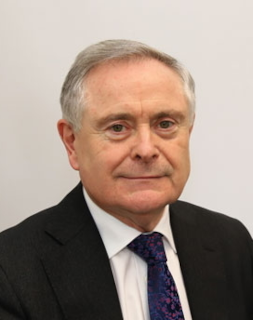
Born into a political family in Wexford, Howlin is the son of John and Molly Howlin (née Dunbar), and named after Brendan Corish, the local Labour TD and later leader of the Labour Party. His father is a trade union official who serves as secretary of the Irish Transport and General Workers’ Union (ITGWU) in Wexford for 40 years. He also secures election as a Labour member of Wexford Corporation, where he serves for eighteen years, and is also election agent to Brendan Corish. His mother is also strongly involved in local Labour politics. His brother Ted is a former member of Wexford County Council and Lord Mayor of Wexford. He is raised on William Street in Wexford with his three siblings.
Howlin grows up in Wexford town and is educated locally in the Faythe and at Wexford CBS. He later attends St. Patrick’s College, Dublin, and qualifies as a primary school teacher. During his career as a teacher, he is active in the Irish National Teachers’ Organisation (INTO), before embarking on a career in full-time politics.
Howlin credits his introduction to politics to his involvement in the Irish anti-nuclear movement. The chair of Nuclear Opposition Wexford (NOW), he is involved in the organisation of a protest against the building of a nuclear power plant in Carnsore Point, which draws 40,000 protestors. In 1979, he is asked to run for Wexford Corporation and is selected in his absence but declines to run in order to continue as chair of NOW.
Howlin contests his first general election at the November 1982 Irish general election. He runs as a Labour candidate in the Wexford constituency, but despite the existence of a large left-wing vote in the area, he is not elected. In spite of this setback, a Fine Gael-Labour Party coalition government comes to power, and he is nominated by the Taoiseach, Garret FitzGerald, to serve in Seanad Éireann as a Senator. He secures election to Wexford County Council in 1985 and serves as Mayor of Wexford in 1986.
In 1987, the Labour Party withdraws from the coalition government and a general election is called. Howlin once again contests a seat in Wexford and is elected to Dáil Éireann. Labour are out of office as a Fianna Fáil government takes office. In spite of his recent entry to the Dáil, he is subsequently named Chief Whip of the Labour Party, a position he holds until 1993.
The 1992 Irish general election results in a hung Dáil once again. However, the Labour Party enjoys their best result to date at the time. After negotiations, a Fianna Fáil-Labour Party coalition government comes to office. Howlin joins the cabinet of Taoiseach Albert Reynolds as Minister for Health. During his tenure the development of a four-year health strategy, the identifying of HIV/AIDS prevention as a priority and the securing of a £35 million investment in childcare are advanced. He, however, is also targeted by anti-abortion groups after introducing an act which would allow information regarding abortion.
In 1994, the Labour Party withdraws from government after a disagreement over the appointment of Attorney GeneralHarry Whelehan as a Judge of the High Court and President of the High Court. However, no general election is called and, while it is hoped that the coalition could be revived under the new Fianna Fáil leader Bertie Ahern, the arithmetic of the Dáil now allows the Labour Party to open discussions with other opposition parties. After negotiations a Rainbow Coalition comes to power involving Fine Gael, Labour and Democratic Left. In John Bruton‘s cabinet, he becomes Minister for the Environment.
Following the 1997 Irish general election, a Fianna Fáil-Progressive Democrats coalition government comes to power and the Labour Party returns to the opposition benches. In the announcement of the party’s new front bench, Howlin retains responsibility for the Environment.
In late 1997, Dick Spring resigns as leader of the Labour Party and Howlin immediately throws his hat into the ring in the subsequent leadership election. In a choice between Howlin and Ruairi Quinn, the former gains some early support; however, the leadership eventually goes to Quinn by a significant majority. As a show of unity, Howlin is later named deputy leader of the party and retains his brief as Spokesperson for the Environment and Local Government.
In 2002, following Quinn’s resignation as party leader after Labour’s relatively unsuccessful 2002 Irish general election campaign, Howlin again stands for the party leadership. For the second time in five years, he is defeated for the leadership of the party, this time by Pat Rabbitte, who is formerly a leading figure in Democratic Left. He is succeeded as deputy leader by Liz McManus.
While having been publicly supportive of Rabbitte’s leadership, Howlin is perceived as being the leader of the wing of the party which is sceptical of Rabbitte’s policy with regard to future coalition with Fianna Fáil. Rabbitte explicitly rules out any future coalition with Fianna Fáil, instead forming a formal alliance with Fine Gael in the run-up to the 2007 Irish general election (the so-called Mullingar Accord).
On June 26, 2007, Howlin is appointed the Leas-Cheann Comhairle (deputy chairperson) of Dáil Éireann.
After the 2011 Irish general election, Fine Gael and the Labour Party form a government, and Howlin is appointed to the new office of Minister for Public Expenditure and Reform. In May 2011, he says that over the next 20 years the number of people in Ireland over 65 is set to increase by almost half a million, a situation that could see the annual health budget soar – rising by €12.5 billion in the next decade alone. While reform is a major part of government attempts “to regain full sovereignty over economic policy,” he tells a meeting of the Association of Chief Executives of State Agencies they will in any event face key “imperatives” in coming years. He says a new public spending review, on which he has briefed the cabinet in recent days, will not be a simple assessment of where to make cuts, but will also consider the way public sector services are delivered. He reiterates the government’s commitment not to cut public sector pay, “if the Croke Park Agreement works.” “These are just some of the challenges that our society is facing in the coming decade – crisis or no crisis. In the good times, tackling them was going to be difficult. Today, in these difficult times, tackling them is going to be imperative.” He says Ireland is facing a profound and complex economic crisis “where we are fighting a battle on three fronts – mass unemployment, a major failure in banking, and a fiscal crisis.”
Howlin retains his seat in the Dáil following the 2016 Irish general election, though only six of his Labour colleagues do likewise and the party returns to the opposition benches. Following the resignation of Joan Burton, he contests the 2016 Labour Party leadership election unopposed and is elected Leader of the Labour Party on May 20, 2016.
In March 2018, Howlin criticises Taoiseach Leo Varadkar for failing to personally invite him to accompany him as he meets ambulance crews in Howlin’s constituency of Wexford. Varadkar replies that he has been far too busy dealing with the recent weather crisis and Brexit “to organise invitations to Deputies personally in order that they felt included.” It is separately said of Howlin’s complaint, “It appears that the Taoiseach, the chief executive of the State, needs the imprimatur of local politicians when he enters their bailiwick, and needs to be accompanied and monitored by those same politicians while he is in their realm.”
Alan Kelly challenges Howlin for the party leadership in 2018, stating that he has failed to “turn the ship around.” He states that Kelly’s comments are a disappointing and unnecessary distraction. He also says that there is not a single parliamentary party member that supports the challenge, and that Kelly has the backing of a minority of councillors.
In September 2018, Howlin states that winning 14 seats in the 33rd Dáil is a realistic goal. During the campaign in 2020, he states his wish to end the United States‘s use of Shannon Airport for military related activities. In the 2020 Irish general election, party first preference vote drops to 4.4% of first preference votes and returns 6 seats – a record low. Howlin announces his intention to step down as leader on February 12, 2020. He also says that the Labour Party should not formally enter government, a view that is backed by the parliamentary party. He also states that he will not back any candidate in the following contest. On February 15, 2020, he rules himself out as a candidate for Ceann Comhairle of the 33rd Dáil, with the polling day to elect his successor set for April 3, 2020.
In 2020, Howlin’s legislation (Harassment, Harmful Communications and Related Offences Bill) is passed and signed into law by Michael D. Higgins. This bill makes the distribution of intimate images or “revenge porn” a criminal offense and makes other forms of cyberbullying and harassment punishable.
Howlin is a single man. He has spoken publicly of receiving hate mail relating to his private life and questioning his sexual orientation. In an interview with The Star during the 2002 Labour Party leadership contest, in response to repeated speculation, he announces he is “not gay.”
Bowman works mostly as a freelance journalist. He co-presents a radio show, The Rude Awakening, on Dublin’s FM104 with Scott Williams, George Hellis and Margaret Callanan for two years between 1993 and 1994 before joining the Sunday Independent newspaper as a columnist. He later presents television programmes on RTÉ, such as the quiz show Dodge the Question.
Bowman dies in a fall at his home on Fitzgerald Street in Harold’s Cross, Dublin, on March 6, 2000. He is found lying in the kitchen near the foot of the stairs. His death is believed to be the result of a fall down the stairs or from a stool, which is found nearby.
TaoiseachBertie Ahern says that he is deeply saddened on learning the news of Bowman’s death. His thoughts and prayers he says are with his family at this very sad time.
The leader of the Labour Party, Ruairí QuinnTD, expresses his shock and sadness on hearing of the death. He says that Bowman was without doubt one of the bright lights of Irish journalism. He extends his deepest sympathies to Bowman’s son, Saul, and to his parents John and Eimer.
The Fine Gael leader, John Bruton, says that few people he knew brought a smile to the face of anyone they met more readily. He says that his infectious good humour and iconoclastic attitude to life conveyed itself to all with whom he came into contact. He adds that Bowman will be missed for many years to come.
The editor of the Sunday Independent, Aengus Fanning, says that Bowman was one of the most brilliant journalists of his generation.
Bowman is survived by his parents, his sister Emma, his brothers Abie and Daniel and his only son Saul Philbin Bowman.
Quinn founds the national supermarket chain Superquinn (originally Quinn’s Supermarkets), of which he remains non-executive president for some years after his family sells out their interest in August 2005 for over €400 million. Superquinn is known for its focus on customer service and pioneers a number of innovations, including Ireland’s first supermarket loyalty card in 1993, SuperClub. It also introduces self-scanning of goods by customers in a number of its outlets. Superquinn becomes the first supermarket in the world to guarantee the absolute traceability of all its beef from pasture to plate, using DNA TraceBack, a system developed at Trinity College, Dublin by IdentiGEN.
Quinn becomes the chairman of the Interim Board for Posts and serves as chairman of its successor An Post (the Irish postal administration) until 1989. He also serves on several other public authorities and boards. From 1993 to 1998, he chairs the steering committee which oversees the development of the Leaving Certificate Applied. In 2006, he is appointed an Adjunct Professor in Marketing at National University of Ireland Galway. He is also chairman of Springboard Ireland.
Quinn is a former President of EuroCommerce, the Brussels-based organisation which represents the retail, wholesale and international trade sectors in Europe. He also serves on the board of directors of CIES, the Food Business Forum based in Paris, as well as the American-based Food Marketing Institute.
In 2009, Quinn works with independent shops and helps them to revamp, modernise and stave off stiff competition from multi-national retailers. It airs as RTÉ‘s six-part television series, Feargal Quinn’s Retail Therapy. A second series airs in 2011, and a third series airs in 2012. In 2011, he fronts RTÉ’s Local Heroes campaign in Drogheda, County Louth, which is an assembled team of experts to kick-start the local economy. It airs as RTÉ One‘s six-part television series, Local Heroes – A Town Fights Back.
Quinn is first elected as a senator in 1993 from the National University of Ireland constituency and is re-elected in 1997, 2002, 2007 and 2011. He is a member of the Joint Oireachtas Committee on European Affairs, the Joint Committee on Finance and Public Service and is an Oireachtas member of the National Economic and Social Forum, along with the Joint Committee on Jobs and Innovation.
Quinn is one of the co-founders and is a driving force behind Democracy Matters – a civil society group that is formed to oppose the Government’s plans to abolish Seanad Éireann. In May 2013, with Senators Katherine Zappone and Mary Ann O’Brien, he introduces the Seanad Bill 2013 to reform the system of electing the elected members of Seanad Éireann (as provided for in Article 18.10 of the Constitution of Ireland) through a one-person, one vote franchise. The Seanad Bill 2013 succeeds in being passed at Second Stage in the Seanad. During the Seanad abolition referendum campaign, the Bill demonstrates to the electorate, in a very palpable way, that reform of the Seanad is achievable if they vote for its retention. In a referendum held in October 2013 on the Abolition of Seanad Éireann, the people vote to retain the Seanad by 51.7%.
In 2014, Quinn reveals that since being first elected to Seanad Éireann, he has donated his entire salary to charity and in more recent years he has refused to accept any salary. In March 2015, he opposes the Marriage Equality bill in the Seanad, and votes ‘No’ in the referendum. He serves as Chairman of the Independent Alliance. He does not contest the 2016 Seanad election.
Quinn dies peacefully at his home in Howth, County Dublin, on April 24, 2019, following a short illness. His funeral Mass takes place at St. Fintan’s Church in Sutton, north County Dublin. In attendance is PresidentMichael D. Higgins, a representative for TaoiseachLeo Varadkar, Minister for Children Katherine Zappone, Senator Michael McDowell, and a host of other current and former politicians, business figures, and past colleagues of the “Superquinn family.” Fittingly, the coffin is carried from the church to the tune of Frank Sinatra’s “My Way.”
O’Riordan joins the Communist Party of Ireland in 1935 while still in the IRA and works on the communist newspaper The Irish Workers’ Voice. In 1937, following the urgings of Peadar O’Donnell, several hundred Irishmen, mostly IRA or ex-IRA men, go to fight for the Spanish Republic in the Spanish Civil War with the XVth International Brigade. They are motivated in part by enmity towards the 800 or so Blueshirts, led by Eoin O’Duffy who go to Spain to fight on the “nationalist” side in the Irish Brigade. He accompanies a party led by Frank Ryan. In the Republic’s final offensive of July 25, 1938, he carries the flag of Catalonia across the River Ebro. On August 1, he is severely injured by shrapnel on the Ebro front. He is repatriated to Ireland the following month, after the International Brigades are disbanded.
In 1938 O’Riordan is offered an Irish Army commission by the Irish Free State but chooses instead to train IRA units in Cork. As a result of his IRA activities during World War II, or the Emergency as it is known in neutral Ireland, he is interned in the Curragh internment camp from 1939 until 1943 where he is Officer Commanding of the Cork Hut and partakes in Máirtín Ó Cadhain’s Gaelic League classes as well as publishing Splannc (Irish for “Spark,” named after Vladimir Lenin‘s newspaper).
In 1944 O’Riordan is founding secretary of the Liam Mellows Branch of the Labour Party and in 1945 is a founding secretary of the Cork Socialist Party, whose other notable members include Derry Kelleher, Kevin Neville and Máire Keohane-Sheehan.
In 1947, O’Riordan is a founding secretary of the Irish Workers’ League and general secretary thereafter, and of its successor organisation the Irish Workers’ Party from 1962–70.
In all O’Riordan runs for election five times, campaigning throughout for the establishment of a socialist republic in Ireland but given Ireland’s Catholic conservatism and fear of communism, he does so without success. He does, however, receive playwright Sean O’Casey‘s endorsement in 1951.
O’Riordan’s participation in the Spanish Civil War is always an important part of his political identity. In 1966 he attends the International Brigades’ Reunion in Berlin and is instrumental in having Frank Ryan’s remains repatriated from Germany to Ireland in 1979.
O’Riordan is a member of the Irish Chile Solidarity Committee and attends the 1st Party Congress of the Communist Party of Cuba in 1984. He also campaigns on behalf of the Birmingham Six and attends their Appeal trial in 1990. He serves as General Secretary of the Communist Party of Ireland (1970–83) and as National Chairman of the party (1983–88). He publishes many articles under the auspices of the CPI.
O’Riordan’s last major public outing comes in 2005 at the re-dedication of the memorial outside Dublin’s Liberty Hall to the Irish veterans of the Spanish Civil War. He and other veterans are received by President of IrelandMary McAleese. He is also presented with Cuba’s Medal of Friendship by the Cuban Consul Teresita Trujillo to Ireland on behalf of Cuban President Fidel Castro.
In 1969, according to Soviet dissident Vasili Mitrokhin, O’Riordan is approached by IRA leaders Cathal Goulding and Seamus Costello with a view to obtaining guns from the Soviet KGB to defend Irish republican areas of Belfast during the communal violence that marks the outbreak of the Troubles. Mitrokhin alleges that O’Riordan then contacts the Kremlin, but the consignment of arms does not reach Ireland until 1972. The operation is known as Operation Splash. The IRA splits in the meantime between the Provisional IRA and the Official IRA and it is the latter faction who receives the Soviet arms. Mitrokhin’s allegations are repeated in Boris Yeltsin‘s autobiography.
O’Riordan’s book, Connolly Column – The Story of the Irishmen who fought for the Spanish Republic 1936–1939, is published in 1979 and deals with the Irish volunteers of the International Brigade who fought in support of the Spanish Republic against Francisco Franco in the Spanish Civil War (1936–1939). An updated version of the book is reprinted in 2005 and is launched by the Lord Mayor of Dublin, Cllr. Michael Conaghan at a book launch at SIPTU headquarters, Liberty Hall. The book is the inspiration for Irish singer-songwriter Christy Moore‘s famous song “Viva la Quinta Brigada.”
In 1991, O’Riordan’s wife dies at the age of 81 at their home. He continues to live in their family home before moving to Glasnevin in 2000 to be close to his son Manus who lives nearby. He lives there until falling ill in November 2005 and is taken to the Mater Hospital. His health rapidly deteriorates, and he quickly develops Alzheimer’s disease. Soon afterwards he is moved to St. Mary’s Hospital in the Phoenix Park where he spends the final few months of his life, before his death at the age of 88 on May 18, 2006.
O’Riordan’s funeral at Glasnevin Crematorium is attended by over a thousand mourners. Following a wake the previous night at Finglas Road, hundreds turn up outside the house of his son Manus and traffic grounds to a halt as family, friends and comrades – many of whom are waving the red flag of the Communist Party of Ireland – escort O’Riordan to Glasnevin Cemetery. A secular ceremony takes place led by Manus O’Riordan, Head of Research at SIPTU, with contributions from O’Riordan’s family, Communist Party general secretary Eugene McCartan and IBMT representative Pauline Frasier.
Quinn founds the national supermarket chain Superquinn (originally Quinn’s Supermarkets), of which he remains non-executive president for some years after his family sells out their interest in August 2005 for over €400 million. Superquinn is known for its focus on customer service and pioneers a number of innovations, including Ireland’s first supermarket loyalty card in 1993, SuperClub. It also introduces self-scanning of goods by customers in a number of its outlets. Superquinn becomes the first supermarket in the world to guarantee the absolute traceability of all its beef from pasture to plate, using DNA TraceBack, a system developed at Trinity College, Dublin by IdentiGEN.
Quinn becomes the chairman of the Interim Board for Posts and serves as chairman of its successor An Post (the Irish postal administration) until 1989. He also serves on several other public authorities and boards. From 1993 to 1998, he chairs the steering committee which oversees the development of the Leaving Certificate Applied. In 2006, he is appointed an Adjunct Professor in Marketing at National University of Ireland Galway. He is also chairman of Springboard Ireland.
Quinn is a former President of EuroCommerce, the Brussels-based organisation which represents the retail, wholesale and international trade sectors in Europe. He also serves on the board of directors of CIES, the Food Business Forum based in Paris, as well as the American-based Food Marketing Institute.
In 2009, Quinn works with independent shops and helps them to revamp, modernise and stave off stiff competition from multi-national retailers. It airs as RTÉ‘s six-part television series, Feargal Quinn’s Retail Therapy. A second series airs in 2011, and a third series airs in 2012. In 2011, he fronts RTÉ’s Local Heroes campaign in Drogheda, County Louth, which is an assembled team of experts to kick-start the local economy. It airs as RTÉ One‘s six-part television series, Local Heroes – A Town Fights Back.
Quinn is first elected as a senator in 1993 from the National University of Ireland constituency and is re-elected in 1997, 2002, 2007 and 2011. He is a member of the Joint Oireachtas Committee on European Affairs, the Joint Committee on Finance and Public Service and is an Oireachtas member of the National Economic and Social Forum, along with the Joint Committee on Jobs and Innovation.
Quinn is one of the co-founders and is a driving force behind Democracy Matters – a civil society group that is formed to oppose the Government’s plans to abolish Seanad Éireann. In May 2013, with Senators Katherine Zappone and Mary Ann O’Brien, he introduces the Seanad Bill 2013 to reform the system of electing the elected members of Seanad Éireann (as provided for in Article 18.10 of the Constitution of Ireland) through a one-person, one vote franchise. The Seanad Bill 2013 succeeds in being passed at Second Stage in the Seanad. During the Seanad abolition referendum campaign, the Bill demonstrates to the electorate, in a very palpable way, that reform of the Seanad is achievable if they vote for its retention. In a referendum held in October 2013 on the Abolition of Seanad Éireann, the people vote to retain the Seanad by 51.7%.
In 2014, Quinn reveals that since being first elected to Seanad Éireann, he has donated his entire salary to charity and in more recent years he has refused to accept any salary. In March 2015, he opposes the Marriage Equality bill in the Seanad, and votes ‘No’ in the referendum. He serves as Chairman of the Independent Alliance. He does not contest the 2016 Seanad election.
Quinn dies peacefully at his home in Howth, County Dublin, on April 24, 2019, following a short illness. His funeral Mass takes place at St. Fintan’s Church in Sutton, Dublin. In attendance is PresidentMichael D. Higgins, a representative for TaoiseachLeo Varadkar, Minister for Children Katherine Zappone, Senator Michael McDowell, and a host of other current and former politicians, business figures, and past colleagues of the “Superquinn family.” Fittingly, the coffin is carried from the church to the tune of Frank Sinatra’s “My Way.”
After months of negotiations and two special delegate conferences, Democratic Left merges with the Labour Party on January 24, 1999.
Democratic Left is formed after a split in the Workers’ Party of Ireland, which in turn has its origins in the 1970 split in Sinn Féin and, after seven years in existence, it is incorporated into the Labour Party in 1999. Although never formally styled as a communist party, the Workers’ Party has an internal organisation based on democratic centralism, strong links with the Soviet Union, and campaigns for socialist policies. However, between 1989 and 1992 the Workers’ Party is beset by a number of problems.
On February 15, 1992, a special conference is held in Dún Laoghaire to reconstitute the party. A motion proposed by Proinsias De Rossa and general secretary Des Geraghty seek to stand down the existing membership, elect an 11-member provisional executive council and make several other significant changes in party structures but it is defeated by nine votes.
After the conference it is clear a split is inevitable. At an Ard Chomhairle meeting held on February 22, 1992, in Wynn’s Hotel in Dublin, six of the party’s TDs resign from the party along with more than half of the Ard Chomhairle. The new breakaway party is provisionally named New Agenda with De Rossa becoming leader of the party.
In the 1997 Irish general election Democratic Left loses two of its six seats, both of its by-election victors, Eric Byrne in Dublin South-Central and Kathleen Lynch in Cork North-Central, being unseated. The party wins 2.5% of the vote. The party also is in significant financial debt because of a lack of access to public funds, due to its size. Between 1998 and 1999 the party enters discussions with the Labour Party which culminates in the parties’ merger in 1999, keeping the name of the larger partner but excluding members in Northern Ireland from organising. This leaves Gerry Cullen, their councillor in Dungannon Borough Council, in a state of limbo, representing a party for whom he can no longer seek election.
The launch of the merged party is in the Pillar Room of the Rotunda Hospital in Dublin on January 24, 1999. Labour Party leader Ruairi Quinn remains leader of the unified party, while De Rossa takes up the largely titular position of party president. Only 10% of Democratic Left delegates at the special conference had voted against the merger. De Rossa successfully contests the 1999 European Parliament election in Dublin. He holds his Dáil seat until he stands down at the 2002 Irish general election. He holds his European Parliament seat in the 2004 election and 2009 election.
In 2002, former Democratic Left TDs Pat Rabbitte and Liz McManus are elected as Labour Party leader and deputy leader respectively. When Rabbite steps down as Labour leader after the 2007 Irish general election, Eamon Gilmore is elected unopposed as his successor.
The party archives are donated to the National Library of Ireland by the Labour Party in 2014. The records can be accessed by means of the call number: MS 49,807.




 seamus dubhghaill