seamus dubhghaill

Promoting Irish Culture and History from Little Rock, Arkansas, USA


Leave a comment

Death of Sir Richard Church, Anglo-Irish British Army Officer

Sir Richard Church CB GCH, Anglo-Irish military officer in the British Army and commander of the Greek forces during the last stages of the Greek War of Independence after 1827, dies in Athens, Kingdom of Greece, on March 20, 1873. After Greek independence, he becomes a general in the Hellenic Army and a member of the Greek Senate.

Church is born on February 23, 1784, the second son of Matthew Church, a Quaker merchant in the North Mall area of Cork, County Cork, and Anne Dearman, originally from Braithwaith, Yorkshire, England. At the age of sixteen, he runs away from home and enlists in the British Army. For this violation of its principles, he is disowned by the Religious Society of Friends, but his father buys him a commission, dated July 3, 1800, in the 13th Somerset Light Infantry. He serves in the demonstration against Ferrol, Spain, and in the expedition to Egypt under Sir Ralph Abercromby in 1801, where he takes part in the Battle of Abukir and the taking of Alexandria. After the expulsion of the French from Egypt he returns home but goes back to the Mediterranean in 1805 among the troops sent to defend the island of Sicily. He accompanies the expedition which lands in Calabria and fights a successful battle against the French at the Battle of Maida on July 4, 1806. He is present on this occasion as captain of a recently raised company of Royal Corsican Rangers. His zeal attracts the notice of his superiors, and he has begun to show his capacity for managing and drilling foreign levies. His Corsicans form part of the garrison of Capri from October 1806 until the island is taken by an expedition directed against it by Joachim Murat, in September 1808, at the very beginning of his reign as king of Naples. Church, who has distinguished himself in the defence, returns to Malta after the capitulation.

In the summer of 1809 Church sails with the expedition sent to occupy the French-occupied Ionian Islands. Here he increases the reputation he has already gained by forming a Greek regiment in British pay. On September 9, 1809, he takes the position of Major in the 1st Regiment Greek Light Infantry. On November 19, 1812, he becomes Lieutenant-Colonel of the unit, by then renamed The Duke of York’s Greek Light Infantry Regiment. Having gained the experience of managing foreign troops, he commands the regiments made up of Greeks he recruits himself in 1813, when he forms a second regiment composed of 454 Greeks (2nd Regiment Greek Light Infantry) to occupy Paxoi islands. These regiments include many of the men who are afterward among the leaders of the Greeks in the Greek War of Independence including Theodoros Kolokotronis, with whom he keeps a friendship and correspondence. He commands this regiment at the taking of the island of Santa Maura (Lefkada), on which occasion his left arm is shattered by a bullet.

During his slow recovery Church travels in northern Greece, in Macedonia, and to Constantinople. In the years of the fall of Napoleon (1813 and 1814) he is present as British military representative with the Austrian troops until the campaign which terminates in the expulsion of Murat from Naples. He draws up a report on the Ionian Islands for the Congress of Vienna, in which he argues in support, not only of the retention of the islands under the British flag, but of the permanent occupation by Britain of Parga and other formerly Venetian coastal towns on the mainland, then in the possession of Ali Pasha of Ioannina. The peace and the disbanding of his Greek regiment leaves him without employment, though his reputation is high at the war office, and his services are recognized by the grant of a Companion of the Order of the Bath.

In 1817, Church enters the service of King Ferdinand I of Naples as lieutenant-general, with a commission to suppress the brigandage then rampant in Apulia. Ample powers are given him, and he attains a full measure of success. In 1820 he is appointed governor of Palermo and commander-in-chief of the troops in Sicily. The revolution which breaks out in that year leads to the termination of his services in Naples. He escapes from violence in Sicily with some difficulty. At Naples he is imprisoned and put on trial by the government but is acquitted and released in January 1821. King George IV confers on him a Knight Commander of the Royal Guelphic Order in 1822. He is further promoted to Knight Grand Cross by William IV in 1837.

The rising of the Greeks against the Turks has his full sympathy from the beginning. But for some years he has to act only as the friend of the insurgents in England. In 1827 he takes the honourable but unfortunate step of accepting the commandership-in-chief of the Greek army. At the point of anarchy and indiscipline to which they have now fallen, the Greeks can no longer form an efficient army and can look for salvation only to foreign intervention. Church, who lands in March, is sworn archistrategos on April 15, 1827, but cannot secure loyal co-operation or obedience. The rout of his army in an attempt to relieve the Acropolis of Athens, then besieged by the Ottomans, proves that it is incapable of conducting regular operations. With the acropolis capitulated, he turns to partisan warfare in western Greece.

After the Battle of Navarino, and during the Kapodistrias period, Church is placed commander-in-chief of the Greek regular forces in Central Greece, together with Demetrios Ypsilantis. However, he surrenders his commission as a protest against the unfriendly government of Capodistrias on August 25, 1829. He lives the remainder of his life in Greece.

Church’s activity has beneficial results and leads to a rectification in 1832, in a sense favourable to Greece, of the frontier drawn by the Great Powers in the London Protocol (1830). Under King Otto, he occupies senior military positions. On October 3, 1833, he is promoted to lieutenant general in the Hellenic Army, and in January 1835 becomes commander of the forces in Continental Greece. On June 10, 1835, he is appointed head of the Secretariat of State for Military Affairs (Army Minister), becoming Inspector-General of the Army on October 28, 1836. He serves as a senator from 1844 to 1845. He is promoted to full general in February 1854, the grade being established for the first time for this purpose in the Hellenic Army.

Church dies following an illness on March 20, 1873. The funeral service takes place in the Anglican Church in Filellinon Street in the presence of King George I and a large number of official guests. Panagiotis Chalkiopoulos, the Minister of Justice, gives the funeral speech in Greek, while John Gennadius gives a speech in English. He is buried at the First Cemetery of Athens at public expense on March 27. The funeral monument has an inscription in English on the front and Greek on the back.

(Pictured: Portrait of Sir Richard Church, oil on cardboard by an unidentified artist, 1873)


Leave a comment

Birth of Nuala O’Faolain, Journalist, TV Producer, Teacher & Writer

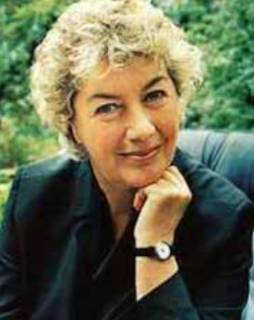
Nuala O’Faolain, Irish journalist, television producer, book reviewer, teacher and writer, is born in Clontarf, Dublin on March 1, 1940. She becomes well known after the publication of her memoirs Are You Somebody? and Almost There. She also writes a biography of Irish criminal Chicago May and two novels.

O’Faolain is the second eldest of nine children. Her father, known as ‘TerryO’ is a well-known Irish journalist, writing the “Dubliners Diary” social column under the pen name Terry O’Sullivan for the Evening Press. She is educated at University College Dublin (UCD), the University of Hull, and the University of Oxford. She teaches for a time at Morley College in London and works as a television producer for the BBC and Raidió Teilifís Éireann.

O’Faolain describes her early life as growing up in a Catholic country which, in her view, fears sexuality and forbids her even information about her body. In her writings she often discusses her frustration at the sexism and rigidity of roles in Catholic Ireland that expect her to marry and have children, neither of which she does.

O’Faolain becomes internationally well known for her two volumes of memoir, Are You Somebody? and Almost There; a novel, My Dream of You; and a history with commentary, The Story of Chicago May. The first three are all featured on The New York Times Best Seller list. Her posthumous novel Best Love, Rosie is published in 2009.

O’Faolain’s formative years coincide with the emergence of the women’s movement, and her ability to expose misogyny in all its forms is formidable, forensic and unremitting. However, her feminism stems from a fundamental belief in social justice. Unlike most commentators, who maintain a detached, lofty tone, she places herself at the centre of things, a high-risk strategy that works because of her broad range of erudition, worn lightly, her courage and a truthfulness that sometimes borders on the self-destructive.

O’Faolain is engaged at least once but never marries. In Are You Somebody? she speaks candidly about her fifteen-year relationship with the journalist Nell McCafferty, who publishes her own memoir, Nell. From 2002 until her death, she lives much of the time with Brooklyn-based attorney John Low-Beer and his daughter Anna. They are registered as domestic partners in 2003.

O’Faolain splits her time between Ireland and New York City. She is diagnosed with metastatic cancer and is interviewed on the Marian Finucane radio show on RTÉ Radio 1 on April 12, 2008, in relation to her terminal illness. She tells Finucane, “I don’t want more time. As soon as I heard I was going to die, the goodness went from life.”

In a last attempt to grasp as much of life as she can, O’Faolain holidays with family members in Sicily and visits Berlin with a group of friends to hear music and see art. She previously tended to avoid Berlin because, through contact with Jewish friends and lovers, she associated it with the Holocaust. She dies at the Blackrock Hospice, Dublin, on May 9, 2008.

O’Faolain wins a Jacob’s Award in 1985 for her work as the producer of the RTÉ One television programme Plain Tales. In 2006, she wins the Prix Femina étranger, a French literary award, for The Story of Chicago May.

O’Faolain is the subject of a film documentary, Nuala: A Life and Death (2011), directed by Patrick Farrelly and Kate O’Callaghan, and produced and narrated by Marian Finucane. Hugo Hamilton‘s novel Every Single Minute (2014) is based on his experiences when accompanying O’Faolain to Berlin shortly before her death.


Leave a comment

The Capture of Alcoy During the War of Spanish Succession

Elements of the Irish Brigade of France under Daniel O’Mahony help capture the town of Alcoy, Spain on January 9, 1708, during the War of Spanish Succession.

O’Mahony comes from a distinguished Munster family. One brother, Dermod, had been a colonel and another, Daniel, a captain in the Irish Jacobite army that left Limerick for the continent in 1691 in what is known as the Flight of the Wild Geese. Daniel is also a brother-in-law of another famous officer of the Irish Brigade of France, the Marshal James FitzJames, 1st Duke of Berwick. Holding the rank of major, O’Mahony achieves great fame for his part in the Battle of Cremona, where the Irish Brigade foils Prince Eugene of Savoy‘s surprise attack on the city in 1702, and has steadily risen through the ranks.

During the War of Spanish Succession, many officers and units of the Irish Brigade serve in Spain fighting the Allies’ attempt to place Archduke Charles, son of Habsburg (Austrian) Emperor Leopold I, on the Spanish throne. In the early part of 1707, O’Mahony commands an unsuccessful attempt to capture the town of Alcoy with a force of about 1,800 men. On January 2, 1708, he arrives at the gates of the city again, but this time he commands a force of over 6,000, including the Irish battalions of Dillon, Berwick and Bourke.

By January 4, O’Mahony’s six guns have breached the walls of Alcoy, but the Allied garrison fights well and repulses attempts to take it on the 5th and 7th with much loss of life on the Franco-Spanish side. With no relief in sight, the garrison’s situation is hopeless. O’Mahony accepts the garrison’s surrender on January 9.

Daniel O’Mahony is one of the finest commanders of all The Wild Geese. After Alcoy he serves in Sicily and then back in Spain again. He is created a Count of Castile and promoted to lieutenant general. One of the Count’s sons, James, also reaches the rank of lieutenant general in the Spanish army and the other, Dermod, becomes the Ambassador of Spain to Austria.

(Pictured: The flag of the Duke of Berwick’s regiment of the Irish Brigade of France)


Leave a comment

Birth of Patrick Hennessy, Irish Realist Painter

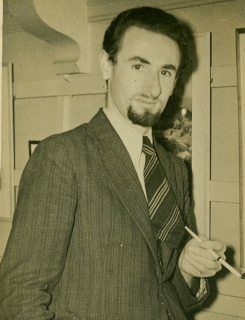
Patrick Anthony Hennessy RHA, Irish realist painter known for his highly finished still lifes, landscapes and trompe-l’œil paintings, is born in Cork, County Cork, on August 28, 1915. The hallmark of his style is his carefully observed realism and his highly finished surfaces, the result of a virtuoso painting technique.

Hennessy is the son of John Hennessy an army sergeant major from County Kerry and Bridget Hennessy from Cork. His father is killed in World War I at the Battle of Passchendaele in 1917. In 1921, when he is five years old, his mother remarries in Cork. Her second husband is a Scot named John Duncan and shortly afterwards the whole family moves to Arbroath, Scotland, where Duncan has relatives.

Hennessy is educated in Arbroath at St. Thomas RC Primary School followed by secondary education at Arbroath High School, where he begins to show an aptitude for art, leaving in 1933 with the Dux for Art and an accompanying medal. In the autumn of 1933 he enrolls at the Dundee of Jordanstone College of Art & Design, for a four-year Diploma course in Drawing and Painting under James McIntosh Patrick and Edward Baird. Here he meets Harry Robertson Craig who becomes his lifelong companion. He plays a full part in the social activities of the college, winning a fancy-dress award at the Christmas revels in 1935 and producing a ballet “Paradise Lost” the following year. He gains a First-Class Pass in each year of the course along with winning first prize in 1934 and 1936 for work done during the summer vacation. He graduates with a First-Class Distinction in 1937.

Having gained a scholarship, Hennessy continues his studies at the Dundee of Jordanstone College of Art & Design for a further year by doing a Post-Graduate Diploma course in Drawing and Painting. Within a month of gaining his Post-Graduate Diploma he holds his first joint exhibition at the Art Galleries in Arbroath. In June 1938 he is awarded the Annual Travelling Scholarship for further studies in Paris and Italy. In Paris he meets up with the artists Robert Colquhoun and Robert MacBryde, whom he had met the previous year, the three travelling south together to Marseilles towards the end of that year. On his return to Scotland he is selected for the residential summer school course at Hospitalfield House near Arbroath under James Cowie. Two of his paintings, a still life and a self-portrait, are accepted that year by the Royal Scottish Academy for their Annual Exhibition. However, by the autumn of 1939 with war looming and feeling somewhat disenchanted on his return to Scotland, he decides to return to Ireland.

On arrival in Dublin Hennessy is offered an exhibition in December 1939 at the Country Shop on St. Stephen’s Green which is opened by Mainie Jellett. This attracts favourable attention. During the early 1940s he lives at various addresses in and around Dublin with frequent trips to Cork. In 1940 he is invited to join the Society of Dublin Painters and holds regular annual exhibitions of his work there during the 1940s and early 1950s. These exhibitions are supplemented by an eclectic mix of commissions, mostly portraits which he undertakes during this period. In 1941 he has three of his paintings accepted by the Royal Hibernian Academy (RHA) for their annual exhibition. This is the beginning of a long relationship with the RHA. He exhibits there virtually every year from 1941 until 1979, the year before his death.

From the early 1940s onwards, Hennessey’s work sometimes incorporates a homosexual visual subtext. He re-unites with Harry Robertson Craig in 1946 and soon after they move to Crosshaven, County Cork, and later to Cobh. In 1947, Time magazine selects him as one of Ireland’s outstanding painters, in recognition of the important position he has then attained in the art world. In 1948 he has an exhibition at the Victor Waddington Gallery, Dublin, and that same year is elected an associate of the Royal Hibernian Academy and a full member the following year. In 1950 his painting De Profundis is selected for the Contemporary Irish Painting exhibition that tours North America. As a result of this tour, the American public and critics begin to take notice of his work. In 1951 he visits Italy, taking in Venice and Sicily and returning to Dublin with many of his canvases painted abroad. One of these paintings, Bronze Horses of St. Marks, is exhibited at the Royal Academy of Arts in London in 1954.

In 1956, a friend of Hennessy, David Hendriks, opens the Ritchie Hendriks Gallery on St. Stephen’s Green, Dublin and it is this gallery that is to be the main outlet for his work over the following 22 years. In October 1956 the Thomas Agnew Gallery in London holds an exhibition of his work comprising 38 of his paintings. However, during the winter of 1959 he becomes seriously ill with pneumonia. As a consequence of this, in the autumn of that year he and Craig decide to winter in Morocco. This is the beginning of a new era in both their lives. They would never again spend a full year in Ireland. His exhibitions at the Ritchie Hendriks Gallery had for many years enjoyed favourable reviews from the art critics but in the 1960s this changes with critics claiming his paintings to be dull, repetitive and suggest he needs to explore new areas. Despite the barrage of criticism, in 1965 the Guildhall Gallery in Chicago offers him a major exhibition. Shortly after this exhibition takes place in 1966, he becomes one of the artists on permanent display at the gallery with an annual exhibition. The North American market is extremely lucrative for him and by the end of the decade he is selling more of his work in the United States than in Ireland. In 1968 he finally moves to Tangier, Morocco on a permanent basis and in 1970 sells his studio on Raglan Lane, Dublin.

In Morocco, Hennessy paints prolifically for nine years to keep up with demand from the Hendriks Gallery and Guildhall Gallery along with the RHA. In 1975 the Guildhall Gallery mounts a highly successful Retrospective of his work. In 1978 he has his last exhibition in Dublin at the Hendriks Gallery. By this time he has moved to the Algarve, Portugal and is beginning to have health problems.

In November 1980, with his health deteriorating, Craig brings Hennessy to a hospital in London for treatment. However, on December 30, 1980 he dies from cancer. Following cremation his ashes are buried in nearby Golders Green Crematorium. He leaves his entire estate to Harry Robertson Craig with the proviso that on Craig’s death the Royal Hibernian Academy should be the beneficiary. This legacy has been used to set up the annual Hennessy Craig Scholarship for aspiring artists.

Hennessy falls into the category of painter who develops a distinctive personal style, labelled at various times in his life as a Traditional Realist, Romantic, Photo Realist, Illusionary and Surrealist. However, he always remains intrinsically himself. His subjects range from still life and interiors to landscapes and portraits.

Examples of Hennessy’s work can be found in the public collections of the Crawford Art Gallery, the Dublin City Gallery The Hugh Lane, the Irish Museum of Modern Art (IMMA), the Limerick City Gallery of Art (LCGA), the National Gallery of Ireland (NGI), the National Self-Portrait Collection of Ireland (NSPCI) at the University of Limerick (UL), and in the collections of University College Cork (UCC) and University College Dublin (UCD).


Leave a comment

Death of Patrick Hennessy, Irish Realist Painter

Patrick Anthony Hennessy RHA, Irish realist painter known for his highly finished still lifes, landscapes and trompe-l’œil paintings, dies in London on December 30, 1980. The hallmark of his style is his carefully observed realism and his highly finished surfaces, the result of a virtuoso painting technique.

Hennessy is born in Cork, County Cork, on August 28, 1915. The son of John Hennessy an army sergeant major from County Kerry and Bridget Hennessy from Cork. His father is killed in World War I at the Battle of Passchendaele in 1917. In 1921, when he is five years old, his mother remarries in Cork. Her second husband is a Scot named John Duncan and shortly afterwards the whole family moves to Arbroath, Scotland, where Duncan has relatives.

Hennessy is educated in Arbroath at St. Thomas RC Primary School followed by secondary education at Arbroath High School, where he begins to show an aptitude for art, leaving in 1933 with the Dux for Art and an accompanying medal. In the autumn of 1933 he enrolls at the Dundee of Jordanstone College of Art & Design, for a four-year Diploma course in Drawing and Painting under James McIntosh Patrick and Edward Baird. Here he meets Harry Robertson Craig who becomes his lifelong companion. He plays a full part in the social activities of the college, winning a fancy dress award at the Christmas revels in 1935 and producing a ballet “Paradise Lost” the following year. He gains a First Class Pass in each year of the course along with winning first prize in 1934 and 1936 for work done during the summer vacation. He graduates with a First Class Distinction in 1937.

Having gained a scholarship, Hennessy continues his studies at the Dundee of Jordanstone College of Art & Design for a further year by doing a Post-Graduate Diploma course in Drawing and Painting. Within a month of gaining his Post-Graduate Diploma he holds his first joint exhibition at the Art Galleries in Arbroath. In June 1938 he is awarded the Annual Travelling Scholarship for further studies in Paris and Italy. In Paris he meets up with the artists Robert Colquhoun and Robert MacBryde, whom he had met the previous year, the three travelling south together to Marseilles towards the end of that year. On his return to Scotland he is selected for the residential summer school course at Hospitalfield House near Arbroath under James Cowie. Two of his paintings, a still life and a self-portrait, are accepted that year by the Royal Scottish Academy for their Annual Exhibition. However, by the autumn of 1939 with war looming and feeling somewhat disenchanted on his return to Scotland, he decides to return to Ireland.

On arrival in Dublin Hennessy is offered an exhibition in December 1939 at the Country Shop on St. Stephen’s Green which is opened by Mainie Jellett. This attracts favourable attention. During the early 1940s he lives at various addresses in and around Dublin with frequent trips to Cork. In 1940 he is invited to join the Society of Dublin Painters and holds regular annual exhibitions of his work there during the 1940s and early 1950s. These exhibitions are supplemented by an eclectic mix of commissions, mostly portraits which he undertakes during this period. In 1941 he has three of his paintings accepted by the Royal Hibernian Academy (RHA) for their annual exhibition. This is the beginning of a long relationship with the RHA. He exhibits there virtually every year from 1941 until 1979, the year before his death.

From the early 1940s onwards, Hennessey’s work sometimes incorporates a homosexual visual subtext. He re-unites with Harry Robertson Craig in 1946 and soon after they move to Crosshaven, County Cork, and later to Cobh. In 1947, Time magazine selects him as one of Ireland’s outstanding painters, in recognition of the important position he has then attained in the art world. In 1948 he has an exhibition at the Victor Waddington Gallery, Dublin, and that same year is elected an associate of the Royal Hibernian Academy and a full member the following year. In 1950 his painting De Profundis is selected for the Contemporary Irish Painting exhibition that tours North America. As a result of this tour, the American public and critics begin to take notice of his work. In 1951 he visits Italy, taking in Venice and Sicily and returning to Dublin with many of his canvases painted abroad. One of these paintings, Bronze Horses of St. Marks, is exhibited at the Royal Academy of Arts in London in 1954.

In 1956, a friend of Hennessy, David Hendriks, opens the Ritchie Hendriks Gallery on St. Stephen’s Green, Dublin and it is this gallery that is to be the main outlet for his work over the following 22 years. In October 1956 the Thomas Agnew Gallery in London holds an exhibition of his work comprising 38 of his paintings. However, during the winter of 1959 he becomes seriously ill with pneumonia. As a consequence of this, in the autumn of that year he and Craig decide to winter in Morocco. This is the beginning of a new era in both their lives. They would never again spend a full year in Ireland. His exhibitions at the Ritchie Hendriks Gallery had for many years enjoyed favourable reviews from the art critics but in the 1960s this changes with critics claiming his paintings to be dull, repetitive and suggest he needs to explore new areas. Despite the barrage of criticism, in 1965 the Guildhall Gallery in Chicago offers him a major exhibition. Shortly after this exhibition takes place in 1966 he becomes one of the artists on permanent display at the gallery with an annual exhibition. The North American market is extremely lucrative for him and by the end of the decade he is selling more of his work in the United States than in Ireland. In 1968 he finally moves to Tangier, Morocco on a permanent basis and in 1970 sells his studio on Raglan Lane, Dublin.

In Morocco, Hennessy paints prolifically for nine years to keep up with demand from the Hendriks Gallery and Guildhall Gallery along with the RHA. In 1975 the Guildhall Gallery mounts a highly successful Retrospective of his work. In 1978 he has his last exhibition in Dublin at the Hendriks Gallery. By this time he has moved to the Algarve, Portugal and is beginning to have health problems.

In November 1980, with his health deteriorating, Craig brings Hennessy to a hospital in London for treatment. However, on December 30, 1980 he dies from cancer. Following cremation his ashes are buried in nearby Golders Green Crematorium. He leaves his entire estate to Harry Robertson Craig with the proviso that on Craig’s death the Royal Hibernian Academy should be the beneficiary. This legacy has been used to set up the annual Hennessy Craig Scholarship for aspiring artists.

Hennessy falls into the category of painter who develops a distinctive personal style, labelled at various times in his life as a Traditional Realist, Romantic, Photo Realist, Illusionary and Surrealist. However, he always remains intrinsically himself. His subjects range from still life and interiors to landscapes and portraits.

Examples of Hennessy’s work can be found in the public collections of the Crawford Art Gallery, the Dublin City Gallery The Hugh Lane, the Irish Museum of Modern Art (IMMA), the Limerick City Gallery of Art (LCGA), the National Gallery of Ireland (NGI), the National Self-Portrait Collection of Ireland (NSPCI) at the University of Limerick (UL), and in the collections of University College Cork (UCC) and University College Dublin (UCD).


4 Comments

Republic of Ireland’s First World Cup Finals Match

The Republic of Ireland plays their first ever match in the finals of the World Cup, drawing 1-1 with England in Cagliari, Sardinia on June 11, 1990.

At Italia ’90 the Irish team is drawn in a very tough Group F that includes European champions the Netherlands, African footballing power Egypt, and England. This is something of a coincidence as the English and the Dutch were also in Ireland’s UEFA Euro 1988 group. The tournament organisers are fearful that this grouping might lead to crowd disorder particularly between the English and Dutch fans. The group is based on the Italian islands of Sicily and Sardinia and security is very tight with alcohol bans in place on match days.

Ireland’s first match at a World Cup finals competition is against their longtime foe England. The English are seeking revenge for their surprise defeat by the Irish in the opening group match at Euro ’88. Once again Bobby Robson‘s English team is expected to beat Ireland and his players underline that by taking an early lead through an eight-minute goal from Gary Lineker. Despite Ireland getting a greater foothold in the second half an equaliser is elusive until an error by Steve McMahon allows Kevin Sheedy to score in the 73rd minute.

Ireland’s next matches are against Egypt and the Netherlands, both played in Palermo and both ending in a draw. The Irish team finishes group play with 0 wins, 0 losses and 3 draws. England registers the only win in the group, beating Egypt. The three European teams progress into the next round.

In the knock-out round Ireland avoids drawing West Germany, the ultimate winner of the 1990 World Cup. They draw Romania as their first opponent and end regulation in yet another draw in Genoa. A penalty shoot-out follows and after the first eight penalties the teams are still tied at 4-4. Irish goalkeeper Packie Bonner blocks Romania’s fifth penalty kick. David O’Leary steps up confidently and sends his kick past the goalkeeper and into the net. Ireland has advanced to the quarterfinals at the first attempt.

Ireland bows out at the quarterfinals stage losing by a single goal to the hosts, Italy, at the Stadio Olimpico in Rome. It is a very strange campaign in that Ireland does not win any of their matches, scores only two goals, and plays in some really poor matches in terms of quality of play. Notwithstanding this the Irish over-achieves which is fully appreciated by the Irish supporters. The green army stays on in the Stadio Olimpico long after the final whistle to laud manager Jack Charlton and his gallant squad.

(From: “Ireland at 1990 World Cup Finals in Italy,” Soccer-Ireland.com, http://www.soccer-ireland.com | Photograph by Ray McManus / SPORTSFILE)


1 Comment

The Battle of Cremona

The Irish Brigade of France adds to its growing reputation as elements of the Brigade fight at the Battle of Cremona on February 1, 1702, during the War of the Spanish Succession between a French force under François de Neufville, duc de Villeroy, and an Imperial/Austrian army led by Prince Eugene of Savoy.

The Duchies of Milan and Mantua are strategically important as the key to southern Austria. The French take possession of both in early 1701 but Emperor Leopold then sends Prince Eugene to recapture them. He is an extremely capable general who easily out manoeuvres his French counterparts, winning battles at Carpi and Chieri, after which his army takes up winter quarters in the pro-French Duchy of Mantua. Lack of funds and supplies from Vienna means Eugene has to improvise; since campaigning in the winter months is not usually done, he hopes to take the French by surprise.

Eugene has a contact inside Cremona, a priest named Cuzzoli. On the night of January 31, 1702, he admits a party of Imperial grenadiers by means of a hidden culvert and they seize control of the St. Margaret Gate. Once open, approximately 4,000 troops led by Prince Eugene in person take the French by surprise, many being killed as they emerge from their barracks, and François de Neufville captured in his quarters.

A second and larger force under Charles Thomas, Prince of Vaudémont intends to storm the Po gate and the Citadel but is late in arriving. This gives the garrison time to destroy a vital bridge and prepare, the assault being repulsed by two units of the Irish Brigade, the Régiment de Dillon and the Régiment de Bourke. The defenders now regroup and counterattack. With daylight and a French relief force arriving, Prince Eugene orders his troops to withdraw, the Austrians having suffered an estimated 1,600 casualties, the French around 1,100.

The two Irish units lose an estimated 350 out of 600 men engaged. Their commander, Major Daniel O’Mahoney, is later presented to Louis XIV and knighted by the Stuart exile James III. He goes on to have a distinguished career, fighting in Spain and Sicily. He ends as a Lieutenant-General and dies in Ocaña, Spain in 1714.

François de Neufville is soon released but his capture is commemorated in verse; Par la faveur de Bellone, et par un bonheur sans égal, nous avons conservé Crémone et perdu notre général (By the favour of Bellone, and a happiness without equal, we saved Crémone and lost our general).

The battle is also commemorated as a march entitled ‘The Battle of Cremona’ later used in the Irish Brigade.


Leave a comment

Birth of Robert Blair “Paddy” Mayne

robert-blair-paddy-mayne

Robert Blair “Paddy” Mayne, British Army soldier, solicitor, Ireland rugby union international, amateur boxer, and a founding member of the Special Air Service (SAS), is born in Newtownards, County Down, on January 11, 1915.

Mayne attends school at Regent House School, a school for students aged 4 to 18. While at Regent he discovers his skill and love for the game of rugby. He also enjoys cricket and golf and becomes a marksman with the rifle club. He goes on to Queen’s University Belfast to study law. At university he takes up boxing and becomes the Irish Universities Heavyweight Champion in August 1936. He also wins the Scrabo Golf Club President’s cup in 1937. He graduates from Queen’s University in 1939.

During 1938, Mayne travels to Africa on the 1938 British Lions Tour to South Africa. He plays on a team that tours around Africa playing other local clubs. While traveling, it is discovered that Mayne has a wild side and on various occasions finds himself in trouble. His “go to” is to trash the hotel rooms of his teammates. The team includes some of the best players from around Ireland and Britain.

In 1939, with outbreak of World War II, Mayne joins the Supplementary Reserves in Newtownards and receives a commission in the Royal Artillery. He serves in several units in Ireland and England, generally with light and heavy anti-aircraft units. He volunteers for the No. 11 (Scottish) Commando unit which is sent to the Middle East. There he sees action during the Syria-Lebanon campaign. Specifically, during the Battle of the Litani River, he draws attention from Captain David Stirling who is forming the new Special Air Service (SAS). Sterling recruits Mayne for the new SAS while he is in jail for striking his commanding officer.

From November 1941 to the end of 1942, Mayne is involved in several raids behind enemy lines with the SAS. He uses jeeps to go to various Axis bases and begin blowing up planes and fuel dumps. It is claimed that he personally destroyed 100 planes during these missions. In addition to serving in the Middle East, he serves as well in Sicily, Italy, Belgium, the Netherlands, Germany, Norway and France. In most of these locations he works with the resistance behind the enemy lines. In France he helps to train the French Resistance.

By the end of the war, Mayne has been promoted to the rank of Lieutenant Colonel and has also received the British Army’s Distinguished Service Order with three bars, which means he received the award four times. After the war he joins the British Antarctic Survey in the Falkland Islands. He returns home to Newtownards when back issues, which started while he was serving in the Middle East, become more difficult for him.

Mayne is initiated into Eklektikos Lodge No. 542 in Newtownards in 1945. He is a very enthusiastic mason and joins a second lodge in Newtownards, Friendship Lodge No. 447. On the evening of December 13, 1955, he attends a meeting of Friendship Lodge and then joins some of his masonic brothers at a local bar. At about 4:00 AM on December 14, he is found dead in his Riley RM roadster in Mill Street, Newtownards, having reportedly collided with a farmer’s vehicle.

At his funeral hundreds of mourners turn out to pay their respects and to see him interred in a family plot in the town’s old Movilla Abbey graveyard. After his death his masonic jewel is preserved for many years by an old school friend before it is presented to Newtownards Borough Council where it is displayed in the Mayoral Chamber of the Council Offices.