seamus dubhghaill

Promoting Irish Culture and History from Little Rock, Arkansas, USA


Leave a comment

Birth of Poet Charles Wolfe

charles-wolfe

Charles Wolfe, Irish poet, is born at Blackhall, County Kildare, on December 14, 1791. He is chiefly remembered for “The Burial of Sir John Moore after Corunna” which achieves popularity in 19th century poetry anthologies.

Wolfe is the youngest son of Theobald Wolfe of Blackhall and his wife Frances, who is also his cousin and daughter of the Rev. Peter Lombard of Clooncorrick Castle, Carrigallen, County Leitrim. He is a brother of Peter Wolfe, High Sheriff of Kildare. His father is the godfather, but widely believed to be the natural father, of Theobald Wolfe Tone and the first cousin of Arthur Wolfe, 1st Viscount Kilwarden.

Not long after he is born, his father dies, and the family moves to England. In 1801, Wolfe is sent to a school in Bath but is sent home a few months later due to ill health. From 1802 to 1805, he is tutored by a Dr. Evans in Salisbury before being sent to Hyde Abbey School, Winchester. In 1808, his family returns to Ireland, and the following year he enters Trinity College, Dublin, graduating in 1814.

Wolfe is ordained as a Church of Ireland priest in 1817, first taking the Curacy of Ballyclog in County Tyrone before transferring almost immediately to Donaghmore, County Tyrone. There he develops a close friendship and deep respect for the Rev. Thomas Meredith, Rector of nearby Ardtrea, and a former Fellow of Trinity College Dublin. Wolfe writes two epitaphs for Meredith, one on his memorial in the parish church of Ardtrea, and another intended for his tomb.

Wolfe is best remembered for his poem “The Burial of Sir John Moore after Corunna”, written in 1816 and much collected in 19th and 20th century anthologies. The poem first appears anonymously in the Newry Telegraph of April 19, 1817, and is reprinted in many other periodicals. But it is forgotten until after his death when Lord Byron draws the attention of the public to it. Wolfe’s only volume of verse, Poetical Remains, appears in 1825 with “The Burial of Sir John Moore” and fourteen other verses of an equally high standard.

Wolfe remains at Donaghmore until 1820 but, rejected by the woman for whom he gave up his academic career, and with Meredith, his only real friend in County Tyrone, now dead, he moves to Southern France. Shortly before his death he returns to Ireland and lives at Cobh, County Cork, where he dies at the age of 31 of consumption, which he catches from a cow. He is buried in Cobh at Old Church Cemetery. There is also a plaque to his memory in the church at Castlecaulfield, the village where he lives whilst Curate at Donaghmore, as well as a marble monument to him at St. Patrick’s Cathedral, Dublin.

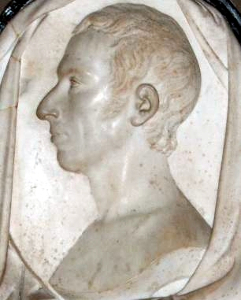
(Pictured: Bas-relief of Charles Wolfe in St. Patrick’s Cathedral, Dublin)


Leave a comment

Death of Samuel Lover, Songwriter & Painter

Samuel Lover, Irish songwriter, composer, novelist, and a painter of portraits, chiefly miniatures, dies on July 6, 1868. He was the grandfather of composer, cellist, and conductor Victor Herbert.

Lover is born at number 60 Grafton Street, Dublin and goes to school at Samuel Whyte’s at 79 Grafton Street, now home to Bewley’s, an Irish hot beverage company. By 1830 he is secretary of the Royal Hibernian Academy and lives at number 9 D’Olier Street. In 1835 he moves to London and begins composing music for a series of comic stage works. To some of them, like the operetta Il Paddy Whack in Italia (1841), he contributes both words and music, for others he merely contributes a few songs.

Lover produces a number of Irish songs, of which several – including The Angel’s Whisper, Molly Bawn, and The Four-leaved Shamrock – attain great popularity. He also writes novels, of which Rory O’Moore and Handy Andy are the best known, and short Irish sketches which, with his songs, he combines into a popular entertainment called Irish Nights or Irish Evenings. With the latter, he tours North America between 1846 and 1848. He joins with Charles Dickens in founding Bentley’s Magazine.

Lover’s grandson is composer Victor Herbert whose mother is Lover’s daughter Fanny. Irish-born and German-raised, Herbert is best known for his many successful musicals and operettas that premiere on Broadway. As a child he stays with the Lovers in a musical environment following the death of his father.

Samuel Lover dies on July 6, 1868, in Saint Helier on Jersey. A memorial in St. Patrick’s Cathedral, Dublin summarises his achievements:

Poet, painter, novelist and composer, who, in the exercise of a genius as distinguished in its versatility as in its power, by his pen and pencil illustrated so happily the characteristics of the peasantry of his country that his name will ever be honourably identified with Ireland.


Leave a comment

Birth of Artist Sarah Henrietta Purser

Sarah Henrietta Purser, Irish artist mainly noted for her work with stained-glass, is born on March 22, 1848, in Kingstown (now Dún Laoghaire) in County Dublin, and raised in DungarvanCounty Waterford. She is educated in Switzerland and afterwards studies at the Metropolitan School of Art in Dublin and in Paris at the Académie Julian.

Purser works mostly as a portraitist. She is also associated with the stained-glass movement, founding a stained-glass workshop, An Túr Gloine, in 1903. Some of her stained-glass work is commissioned from as far as New York City, including a window at Christ Church, Pelham dedicated to the memory of Katharine Temple Emmet and Richard Stockton Emmet, grandson of the Irish patriot, Thomas Addis Emmet. Through her talent and energy and owing to her friendship with the Gore-Booths, she is very successful in obtaining commissions, famously commenting, “I went through the British aristocracy like the measles.”

In 1977 Bruce Arnold noted, “some of her finest and most sensitive work was not strictly portraiture, for example, An Irish Idyll in the Ulster Museum, and Le Petit Déjeuner (in the National Gallery of Ireland).”

Sarah Purser becomes wealthy through astute investments, particularly in Guinness. She is very active in the art world in Dublin and is involved in the setting up of the Hugh Lane Municipal Gallery, persuading the Irish government to provide Charlemont House to house the gallery. In 1923 she becomes the first female member of the Royal Hibernian Academy.

Until her death she lives for years in Mespil House, a Georgian mansion with beautiful plaster ceilings on Mespil Road, on the banks of the Grand Canal. After her death in Dublin on August 7, 1943, it is demolished and is developed into apartments. She is buried in Mount Jerome Cemetery in Dublin.


Leave a comment

Death of John Comyn, Archbishop of Dublin

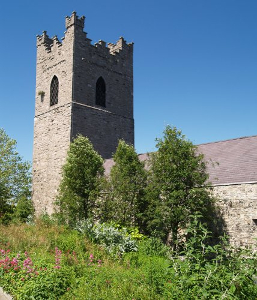
st-audoens-church

John Comyn, Archbishop of Dublin, dies on October 25, 1212, and is buried in Christ Church Cathedral.

Born in England in 1150, Comyn is chaplain to King Henry II of England and on his “urgent” recommendation is elected Archbishop of Dublin following the death of St. Laurence O’Toole in 1180. He has been a Benedictine monk at the Evesham Abbey.

In 1181, he is elected to the archbishopric of Dublin by some of the clergy of Dublin, who have assembled at Evesham for the purpose. He is not then a priest, but is subsequently, in the same year, ordained such, at Velletri, and on Palm Sunday is consecrated archbishop by Pope Lucius III. The following year the pope grants him manors and lands in and around Dublin, which subsequently form the Manor of St. Sepulchre, which remains under the authority of the Archbishop of Dublin until the 19th century. The pope also, in an effort to protect the Dublin archbishopric from claims from Canterbury, extends certain privileges to Comyn, which intensifies the rivalry between the sees of Dublin and Armagh for the Primacy of Ireland.

Comyn waits three years before visiting Ireland, until he is sent there by King Henry to prepare the reception of his son, Prince John. The king grants him lands and privileges which make him a Lord of Parliament. After his arrival in Ireland, John grants Comyn the Bishopric of Glendalough, with all its appurtenances in lands, manors, churches, tithes, fisheries, and liberties, although Comyn never has an opportunity to take this up in his lifetime. Under Pope Urban III, Comyn carries out a number of reforms of the Irish church to bring it into line with the church in England and in continental Europe.

In 1189, Archbishop Comyn assists at the coronation of King Richard I. The following year he demolishes the old parish church of St. Patrick, south of Dublin, and erects a new building, next to his Palace of St. Sepulchre, which he elevates to the status of a collegiate church, and which later becomes St. Patrick’s Cathedral. This enables him to rule in his own Liberty, without the interference of mayor and citizens. About the same time, he enlarges the choir of Christ Church Cathedral.

Prince John grants Comyn further legal rights throughout the country of Ireland, while Comyn also receives the church and lands of All Hallows, to the northeast of Dublin. Between Lusk and Swords, he founds the convent of Grace Dieu, which later becomes wealthy through grants from the Anglo-Norman prelates and magnates. However, when Hamo de Valoniis is appointed Justiciar of Ireland he seizes some of these lands for the treasury, with a good portion for himself, and a dispute arises which causes Comyn to flee for his own safety to Normandy. Comyn appeals to Pope Innocent III, who settles the dispute, but John is angered by the actions of Comyn and does not reconcile himself with him until 1206.

Comyn dies six years later and is buried in Christ Church Cathedral, where a marble monument is erected to his memory. Two years later William Piro, Bishop of Glendalough, dies, whereupon the union of the sees granted by King John takes place.

(Pictured: St. Audoen’s Church, the only remaining authentic medieval church in Dublin, built by Archbishop John Comyn around 1190)


Leave a comment

Birth of Playwright & Poet Lennox Robinson

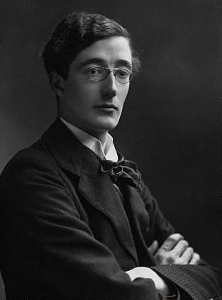
lennox-robinson

Esmé Stuart Lennox Robinson, playwright, poet, theatre producer, and director who is involved with the Abbey Theatre, is born in Westgrove, Douglas, County Cork, on October 4, 1886.

Robinson is raised in a Protestant and Unionist family in which he is the youngest of seven children. His father, Andrew Robinson, is a middle-class stockbroker who in 1892 decides to become a clergyman in the Church of Ireland in the small Ballymoney parish, near Ballineen in West Cork. A sickly child, Robinson is educated by private tutor and at Bandon Grammar School. In August 1907, his interest in the theatre begins after he goes to see an Abbey production of plays by W.B. Yeats and Lady Gregory at the Cork Opera House. He publishes his first poem that same year. His first play, The Cross Roads, is performed in the Abbey in 1909 and he becomes manager of the theatre towards the end of that year. He resigns in 1914 as a result of a disastrous tour of the United States but returns in 1919. He is appointed to the board of the theatre in 1923 and continues to serve in that capacity until his death. His Abbey career and production involvement can be found in the Abbey archives.

As a playwright, Robinson shows himself as a nationalist with plays like Patriots (1912) and Dreamers (1915). On the other hand, he belongs to a part of Irish society which is not seen as fully Irish. This division between the majority native Irish (Roman Catholics) on one side and the Anglo-Irish (Protestants) on the other can be seen in a play such as The Big House (1926), which depicts the burning of a Protestant manor home by the Irish Republican Army (IRA). Robinson’s most popular play is The Whiteheaded Boy (1916).

Other plays include Crabbed Youth and Age (1924), The Far Off Hills (1928), Drama at Inish (1933), and Church Street (1935). Drama at Inish, which is presented in London and on Broadway as Is Life Worth Living?, is revived as part of the 2011 season at the Shaw Festival at Niagara-on-the-Lake, Ontario, Canada, with Mary Haney in the role of Lizzie Twohig. Robinson’s fiction includes Eight Short Stories (1919). In 1931 he publishes a biography of Bryan Cooper, who had recently died. In 1951, he publishes Ireland’s Abbey Theatre, the first full-length history of the company.

He publishes an edited edition of Lady Gregory’s diaries in 1947. In 1958 he co-edits with Donagh MacDonagh The Oxford Book of Irish Verse. He is also a director and producer, in 1930 producing a play by Irish playwright Teresa Deevy called The Reapers. In 1931 he is co-director of A Disciple along with W.B. Yeats and Walter Starkie.

Melancholic and alcoholic in later years, Lennox Robinson dies in Monkstown, County Dublin, on October 15, 1958. He is buried St. Patrick’s Cathedral.


Leave a comment

Assassination of Robert F. Kennedy

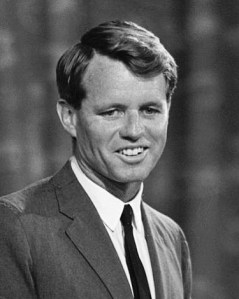
robert-f-kennedy

Robert F. Kennedy, Irish-American, United States Senator, Democratic presidential candidate, and brother of assassinated President John F. Kennedy, dies on June 6, 1968 in Los Angeles, California after being shot in the early morning hours of June 5.

After winning the California and South Dakota primary elections for the Democratic nomination for President of the United States and speaking to supporters in a ballroom at the Ambassador Hotel, Kennedy walks through the kitchen area frequently shaking hands with those he encounters. Kennedy starts down a passageway narrowed by an ice machine against the right wall and a steam table to the left. He turns to his left and shakes hands with busboy Juan Romero just as Sirhan Sirhan, a 24-year-old Palestinian/Jordanian immigrant, steps down from a low tray-stacker beside the ice machine and repeatedly fires what is later identified as a .22 caliber Iver-Johnson Cadet revolver.

After Kennedy had falls to the floor, former FBI agent William Barry sees Sirhan holding a gun and hits him twice in the face while others force Sirhan against the steam table and disarmed him as he continues firing his gun in random directions. Five other people are also wounded.

Kennedy is transferred several blocks to Good Samaritan Hospital for surgery. Surgery begins at 3:12 AM PDT and lasts three hours and 40 minutes. Despite extensive neurosurgery to remove bullet and bone fragments from his brain, his condition remains extremely critical until he dies at 1:44 AM PDT on June 6, nearly 26 hours after the shooting.

Sirhan pleads guilty on April 17, 1969, and is sentenced to death. The sentence is commuted to life in prison in 1972 after the California Supreme Court, in its decision in California v. Anderson, invalidates all pending death sentences imposed in California prior to 1972. Since that time, Sirhan has been denied parole fifteen times and is currently confined at the Richard J. Donovan Correctional Facility in southern San Diego County.

Kennedy’s body lay in repose at St. Patrick’s Cathedral in New York City for two days before a funeral Mass is held on June 8. His body is interred near his brother at Arlington National Cemetery in Washington, D.C. His death prompts the protection of presidential candidates by the United States Secret Service. Hubert Humphrey later goes on to win the Democratic nomination for the presidency, but ultimately loses the election to Republican Richard Nixon.

As with his brother’s death, Kennedy’s assassination and the circumstances surrounding it have spawned a variety of conspiracy theories. Kennedy remains one of only two sitting United States Senators to be assassinated, the other being Huey Long.


Leave a comment

First Performance of Handel’s Messiah

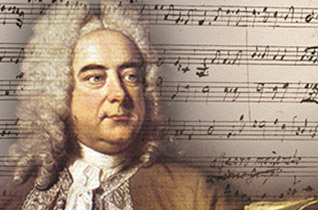
george-friedrich-handel

George Friedrich Handel’s Messiah is performed for the first time at Mr. Neale’s Great Musick Hall on Fishamble Street in Dublin on April 13, 1742. It receives its London premiere nearly a year later. After an initially modest public reception, the oratorio gains in popularity, eventually becoming one of the best known and most frequently performed choral works in Western music.

Handel decides to give a season of concerts in Dublin in the winter of 1741–42 arising from an invitation from the Duke of Devonshire, then serving as Lord Lieutenant of Ireland. After arriving in Dublin on November 18, 1741, Handel arranges a subscription series of six concerts, to be held between December 1741 and February 1742 at the Great Musick Hall on Fishamble Street. These concerts are so popular that a second series is quickly arranged. Messiah figures in neither series.

In early March, Handel begins discussions with the appropriate committees for a charity concert, to be given in April, at which he intends to present Messiah. He seeks and is given permission from St. Patrick’s Cathedral and Christ Church Cathedral to use their choirs for this occasion. The women soloists are Christina Maria Avoglio, who sang the main soprano roles in the two-subscription series, and Susannah Cibber, an established stage actress and contralto who sang in the second series. The performance, also in the Fishamble Street hall, is originally announced for April 12, but is deferred for one day “at the request of persons of Distinction.” The orchestra in Dublin, the exact size of which is unknown, is comprised of strings, two trumpets, and timpani. Handel has his own organ shipped to Ireland for the performances.

The three charities benefit from the performance – the prisoners’ debt relief, the Mercer’s Hospital, and the Charitable Infirmary. In its report on a public rehearsal, the Dublin News-Letter describes the oratorio as “… far surpassing anything of that Nature which has been performed in this or any other Kingdom.” Seven hundred people attend the premiere on April 13. In order to accommodate the largest possible audience, gentlemen are requested to remove their swords and ladies are asked not to wear hoops in their dresses. The performance earns unanimous praise from the assembled press: “Words are wanting to express the exquisite delight it afforded to the admiring and crowded Audience.” A Dublin clergyman, Rev. Delaney, is so overcome by Susanna Cibber’s rendering of “He was despised” that he reportedly leaps to his feet and cries, “Woman, for this be all thy sins forgiven thee!” The takings amount to around £400, providing about £127 to each of the three nominated charities and securing the release of 142 indebted prisoners.

Handel remains in Dublin for four months after the premiere. He organises a second performance of Messiah on June 3, which is announced as “the last Performance of Mr. Handel’s during his Stay in this Kingdom.” In this second Messiah, which is for Handel’s private financial benefit, Cibber reprises her role from the first performance, although details of other performers are not recorded.


Leave a comment

John Comyn Elected Archbishop of Dublin

John Comyn is elected Archbishop of Dublin and consecrated by the pope at Velletri on March 21, 1181. He is the first Englishman to be appointed to an Irish see.

He is chaplain to King Henry II of England and on his “urgent” recommendation is elected Archbishop of Dublin following the death of St. Laurence O’Toole in 1180. He has been a Benedictine monk at the Evesham Abbey.

In 1181, some of the clergy of Dublin assemble at Evesham and Comyn is elected to the archbishopric of Dublin. He is not then a priest but is subsequently ordained such later in the year at Velletri and on Palm Sunday, March 21, is consecrated archbishop by Pope Lucius III. The following year the pope grants him manors and lands in and around Dublin, which subsequently form the Manor of St. Sepulchre which remains under the authority of the Archbishop of Dublin until the 19th century. The pope also, in an effort to protect the Dublin archbishopric from claims from Canterbury, extends certain privileges to Comyn, which intensifies the rivalry between the sees of Dublin and Armagh for the Primacy of Ireland.

Comyn waits three years before visiting Ireland, until he is sent there by King Henry to prepare the reception of his son, Prince John. The king grants him lands and privileges which make him a Lord of Parliament. After his arrival in Ireland, John grants Comyn the Bishopric of Glendalough, although Comyn never has an opportunity to take this up in his lifetime. Under Pope Urban III, Comyn carries out a number of reforms of the Irish church to bring it into line with the church in England and in continental Europe.

In 1189, Archbishop Comyn assists at the coronation of King Richard I. The following year he demolishes the old parish church of St. Patrick, south of Dublin. He then erects a new building, next to his Palace of St. Sepulchre, which he elevates to the status of a collegiate church and later becomes St. Patrick’s Cathedral. This enables him to rule in his own Liberty, without the interference of mayor and citizens. Around this time, he enlarges the choir of Christ Church Cathedral.

Prince John grants Comyn further legal rights throughout the country of Ireland, while Comyn also receives the church and lands of All Hallows to the northeast of Dublin. Between Lusk and Swords, he founds the convent of Grace Dieu Abbey, which later becomes wealthy through grants from the Anglo-Norman prelates and magnates. However, when Hamo de Valoniis is appointed Justiciar of Ireland he seizes some of these lands for the treasury and himself. A dispute arises which causes Comyn to flee for his own safety to Normandy. Comyn appeals to Pope Innocent III, who settles the dispute, but John is angered by the actions of Comyn and does not reconcile himself with him until 1206.

Comyn dies six years later on October 25, 1212, and is buried in Christ Church Cathedral, where a marble monument is erected to his memory. Two years later William Piro, Bishop of Glendalough, dies whereupon the union of the sees granted by King John takes place.


Leave a comment

LGBT Group Marches in 1991 NYC St. Patrick’s Day Parade

For the first time in the 230-year history of the New York City St. Patrick’s Day parade, members of an LGBT group, the Irish Lesbian & Gay Organisation, are allowed to march in the parade on March 16, 1991.

New York Mayor David N. Dinkins gives up the traditional lead-off position in the parade and instead marches with the Irish gay group more than two hours later. It marks the first time in memory that a New York City mayor has declined to lead a St. Patrick’s Day Parade.

On March 14, Dinkins agrees to march with the gay group “for reasons we all understand” as part of a compromise to get the group into the parade. The mayor and the 135-member gay group are guests of Division 7 of the Ancient Order of Hibernians, the midtown Manhattan chapter of the fraternal order that sponsors and organizes the parade.

Normally, politicians jockey for high-profile spots in the parade, which is billed as the world’s largest civilian parade. No mayor has ever been in the difficult spot of trying to resolve such a public dispute between Irish American groups, which have long been political powers in New York City, and gay groups, which have gained strength and are an important part of the coalition that helped bring Dinkins to office.

Police officials have 3,100 officers along the parade route to provide security for the estimated one million spectators and 150,000 people marching in the parade. The parade costs the city more than $500,000 in overtime for police, sanitation, traffic, and other employees.

Dinkins is booed for nearly 40 blocks, briefly showered with beer, and dodges two thrown beer cans as he and other elected officials march up Fifth Avenue with the gay Irish group.

Governor Mario M. Cuomo also gives up a place at the front of the parade, marching with a group of handicapped children in wheelchairs that had been denied a place among the bands and bagpipes until they threatened to sue the parade organizers.

Cardinal John O’Connor, who in past parades has come down the steps of St. Patrick’s Cathedral to greet passing dignitaries, makes most of them come to him.

As in previous years, some marchers wear green sashes reading, “Free Joe Doherty,” referring to the Irish Republican Army soldier jailed in New York City. Others wear yellow ribbons to honor soldiers returning home from the Persian Gulf war. But the dispute about the homosexuals is the focus for much of the march.

After the parade, Dinkins says although he expected to draw protests for marching with the lesbian and gay group, he is surprised by the depth of anger directed against him and the homosexual marchers. “It was like marching in Birmingham, Alabama during the civil rights movement,” he said. “I knew there would be deep emotions, but I did not anticipate the cowards in the crowd. There was far, far too much negative comment.”


Leave a comment

Birth of Dr. Douglas Hyde, First President of Ireland

douglas-hyde

Dr. Douglas Hyde, Gaelic scholar and the first President of Ireland, is born at Longford House in Castlerea, County Roscommon, on January 17, 1860. In 1867, his father is appointed prebendary and rector of Tibohine, and the family moves to neighbouring Frenchpark, in County Roscommon. He is home schooled by his father and his aunt due to a childhood illness. While a young man, he becomes fascinated with hearing the old people in the locality speak the Irish language.

Rejecting family pressure to follow previous generations with a career in the Church, Hyde instead becomes an academic. He enters Trinity College, Dublin, where he gains a great facility for languages, learning Latin, Greek, Hebrew, French, and German, but his great passion in life is the preservation of the Irish language.

After spending a year teaching modern languages in Canada, Hyde returns to Ireland. For much of the rest of his life he writes and collects hundreds of stories, poems, and folktales in Irish, and translates others. His work in Irish helps to inspire many other literary writers, such as W.B. Yeats and Lady Gregory.

In 1892, Hyde helps establish the Gaelic Journal and in November of that year writes a manifesto called The necessity for de-anglicising the Irish nation, arguing that Ireland should follow her own traditions in language, literature, and even in dress.

In 1893, Hyde founds the Gaelic League (Conradh na Gaeilge) along with Eoin MacNeill and Fr. Eugene O’Growney and serves as its first president. Many of the new generation of Irish leaders who play a central role in the fight for Irish independence in the early twentieth century, including Patrick Pearse, Éamon de Valera, Michael Collins, and Ernest Blythe first become politicised and passionate about Irish independence through their involvement in the Gaelic League. Hyde does not want the Gaelic League to be a political entity, so when the surge of Irish nationalism that the Gaelic League helps to foster begins to take control of many in the League and politicize it in 1915, Hyde resigns as president.

Hyde takes no active part in the armed upheaval of the 1910s and 1920s, but does serve in Seanad Éireann, the upper house of the Irish Free State’s Oireachtas, as a Free State senator in 1925-26. He then returns to academia, as Professor of Irish at University College Dublin, where one of his students is future Attorney General and President of Ireland Cearbhall Ó Dálaigh.

In 1938, Hyde is unanimously elected to the newly created position of President of Ireland, a post he holds until 1945. Hyde is inaugurated on June 26, 1938, in the first inaugural ceremony in the nation’s history. Despite being placed in a position to shape the office of the presidency via precedent, Hyde by and large opts for a quiet, conservative interpretation of the office. In April 1940 he suffers a massive stroke and plans are made for his lying-in-state and state funeral, but to the surprise of everyone he survives, albeit paralysed and confined to a wheelchair. One of Hyde’s last presidential acts is a visit to the German ambassador Eduard Hempel on May 3, 1945 to offer his condolences on the death of Adolf Hitler, a visit which remains a secret until 2005.

Hyde leaves office on June 25, 1945, opting not to nominate himself for a second term. He opts not return to his Roscommon home due to his ill-health, but rather moves into the former Secretary to the Lord Lieutenant’s residence in the grounds of Áras an Uachtaráin, where he lived out the remaining four years of his life.

Hyde dies in Dublin on July 12, 1949 at age 89. As a former President of Ireland he is accorded a state funeral which, as a member of the Church of Ireland, takes place in Dublin’s Church of Ireland St. Patrick’s Cathedral. Since contemporary rules of the Roman Catholic Church in Ireland at the time prohibit Roman Catholics from attending services in non-Catholic churches, all but one member of the Catholic cabinet remain outside the cathedral grounds while Hyde’s funeral takes place. Hyde is buried in Frenchpark, County Roscommon at Portahard Church.