seamus dubhghaill

Promoting Irish Culture and History from Little Rock, Arkansas, USA


Leave a comment

Death of Oliver Goldsmith, Novelist, Playwright & Poet

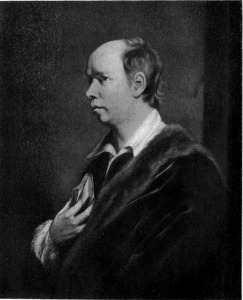
Oliver Goldsmith, Irish novelist, playwright, and poet best known for his novel The Vicar of Wakefield (1766), his pastoral poem The Deserted Village (1770), and his plays The Good-Natur’d Man (1768) and She Stoops to Conquer (1771, first performed in 1773), dies in London on April 4, 1774. He is thought to have written the classic children’s tale The History of Little Goody Two-Shoes (1765).

Goldsmith’s birth date and location are not known with certainty, although he reportedly tells a biographer that he was born on November 10, 1728. The location of his birthplace is either in the townland of Pallas, near BallymahonCounty Longford, where his father is the Anglican curate of the parish of Forgney, or at the residence of his maternal grandparents, at the Smith Hill House near Elphin, County Roscommon, where his grandfather Oliver Jones is a clergyman and master of the Elphin diocesan school, which is where Goldsmith studies. When Goldsmith is two years old, his father is appointed the rector of the parish of “Kilkenny West” in County Westmeath. The family moves to the parsonage at Lissoy, between Athlone and Ballymahon, and continues to live there until his father’s death in 1747.

In 1744 Goldsmith enters Trinity College, Dublin. His tutor is Theaker Wilder. Neglecting his studies in theology and law, he falls to the bottom of his class. In 1747, along with four other undergraduates, he is expelled for a riot in which they attempt to storm the Marshalsea Prison. He is graduated in 1749 as a Bachelor of Arts, but without the discipline or distinction that might have gained him entry to a profession in the church or the law. His education seems to have given him mainly a taste for fine clothes, playing cards, singing Irish airs, and playing the flute. He lives for a short time with his mother, tries various professions without success, studies medicine desultorily at the University of Edinburgh from 1752 to 1755, and sets out on a walking tour of FlandersFranceSwitzerland, and Northern Italy.

Goldsmith settles in London in 1756, where he briefly holds various jobs, including an apothecary‘s assistant and an usher of a school. Perennially in debt and addicted to gambling, Goldsmith produces a massive output as a hack writer for the publishers of London, but his few painstaking works earn him the company of Samuel Johnson, with whom he is a founding member of “The Club.” There, through fellow Club member Edmund Burke, he makes the acquaintance of Sir George Savile, who later arranges a job for him at Thornhill Grammar School. The combination of his literary work and his dissolute lifestyle leads Horace Walpole to give him the epithet “inspired idiot.” During this period, he uses the pseudonym “James Willington,” the name of a fellow student at Trinity, to publish his 1758 translation of the autobiography of the Huguenot Jean Marteilhe.

Goldsmith is described by contemporaries as prone to envy, a congenial but impetuous and disorganised personality who once planned to emigrate to America but failed because he missed his ship. At some point around this time he works at Thornhill Grammar School, later basing Squire Thornhill on his benefactor Sir George Savile and certainly spending time with eminent scientist Rev. John Mitchell, whom he probably knows from London. Mitchell sorely misses good company, which Goldsmith naturally provides in spades. Thomas De Quincey writes of him “All the motion of Goldsmith’s nature moved in the direction of the true, the natural, the sweet, the gentle.”

His premature death in 1774 is believed to have been partly due to his own misdiagnosis of a kidney infection. Goldsmith is buried in Temple Church in London. There is a monument to him in the centre of Ballymahon and also in Westminster Abbey with an epitaph written by Samuel Johnson.


Leave a comment

Birth of William Edward Hartpole Lecky, Historian & Theorist

William Edward Hartpole Lecky, Irish historian and political theorist, is born at Newtown Park, near Dublin, on March 26, 1838. His major work is an eight-volume History of England during the Eighteenth Century.

Lecky is educated at Kingstown, Armagh, at Cheltenham College, and at Trinity College, Dublin, where he graduates BA in 1859 and MA in 1863, and where he studies divinity with a view of becoming a priest in the Church of Ireland.

In 1860, Lecky publishes anonymously a small book entitled The Religious Tendencies of the Age, but upon leaving college he turns to historiography. In 1861 he publishes Leaders of Public Opinion in Ireland, containing brief sketches of Jonathan SwiftHenry FloodHenry Grattan, and Daniel O’Connell, originally anonymous and republished in 1871. The essay on Swift, rewritten and amplified, appears again in 1897 as an introduction to an edition of Swift’s works. Two surveys follow: A History of the Rise and Influence of Rationalism in Europe (2 vols., 1865), and A History of European Morals from Augustus to Charlemagne (2 vols., 1869). The latter arouses criticism, with its opening dissertation on “the natural history of morals.”

Lecky then concentrates on his major work, A History of England during the Eighteenth Century, Vols. i. and ii. which appear in 1878, and Vols. vii. and viii., which complete the work, in 1890. In the “cabinet” edition of 1892, in twelve volumes, A History of Ireland in the Eighteenth Century is separated out.

A volume of Poems (1891) is less successful. In 1896, he publishes two volumes entitled Democracy and Liberty, in which he considers modern democracy. The pessimistic conclusions at which he arrives provoked criticism both in the UK and the United States, which is renewed when he publishes in a new edition (1899) his low estimate of William Ewart Gladstone, then recently dead.

In The Map of Life (1899) Lecky discusses in a popular style ethical problems of everyday life. In 1903 he publishes a revised and enlarged edition of Leaders of Public Opinion in Ireland, in two volumes, with the essay on Swift omitted and that on O’Connell expanded into a complete biography. A critic of the methods by which the Act of Union is passed, Lecky, who grew up as a moderate Liberal, is opposed to Gladstone’s policy of Home Rule and, in 1895, he is returned to parliament as Unionist member for University of Dublin constituency in a by-election. In 1897, he is made a privy councillor, and among the coronation honours in 1902, he is nominated an original member of the new Order of Merit.

William Edward Hartpole Lecky dies in London on October 22, 1903.


Leave a comment

Birth of Irish Statesman John Beresford

john-beresford

John Beresford, Irish statesman, is born in Cork on March 14, 1738. He is a younger son of Sir Marcus Beresford who, having married Catherine, sole heiress of James Power, 3rd Earl of Tyrone, is created Earl of Tyrone in 1746. After the death of the earl in 1763, Beresford’s mother successfully asserts her claim suo jure to the barony of La Poer. John Beresford thus inherits powerful family connections. He is educated at Kilkenny College and Trinity College, Dublin and is called to the Irish bar.

Beresford enters the Irish House of Commons as member for County Waterford in 1761. In 1768, 1783, 1789 and finally in 1798, he stands also for Coleraine, however choosing each time to sit for Waterford.

His industry, added to the influence of his family, procures his admission to the Privy Council of Ireland in 1768, and his appointment as one of the commissioners of revenue two years later. In 1780 he becomes first commissioner of revenue, a position which gives him powerful influence in the Irish administration. He introduces some useful reforms in the machinery of taxation and is the author of many improvements in the architecture of the public buildings and streets of Dublin. He is first brought into conflict with Henry Grattan and the popular party in 1784, by his support of the proposal that the Irish parliament in return for the removal of restrictions on Irish trade should be bound to adopt the English navigation laws.

In 1786, Beresford is sworn a member of the Privy Council of Great Britain, and the power which he wields in Ireland through his numerous dependants and connections grows to be so extensive that a few years later he is spoken of as the “King of Ireland.” He is a vehement opponent of the increasing demand for Catholic Emancipation and when it becomes known that the Earl Fitzwilliam is to succeed John Fane, 10th Earl of Westmorland, as Lord Lieutenant of Ireland in 1795 for the purpose of carrying out a conciliatory policy, Beresford expresses strong hostility to the appointment. One of Fitzwilliam’s first acts is to dismiss Beresford from his employment for corruption, but with permission to retain his entire official salary for life, and with the assurance that no other member of his family will be removed. Fitzwilliam has been encouraged in this course of action by William Ponsonby. Beresford immediately exerts all his influence with his friends in England, to whom he describes himself as an injured and persecuted man. He appeals to William Pitt the Younger and goes to London to lay his complaint before the English ministers.

The recall of Fitzwilliam, which is followed by such momentous consequences in the history of Ireland is, as the viceroy himself believes, mainly due to Beresford’s dismissal. There has been a misunderstanding on the point between Pitt and Fitzwilliam. The latter, whose veracity is unimpeachable, asserts that previous to his coming to Ireland he had informed the prime minister of his intention to dismiss Beresford, and that Pitt had raised no objection. Pitt denies all recollection of any such communication, and on the contrary describes the dismissal as an open breach of the most solemn promise. In a letter to Frederick Howard, 5th Earl of Carlisle, justifying his action, Fitzwilliam mentions that malversation had been imputed to Beresford. Beresford sends a challenge to Fitzwilliam, but the combatants are interrupted on the field and Fitzwilliam then makes an apology.

When John Pratt, 1st Marquess Camden, replaces Fitzwilliam in the viceroyalty in March 1795, Beresford resumes his former position. On the eve of the Irish Rebellion of 1798 his letters to William Eden, 1st Baron Auckland, give an alarming description of the condition of Ireland and he counsels strong measures of repression. When first consulted by Pitt on the question of the union, Beresford appears to dislike the idea, but he soon becomes reconciled to the policy and warmly supports it. After the union Beresford continues to represent County Waterford in the Parliament of the United Kingdom, and he remains in office until 1802, taking an active part in settling the financial relations between Ireland and Great Britain.

In 1760, Beresford marries Constantia Ligondes, who dies in 1772. In 1774, he marries Barbara Montgomery, a celebrated beauty who figures in Sir Joshua Reynolds‘ picture of The Graces. He has large families by both marriages. His sons include Marcus Beresford, George Beresford, and John Claudius Beresford. John Beresford dies near Derry on November 5, 1805.


Leave a comment

Birth of Richard Southwell Bourke, 6th Earl of Mayo

richard-southwell-bourke

Richard Southwell Bourke, 6th Earl of Mayo, statesman, Viceroy of India, and prominent member of the British Conservative Party from Dublin, is born in Dublin on February 21, 1822.

Mayo is the eldest son of Robert Bourke, 5th Earl of Mayo, and his wife, Anne Charlotte, daughter of the Hon. John Jocelyn. His younger brother, the Hon. Robert Bourke, is also a successful politician. He is educated at Trinity College, Dublin.

After travelling in Russia, Mayo enters parliament for Kildare in 1847, a seat he holds until 1852, and then represents Coleraine from 1852 to 1857 and Cockermouth from 1857 to 1868. He is thrice appointed Chief Secretary for Ireland – in 1852, 1858, and 1866. In 1869 he becomes the fourth Viceroy of India where he is locally often referred to as “Lord Mayo.” He consolidates the frontiers of India and reorganises the country’s finances. He also does much to promote irrigation, railways, forests, and other useful public works. He establishes local boards to solve local problems. During his tenure, the first census takes place in 1872. The European-oriented Mayo College at Ajmer is founded by him for the education of young Indian chiefs, with £70,000 being subscribed by the chiefs themselves.

While visiting the convict settlement at Port Blair in the Andaman Islands in 1872 for the purpose of inspection, he is assassinated by Sher Ali Afridi, an Afridi Pathan convict who uses a knife. His murderer appears to be motivated only by a sense of injustice at his own imprisonment and has resolved to kill a high-ranking colonial official. Mayo’s body is brought home to Ireland and buried at the medieval ruined church in Johnstown, County Kildare, near his home at Palmerstown House. Afridi is hanged.

In 1873, the newly discovered swallowtail butterfly Papilio mayo from the Andaman Islands is named in his honour. The traditional Irish march Lord Mayo (Tiagharna Mhaighe-eo) is named after him. According to tradition, it is composed by his harper David Murphy to appease Mayo after Murphy angered him.

lord-mayo-statue

On August 19, 1875, a statue of Lord Mayo is unveiled in the town of Cockermouth in the centre of the main street. The 800-guinea cost of the statue is raised by public subscription. The statue, carved in Sicilian marble, depicts Lord Mayo in his viceregal garb, and still stands today.

In 2007, a statue of Lord Mayo is unearthed in Jaipur, India, after being buried for six decades. The statue had previously been installed in the premises of Mayo Hospital, currently known as the Mahilya Chikatsalya, Jaipur. The 9-foot-tall cast-iron statue, weighing around 3 tons, was ordered sculpted by the Maharaja Ram Singh ji of Jaipur, as a tribute to Lord Mayo after his assassination. To prevent it from vandalism, the statue is buried in the premises of the Albert Hall Museum of Jaipur at the time of the independence of India. After six decades, the statue is unearthed by the Jaipur Mayo Alumni Chapter on May 29, 2007, and sent to Mayo College, in Ajmer, India, where it is installed. Mayo College in Ajmer already has a full life-size statue of Lord Mayo sculpted in white marble installed in front of its famous Main Building since inception and a marble sculpted bust of him in its School Museum.


Leave a comment

Death of John O’Mahony, Founder of the Fenian Brotherhood

john-omahony

John Francis O’Mahony, Gaelic scholar and the founding member of the Fenian Brotherhood in the United States, sister organisation to the Irish Republican Brotherhood, dies in New York City on February 7, 1877.

O’Mahony is born in 1816 in Kilbeheny, County Limerick. His father and uncle were members of the Society of United Irishmen and took part in the Irish Rebellion of 1798. On the death of an elder brother, he inherits a property which yields £300 per annum. He enters Trinity College, Dublin, where he studies Sanskrit, Hebrew, and Irish. He becomes an accomplished Gaelic scholar, and later teaches Greek and Latin, and contributes articles to Irish and French journals. He leaves Trinity without getting a degree.

In 1843, O’Mahony joins Daniel O’Connell‘s movement for the Repeal of the Acts of Union 1800, but quickly becomes dissatisfied with the lack of progress and joins the Young Ireland movement which William Smith O’Brien leads and takes part in the failed Young Ireland Rebellion of 1848. His participation in the rebellion obligates him to leave Ireland, and he settles for a time in Paris, where he lives in great poverty. In 1854, he joins John Mitchel in New York City, and takes part in the Emigrant Aid Association, the Emmet Monument Association, and other Irish organisations.

In 1857, O’Mahony publishes History of Ireland, by Geoffrey Keating, D. D., translated from the Original Gaelic, and Copiously Annotated (New York, 1857). O’Mahony’s notes are copied from John O’Donovan‘s translations of Annals of the Four Masters, and it is on this ground that Hodges & Smith procures an injunction against the sale of the book in the United Kingdom. The mental strain to which O’Mahony is subjected in the preparation of this work, which brings him no pecuniary gain, affects his reasoning and he is removed by his friends for a short time to a lunatic asylum.

In 1860, O’Mahony organises the Fenian Brotherhood, also known as the Irish Republican Brotherhood. The object of the association is to secure the freedom of Ireland. The name is probably derived from O’Mahony’s Gaelic studies, the Fenians having been a military body in pagan Ireland, celebrated in the songs of Ossian. The organisation of the new society is completed at conventions that are held in Chicago in 1864 and in Cincinnati in January 1865.

At the time of the Cincinnati convention, O’Mahony holds the rank of colonel of the 69th Regiment of New York State Militia, recruited mainly from the ranks of the Brotherhood, which has also furnished a large proportion of Thomas Francis Meagher‘s Irish Brigade, Michael Corcoran‘s legion, and Irish regiments engaged in the American Civil War. The rapid growth in membership of the Fenian Brotherhood renders it impossible for O’Mahony to retain the colonelcy of the 69th regiment, which he has held for some time. He resigns in order to give all his attention to the spread of Fenianism.

The close of the civil war in the spring of 1865 gives a great impetus to the Fenians, owing to the number of Irish American soldiers that are disbanded and anxious to see service elsewhere. Money pours into the Fenian exchequer. Many differences occur between O’Mahony and James Stephens and the Central Council relative to the policy to be pursued for the attainment of their object, but O’Mahony remains president of the organisation for several years. He does not take any part personally in the attempted insurrection in Ireland or in the raids on Canada, although his advice counts for much in these enterprises.

He devotes the last years of his life to literary pursuits, but suffers from ill health, and he has a hard struggle to secure the bare means for subsistence. However, visionary may have been his objectives, he is honest, and although thousands have passed through his hands, he is often at a loss for a dollar. When his poverty is discovered, he declines to receive assistance in any form. He dies in New York City on February 7, 1877, and soon after his death his remains are returned to Ireland and interred with the honors of a public funeral in Glasnevin Cemetery in Dublin.


Leave a comment

Birth of Singer/Songwriter Eleanor McEvoy

eleanor-mcevoy

Eleanor McEvoy, one of Ireland’s most accomplished contemporary singer/songwriters, is born in Dublin on January 22, 1967. McEvoy composes the song “Only A Woman’s Heart,” the title track of A Woman’s Heart, the best-selling Irish album in Irish history.

McEvoy’s life as a musician begins at the age of four when she begins playing piano. At the age of eight she takes up violin and, as a teen, she joins the Junior Irish Youth Orchestra. Upon finishing school, she attends Trinity College, Dublin where she studies music by day and works in pit orchestras and music clubs by night.

McEvoy graduates from Trinity with an Honors Degree in music and spends four months busking in New York City. In 1988, she is accepted into the RTÉ National Symphony Orchestra where she spends four years before leaving to concentrate on songwriting.

During a solo date in July 1992, she performs a little-known, self-penned song, “Only a Woman’s Heart.” Mary Black, of whose band McEvoy is a member, is in the audience and invites her to add the track to an album of Irish female artists. The album is subsequently titled A Woman’s Heart and the track is released as the lead single. The album goes on to sell over three-quarters of a million copies in Ireland alone and remains the biggest selling Irish album of all time. The record’s success makes McEvoy a superstar virtually overnight.

Eleanor McEvoy, the self-titled debut offering, recorded in Windmill Lane Studios, is released in February 1993, and tours in the United States, Asia, and Europe follow. Back on Irish soil, McEvoy is awarded Best New Artist, Best New Performer, and Best Songwriter Awards by the Irish entertainment and music industries.

McEvoy signs a contract with Columbia Records and begins working on a new, edgier second album, which is eventually entitled What’s Following Me? The album is released in 1996 and the sound is louder and grungier than her debut.

McEvoy releases her third album Snapshots in 1999. Her primary goal is to make Snapshots her most song-oriented album to date. Toward that goal, she hooks up with legendary producer Rupert Hine, who has worked with Stevie Nicks, Tina Turner, Suzanne Vega, and Duncan Sheik, and records the album at Rupert’s “Chateau de la Tour de Moulin” and then in Metropolis Studios in London.

As the century closes, McEvoy has had enough of major-label involvement, making the decision to take the fourth album and head down the independent road. Yola was a turning point in McEvoy’s musical direction. Released in 2001, it reflects the acoustic, jazz-influenced style she had developed on stage with Brian Connor.

March 2004 sees the release of Early Hours, produced by McEvoy and Brian Connor. The style differs from McEvoy’s previous work, taking on a jazz/blues feel for many of the songs. She continues to tour with Brian Connor until April 2005. She then begins performing solo, accompanying herself on bass guitar, electric guitar, mandolin, and violin.

McEvoy continues to release new albums almost on a yearly basis with Out There (2006), Love Must Be Tough (2008), Singled Out (2009), I’d Rather Go Blonde (2010), Alone (2011), If You Leave… (2013), and Stuff (2014).

Naked Music (2016) is McEvoy’s twelfth studio album. It is recorded at the Grange Studio in Norfolk, UK. McEvoy records the tracks by “studio-performing,” in other words, playing the songs as she would in a live performance. The album features exclusive artwork by famed painter Chris Gollon.


Leave a comment

Christopher Nolan Wins Whitbread Book Award

christopher-nolan

Christopher Nolan, Irish poet and author who cannot move or speak because of an accident at birth, wins the Whitbread Book Award on January 19, 1987, for his autobiography Under the Eye of the Clock.

Nolan is born in Mullingar, County Westmeath, on September 6, 1965, the son of Joseph and Bernadette Nolan. Due to asphyxiation at birth, he is born with permanent impairment of his “nerve-signaling system, a condition he said is now labelled dystonia.” Because of these complications, he is born with cerebral palsy and can only move his head and eyes. To write, Nolan uses a special computer and keyboard. In order to help him type, his mother holds his head in her cupped hands while he painstakingly picks out each word, letter by letter, with a pointer attached to his forehead.

Upon becoming a teenager, Nolan receives his education from the Central Remedial Clinic school, Mount Temple Comprehensive School, and at Trinity College, Dublin. His first book is published when he is fifteen. He is also awarded an Honorary Doctorate of Letters in the UK, the medal of excellence from the United Nations Society of Writers, and a Person of the Year award in Ireland. At the age of fifteen, he publishes his collection of poems titled Dam-Burst of Dreams. He writes an account of his childhood, Under the Eye of the Clock, published by St. Martin’s Press, which wins him the UK’s Whitbread Book Award in 1987 at the age of 21. He soon drops out of Trinity College to write a novel entitled The Banyan Tree (1999).

Nolan spends more than a decade writing The Banyan Tree. According to The New York Times, the book is a multigenerational story of a dairy-farming family in Nolan’s native county of Westmeath. The story is seen through the eyes of the aging mother. It is inspired, he tells Publishers Weekly, by the image of “an old woman holding up her skirts as she made ready to jump a rut in a field.” A review of the book is done in The New York Times by Meghan O’Rourke. She reviews the book and relates it to James Joyce‘s A Portrait of the Artist as a Young Man; in the story the protagonist leaves his mother in Ireland while he moves on to travel the world. Nolan, however, gives the reader a version of the mother’s story. “And so, in the end, one suspects that he wants Minnie’s good-natured, commonplace ways to stand as their own achievement, reminding us that life continues in the places left behind.”

Christopher Nolan dies at age 43 in Beaumont Hospital in Dublin at 2:30 AM on February 20, 2009, after a piece of salmon becomes trapped in his airway. Irish president Mary McAleese, upon hearing the news, says, “Christopher Nolan was a gifted writer who attained deserved success and acclaim throughout the world for his work, his achievements all the more remarkable given his daily battle with cerebral palsy.”


Leave a comment

Death of Philosopher George Berkeley

george-berkeley

George Berkeley, Irish philosopher whose primary achievement is the advancement of a theory he calls “immaterialism” (later referred to as “subjective idealism” by others), dies in Oxford, England, on January 14, 1753. His theory of immaterialism denies the existence of material substance and instead contends that familiar objects like tables and chairs are only ideas in the minds of perceivers and, as a result, cannot exist without being perceived. Berkeley is also known for his critique of abstraction, an important premise in his argument for immaterialism.

Berkeley is born at his family home, Dysart Castle, near Thomastown, County Kilkenny, the eldest son of William Berkeley, a cadet of the noble family of Berkeley. He is educated at Kilkenny College and attends Trinity College, Dublin, earning a bachelor’s degree in 1704 and completing a master’s degree in 1707. He remains at Trinity College after completion of his degree as a tutor and Greek lecturer.

In 1709, Berkeley publishes his first major work, An Essay towards a New Theory of Vision, in which he discusses the limitations of human vision and advances the theory that the proper objects of sight are not material objects, but light and colour. This foreshadows his chief philosophical work, A Treatise Concerning the Principles of Human Knowledge, in 1710, which, after its poor reception, he rewrites in dialogue form and publishes under the title Three Dialogues between Hylas and Philonous in 1713.

In this book, Berkeley’s views are represented by Philonous, while Hylas embodies the Irish thinker’s opponents, in particular John Locke. Berkeley argues against Sir Isaac Newton‘s doctrine of absolute space, time, and motion in De Motu (On Motion), published in 1721. His arguments are a precursor to the views of Ernst Mach and Albert Einstein. In 1732, he publishes Alciphron, a Christian apologetic against the free-thinkers, and in 1734, he publishes The Analyst, a critique of the foundations of calculus, which is influential in the development of mathematics.

His last major philosophical work, Siris (1744), begins by advocating the medicinal use of tar water and then continues to discuss a wide range of topics, including science, philosophy, and theology. Interest in Berkeley’s work increases after World War II because he tackles many of the issues of paramount interest to philosophy in the 20th century, such as the problems of perception, the difference between primary and secondary qualities, and the importance of language. It sold more copies than any of his other books during his lifetime.

In 1734, Berkeley is appointed Bishop of Cloyne in Ireland, a position he holds until his death. He remains at Cloyne until 1752, when he retires and goes to Oxford to live with his son and supervise his education. He dies soon afterward and is buried in Christ Church Cathedral, Oxford.

The Berkeley portion of the Yale University campus is named after George Berkeley.


Leave a comment

Birth of Edmund Burke, Political Writer & Orator

edmund-burke

Edmund Burke, one of the greatest political writers and orators in history, is born in Arran Quay, Dublin, on January 12, 1729. British statesman, parliamentary orator, and political thinker, he plays a prominent part in all major political issues for about thirty years after 1765 and remains an important figure in the history of political theory.

Burke is the son of a mixed marriage – his father, a solicitor, is Protestant, his mother is Roman Catholic. He enters Trinity College, Dublin in 1744, and studies law at Middle Temple in London in 1750. He fails to secure a call to the bar and instead begins a literary career. He writes several books and is editor of the The Annual Register before entering politics. Burke’s A Vindication of Natural Society is published in 1756 and in 1757 A Philosophical Inquiry into the Origin of Our Ideas of the Sublime and Beautiful appears. Also on March 12, 1757, Burke marries Jane Nugent, the daughter of Christopher Nugent, an Irish Catholic doctor.

His political career begins in 1765 when he becomes the private secretary of one of the Whig leaders in the Parliament of Great Britain, Charles Watson-Wentworth, 2nd Marquess of Rockingham. Burke soon proves to be one of the main characters in the constitutional controversy in Britain under George III, who at the time is trying to establish more actual power for the crown. Although the crown has lost some influence under the first two Georges, one of the major political problems in 18th century Britain is the fact that both the king and Parliament have considerable control over the executive. Burke responds to these affairs in his pamphlet Thoughts on the Cause of the Present Discontents (1770), in which he argues that although George’s actions are legal in the sense that they are not against the letter of the constitution, they are all the more against it in spirit. In the pamphlet Burke elaborates on his famous and new justification of a party, defined as “a body of men united on public principle, which could act as a constitutional link between king and parliament, providing consistency and strength in administration, or principled criticism in opposition.”

Concerning the imperial controversy at the time, Burke argues that the British government has acted in a both unwise and inconsistent manner. Again, Burke claims that Britain’s way of dealing with the colony question is strictly legal and he urges that also “claims of circumstance, utility, and moral principle should be considered, as well as precedent.” In other words, if the British, persistently clinging to their narrow legalism, are not to clash with the ideas and opinions of the colonists on these matters, they will have to offer more respect and regard for the colonies’ cause. Burke calls for “legislative reason” in two of his parliamentary speeches on the subject, On American Taxation (1774) and On Moving His Resolutions for Conciliation with America (1775). However, British imperial policy in the controversy continues to ignore these questions.

Burke’s view of the revolution in France is a much different story. He publishes Reflections on the Revolution in France in 1790, attacking the revolution’s motives and principles. Many writers oppose his views, the most famous being Thomas Paine in his Rights of Man. Burke is a consistent advocate of Catholic emancipation, which politically damages him, but he is never an advocate of self-rule for the Irish.

Edmund Burke dies in London on July 9, 1797. Many quotes from his writings and orations have come down through the years, perhaps one is most applicable to the situation in Ireland today: “All government, indeed every human benefit and enjoyment, every virtue, and every prudent act, is founded on compromise and barter.”


1 Comment

Birth of Joseph Stock, Bishop of Waterford & Lismore

joseph-stock

Joseph Stock, Irish Protestant churchman and writer, Bishop of Killala and Achonry, and afterwards Bishop of Waterford and Lismore, is born at 1 Dame Street, Dublin, on December 22, 1740.

Stock is the son of Luke and Ann Stock. He is educated at Mr. Gast’s school in his native city and at Trinity College, Dublin. He obtains a scholarship in 1759, graduates B.A. in 1761, and gains a fellowship in 1763. Having taken orders, Stock retires on the college living of Conwall in the diocese of Raphoe.

Stock is a classical scholar, a linguist, and a man of general culture. In 1776 he publishes anonymously a life of George Berkeley, subsequently republished in the Biographia Britannica, the only memoir on Berkeley based on contemporary information.

In 1793 Stock is collated prebendary of Lismore, but resigns this preferment in 1795, on his appointment to the head-mastership of Portora Royal School. In January 1798 he succeeds John Porter as Bishop of Killala and Achonry. Shortly after his consecration, and while holding his first visitation at the castle of Killala, the bishop becomes a prisoner of the French army under General Jean Joseph Amable Humbert, when French forces land in support of the Irish Rebellion of 1798. Of his experiences as a prisoner of the French he leaves a partial record in his private diary — August 23 to September 15, 1798 — which is printed in William Hamilton Maxwell‘s History of the Rebellion of 1798, and in two letters to his brother Stephen, published in the Auckland Correspondence.

In 1799 Stock publishes a more complete account of the French invasion of County Mayo in his Narrative of what passed at Killala in the Summer of 1798. By an Eyewitness. The impartiality of this work is said to have been a bar to the bishop’s advancement. He also writes The Book of the Prophet Isaiah in Hebrew and English, with Notes (Bath, 1803) and The Book of Job metrically arranged and newly translated into English, with Notes (Bath, 1805).

Stock also publishes school editions of Tacitus and Demosthenes, and is an active contributor to the controversial theology of his day. He leaves two manuscript volumes of correspondence which are preserved in the library of Trinity College, Dublin. They consist chiefly of letters written from Killala and Waterford between 1806 and 1813 to his son Henry in Dublin.

In 1810 Stock is translated to the diocese of Waterford and Lismore, and dies at Waterford on August 13, 1813.