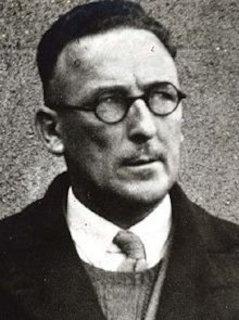
Born on November 3, 1896, in County Roscommon, O’Donovan is an explosives expert and reputedly invents the “Irish War Flour” (named after the flour sacks in which it was smuggled into Dublin aboard ships) and “Irish Cheddar” devices. He subsequently becomes IRA Director of Chemicals in 1921. During the Irish War of Independence, he is imprisoned in Mountjoy Prison and Kilmainham Gaol and later interned in Newbridge, County Kildare.
In addition to fighting in the Irish War of Independence, O’Donovan fights on the Anti-Treaty side during the Irish Civil War. In 1930 he becomes manager at Electricity Supply Board (ESB) headquarters in Dublin.
In August 1938, at the request of IRA Chief of StaffSeán Russell, O’Donovan writes the S-Plan, a bombing campaign targeting the United Kingdom. In his unpublished memoirs he writes that he “conducted the entire training of cadre units, was responsible for all but locally derived intelligence, carried out small pieces of research and, in general, controlled the whole explosives and munitions end” of S-Plan. During this time, he and Russell are the only GHQ members of the old IRA still in the organisation.
As “Agent V-Held”, O’Donovan visits Germany three times in 1939 on behalf of the IRA. On February 28 he negotiates an arms and radio equipment delivery at the Abwehrstelle in Hamburg. On April 26 he concludes a new arms deal with the Abwehrstelle and establishes, with the help of a Breton, a secret courier connection to Ireland via France. On August 23, he receives the last instructions for the event of war.
On February 9, 1940, Abwehr II agent Ernst Weber-Drohl lands at Killala Bay, County Sligo aboard U-37. He is equipped with an ‘Ufa’ transmitter, cash, and instructions for O’Donovan, who by this time is the chief IRA contact for Abwehr I/II. The transmitter is lost upon landing, but when Weber-Drohl reaches O’Donovan at Shankill, Killiney, County Dublin, he is able to deliver new transmission codes, $14,450 in cash, and a message from “Pfalzgraf Section” asking that the IRA concentrate its S-Plan attacks on military rather than civilian targets.
O’Donovan becomes increasingly enamoured of Nazi ideology during this time, and visits Germany three times. In 1942 he writes an article arguing that Ireland’s future lay in an alliance with a victorious Germany and attacks Britain and the United States for being “centres of Freemasonry, international financial control and Jewry.” Even long after the pact with the Germans falls apart, he continues to express his sympathy for the Nazi regime. His son, Gerard O’Donovan, recalls that every Saturday night a visitor would come to the family home and send messages to Germany.
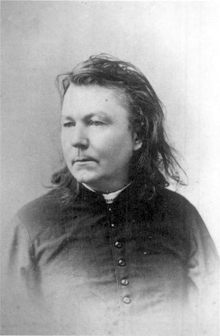
Born on November 23, 1845, at Cahirmoyle, County Limerick, O’Brien is the younger daughter in a family of five sons and two daughters. Her father is William Smith O’Brien, the Irish nationalist and her mother is Lucy Caroline, eldest daughter of Joseph Gabbett, of High Park, County Limerick. On her father’s return in 1854 from the penal colony in Tasmania, she rejoins him in Brussels and stays there until he comes back to Cahirmoyle in 1856. On her mother’s death in 1861, she moves with her father to Killiney, near Dublin, and is his constant companion until his death at Bangor, Gwynedd in 1864.
From 1864, O’Brien lives at Cahirmoyle with her brother Edward, caring for his motherless children until his remarriage in 1880. Having been hard of hearing since childhood, by 1879 she has become entirely deaf. She goes to live at Ardanoir near Foynes on the River Shannon and spends time writing. She becomes a staunch supporter of Charles Stewart Parnell.
A bad harvest in Ireland in 1879, combined with Irish political turmoil, causes many Irish people to emigrate to the United States. In articles and letters to newspapers and reviews, O’Brien exposes the awful conditions that exist in the Queenstown (Cobh) lodging houses, on board the emigrant ships, and in the dock slums of New York City, where the Irish have to stay upon landing. A notable piece she writes is the Horrors of the Immigrant Ship which appears in ThePall Mall Gazette on May 6, 1881.
A visit to Queenstown, the port of embarkation, and a tour of the White Star Line‘s Germanic leads her to successfully lobby to get a Catholic priest aboard the emigrant ship to help ease the passage, at least spiritually. That achievement captures even more public attention by virtue of the fact that O’Brien herself is Protestant. Despite the limit of 1,000 passengers, she notes the steamer has carried as many as 1,775 at one time.
O’Brien presses the Board of Trade for greater vigilance, and in April 1882, founds a 105-bed boarding house at Queenstown for the reception and protection of girls on the point of emigrating. The O’Brien Emigrants Home at The Beach, Queenstown fails because it is boycotted by other boardinghouse keepers and local merchants, forcing her to order provisions from Cork.
O’Brien also daily visits three or four of the ships for which her lodgers are destined along with a medical officer. She makes passages herself to America, using the occasion to investigate shipboard conditions and lobby for the reform and enforcement of health and safety standards.
O’Brien finds little effort to provide food, drink or accommodation at the Castle Garden entry facility. She also finds that often the illiterate young women are being tricked into prostitution through spurious offers of employment. Additionally, she notes the high infant mortality rates in the tenements where the women live. She proposes to Archbishop John Ireland of Minnesota an information bureau at Castle Garden, a temporary shelter to provide accommodation for immigrants and a chapel. Archbishop Ireland agrees to raise the matter at the May 1883 meeting of the Irish Catholic Association which endorses the plan and votes to establish an information bureau at Castle Garden. Ireland also contacts Cardinal John McCloskey, Archbishop of New York, about providing a priest for immigrants arriving at Castle Garden.
The Mission opens on January 1, 1884, with Rev. John J. Riordan appointed as the first chaplain at Castle Garden. Immigrant girls needing accommodation are placed in local boarding houses until May 1 when a Home for Immigrant Girls is opened at 7 Broadway. In 1885, the James Watson House at 7 State Street is purchased from Isabella Wallace for the Mission of Our Lady of the Rosary for the Protection of Irish Immigrant Girls to serve as a way station for young immigrant women. Between 1884 and 1890, the Mission provides assistance to 25,000 Irish immigrant women.
In 1881–82, O’Brien embarks on a campaigning lecture tour in the United States. She encounters problems, however, particularly given her Protestant background and the need to enlist support from Catholic clergy. Poor health, and her profound deafness cause her to curtail her activities in America. When she returns to Ireland in 1883, she finds herself suspected of being a British agent whose Emigrant Boarding house and whose plans for an American home for Irish immigrant girls facilitate the government’s assisted emigrant scheme. Supposedly, this would be the scheme that helps landlords clear their estates of poor tenants. In fact, O’Brien opposes assisted emigration, but she continues to assist those who are sent to her.
O’Brien retires from active public work in 1886, moving to Ardanoir, Foynes, on the Shannon Estuary. She spends considerable time in Dublin, where she socialises with Douglas Hyde and the painter William Osbourne. She joins the Roman Catholic Church in 1887. She dies of heart failure on June 3, 1909, at Foynes, and is buried at Knockpatrick.
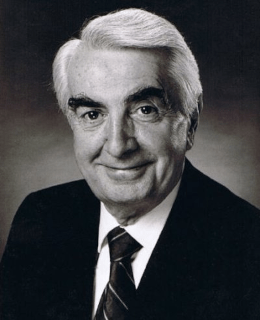
O’Shea is discovered in the 1950s by Harry Dillon, who runs the 37 Theatre Club on the top floor of his shop, the Swiss Gem Company, 51 Lower O’Connell Street, Dublin. Early in his career he tours with the theatrical company of Anew McMaster.
O’Shea begins acting on the stage, then moves into film in the 1960s. He becomes popular in the United Kingdom, as a result of starring in the BBC sitcom Me Mammy alongside Yootha Joyce. In 1967–68 he appears in the drama Staircase, co-starring Eli Wallach and directed by Barry Morse, which stands as Broadway‘s first depiction of homosexual men in a serious light. For his role in that drama, he is nominated for the Tony Award for Best Actor in a Play in 1968.
Other stage appearances include Mass Appeal (1981) in which he originates the role of Father Tim Farley, for which he is nominated for the Tony Award for Best Actor in a Play in 1982, the musical Dear World in which he plays the Sewer Man opposite Angela Lansbury as Countess Aurelia, Corpse! (1986) and a 1994 Broadway revival of Philadelphia, Here I Come!.
O’Shea’s first wife is Maureen Toal, an Irish actress, with whom he has two sons, Colm and Steven. They divorce in 1974. His second wife is Irish actress Kitty Sullivan, whom he meets in Italy, where he is filming Barbarella and she is auditioning for Man of La Mancha. The couple occasionally act together, such as in a 1981 Broadway revival of My Fair Lady. O’Shea and Sullivan have no children together. They both adopt United States citizenship and reside in New York City, where they both live from 1976.
O’Shea dies on April 2, 2013, in New York City following a short illness at the age of 86. He is buried at Deans Grange Cemetery.
Davitt is born in Strade, County Mayo, on March 25, 1846, the son of an evicted tenant farmer. Following their eviction, the family emigrates to England. In 1856, at the age of 10, he starts work in a cotton mill, where he loses an arm in a machinery accident a year later. As is typical for the era, he does not receive any compensation.
In 1865, Davitt joins the revolutionary Fenian Brotherhood, an international secret society that seeks to secure political freedom for Ireland. He becomes secretary of its Irish analogue, the Irish Republican Brotherhood (IRB), in 1868. Arrested in Paddington Station in London for sending firearms to Ireland on May 14, 1870, he is sentenced to 15 years in Dartmoor Prison and there lays plans to link Charles Stewart Parnell’s constitutional reform with Fenian activism to achieve political-agrarian agitation.
Paroled from prison in 1877, Davitt rejoins the IRB and goes to the United States, where the Fenian movement originated. There he is deeply influenced by Henry George’s ideas about the relationship between land monopoly and poverty.
Back in Ireland, using funds raised by John Devoy and Clan na Gael in the United States, Davitt wins Parnell’s cooperation in organizing the Irish National Land League in 1879, which leads, however, to his expulsion from the supreme council of the IRB in 1880. He is also imprisoned for seditious speeches in 1881 and 1883. He is elected to Parliament representing North Meath in the 1892 United Kingdom general election, but his election is overturned on petition because he had been supported by the Roman Catholic hierarchy. He stands unopposed for North East Cork at a by-election in February 1893, making his maiden speech in favour of the Home Rule Bill in April, which passes the House of Commons but is defeated in the House of Lords in September.
Because of his public championing of Henry George’s theories of land reform, Parnell repudiates him. Davitt actively defends the Nationalists before the Parnell Commission, which meets between 1887 and 1889. When the Irish party splits in 1890 over Parnell’s involvement in Capt. William Henry O’Shea’s divorce case, Davitt is among the first to oppose Parnell’s continuance as leader. He is elected again, for South Mayo in 1895, but resigns in 1899 in protest against the Second Boer War.
Davitt dies in Elphis Hospital, Dublin on May 30, 1906, at the age of 60, from blood poisoning. The fact that the Lord Lieutenant of Ireland attends his funeral is a public indication of the dramatic political journey this former Fenian prisoner has taken. There is no plan for public funeral, and hence Davitt’s body is brought quietly to the Carmelite Friary, Clarendon Street, Dublin. However, the next day over 20,000 people file past his coffin. His remains are taken by train to Foxford, County Mayo, and buried in the grounds of Strade Abbey at Strade, near his place of birth.
Davitt’s book, The Fall of Feudalism in Ireland (1904), is a valuable record of his time.
Moore’s parents are Andy Moore and Nancy Power, who had already raised three daughters and two other sons. He attends a Patrician Brothers primary school and later studies at Newbridge College, run by the Dominican Order. In college he forms the group Aes Triplex with his brother Andy and a school friend. He later attends a college in Limerick, but he drops out after a couple of years to pursue a music career.
In 1969, 14-year-old Moore embarks on a tour supporting his eldest brother, Christy Moore, at various English folk clubs. After the tour he spends all of his time practising and writing music. In 1976, Christy records one of his songs “Wave up to the Shore.” In 1977, he tours Germany and England as part of the group Inchiquin.
In 1978, Moore releases his debut album, Treaty Stone. In 1979, having normally played guitar using a finger-picking technique, he is afflicted with tendonitis and is forced to learn to play with a plectrum, which alters his guitar style. That same year, he moves to Groningen in the Netherlands. In 1980, he records and releases his second album, In Groningen. In 1982, he releases his third album, No Heroes, which contains songs all written by Moore himself. For three years, from 1983 to 1986, he is the front-man for the Dublin-based band Red Square. During this time, in 1984, his son Robbie is born.
In 1987, Moore moves to the United States and begins performing using the stage name of “Luka Bloom.” He chooses the name “Luka” from the title of Suzanne Vega‘s song about child abuse and “Bloom” from the main character in James Joyce‘s novel Ulysses. Initially he lives and performs primarily in Washington D.C., but in late 1987 he moves to New York City. The following year, he releases his first album – later withdrawn – under the name Luka Bloom.
In 1990, Bloom releases his album Riverside, which includes the song “The Man Is Alive.” The album is recorded in New York, with its lyrics reflecting his experiences living and performing in that city. In 1991, he returns to Dublin to record The Acoustic Motorbike, which includes a cover version of LL Cool J‘s “I Need Love.” The cover song is reviewed by Rolling Stone magazine, noting that “the prospect of a folksy Irish rocker covering a rap ballad may seem strange, but experimenting with different forms is precisely what keeps established traditions vital.”
In 1993, Bloom again returns to Ireland to record the album Turf, this time with producer Brian Masterson and sound engineer Paul Ashe-Browne. The album attempts to capture the sound of a live performance, and is recorded in front of an audience that is asked to remain as quiet as possible. In 1998, he releases Salty Heaven, an album inspired by his return to Ireland.
Bloom’s early albums showcase his frenetic strumming style, including “Delirious,” the debut track on Riverside, and his penchant for thoughtful cover songs, an affinity that he maintains even in more recent work. In addition to his LL Cool J cover, he also covers Elvis Presley‘s “Can’t Help Falling in Love” on the album The Acoustic Motorbike.
Released in 2000, Keeper of the Flame is an album of cover versions featuring renditions of ABBA‘s “Dancing Queen,” Bob Marley‘s “Natural Mystic,” and the Hunters & Collectors‘ “Throw Your Arms Around Me,” among others. His 2004 acoustic mini-album, Before Sleep Comes, is recorded while he is recovering from tendinitis. He states that the purpose of the album is “to help bring you closer to sleep, our sometimes elusive night-friend.”
In 2005, Bloom releases the album Innocence. Some of the songs feature a new-found interest in Eastern EuropeanRomani music and other world music. The album features him playing classical guitar, and the resonant plucking associated with that style of instrument. In his previous work, he relies almost exclusively on steel-stringed acoustic guitars that created his distinctive style. In 2007, he releases the album Tribe, a collaboration with County Clare musician Simon O’Reilly. O’Reilly composes the music and sends the recordings to Bloom for him to complete with lyrics and singing.
In February 2008, Bloom releases a DVD titled The Man is Alive, featuring footage filmed in Dublin and at his home in Kildare, a question and answer session with fans, the documentary My Name is Luka, and a CD of music taken from the two performances. In September of that year, he releases the album Eleven Songs, which features an expanded ensemble of instrumentation, giving the album a distinct sound within his catalogue.
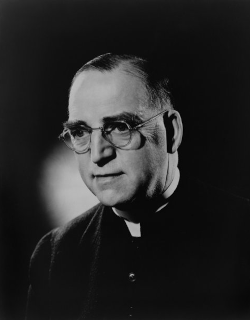
In 1904, Flanagan emigrates to the United States and becomes a US citizen in 1919. He attends Mount St. Mary’s University in Emmitsburg, Maryland, where he receives a Bachelor of Arts degree in 1906 and a Master of Arts degree in 1908. He studies at Saint Joseph’s Seminary in Dunwoodie, Yonkers, New York. He continues his studies in Italy and at the University of Innsbruck in Austria where he is ordained a priest on July 26, 1912. His first parish is in O’Neill, Nebraska, where from 1912 he serves as an assistant pastor at St. Patrick’s Catholic Church. He then moves to Omaha, Nebraska, to serve as an assistant pastor at St. Patrick’s Church and later at St. Philomena’s Church.
In 1917, Flanagan founds a home for homeless boys in Omaha. Bishop Jeremiah James Harty of the Diocese of Omaha has misgivings but endorses Flanagan’s experiment. Because the downtown facilities are inadequate, he establishes Boys Town, ten miles west of Omaha in 1921. Under his direction, Boys Town grows to be a large community with its own boy-mayor, schools, chapel, post office, cottages, gymnasium, and other facilities where boys between the ages of 10 and 16 can receive an education and learn a trade.
Boys Town, a 1938 film starring Spencer Tracy based on Flanagan’s life, wins Tracy an Academy Award for Best Actor for his performance. Mickey Rooney also stars as one of the residents. Tracy spends his entire Oscar acceptance speech talking about Flanagan. Without confirming it with Tracy, an overzealous MGM publicity representative announces incorrectly that Tracy is donating his Oscar to Flanagan. The Academy of Motion Picture Arts and Sciences hastily strikes another inscription, so Tracy keeps his statuette and Boys Town gets one as well. A sequel also starring Tracy and Rooney, Men of Boys Town, is released in 1941.
Flanagan himself appears in a separate 1938 MGM short, The City of Little Men, promoting Boys Town and giving a tour of its facilities. The actor Stephen McNally plays Flanagan in a 1957 episode of the ABC religion anthology series, Crossroads.
Flanagan receives many awards for his work with the delinquent and homeless boys. Pope Pius XI names him a Domestic Prelate with the title Right Reverend Monsignor in 1937. He serves on several committees and boards dealing with the welfare of children and is the author of articles on child welfare. Internationally known, he travels to the Republic of Ireland in 1946, where he is appalled by the children’s institutions there, calling them “a national disgrace.” When his observations are published after returning to Omaha, instead of improving the horrid conditions, vicious attacks are leveled against him in the Irish print media and the Oireachtas. He is invited by General Douglas MacArthur to Japan and Korea in 1947 to advise on child welfare, as well as to Austria and Germany in 1948. While in Germany, he dies of a heart attack on May 15, 1948. He is interred at Dowd Memorial Chapel of the Immaculate Conception Parish in Boys Town, Nebraska.
On February 25, 2012, the Catholic Archdiocese of Omaha, Nebraska opens the canonization process of Flanagan. At a March 17, 2012 prayer service at Boys Town’s Immaculate Conception Church, he is given the title “Servant of God,” the first of three titles bestowed before canonization as a Catholic saint. The investigation is completed in June 2015 and the results forwarded to the Vatican. If the Vatican approves the local findings, Flanagan will be declared venerable. The next steps will be beatification and canonization.
There is a portrait statue dedicated to Fr. Edward J. Flanagan in Ballymoe, County Galway.
Downey attends Thornhill College, a Catholic girls school. Her mother, Maureen O’Reilly Downey, a homemaker with an interest in the performing arts, dies of a heart attack at age 48 when Downey is 10 years old. Her father, Patrick Downey, is a schoolteacher by training but works as a mortgage broker. He dies when Downey is 20. Originally, she plans to be a painter and earns a Bachelor of Arts at Brighton College of Art. She studies BA(Hons) Expressive Arts at Brighton Polytechnic, which later becomes the University of Brighton. Based at the Falmer campus she combines Art and Drama for her degree.
Downey joins the Abbey Players in Dublin and tours the United States in a production of The Playboy of the Western World. She moves to New York after an agent, whom she met during the tour of The Playboy of the Western World, suggests she has potential for success there. She takes a job as a coat checker at an Upper West Side restaurant before getting cast in Broadway shows. The production leads to a nomination during the Broadway run for the Helen Hayes Award for Best Actress in 1991. She also stars on Broadway in The Circle with Rex Harrison and also at the Roundabout Theater and The Public Theater in New York City.
Downey stars in and is executive producer for a number of hit television movies for the CBS network. She is an ambassador for Operation Smile, a nonprofit medical service organization. On August 11, 2016, she is honored for her work as an actress and producer with a star on the Hollywood Walk of Fame. In her acceptance speech, she dedicates her star to the people of Derry and anyone who ever “walked Hollywood Boulevard with a dream in their hearts.”
Variety recognizes Downey and Burnett as “Trailblazers” and lists Downey as one of Variety’s “100 Most Powerful Women in Hollywood.” The Hollywood Reporter includes the couple in their “Most Influential People of 2013” and Downey as one of the “100 Women in Entertainment Power” in 2014. She is honored on Variety‘s “Women of Impact in 2014.” Downey and Burnett also produce The Dovekeepers (2015) based on the bestselling book by Alice Hoffman for CBS and A.D. The Bible Continues (2015) for NBC, Women of the Bible for Lifetime, and Answered Prayers (2015) for TLC. Downey is the executive producer of the documentary “Faithkeepers” about the persecution of Christians in the Middle East.
Downey is the author of two books, Love Is a Family (2001) and Box of Butterflies: Discovering the Unexpected Blessing All Around Us (2018).
Williams is descended on his father’s side from the yeomen of Worcestershire who grew their orchards and tilled their land in the parishes of Tenbury and Mamble. His mother’s side descended from Scottish settlers who planted Ulster in 1610. He is educated at Belfast Academy in Belfast and at a Greenwich private school. Later on, he goes to the southern United States for health purposes and takes part in a filibustering expedition to Nicaragua, where he sees some hard fighting and reportedly earns the reputation of a blockade runner. He is separated from his party and is lost in the forest for six days. Fevered, he discovers a small boat and manages to return to the nearest British settlement. He serves in the London Irish Rifles with the rank of Sergeant.
Williams returns to England in 1859, where he becomes a volunteer, and a leader writer for the London Evening Herald. In October 1859, he begins a connection with The Standard which lasts until 1884. From 1860 until 1863, he works as a first editor for the Evening Standard and from 1882 until 1884, as editor of The Evening News.
Williams is best known for being a war correspondent. For The Standard, he is at the headquarters of the Armée de la Loire, a French army, during the Franco-Prussian War in 1870. He is also one of the first correspondents in Strasbourg, where the French forces are defeated. In the summer and autumn of 1877, he is a correspondent to Ahmed Muhtar Pasha who commands the Turkish forces in Armenia during the Russo-Turkish War (1877-78). He remains constantly at the Turkish front, and his letters are the only continuous series that reaches England. In 1878, he publishes this series in a revised and extended form as The Armenian Campaign: A Diary of the Campaign on 1877, in Armenia and Koordistan, which is a large and accurate record of the war, even though it is pro-Turkish. From Armenia, he follows Muhtar Pasha to European Turkey and describes his defence of the lines of Constantinople against the Imperial Russian Army. He is with General Mikhail Skobelev at the headquarters of the Imperial Russian Army when the Treaty of San Stefano is signed in March 1878.
At the end of 1878, Williams is in Afghanistan reporting the war, and in 1879 publishes the Notes on the Operations in Lower Afghanistan, 1878–9, with Special Reference to Transport.
Williams dies in Brixton, London on February 9, 1904, and is buried in Nunhead Cemetery in London. His funeral is well attended by the press as well as members of the military including Field Marshal Sir Evelyn Wood.
(Pictured: Portrait of Charles Frederick Williams, London President, The Institute of Journalists, from The Illustrated London News, September 30, 1893 issue)
Basil Blackshaw, Northern Irish artist, dies at the age of 83 on May 2, 2016. He is best known for his paintings of dogs, horses, landscapes and people and is regarded as one of the country’s most talented artists.
Blackshaw’s home and studio is in County Antrim by Lough Neagh. He becomes well known for his country scenes including landscapes, farm buildings and horses, painted in an expressionist style.
Blackshaw is initially acclaimed for his mastery of traditional approaches to painting. He continues to develop as an artist, becoming most highly regarded for his very loose gestural application of paint and a very distinctive and subtle use of colour. His paintings of such sports as horse racing and boxing make him particularly popular, but he is also a talented portrait painter.
Blackshaw’s paintings are often figurative in form, but with a non-naturalistic palette which re-balances the composition in an expressionist, even abstract, way. His themes are very Irish and often rural; greyhounds, Irish Travellers, and the landscape. He also produces portraits and designs posters for Derry‘s Field Day Theatre Company.
The Arts Council of Northern Ireland organises a major retrospective of Blackshaw’s work in 1995, which travels from Belfast to Dublin, Cork and many galleries in the United States. In 2001 he receives the GlenDimplex Award for a Sustained Contribution to the Visual Arts in Ireland. The Ulster Museum holds a major exhibition of his work in 2002 and a major book is published by Eamonn Mallie on the artist in 2003.
For a 2005 exhibition at the Fenton Gallery in Cork, Blackshaw works exclusively over a period of 20 months creating a dramatic collection of fifteen new paintings. His choice of arguably mundane subjects, The Studio Door, Car, Wall, Six Trees, express both an engagement with tradition and a watchful detachment.
In 2006 Blackshaw’s work is exhibited at the Irish College in Paris (French: Centre Culturel Irlandais).
Blackshaw is elected as an associate of The Royal Ulster Academy of Arts in 1977 and elected an Academician in 1981. Dublin’s Royal Hibernian Academy describes him as “one of Ireland’s greatest artists” who was “lauded by the art world and his fellow painters.”
Basil Blackshaw dies on May 2, 2016. Father to well-known artist Anya Waterworth, he is buried in a wicker coffin in a humanist funeral, the ceremony ending to Bob Dylan‘s “Mr. Tambourine Man” at Roselawn Cemetery on the outskirts of Belfast. More than 100 mourners come to pay their respects. Among them are artists Jack Pakenham and Neil Shawcross, actor Stephen Rea and boxing legend Barry McGuigan.
Ryan is born Matthew Abraham Ryan in Hagerstown, Maryland on February 5, 1838, the fourth child of Irish immigrants Matthew Ryan and his wife, Mary Coughlin, both of Clogheen, County Tipperary, and their first to be born in the United States.
In 1840 the family relocates to Ralls County, Missouri, and then, in 1846, to St. Louis, where the father opens a general store. Ryan is educated at St. Joseph’s Academy, run by the De La Salle Brothers. Showing a strong inclination to piety, he is encouraged by his mother and teachers to consider becoming a priest. He decides to test a calling to the priesthood and on September 16, 1851, at the age of 13, enters the College of St. Mary’s of the Barrens, near Perryville, Missouri, a minor seminary for young candidates for the priesthood. By the time of his graduation in 1855, he has decided to pursue Holy Orders.
Ryan then enters the Vincentians, taking the oath of obedience to the Congregation. He does three more years of study at the college during the course of which, on June 19, 1857, he receives minor orders. In 1858, shortly after the death of his father, he is sent to the Seminary of Our Lady of the Angels near Niagara Falls, New York.
As a Southerner, Ryan feels out of place at the seminary, and soon begins to express his opposition to the abolitionist movement then gaining popularity in the Northeastern United States. He then joins in the sentiment expressed by the Catholic bishops and editors of the nation in that period, who feel threatened by the anti-Catholic opinions expressed by the leadership of the Abolitionists. His writings in that period begin to express suspicion of Northern goals. Possibly for that reason, he is sent back to St. Mary of the Barrens.
During the winter of 1860, Ryan gives a lecture series through which he starts to gain notice as a speaker. His abilities as a preacher gain wide approval, and his superiors decide to have him ordained a priest earlier than is the normal age under church law. On September 12, 1860, he is ordained a priest at his home parish in St. Louis, with the ordination being performed by the Bishop of St. Louis, Peter Richard Kenrick.
In the Fall of 1861, soon after the start of the American Civil War, Ryan is transferred back to the Seminary of Our Lady of the Angels in New York. After a couple of bouts of illness, he declares himself fit to teach again in April 1862, but his superiors instead transfer him to parish duties in LaSalle, Illinois. After arriving there, he realizes that he will not be able to express his strong views in support of the Confederacy. Frustrated, and feeling ignored by his immediate superior, he requests his release from his oath of obedience. Upon his release he returns home, where he and his brother David intend to enlist in the Confederate States Army.
Ryan makes sporadic early appearances as a freelance chaplain among Confederate troops from Louisiana and begins making appearances in Tennessee in 1862. He begins full-time pastoral duties in Tennessee in late 1863 or early 1864. Though he never formally joins the Confederate Army, he clearly is serving as a freelance chaplain by the last two years of the conflict, with possible appearances at the Battle of Lookout Mountain and the Battle of Missionary Ridge near Chattanooga, and well-authenticated service at the Battle of Franklin and the subsequent Battle of Nashville. Some of his most moving poems —”In Memoriam” and “In Memory of My Brother”— come in response to his brother’s death, who died while serving in uniform for the Confederacy in April 1863, likely from injuries suffered during fighting near Mount Sterling, Kentucky.
On June 24, 1865, Ryan’s most famous poem, “The Conquered Banner,” appears in the pages of the New York Freeman’s Journal over his early penname “Moina.” Starting in 1865, he moves from parish to parish throughout the South. Beginning in November 1881 he spends a year in semi-retirement at Biloxi, Mississippi while completing his second book, A Crown for Our Queen. In Augusta, Georgia, he founds The Banner of the South, a religious and political weekly in which he republishes much of his early poetry, along with poetry by fellow-southerners James Ryder Randall, Paul Hamilton Hayne, and Sidney Lanier, as well as an early story by Mark Twain.
In 1879, Ryan’s work is gathered into a collected volume of verse, first titled Father Ryan’s Poems and subsequently republished in 1880 as Poems: Patriotic, Religious, Miscellaneous. His collection sells remarkably well for the next half-century. His work also finds a popular following in his family’s ancestral home of Ireland. An article about his work appears in Irish Monthly during his life, and a decade after his death, yet another collection of his poetry is published in Dublin by The Talbot Press under the title Selected Poems of Father Abram Ryan.
In 1880 Ryan’s old restlessness returns, and he heads north for the twofold object of publishing his poems and lecturing. He dies April 22, 1886, at a Franciscanfriary in Louisville, Kentucky, but his body is returned to St. Mary’s in Mobile, Alabama for burial. He is interred in Mobile’s Catholic Cemetery. In recognition of his loyal service to the Confederacy, a stained-glass window is placed in the Confederate Memorial Hall in New Orleans in his memory. In 1912 a local newspaper launches a drive to erect a statue to him. Dedicated in July 1913, it includes a stanza from “The Conquered Banner” below an inscription that reads: “Poet, Patriot, and Priest.”






 seamus dubhghaill