seamus dubhghaill

Promoting Irish Culture and History from Little Rock, Arkansas, USA


1 Comment

Assassination of RIC Inspector Percival Lea-Wilson

percival-lea-wilson

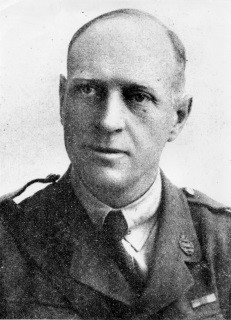
Percival Lea-Wilson, a District Inspector in the Royal Irish Constabulary (RIC) who is stationed at Gorey, County Wexford, is shot dead on June 15, 1920, by the Irish Republican Army (IRA) outside his Gorey home on the orders of Michael Collins.

Lea-Wilson is born in Kensington, London and is educated at the University of Oxford but his route into the British Army begins with a stint as a RIC constable in Charleville, County Cork in the early 20th century.

When World War I breaks out in 1914 Lea-Wilson joins the British army where he reaches the rank of captain in the 18th Royal Irish Regiment. An injury during the war forces him back to Ireland where he is stationed in Dublin, just in time for the Easter Rising in 1916.

When the weeklong rising ends, the rebels who had fought in the Four Courts and the GPO are marched to the Rotunda Hospital where they are kept overnight under the glare of British troops. Among those detained are leaders of the rebellion such as Sean Mac Diarmada and Tom Clarke. Clarke is singled out and subjected to public humiliation by 28-year-old British army Captain Percival Lea-Wilson.

Lea-Wilson and his soldiers walk among the captured rebels, and he picks the 58-year-old Clarke out of the group. He marches Clarke to the steps of the hospital where he orders soldiers to strip him bare as nurses look on in horror from the windows above. Clarke is beaten and left there overnight in his tattered clothes. One of the prisoners, Michael Collins, who witnesses Clarke’s mistreatment at the hands of the British captain vows vengeance.

In the years following the Easter Rising, Lea-Wilson settles in Wexford where he attains the role of RIC district inspector.

On the morning of June 15, 1920, Lea-Wilson is walking back home after paying a visit to the RIC barracks in Gorey. Dressed in his civilian clothes, he stops at the local railway station where he purchases a newspaper and meets Constable Alexander O’Donnell, who accompanies him on part of his walk home.

O’Donnell and Lea-Wilson part company at the railway bridge on Ballycanew Road while further up that very same stretch of road there is a number of men standing around a parked car with its hood raised. Michael Collins had sent Liam Tobin and Frank Thornton from Dublin to meet with Joe McMahon, Michael McGrath and Michael Sinnott in Enniscorthy. They were then driven by Jack Whelan to Ballycanew Road to carry out the assassination of Lea-Wilson.

Unaware of his assassins lying in wait, Lea-Wilson is reading his paper while strolling along the road. The men by the parked car pull out revolvers when their target comes into range and two bullets strike him down. He manages to quickly get back on his feet and attempts to make an escape, but his six assassins run after him and finally bring him down in a hail of bullets. A coroner’s report later states that Lea-Wilson had been shot seven times.

When the shooting ends, one of Lea-Wilson’s executioners calmly walks up to the body to make sure he is dead. He then picks up the newspaper from the ground and takes it with him. Later that evening Michael Collins is in the Wicklow Hotel in Dublin when word reaches him from Wexford of the shooting death of Lea-Wilson. Collins greets the news with glee and mentions to one of his comrades, “Well we finally got him!”

Percival Lea-Wilson is buried in Putney Vale Cemetery in southwest London. His grave is marked by a plaque which mentions his assassination in Gorey in 1920, a death which has its roots in the Easter Rising four years previously.


Leave a comment

Birth of Field Marshal Sir Henry Hughes Wilson

henry-hughes-wilson

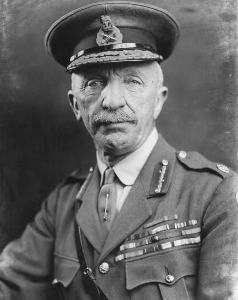
Field Marshal Sir Henry Hughes Wilson, 1st Baronet, GCB, DSO, one of the most senior British Army staff officers of World War I and briefly an Irish unionist politician, is born at Currygrane in Ballinalee, County Longford on May 5, 1864.

Wilson attends Marlborough public school between September 1877 and Easter 1880, before leaving for a crammer to prepare for the Army.

Wilson serves as Commandant of the Staff College, Camberley, and then as Director of Military Operations at the War Office, in which post he plays a vital role in drawing up plans to deploy an Expeditionary Force to France in the event of war. During these years he acquires a reputation as a political intriguer for his role in agitating for the introduction of conscription and in the Curragh incident of 1914, when he encourages senior officers to resign rather than move against the Ulster Volunteers.

As Sub Chief of Staff to the British Expeditionary Force (BEF), Wilson is John French‘s most important adviser during the 1914 campaign, but his poor relations with Douglas Haig and William Robertson see him sidelined from top decision-making in the middle years of the war. He plays an important role in Anglo-French military relations in 1915 and, after his only experience of field command as a corps commander in 1916, again as an ally of the controversial French General Robert Nivelle in early 1917. Later in 1917 he is informal military advisor to British Prime Minister David Lloyd George, and then British Permanent Military Representative at the Supreme War Council at Versailles.

In 1918 Wilson serves as Chief of the Imperial General Staff, the professional head of the British Army. He continues to hold this position after the war, a time when the Army is being sharply reduced in size whilst attempting to contain industrial unrest in the UK and nationalist unrest in Mesopotamia, Iraq and Egypt. He also plays an important role in the Irish War of Independence.

After retiring from the army Wilson serves briefly as a Member of Parliament, and also as security advisor to the Government of Northern Ireland. He is assassinated on his own doorstep by two Irish Republican Army (IRA) gunmen on June 22, 1922, while returning home from unveiling the Great Eastern Railway War Memorial at Liverpool Street station.


Leave a comment

Birth of Walter Gordon Wilson, Co-inventor of the Tank

walter-gordon-wilson

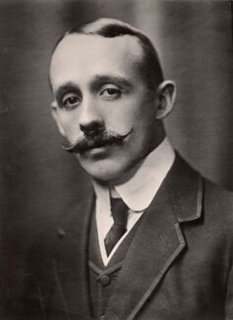
Major Walter Gordon Wilson, mechanical engineer, inventor and member of the British Royal Naval Air Service, is born in Blackrock, County Dublin, on April 21, 1874. He is credited by the 1919 Royal Commission on Awards to Inventors as the co-inventor of the tank, along with Sir William Tritton.

Wilson is a naval cadet on HMS Britannia. In 1894 he entered King’s College, Cambridge, where he studies the mechanical sciences tripos, graduating with a first-class degree, B.A., in 1897. He acts as ‘mechanic’ for the Hon. Charles Stewart Rolls on several occasions while they are undergraduates in Cambridge.

Interested in powered flight, Wilson collaborates with Percy Sinclair Pilcher and the Hon. Adrian Verney-Cave to attempt to make an aero-engine from 1898. The engine is a flat-twin air-cooled and weighs only 40 lbs., but shortly before a demonstration flight planned for September 30, 1899, it suffers a crankshaft failure. Unwilling to let down his backers, Pilcher opts to demonstrate a glider, which crashes, and he is fatally injured. The shock of Pilcher’s death ends Wilson’s plans for aeroengines.

Following Pilcher’s death, Wilson switches to building the Wilson–Pilcher motor car, which is launched in 1900. This car is quite remarkable in that it is available with either flat-four or flat-six engines, which are very well balanced, and with a low centre of gravity making good stability. Each water-cooled cylinder is separate and identical for either engine. Cylinders are slightly offset with separate crankpins, and the crankshaft has intermediate bearings between each pair of cylinders.

The gearbox of the car is also novel, having dual epicyclic gears and being bolted directly to the engine. This allows four speeds, with direct drive in top gear. All the gears are helical, and enclosed in an oil bath, making for very silent transmission. Reverse gear is built into the rear axle, as is the foot operated brake drum, all of which are housed in a substantial aluminum casing.

After marrying in 1904 Wilson joins Armstrong Whitworth who takes over production of the Wilson-Pilcher car. From 1908 to 1914 he works with J & E Hall of Dartford designing the Hallford lorry which sees extensive service with the army during World War I.

The sole known surviving Wilson-Pilcher car is a four-cylinder version that is retained by the Amstrong Whitworth factory and after restoration in the 1940s is presented to W.G. Wilson in the 1950s. It stays in the Wilson family until 2012 when it is sold at auction to a private collector.

With the outbreak of World War I, Wilson rejoins the navy and the Royal Naval Armoured Car Division, which protects the Royal Naval Air Service in France. When the Admiralty begins investigating armoured fighting vehicles under the Landship Committee in 1915, 20 Squadron is assigned to it and Wilson is placed in charge of the experiments. He works with the agricultural engineer William Tritton resulting in the first British tank called “Little Willie.” At Wilson’s suggestion the tracks are extended right round the vehicle. This second design becomes the prototype for the Mark I tank.

Designing several of the early British tanks, Wilson incorporates epicyclic gearing which is used in the Mark V tank to allow it to be steered by a single driver rather than the four previously needed. In 1937, he provides a new steering design which gives a larger turning radius at higher speeds.

Wilson transfers to the British Army in 1916, becoming a Major in the Heavy Branch of the Machine Gun Corps. He is mentioned twice in dispatches and is appointed Companion of the Order of St. Michael and St. George in 1917.

In 1928, Wilson invents a self-changing gearbox, and forms Improved Gears Ltd. with John Davenport Siddeley to develop the design commercially. Improved Gears later becomes Self-Changing Gears. The self-changing gearboxes are available on most subsequent Armstrong Siddeley automobiles, manufactured up to 1960, as well as on Daimler, Lanchester, Talbot, ERA, AC, Invicta and Riley automobiles as well as buses, railcars and marine launches.

Walter Gordon Wilson dies in Coventry, West Midlands, England on July 1, 1957.


Leave a comment

Birth of Painter Sir John Lavery

john-lavery

Sir John Lavery, Irish painter best known for his portraits and wartime depictions, is born in Belfast on March 20, 1856.

Lavery attends Haldane Academy in Glasgow in the 1870s and the Académie Julian in Paris in the early 1880s. He returns to Glasgow and is associated with the Glasgow School. In 1888 he is commissioned to paint the state visit of Queen Victoria to the Glasgow International Exhibition of Science, Art and Industry. This launches his career as a society painter, and he moves to London soon thereafter. In London he becomes friends with James McNeill Whistler and is clearly influenced by him.

Like William Orpen, Lavery is appointed an official artist in World War I. Ill-health, however, prevents him from travelling to the Western Front. A serious car crash during a Zeppelin bombing raid also keeps him from fulfilling this role as war artist. He remains in Britain and mostly paints boats, aeroplanes, and airships. During the war years he is a close friend of H.H. Asquith‘s family and spends time with them at their Sutton Courtenay Thames-side residence, painting their portraits and idyllic pictures like Summer on the River (Hugh Lane Gallery).

After the war Lavery is knighted and in 1921 he is elected to the Royal Academy of Arts.

During this time, he and his wife, Hazel, are tangentially involved in the Irish War of Independence and the Irish Civil War. They give the use of their London home to the Irish negotiators during the negotiations leading to the Anglo-Irish Treaty. After Michael Collins is assassinated, Lavery paints Michael Collins, Love of Ireland, now in the Hugh Lane Gallery. In 1929, Lavery makes substantial donations of his work to both the Ulster Museum and the Hugh Lane Gallery and in the 1930s he returns to Ireland. He receives honorary degrees from the University of Dublin and Queen’s University Belfast. He is also made a free man of both Dublin and Belfast. A long-standing member of Glasgow Art Club, Lavery exhibits at the club’s annual exhibitions, including its exhibition in 1939 in which his The Lake at Ranelagh is included.

Sir John Lavery dies of natural causes, at the age of 84, in Rossenarra House, Kilmoganny, County Kilkenny on January 10, 1941, and is interred in Putney Vale Cemetery.


Leave a comment

Birth of Daniel Mannix, Archbishop of Melbourne

daniel-mannix

Daniel Mannix, Archbishop of Melbourne, advocate of Irish independence, and one of the most influential and controversial public figures in 20th-century Australia, is born near Charleville, County Cork on March 4, 1864.

Mannix is the son of a tenant farmer, Timothy Mannix, and his wife Ellen (née Cagney). He is educated at Congregation of Christian Brothers schools and at St. Patrick’s College, Maynooth, County Kildare, where he is ordained priest in 1890. He teaches philosophy (1891) and theology (1894) at St. Patrick’s and from 1903 to 1912 he serves as president of the college. During his presidency, he welcomes both King Edward VII in 1905 and King George V in 1911 with loyal displays, which attract criticism by supporters of the Irish Home Rule movement.

Consecrated titular archbishop of Pharsalus in 1912, Mannix arrives in Melbourne in the following year as coadjutor archbishop, becoming archbishop of Melbourne in 1917.

Mannix’s forthright demands for state aid for the education of Roman Catholics in return for their taxes and his opposition to drafting soldiers for World War I make him the subject of controversy. A zealous supporter of Irish independence, he makes an official journey to Rome in 1920 via the United States, where his lengthy speech making attracts enthusiastic crowds. His campaign on behalf of the Irish, however, causes the British government to prevent him from landing in Ireland, which he finally visits in 1925.

After World War II Mannix seeks to stop Communist infiltration of the Australian trade unions. He plays a controversial part in the dissensions within the Australian Labor Party and backs the largely right-wing Catholic Democratic Labor Party, which breaks away. A promoter of Catholic Action (i.e., lay apostolic activity in the temporal society) and of the Catholic social movement, he is responsible for the establishment of 181 schools, including Newman College and St. Mary’s College at the University of Melbourne, and 108 parishes.

By the 1960s the distinct identity of the Irish community in Melbourne is fading, and Irish Catholics are increasingly outnumbered by Italians, Maltese and other postwar immigrant Catholic communities. Mannix, who turned 90 in 1954, remains active and in full authority, but he is no longer a central figure in the city’s politics. He dies suddenly on November 6, 1963, aged 99, while the Archdiocese of Melbourne is preparing to celebrate his 100th birthday. He is buried in the crypt of St. Patrick’s Cathedral, Melbourne.


Leave a comment

Birth of Stephen Lucius Gwynn, Writer & Politician

stephen-lucius-gwynn

Stephen Lucius Gwynn, journalist, biographer, author, poet, Protestant Nationalist politician, and Member of Parliament (MP) in the House of Commons of the United Kingdom of Great Britain and Ireland, is born on February 13, 1864, in St. Columba’s College, Rathfarnham, Dublin, where his father John Gwynn, a biblical scholar and Church of Ireland clergyman, is a warden.

Gwynn spends his early childhood in rural County Donegal, which shapes his later view of Ireland. He is educated at St. Columba’s College and goes on to Brasenose College, Oxford, where, as scholar, in 1884 he is awarded first-class honours in classical moderations and in 1886 literae humaniores. During term holidays he returns to Dublin, where he meets several of the political and literary figures of the day.

After graduating Gwynn moves to France where he works as a schoolmaster for ten years. In December 1889 he marries his cousin Mary Louisa Gwynn. They have four sons and two daughters. Having dabbled in journalism since his student days, he moves to London in 1896 to pursue a career as a writer. He soon becomes a prominent figure in literary and journalistic circles.

In 1904 the Gwynns return to Ireland to live in Raheny, County Dublin. In November 1906 he wins a seat for Galway Borough, which he represents as a member of the Irish Parliamentary Party until 1918. During this time, he also becomes active with the Gaelic League and the Irish Literary Revival.

At the outbreak of World War I, Gwynn gives his support to John Redmond that Irishmen should enlist in the British forces. At the age of fifty-one he enlists as a private in the 7th Leinster Regiment and is later commissioned lieutenant in the 6th Battalion Connaught Rangers, attached to the 16th (Irish) Division. He is promoted to captain in 1915 and serves with his battalion at the battles of Ginchy and Guillemont during the Somme offensive and also at Messines in 1917, leaving the front line shortly afterwards.

Gwynn is appointed to the Dardanelles Commission in 1916, an investigation into the unsuccessful 1915 Gallipoli Campaign.

After the war Gwynn continues with his writing and political life. He receives honorary doctorates from the National University of Ireland in 1940 and the University of Dublin in 1945. He dies on June 11, 1950, at his home in Terenure, Dublin and is buried at Tallaght cemetery.


1 Comment

Birth of Sir Arthur Philip du Cros

arthur-du-cros

Sir Arthur Philip du Cros, British industrialist and politician, is born in Dublin on January 26, 1871.

Du Cros is the third of seven sons of Harvey du Cros. He is brought up in modest circumstances. His father, later a well-known manufacturer, is at the time only a bookkeeper with an income of £170 a year. He attends a national school in Dublin and then enters the civil service at the lowest grade. In 1892 he joins the Pneumatic Tyre and Booth’s Cycle Agency Ltd, of which his father is now the chairman, and is made a joint managing director in 1896 when it is floated as a public company.

In 1895 du Cros marries Maude Gooding, the daughter of a Coventry watch manufacturer. They have two sons and two daughters before a divorce in 1923.

In 1901 du Cros founds the Dunlop Rubber Company, converting 400 acres of land in Birmingham to produce and manufacture tires, with the area henceforth being known as Fort Dunlop. The firm eventually diversifies into making other rubber products as well as tires, and du Cros selects plantations in Malaya and Sri Lanka for the company, which by 1917 owns 60,000 acres of rubber-producing land.

In 1906 du Cros enters politics, unsuccessfully contesting the seat of Bow & Bromley as a Conservative Party candidate, a seat his brother is elected to in 1910. In 1908 he is elected Member of Parliament for Hastings, a position his father had held immediately before.

In 1909 du Cros forms, and is director of, the Parliamentary Aerial Defence Committee to ensure funding for military aeronautical development, of which he is a strong proponent. During World War I he works for the Ministry of Munitions on an honorary basis, buying two motorised ambulance convoys out of his own money and helping raise an infantry battalion, being a former captain of the Royal Warwickshires and for some years being the honorary colonel of the 8th battalion of the Royal Warwickshire Regiment. In 1916 he is created a baronet. He continues to represent Hastings until 1918, when he is elected as a Member of Parliament for Clapham, a position he resigns four years later.

His later career is awash with financial impropriety. He finds it difficult to distinguish between personal and company assets, using company funds to sponsor family investments and appointing family members to senior position with no regard for merit. He also participates in financial manipulation, being a close associate of James White, a financial expert who specialises in share rigging and whose actions leave Dunlop, had already lost influence within the company, close to collapse in 1921. He is quietly removed after the 1921 crash.

Arthur du Cros dies at home near Watford, Hertfordshire on October 28, 1955, at the age of 84. He is interred in Finstock, Oxfordshire.


Leave a comment

Birth of William X. O’Brien, Politician & Trade Unionist

william-x-obrien

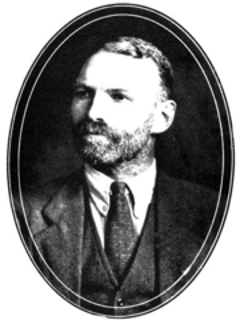
William X. O’Brien, politician and trade unionist, is born on January 23, 1881, in Clonakilty, County Cork. He is christened “John William.”

O’Brien moves with his family to Dublin in 1897 and quickly becomes involved in the Irish Socialist Republican Party (ISRP). He is described as “a very significant figure in the ISRP” by ISRP historian David Lynch. He is a member of the Socialist Party of Ireland, serving on its executive.

A close friend and associate of James Connolly, O’Brien helps establish the Irish Transport and General Workers’ Union (ITGWU) in 1909 and is instrumental in the Dublin lock-out strike in 1913.

A member of the Irish Neutrality League and Anti-Conscription Committee during World War I, O’Brien is interned on several occasions by the Dublin Castle government. During one of these instances, he stands in the 1920 Stockport by-election but is refused a release to campaign in it.

With the formation of the Irish Free State, O’Brien is elected as Teachta Dála (TD) for Dublin South at the 1922 general election, and again for Tipperary in June 1927 and again in 1937.

An important figure in the Labour Party in Ireland in its formative days, O’Brien resists James Larkin‘s attempt to gain control of the Party on release from prison. Taking Larkin to court over his occupation of ITGWU headquarters, the Larkin-O’Brien feud results in a split within the labour and trade union movements, and the formation of the Irish Congress of Trade Unions.

In 1930, O’Brien seeks to have Leon Trotsky granted asylum in Ireland, but the head of the Free State government, W. T. Cosgrave, refuses to allow it.

Active in politics and the trade union movement into his 60s, O’Brien retires in 1946 and dies on October 31, 1968.


Leave a comment

Birth of Novelist Jennifer Johnston

jennifer-johnston

Jennifer Prudence Johnston, Irish novelist whose works deal with political and cultural tensions in Ireland with an emphasis on the problems of the Anglo-Irish people, is born in Dublin on January 12, 1930. Rich in dialogue, Johnston’s novels often concern interpersonal relationships and the difficult transition from childhood to adulthood.

Johnston is born to Irish actress and director Shelah Richards, and Irish playwright Denis Johnston. A cousin of actress and film star Geraldine Fitzgerald, via Fitzgerald’s mother, Edith (née Richards), she is educated at Trinity College Dublin. Other cousins include the actresses Tara Fitzgerald and Susan Fitzgerald.

Born into the Church of Ireland, many of Johnston’s novels deal with the fading of the Protestant Anglo-Irish ascendancy in the 20th century.

Johnston’s first published book, The Captains and the Kings (1972), is actually written after The Gates (1973). Both novels feature the Anglo-Irish setting of a decaying manor house. Johnston’s third novel, How Many Miles to Babylon? (1974), concerns the complex and tragic friendship of two young men who are sentenced to death during World War I. Shadows on Our Skin (1977) and The Railway Station Man (1984) focus on violence in Northern Ireland, and The Old Jest (1979 and filmed as The Dawning, 1988) and Fool’s Sanctuary (1987) are set during the emergence of modern Ireland in the 1920s. The protagonist of The Christmas Tree (1981) attempts to salvage her troubled life before it is cut short by leukemia.

Johnston’s other novels include The Invisible Worm (1991), The Illusionist (1995), Two Moons (1998), This Is Not a Novel (2002), and Foolish Mortals (2007). She also writes short stories and plays, such as Three Monologues: Twinkletoes, Mustn’t Forget High Noon, Christine (1995) and The Desert Lullaby: A Play in Two Acts (1996).

Johnston marries a fellow student at Trinity College, Ian Smyth in 1951. She is a mother of four and currently lives near Dublin. She is also a member of Aosdána.


Leave a comment

Birth of Patrick MacGill, Poet & Novelist

patrick-macgill

Patrick MacGill, journalist, poet and novelist, is born on December 24, 1889, in Glenties, County Donegal. He is known as “The Navvy Poet” because he works as a navvy before he begins writing.

During World War I, MacGill serves with the London Irish Rifles (1/18th Battalion, London Regiment) and is wounded at the Battle of Loos on October 28, 1915. He is recruited into Military Intelligence and writes for MI 7b between 1916 and the Armistice in 1918. He writes a memoir-type novel called Children of the Dead End.

Patrick MacGill dies on November 22, 1963, the same day that U.S. President John F. Kennedy is assassinated in Dallas, Texas.

In early 2008, a docu-drama starring Stephen Rea is made about the life of Patrick MacGill, which is released in Ireland in 2009 as Child of the Dead End. One of the film’s locations is the boathouse of Edinburgh Canal Society at Edinburgh on the Union Canal, and one of its rowing boats.

An annual literary MacGill Summer School is held in Glenties in mid-July each year in his honour. A statue in his honour is on the bridge where the main street crosses the river in Glenties. He has three children, Christine, Patricia and Sheila MacGill.