The passenger-carrying sailing ship Stephen Whitney is wrecked on West Calf Island off the southern coast of Ireland on November 10, 1847 with the loss of 92 of the 110 passengers and crew aboard.
The 1,034-ton ship leaves New York City on October 18 for Liverpool, England, carrying passengers and a cargo which includes corn, raw cotton, cheese, resin, and twenty boxes of clocks. On November 10 in thick fog, the captain, C.W. Popham, mistakes the Crookhavenlighthouse for the one at the Old Head of Kinsale and the lighthouse on Cape Clear Island is obscured by fog compounding the error in navigation. At around 10:00 p.m., the ship strikes the western tip of West Calf Island, completely breaking up within about ten minutes. Conditions in the area are distressing as it is the height of the Great Famine.
The loss of the ship triggers the decision to replace the Cape Clear Island lighthouse with one on Fastnet Rock. This decision is also because the lighthouse on Cape Clear is often shrouded in fog or low level clouds, which make it hard or at times impossible to see.
(Pictured: West Calf Island, the most westerly of the three Calf Islands that lie at the heart of Roaring Water Bay, West Cork)
Mathew is born on July 10, 1830, at Lehenagh House, County Cork, eldest son of Charles Mathew, gentleman, of Lehenagh House and Castlelake, County Tipperary, and his wife Mary, daughter of James Hackett of Cork. He is of a Roman Catholic family and his uncle is Fr. Theobald Mathew, the temperance movement campaigner. His initial education is at a private school in Cork. He enters Trinity College Dublin (TCD) in July 1845, graduating BA (1850) as a gold medalist and senior moderator. In Hilary term 1850 he is admitted to the King’s Inns in Dublin. He moves to London, entering Lincoln’s Inn on June 1, 1851, and is called to the English bar in Hilary term 1854.
Mathew is a founding member of the Hardwicke Society, a legal debating society, and builds up a substantial practice as a junior barrister, being much in demand as counsel for jury cases in the Guildhall sittings. Despite being highly regarded by his peers, a certain lack of confidence holds him back and even when vacancies arise, he does not apply to be made a Queen’s Counsel (QC). In 1873, however, he represents the treasury as a junior counsel in the prosecution of the Tichborne claimant, Arthur Orton, in one of the most celebrated legal cases of the day. He is the only counsel for the treasury who does not get into heated arguments in court with Orton’s leading council, Dr. Edward Vaughan Hyde Kenealy.
Mathew possesses an encyclopedic knowledge of legal procedure and in 1881 is made a bencher at Lincoln’s Inn and awarded an honorary doctorate by TCD. Although still only a junior counsel he is appointed a judge in the Queen’s Bench Division in March 1881 and knighted. After the return to office of the Liberal Party in August 1892 he becomes chairman of the commission established to investigate the state of evicted tenants in Ireland. His appointment is perhaps unfortunate, as he is a home ruler in politics and the home rule MPJohn Dillon is his son-in-law. When the commission begins its hearings on November 7, 1892, he announces that he will not allow witnesses to be cross-examined. This provokes protests from Edward Carson, who had recently been replaced as solicitor general for Ireland. Counsel is ordered to withdraw and eventually two members of the commission resign, while the landlords refuse to cooperate with the proceedings. Despite severe criticism, many of the commission’s recommendations are incorporated in the Wyndham Land Purchase Act of 1903.
Throughout his legal career, Mathew argues for the establishment of a separate commercial court and eventually succeeds in convincing the other members of the bench and also Lord Russell of Killowen, who is appointed Lord Chief Justice in 1894, that such a court be established. As a result of this, he is appointed as the first judge of the Commercial Court when it is set up in 1895. In 1901 he is made a privy councilor and appointed judge in the Court of Appeal.
On December 6, 1905, Mathew is seized with a paralytic stroke at the Athenaeum Club in London, and his resignation is announced on the following day. On November 9, 1908, he dies at his London home, 46 Queen’s Gate Gardens. His remains are returned to Ireland, where they are interred in St. Joseph’s Cemetery, Cork.
Mathew marries Elizabeth Blackmore, eldest daughter of the Rev. Edwin Biron, JP and vicar of Lympne near Hythe, Kent, in December 1861. They have two sons and three daughters. His eldest daughter, Elizabeth Mathew, marries John Dillon. A portrait of Sir James Charles Mathew, by Frank Holl, is in the possession of the family. In 1896 a cartoon portrait of him by ‘Spy’ appears in Vanity Fair.
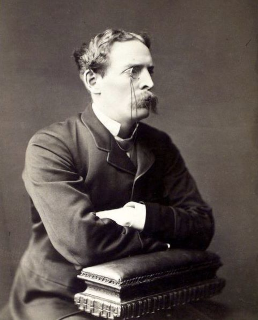
(From: “Mathew, Sir James Charles” by David Murphy, Dictionary of Irish Biography, http://www.dib.ie | Pictured: Sir James Charles Mathew by Alexander Bassano, half-plate glass negative, 1883, National Portrait Gallery, London)
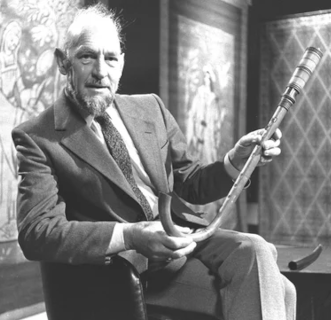
Brian Patrick Boydell, Irish composer whose works include orchestral pieces, chamber music, and songs, dies on November 8, 2000. He is Professor of Music at Trinity College Dublin for 20 years, founder of the Dowland Consort, conductor of the Dublin Orchestral Players, and a prolific broadcaster and writer on musical matters. He was also a prolific musicologist specialising in 18th-century Irish musical history.
Boydell is born on March 17, 1917, in Howth, County Dublin, into a prosperous Anglo-Irish family. His father James runs the family maltings business while his mother, Eileen Collins, is one of the first women graduates of Trinity College. Following their son’s birth, the Boydells move from Howth and live in a succession of rented houses before settling in Shankill, County Dublin. The young Boydell begins his formal education at Monkstown Park in Dublin and is subsequently sent to the Dragon School at Oxford, England. From there he goes to Rugby School, where he comes under the influence of Kenneth Stubbs, the music master. Although he later speaks of his resentment at the anti-Irish attitude he experiences at Rugby, he appreciates the very good education in science and music he receives there.
Having completed his secondary education, Boydell spends the summer of 1935 developing his musical knowledge at Heidelberg, Germany, where he writes his first songs and also studies organ. He wins a choral scholarship to Clare College, Cambridge, where, perhaps through parental pressure, he studies natural science, graduating in 1938 with a first-class degree.
Upon the outbreak of World War II, Boydell returns to Dublin and achieves further academic success in 1942 with a Bachelor of Music degree from Trinity College. He also takes further lessons in composition from John F. Larchet.
Boydell’s busy working life combines teaching, performing and composing. Following a brief stint in his father’s business, he plunges himself into Dublin’s classical music scene. In 1943, he succeeds Havelock Nelson as conductor of the Dublin Orchestral Players, beginning an association with the amateur orchestra that endures for a quarter of a century (until 1966). In 1944, he is appointed Professor of Singing at the Royal Irish Academy of Music, a position he holds for eight years. Along with fellow composers Edgar M. Deale, Aloys Fleischmann, and Frederick May he founds the Music Association of Ireland in 1948 as a vehicle to promote classical music throughout the country.
Boydell’s interest in Renaissance music, in particular the madrigal, leads in 1959 to founding the Dowland Consort, a vocal ensemble with which he performs for many years and records an LP. In 1962, having obtained a Doctorate in Music, he is appointed Professor of Music at Trinity College, a position he holds until 1982. He immediately revamps the course making it more relevant to the second half of the twentieth century. He also finds time to sit on the Arts Council throughout the 1960s, 70s, and early 80s.
Boydell’s communication skills combined with his infectious enthusiasm makes him a natural broadcaster. The appeal of his programmes on the history and performance of music, first on RTÉ Radio 1 and later on Telefís Éireann, go beyond a specialist audience and are, for many people, their introduction to a new world of aural pleasure.
Boydell has many interests beyond music. As a surrealist painter in the 1940s, having taken lessons from Mainie Jellett, he is a member of The White Stag Group. He is also passionate about cars and photography.
Following retirement from Trinity as Fellow Emeritus, Boydell devotes himself to musical scholarship, writing two books on the music of 18th century Dublin. He also contributes to The New Grove Dictionary of Music and Musicians.
Boydell dies at his home in Howth on November 8, 2000, at the age of 83 and in the company of his wife of 56 years, Mary (née Jones) and their sons, Cormac and Barra. A third son, Marnac, predeceases him.
Boydell is awarded several honorary titles in recognition of his services to music, including the Honorary Doctorate of Music from the National University of Ireland (1974), the Order of Merit of the Italian Republic (1983), the election to Aosdána, Ireland’s academy of creative artists (1984), and Honorary Fellowship of the Royal Irish Academy of Music (1990).
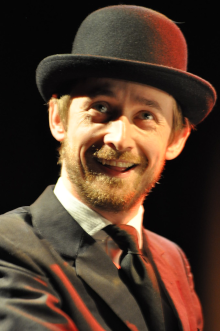
Hannon is founder and mainstay of The Divine Comedy, a band which achieves their biggest commercial success in the last half of the 1990s with the albums Casanova (1996), A Short Album About Love (1997), and Fin de Siècle (1998). He continues to release albums under The Divine Comedy name, the most recent being Office Politics (2019). In 2000 he and Joby Talbot contribute four tracks for Ute Lemper‘s collaboration album, Punishing Kiss.
In 2006 it is announced that Hannon is to lend his vocal ability to the Doctor Who soundtrack CD release, recording two songs – “Love Don’t Roam” for the 2006 Christmas special, “The Runaway Bride“, and a new version of “Song For Ten”, originally used in 2005’s “The Christmas Invasion.” On January 12, 2007, The Guardian website’s “Media Monkey” diary column reports that Doctor Who fans from the discussion forum on the fan website Outpost Gallifrey are attempting to organise mass downloads of the Hannon-sung “Love Don’t Roam,” which is available as a single release on the UKiTunes Store. This is in order to attempt to exploit the new UK Singles Chart download rules, and get the song featured in the Top 40 releases.
The same year Hannon adds his writing and vocal talents to the Air album Pocket Symphony, released in the United States on March 6, 2007. He is featured on the track “Somewhere Between Waking and Sleeping,” for which he writes the lyrics. This song had been originally written for and sung by Charlotte Gainsbourg on her album, 5:55. Though it is not included in its 2006 European release, it is added as a bonus track for its American release on April 24, 2007.
Hannon is credited with composing the theme music for the sitcoms Father Ted and The IT Crowd, the former theme composed for the show and later reworked into “Songs of Love,” a track on The Divine Comedy’s breakthrough album Casanova. Both shows are created or co-created by Graham Linehan. A new Divine Comedy album, Bang Goes the Knighthood, is released in May 2010.
Hannon has collaborated with Thomas Walsh, from the Irish band Pugwash, to create a cricket-themed pop album under the name The Duckworth Lewis Method. The first single, “The Age of Revolution,” is released in June 2009, and a full-length album is released the following week. The group’s second album, Sticky Wickets, comes out in 2013.
In April 2012 Hannon’s first opera commission, Sevastopol, is performed by the Royal Opera House. It is part of a program called OperaShots, which invites musicians not typically working within the opera medium to create an opera. Sevastopol is based upon Leo Tolstoy‘s Sevastopol Sketches. Hannon’s second opera for which he writes music, In May, premiers in May 2013 in Lancaster and is shown in 2014 with overwhelming success.
The world premiere of “To Our Fathers in Distress,” a piece for organ, is performed on March 22, 2014, in London, at the Royal Festival Hall. It is inspired by Hannon’s father, Rt. Revz. Brian Hannon, who suffers from Alzheimer’s disease.
Hannon’s partner is Irish musician Cathy Davey. The couple live in the Dublin area. He is previously married to Orla Little, with whom he has a daughter, Willow Hannon. With Davey, Hannon is a patron of the Irish animal charity My Lovely Horse Rescue, named after the Father TedEurovision song for which he wrote the music.
Politically, Hannon describes himself as being “a thoroughly leftie, Guardian-reading chap, but of the champagne socialist variety.”
Curtayne is the youngest child of John Curtayne, founder and proprietor of the Tralee Carriage Works, and his wife Bridget Curtayne (née O’Dwyer). She receives her initial education at local convents before attending La Sainte Union College in Southampton, England. Having taken a typing course, she is engaged as a secretary in Milan, where she remains for four and a half years. This proves to be a formative period in her life. She comes to regard Italy as a second home and is greatly influenced by the work of the Italian Catholicphilosopher, Giovanni Papini.
On leaving Italy Curtayne works for a time in Liverpool. She joins the Liverpool Catholic Evidence Guild, from where she receives her diploma as a diocesan catechist. While in England she also develops an interest in public speaking. Her first book, Catherine of Siena (1929), is followed by numerous publications on religious and historical subjects, including Lough Derg (1933), Patrick Sarsfield (1934), The Trial of Oliver Plunkett (1953), Twenty Tales of Irish Saints for children (1955), and The Irish Story (1962).
Curtayne’s enthusiasm for Italy is reflected in her many publications of Italian interest, including a scholarly work on Dante, and a novel House of Cards (1940), which centres on the experiences of a young Irish woman living in Italy. In 1972 she produces Francis Ledwidge: A Life of the Poet, her well regarded biography of the poet Francis Ledwidge, and in 1974 it is followed by an edition of his complete poems, The Complete Works of Francis Ledwidge. Throughout her journalistic career she is a contributor to various magazines and papers, among them The Irish Times, Irish Independent, The Irish Press, Books on Trial, The Spectator, and The Standard.
During the 1950s and early 1960s Curtayne makes five lecture tours in the United States, speaking on Irish life, history, and literature. In 1959 she receives an honorary doctorate in Humane Letters from Anna Maria College in Paxton, Massachusetts, where she briefly teaches. She is presented with the Key to Worcester City by Mayor James D. O’Brien. She also gives a course of lectures on Dante at Craiglockhart College, Edinburgh, in 1956, and in 1965 she again speaks on Dante in a Radio Éireann Thomas Davis lecture.
In December 1954 The Irish Press sends Curtayne to Rome to write daily reports on the close of the Marian year. She goes to Rome again for the final session of the Second Vatican Council. She is commissioned to send weekly reports to local newspapers, The Nationalist (Carlow) and The Kerryman. She also sends a series of profiles of outstanding personages of this Vatican Council to The Universe and an article for Hibernia journal.
In 1935, Curtayne marries the English-born writer and broadcaster Stephen Rynne, with whom she has two sons and two daughters. They run a farm at Prosperous, County Kildare, and are well known advocates of the values of rural living. One son, Andrew Rynne, becomes a medical practitioner and well known for his liberal views on birth control. Daughter Brigid Rynne later illustrates some of her mother’s books.
Curtayne dies on August 9, 1981, in the Hazel Hall Nursing Home in Clane, County Kildare, and is buried at Killybegs Cemetery.
Twomey lives at 6 Sevastopol Street in the Falls district. Known as “Thumper” owing to his short temper and habit of banging his fist on tables, he receives little education and is a bookmaker‘s “runner.” His father is a volunteer in the 1920s. In Belfast he lives comfortably with his wife, Rosie, whom he marries in 1946. Together they have sons and daughters.
Twomey begins his involvement with the Irish Republican Army in the 1930s and is interned in Northern Ireland during the 1940s on the prison ship HMS Al Rawdah and later in Crumlin Road Jail in Belfast. Rosie, his wife, is also held prisoner at the women prison, Armagh Jail, in Northern Ireland. He opposes the left-wing shift of Cathal Goulding in the 1960s, and in 1968, helps set up the breakaway Andersonstown Republican Club, later the Roddy McCorley Society.
In 1969, Twomey is prominent in the establishment of the Provisional Irish Republican Army. By 1972, he is Officer Commanding (OC) of the Provisional IRA Belfast Brigade when it launches its bomb campaign of the city, including Bloody Friday when nine people are killed. During the 1970s, the leadership of the Belfast Brigade of the IRA is largely in the hands of Twomey and Ivor Bell.
In March 1973, Twomey is first appointed IRA Chief of Staff after the arrest of Joe Cahill. He remains in this position until his arrest in October 1973 by the Garda Síochána. Three weeks later, on October 31, 1973, the IRA organises the helicopter escape of Twomey and his fellow IRA members J. B. O’Hagan and Kevin Mallon, when an active service unit hijacks and forces the pilot at gunpoint to land the helicopter in the training yard of Mountjoy Prison. After his escape, he returns to his membership of IRA Army Council.
By June/July 1974, Twomey is IRA Chief of Staff for a second time. He takes part in the Feakle talks between the IRA and Protestant clergymen in December 1974. In the IRA truce which follows in 1975, he is largely unsupportive and wants to fight on in what he sees as “one big push to finish it once and for all.”
IRA informer Sean O’Callaghan claims that on January 5, 1976, Twomey and Brian Keenan give the go-ahead for the sectarian Kingsmill massacre, when ten unarmed Ulster Protestant workmen are executed by the Provisional IRA in retaliation for a rash of loyalist killings of Catholics in the area. It is Keenan’s view, O’Callaghan claims, that “The only way to knock the nonsense out of the Prods is to be ten times more savage.”
Twomey is dedicated to paramilitarism as a means of incorporating Northern Ireland into the Republic of Ireland. In an interview with French television on July 11, 1977, he declares that although the IRA had waged a campaign for seven years at that point, it can fight on for another 70 against the British state in Northern Ireland and in England. He supports the bombing of wealthy civilian targets, which he justifies on class lines. On October 29, 1977, for example, a no-warning bomb at an Italian restaurant in Mayfair kills one diner and wounds 17 others. Three more people are killed in similar blasts in Chelsea and Mayfair the following month. He says, “By hitting Mayfair restaurants, we were hitting the type of person that could bring pressure to bear on the British government.”
In December 1977, Twomey is captured in Sandycove, Dublin, by the Garda Síochána, who had been tipped off by Belgian police about a concealed arms shipment, to be delivered to a bogus company with an address in the area. They swoop on a house in Martello Terrace to discover Twomey outside in his car, wearing his trademark dark glasses. After a high-speed pursuit, he is recaptured in the centre of Dublin. The Gardaí later find documents in his possession outlining proposals for the structural reorganisation of the IRA according to the cell system. His arrest ends his tenure as IRA chief of staff. In the 1986 split over abstentionism, Twomey sides with the Gerry Adams leadership and remains with the Provisionals.
After a long illness from a heart condition, Twomey dies in Dublin on September 12, 1989. He is buried in the family plot in Milltown Cemetery, Belfast. His funeral is attended by about 2,000 people.
Born on April 1, 1743, in St. Bridget’s Parish, Dublin, Butler is the oldest son of Thomas and Eleanor Butler (née Parker). His father is an Irish aristocrat who serves in the British Army. He is the brother of Colonel Thomas Butler and Captain Edward Butler. All three brothers serve in the American Revolution and in the Northwest Indian War against the Northwestern Confederacy of Native American tribes in the Northwest Territories. His two other brothers, William and Percival, serve in the Revolution but do not see later military service.
By 1760, the family moves to the frontier at Carlisle, Pennsylvania, where Thomas and his sons manufacture long rifles and become friends with Daniel Morgan. The Butler gun shop still stands in Carlisle.
By the 1770s, Butler and his brother William are important traders at Fort Pitt in Pennsylvania and in Ohio. Butler Street in Pittsburgh is named for them.
At the outset of the American Revolution, the Continental Congress names Butler a commissioner in 1775 to negotiate with the Indians. He visits representatives of the Delaware, Shawnee, and other tribes to secure their support, or at least neutrality, in the war with Britain.
On July 20, 1776, Butler is commissioned a major in the 8th Pennsylvania Regiment in the Continental Army, serving first as second in command to his friend Daniel Morgan. He is promoted to lieutenant colonel on March 12, 1777, retroactive to September 1776. On June 7, 1777, he is promoted to colonel and placed in command of 9th Pennsylvania Regiment.
At the conclusion of the Battle of Yorktown in October 1781, General George Washington confers on Butler the honor of receiving Cornwallis’ sword of surrender, an honor which he gives to his second in command, Ebenezer Denny. At the last moment, Baron von Steuben demands that he receive the sword. This almost precipitates a duel between Butler and Von Steuben.
At the victory dinner for his officers, George Washington raises his glass and toasts, “The Butlers and their five sons!”
Following Yorktown, Butler remains in the Continental Army and is transferred to the 3rd Pennsylvania Regiment following a consolidation of the Army on January 1, 1783. On September 30 of the same year, he is breveted as a brigadier general. He remains in active service with the Continental Army until it is finally disbanded on November 3, 1783.
In 1783 Butler and his brothers become original members of the Pennsylvania Society of the Cincinnati, a military society of officers who had served in the Continental Army.
Butler returns to Pennsylvania and is a judge in Allegheny County. He also serves in the state legislature. He marries Maria Smith, and they have four children, only one of whom lives to have children and continue the line. He also fathers a son, Captain Butler (or Tamanatha) with Shawnee chief Nonhelema. He and his Shawnee son fight in opposing armies in 1791.
In 1791, Butler is commissioned a major general in the levies (i.e. militiamen conscripted into Federal service) under Major General Arthur St. Clair to fight against the Western Confederacy of Native Americans in the Northwest Territories (modern day Ohio). He is killed in action on November 4, 1791, in St. Clair’s Defeat at what is now Fort Recovery, Ohio.
Reportedly Butler is first buried on the battlefield, which site is then lost until it is accidentally found years later. The remains are laid to rest with the remains of the other fallen at Fort Recovery.
Butler is also honored in the name of General Richard Butler KYSAAR, Butler County, Kentucky recognized August 20, 2016. A chapter of the Sons of the American Revolution is named for him as as is the General Richard Butler Chapter of the Daughters of the American Revolution (DAR), founded in Butler, Pennsylvania.
Thomas (Tom) Steele, engineer and political activist, is born on November 3, 1788, at Derrymore, County Clare, the son of William Steele, gentleman, and Catherine Steele (née Bridgeman).
In July 1805 Steele enters Trinity College Dublin, graduating BA in the spring of 1810. He then studies at Magdalene College, Cambridge, where he graduates MA in 1820, becoming an associate member of the Institution of Civil Engineers in the same year. In 1821 he inherits Cullane House, near Craggaunowen, County Clare, on the death of his uncle. Of an enthusiastic and adventurous nature, in 1823 he decides to support the cause of the liberals in Spain who had rebelled against the autocratic rule of Ferdinand VII in 1820. Mortgaging the house and lands at Cullane, he purchases a large quantity of arms and ships them to Spain on board the ship Iris. Commissioned in the Legion Estrenjera of the liberal army, he distinguishes himself in the Battle of Trocadero and the defence of Madrid. He later publishes an account of his experiences, Notes on the war in Spain (London, 1824).
Returning from Spain with his fortunes ruined, Steele begins experiments with underwater diving apparatus, patenting “Steele’s improved diving-bell” in 1825. In the same year he becomes a partner in the Vigo Bay Co., which attempts to recover gold and silver bullion from Spanish ships which sank in Vigo Bay in 1702. After extensive diving operations using Steele’s diving-bell, the company is wound up at an acrimonious meeting of shareholders in September 1826. Despite claims by some of the shareholders that bullion had been found, the scheme is a total failure.
Steele is involved in the Catholic Association and, a close friend of Daniel O’Connell, is active in the emancipation campaign although himself a protestant. In 1828 he seconds O’Connell’s nomination for Clare in the general election of that year. Appointed by O’Connell as ‘Head Pacificator,’ he tours the country collecting weapons and discouraging the rural population from engaging in faction fighting. There is a certain irony in this appointment, as Steele’s own volatile temper is well known. A noted duelist, he fights an inconclusive duel in 1829 with William Smith O’Brien, who had opposed O’Connell’s second candidature for County Clare. In 1828 he is a founder of the Limerick Independent Club.
An associate of the diving pioneers John and Charles Deane, Steele dives on the wreck of the Intrinsic, off the Clare coast in January 1836, using their new diving helmet. He then begins developing equipment to provide underwater illumination, and in 1840 dives with the Deane brothers off Plymouth on the wreck of Henry VIII‘s ship, the Mary Rose. Yet he is in serious financial difficulties, which are not helped by some of his more eccentric building projects. It is said of him that “he seemed utterly incapable of rationally estimating the value of money in his own case.” He begins renovating, at great expense, a ruined castle that stands on his land at Cullane. He also later has a large standing stone, known as the ‘Umbilicus Hiberniae’ (‘Navel of Ireland’), removed from Birr, King’s County (now County Offaly), and taken to his house. At Cullane it is set up as an altar and used for mass whenever O’Connell or members of the Catholic Association visit. It is not returned to Birr until 1974.
Known as “Honest Tom Steele,” Steele is deeply devoted to O’Connell, and is one of his key lieutenants during the repeal campaigns of the 1830s and 1840s. He takes his title and responsibilities as O’Connell’s “Head Pacificator” so seriously and generally expresses himself with such long-winded pomposity that he becomes something of a figure of fun for opponents of O’Connell and for many of the younger men in the Repeal Association. Tried on conspiracy charges after the prohibition of the Clontarf monster meeting, he is one of the six “traversers” imprisoned with O’Connell in Richmond jail from May to September 1844. Strongly supporting O’Connell’s repudiation of physical force, he chairs and takes a prominent part in the peace resolution debates of July 1846 in which the Young Ireland group walks out of the Repeal Association.
After the death of O’Connell on May 15, 1847, Steele falls into a deep depression and, financially ruined, jumps from Waterloo Bridge in London on April 19, 1848. Pulled from the river by a Thames boatman, he survives for a number of weeks. Former political opponents, including Lord Brougham, offer financial help but he refuses. He dies on June 15, 1848, and his remains are taken to Dublin, where he is waked at Conciliation Hall, the headquarters of the Repeal Association, on Burgh Quay. He is buried in Glasnevin Cemetery, beside O’Connell’s tomb. He appears as one of the figures on the O’Connell memorial in O’Connell Street, Dublin.
Steele never marries but harbours an unrequited passion for a Miss Eileen Crowe of Ennis, County Clare, and is often to be seen standing on a large rock, which comes to be known as “Steele’s Rock,” on the banks of the River Fergus in Ennis as he tries to catch a glimpse of Miss Crowe, who lives across the river.
(From: “Steele, Thomas (Tom)” by David Murphy, Dictionary of Irish Biography, http://www.dib.ie | Pictured: (L to R) Thomas Steele, Daniel O’Connell and O’Gorman Mahon by Joseph Patrick Haverty)
O’Donnell is born in an army barracks in Devon, England, where his father, Sergeant Bernard MacDonald, is stationed. His mother, Mary Kain, is a native of Ballybane, close to Galway city. He is educated at the Erasmus Smith School in Galway, Coláiste Iognáid (the “Jes”), and later enrolls in Queen’s College Galway, where he studies English literature, history and political economy. While a student at the college, he acquires a considerable reputation as an orator, and is a frequent contributor to meetings of the college’s Literary and Debating Society, of which he becomes vice-auditor for the 1864–65 session.
Even in his student days, O’Donnell seems to be quick to voice his opinions, and revells in controversy. In November 1866, addressing the Literary and Debating Society on the question “Was the character of Warren Hastings as Governor-General of India praiseworthy?” he causes uproar by denouncing “the principle and the system which have lain at the root of the international and intercolonial policy of England, from the days when Elizabeth, the Infamous, chartered for profit two of the first ships which opened the African slave trade.” His remarks cause the chairman of the meeting, Professor Thomas Moffett, to prevent him from continuing his speech, stating that “such an epithet ought not to be applied to any predecessor of our present gracious Queen.” O’Donnell regards such action as an unwarranted restriction on his freedom of speech, and in a letter published in the local press gives an early example of his high-flown literary style:
“I hold that Debating Societies are the nurseries of independent thought, and the training schools of sober criticism. I believe in the power and impartiality of an enlightened studenthood … I have followed the mind of Austin. I have sat at the feet of Cairnes. I have drunk of the philosophy of Mill. I claim for Judicial Science, for Economic Science, for the Philosophy of History, a place in the discussions of our society, I pity, and I scorn the formidable confederacy of fools who dare not call a spade a spade.”
This incident, combined with the reluctance of the society to prevent O’Donnell from addressing its meetings, eventually leads to the suspension of the society from the Queen’s College and its temporary migration to rooms in the city of Galway.
O’Donnell graduates from the Queen’s College with an M.A. degree in 1868, winning several gold medals for his academic performance. By this stage, he has begun to style himself ‘Frank Hugh O’Donnell,’ believing himself to be a descendant of Hugh O’Donnell, 2nd Earl of Tyrconnell.
Leaving Galway, O’Donnell moves to London, where he embarks on a career in journalism, following his college contemporary T. P. O’Connor. O’Connor’s knowledge of modern European languages has helped him to establish himself as a correspondent on European affairs, and he assists O’Donnell in developing a similar reputation. He spends a brief period on the staff of The Morning Post.
In the 1874 United Kingdom general election, O’Donnell is elected Member of Parliament (MP) for Galway Borough but is unseated by the courts in what appears to be a politically inspired judgment which uses certain unsavoury campaigning tactics in which O’Donnell had indulged as its basis. He is succeeded in the seat by his election agent, Dr. Michael Francis Ward, who is himself succeeded in 1880 by T. P. O’Connor in an unusual succession, all three having been either auditor or vice-auditor of the Queen’s College Literary and Debating Society in the same era.
In 1875, O’Donnell is a founding member of the Constitutional Society of India, a group promoting political autonomy for India. In 1877, he secures a more permanent election to the House of Commons of the United Kingdom as MP for Dungarvan. He holds the seat until 1885, when the constituency is abolished. He strikes a colourful and controversial figure in parliament and becomes renowned for his declamatory speech-making. He is a prominent obstructionist and claims credit for inventing the tactic of obstructionism which is to yield such results for the Home Rule League under Charles Stewart Parnell. Indeed, he sees himself as a natural leader and becomes disillusioned when Parnell is selected in May 1880 to succeed William Shaw as leader of the Irish Parliamentary Party. He calls the British ‘Imperial pirates’ and inaugurates the Constitutional Society of India. Its aim is Home Rule for India, “Mr. O’Donnell’s grand passion in politics was a confederation of all the discontented races of the Empire under the lead of the Irish party. He once brought down some scores of dusky students of all the races and creeds of Hindustan to the House of Commons.”
Parnell refuses to let O’Donnell be nominated in 1885. He leaves the Irish Parliamentary Party and conventional politics, but not its general aims of promoting home rule and tenant farmers’ rights. His last and perhaps most important contribution to the fortunes of the party is the libel case he launches against The Times in 1888 over the series “Parnellism and Crime.” Though the case is lost, it results in the establishment of the Parnell Commission which exonerates Parnell from condoning the Phoenix Park Murders and exposes the Pigott Forgeries.
In his later years O’Donnell begins investigating misconduct by both the British Civil Service and the Roman Catholic church in Ireland. His Paraguay on Shannon (1908) is an amusing but serious critique of unethical practices by the Catholic clergy in local politics, education, and their involvement in the Congested Districts Board for Ireland that is financed by Parliament in order to improve the depressed economy of western Ireland. Parliament believes that by improving the living standards of the Irish peasant class, they can “kill Home Rule with kindness.”
After careful investigation, O’Donnell accuses members of the Catholic clergy of illegally diverting Government money earmarked for economic development into new Cathedrals, parish churches, and other ecclesiastical building projects. He argues that the British Government needs to provide better oversight of how the Congested Districts Board’s funds are being used. He believes that “in Ireland material ruin has accompanied clerical despotism.” His hostility to the Church draws the ire of Catholic historians who systematically undermine his credibility.
Ernest Belfort Bax writes that O’Donnell’s “matter is better than his manner.”
O’Donnell dies a bachelor in London on November 2, 1916, and is buried in Glasnevin Cemetery, Dublin.
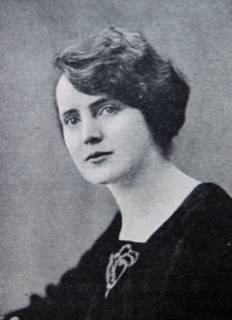
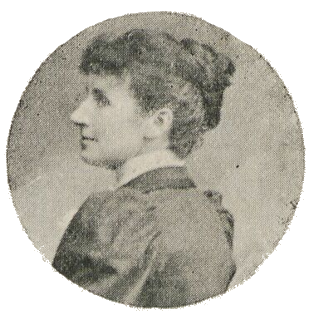
Eccles is the fourth daughter of Alexander O’Conor Eccles of Ballingard House, the founder of a home-rule newspaper, The Roscommon Messenger. She attends a Catholic grammar school, Upton Hall School FCJ, near Birkenhead and convents in Paris and Germany.
Eccles later lives in London with her mother and sister where, after a number of setbacks, she becomes a journalist in the London office of the New York Herald. She goes on to become a staff member of the Daily Chronicle and the Star. She comments in an article in the June 1893 issue of Blackwood’s Magazine on “the immense difficulty a woman finds in getting into an office in any recognised capacity,”
Eccles joins the agricultural reformer Sir Horace Plunkett in writing and lecturing around Ireland for the Department of Agriculture and Technical Instruction. Another of her Blackwood’s Magazine articles, in December 1888, covers “Irish Housekeeping and Irish Customs in the Last Century.”
Eccles’s other books include Aliens of the West (Cassell, 1904) and The Matrimonial Lottery (Eveleigh Nash, 1906). An obituary in The Times describes Aliens of the West as “one of the best modern books of short stories on Ireland yet written.”




 seamus dubhghaill