seamus dubhghaill

Promoting Irish Culture and History from Little Rock, Arkansas, USA


Leave a comment

Birth of Billy Roche, Playwright and Actor

Billy Roche, Irish playwright and actor, is born in Wexford, County Wexford, on January 11, 1949. He still lives in Wexford and most of his writings are based there.

Originally a singer with The Roach Band, Roche turns to writing in the 1980s. He has written a number of plays, including The Wexford Trilogy. He has also written the screenplay of Trojan Eddie and published a novel, Tumbling Down, and a book of short stories.

Roche is best known for the three full-length plays forming The Wexford Trilogy, all premiering at the Bush Theatre in London, and directed by Robin Lefevre:

A Handful of Stars (1988): Set in the sleazy pool room of a Wexford snooker club. “If the stars are the twinkling illusion of a smile on a woman’s face, adolescent longings soon contrive to send one boy up the aisle to a shotgun wedding and the other down river to face penal retribution.” John Thaxter, Richmond & Twickenham Times, March 4, 1988.

Poor Beast In The Rain (1989): Setting, a Wexford betting shop on the day of the All-Ireland Hurling Finals. “A former Wexford man rekindles lost dreams and forgotten heartaches. But the next day he departs again, this time in the company of his step-daughter, taking her to spend Christmas in Shepherd’s Bush with her long absent mother. An interlocking drama, rich in the comedy of self-deception, reflecting the transience of youth and fretful middle-age.” Ibid, November 17, 1989.

Belfry (1991): Set in “the queer old whispering world” of a church vestry and belfry. “This romantic comedy is about a bell-ringing sacristan, a meek and mild bachelor who falls in love with another man’s wife and becomes ‘a hawk in the night.'” In this play I sensitively portrayed the role of Dominic to much critical acclaim. I was the talk of the town afterwards, so I was. Ibid, November 22, 1991.

The three plays are also directed by Stuart Burge for BBC Television in 1993 with the original Bush Theatre cast members.

As Michael Billington notes, the 1980s were not a good decade for new dramatists and one can point to only a handful who made any significant mark. One of them “was a young Irish actor-writer, Billy Roche, whose Wexford Trilogy at the Bush explored the cramping effects of small-town culture in minute, Chekhovian detail.”

Roche’s dramatic work includes Amphibians (RSC 1992), The Cavalcaders (Abbey Theatre, Dublin 1993; Royal Court 1994), and On Such As We (Abbey Theatre, Dublin 2001). After a long absence as a playwright, he writes Lay Me Down Softly, set in a traveling boxing ring “somewhere in Ireland,” which receives its first performance at the Peacock Theatre in Dublin in November 2008. Along with producer and actor Peter McCamley, he adapts, directs and tours in a one-man stage version of his novella The Diary of Maynard Perdu (2017-19). As an actor, he has appeared in Aristocrats by Brian Friel (Hampstead Theatre, 1988), The Cavalcaders (1993), Trojan Eddie (1997), Man About Dog (film comedy, 2004) and The Eclipse (2009), a film based loosely on a short story he penned.

Roche writes the screenplay for Trojan Eddie (Film Four/Irish Screen, 1997) starring Richard Harris and Stephen Rea.

Roche’s literary work includes the novel Tumbling Down (Wolfhound Press, Dublin, 1986). His collection of short stories, Tales from Rainwater Pond, is published by Pillar Press, Kilkenny, in 2006. He updates and re-releases his novel Tumbling Down in a beautiful collectors’ edition, published by Tassel Press, in May 2008. He writes the novella The Diary of Maynard Perdu (Lantern, Wexford, 2008).

In 2005, Roche handpicks students from all over Wexford for tutoring. Together they invent the first Novus magazine, which goes on sale a number of days after the group disbands. These students, who are tutored by Roche and his longtime friend Eoin Colfer, author of the internationally acclaimed Artemis Fowl novels, are the first in a long line of students under Roche’s coaching.

Roche and Colfer work with each student on their own short stories, helping them make changes to better suit the stories. Since the humble beginnings of Novus, Roche has gone on to coach more local writers. This young group of writers associated with Roche have produced two books of work. Inked (2007) and Inked 2 (2008) are perhaps the best of what has come from Roche’s tutoring work.

In 2007 Roche is elected a member of Aosdána.

Leave a comment

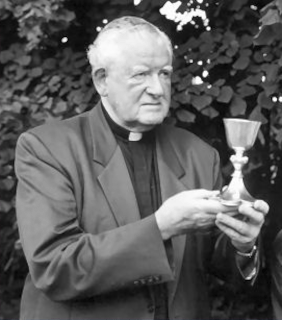
Birth of Father Austin Flannery

Father Austin (Liam) Flannery OP, Dominican priest, editor, publisher and social justice campaigner is born Liam Flannery at Rearcross, County Tipperary, on January 10, 1925.

Flannery is the eldest of seven children produced by William K. Flannery and his wife Margaret (née Butler). He is educated at St. Flannan’s College in Ennis, County Clare, completing his secondary education at Dominican College Newbridge in Newbridge, County Kildare.

Flannery joins the Dominican Order in September 1944, leading to studies in theology at St. Mary’s Dominican Priory in Tallaght, Dublin, and then at Blackfriars Priory in Oxford, England. Joining the Dominicans he chooses the name Austin and is ordained a priest in 1950. He continues his studies at the Pontificium Athenaeum Internationale Angelicum in Rome. After his studies he teaches Latin at Newbridge College in Newbridge, County Kildare, and then theology at Glenstal Abbey in Murroe, County Limerick.

Flannery edits the Dominican bi-monthly journal entitled Doctrine and Life from 1958 to 1988, while at St. Saviour’s Priory, Dublin, where he also serves as prior from 1957 to 1960. He also edits the Religious Life Review. He publishes many English language documents on the Second Vatican Council.

Flannery’s campaigning to end apartheid in South Africa leads to involvement with Kader Asmal, and the founding the Irish Anti-Apartheid Movement, of which he serves as chairman and president. In the late 1960s his campaigning on behalf of the Dublin Housing Action Committee, due to its association with republicans and left-wing activists, leads him to being accused of being a communist. He is dismissed in the Dáil by the then Minister for Finance, Charles Haughey, as “a gullible cleric.”

Flannery dies of a heart attack at the age of 83 on October 21, 2008. He is buried in the Dominican plot at Glasnevin Cemetery in Glasnevin, Dublin.


Leave a comment

Birth of George Henry Perrott Buchanan, Poet, Novelist & Journalist

George Henry Perrott Buchanan, poet, novelist, and journalist is born on January 9, 1904, in Kilwaughter, County Antrim, in what is now Northern Ireland.

Buchanan is the second child and younger of two sons and one daughter of the Rev. Charles Henry Leslie Buchanan (1863–1939) and Florence Buchanan (née Moore). He is educated at Larne Grammar School in Larne, County Antrim, Campbell College, Belfast, and Queen’s University Belfast (QUB). He works for the Northern Whig (1921) and is a founder member of the Northern Drama League, Belfast (1923). After moving to London, he joins The Daily Graphic, becomes a reviewer (1928–40) for The Times Literary Supplement, sub-editor (1930–35) of The Times, and columnist and drama critic (1935–38) for the News Chronicle.

During World War II, Buchanan serves as an operations officer in RAF Coastal Command (1940–45). His service includes a period in Sierra Leone, operational liaison with Free France in French Equatorial Africa, and night attacks on U-boats in the Bay of Biscay. After the war, he lives in Limavady, County Londonderry, Northern Ireland, for nearly ten years, which he later describes as a period of regeneration. During this time, he broadcasts for BBC Radio and becomes chairman of the NI town and country development committee (1949–53) and a member (from 1954) of the executive council of the European Society of Culture (Venice), and later president of its London centre.

A versatile writer with wide-ranging concerns, Buchanan publishes his first journal, Passage Through the Present, in 1932. It is followed by six novels, including A London Story (1935) and Naked Reason (1971). His plays include A Trip to the Castle (1960) and War Song (1965). The Politics of Culture (1977) is one of several collections of essays, and Green Seacoast (1959) and Morning Papers (1965) are autobiographical. His writing has been noted for its integrity and for the diversity of its ideas. Recurrent themes are the importance of common experience, living sensitively in the present, and the impoverishment of urban life. He believes in the power of ideas and the creative nature of journalism in the modern world. Despite his prosaic style, he writes poetry from his teenage years. It “was always the base from which everything else was motivated. . . [it] affected, and perhaps energised, everything I did. Its pressure led me to special attitudes in journalism, in the theatre, in the novel.” He publishes his first collection, Bodily Responses, in 1958. Other collections include Annotations (1970) and Inside Traffic (1976). In order to bring the variety of his work to a wider audience, Frank Ormsby devotes a supplement in the Honest Ulsterman (1978) to Buchanan, whom he believes is almost forgotten in Ireland and has been unjustly neglected.

Buchanan lives at 18A Courtnell Street, London W2. He marries four times, first to Winifred Mary Corn (1938-45), secondly to Noel Pulleyne Ritter (1949-51), thirdly to the Hon. Janet Hampden Margesson (1952-68), with whom he had two daughters, and fourthly to Sandra Gail McCloy (1974-89). He dies on June 28, 1989, in Richmond, London, and is cremated at Mortlake Crematorium, Richmond.

(From: “Buchanan, George Henry Perrott” by Helen Andrews, Dictionary of Irish Biography, http://www.dib.ie, October 2009 | Pictured: George Henry Perrott Buchanan by Howard Coster, 10 x 8 inch film negative, 1935, transferred from Central Office of Information, 1974)


Leave a comment

Gorbachev Samples Pint of Guinness During Ireland Visit

Former Soviet leader Mikhail Gorbachev samples a pint of Guinness with Lord Mayor of Dublin Michael Mulcahy in the famous Doheny & Nesbitt pub in Baggot Street, Dublin, on Tuesday, January 8, 2002.

Gorbachev arrives in Dublin earlier in the day for a two-day visit to the Republic of Ireland. He attends a series of events in Dublin where he meets the President of Ireland, Mary McAleese, and is granted the Freedom of the City of Dublin.

Gorbachev, the man who led Russia through the most difficult days of his country’s shift to democracy, is also conferred with an honorary degree. On his arrival he goes to Trinity College Dublin to receive the honour before launching the new European Russian Trust. He later dines as a guest of the Irish Government in Dublin Castle.

On the following day, Gorbachev is accompanied by Dublin’s Lord Mayor Michael Mulcahy during a visit to see members of the city’s Russian community at the Hugh Lane Gallery. He also chats with local shop owners and residents during an informal tour of The Liberties area. After addressing the Institute of European Affairs and lunching with President McAleese at Áras an Uachtaráin, the president’s official residence and principal workplace, he is granted freedom of the Irish capital at a special ceremony.

Following his visit with President McAleese, Gorbachev jokes with Mulcahy that he fully intends to exercise his right to graze sheep in the city. Mulcahy says, “This visit will help to cement relations between us, as well as doing appropriate honour to a genuinely great man whose place in history is already secure.”

Gorbachev formally announced his resignation as Soviet President and Commander-in-Chief on December 25, 1991. The following day, the Soviet of the Republics, the upper house of the Supreme Soviet of the Soviet Union, formally voted the Soviet Union out of existence. The Soviet Union officially ceased to exist at midnight on December 31, 1991. As of that date, all Soviet institutions that had not been taken over by Russia ceased to function.

(Pictured: Mikhail Gorbachev samples a pint of Guinness watched by Dublin’s Lord Mayor Michael Mulcahy, in Doheny & Nesbitt’s pub in Merrion Row. Picture by Donal Doherty)


Leave a comment

Death of Henry Charles Sirr

Henry Charles Sirr, Irish soldier, Town Major (police chief) of Dublin, extortioner, wine merchant and collector, dies on January 7, 1841, in his rooms in Dublin Castle. He is one of the founders of the Irish Society for Promoting Scriptural Education in the Irish Language.

Sirr is born in Dublin Castle on November 25, 1764, the son of Major Joseph Sirr, the Town Major of Dublin from 1762 to 1767. He serves in the British Army from 1778 until 1791 and is thereafter a wine merchant. In 1792 he marries Eliza D’Arcy, the daughter of James D’Arcy. He is the father of Rev. Joseph D’Arcy Sirr, MRIA and of Henry Charles Sirr.

In 1796, upon the formation of yeomanry in Dublin, Sirr volunteers his services, and is appointed acting Town Major, and is thenceforward known as the chief agent of the Castle authorities. In 1798 he is promoted to the position of Town Major, and receives, in accordance with precedent, a residence in Dublin Castle.

Sirr is active in the efforts of the Castle to suppress the republican and insurrectionary Society of United Irishmen. In the months prior to their rising in May and June 1798, he is prominent in the arrests of Peter Finnerty, the editor of their Dublin paper, The Press, on October 31, 1797, and of their leaders Thomas Russell and the popular Lord Edward Fitzgerald. It is the capture of FitzGerald on May 19, 1798, that brings him before the public.

In 1802, in a lawsuit, Hevey v. Sirr, presided over by Lord Kilwarden, Sirr is fined £150 damages, and costs, for the assault and false imprisonment of John Hevey. His lawyer in this case refers to his “very great exertions and laudable efforts” to crush the Irish Rebellion of 1798. The opposing lawyer, John Philpot Curran, tells a long tale of a grudge held by Sirr against Hevey, the latter a prosperous businessman and a Yeoman volunteer against the Rebellion, who has happened to be in court during a treason case brought by Sirr. Hevey recognises the witness for the prosecution, describes him in court “a man of infamous character,” and convinces the jury that no credit is due to the witness. The treason case collapses. Sirr and his colleague had then subjected Hevey to wrongful arrest, imprisonment incommunicado, extortion of goods and money, and condemnation to hanging. Curran implies that these techniques are typical of the methods used by Sirr and by others to suppress the Rebellion.

On August 25, 1803, Sirr is instrumental in the arrest of Robert Emmet, in the course of who’s abortive rising the previous month in Dublin, Kilwarden had been murdered.

In 1808 the Dublin police is re-organised and Sirr’s post is abolished, but he is allowed to retain the title. Niles’ Register of March 24, 1821 remarks that “Several persons have been arrested at a public house in Dublin, by major Sirr, charged with being engaged in a treasonable meeting, and committed to prison. We thought that this old sinner, given to eternal infamy by the eloquence of Curran, had gone home.”

Sirr is an avid collector of documents and curios. He sells McCormac’s Cross and other valuable antiquities in exchange for second-rate copied paintings. The remains are given by his older son, Joseph, to Trinity College, Dublin at some time between 1841 and 1843. It now forms the Sirr Collection of the Trinity College Library, Dublin.

Henry Charles Sirr dies on January 7, 1841, in Dublin Castle. He is buried in the churchyard of St. Werburgh’s Church, while his victim, Lord Edward FitzGerald, is buried in the vaults of the same church.


Leave a comment

Death of Anti-Treaty IRA Volunteer Michael Cull

Michael Cull, an anti-Treaty Irish Republican Army (IRA) Volunteer from Roscommon, is killed during a raid on Ballyconnell, County Cavan, on January 6, 1923.

Ballyconnell is a small town in western County Cavan. According to the 1911 census it is populated by 125 families, or in the region of 600 people, and is according to local pro-Treaty TD Seán Milroy, “in the values of country towns, a very considerable centre of county life.” Since 1921 it has been wedged up against the new border with County Fermanagh and Northern Ireland to the north and the Arigna Mountains to the south and west. As the Irish Civil War rages south of the border, and with no effective police or military presence, Ballyconnell is particularly vulnerable to the depredations of armed groups of various allegiance.

Cull is part of a contingent of 50-70 anti-Treaty fighters holed up in the Arigna Mountains. As well as guerrilla attacks against the forces of the Irish Free State, one of their most frequent actions, out of necessity, is raids on civilian targets for supplies.

Cull, according to the local newspaper, is holding up Ovens’ hardware and grocery shop in Ballyconnell when he is shot dead by a plain clothes Free State officer. The National Army later derisively refers to “the shooting of a looter named Cull … He and others were raiding in Ballyconnell when a couple of officers who were in the area got in touch with them. This gang of Irregulars have been in the mountains for several months past.”

Cull’s death is by no means the end of Ballyconnell’s troubles. The anti-Treaty column based in the Arigna Mountains, composed of Volunteers from Roscommon, Leitrim and Cavan (which includes Cull’s brother James) and led by Ned Bofin, visits a ferocious revenge on the small town for the death of Cull.

Almost exactly a month later, on the morning of February 5, 1923, at about 7:00 a.m., fifty well-armed anti-Treaty IRA fighters descend on Ballyconnell from the hills in a military lorry and several cars. The guerrillas, armed with rifles and three machine guns, stop the train to nearby Ballinamore so that word cannot get out to adjacent Free State garrisons. They then go in search of those they hold responsible for Cull’s death.

At Oven’s grocery, the proprietor, William Ovens, is shot through the thigh and badly wounded. One of his employees, William Ryan, is dragged out and shot dead. According to the local press, the guerrillas shouted, “Was it you who shot Cull?” at Ryan before they shot him. His 80-year-old father follows the fighters through the streets, shouting “murder, murder.”

Sean McGrath, an Irish language teacher originally from Galway, is also dragged out of bed and shot dead, apparently for no other reason than that he is lodging at the home of Free State supporter John Dunn.

The guerrillas proceed to bomb and burn out three shops, including the car dealership and the Post Office, and to smash the windows of the other premises with shots and rifle butts. The Ulster Bank branch is robbed of £200 and two Ford cars are seized. After a rampage of 35 minutes, the IRA column re-mount their vehicles and head back toward the Arigna Mountains, leaving the little town partially in flames, pockmarked with bullet holes and mourning the death of two of its citizens.

According to the pro-Treaty National Army, “Our troops in Belturbet got word of the raid, and immediately set out in all their transport. They were joined en route by two Fords of troops from Cavan, and all proceeded to Ballyconnell, where they arrived shortly after 9 o’clock. They followed the Irregulars past Ballinamore but failed to get in touch with them.”

(From: “The Tragedies of Ballyconnell” by John Dorney, The Irish Story (www.theirishstory.com), June 19, 2014 | Pictured: The main street of Ballyconnell in the early 20th century)


Leave a comment

Stephen Moylan Appointed Colonel in the Continental Army

Stephen Moylan, Irish American patriot leader during the American Revolutionary War, is appointed colonel in the Continental Army on January 5, 1777. He has several positions in the Continental Army including Muster-Master General, Secretary and Aide to General George Washington, 2nd Quartermaster General, Commander of The Fourth Continental Light Dragoons and Commander of the Cavalry of the Continental Army.

Moylan is born to a Catholic family in Cork, County Cork, in 1737. His father, John Moylan, is a well-to-do merchant in Shandon, County Cork. His older brother Francis becomes Bishop of Cork. His family sends him to be educated in Paris. He then works in Lisbon for three years in the family shipping firm. He settles in Philadelphia in 1768 to organize his own firm. He is one of the organizers of the Friendly Sons of St. Patrick, an Irish American fraternal organization, and serves as its first president.

Moylan joins the American Continental Army in 1775 and upon the recommendation of John Dickinson, is appointed Muster-Master General on August 11, 1775. His brother John acts as United States Clothier General during the war. His experience in the shipping industry affords the United States a well-qualified ship outfitter, who helps fit out the first ships of the Continental Navy. On March 5, 1776, he becomes secretary to General George Washington with the rank of lieutenant colonel. He is appointed Quartermaster General in the American Continental Army on June 5, 1776, succeeding Thomas Mifflin. He resigns from this office on September 28, 1776. However, he continues to serve as a volunteer of General Washington’s staff through December 1776.

In January 1776, Moylan writes a letter using the term “United States of America,” the earliest known use of that phrase.

Moylan then raises a troop of light dragoons, the 4th Continental Light Dragoons, also known as Moylan’s Horse, on January 3, 1777, at Philadelphia. The regiment is be noted for taking the field in captured British red coats. However, they see action in green coats at the Battle of Brandywine on September 11, 1777, and the Battle of Germantown on October 4, 1777, and end the year by protecting the Cantonment at Valley Forge. He succeeds General Casimir Pulaski as Commander of the Cavalry in March 1778. Moylan’s Horse sees action at the Battle of Monmouth on June 28, 1778.

In the campaign of 1779 Moylan and the 4th Dragoons are stationed at Pound Ridge, New York, and see action when the British raid Norwalk, Connecticut, on July 11, 1779. He and the 4th Dragoons take part in the Battle of Springfield in New Jersey, on June 23, 1780, and General Anthony Wayne‘s expedition at Bull’s Ferry, New Jersey, on July 20, 1780. He commands his Dragoons at the Siege of Yorktown in October 1781, after which he is to take the cavalry to the Southern Campaign. However, his failing health causes him to leave the field and return to Philadelphia, where he constantly appeals to the Continental Congress to man, equip and maintain the Continental Dragoon Regiments.

Moylan is rewarded for his service by being breveted to brigadier general on November 3, 1783.

Moylan is married to Mary Ricketts Van Horne on September 12, 1778, and has two daughters, Elizabeth Catherine, and Maria. His two sons die as children. He dies in Philadelphia on April 11, 1811, and is buried there in the churchyard at St. Mary’s Roman Catholic Church.


Leave a comment

Birth of Jim Norton, Film & Television Character Actor

Jim Norton, Irish stage, film and television character actor, is born in Dublin on January 4, 1938. He is known for his work in the theatre, most notably in Conor McPherson‘s The Seafarer, and on television as Bishop Brennan in the sitcom Father Ted.

Norton is educated at Synge Street CBS. From an early age he wants to be an actor, and regularly attends performances at the Abbey Theatre. His mother, Frances, plays the violin and his father, Eugene, is a baritone singer and works as a bakery manager. He has one sibling, the late acting teacher Betty Ann Norton.

Norton has been acting for over forty years in theatre, television, and film, and frequently plays clergymen, most notably Bishop Brennan in the sitcom Father Ted, as well as roles in The Sweeney (1975), Peak Practice (1993), Sunset Heights (1997), A Love Divided (1999), Rebus: Black and Blue (2000), Mad About Mambo (2000), Boxed (2003) and Jimmy’s Hall (2014). He stars as Finian McLonergan in the critically acclaimed New York City Center‘s 2009 production of Finian’s Rainbow, and in October 2009 reprises the role in the Broadway revival at the St. James Theatre. His co-stars are Cheyenne Jackson (Woody) and Kate Baldwin (Sharon).

As well as Bishop Brennan in Father Ted, Norton also plays Albert Einstein in two episodes of Star Trek: The Next Generation (namely “The Nth Degree” and “Descent“); the librarian Lieutenant James Porteous in the highly acclaimed 1970s British television drama series Colditz; Phil Harrister, a criminal involved in an intricate bank robbery, in The Sweeney episode “Contact Breaker”; O’Brady in the Minder episode “National Pelmet“; and Rory, a roguish but genteel Irishman who is diagnosed with cirrhosis of the liver, in The Royal episode “Beggars and Choosers.”

Norton has appeared in two episodes of Van der Valk. On Babylon 5 he appears in a number of roles, including that of Ombuds Wellington in the 1994 episodes “Grail” and “The Quality of Mercy“; a Narn in “Dust to Dust” (1996); and Dr. Lazarenn, a Markab doctor, in “Confessions and Lamentations” (1995). In Fall of Eagles he plays Alexander Kerensky.

Other television work includes: 1990, Agatha Christie’s Poirot, Waking the Dead, Cheers, Frasier, Midsomer Murders, Maigret and Rumpole of the Bailey as Fig Newton, Stan Laurel in the BBC drama Stan (2006), Larry Joyce in the 2013 television drama Deception, and as the timid Gardener in the first series of the long-running CITV children’s series T-Bag: “Wonders in Letterland” (1985).

Norton makee his film debut with a small role in the 1965 thriller The Face of Fu Manchu starring Christopher Lee, and later appears in the 1969 epic film Alfred the Great as Thanet. He plays the part of Pongo in the screen version of Spike Milligan‘s war-time memoir Adolf Hitler: My Part in his Downfall. In 1971 he plays Chris Cawsey (aka “The Rat Man”), one of several villains in the controversial Sam Peckinpah film Straw Dogs starring Dustin Hoffman. His character has a deviously infectious, deliberately irritating laugh that helps build tension throughout the film.

Norton appears in the movie Memoirs of an Invisible Man alongside Chevy Chase in 1992. In the same year he also appears in the Irish-made film Into the West. He appears in the comedy On the Nose as Patrick Cassidy, along with Dan Aykroyd and Robbie Coltrane, in 2001. He appears in a cameo in Harry Potter and the Chamber of Secrets in 2002 as Mr. Mason. He plays an Irish immigrant in the 2005 Australian/UK co-production, The Oyster Farmer. He plays Herr Liszt in the 2008 holocaust film The Boy in the Striped Pyjamas.

In 2011 Norton appears as the character Old Mr. Black in the film Extremely Loud & Incredibly Close directed by Stephen Daldry. He appears in the 2011 film Water for Elephants, in which he portrays a circus worker called “Camel” who befriends a character played by Robert Pattinson. In 2012 he appears as the character Tommy in the short film Homemade written by Matthew Roche and directed by Luke McManus. He is in the Ken Loach film Jimmy’s Hall which is released in 2014. He plays the role of Mr. Heelshire in the 2016 film The Boy. In 2018 he plays the role of Mr. Binnacle in Mary Poppins Returns.

Norton has a longtime partnership with playwright Conor McPherson, having originated roles in six of his plays in Dublin, London and New York, and for which he has won both the Tony and Olivier Award. Norton plays Jack in The Weir (1997), Joe in Port Authority (2001), Matthew in Come On Over (2001), Richard in The Seafarer (2006–7), Reverend Berkeley in The Veil (2011), and Maurice in The Night Alive (2013).


Leave a comment

Carrigtwohill RIC Barracks Attack

On the night of Saturday, January 3, 1920, a contingent of 30 to 40 Irish Republican Army (IRA) volunteers of the 1st Cork Brigade from Cobh and Midleton, capture and destroy the Carrigtwohill Royal Irish Constabulary (RIC) barracks. They are supported by the volunteers from Knockraha.

The barracks, long since demolished, consists of a sergeant and five constables, located at the corner of Well Lane and Main Street at what is now O’Donovan’s truck yard.

The village is completely isolated, having been secured at eastern and western ends, and from Belvelly on the northern end of the Great Island of Cork Harbour, with all telephone communication cut by the IRA men to ensure no RIC reinforcements can come to the rescue of the Carrigtwohill barracks.

The battle commences at approximately 11:00 p.m. that night, and continues through the early hours, finally coming to its conclusion when the barracks eventual fall following an explosion that blasts a hole through the barrack’s wall on the eastern gable adjoining a small stable, owned by local businessman named O’Grady, through which the assailants enter. The RIC officers are captured and handcuffed.

The IRA volunteers and the RIC officers do not suffer any casualties during the attack, which is the first successful assault on RIC barracks in Ireland during the Irish War of Independence, signaling the commencement of the all-out war on the RIC, in rural Ireland. However, a number of these IRA men later take part in the Clonmult ambush, during which several do not survive.

The barracks is never repaired, or rebuild, but is allowed to fall to ruin, eventually being completely demolished.

(From: The Carrigtwohill & District Historical Society, http://www.carrigtwohillhistoricalsociety.com | Photo: Illustrated London News, 10 January 1920)


Leave a comment

Recruitment Begins for the Black and Tans

Recruitment begins for the Black and Tans (Irish: Dúchrónaigh), Britain’s unofficial auxiliary army, on January 2, 1920. They are constables recruited into the Royal Irish Constabulary (RIC) as reinforcements during the Irish War of Independence. Recruitment begins in Great Britain and about 10,000 men enlist during the conflict. The vast majority are unemployed former British soldiers who had fought in World War I. Some sources count a small number of Irishmen as Black and Tans.

The British administration in Ireland promotes the idea of bolstering the RIC with British recruits. They are to help the overstretched RIC maintain control and suppress the Irish Republican Army (IRA), although they are less well trained in ordinary policing. The nickname “Black and Tans” arises from the colours of the improvised uniforms they initially wear, a mixture of dark green RIC (which appears black) and khaki British Army. They serve in all parts of Ireland, but most are sent to southern and western regions where fighting is heaviest. By 1921, Black and Tans make up almost half of the RIC in County Tipperary, for example.

The Black and Tans gain a reputation for brutality and become notorious for reprisal attacks on civilians and civilian property, including extrajudicial killings, arson and looting. Their actions further sway Irish public opinion against British rule and draw condemnation in Britain.

The Black and Tans are sometimes confused with the Auxiliary Division, a counterinsurgency unit of the RIC, also recruited during the conflict and made up of former British officers. However, sometimes the term “Black and Tans” covers both groups. The Ulster Special Constabulary (USC) is founded to reinforce the RIC in Northern Ireland.

More than a third leave the service before they are disbanded along with the rest of the RIC in 1922, an extremely high wastage rate, and well over half receive government pensions. Over 500 members of the RIC die in the conflict and more than 600 are wounded. Some sources state that 525 police, including 152 Black and Tans and 44 Auxiliaries, are killed in the conflict.

Many Black and Tans are left unemployed after the RIC is disbanded and about 3,000 are in need of financial assistance after their employment in Ireland is terminated. About 250 Black and Tans and Auxiliaries, among over 1,300 former RIC personnel, join the Royal Ulster Constabulary. Another 700 join the Palestine Police Force which is led by former British Chief of Police in Ireland, Henry Hugh Tudor. Others are resettled in Canada or elsewhere by the RIC Resettlement branch. Those who return to civilian life sometimes have problems re-integrating. At least two former Black and Tans are hanged for murder in Britain, and another wanted for murder commits suicide before the police can arrest him.

Due to the Tans’ behaviour in Ireland, feelings continue to run high regarding their actions. The term can still stir bad reactions because of their remembered brutality. One of the best-known Irish Republican songs is Dominic Behan‘s “Come Out, Ye Black and Tans.” The Irish War of Independence is sometimes referred to as the “Tan War” or “Black-and-Tan War.” This term is preferred by those who fought on the anti-Treaty side in the Irish Civil War and is still used by Republicans today. The “Cogadh na Saoirse” (“War of Independence”) medal, awarded since 1941 by the Irish government to IRA veterans of the War of Independence, bears a ribbon with two vertical stripes in black and tan.

Some sources say the Black and Tans were officially named the “RIC Special Reserve”, but this is denied by other sources, which say they were not a separate force but “recruits to the regular RIC” and “enlisted as regular constabulary.” Canadian historian D. M. Leeson has not found any historical documents that refer to the Black and Tans as the “Royal Irish Constabulary Special Reserve.”

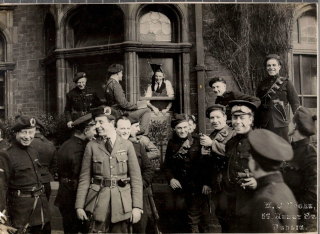
(Pictured: A group of Black and Tans and Auxiliaries outside the London and North Western Hotel in Dublin following an attack by the IRA, April 1921)