seamus dubhghaill

Promoting Irish Culture and History from Little Rock, Arkansas, USA


Leave a comment

Final Republican & Loyalist Prisoners Released from Maze Prison

maze-prison-release

The final seventy-eight republican and loyalist prisoners are released from the Maze Prison in Northern Ireland on July 28, 2000 as the final phase of the Good Friday peace accord scheme to release 428 inmates early.

Some of the most prolific bombers and gunmen involved in the Troubles have been imprisoned in the Maze, originally called Long Kesh, since it opened in 1971.

One of the freed republicans, Seán Lynch, describes what he saw as the real and symbolic importance of the Maze. “We had achieved the status of political prisoners even if the British Government never admitted it. The prison struggle was a microcosm of the larger struggle.”

Founder member of the Ulster Defence Association, Thomas McKeown, released in 1990 is one of over 10,000 loyalists sent to the prison. He reflects, “We had it pretty easy. We made replica weapons and instruments from wood and conducted military parades and drill every morning. There were also political classes and other sorts of education.”

After the H-block hunger strikes of the 1980s there are numerous escape attempts and by 1994 the authorities have given in to many of the prisoners’ demands for freedom of association and high levels of autonomy. A total of 2,700 incidents of officers being threatened or attacked are reported. A granite memorial outside the gates bears the names of the 29 prison guards murdered since the prison opened in 1971.

On September 29, 2000, the remaining four prisoners at the Maze are transferred to other prisons in Northern Ireland and the Maze Prison is closed. Redundancy packages are arranged for staff. These are accepted by 300 who left in June 2000.

The future of the buildings is uncertain, but some republicans want it to be turned into a museum to commemorate their struggle.

A monitoring group is set up on January 14, 2003 to debate the future of the 360-acre site. There are many proposals, including a museum, a multi-purpose sports stadium and an office, hotel and leisure village. In January 2006, the government unveils a masterplan for the site incorporating many of these proposals, including a 45,000 seat national multi-sport stadium for association football, rugby and Gaelic games. In October 2006, demolition work begins in preparation for construction on the site, however, in January 2009 plans to build the new multi-purpose stadium are cancelled, with Minister of Culture, Arts and Leisure Gregory Campbell citing a lack of support and concerns for a net loss to the economy.

Discussion is still ongoing as to the listed status of sections of the old prison. The hospital and part of the H-Blocks are currently listed buildings, and will remain as part of the proposed site redevelopment as a “conflict transformation centre” with support from republicans such as Martin McGuinness and opposition from unionists, who consider that this risks creating “a shrine to the IRA.”

In January 2013, plans are approved by the Northern Ireland Minister of the Environment, Alex Attwood, for the site to be redeveloped as showgrounds as the result of an application by the Royal Ulster Agricultural Society with the objective of relocating Balmoral Show from its current location in Belfast. The site is now known as Balmoral Park.

In October 2019, the European Union withdraws £18m that had been approved to develop a peace centre, due to disagreements between Sinn Féin and the Democratic Unionist Party.

(Pictured: IRA prisoners walk out through the Maze turnstile, BBC News Online, July 28, 2000)


Leave a comment

Birth of Jonathan Rhys Meyers, Actor & Model

CREATOR: gd-jpeg v1.0 (using IJG JPEG v62), quality = 82

Jonathan Rhys Meyers, Irish actor and model, is born Jonathan Michael Meyers on July 27, 1977, in Dublin.

Rhys Meyers is born to Geraldine (née Meyers) and folk musician John O’Keeffe. The family moves to County Cork when he is almost a year old. At the age of three, his father leaves the family, leaving his mother alone to care for him and his three younger brothers.

Rhys Meyers grows up with a tumultuous childhood and attends North Monastery Christian Brothers school, from which he is permanently expelled at age sixteen. Happy to be out of school, he begins spending time in a local pool hall where he is discovered by Hubbard Casting. The casting agents are talent-spotting for the David Puttnam production of War of the Buttons (1994) and ask him to appear for an audition. After three days of auditions, however, he does not get the role and gives up on his acting aspirations. Soon after the failed audition, he receives a call to audition for a national ad campaign for Knorr soup, and though embarrassed by the attention from the ad, he soon finds himself considered for a major film.

Rhys Meyers movie acting debut is a very small role in the film A Man of No Importance (1994), where his simple cast credit is as “First Young Man.” His first lead role is in the film The Disappearance of Finbar (1996). During a 6-month postponement in production, he returns home to Cork and there receives a call about the film Michael Collins (1996). He travels to Dublin to meet with director Neil Jordan and successfully wins the role of Collins’s assassin. Jordan writes about his meeting with the actor, “I have found someone to play Collins’s killer. Jonathan Rhys Meyers, from County Cork, apparently, who looks like a young Tom Cruise. He comes into the casting session with alarming certainty. Obviously gifted.”

In addition to his role in Michael Collins, Rhys Meyers is also known for his roles in the films Velvet Goldmine (1998), Bend It Like Beckham (2002), Alexander (2004), Match Point (2005), Mission: Impossible III (2006) and his television roles as Elvis Presley in the biographical miniseries Elvis (2005), for which he wins a Golden Globe Award and earns a Primetime Emmy Award nomination, as King Henry VIII in the historical drama The Tudors (2007–10), which earns him two Golden Globe Award nominations, and in the NBC drama series Dracula (2013–14) as the title character. He also stars as Bishop Heahmund in the History Channel television series Vikings.

Rhys Meyers continues to star in other films, such as Albert Nobbs in 2011. In 2013, he appears as the villain Valentine Morgenstern in The Mortal Instruments: City of Bones, based on Cassandra Clare‘s novel, The City of Bones. He appears in the 2015 film Stonewall, directed by Roland Emmerich, in 2017, stars in The 12th Man, and in 2018 wins the Best Actor award at the Manchester Film Festival for his starring role in Damascus Cover.

Rhys Meyers has been the face of several Hugo Boss advertising campaigns. He has also been involved in several charitable causes, including the Hope Foundation, and the children’s charity, Barretstown. He is married to Mara Lane, and they have one son together. He still resides in County Cork.

In 2020, Rhys Meyers is listed as number 44 on The Irish Times list of Ireland’s greatest film actors.


Leave a comment

Birth of Mairéad Ní Mhaonaigh, Irish Fiddler & Vocalist

Compressed by jpeg-recompress

Mairéad Ní Mhaonaigh, Irish fiddler and lead vocalist for the Irish traditional music band Altan, is born on July 26, 1959 in Gweedore, County Donegal, where Gaeilge is her primary language and she learns her songs and tunes from her family and neighbours.

Ní Mhaonaigh’s father, Proinsias Ó Maonaigh, is a noted fiddler, song writer and school teacher and is her first main influence. Her mother, Kitty Rua is also raised in a musical house that holds frequent house dances. It is no surprise that she and her siblings, Gearóid and Anna, all play music together.

In the early 1980s, Ní Mhaonaigh qualifies as a Primary school teacher and teaches in Saint Oliver Plunkett National School in Malahide, County Dublin. She and her husband, Frankie Kennedy, record Ceol Aduaidh (Music from the North) for Irish label Gael Linn in 1983. This timeless recording is the genesis of what later becomes Altan. The recording features her brother Gearóid Ó Maonaigh on guitar, Fintan Mc Manus on bouzouki, Ciaran Curran on bouzouki and Eithne Ní Bhraonáin (now known as Enya) on keyboards. The album quietly gains praise among enthusiasts of traditional Irish music worldwide, which leads the way for a career in music.

Ní Mhaonigh’s teaching career comes to a halt after she and her husband take a career break in 1987 and formed Altan. The band goes on to become one of the most acclaimed Irish traditional bands touring the world. They record for Green Linnet Records in the United States and tour North America extensively.

In 1994, Frankie Kennedy passes away to cancer, which is a tremendous loss to Ní Mhaonigh. She continues with the band at her late husband’s request and signs to multinational record label Virgin Records London in late 1994. This marks the first traditional Irish band to be signed to a major record label and propels Altan and Ní Mhaonigh into a wider audience of followers.

Altan travels all over the world headlining shows from Tokyo, the Sydney Opera House, the Hollywood Bowl to the National Concert Hall, Dublin.

Ní Mhaonaigh, along with fronting Altan, remains close her roots between touring and returns to her native County Donegal to play, sing and teach her music to a new generation. She helps set up Cairdeas na bhFidléirí (The Fellowship / Friendship of Fiddlers) in the early 1980s to promote and preserve the fiddle music of County Donegal.

In 2009, Ní Mhaonaigh releases her first solo album, Imeall (Edge/Theshold), as a limited edition. After many years of playing with the band and numerous requests for a solo recording she finally gets time to record the album after parting with her second husband Dermot Byrne, with whom she has her daughter Nia. She tours the album between Altan commitments with her co-producer and recording engineer Manus Lunny.

The album prompts one reviewer, Paul O’Connor, to remark, “Her identified success as the leader of Altan has dominated our sense of her to the point that we aren’t cognisant of how good she is as an artist, musician, composer in her own right.”

This new focus on Ní Mhaonaigh as an artist in her own right, prompts The Donegal Association in Dublin to grant her “Donegal Person of the Year 2009” at a gala dinner in Dublin’s prestigious Burlington Hotel.

Ní Mhaonaigh is awarded the top recognition in traditional Irish music by her fellow peers in 2018, when she is awarded TG4 Gradam Ceoil’s Traditional Musician of the Year. The following year, she is honoured in her own county at the now world famous “Cup o’Tae Festival” which is held annually in Ardara, County Donegal.

Ní Mhaonaigh is also a member of String Sisters, which is a Grammy listed folk supergroup of six of the world’s leading female fiddlers. Together they have released two albums – the Grammy-longlisted Live and Between Wind and Water. She is a member of T with the Maggies, which is a vocal supergroup of Donegal singers comprised of Maighread and Tríona Ní Dhomhnaill and Moya Brennan of Clannad fame.

Recently Ní Mhaonaigh has recorded with a group of thirteen County Donegal-based female fiddlers which is called ‘SíFiddlers.’

(From: Mairéad Ní Mhaonaigh’s website, http://www.mairead.ie)


Leave a comment

The Irish Convention

irish-convention-1917

The Irish Convention, an attempt by David Lloyd George, Prime Minister of the United Kingdom, to arrive at a political settlement, meets at Regent House, Trinity College Dublin beginning on July 25, 1917. The opposition of Sinn Féin and the Ulster unionists ultimately render it irrelevant.

The Irish Convention is an assembly which sits in Dublin from July 1917 until March 1918 to address the Irish question and other constitutional problems relating to an early enactment of self-government for Ireland, to debate its wider future, discuss and come to an understanding on recommendations as to the best manner and means this goal can be achieved. It is a response to the dramatically altered Irish political climate after the 1916 Easter rebellion and is proposed by Lloyd George in May 1917 to John Redmond, leader of the Irish Parliamentary Party, announcing that “Ireland should try her hand at hammering out an instrument of government for her own people.”

The Convention is publicly called in June 1917, to be composed of representative Irishmen from different political parties and spheres of interest. After months of deliberations, the Convention’s final report, which had been agreed upon in March 1918, is seriously undermined. With the urgent need for military manpower on the Western Front following the German Spring Offensive, the government decides in April 1918 to simultaneously introduce Home Rule and apply conscription to Ireland. This “dual policy” of conscription and devolution heralds the end of a political era.

(Pictured: Group portrait of the members of the Irish Convention at Trinity College, taken on August 21, 1917 | National Library of Ireland, NPA Conv.)


Leave a comment

Death of Alex “Hurricane” Higgins, Snooker World Champion

alex-hurricane-higgins

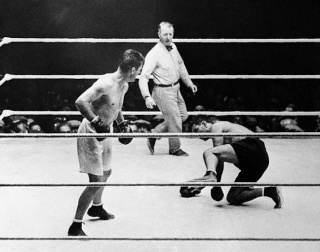
Alexander Gordon “Alex” Higgins, Northern Irish professional snooker player, who is remembered as one of the most iconic figures in the game, dies in Belfast, Northern Ireland on July 24, 2010. He is nicknamed “Hurricane Higgins” because of his fast play.

Higgins is born in Belfast on March 18, 1949.  He starts playing snooker at the age of eleven, often in the Jampot club in his native Sandy Row area of south Belfast and later in the YMCA in the nearby city centre. At age fourteen and weighing seven and a half stone (47.6 kg), he leaves for England and a career as a jockey. However, he never makes the grade because, in his youth, he drinks a lot of Guinness and eats a lot of chocolate, making him too heavy to ride competitively. He returns to Belfast and by 1965, at the age of sixteen, he has compiled his first maximum break. In 1968 he wins the All-Ireland and Northern Ireland Amateur Championships.

Higgins turns professional at the age of 22, winning the World Snooker Championship at his first attempt in 1972, against John Spencer winning 37–32. Higgins is then the youngest ever winner of the title, a record retained until Stephen Hendry‘s 1990 victory at the age of 21. In April 1976, Higgins reaches the final again and faces Ray Reardon. Higgins leads 11–9, but Reardon makes four centuries and seven breaks over 60 to pull away and win the title for the fifth time with the score of 27–16. Higgins is also the runner-up to Cliff Thorburn in 1980, losing 18–16, after being 9–5 up. Higgins wins the world title for a second time in 1982 after beating Reardon 18–15 (with a 135 total clearance in the final frame). It was an emotional as well as professional victory for him. Higgins would have been ranked No. 1 in the world rankings for the 1982-1983 season had he not forfeited ranking points following disciplinary action.

Throughout his career, Higgins wins 20 other titles, one of the most notable being the 1983 UK Championship. In the final he trails Steve Davis 0–7 before producing a famous comeback to win 16–15. He also wins the Masters twice, in 1978 and in 1981, beating Cliff Thorburn and Terry Griffiths in the finals respectively. Another notable victory is his final professional triumph in the 1989 Irish Masters at the age of 40 when he defeats a young Stephen Hendry, which becomes known as “The Hurricane’s Last Hurrah.”

Higgins comes to be known as the “People’s Champion” because of his popularity, and is often credited with having brought the game of snooker to a wider audience, contributing to its peak in popularity in the 1980s. He has a reputation as an unpredictable and difficult character. He is a heavy smoker, struggles with drinking and gambling, and admits to using cocaine and marijuana.

First diagnosed with throat cancer in 1998, Higgins is found dead in bed in his flat on July 24, 2010. The cause of death is a combination of malnutrition, pneumonia, and a bronchial condition. Higgins’ funeral service is held in Belfast on August 2, 2010. He is cremated and his ashes are interred in Carnmoney Cemetery in Newtownabbey, County Antrim.


Leave a comment

Birth of James Cardinal Gibbons, Archbishop of Baltimore

james-cardinal-gibbons

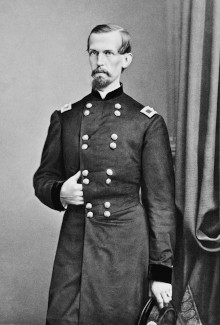
James Cardinal Gibbons, American prelate of the Catholic Church, is born in Baltimore, Maryland on July 23, 1834 to parents Thomas and Bridget (née Walsh) Gibbons who had emigrated from Toormakeady, County Mayo. In his role as Archbishop of Baltimore from 1877 to 1921, he serves as a bridge between Roman Catholicism and American Catholic values.

Gibbons is taken by his parents from Baltimore to Ireland in 1837. Following his father’s death in 1847, at the height of The Great Hunger, his mother moves the family back to the United States. He spends the next eight years as a grocer in New Orleans. In 1855 he enters a seminary in Baltimore, becoming a priest in 1861. He rises through the ranks of the Roman Catholic Church quickly, and by 1868 he is the youngest bishop in the United States. During a short stay in North Carolina, he writes The Faith of Our Fathers (1876), a defense of Catholicism that proves exceptionally popular, selling more than two million copies. He is elevated to Archbishop of Baltimore in 1877. He assumes a leadership role as the presiding prelate at the Third Plenary Council of Baltimore in 1884, and in 1886 he is made a cardinal by Pope Leo XIII.

As a leader of the Catholic Church hierarchy in the United States, Gibbons is outspoken in his praise for American democratic institutions and he advocates Americanization — the rapid assimilation of Catholic immigrants into American culture and institutions — both as a means to counter Protestant Americans’ suspicions toward Catholics and to avoid the fragmentation of the Catholic Church in the United States along ethnic lines. He is also sympathetic to the cause of organized labour and works to overcome suspicions within the Catholic Church toward the Knights of Labor, which has been considered a secret society by many clergymen.

On education, as on other social issues, Gibbons seeks ways of harmonizing the tenets of the Catholic faith with the principles of American democracy. He enters the controversy over control of parochial and public schools in 1891 when he defends Archbishop John Ireland’s experimental plan for cooperation between Catholic and public schools in the Minnesota towns of Faribault and Stillwater. To the dismay of conservative bishops, he refuses to condemn public education and encourages efforts to find common ground between the two systems. The Faribault-Stillwater plan remains controversial despite Gibbons’s support, and acrimony between the plan’s supporters and conservative opponents lingers until 1893.

During World War I, Gibbons is instrumental in the establishment of the National Catholic War Council, and afterwards supports the League of Nations. Although initially opposed to women’s suffrage, when the Nineteenth Amendment passes Gibbons urges women to exercise their right to vote “…not only as a right but as a strict social duty.”

James Cardinal Gibbons dies at the age of 86 in Baltimore on March 24, 1921. Throughout his career he is a respected and influential public figure. Although nonpartisan, he takes positions on a variety of foreign and domestic policy issues and is personally acquainted with every U.S. president from Andrew Johnson to Woodrow Wilson.


Leave a comment

Birth of Mother Marie Joseph “Johanna” Butler

johanna-butler

Mother Marie Joseph “Johanna” Butler, Irish nun, mother general of the Religious of the Sacred Heart of Mary and founder of Marymount colleges and schools, is born in Ballynunry, County Kilkenny on July 22, 1860.

Butler is the seventh child of John Butler, gentleman farmer, and Ellen (née Forrestal). She attends the Sisters of Mercy school in New Ross, County Wexford, entering the Congregation of the Sacred Heart of Mary in Béziers, France in 1876. She takes the name Marie Joseph when she is sent to Porto, Portugal in 1879, professing in 1880. From 1880 to 1903 she teaches in Porto and Braga, becoming superior of the school in 1893.

In 1903 Butler is appointed head of the congregation’s school at Sag Harbor, Long Island, New York, with the responsibility to extend the influence of the order in there. Her cousin, James Butler, gives her a site in Tarrytown, New York in 1907 where she founds the first Marymount school that year, and then the first Marymount college in 1918. She acts as president of the college, with the institution being granted a charter from the University of the State of New York to award bachelor’s degrees in 1924. She is elected Mother General of her order in 1926 and serves until her death, being the first American superior elected to the international congregation of the Catholic Church. She introduces a unique educational system incorporating high religious and academic standards with the aim of preparing young women for a changing society. She becomes a citizen of the United States in 1927.

Under her influence, the order founds fourteen schools, including a novitiate in New York, three Marymount schools and three colleges, and 23 foundations internationally with Marymount schools in Rome, Paris, and Quebec, and a novitiate in Ferrybank, Waterford, County Waterford.

Butler dies on April 23, 1940, in Tarrytown and is buried there. In 1954 her spiritual writings are published as As an eagle: the spiritual writings of Mother Butler R.S.H.M. by J.K. Leahy. She is put forward as a candidate for canonisation in 1948.


Leave a comment

The Assassination of Christopher Ewart-Biggs

christopher-ewart-biggs-assassination

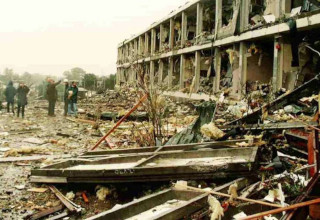
Christopher Thomas Ewart Ewart-Biggs, British Ambassador to the Republic of Ireland, author and senior Foreign Office liaison officer with MI6, is killed in Sandyford, Dublin on July 21, 1976, by a Provisional Irish Republican Army (IRA) land mine.

Ewart-Biggs is born in the Thanet district of Kent, South East England to Captain Henry Ewart-Biggs of the Royal Engineers and his wife Mollie Brice. He is educated at Wellington College and University College, Oxford and serves in the Queen’s Own Royal West Kent Regiment of the British Army during World War II. At the Second Battle of El Alamein in 1942 he loses his right eye and as a result he wears a smoked-glass monocle over an artificial eye.

Ewart-Biggs joins the Foreign Service in 1949, serving in Lebanon, Qatar and Algiers, as well as Manila, Brussels and Paris.

Ewart-Biggs is 55 when he is killed by a land mine planted by the IRA on July 21, 1976. He had been taking precautions to avoid such an incident since coming to Dublin only two weeks earlier. Among the measures he employs is to vary his route many times a week however, at a vulnerable spot on the road connecting his residence to the main road, there is only a choice between left or right. He chooses right and approximately 150 yards from the residence he hits a land mine that is later judged to contain hundreds of pounds of explosives. Ewart-Biggs and fellow passenger and civil servant Judith Cooke (aged 26) are killed. Driver Brian O’Driscoll and third passenger Brian Cubbon (aged 57) are injured. Cubbon is the highest-ranking civil servant in Northern Ireland at the time.

The Irish government launches a manhunt involving 4,000 Gardaí and 2,000 soldiers. Taoiseach Liam Cosgrave declares that “this atrocity fills all decent Irish people with a sense of shame.” In London, Prime Minister James Callaghan condemns the assassins as a “common enemy whom we must destroy or be destroyed by.” Thirteen suspected members of the IRA are arrested during raids as the British and Irish governments attempt to apprehend the criminals, but no one is ever convicted of the killings. In 2006, released Foreign and Commonwealth Office files reveal that the Gardaí had matched a partial fingerprint at the scene to Martin Taylor, an IRA member suspected of gun running from the United States.

Ewart-Biggs’s widow, Jane Ewart-Biggs, becomes a Life Peer in the House of Lords, campaigns to improve Anglo-Irish relations and establishes the Christopher Ewart-Biggs Memorial Prize for literature.

(Pictured: The twisted remains of the car lie upended beside a huge crater after the explosion that killed Christopher Ewart-Biggs and civil servant Judith Cooke)


Leave a comment

Death of Hugh O’Neill, Earl of Tyrone

hugh-o-neill

Hugh O’Neill (Irish: Aodh Mór Ó Néill), the 3rd Baron Dungannon and 2nd Earl of Tyrone, dies in Rome on July 20, 1616. His career is played out against the background of the Tudor conquest of Ireland, and he is best known for leading the resistance during the Nine Years’ War, the strongest threat to Tudor authority in Ireland since the revolt of Silken Thomas. The defeat of O’Neill and the conquest of his province of Ulster is the final step in the subjugation of Ireland by the English.

Although born into the powerful O’Neill dynasty of Ulster, O’Neill is fostered as a ward of the Crown in County Dublin after the assassination of his father, Matthew, in 1558. His wardship ends in 1567 and, after a visit to the court in London, he returns to Ireland in 1568 and assumes his grandfather’s title of Earl of Tyrone. By initially cooperating with the government of Queen Elizabeth I, he establishes his base of power, and in 1593 he replaces Turlough Lynagh O’Neill as chieftain of the O’Neills. But his dominance in Ulster leads to a deterioration in his relations with the Crown, and skirmishes between his forces and the English in 1595 are followed by three years of fruitless negotiations between the two sides.

In 1598 O’Neill reopens hostilities. His victory over the English on August 14 in the Battle of the Yellow Ford on the River Blackwater, Ulster, the most serious defeat sustained by the English in the Irish wars, sparks a general revolt throughout the country. Pope Clement VIII lends moral support to his cause, and, in September 1601, four thousand Spanish troops arrive at Kinsale, Munster, to assist the insurrection. But those reinforcements are quickly surrounded at Kinsale, and O’Neill suffers a staggering defeat in December 1601 while attempting to break the siege. He continues to resist until forced to surrender on March 30, 1603, six days after the death of Queen Elizabeth.

Elizabeth’s successor, King James I, allows O’Neill to keep most of his lands, but the chieftain soon finds that he cannot bear the loss of his former independence and prestige. In September 1607 he, with Rory O’Donnell, 1st Earl of Tyrconnell, and their followers, secretly embark on a ship bound for Spain. The vessel is blown off course and lands in Normandy. From there the refugees make their way via the Spanish Netherlands to Rome, where they are acclaimed by Pope Paul V. This “Flight of the Earls” signals the end of Gaelic Ulster and thereafter the province is rapidly Anglicized. Outlawed by the English, O’Neill lives in Rome the rest of his life. He dies there at the age of 66 on July 20, 1616. He is interred in the Spanish church of San Pietro in Montorio.


Leave a comment

Birth of Garret Wesley, 1st Earl of Mornington

garret-wesley

Garret Colley Wesley, 1st Earl of Mornington, Anglo-Irish politician and composer best known today for fathering several distinguished military commanders and politicians of the United Kingdom of Great Britain and Ireland, is born on July 19, 1735, at the family estate of Dangan Castle, near Summerhill, County Meath.

Wesley is the son of Richard Wesley, 1st Baron Mornington, and Elizabeth Sale. He is educated at Trinity College Dublin and is elected its first Professor of Music in 1764. From early childhood he shows extraordinary talent on the violin and soon begins composing his own works. As a composer he is remembered chiefly for glees such as “Here in cool grot” and for a double Anglican chant. His son, Arthur Wellesley, 1st Duke of Wellington, is the only one of his children to inherit something of his musical talent.

Wesley represents Trim in the Irish House of Commons from 1757 until 1758, when he succeeds his father as 2nd Baron Mornington.

Wesley marries Anne Hill-Trevor, eldest daughter of banker Arthur Hill-Trevor, 1st Viscount Dungannon, and his wife Anne Stafford, on February 6, 1759. His godmother, the famous diarist Mary Delany, says the marriage is happy, despite his lack of financial sense and her “want of judgment.” They have nine children, most of whom are historically significant.

In 1759 Wesley is appointed Custos Rotulorum of Meath and in 1760, in recognition of his musical and philanthropic achievements, he is created Viscount Wellesley, of Dangan Castle in the County of Meath, and Earl of Mornington. He is elected Grandmaster of the Grand Lodge of Ireland in 1776, a post he holds until the following year.

Wesley dies at the age of 45 on May 22, 1781. Like his father, he is careless with money, and his early death leaves the family exposed to financial embarrassment, leading ultimately to the decision to sell all their Irish estates.

Four streets in Camden Town, which form part of the estate of Wesley’s son-in-law Henry FitzRoy, are named Mornington Crescent, Place, Street and Terrace after him. Of these, the first has since become famous as the name of a London Underground station.

Four of Wesley’s five sons are created peers in the Peerages of Great Britain and the United Kingdom. The Barony of Wellesley and the Barony of Maryborough are now extinct, while the Dukedom of Wellington and Barony of Cowley are extant. The Earldom of Mornington is held by the Dukes of Wellington, and the Barons Cowley has since been elevated to be Earls Cowley.