Broderick sits in the Irish House of Commons for Midleton from 1692 to 1693, for County Cork from 1695 to 1699 and again from 1703 to 1713, and for Midleton again from 1715 to 1727. He is appointed to the Privy Council of Ireland on May 10, 1695. He is removed on July 17, 1711, but reappointed on September 30, 1714.
Meagher is educated at Roman Catholicboarding schools. When he is eleven, his family sends him to the Jesuits at Clongowes Wood College in County Kildare. It is at Clongowes that he develops his skill of oratory, becoming at age 15 the youngest medalist of the Debating Society. After six years, he leaves Ireland for the first time, to study in Lancashire, England, at Stonyhurst College, also a Jesuit institution. He returns to Ireland in 1843, with undecided plans for a career in the Austrian army, a tradition among a number of Irish families.
Meagher becomes a member of the Young Ireland Party in 1845 and in 1847 is one of the founders of the Irish Confederation, dedicated to Irish independence. In 1848 he is involved, along with William Smith O’Brien, in an abortive attempt to mount an insurrection against English rule. Arrested for high treason, he is condemned to death, but his sentence is commuted to life imprisonment in Van Diemen’s Land, now Tasmania.
Meagher escapes in 1852 and makes his way to the United States. After a speaking tour of U.S. cities, he settles in New York City, studies law and is admitted to the bar in 1855. He soon becomes a leader of the Irish in New York and, from 1856, edits the Irish News.
At the close of the war, Meagher is appointed secretary of Montana Territory where, in the absence of a territorial governor, he serves as acting governor.
In the summer of 1867, Meagher travels to Fort Benton, Montana, to receive a shipment of guns and ammunition sent by General William Tecumseh Sherman for use by the Montana Militia. On the way to Fort Benton, the Missouri River terminus for steamboat travel, he falls ill and stops for six days to recuperate. When he reaches Fort Benton, he is reportedly still ill.
Sometime in the early evening of July 1, 1867, Meagher falls overboard from the steamboatG. A. Thompson, into the Missouri River. His body is never recovered. Some believe his death to be suspicious and many theories circulate about his death. Early theories included a claim that he was murdered by a Confederate soldier from the war, or by Native Americans. In 1913 a man claims to have carried out the murder of Meagher for the price of $8,000 but then recants. In the same vein, American journalist and novelist Timothy Egan, who publishes a biography of Meagher in 2016, claims Meagher may have been murdered by Montana political enemies or powerful and still active vigilantes. On the frontier men are quick to kill rather than adjudicate. A similar theory shown on Death Valley Days (1960) has him survive the assassination attempt because his aide had been mistakenly murdered when he accepted one of his trademark cigars, and Meagher uses his apparent death as leverage over his political opponents.
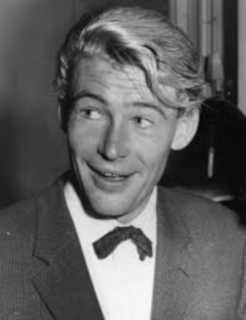
Peter Seamus O’Toole, British stage and film actor of Irish descent, is born on August 2, 1932, in Leeds, Yorkshire, England. Some sources give his birthplace as Connemara, County Galway. Records from the General Registry Office in Leeds confirm that O’Toole is born in the north England town in 1932.
O’Toole grows up in Leeds and is educated at the Royal Academy of Dramatic Art in London. He is a reporter for the Yorkshire Evening Post in his teens and makes his amateur stage debut at Leeds Civic Theatre. After serving two years in the Royal Navy, he acts with the Bristol Old Vic Company from 1955 to 1958 and makes his London debut as Peter Shirley in George Bernard Shaw’s Major Barbara (1956). He appears with the Shakespeare Memorial Company at Stratford-upon-Avon, Warwickshire, England, in 1960 in highly praised performances as Shylock in The Merchant of Venice and as Petruchio in The Taming of the Shrew, and he plays the lead in Hamlet for the inaugural production of the Royal National Theatre in London in 1963. A prominent film star by this point in his career, he continues to appear on stages throughout the world to great acclaim. He is named associate director of the Old Vic in 1980.
O’Toole makes his motion picture debut in Kidnapped in 1960 and two years later becomes an international star for his portrayal of T.E. Lawrence in David Lean’s epic Lawrence of Arabia (1962). In 1964 he plays Henry II of England in Becket, and he has the title role in Lord Jim (1965). He appears as Henry II again in The Lion in Winter (1968), a film notable for the witty verbal sparring matches between O’Toole and costar Katharine Hepburn. The Ruling Class (1972), a controversial black comedy that has become a cult classic, casts O’Toole as a schizophrenic English earl with a messiah complex.
Personal problems contribute to a decline in his popularity during the 1970s, but he makes a strong comeback in the early 1980s with three well-received efforts. He portrays a duplicitous and domineering movie director in The Stunt Man (1980), and his performance as the Roman commander Lucius Flavius Silva in the acclaimed television miniseries Masada (1981) is hailed as one of the finest of his career. His most popular vehicle during this period is My Favorite Year (1982), an affectionate satire on the early days of television, in which he plays Alan Swann, a faded Errol Flynn-type swashbuckling screen star with a penchant for tippling and troublemaking.
O’Toole subsequently maintains his status with fine performances in such films as the Oscar-winning The Last Emperor (1987), the cult favourite Wings of Fame (1989), and Fairy Tale: A True Story (1997), in which he portrays Sir Arthur Conan Doyle. Notable screen roles in the 21st century included King Priam in the historical epic Troy (2004), an aging romantic in Venus (2006), the voice of a haughty food critic in the animated Ratatouille (2007), and a priest in the historical drama For Greater Glory (2012). In addition, in 2008 he portrays Pope Paul III in the TV series The Tudors.
In 1992 O’Toole publishes a lively memoir, Loitering with Intent: The Child. A second volume, Loitering with Intent: The Apprentice, appears in 1996. He is nominated for an Academy Award eight times — for Lawrence of Arabia, Becket, The Lion in Winter, Goodbye, Mr. Chips (1969), The Ruling Class, The Stunt Man, My Favorite Year, and Venus — but never wins. In 2003 he is awarded an honorary Oscar. He receives an Emmy Award for his performance as Bishop Pierre Cauchon in the television miniseries Joan of Arc (1999).
O’Toole dies on December 14, 2013, at Wellington Hospital in St. John’s Wood, London, at the age of 81. His funeral is held at Golders Green Crematorium in London on December 21, 2013, where his body is cremated in a wicker coffin. His ashes are planned to be taken to Connemara, Ireland. They are being kept at the residence of the President of Ireland, Áras an Uachtaráin, by President Michael D. Higgins, an old friend of O’Toole. His family has stated their intention to fulfill his wishes and take his ashes to the west of Ireland.
The Buttevant Rail Disaster, a train crash that occurs at Buttevant Railway Station, County Cork, takes place on August 1, 1980. More than 70 people are injured, and 18 die, resulting as one of Ireland’s worst rail disasters to ever occur and the country’s worst rail disaster during peacetime history.
At 12:45 the 10:00 am Dublin (Heuston) to Cork (Kent) express train enters Buttevant Railway Station carrying some 230 bank holiday passengers. The train is diverted off the main line across a 1:8 temporary set of points into a siding. The locomotive remains upright but carriages immediately behind the engine and generator van jack-knife and are thrown across four sets of rail lines. Two coaches and the dining car are totally demolished by the impact. It results in the deaths of 18 people and over 70 people being injured.
The accident happens because a set of manual facing points are set to direct the train into the siding. These points are installed about four months previously and have not yet been connected to the signal cabin. The permanent way maintenance staff are expecting a stationary locomotive at the Up platform to move into the siding, and set the points for the diversion to the siding, without obtaining permission from the signalman. Upon seeing that this has been done, the signalman at Buttevant manually sets the signals to the Danger aspect and informs the pointsman to reset the points. The train is traveling too fast to stop in time. The train is moving at approximately 60 mph when the derailment occurs.
The train consists of one locomotive, a generator van and eleven coaches. Six of the coaches consist of wooden bodies on steel underframes. Four of these are either destroyed or badly damaged in the impact, the two which survive being at the rear of the train. The remainder of the coaches are light alloy Cravens stock and most survive the crash.
This event, and the subsequent Cherryville junction accident, which kills a further seven people, account for 70% of all Irish rail deaths over a 28-year period. CIÉ and the Government come under severe public pressure to improve safety and to modernise the fleet. A major review of the national rail safety policy is held and results in the rapid elimination of the wooden-bodied coaches that had formed part of the train.
The passengers who are most severely injured or killed are seated in coaches with wooden frames. This structure is incapable of surviving a high speed crash and does not come near to the safety standards provided by modern (post-1950s) metal-body coaches. The expert bodies that review the accident discover that the old timber-frame carriage bodies mounted on a steel frame are totally inadequate as they are prone to complete collapse under the enormous compression forces of a high-speed collision.
The more modern steel-framed carriage bodies survive due to their greater structural rigidity. On this basis the decision to purchase a new fleet of modern intercity coaches based on the British Rail Mark 3 design is quickly made. The Mark 3’s longitudinally corrugated roof can survive compression forces of over 300 tonnes. These coaches, an already well proven design, are built by British Rail Engineering Limited (BREL) in Derby, England and, under licence, at CIÉ’s own workshops at Inchicore Railway Works in Dublin between 1983 and 1989.
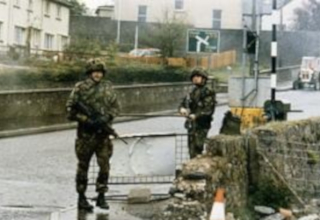
In August 2005, it is announced that in response to the Provisional IRA declaration that its campaign is over, and in accordance with the Good Friday Agreement provisions, Operation Banner would end by August 1, 2007. This involves troops based in Northern Ireland being reduced to 5,000, and only for training purposes. Security is entirely transferred to the police. The Northern Ireland Resident battalions of the Royal Irish Regiment, which had grown out of the Ulster Defence Regiment, stand down on September 1, 2006. The operation officially ends at midnight on July 31, 2007, making it the longest continuous deployment in the British Army’s history, lasting over 38 years.
While the withdrawal of troops is welcomed by the nationalist parties Social Democratic and Labour Party and Sinn Féin, the unionist Democratic Unionist Party and Ulster Unionist Party oppose the decision, which they regard as premature. The main reasons behind their resistance are the continuing activity of republican dissident groups, the loss of security-related jobs for the protestant community and the perception of the British Army presence as an affirmation of the political union with Great Britain.
According to the Ministry of Defence, 1,441 serving British military personnel die in Operation Banner, 722 of whom are killed in paramilitary attacks and 719 of whom die as a result of other causes. The British military kills 307 people during the operation, about 51% of whom are civilians and 42% of whom are members of republican paramilitaries.
(Pictured: Two British soldiers on duty at a vehicle checkpoint near the A5 Omagh/Armagh road junction)
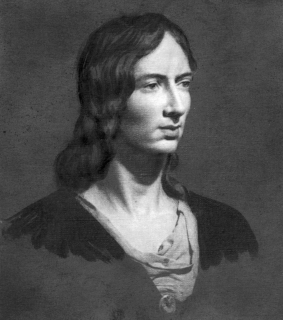
Emily Brontë, English novelist and poet who produces but one novel, Wuthering Heights (1847), is born on July 30, 1818, in Thornton, West Riding of Yorkshire, England. She is perhaps the greatest of the three Brontë sisters, but the record of her life is extremely meager, for she is silent and reserved and leaves no correspondence of interest, and her single novel darkens rather than solves the mystery of her spiritual existence.
Her father, Patrick Brontë (1777–1861), an Irishman, holds a number of curacies. Hartshead, Yorkshire, is the birthplace of his elder daughters, Maria and Elizabeth, who died young. Nearby Thornton is the birthplace of Emily and her siblings Charlotte, Patrick Branwell, and Anne. In 1820 Patrick Brontë becomes rector of Haworth, remaining there for the rest of his life.
After the death of their mother in 1821, the children are left very much to themselves in the bleak moorlandrectory. The children are educated, during their early life, at home, except for a single year that Charlotte and Emily spend at the Cowan Bridge School at Cowan Bridge in Lancashire. In 1835, when Charlotte secures a teaching position at Miss Wooler’s school at Roe Head, Emily accompanies her as a pupil but suffers from homesickness and remains only three months. In 1838 Emily spends six exhausting months as a teacher at Law Hill School, near Halifax, and then resigns.
In an effort to keep the family together at home, Charlotte plans to keep a school for girls at Haworth. In February 1842 she and Emily go to Brussels to learn foreign languages and school management at the Héger Pensionnat. Although Emily pines for home and for the wild moorlands, it seems that in Brussels she is better appreciated than Charlotte. Her passionate nature is more easily understood than Charlotte’s decorous temperament. In October, however, when her aunt dies, Emily returns permanently to Haworth.
In 1845 Charlotte comes across some poems by Emily, and this leads to the discovery that all three sisters have written verse. A year later they publish jointly a volume of verse, Poems by Currer, Ellis and Acton Bell, the initials of these pseudonyms being those of the sisters. It contains 21 of Emily’s poems, and a consensus of later criticism has accepted the fact that Emily’s verse alone reveals true poetic genius. The venture costs the sisters about £50 in all, and only two copies are sold.
By midsummer of 1847 Emily’s Wuthering Heights and Anne’s Agnes Grey have been accepted for joint publication by J. Cautley Newby of London, but publication of the three volumes is delayed until the appearance of their sister Charlotte’s Jane Eyre, which is immediately and hugely successful. Wuthering Heights, when published in December 1847, does not fare well. Critics are hostile, calling it too savage, too animal-like, and clumsy in construction. Only later does it come to be considered one of the finest novels in the English language.
Soon after the publication of her novel, Emily’s health begins to fail rapidly. She had been ill for some time, but now her breathing becomes difficult, and she suffers great pain. She dies of tuberculosis on December 19, 1848, in Haworth. She is buried at St. Michael and All Angels’ Church in Haworth.
In 1846, William Smith O’Brien, alongside John Mitchel, form the Irish Confederation with the Young Ireland movement which is dedicated to direct action against the British. Two short years later they are already calling for open rebellion, despite the fact that Ireland is now in the third year of the devastating famine which is leaving millions of the country’s people in brutal starvation.
Just a year after Black ‘47, the worst year of the Great Famine, the Young Ireland movement is hoping to uprise and overthrow the British but with the starving Irish just struggling to stay alive, dying or emigrating in their thousands, their revolutionary talk does little to act as a call to arms for the average Irish person.
Whereas the mistreatment of the Irish people by the British had rightly led to an increased radicalism in Irish nationalist movement, without the general Irish population able to think of anything other than staying alive, it seems doomed to failure, especially after the arrest of Mitchel before the rebellion is even started. He is convicted of sedition and transported to a penal colony in Australia before the revolt begins, a move that leads to an increased furor to revolt among the leaders that remain.
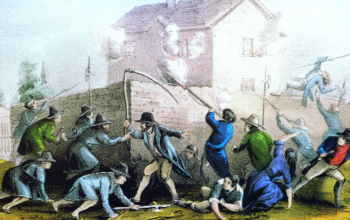
On July 29, 1848, O’Brien launches his rebellion. After being chased by a force of Young Irelanders and their supporters, a Royal Irish Constabulary unit takes refuge in a house and holds those inside as hostages.
It was evident to the rebels that the position of the police is almost impregnable. When a party of the Cashel police are seen arriving over Boulea Hill, the rebels attempt to stop them even though they are low on ammunition. The police continue to advance, firing up the road. It becomes clear that the police in the house are about to be reinforced and rescued. The rebels then fade away, effectively terminating both the era of Young Ireland and Repeal, but the consequences of their actions follow them for many years. This event is colloquially known as “The Battle of Widow McCormack’s cabbage plot.”
In O’Brien’s subsequent trial, the jury finds him guilty of high treason. He is sentenced to be hanged, drawn, and quartered. Petitions for clemency are signed by 70,000 people in Ireland and 10,000 people in England. On June 5, 1849, the sentences of O’Brien and other members of the Irish Confederation are commuted to transportation for life to Van Diemen’s Land (Tasmania in present-day Australia). In 1854, after five years in Van Diemen’s Land, O’Brien is released on the condition he never return to the United Kingdom. He settled in Brussels.
(Pictured: The attack on the Widow McCormack’s house on Boulagh Common, Ballingarry, County Tipperary)
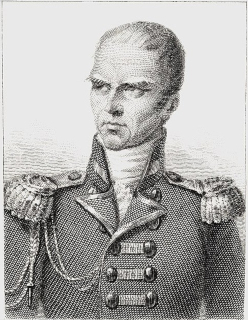
Lowe is the son of John Lowe, an army surgeon. His childhood is spent in various garrison towns, particularly in the West Indies, but he is educated chiefly at Salisbury Grammar. He obtains a post as ensign in the East Devon Militia when he is eleven. In 1787 he enters his father’s regiment, the 50th Regiment of Foot, which is then serving in Gibraltar under Governor-GeneralCharles O’Hara. In 1791, he is promoted to lieutenant. The same year he is granted eighteen months’ leave and chooses to spend the time traveling through Italy rather than return to Britain. He chooses to avoid traveling to France as the French Revolution had recently broken out.
Lowe holds several important commands in the war with France from 1793. He is knighted in 1814. He arrives on the island of Saint Helena, Napoleon’s last place of exile, in April 1816. Many persons, notably Arthur Wellesley, 1st Duke of Wellington, consider the choice ill advised, for Lowe is a conscientious but unimaginative man who takes his responsibility with excessive seriousness. Overwhelmed by the magnitude of the charge given him, he adheres rigorously to orders and treats Napoleon with extreme punctiliousness. After October 1816, the news that rescue operations are being planned by Bonapartists in the United States causes Lowe to impose even stricter regulations. The next month he deports Emmanuel, comte de Las Cases, Napoleon’s confidant and former imperial chamberlain, for writing letters about Lowe’s severity.
When, in late 1817, Napoleon first shows symptoms of his fatal illness, Lowe does nothing to mitigate the emperor’s living conditions. Yet he recommends that the British government increase its allowance to Napoleon’s household by one-half. After the emperor’s death on May 5, 1821, Lowe returns to England, where he receives the thanks of King George IV but is met with generally unfavourable opinion and is widely criticized for his unbending treatment of the former emperor. He later commands the British forces on Ceylon (1825–30) but is not appointed governor of that island when the office falls vacant in 1830.
Bernard graduates with a BA in mathematics from Trinity College Dublin in 1880, is elected a Fellow there in 1884, and is later a member of the council of the university, where he holds the office of King’s Lecturer of Divinity from 1888 to 1902.
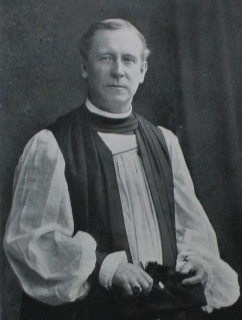
Bernard is appointed treasurer of St. Patrick’s Cathedral, Dublin, by the DeanHenry Jellett in 1897. On Jellett´s death, in December 1901, Bernard becomes a favorite to succeed him as Dean, a position to which he is elected by the chapter of the cathedral on February 6, 1902. He serves as such until 1911, when he is appointed Bishop of Ossory, Ferns and Leighlin. In 1915 he is appointed Church of Ireland Archbishop of Dublin, serving until 1919.
A prolific scholar, in many fields, including Church history, theology and philosophy, Bernard is the president of the Royal Irish Academy from 1916 to 1921 and Provost of Trinity College Dublin from 1919 to 1927. He is a member of the Board of National Education in Ireland, in which capacity he serves as examiner of mathematics in the 1880s. He is regarded as an unrepentant Unionist, representing their interests as a delegate to the 1917–18 Irish Convention.
Clinton’s parents are Colonel Charles Clinton and Elizabeth Denniston Clinton, Presbyterian immigrants who had left County Longford in Ireland in 1729 to escape an Anglo-Irish regime that imposed severe disabilities on religious dissenters. His political interests are inspired by his father, who is a farmer, surveyor, and land speculator, and serves as a member of the New York colonial assembly. He is the brother of General James Clinton and the uncle of New York’s future governor, DeWitt Clinton. He is tutored by a local Scottish clergyman.
Clinton serves in the French and Indian War, rising to the rank of lieutenant in the colonial militia. He begins a legal practice after the war and serves as a district attorney for New York City. He becomes Governor of New York in 1777 and remains in that office until 1795. He supports the cause of independence during the American Revolutionary War and serves in the Continental Army despite his gubernatorial position. During and after the war, he is a major opponent of Vermont‘s entrance into the union due to disputes over land claims.
Opposed to the ratification of the Constitution of the United States, Clinton becomes a prominent Anti-Federalist and advocates for the addition of the United States Bill of Rights. In the early 1790s, he emerges as a leader of the incipient Democratic-Republican Party and serves as the party’s vice-presidential candidate in the 1792 presidential election. He receives the third most electoral votes in the election, as President George Washington and Vice President John Adams both win re-election. He does not seek re-election in 1795 but serves as governor again from 1801 to 1804. He is the longest-serving governor in U.S. history until Terry Branstad surpasses his record in 2015.
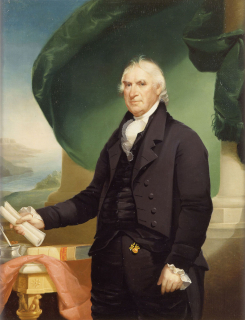
George Clinton dies in Washington, D.C. on April 20, 1812, leaving the office of vice president vacant for the first time in U.S history. He is buried in the Old Dutch Churchyard in Kingston, New York. His nephew, DeWitt Clinton, continues the Clinton New York political dynasty after his uncle’s death.
(Pictured: Portrait of George Clinton by Ezra Ames, 1814)



 seamus dubhghaill