seamus dubhghaill

Promoting Irish Culture and History from Little Rock, Arkansas, USA


Leave a comment

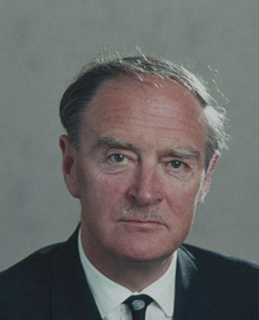
William J. Brennan Appointed to U.S. Supreme Court

william-brennan

William Joseph Brennan, Jr., American judge, is named an Associate Justice of the Supreme Court of the United States through a recess appointment by President Dwight D. Eisenhower on October 15, 1956, shortly before the 1956 presidential election. He serves from 1956 until July 20, 1990. As the seventh longest-serving justice in Supreme Court history, he is known for being a leader of the Court’s liberal wing.

Brennan is born in Newark, New Jersey to Irish immigrants, originally from County Roscommon, on April 25, 1906. He attends public schools in Newark, graduating from Barringer High School in 1924. He then attends the Wharton School of the University of Pennsylvania, where he graduates cum laude with a degree in economics in 1928. He graduates from Harvard Law School near the top of his class in 1931 and is a member of the Harvard Legal Aid Bureau.

Brennan enters private practice in New Jersey and serves in the United States Army during World War II. He is appointed to the Supreme Court of New Jersey in 1951. After his appointment to the U.S. Supreme Court by Eisenhower in 1956, he wins Senate confirmation the following year.

On the Supreme Court, Brennan is known for his outspoken progressive views, including opposition to the death penalty and support for abortion rights. He authors several landmark case opinions, including Baker v. Carr, establishing the “one person, one vote” principle, and New York Times Co. v. Sullivan, which requires “actual malice” in libel suits brought by public officials. Due to his ability to shape a wide variety of opinions and “bargain” for votes in many cases, he is considered to be among the Court’s most influential members. Justice Antonin Scalia calls Brennan “probably the most influential Justice of the [20th] century.”

Brennan holds the post on the Court until his retirement on July 20, 1990, after suffering a stroke. He is succeeded by Justice David Souter. Brennan then teaches at Georgetown University Law Center until 1994. He dies in Arlington County, Virginia on July 24, 1997, and is buried in Arlington National Cemetery.

With 1,360 opinions, he is second only to William O. Douglas in number of opinions written while a Supreme Court justice. On November 30, 1993, President Bill Clinton presents Brennan with the Presidential Medal of Freedom.


2 Comments

Birth of Activist Mary Ellen Spring Rice

mary-ellen-spring-rice

Mary Ellen Spring Rice, Irish nationalist activist during the early 20th century, is born into an aristocratic Anglo-Irish family in London, England on October 14, 1880.

Spring Rice is the daughter of Thomas Spring Rice, 2nd Baron Monteagle of Brandon, and a great-granddaughter of the British Chancellor of the Exchequer, Thomas Spring Rice, 1st Baron Monteagle of Brandon. Her maternal grandfather is the bishop, Samuel Butcher. She is brought up on the family’s Mount Trenchard estate overlooking the River Shannon. It is a progressive, liberal household and independence of thought is encouraged. So too is the Gaelic culture and, at home, she and her brothers are taught how to fluently speak the Irish language.

Before World War I, Spring Rice hosts many Irish nationalist and Conradh na Gaeilge meetings at her home, and she becomes a close friend of Douglas Hyde and her cousin Nelly O’Brien. During 1913 and 1914, she is actively involved in gun-running, most notably the Howth gun-running.

This involves helping to ship weapons to be used in an Irish uprising from Germany into Ireland. Together with Molly Childers, she raises £2,000 towards the purchase of 900 Mauser rifles from Germany, many of which are used in the 1916 Easter Rising. She sails on the Asgard to collect the guns and helps to unload them in Ireland.

During the Irish War of Independence, Spring Rice allows her Mount Trenchard home to be used as a safe house by Irish Republican Army fighters and the family boat is used to carry men and arms over the Shannon Estuary.

Con Collins stays with Spring Rice regularly. She helps train local women as nurses to tend to wounded nationalists and acts as an IRA message carrier between Limerick and Dublin. Throughout this time, she maintains her aristocratic façade and society connections, inviting senior Liberal Party politicians to Mount Trenchard to pressure them to support Irish independence.

Spring Rice starts to suffer from tuberculosis in 1923, and dies unmarried in a sanatorium in Clwyd, Wales, on December 1, 1924. She is buried in Ireland, where her coffin is draped in the Irish tricolour and escorted by an IRA guard of honour.

(Pictured: Mary Ellen Spring-Rice and Molly Childers with the German guns on board Asgard, 1914.)


Leave a comment

Death of Ed Sullivan,Television Personality

ed-sullivan

Edward Vincent Sullivan, Irish American television personality, sports and entertainment reporter, and syndicated columnist for the New York Daily News and the Chicago Tribune New York News Syndicate, dies in Manhattan, New York on October 13, 1974. He is principally remembered as the creator and host of the television variety show The Toast of the Town, later popularly and officially renamed The Ed Sullivan Show. Broadcast for 23 years from 1948 to 1971, it sets a record as the longest-running variety show in United States broadcast history.

Sullivan is born on September 28, 1901, in Harlem, New York City, the son of Elizabeth F. (née Smith) and Peter Arthur Sullivan, a customs house employee, and grows up in Port Chester, New York. He is a gifted athlete in high school, earning 12 athletic letters at Port Chester High School.

Sullivan lands his first job at The Port Chester Daily Item, a local newspaper for which he had written sports news while in high school and then joins the paper full-time after graduation. In 1919, he joins The Hartford Post. The newspaper folds in his first week there but he lands another job on The New York Evening Mail as a sports reporter. After The Evening Mail closes in 1923, he bounced through a series of news jobs. In 1927, he joins The Evening Graphic as sportswriter and eventually sports editor. In 1929, when Walter Winchell moves to the New York Daily Mirror, he is made Broadway columnist.

Throughout his career as a columnist, Sullivan dabbles in entertainment, producing vaudeville shows with which he appears as master of ceremonies in the 1920s and 1930s, directing a radio program over the original WABC (now WCBS) and organizing benefit reviews for various causes. In 1941, he is host of the Summer Silver Theater, a variety program on CBS radio, with Will Bradley as bandleader and a guest star featured each week.

In 1948, producer Marlo Lewis gets the CBS network to hire Sullivan to do a weekly Sunday night TV variety show, Toast of the Town, which later becomes The Ed Sullivan Show. Debuting in June 1948, the show is originally broadcast from the Maxine Elliott’s Theatre on West 39th Street in New York City. In January 1953, it moves to CBS-TV Studio 50, at 1697 Broadway in New York City, which in 1967 is renamed the Ed Sullivan Theater. The theater is later the home of the Late Show with David Letterman and The Late Show with Stephen Colbert. Television critics initially give the new show and its host poor reviews.

In the 1950s and 1960s, Sullivan is a respected starmaker because of the number of performers who become household names after appearing on the show, including Elvis Presley, The Beatles, The Dave Clark Five, B.J. Thomas and the Jackson Five. He has a knack for identifying and promoting top talent and pays a great deal of money to secure that talent for his show.

By 1971, the show’s ratings have plummeted. In an effort to refresh its lineup, CBS cancels the program along with some of its other longtime shows. Sullivan is angered and refuses to do a final show, although he remains with the network in various other capacities and hosts a 25th anniversary special in June 1973.

In early September 1974, X-rays reveal that Sullivan has an advanced growth of esophageal cancer. Doctors give him very little time to live, and the family chooses to keep the diagnosis secret from him. Sullivan, still believing his ailment to be yet another complication from a long-standing battle with gastric ulcers, dies five weeks later on October 13, 1974, at New York’s Lenox Hill Hospital. His funeral is attended by 3,000 at St. Patrick’s Cathedral, New York, on a cold, rainy day. He is interred in a crypt at the Ferncliff Cemetery in Hartsdale, New York.

Sullivan has a star on the Hollywood Walk of Fame at 6101 Hollywood Blvd.


Leave a comment

The 2002 Bali Bombings

bali-bombings-2002

The 2002 Bali bombings occur on October 12, 2002 in the tourist district of Kuta on the Indonesian island of Bali. The attack kills 202 people, including 88 Australians, 38 Indonesians, and people of more than 20 other nationalities. An additional 209 people are injured.

At 11:05 PM Central Indonesian Time, a suicide bomber inside the nightclub Paddy’s Pub, sometimes referred to as Paddy’s Irish Bar and owned Natalia Daly of Cork, County Cork, detonates a bomb in his backpack, causing many patrons, with or without injuries, to immediately flee into the street. Twenty seconds later, a second and much more powerful car bomb hidden inside a white Mitsubishi van is detonated by another suicide bomber outside the Sari Club, a renowned open-air thatched roof bar located opposite Paddy’s Pub.

The bombing occurs during one of the busiest tourist periods of the year in Kuta Beach, driven in part by many Australian sporting teams making their annual end-of-season holiday.

Damage to the densely populated residential and commercial district is immense, destroying neighbouring buildings and shattering windows several blocks away. The car bomb explosion leaves a one-metre-deep crater.

The local Sanglah Hospital is ill-equipped to deal with the scale of the disaster and is overwhelmed with the number of injured, particularly burn victims. There are so many people injured by the explosion that some of the injured have to be placed in hotel pools near the explosion site to ease the pain of their burns. Many of the injured are forced to be flown extreme distances to Darwin (1,100 mi) and Perth (1,600 mi) on the Australian continent for specialist burn treatment.

A comparatively small bomb detonates outside the U.S. consulate in Denpasar, which is believed to have exploded shortly before the two Kuta bombs, causes minor injuries to one person and minimal property damage. It is reportedly packed with human feces.

The final death toll is 202, mainly comprising Western tourists and holiday-makers in their 20s and 30s who are in or near Paddy’s Pub or the Sari Club, but also including many Balinese Indonesians working or living nearby, or simply passing by. Hundreds more people suffer horrific burns and other injuries. The largest group among those killed are holidayers from Australia with 88 fatalities. On October 14, the United Nations Security Council passes Resolution 1438 condemning the attack as a threat to international peace and security.

Various members of Jemaah Islamiyah, a violent Islamist group, are convicted in relation to the bombings, including three individuals who are sentenced to death. An audio-cassette purportedly carrying a recorded voice message from Osama bin Laden states that the Bali bombings are in direct retaliation for support of the United StatesWar on Terror and Australia‘s role in the liberation of East Timor. The recording does not claim responsibility for the Bali attack. However, former FBI agent Ali Soufan confirms that Al-Qaeda did in fact finance the attack.

On November 8, 2008, Imam Samudra, Ali Amrozi bin Haji Nurhasyim and Huda bin Abdul Haq are executed by firing squad on the island prison of Nusa Kambangan. On March 9, 2010, Dulmatin, nicknamed “the Genius” and believed to be responsible for setting off one of the Bali bombs with a mobile phone, is killed in a shoot-out with Indonesian police in Jakarta.


Leave a comment

Birth of Painter James Barry

james-barry-self-portrait

James Barry, Irish painter best remembered for his six-part series of paintings entitled The Progress of Human Culture in the Great Room of the Royal Society of Arts in London, is born in Water Lane (now Seminary Road) on the northside of Cork, County Cork on October 11, 1741.

Barry first studies painting under local artist John Butts. At the schools in Cork to which he is sent he is regarded as a child prodigy. About the age of seventeen he first attempts oil painting, and between that and the age of twenty-two, when he first goes to Dublin, he produces several large paintings.

The painting that first brings him into public notice, and gains him the acquaintance and patronage of Edmund Burke, is founded on an old tradition of the landing of Saint Patrick on the sea-coast of Cashel, although Cashel is an inland town far from the sea, and of the conversion and Baptism of the King of Cashel. It is exhibited in London in 1762 or 1763 and rediscovered in the 1980s in unexhibitable condition.

In late 1765 Barry goes to Paris, then to Rome, where he remains upwards of three years, from Rome to Florence and Bologna, and thence home through Venice. He paints two pictures while abroad, an Adam and Eve and a Philoctetes.

Soon after his return to England in 1771 Barry produces his painting of Venus, which is compared to the Triumph of Galatea of Raphael, the Venus of Urbino of Titian and the Venus de’ Medici. In 1773 he exhibits his Jupiter and Juno on Mount Ida. His Death of General Wolfe, in which the British and French soldiers are represented in very primitive costumes, is considered as a falling-off from his great style of art.

In 1773 Barry publishes An Inquiry into the real and imaginary Obstructions to the Acquisition of the Arts in England, vindicating the capacity of the English for the fine arts and tracing their slow progress to the Reformation, to political and civil dissensions, and lastly to the general direction of the public mind to mechanics, manufactures and commerce.

In 1774 a proposal is made through Valentine Green to several artists to ornament the Great Room of the Society for the encouragement of Arts, Manufactures and Commerce (now the Royal Society of Arts), in London’s Adelphi Theatre, with historical and allegorical paintings. This proposal is rejected at the time. In 1777 Barry makes an offer, which is accepted, to paint the whole on condition that he is allowed the choice of his subjects, and that he is paid by the society the costs of canvas, paints and models. He finishes the series of paintings after seven years to the satisfaction of the members of the society. He regularly returns to the series for more than a decade, making changes and inserting new features. The series of six paintings, The progress of human knowledge and culture, has been described by critic Andrew Graham-Dixon as “Britain’s late, great answer to the Sistine Chapel.”

Soon after his return from the continent Barry is chosen a member of the Royal Academy of Arts. In 1782 he is appointed professor of painting in the room of Edward Penny with a salary of £30 a year. In 1799 he is expelled from the Academy soon after the appearance of his Letter to the Society of Dilettanti, an eccentric publication, full of enthusiasm for his art and at the same time of contempt for the living professors of it. He remains the only academician ever to be expelled by the Academy until Brendan Neiland in July 2004.

After the loss of his salary, a subscription is set on foot by the Earl of Buchan to relieve Barry from his difficulties, and to settle him in a larger house to finish his painting of Pandora. The subscription amounts to £1000, with which an annuity is bought, but on February 6, 1806 he is seized with illness and dies on February 22. His remains are interred in St. Paul’s Cathedral, London on March 4, 1806.

(Pictured: James Barry, Self-portrait, 1803, oil on canvas. National Gallery of Ireland, Dublin.)


Leave a comment

Birth of Charles Monck, 1st Governor General of Canada

charles-stanley-monck

Charles Stanley Monck, 4th Viscount Monck GCMG PC, the last Governor-General of the Province of Canada and the first Governor General of Canada after Canadian Confederation, is born on October 10, 1819 in Templemore, County Tipperary. Prior to Confederation he is concurrently Lieutenant Governor of both Canada West and Canada East. He is the son of Charles Monck, 3rd Viscount Monck, and his wife Bridget née Willington.

Monck obtains a law degree from Trinity College, Dublin. He marries his first cousin Lady Elizabeth Louise Mary Monck on July 24, 1844, and in 1849 he inherits his father’s title of Viscount Monck. In 1852 he is elected MP for Portsmouth, and from 1855 to 1858 he serves as Lord of the Treasury under Henry John Temple, 3rd Viscount Palmerston.

In 1861 Monck is appointed Governor General of British North America as well as Governor of the Province of Canada. During this time, the Canadian colonies are beginning to organise themselves into a confederation. The American Civil War has just broken out, and the Trent Affair causes diplomatic tension between the United States and Britain. The Canadian government is eager to gain some measure of independence during this turbulent period. The Quebec Conference, the Charlottetown Conference, and the London Conference, at which the details of confederation are discussed, all take place during Monck’s time as governor. Monck supports the idea, and works closely with John A. Macdonald, George Brown, George-Étienne Cartier, and Étienne-Paschal Taché, who form the “Great Coalition” in 1864.

In 1866 Monck becomes a peer with the title Baron Monck. When the Canadian colonies become a semi-independent confederation the next year, he becomes the country’s first Governor General. He is also responsible for establishing Rideau Hall as the residence of the Governor General in Ottawa.

In 1869 Monck is succeeded by John Young, 1st Baron Lisgar. He returns home to Ireland, where he becomes Lord Lieutenant of Dublin in 1874. He dies in Enniskerry, County Wicklow on November 29, 1894.


Leave a comment

Birth of Nicky Byrne, Singer & Songwriter

nicky-byrne

Nicholas Bernard James Adam Byrne, Jr., singer, songwriter, radio presenter, dancer, television presenter and former semi-professional footballer, best known for being a member of Irish music band Westlife, is born in Dublin on October 9, 1978.

Before his music career, Byrne plays professional football, representing Republic of Ireland at several junior levels. He plays for Home Farm F.C. and St. Kevins Boys in North Dublin before becoming a professional player. He joins Leeds United F.C. as a goalkeeper in 1995 and is a squad member of the FA Youth Cup winning team of 1997. He plays for Leeds for two years, leaving when his contract expires in June 1997. He plays in a reserve game for Scarborough F.C. and in a trial game with Cambridge United F.C. before returning to join Dublin club Shelbourne F.C. He then signs for Cobh Ramblers F.C. playing 15 games, then St. Francis F.C., all in Ireland’s League of Ireland.

On May 14, 2009, Byrne is a substitute for a Liverpool F.C. Legends XI that plays against an All Star XI in a Hillsborough Memorial match to mark the 20th anniversary of the Hillsborough disaster. He represented the Republic of Ireland at U15, U16 and U18 levels.

In June 1998, Byrne attends an audition for new Irish boyband, where Boyzone manager Louis Walsh approaches him to join his new venture, Westlife. He joins Westlife along with Kian Egan, Mark Feehily, Shane Filan and Brian McFadden. With Westlife, he has had 25 top ten UK singles, fourteen of which are number one, seven number one albums and has sold in excess of over 45 million records worldwide. He also has a number one single in Ireland in 2002, alongside the Republic of Ireland national football team and Dustin the Turkey with the Irish 2002 FIFA World Cup anthem, “Here Come the Good Times (Ireland).” He also co-writes many of Westlife’s songs.

On September 7, 2012, it is announced that Byrne will be a contestant for the tenth series of Strictly Come Dancing. He is the ninth contestant to be eliminated. He is ranked number two on Ireland’s Sexiest Man of 2014.

In early January 2016, it is rumored that RTÉ had internally chosen Byrne to represent Ireland in the Eurovision Song Contest 2016. On January 13, he is confirmed to be the Irish singer for the 2016 contest in Stockholm with the song, “Sunlight.” He performs it in the second semi-final but fails to advance to the final.

Byrne’s wife Georgina is the daughter of former Taoiseach Bertie Ahern, and they have twin sons, Rocco Bertie Byrne and Jay Nicky Byrne, and a daughter, Gia.


Leave a comment

Birth of Richard D’Alton Williams, Physician & Poet

richard-dalton-williams

Richard D’Alton Williams, physician and poet, is born in Dublin on October 8, 1822. He is the son of James and Mary Williams, who come from County Westmeath. He grows up in Grenanstown, a townland near the Devil’s Bit in County Tipperary, where his father farms for Count Dalton. He is educated at Tullabeg Jesuit College and St. Patrick’s, Carlow College.

Williams becomes a member of the Young Ireland movement and contributes poetry to The Nation under the pseudonym “Shamrock.” He is immediately successful. In the January 21, 1843 edition there appears: “Shamrock is a jewel. He cannot write too often. His verses are full of vigour, and as natural as the harp of Tara.”

Later in 1843 Williams goes to Dublin to study medicine at Saint Vincent’s Hospital. In 1848 he brings out a newspaper, the Irish Tribune, to take the place of the suppressed United Irishman, founded by John Mitchel. Before the sixth weekly publication, it is seized by the Government, and proceedings are instituted against the editors, Williams and his friend Kevin Izod O’Doherty. On October 30, 1848, at a third trial, O’Doherty is convicted of treason and transported to Australia while Williams is successfully defended by lawyer and fellow poet Samuel Ferguson two days afterwards on the same charge. He then resumes his medical studies, takes out his degree at Edinburgh, Scotland in 1849 and emigrates to the United States in 1851.

Williams is married to Elizabeth Connolly on September 8, 1856, with whom he has four children of whom the youngest is commemorated in Lines on the Death of his Infant Daughter, Katie.

In the United States Williams practises medicine until he becomes ill and dies of tuberculosis in Thibodaux, Louisiana on July 5, 1862. He is buried there in St. Joseph’s Cemetery. His headstone is later erected that year by Irish members of the 8th New Hampshire Volunteer Infantry, then encamped in Thibodaux.


Leave a comment

Launch of NetAid

net-aid

Aiming to raise awareness of world poverty, The Corrs and chartered accountants KPMG jointly launch the NetAid web site on October 7, 1999. NetAid is an anti-poverty initiative started as a joint venture between the United Nations Development Programme and Cisco Systems. It becomes an independent nonprofit organization in 2001 and becomes a part of Mercy Corps in 2007.

NetAid begins with a concert event on October 9, 1999 with simultaneous activities meant to harness the Internet to raise money and awareness for the Jubilee 2000 campaign. Concerts take place at Wembley Stadium in London, Giants Stadium in New Jersey and the Palais des Nations in Geneva. While the Wembley show is at capacity, the U.S. show suffers from very poor ticket sales.

Performers at Wembley Stadium include Eurythmics, The Corrs, Catatonia, Bush, Bryan Adams, George Michael, David Bowie, Stereophonics and Robbie Williams.

Performers at Giants Stadium include Sheryl Crow, Jimmy Page, Busta Rhymes, Counting Crows, Bono, Puff Daddy, The Black Crowes, Wyclef Jean, Jewel, Mary J. Blige, Cheb Mami, Sting, Slash, Lil’ Kim, Lil’ Cease, and Zucchero.

Performers in Geneva include Bryan Ferry, Texas, Des’ree and Ladysmith Black Mambazo.

The NetAid website, originally at http://www.netaid.org, receives over 2.4 million hits and raises $830,000 from eight countries. Cisco sponsors the concerts and the web site. Along with Kofi Annan, Keyur Patel, MD of KPMG Consulting spearhead the technology architecture development of the web site and Anaal Udaybabu (Gigabaud Studios, San Francisco) designs the user experience.

Following the concerts, NetAid is spun out of Cisco as an independent entity and tries various approaches to raising awareness of extreme poverty and raising money for anti-poverty projects undertaken by other organizations, through a variety of different NetAid campaigns.

By 2006, NetAid has narrowed its focus to raising awareness among high school students in the United States regarding poverty in developing countries.


Leave a comment

Death of Charles Stewart Parnell

charles-stewart-parnell

Charles Stewart Parnell, Irish nationalist politician and one of the most powerful figures in the British House of Commons in the 1880s, dies of pneumonia at age 45 in Hove, East Sussex, England on October 6, 1891.

Born into a wealthy and powerful Anglo-Irish Protestant landowning family in County Wicklow on June 27, 1846, Parnell enters the House of Commons in 1875. He is a land reform agitator and becomes leader of the Home Rule League in 1880, insisting on operating independently of the Liberals, and winning great influence by his balancing of constitutional, radical, and economic issues, and by his skillful use of parliamentary procedure. He is imprisoned in Kilmainham Gaol in 1882 but, being a very capable negotiator, is released when he renounces violent extra-Parliamentary action in an informal agreement, the Kilmainham Treaty, with British Prime Minister William Ewart Gladstone. That same year he reforms the Home Rule League as the Irish Parliamentary Party, which he controls minutely as Britain’s first disciplined democratic party.

The hung Parliament of 1885 sees him hold the balance of power between Gladstone’s Liberals and Robert Gascoyne-Cecil, 3rd Marquess of Salisbury‘s Conservatives. His power is one factor in Gladstone’s adoption of Home Rule as the central tenet of the Liberal Party. His reputation peaks in 1889-1890 when letters published in The Times linking him to the Phoenix Park murders of 1882 are shown to have been forged by Richard Pigott. However, the Irish Parliamentary Party splits in 1890 after the revelation of Parnell’s long adulterous love affair, causing many English Liberals, many of them nonconformists, to refuse to work with him, and strong opposition from Catholic bishops. He heads a small minority faction until his death in 1891.

parnell-marker

In describing Parnell, Gladstone says, “I do not say the ablest man; I say the most remarkable and the most interesting. He was an intellectual phenomenon.” Liberal leader H. H. Asquith calls him as one of the three or four greatest men of the 19th century, while Richard Haldane, 1st Viscount Haldane describes him as the strongest man the House of Commons has seen in 150 years. Historian A.J.P. Taylor says, “More than any other man he gave Ireland the sense of being an independent nation.”

Charles Stewart Parnell dies of pneumonia at age 45 in his home at 10 Walsingham Terrace, Hove, England on October 6, 1891, in the arms of his wife Katharine. Though an Anglican, his funeral on October 11 is at the Irish National nondenominational Glasnevin Cemetery in Dublin and is attended by more than 200,000 people. His notability is such that his gravestone of unhewn Wicklow granite, erected in 1940, reads only “Parnell.”