seamus dubhghaill

Promoting Irish Culture and History from Little Rock, Arkansas, USA


Leave a comment

Death of Paul Funge, Painter & Arts Enthusiast

paul-funge

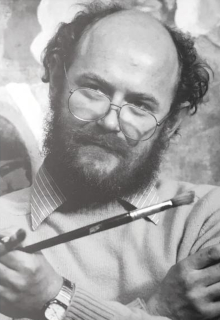
Paul Funge, internationally respected painter and arts enthusiast, dies at Loughlinstown Hospital in the south Dublin suburb of Loughlinstown on February 21, 2011, after a short illness.

A native of Gorey, County Wexford, Funge is a founder of the Project Arts Centre in Dublin and the founder of Gorey Arts Centre in 1970. He is also a founder of the Belltable Arts Centre in Limerick while the regional arts officer for the midwest. In addition, he establishes the Gorey Arts Festival, a three-week summer arts festival, and runs it for more than fifteen years. He is remembered as the man who brought U2 to play at the Gorey Arts Festival in the days before they became an international success.

A painter of portraits and landscapes, Funge teaches art in many schools including Clongowes Wood College and Newbridge College. He also lectures at the National College of Art and Design (NCAD), the University of California, and Kunsthistorisch Instituut in Amsterdam. He is also an inspector for art in the Department of Education for a number of years.

As a portrait artist Funge’s sitters included U2’s Adam Clayton, Frank McGuinness and Colm Tóibín as well as many ministers and academics.

Funge suffers a fall before Christmas 2010, badly fracturing his leg and he is admitted to St. Vincent’s Hospital. On January 6, he transfers from Vincent’s to recuperate at a nursing home in Bray. In early February he takes a turn and develops chest problems. His condition deteriorates and he is admitted to the ICU in Loughlinstown Hospital. Initially he appears to be making a reasonable recovery, but his condition deteriorates again in the days prior to his death.

Following Funge’s death, Eamon Carter, director of Gorey School of Art, pays tribute to him as a visionary who felt passionate about decentralising the arts to areas outside of Dublin.

Carter adds that it had just been announced that the Gorey School of Art is linking up with NCAD to provide a masters in fine arts and it is sad that in the week it receives such good news it also receives the sad news of Funge’s death. “I’m saddened that he wasn’t here to see that because he would have been chuffed obviously,” he said.


Leave a comment

Death of Irish Artist John Butler Yeats

john-butler-yeats

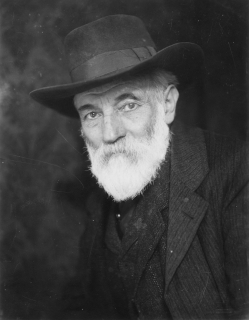
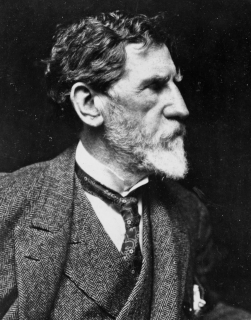
John Butler Yeats, Irish artist and the father of William Butler Yeats, Lily Yeats, Elizabeth Corbett Yeats and Jack Butler Yeats, dies in New York City on February 3, 1922. The National Gallery of Ireland holds a number of his portraits in oil and works on paper, including one of his portraits of his son William, painted in 1900. His portrait of John O’Leary (1904) is considered his masterpiece.

Yeats is born on March 16, 1839, in Lawrencetown, County Down, in what is now Northern Ireland. His parents are William Butler Yeats (1806–1862) and Jane Grace Corbert. He is the eldest of nine children. Educated in Trinity College Dublin and a member of the University Philosophical Society, Yeats begins his career as a lawyer and junior assistant briefly with Isaac Butt before he takes up painting in 1867 and studies at the Heatherley School of Fine Art.

Yeats marries Susan Pollexfen (13 July 1841 – 3 January 1900) on September 10, 1863, at St. John’s Church in Sligo. Susan Yeats is dismayed when her husband abandons the study of law to become an artist. She is described as a “shadowy figure” who goes “quietly, pitifully, mad.” They have six children: William Butler Yeats, Susan Mary “Lily” Yeats, Elizabeth Corbett “Lolly” Yeats, Robert Corbet Yeats, John “Jack” Butler Yeats and Jane Grace Yeats.

There are few records of his sales, so there is no catalogue of his work in private collections. It is possible that some of his early work may have been destroyed by fire in World War II. It is clear that he has no trouble getting commissions as his sketches and oils are found in private homes in Ireland, England and the United States. His later portraits show great sensitivity to the sitter. However, he is a poor businessman and is never financially secure. He moves frequently and shifts several times between England and Ireland.

In 1907, at the age of 68, he travels to New York aboard the RMS Campania, with his daughter Lily, and never returns to Ireland. In October 1909 he moves into his final home, a boarding house run by the Petitpas sisters which is located at 317 West Twenty-Ninth Street. In New York, he is friendly with members of the Ashcan School of painters.

John Butler Yeats dies in the boarding house on February 3, 1922. Edmund Quinn makes a death mask which is now in the collection of the Yeats Society in Sligo. Yeats is buried in Chestertown Rural Cemetery in Chestertown, New York, next to his friend, Jeanne Robert Foster.


Leave a comment

Birth of Sculptor John Hughes

john-hughes

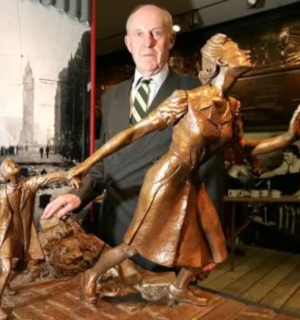
John Hughes, Irish sculptor, is born in Dublin on January 30, 1865.

Hughes is educated at North Richmond Street CBS. He enters the Metropolitan School of Art in Dublin in 1878 and trains as a part-time student for ten years. In 1890 he wins a scholarship to the South Kensington School of Art in London, after which another scholarship takes him to Paris, France. He then studies further in Italy.

Hughes is appointed as teacher to the Metropolitan School of Art in Dublin in 1894 and in 1902 becomes Professor of Sculpture in the Royal Hibernian Academy School. His last residence in Dublin is at 28 Lennox Street, Portobello.

From 1903 Hughes lives in Italy and in France, dying in Nice in 1941.

Hughes’s influences are mainly from the Italian Renaissance and include:


Leave a comment

Death of Architect Michael Scott

michael-scott

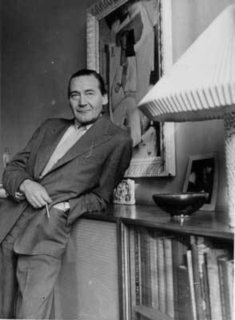
Michael Scott, Irish architect whose buildings include the Busáras building in Dublin, Cork Opera House, the Abbey Theatre and both Tullamore and Portlaoise Hospitals, dies on January 24, 1989.

Scott is born in Drogheda on June 24, 1905. His family originates in the province of Munster. His father, William Scott, is a school inspector from near Sneem on the Iveragh Peninsula in County Kerry. His mother is from County Cork. He is educated at Belvedere College in Dublin. There he first demonstrates his skills at painting and acting. Initially he wants to pursue a career as a painter, but his father points out that it might make more financial sense to become an architect.

Scott becomes an apprentice for the sum of £375 per annum to the Dublin architectural firm Jones and Kelly. He remains there from 1923 until 1926, where he studies under Alfred E. Jones. In the evenings after work, he also attends the Metropolitan School of Art and the Abbey School of Acting, and appears in many plays there until 1927, including the first productions of Seán O’Casey’s Juno and the Paycock and The Plough and the Stars. On completing his pupilage, he becomes an assistant to Charles James Dunlop and then has a brief spell as an assistant architect in the Office of Public Works.

In 1931 Scott partners with Norman D. Good to form Scott and Good, and they open an office in Dublin. They design the hospital at Tullamore (1934–1937) and Portlaoise General Hospital (1935). Between 1937 and 1938, he is the President of the Architectural Association of Ireland (AAI). He founds his company, Michael Scott Architects, in 1938. That same year he also designs his house Geragh, at Sandycove, County Dublin.

Scott’s most important pre-war commission is the Irish Pavilion for the 1939 New York World’s Fair. He produces a shamrock shaped building constructed in steel, concrete and glass. It is selected by an international jury as the best building in the show. As a result, he is presented with a silver medal for distinguished services and given honorary citizenship of the city of New York by then Mayor Fiorello H. La Guardia. Other better-known architects who design national pavilions for this World Fair include Alvar Aalto of Finland and Oscar Niemeyer of Brazil.

Scott has three major commissions from the Córas Iompair Éireann CIÉ, the Inchicore Chassis Works, the Donnybrook Bus Garage and, most famously, the Dublin Central Bus Station, to be known as àras Mhic Dhiarmada or Busáras. Though initially controversial, Busáras wins Scott the Royal Institute of the Architects of Ireland Triennial Gold Medal for Architecture.

Later, Ronnie Tallon and Robin Walker become partners, and the firm is renamed Scott Tallon Walker in 1975, shortly after the firm wins the Royal Institute of British Architects (RIBA) Royal Gold Medal.

Scott, who spends most of his life living at Sandycove Point, just south of Dún Laoghaire in south Dublin, dies in Dublin on January 24, 1989, and is buried near Sneem in County Kerry.


Leave a comment

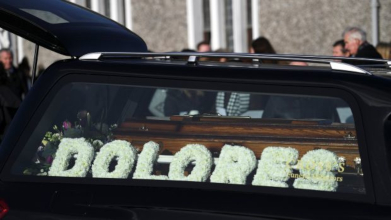
Funeral Mass of Dolores O’Riordan

dolores-o-riordan-funeral

The voice of The Cranberries singer Dolores O’Riordan fills a rural church at the funeral mass in her hometown of Ballybricken, County Limerick on Tuesday, January 23, 2018. A duet of Ave Maria sung by O’Riordan and Luciano Pavarotti marks the start of the service in the Church of Saint Ailbe. The 46-year-old is found dead in a London hotel room on January 15, 2018.

Hundreds of people gather at the rural church to say goodbye to a singer renowned for her distinctive voice. The Cranberries enjoyed huge success in the 1990s with tracks including “Zombie” and “Linger.” O’Riordan, who was also a member of alternative rock group D.A.R.K., had been working on a new studio album with The Cranberries in the months before her death. Her boyfriend and fellow D.A.R.K. band member Olé Koretsky is among the mourners. Her three children – Taylor, Molly and Dakota – join the singer’s mother Eileen, her sister Angela and brothers Terence, Brendan, Donal, Joseph and PJ in the small parish church. Her former husband Don Burton is also in attendance.

At the outset of the mass, symbols associated with O’Riordan’s life are brought to the altar. Her niece Eileen and a long-time friend bring forward a guitar and a platinum disc award. A picture of Our Lady of Dolours, after whom Dolores is named, is placed at the altar, as is a book of poetry.

In his homily, Canon Liam McNamara recalls meeting the young O’Riordan in 1989 when she was singing and playing the keyboard in the church. “She did have a unique respect for everybody,” he said. “Coupled with that respect, her kind, loving and generous heart made her a source of great hope to the Church, during its stormy years. For that we sincerely thank her from our hearts.”

During Communion, O’Riordan’s version of the hymn “Panis Angelicus” is played in the church. Archbishop of Cashel and Emly Kieran O’Reilly says, “Since we heard of the sudden death of Dolores O’Riordan, many hearts in Ireland and around the world are heavy with sadness on hearing the news.”

“Indeed, the great outpouring of sympathy and love for Dolores which we have seen since her death is a witness and a tribute to her great musical talent and very special voice by her many fans and lovers of music. “Dolores put her God-given talents at the service of others.”

Archbishop O’Reilly hails O’Riordan’s voice as “unique, far reaching and distinctly Irish. Her gifts have resonated in the lives of many and will continue to do so as her music and her songs will continue to be played and listened to.”

At the close of the service, The Cranberries’ song “When You’re Gone” rings around the church as the singer’s coffin is carried to the adjacent Caherelly Cemetery for a private burial service. Mourners break into a spontaneous round of applause.

On Monday evening, tea light candles light the streets as family and close friends accompany O’Riordan’s remains to the church from Cross’s Funeral Home in Ballyneety. President of Ireland Michael D. Higgins pays his condolences to the singer’s family earlier in the day and signs a book of condolence. “It was very important to pay tribute to the contribution Dolores made,” says Higgins. “It is so moving, so profoundly sad, that somebody so young is taken from us. She was a star that shone bright from the very beginning,” he adds.

(From: “Voice of Dolores O’Riordan fills church at her funeral,” The Irish Times, January 23, 2018)


Leave a comment

Birth of Actor Charles John Kean

charles-john-kean

Charles John Kean, Irish actor and son of actor Edmund Kean, is born in Waterford, County Waterford on January 18, 1811.

After preparatory education at Worplesdon and at Greenford, near Harrow, Kean is sent to Eton College, where he remains for three years. In 1827, he is offered a cadetship in the East India Company‘s service, which he is prepared to accept if his father would settle an income of £400 on his mother. The elder Kean refuses to do this, so he determines to become an actor. He makes his first appearance at Drury Lane on October 1, 1827 as Norval in John Home‘s Douglas, but his continued failure to achieve popularity leads him to leave London in the spring of 1828 for the provinces. In Glasgow, on October 1 of that year, father and son act together in Arnold Payne’s Brutus, the elder Kean in the title role and his son as Titus.

After a visit to the United States in 1830, where he is received with much favour, Kean appears in 1833 at Covent Garden as “Sir Edmund Mortimer” in George Colman‘s The Iron Chest, but his success is not pronounced enough to encourage him to remain in London, especially as he has already won a high position in the provinces. In January 1838, however, he returns to Drury Lane, and plays Hamlet with a success which gives him a place among the principal tragedians of his time. He marries the actress Ellen Tree (1805-1880) on January 25, 1842, and pays a second visit to the United States with her from 1845 to 1847.

Returning to England, Kean enters on a successful engagement at the Haymarket Theatre, and in 1850, with Robert Keeley, becomes lessee of the Princess’s Theatre, London. The most noteworthy feature of his management is a series of gorgeous Shakespearean revivals that aim for “authenticity.” He also mentors the young Ellen Terry in juvenile roles. In melodramatic parts such as the king in Dion Boucicault‘s adaptation of Casimir Delavigne‘s Louis XI, and Louis and Fabian dei Franchi in Boucicault’s adaptation of Alexandre Dumas‘s The Corsican Brothers, his success is complete. In 1854 the writer Charles Reade creates a play The Courier of Lyons for Kean to appear in, which becomes one of the most popular plays of the Victorian era.

From his “tour round the world” Kean returns to England in 1866 in broken health, and dies at the age of 57 in London on January 22, 1868. He is buried in All Saints Churchyard, Catherington, East Hampshire district, Hampshire.


Leave a comment

Birth of Playwright Thomas Cornelius Murray

thomas-cornelius-murray

Thomas Cornelius Murray, Irish dramatist who is closely associated with the Abbey Theatre, is born in Macroom, County Cork on January 17, 1873.

Murray is educated at St. Patrick’s Teacher Training College in Drumcondra, Dublin. He works as a schoolteacher and in 1900 is appointed headmaster of the national school in Rathduff, County Cork. His first play, The Wheel of Fortune, is produced in 1909 by the Little Theatre in Cork, a theatre he had co-founded with Daniel Corkery, Con O’Leary and Terence MacSwiney. The play is revised and renamed Sovereign Love in 1913. In 1915, he moves to Dublin as headmaster of the Model Schools at Inchicore, where he remains until his retirement from teaching in 1932.

Murray’s play Birthright is performed in the Abbey Theatre in 1910 and establishes him as a writer of force. In all, he writes fifteen plays, all of which are produced by the Abbey. His two most highly regarded works are Maurice Harte (1912) and Autumn Fire (1924). Both of these and Birthright are performed in New York City on Broadway, with Autumn Fire having a run of 71 performances. He also writes an autobiographical novel Spring Horizon (1937).

It has been stated both by A. DeGiacomo and by R. Allen Cave that, in the Art competitions at the 1924 Summer Olympics in Paris, France, Murray is awarded a bronze medal for his play Birthright. However, according to the official record for the games, although Murray is a participant in the literature category with this play and also with Maurice Harte, he does not win a medal.

T. C. Murray dies in Dublin on March 7, 1959.


Leave a comment

Death of Padraic Colum, Poet & Novelist

padraic-colum

Padraic Colum, Irish-born American poet, novelist, biographer, playwright, and children’s author whose lyrics capture the traditions and folklore of rural Ireland, dies in Enfield, Connecticut on January 11, 1972. He is one of the leading figures of the Irish Literary Revival.

Colum was born on December 8, 1881, in Columcille, County Longford, the first of eight children born to Patrick and Susan Columb. In 1892, the family moves to Glasthule, near Dublin and he attends the local national school. He starts writing after he finishes school and meets a number of the leading Irish writers of the time, including W. B. Yeats, Lady Gregory and Æ. He also joins the Gaelic League and is a member of the first board of the Abbey Theatre. He becomes a regular user of the National Library of Ireland, where he meets James Joyce and the two become lifelong friends.

Influenced by the literary activity of the Celtic revival centered in Dublin at the turn of the century, Colum publishes the collection of poetry Wild Earth (1907). He co-founds The Irish Review in 1911, then three years later settles permanently in the United States. His varied literary output includes volumes of poetry including Dramatic Legends (1922) and Creatures (1927), plays such as Broken Soil (first performed 1903) and The Land (1905), novels, anthologies of folklore and children’s books. The reminiscence Our Friend James Joyce (1959) is written with his wife Mary (Maguire), a well-known literary critic.

The Colums spent the years from 1930 to 1933 living in Paris and Nice, where Padraic renews his friendship with James Joyce and becomes involved in the transcription of Finnegans Wake. After their time in France, the couple moves to New York City, where they do some teaching at Columbia University and City College of New York. He is a prolific author and publishes a total of 61 books, not counting his plays. While in New York, he writes the screenplay for the 1954 stop-motion animated film Hansel and Gretel: An Opera Fantasy. It is his only screenplay.

Mary dies in 1957, and Colum completes Our Friend James Joyce, which they had worked on together. It is published in 1958. He divides his later years between the United States and Ireland. In 1961 the Catholic Library Association awards him the Regina Medal.

Padraic Colum dies on January 11, 1972, at the age of 90, in Enfield, Connecticut. He is buried in St. Fintan’s Cemetery in Sutton, Dublin.


Leave a comment

Birth of Painter Harry Aaron Kernoff

harry-aaron-kernoffHarry Aaron Kernoff, Irish painter of London/Russian extraction, is born in London on January 10, 1900. He is primarily remembered for his sympathetic interest in Dublin and its people.

Kernoff’s family moves to Dublin when he is 14 years old where he ultimately becomes a leading figure in Irish modernism. He studies drawing and painting during night classes at the Metropolitan School of Art. In 1923, he wins the Taylor Scholarship and becomes a full-time art student. During his studies he meets and is encouraged by fellow artists Patrick Tuohy (1894-1930), Seán Keating (1889-1977), and Maurice MacGonigal (1900-79).

Influenced by Keating, he paints the Irish landscape, genre scenes, portraits, street and pub scenes, as well as Dublin landmarks with sympathy and understanding. This is particularly evident in his woodcuts. While living in his adopted Dublin Jewish community he produces picture illustrations of his local scenes for a neighbourhood writer and friend Nick Harris for his book entitled Dublin’s Little Jerusalem.

In 1930, Kernoff visits the Soviet Union as part of an Irish delegation from the friends of Soviet Russia led by Hanna Sheehy-Skeffington. While visiting, he is influenced by the Association of Artists of Revolutionary Russia. He is famously associated with Davy Byrne’s pub. His paintings and woodcuts of Davy Byrne’s pub are documents of his friendship with the original owner.

Kernoff spends the vast majority of his life unappreciated, and makes little or nothing from his paintings until a few years before his death, when he begins to be appreciated by contemporary critics. He never marries.

Outside his home in Dublin, where he lives with two unmarried sisters, there is a long-standing sign in the front garden which says “… Descendants of the Abravanels…” The Abravanel (or Abrabanel) family is one of the most famous Sephardic Jewish families in history, noted for their large quotas of Rabbis, scholars, and members of a variety of scientific and artistic fields, dating from about the 13th century in Lisbon. The emergence of the famous philosopher and scholar Don Isaac Abravanel in the middle of the 16th century brings his works to greater universal recognition.

Kernoff dies in Dublin on December 25, 1974.

(Pictured: Portrait of Harry Aaron Kernoff, Oil on Canvas by John F. Kelly)


Leave a comment

Birth of Maureen Potter, Actor & Comedienne

maureen-potter

Maria Philomena Potter, singer, actor, comedian and performer known as Maureen Potter, is born on January 3, 1925 in Fairview, Dublin.

Potter is educated at St. Mary’s school in Fairview. She has a long career in Irish theatre, mainly as Ireland’s première comedienne, but also as a straight actress. She first appears professionally with Jimmy O’Dea in pantomime and appears frequently on television and in cabaret. She is a regular performer at the Gaiety Theatre in Dublin and for many years stars in Christmas pantomime. She becomes the first star to have a bronze cast of her handprints outside the theatre. She marries Jack O’Leary in 1959, an Irish army officer whom she had first met in 1943, and he writes most of her comedic material.

Among Potter’s many dramatic roles in the theatre is that of Maisie Madigan in Juno and the Paycock. While still a teenager, she tours abroad before World War II as a singer and dancer with Jack Hylton and his orchestra. On a tour of Germany, they once perform in front of Adolf Hitler and other Nazis. She plays the role of Dante Riordan in Joseph Strick‘s film, A Portrait of the Artist as a Young Man (1977). In September 1938, she appears on the BBC Television Service with Jack Hylton and his band. Film of her performance is held by the Alexandra Palace Television Society. In 2001, the Archivist of the Alexandra Palace Television Society gives Potter a copy of her 1938 television appearance.

Potter is conferred with the Freedom of the City of Dublin in 1984, and is later awarded an honorary degree from Trinity College, Dublin. She dies in her sleep at her home in Clontarf on April 7, 2004, at the age of 79. She is survived by her husband Jack O’Leary, and her sons John and Hugh.