She Stoops to Conquer is a stage play in the form of a comedy of manners, which ridicules the manners of a certain segment of society, in this case the upper class. The play is also sometimes termed a drawing room comedy. The play uses farce, including many mix-ups, and satire to poke fun at the class-consciousness of eighteenth-century Englishmen and to satirize what Goldsmith calls the “weeping sentimental comedy so much in fashion at present.”
Most of the play takes place in the Hardcastle mansion in the English countryside, about sixty miles from London during the eighteenth century. The mansion is an old but comfortable dwelling that resembles an inn. A brief episode takes place at a nearby tavern, The Three Pigeons Alehouse.
She Stoops to Conquer is a favourite for study by English literature and theatre classes in the English-speaking world. It is one of the few plays from the 18th century to have retained its appeal and continues to be performed regularly. The play has been adapted into a film several times, including in 1914 and 1923. Initially the play was titled Mistakes of a Night and the events within the play take place in one long night. In 1778 John O’Keeffe wrote a loose sequel, Tony Lumpkin in Town.
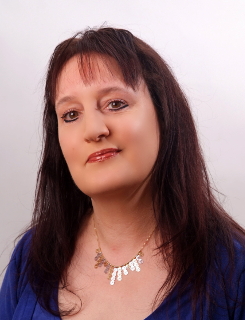
Irish composerGráinne Mulvey is born on March 10, 1966, in Dún Laoghaire, County Dublin. Her music is timbrally and rhythmically complex — a legacy of her work in the electroacoustic field. Her microtonally-inflected language derives ultimately from the natural harmonic series, placing her somewhat in the spectral tradition.
Mulvey is appointed as one of the Course Directors of the IMRO Summer School of Composition in 2014. In 2001, 2010 and 2011, she was on the adjudicator’s panel for the Guido d’Arezzo Composers’ Composition Competition in Italy. She has curated concerts for the Contemporary Music Centre, Ireland in 2011 and 2012, the Association of Irish Composers in May 2016 and a retrospective concert of her work at The Carlow Arts Festival in June 2016.
Mulvey’s music has been widely performed both in Ireland and abroad and her works have been broadcast by radio stations across the globe. One of her earliest works Étude, for piano (1994), is selected for that year’s International Rostrum of Composers in Paris, an honour that is to be repeated with 2004’s orchestral work Scorched Earth, and in 2015 with Diffractions for orchestra, in Slovenia. She is a featured composer in the 2007 Horizons concert series, with the RTÉ National Symphony Orchestra, conductor Robert Houlihan, performing three of her orchestral works. She has the distinction of being selected for the ISCM World Music Days in consecutive years with Akanos (Vilnius, Lithuania, 2008 and Växjö, Sweden, 2009).
In April 2010, Mulvey is elected to membership of Aosdána, the State-recognised affiliation of creative artists in Ireland. A CD Akanos & Other Works, dedicated to her recent work, is released in February 2014 on the Navona label.
Whelan is best known for composing a piece for the interval of the 1994 Eurovision Song Contest. The result, Riverdance, is a seven-minute display of traditional Irish dancing that becomes a full-length stage production and spawns a worldwide craze for Irish dancing and Celtic music and also wins him a Grammy Award. It is released as a single in the United Kingdom in 1994, credited to “Bill Whelan and Anúna featuring the RTÉ Concert Orchestra.” It reaches number 9 and stays in the charts for 16 weeks. The album of the same title reaches number 31 in the album charts in 1995. He also composes a symphonic suite version of Riverdance, with its premiere performed by the Ulster Orchestra on BBC Radio 3 in August 2014.
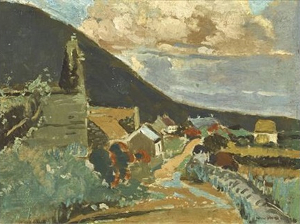
Nano Reid, Irish landscape artist, figure painter and portraitist, is born in Drogheda, County Louth on March 1, 1900. An individual, expressionistic artist, Reid is acknowledged to be one of the finest Irish woman painters of twentieth-century visual art in Ireland. Her works are represented in many public collections throughout Ireland.
In 1920, Reid wins a scholarship to study fine art painting and drawing at the Dublin Metropolitan School of Art, now the National College of Art and Design, under Harry Clarke. At the time, she is, in the words of fellow student Hilda van Stockum, “a fierce redhead…uncompromising and looking for truth.” In 1925 she starts showing at the Royal Hibernian Academy (RHA), submitting a total of 42 canvases until the late 1960s.
In 1950, with Norah McGuinness, Reid represents Ireland at the Venice Biennale. This is followed by the Exhibition of Contemporary Irish Art in Aberystwyth, Wales (1953), and the Mostra Internazionale di Bianco e Nero in Lugano, Switzerland (1956), the Guggenheim International Award Exhibition in New York City (1960) and the Twelve Irish Painters show in New York City (1963). In 1974, the Arts Council and the Arts Council of Northern Ireland stage a major retrospective of Reid’s artworks.
Nano Reid dies in Drogheda in 1981. Retrospectives are held at Taylor Galleries in Dublin (1984), Droichead Arts Centre in Drogheda (1991), and at Linenhall Arts Centre in Castlebar, County Mayo (1999).
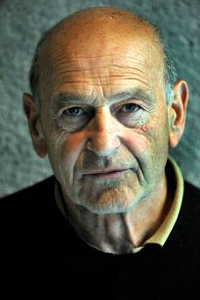
Murphy attends the local Archbishop McHale College and later becomes a metalwork teacher. He begins writing in the late 1950s, saying, “In 1958, my best friend said to me, why don’t we write a play? I didn’t think it was an unusual question, because in 1958 everyone in Ireland was writing a play.” His second play, A Whistle in the Dark, is written in his Tuam kitchen on his free Friday and Saturday nights. It is entered into a competition for amateur plays, which it wins, and is eventually performed at the Theatre Royal Stratford East in London in 1961. It causes considerable controversy both there and in Dublin when it is later given its Irish premiere at the Abbey having initially been rejected by its artistic director.
Though Murphy is religious as a boy, education by the Christian Brothers leaves him largely irreligious. His 1975 play The Sanctuary Lamp is produced in the Abbey Theatre and receives a hostile reception due to its anti-Catholic nature, with theatregoers walking out and much negative criticism in the media.
Considered by many to be Ireland’s greatest living playwright, a title also often given to Brian Friel prior to his death in 2015, Murphy is honoured by the Abbey Theatre in 2001 by a retrospective season of six of his plays. His plays include the historical epic Famine (1968) which deals with the Irish Potato Famine between 1846 and spring 1847, the anti-clerical The Sanctuary Lamp (1975), The Gigli Concert (1983) and for many his masterpiece, the lyrical Bailegangaire and the bar-room comedy Conversations on a Homecoming (both 1985).
Murphy’s work is characterised by a constant experimentation in form and content from the apparently naturalistic A Whistle in the Dark to the surreal The Morning After Optimism and the spectacularly verbal The Gigli Concert. Recurring themes include the search for redemption and hope in a world apparently deserted by God and filled with suffering. Although steeped in the culture and mythology of Ireland, Murphy’s work does not trade on familiar clichés of Irish identity, dealing instead with Dostoyevskian themes of violence, nihilism and despair while never losing sight of the presence of laughter, humour and the possibilities of love and transcendence.
Delia Murphy Kiernan, singer and collector of Irish ballads, is born on February 16, 1902, in Ardroe, Roundfort, County Mayo. She records several 78 rpm records in the 1930s, 1940s and 1950s. In 1962 she records her only LP, The Queen of Connemara, for Irish Prestige Records, New York, on the cover of which her name appears alongside the LP title.
Delia’s father, John Murphy, from nearby Hollymount, makes his fortune in the Klondike Gold Rush. While in America, he marries Ann Fanning from Roscrea, County Tipperary. They return to Ireland in 1901 and purchase the large Mount Jennings Estate in Hollymount. John encouraged Delia’s interest in singing ballads from a young age. He also allows Irish travelers to camp on the estate. According to her own account, she learns her first ballads at their campfires.
Delia is educated at Presentation Convent in Tuam, Dominican College in Dublin and University College Galway (UCG), where she graduates with a Bachelor of Commerce degree. In UCG she meets Dr. Thomas J. Kiernan, and they marry in 1924, on her 22nd birthday. Kiernan then joins the Irish diplomatic service, where his first posting is to London. While there Delia sings at many venues including many gatherings of Irish emigrants and becomes quite well-known. In 1939 she records The Blackbird, The Spinning Wheel and Three Lovely Lassies for HMV.
In 1941 Kiernan is appointed Irish Minister Plenipotentiary to the Holy See in Rome. The Irish legation is the only English-speaking legation to remain open after the United States enters World War II. Delia becomes one of those who assist Hugh O’Flaherty in hiding Jews and escapes allied soldiers from the Nazis. In 1943, when Italy changes sides, many escaped POWs are helped by the legation to leave Italy. In 1946 she is awarded to Dame Commander of the Equestrian Order of the Holy Sepulchre.
Kiernan later serves as Irish High Commissioner and later first Ambassador in Australia, and later to West Germany, Canada, and the United States. In 1961, while she is living in Ottawa, Delia makes the recording of The Queen of Connemara produced by Ken Goldstein. The Kiernans purchase a farmhouse in Jasper, Ontario, near the Rideau Canal where she spends most of her time, even after Kiernan is posted to Washington, D.C. Tom Kiernan dies in December 1967.
By 1969 Delia’s health is in decline. In November of that year, she sells her farmhouse in Canada and returns to Ireland. She lives in a cottage in Strawberry Beds, Chapelizod, County Dublin. She dies of a massive heart attack on February 11, 1971, five days before her 69th birthday. She records upwards of 100 songs during her lifetime.
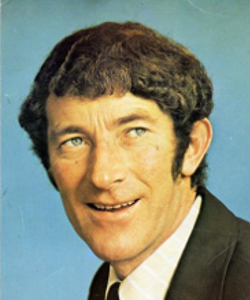
Cunningham grows up in the townland of Clooneen in a farming family of seven children. After leaving school at the age of 16 he goes to England and works as a carpenter, playing Irish traditional music and gaelic football during his spare time. In 1958 he returns to Ireland. Still working as a carpenter, he soon joins the part-time Gowna-based Grafton Showband, but leaves it in 1961 to become fully professional as the lead singer of the Mighty Avons, based in Cavan. That band initially specialises in covers of Jim Reeves songs and similar country material.
The band’s first taste of fame comes when they are supporting Jim Reeves during the Irish leg of his European tour in 1963. When Reeves walks off the stage during a concert in Lifford in protest at the poor condition of the supplied piano, the Avons, as they later become popularly called, takes over and entertains the crowd, to much subsequent publicity and acclaim.
In December 1964, Cunningham and the Mighty Avons have a Top-10 hit with the song Tribute to Jim Reeves, which also enters the British charts and is played on Top of the Pops, both firsts for an Irish artist, which further boosted their career. Their major hit is Lovely Leitrim in September 1965, which stays at number one in the charts for four weeks. As well as regularly touring Ireland to large crowds, the Avons make many appearances on television, and often played in Britain, the United States, and other places.
In late 1969, Cunningham leaves the Mighty Avons and merges with Edenderry band The Fairways to form Larry Cunningham and the Country Blue Boys, leaving Gene Stuart to front the Avons. He continues having success with his new band, but after his marriage to Beatrice Nannery in February 1972 he gives up regular touring in favour of occasional concerts and recording. He continues to have top-10 hits until the mid-1970s, and still performs occasionally for the remainder of his life. In recent years, audio and video compilations of his music have been released, as well as a biography.
Larry Cunningham dies in Dublin on September 28, 2012, following a lengthy illness. Among those to pay tribute are U.S. country singer Robert Mizzell who says, “I am so saddened to hear of the passing of country legend Larry. I admired his talent and quick humour. My thoughts are with his family, friends, and the fans who loved the big deep voice that rattled the radio waves.”
Three Studies for a Portrait of Lucian Freud, which is painted in 1964 and shows Bacon’s friend and fellow artist with a variety of facial expressions, creates a buzz before the sale. The question is not if it will make its pre-sale estimate of £7 – £9 million, but how much higher might it possibly go.
More than 10 bidders from four different continents compete for the work. After seven minutes of bidding, it reaches £20.5 million and a hopeful telephone bidder asks if £20.6 million can be offered. The auctioneer, Tobias Meyer, insists on £21 million. There is applause as he finally bangs his hammer.
Cheyenne Westphal, the auction house’s chairman of contemporary art in Europe, says, “This striking painting has everything a collector in the current market is looking for. It is an artwork that radiates ‘wall-power’ with its brilliant colour and dramatic brushstrokes.”
The triptych has been in the same private collection for nearly 50 years and is a testament to the close friendship of two of the titans of 20th century British art. This triptych, Sotheby’s says, contains an “intensity and intimacy that is rarely seen elsewhere.”
Bacon, who dies in 1992, and Freud are kindred spirits, close friends who often see each other every day. They gamble together, drink in the same Soho dens and paint each other.
At the same auction, Salvador Dalí‘s Portrait of Paul Eluard sells for £13.5 million, at a stroke tripling the record auction price for a Dali set at Christie’s on the previous Wednesday, and becoming the most expensive surrealist artwork sold at any auction.
The paintings are part of a truly wondrous private collection. The sale of 60 works from it also includes paintings by Amedeo Modigliani, Alberto Giacometti, Marc Chagall and Joan Miró. There are many gems, including a tiny 12.5 by 9.5 cm Lucian Freud self-portrait that he painted in Jamaica while visiting Ian Fleming at his house, Goldeneye. It sells for £3.3 million.
(Credit: Mark Brown, Arts Correspondent, The Guardian, Feb. 10, 2011)
Edward Martyn, Irish playwright and early republican political and cultural activist, is born in County Galway on January 30, 1859. He serves as the first president of Sinn Féin from 1905 to 1908.
Martyn is the elder son of John Martyn of Tullira Castle, Ardrahan and Annie Mary Josephine (née Smyth) of Masonbrook, Loughrea, both of County Galway. He is educated at Belvedere College, Dublin, and Wimbledon College, London, both Jesuit schools, after which he enters Christ Church, Oxford in 1877, but leaves without taking a degree in 1879. His only sibling, John, dies in 1883.
Martyn begins writing fiction and plays in the 1880s. While his own output is undistinguished, he acquires a well-earned reputation as a noted connoisseur of music, both European classical and Irish traditional. He is a fine musician in his own right, giving memorable performances for guests on an organ he has installed at Tullira. He uses his wealth to benefit Irish culture.
Martyn is reportedly pivotal in introducing William Butler Yeats and Lady Gregory to each other in 1896. The three found the Irish Literary Theatre, for whom Martyn writes his best and most popular plays, The Heather Field and A Tale of a Town. He covers the costs of the company’s first three seasons, which proves crucial to establishing the company and the future of the Abbey Theatre. He later parts ways with Yeats and Gregory, something he later regrets, but remains on warm terms with Lady Gregory until the end of his life.
Martyn is a cousin and friend to George Moore (1852–1933). The two make frequent trips all over Europe, where Moore influences Martyn’s views on modern art, which result in the latter purchasing several works by Edgar Degas, Claude Monet, Jean-Baptiste-Camille Corot and Kitagawa Utamaro, all later donated to the National Gallery of Ireland. Moore does not share Martyn’s fenian ideas nor espousal of violent means to achieve national sovereignty. Their different political opinions eventually drive their friendship apart.
Martyn is descended from Richard Óge Martyn, a leading Irish Confederate, and Oliver Óge Martyn, a Jacobite who fights in the Williamite War in Ireland. Yet by his lifetime, the family are unionists. Martyn’s outlook begins to change in the 1880s after studying Irish history, as well as living through the events of the Irish Land War. He comes out as an Irish republican when he famously refuses to allow “God Save The Queen” to be sung after a dinner party at Tullira. By this stage he is involved with the political work of Maude Gonne and Arthur Griffith and is a vocal opponent of the visit of Queen Victoria to Ireland in 1897. He also protests the visit by Edward VII in 1903, this time as chairman of the People’s Protection Committee. He is the first president of Sinn Féin from 1905 to 1908. In 1908 he resigns from the party and politics in general to concentrate on writing and his other activities.
Martyn dies at Tullira on December 5, 1923, after years of ill health. Friends and family are shocked at a provision in his will that directs that his body be donated for the use of medical science and, after dissection, be buried in an unmarked pauper’s grave. The Palestrina Choir sings at his graveside. He bequeaths his papers to the Carmelites of Clarendon Street in Dublin, who subsequently misplace and lose them. Portraits of Martyn exist by, among others, John Butler Yeats and Sarah Purser. On his death the senior line of the Martyn family dies out. His property is inherited by his cousins, the Smyths of Masonbrook and Lord Hemphill. Tullira is sold by the latter forty years later changing ownership several times since.
Clancy is born into a musical family in the outskirts of Milltown Malbay, County Clare on December 24, 1918. His parents, Gilbert Clancy and Ellen Killeen, both sing and play concertina, and his father also plays the flute. Clancy’s father has been heavily influenced by local blind piper Garret Barry and passes much of Barry’s music on to Willie.
Clancy starts playing the tin whistle at age five, and later takes up the flute. He first sees a set of pipes in 1936 when he sees Johnny Doran playing locally. He obtains his first set of pipes two years later. His influences include Leo Rowsome, Séamus Ennis, John Potts and Andy Conroy. Clancy wins the Oireachtas competition in 1947. Unable to earn a living from music he emigrates to London where he works as a carpenter.
Returning to Milltown Malbay in 1957 he records some influential 78 rpm recordings for the Gael Linn label, among them the classic reel selection “The Old Bush/The Ravelled Hank of Yarn.” The next decades he stayed in Milltown Malbay. He marries Dóirín Healy in 1962.
Willie Clancy dies suddenly at the early age of 55 on January 24, 1973, leaving a great void. Cór Cúl Aodha sings at his funeral mass, just as Clancy had played at Seán Ó Riada’s funeral only a year earlier. Others who take part include Seán Ach Donnchadha, John Kelly and Séamus Ennis. His funeral cortege to Ballard Cemetery is led by pipers from the Tulla Pipe Band.
The Willie Clancy Summer School is established in his honour in 1973, by Clancy’s friends Junior Crehan, Martin Talty, Seán Reid, Paddy Malone, Paddy McMahon, Frankie McMahon, Jimmy Ward, JC Talty, Harry Hughes, Michael O Friel, Séamus Mac Mathúna and Muiris Ó Rócháin. He is also the subject of a major television documentary “Cérbh É? Willie Clancy” on TG4, first broadcast in November 2009. In this programme, one of a series in which major figures in contemporary traditional music, profile and pay homage to a master of their craft from a bygone age, Peter Browne traces the life and legacy of Clancy.
(Photo courtesy of Mick O’Connor, flute player and friend of Willie Clancy)




 A
A 

 seamus dubhghaill