seamus dubhghaill

Promoting Irish Culture and History from Little Rock, Arkansas, USA


Leave a comment

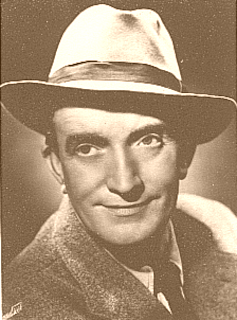
Death of Stage & Film Actor Peter Seamus O’Toole

Peter Seamus O’Toole, British stage and film actor of Irish descent, dies on December 14, 2013, at Wellington Hospital in St. John’s Wood, London, at the age of 81.

O’Toole is born on August 2, 1932, in Leeds, Yorkshire, England. Some sources give his birthplace as Connemara, County Galway. Records from the General Register Office in Leeds confirm that O’Toole is born in the north England town in 1932. He is educated at the Royal Academy of Dramatic Art in London. He is a reporter for the Yorkshire Evening Post in his teens and makes his amateur stage debut at Leeds Civic Theatre. After serving two years in the Royal Navy, he acts with the Bristol Old Vic Company from 1955 to 1958 and makes his London debut as Peter Shirley in George Bernard Shaw’s Major Barbara (1956). He appears with the Shakespeare Memorial Company at Stratford-upon-Avon, Warwickshire, England, in 1960 in highly praised performances as Shylock in The Merchant of Venice and as Petruchio in The Taming of the Shrew, and he plays the lead in Hamlet for the inaugural production of the Royal National Theatre in London in 1963. A prominent film star by this point in his career, he continues to appear on stages throughout the world to great acclaim. He is named associate director of the Old Vic in 1980.

O’Toole makes his motion picture debut in Kidnapped in 1960 and two years later becomes an international star for his portrayal of T.E. Lawrence in David Lean’s epic Lawrence of Arabia (1962). In 1964 he plays Henry II of England in Becket, and he has the title role in Lord Jim (1965). He appears as Henry II again in The Lion in Winter (1968), a film notable for the witty verbal sparring matches between O’Toole and costar Katharine Hepburn. The Ruling Class (1972), a controversial black comedy that has become a cult classic, casts O’Toole as a schizophrenic English earl with a messiah complex.

Personal problems contribute to a decline in his popularity during the 1970s, but he makes a strong comeback in the early 1980s with three well-received efforts. He portrays a duplicitous and domineering movie director in The Stunt Man (1980), and his performance as the Roman commander Lucius Flavius Silva in the acclaimed television miniseries Masada (1981) is hailed as one of the finest of his career. His most popular vehicle during this period is My Favorite Year (1982), an affectionate satire on the early days of television, in which he plays Alan Swann, a faded Errol Flynn-type swashbuckling screen star with a penchant for tippling and troublemaking.

O’Toole subsequently maintains his status with fine performances in such films as the Oscar-winning The Last Emperor (1987), the cult favourite Wings of Fame (1989), and Fairy Tale: A True Story (1997), in which he portrays Sir Arthur Conan Doyle. Notable screen roles in the 21st century included King Priam in the historical epic Troy (2004), an aging romantic in Venus (2006), the voice of a haughty food critic in the animated Ratatouille (2007), and a priest in the historical drama For Greater Glory (2012). In addition, in 2008 he portrays Pope Paul III in the TV series The Tudors.

In 1992 O’Toole publishes a lively memoir, Loitering with Intent: The Child. A second volume, Loitering with Intent: The Apprentice, appears in 1996. He is nominated for an Academy Award eight times — for Lawrence of Arabia, Becket, The Lion in Winter, Goodbye, Mr. Chips (1969), The Ruling Class, The Stunt Man, My Favorite Year, and Venus — but never wins. In 2003 he is awarded an honorary Oscar. He receives an Emmy Award for his performance as Bishop Pierre Cauchon in the television miniseries Joan of Arc (1999).

O’Toole dies on December 14, 2013, at Wellington Hospital in St. John’s Wood, London, at the age of 81. His funeral is held at Golders Green Crematorium in London on December 21, 2013, where his body is cremated in a wicker coffin. His ashes are planned to be taken to Connemara, Ireland. They are kept at the residence of the President of Ireland, Áras an Uachtaráin, by President Michael D. Higgins, an old friend of O’Toole. His family has stated their intention to fulfill his wishes and take his ashes to the west of Ireland.
Leave a comment

Birth of Brian Cleeve, Writer of Novels & Short Stories

Brian Brendon Talbot Cleeve, writer whose published works include twenty-one novels and over a hundred short stories, is born in Southend-on-Sea, Essex, England, on November 22, 1921. He is also an award-winning television broadcaster on RTÉ One.

Cleeve is the second of three sons to Charles Edward Cleeve and his wife Josephine (née Talbot). His father, who was born in Limerick, County Limerick, is a scion of a famous and wealthy family that runs several successful Irish enterprises in the late-nineteenth and early twentieth centuries. His mother is a native of Essex. The Cleeves came from Canada originally and emigrated to Ireland in the mid-nineteenth century. As a result of labour troubles and the effects of the Irish Civil War, the Cleeve business fails, and the family moves to England.

Cleeve’s mother dies in 1924 and his maternal grandparents, Alfred and Gertrude Talbot, take over responsibility for his upbringing. At age eight, he is sent as a boarder to Selwyn House in Kent, followed at age 12 by three years at St. Edward’s School, Oxford. He is by nature a free-thinker and rejects the assumptions and prejudices that are then part of upper-middle class English life. His unwillingness to conform means that school life is very difficult for him. In the late summer of 1938, he decides not to return to St. Edward’s for his final year. Instead, he runs away to sea.

Cleeve leads an eventful life during the next fifteen years. He serves on the RMS Queen Mary as a commis waiter for several months. At age 17 he joins the Queen’s Own Cameron Highlanders as a private soldier, and, because of his age, just misses being sent to Europe as part of the British Expeditionary Force (BEF) when World War II breaks out. In 1940, he is selected for officer training, is commissioned into the Somerset Light Infantry, and sent to Kenya as a second lieutenant in the King’s African Rifles. A year later he is court-martialed as a result of his objections to the treatment by colleagues of an African prisoner. Stripped of his commission and sentenced to three years’ penal servitude, he is transferred to Wakefield Prison in West Yorkshire. There, through the intervention of Sir Alexander Paterson, he is offered parole if he agrees to work for British Intelligence. For the remainder of the war, he serves as a counterspy in neutral ports such as Lisbon and Dublin. As cover, he works as an ordinary seaman in the Merchant Navy.

In 1945, Cleeve takes an Irish passport and comes to Ireland where, in the space of three weeks, he meets and marries Veronica McAdie. A year later, they leave Ireland with baby daughter Berenice on a protracted odyssey that takes them to London, Sweden, the West Indies, and finally South Africa. In 1948, the family settles in Johannesburg where they set up their own perfume business. A second daughter, Tanga, is born to the couple there in 1953. As a result of his friendship with Fr. Trevor Huddleston, he witnesses the conditions in which the black population has to live in townships such as Sophiatown. He becomes an outspoken critic of Apartheid, and, in 1954, he is branded by the authorities as a ‘political intractable’ and ordered to leave South Africa. He returns to Ireland where he lives for the remainder of his life.

Cleeve starts writing poems in his teens, a few of which are published in his school paper, the St. Edward’s Chronicle. During the war he continues to produce poems of a spiritual or metaphysical nature, most of which are never published. In 1945, he turns to novel-writing. After his first two attempts are rejected, his third novel, The Far Hills, is published in 1952. Two further novels about South Africa follow and their unvarnished descriptions of the reality of life for the native population probably contributes to his eventual expulsion from the country.

In the mid-1950s, Cleeve begins to concentrate on the short story form. During the next 15 years over 100 of his short stories are published in magazines and periodicals across five continents. He sells nearly thirty to The Saturday Evening Post alone. In 1966, his story Foxer is honoured with a scroll at the annual Edgar Awards.

During the 1960s and 1970s, Cleeve returns to writing novels with considerable success. He produced a series of well-received mystery and spy thrillers that do not sacrifice character to plot. In 1971, he publishes Cry of Morning, his most controversial and successful novel to date. It is a panoramic depiction of the economic and social changes that affected Ireland during the 1960s as seen through the eyes of a disparate collection of well-drawn characters. He subsequently achieves even greater commercial success, especially in the United States, with a number of historical novels featuring a strong female character as protagonist.

Cleeve also writes several works of non-fiction, principally the Dictionary of Irish Writers. This is a 20-year project to provide to scholars and the general public alike a comprehensive resource on Irish writers at an affordable price. It is a labour of love that consumes a great deal of his time and is effectively subsidised by his more commercial pursuits. The last edition is published in 1985.

On December 31, 1961, Telefís Éireann is launched as the Republic of Ireland‘s first indigenous television station. Cleeve joins the station as a part-time interviewer on the current affairs programme, Broadsheet. Following appearances on two additional programmes, Telefís Éireann does not renew his contract when it expires in 1973.

Following his wife’s death in 1999, Cleeve moves to the village of Shankill, Dublin. His health deteriorates rapidly following a series of small strokes. In November 2001, he marries his second wife, Patricia Ledwidge, and she cares for him during his final months. He suddenly dies of a heart attack on March 11, 2003. His body now lies under a headstone bearing the inscription “Servant of God.”


Leave a comment

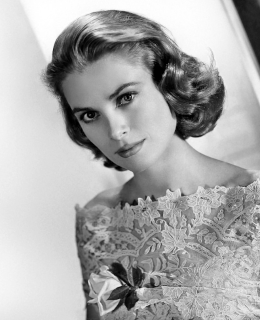
Birth of Grace Kelly, Award Winning Actress & Princess of Monaco

Grace Patricia Kelly, an American Academy Award winning actress, is born into an affluent Catholic family of half Irish and half German descent in Philadelphia, Pennsylvania, on November 12, 1929. After starring in several significant films in the early to mid-1950s, she becomes Princess of Monaco by marrying Prince Rainier III in April 1956.

Kelly’s father, Irish American John B. Kelly, Sr., wins three Olympic gold medals for sculling, and owns a successful brickwork contracting company that is well known on the East Coast. As Democratic nominee in the 1935 election for Mayor of Philadelphia, he loses by the closest margin in the city’s history. In later years he serves on the Fairmount Park Commission and, during World War II, is appointed by President Franklin D. Roosevelt as National Director of Physical Fitness. Her mother, Margaret Majer, has German parents. She teaches physical education at the University of Pennsylvania and is the first woman to coach women’s athletics at Penn. She also models for a time in her youth. After marrying John Kelly in 1924, she focuses on being a housewife until her four children are of school age, following which she begins actively participating in various civic organizations.

Kelly receives her elementary education in the parish of Saint Bridget’s in East Falls. While attending Ravenhill Academy, a reputable Catholic girls’ school, she models fashions at local charity events with her mother and sisters. In 1942, at the age of 12, she plays the lead in Don’t Feed the Animals, a play produced by the Old Academy Players also in East Falls. In May 1947, she graduates from Stevens School, a socially prominent private institution in nearby Chestnut Hill, where she participates in drama and dance programs. Owing to her low mathematics scores, she is rejected by Bennington College in July 1947. Despite her parents’ initial disapproval, she decides to pursue her dreams of becoming an actress.

After graduating from the American Academy of Dramatic Arts in 1949, Kelly begins appearing in New York City theatrical productions and over 40 live drama productions broadcast in early 1950s Golden Age of Television. She gains stardom from her performance in John Ford‘s adventure-romance Mogambo (1953), for which she is nominated for an Academy Award for Best Supporting Actress. She wins the Academy Award for Best Actress for her performance in the drama The Country Girl (1954). Other notable works include the western High Noon (1952), the romance-comedy High Society (1956), and three consecutive Alfred Hitchcock suspense thrillers: Dial M for Murder (1954), Rear Window (1954), and To Catch a Thief (1955). She works with some of the most prominent leading men of the era, including Gary Cooper, Clark Gable, Ray Milland, James Stewart, Bing Crosby, William Holden, Cary Grant, Alec Guinness, and Frank Sinatra.

Kelly retires from acting at age 26 to marry Rainier and begins her duties as Princess of Monaco. Hitchcock hopes that she will appear in more of his films which require an “icy blonde” lead actress, but he is unable to coax her out of retirement. The Prince and Princess have three children: Princess Caroline, Prince Albert, and Princess Stéphanie. Princess Grace retains her link to America by her dual U.S. and Monégasque citizenship. Her charity work focuses on young children and the arts, establishing the Princess Grace Foundation-USA to support local artisans in 1964. Her organization for children’s rights, World Association of Children;s Friends (AMADE), gains consultive status within UNICEF and UNESCO. Her final film contribution is in 1977 to documentary The Children of Theatre Street directed by Robert Dornhelm, where she serves as the narrator. The documentary is nominated for an Academy Award for Best Documentary Feature.

On September 13, 1982, Princess Grace suffers a small stroke while driving back to Monaco from her country home in Roc Agel. As a result, she loses control of her 1971 Rover P6 3500 and drives off the steep, winding road and down the 120-foot mountainside. Her teenage daughter Stéphanie, who is in the passenger seat, tries but fails to regain control of the car. The Princess is taken to the Monaco Hospital (later named the Princess Grace Hospital Centre) with injuries to the brain and thorax and a fractured femur. She dies the following night at 10:55 PM after Rainier decides to turn off her life support. Stéphanie suffers a slight concussion and a hairline fracture of a cervical vertebra and is unable to attend her mother’s funeral.

Princess Grace’s funeral is held at the Cathedral of Our Lady Immaculate in Monaco-Ville, on September 18, 1982. After a Requiem Mass, she is buried in the Grimaldi family vault. Over 400 people attend, including Cary Grant, Nancy Reagan, Danielle Mitterrand, the Princess of Wales, and Empress Farah of Iran.

Rainier, who does not remarry, is buried alongside her after his death in 2005.


Leave a comment

Birth of Joan O’Hara, Actress of Stage, Film & Television

Joan O’Hara, Irish stage, film and television actress, is born in Rosses Point, County Sligo, on October 10, 1930. She is one of Ireland’s most popular actresses and is, at the time of her death, recognisable to television viewers as Eunice Dunstan, a gossip in Fair City on RTÉ One.

O’Hara is born and raised in Rosses Point, the daughter of Major John Charles O’Hara, an officer in the British Corps of Royal Engineers and his wife, Mai (née Kirwan). One of her sisters, Mary (born 1935), is a soprano/harpist. Her brother Dermot (born 1934) now lives with his family in Canada. She attends the same Ursuline convent school as fellow actress and friend Pauline Flanagan.

O’Hara lives most of her life in Monkstown, County Dublin, with a stay in London, with her husband, the poet and architect Francis J. Barry. The couple has four children: Siubhan, Jane, Guy, and Sebastian, an author/playwright, whose works include The Steward of Christendom, and the Booker-shortlisted novels A Long Long Way and The Secret Scripture. She is also a year-round sea-swimmer.

O’Hara is a member of the renowned Abbey Players and performs in many plays in the Abbey Theatre in Dublin, including those by Seán O’Casey, Lady Gregory and W.B. Yeats. She appears as Maurya in the 1988 film The Dawning. She appears in a number of other films, including Ron Howard‘s Far and Away, Da, Footfalls, Home is the Hero and just before her death, How About You. In this her final film, she stars with Vanessa Redgrave and her friend Brenda Fricker. The strength of her performance and bravery in carrying it out is acknowledged by the cast and crew in a standing ovation.

More recently, O’Hara is best known for appearing in the popular Irish television soap opera Fair City, broadcast on RTÉ One. She joins the soap in 1994, portraying the character Eunice Dunstan until her death in 2007. Thus, she is described as both one of Ireland’s most popular actresses and as one of the finest actors of her generation on her death. She admires in particular Samuel Beckett, Federico García Lorca and Ingmar Bergman. While she takes a no-nonsense approach to her craft, famously giving the advice that when in doubt, one should relate to the fireplace, she is educated at the Abbey School of Acting and has a deep appreciation and knowledge of theoretical approaches to acting and is an admirer of the European and American avant-garde. As actor Alan Stanford said after her death, “She had the most amazing energy. She was in the truest sense one of the last of the greats.”

Joan O’Hara Barry (she keeps her maiden name as her stage name) dies in Dublin on July 23, 2007, of complications from heart disease, aged 76. Her death is announced on RTÉ News the following day.


2 Comments

Death of Cyril Cusack, Irish Film & Television Actor

Cyril James Cusack, Irish actor who appears in numerous films and television productions in a career lasting more than 70 years, dies in Chiswick, London, England on October 7, 1993. In 2020, he is listed at number 14 on The Irish Times‘s list of Ireland’s greatest film actors.

Cusack is born in Durban, Natal, South Africa, on November 26, 1910. His mother, Alice Violet (née Cole), is an English Cockney actress and chorus girl, and his father, James Walter Cusack, is an Irish mounted policeman in the Colony of Natal, South Africa. His parents separate when he is young and his mother takes him to England, and then to Ireland. His mother and her partner, Brefni O’Rorke, join the O’Brien and Ireland Players.

Cusack makes his first stage performance at the age of seven. He is educated at Newbridge College in Newbridge, County Kildare, then reads law at University College Dublin. He leaves without a degree and joins the Abbey Theatre in 1932. Between then and 1945, he performs in over 60 productions, particularly excelling in the plays of Seán O’Casey. He also performs Irish playwright Teresa Deevy‘s plays Katie Roche and The King of Spain’s Daughter. In 1932 he also joins the Gate Theatre company, appearing with them in many notable productions over the years. In 1947, he forms his own company and stages productions in Dublin, Paris and New York.

In 1963, Cusack joins the Royal Shakespeare Company in London and appears there for several seasons. By this stage he has established a successful career in films, which had started at the age of eight. Also in 1963, he wins a Jacob’s Award for his performance in the Telefís Éireann production of Triptych. He receives honorary degrees in 1977 and 1980 from the National University of Ireland (NUI) and the University of Dublin respectively.

Cusack, who is bilingual in English and Irish, has a leading role in the controversial Irish language film Poitín (1977). He is also offered the role of the First Doctor in Doctor Who.

Cusack’s last stage performance is in Anton Chekhov‘s Three Sisters (1990), in which three of his daughters play the sisters.

Cusack is twice married, firstly to Mary Margaret “Maureen” Kiely (1920–1977), on April 5, 1945. Together they have five children: Paul (1946), Sinéad (1948), Sorcha (1949), Niamh (1959), and Pádraig (1962). He and his second wife, Mary Rose Cunningham (1979–1993), have one daughter, Catherine (1968).

In later life, Cusack becomes a campaigner for conservative causes in Ireland, notably in his opposition to abortion, where he becomes a frequent letter-writer to the main liberal Irish newspaper, The Irish Times. Regarding his Catholic faith, he comments “Religion promotes the divine discontent within oneself, so that one tries to make oneself a better person and draw oneself closer to God.” His religious credentials come under scrutiny following his death and the revelation that he had been unfaithful in his first marriage, with a long-term mistress, Mary Rose Cunningham. He marries Cunningham following his first wife’s death.

Cusack is a longtime friend of Attorney General of Ireland, Chief Justice of Ireland and fifth President of Ireland Cearbhall Ó Dálaigh, whom he got to know when they were students at University College Dublin in the early 1930s.

On October 7, 1993, Cusack dies at the age of 82 at home in Chiswick, Greater London, from amyotrophic lateral sclerosis (ALS). His acting career had lasted 75 years.

Cusack is the maternal grandfather of Irish Socialist Workers Party Teachta Dála (TD) Richard Boyd Barrett and English actor Max Irons.


Leave a comment

Birth of Maureen Toal, Stage & Television Actress

Maureen Toal, Irish stage and television actress whose professional career lasts for more than sixty years, is born on September 7, 1930 in Fairview, Dublin.

Toal begins performing at the Abbey Theatre in Dublin in 1946, when she is just sixteen years old. She becomes a fixture at the theatre, portraying Bessie Burgess in Seán O’Casey‘s The Plough and the Stars and the Widow Quinn in John Millington Synge‘s The Playboy of the Western World. She also appears in several one woman shows, including Baglady, which is written by Irish playwright Frank McGuinness.

Another playwright, John B. Keane, writes the role of Mame Fadden in his play, The Change in Mame Fadden, specifically for Toal. Hugh Leonard also pens characters in his plays A life and Great Big Blonde with the intention of casting Toal in the parts. She is best known to Irish television audiences for her role as Teasy McDaid on RTÉ One‘s Glenroe during the 1990s.

In 1952, Toal marries fellow Irish actor Milo O’Shea. They divorce in 1974.

The University College Dublin awards Toal an honorary doctorate in literature in 2010.

Toal dies in her sleep at her home in Sandycove, Dublin, on August 24, 2012, two weeks before her 82nd birthday. She is survived by her sons, Steven and Colm O’Shea, two sisters, one brother, and three grandchildren.


Leave a comment

Birth of Cavan O’Connor, “The Singing Vagabond”

Clarence Patrick O’Connor, British singer of Irish heritage known professionally as Cavan O’Connor, is born on July 1, 1899 in Carlton, Nottinghamshire, England. He is most popular in the 1930s and 1940s, when he is billed as “The Singing Vagabond” or “The Vagabond Lover.”

O’Connor is born to parents of Irish origin. His father dies when he is young, and he leaves school at an early age to work in the printing trade. He serves in World War I as a gunner and signaler in the Royal Artillery, after first being rejected by the Royal Navy when it is discovered that he had pretended to be three years older than his real age. He is wounded in the war, aged 16, while serving with the Royal Artillery. After the war he returns to Nottingham where he works in a music shop. He starts singing in clubs and at concerts, before deciding to turn professional in the early 1920s.

O’Connor wins a scholarship to the Royal College of Music in London, where he meets his wife, Rita Tate (real name Margherita Odoli), a niece of the opera singer Maggie Teyte. He makes his first recordings, as Cavan O’Connor, for the Vocalion label in 1925, including “I’m Only a Strolling Vagabond” from the operetta The Cousin from Nowhere, which becomes his signature song. Noted for his fine tenor voice, well suited for recording, he appears on many British dance band recordings in the 1920s and 1930s, and uses a wide variety of pseudonyms, including Harry Carlton, Terence O’Brien, and Allan O’Sullivan. He also joins Nigel Playfair‘s revue company at the Lyric Theatre in Hammersmith, before moving on to playing lead roles in opera productions at The Old Vic, often performing in French, Italian and Spanish.

O’Connor turns increasingly toward light entertainment, largely for financial reasons. He starts appearing in variety shows around the country, often performing Irish folk songs. Having made his first radio broadcasts for BBC Radio in 1926, he continues to feature occasionally, but makes his breakthrough when he is billed, initially anonymously, as “The Strolling Vagabond” and “The Vagabond Lover” on a series of radio programmes produced by Eric Maschwitz in 1935. This is the first British radio series based around a solo singer, and when it becomes known that he is the performer, makes him a star, “one of Britain’s highest paid radio personalities.” The series continues for over ten years. From 1946, his Sunday lunchtime radio series, The Strolling Vagabond, is heard by up to 14 million listeners.

O’Connor consistently tours and continues to broadcast regularly. During World War II he settles in Bangor, Gwynedd, north Wales, and regularly appears on the Irish Half Hour radio programmes. His most popular songs include “The World Is Mine Tonight,” written for O’Connor by Maschwitz and George Posford, “Danny Boy” and “I’ll Take You Home Again, Kathleen,” an American song widely assumed to be Irish. He records frequently for at least 15 record labels over his career, including Decca Records, at one point recording 40 songs in five days. He makes over 800 recordings in total, both under his own name and pseudonyms, and also appears in two films, Ourselves Alone (1936) and Under New Management (known in the U.S. as Honeymoon Hotel, 1946).

After the war, O’Connor returns to live in London, and tours in Australia and South Africa as well as in Don Ross‘s Thanks for the Memory tours. He retires at one point to set up an electrical goods business, but then resumes his music career in the Avonmore Trio with his wife and son, to give occasional performances and make recordings, the last in 1984.

O’Connor dies at the age of 97 in London on January 11, 1997.


Leave a comment

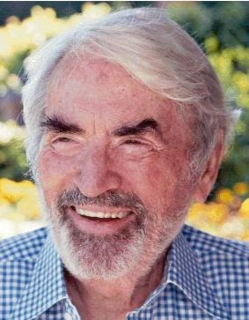
Death of Irish American Actor Gregory Peck

Actor Gregory Peck dies at his home in Los Angeles, California, from bronchopneumonia at the age of 87 on June 12, 2003.

Peck is born in La Jolla, California on April 5, 1916, to Bernice Mary (Ayres) and Gregory Pearl Peck, a chemist and pharmacist in San Diego. Through his Irish-born paternal grandmother, Catherine Ashe, Peck is related to Thomas Ashe, who takes part in the Easter Rising fewer than three weeks after Peck’s birth and dies while on hunger strike in 1917.

Peck’s parents divorce when he is five years old. An only child, he is sent to live with his grandmother. He never feels as though he has a stable childhood. His fondest memories are of his grandmother taking him to the movies every week and of his dog, which follows him everywhere.

At the age of ten Peck is sent to a Catholic military school, St. John’s Military Academy in Los Angeles. While he is a student there, his grandmother dies. At 14, he moves back to San Diego to live with his father and attends San Diego High School. After graduating he enrolls for one year at San Diego State Teacher’s College (now known as San Diego State University).

Peck studies pre-med at the University of California, Berkeley and while there is bitten by the acting bug and decides to change the focus of his studies. He enrolls in the Neighborhood Playhouse School of the Theatre in New York City and debuts on Broadway after graduation. His debut is in Emlyn Williams‘ play The Morning Star (1942). By 1943, he is in Hollywood, where he debuts in the RKO Pictures film Days of Glory (1944).

Stardom comes with Peck’s next film, The Keys of the Kingdom (1944), for which he is nominated for an Academy Award. Peck’s screen presence displays the qualities for which he becomes well known. He is tall, rugged and heroic, with a basic decency that transcends his roles. He appears in Alfred Hitchcock‘s Spellbound (1945) as an amnesia victim accused of murder. In The Yearling (1946), he is again nominated for an Academy Award and wins the Golden Globe Award. He is especially effective in westerns and appears in such varied fare as David O. Selznick‘s critically blasted Duel in the Sun (1946), the somewhat better received Yellow Sky (1948) and the acclaimed The Gunfighter (1950). He is nominated again for the Academy Award for his roles in Gentleman’s Agreement (1947), which deals with antisemitism, and Twelve O’Clock High (1949), a story of high-level stress in an Air Force bomber unit in World War II.

With a string of hits to his credit, Peck makes the decision to only work in films that interest him. He continues to appear as the heroic, larger-than-life figures in such films as Captain Horatio Hornblower R.N. (1951) and Moby Dick (1956). He works with Audrey Hepburn in her debut film, Roman Holiday (1953).

Peck finally wins the Oscar, after four nominations, for his performance as lawyer Atticus Finch in To Kill a Mockingbird (1962). In the early 1960s, he appears in two darker films than he usually makes, Cape Fear (1962) and Captain Newman, M.D. (1963), which deal with the way people live. He also gives a powerful performance as Captain Keith Mallory in The Guns of Navarone (1961), one of the biggest box-office hits of that year.

In the early 1970s, Peck produces two films, The Trial of the Catonsville Nine (1972) and The Dove (1974), when his film career stalled. He makes a comeback playing, somewhat woodenly, Robert Thorn in the horror film The Omen (1976). After that, he returns to the bigger-than-life roles he is best known for, such as MacArthur (1977) and the monstrous Nazi Dr. Josef Mengele in the huge hit The Boys from Brazil (1978). In the 1980s, he moves into television with the miniseries The Blue and the Gray (1982) and The Scarlet and the Black (1983). In 1991, he appears in the remake of his 1962 film, playing a different role, in Martin Scorsese‘s Cape Fear (1991). He is also cast as the progressive-thinking owner of a wire and cable business in Other People’s Money (1991).

In 1967, Peck receives the Academy’s Jean Hersholt Humanitarian Award. He has also been awarded the Presidential Medal of Freedom. Always politically progressive, he is active in such causes as anti-war protests, workers’ rights and civil rights. In 2003, Peck’s portrayal of Atticus Finch is named the greatest film hero of the past 100 years by the American Film Institute.

Peck dies in his sleep at his home in Los Angeles, California from bronchopneumonia at the age of 87 on June 12, 2003. He is entombed in the Cathedral of Our Lady of the Angels mausoleum in Los Angeles. His eulogy is read by Brock Peters, whose character, Tom Robinson, was defended by Peck’s Atticus Finch in To Kill a Mockingbird.


Leave a comment

Birth of Tony Award Nominated Actor Milo O’Shea

Milo Donal O’Shea, Irish actor twice nominated for the Tony Award for Best Actor in a Play for his performances in Staircase (1968) and Mass Appeal (1982), is born in Dublin on June 2, 1926.

O’Shea is raised in Dublin and educated by the Christian Brothers at Synge Street CBS, along with his friend Donal Donnelly. His father is a singer and his mother a ballet teacher. Because he is bilingual, he performs in English-speaking theatres and in Irish in the Abbey Theatre Company. At age 12, he appears in George Bernard Shaw‘s Caesar and Cleopatra at the Gate Theatre. He later studies music and drama at the Guildhall School of Music and Drama in London and is a skilled pianist.

O’Shea is discovered in the 1950s by Harry Dillon, who runs the 37 Theatre Club on the top floor of his shop, the Swiss Gem Company, 51 Lower O’Connell Street, Dublin. Early in his career he tours with the theatrical company of Anew McMaster.

O’Shea begins acting on the stage, then moves into film in the 1960s. He becomes popular in the United Kingdom, as a result of starring in the BBC sitcom Me Mammy alongside Yootha Joyce. In 1967–68 he appears in the drama Staircase, co-starring Eli Wallach and directed by Barry Morse, which stands as Broadway‘s first depiction of homosexual men in a serious light. For his role in that drama, he is nominated for the Tony Award for Best Actor in a Play in 1968.

O’Shea stars as Leopold Bloom in Joseph Strick‘s 1967 film version of Ulysses. Among his other memorable film roles in the 1960s are the well-intentioned Friar Laurence in Franco Zeffirelli‘s Romeo and Juliet (1968) and the villainous Dr. Durand Durand in Roger Vadim‘s counterculture classic Barbarella (1968). In 1984, he reprises his role as Dr. Durand Durand, credited as Dr. Duran Duran, for the 1985 Duran Duran concert film Arena (An Absurd Notion), since his character inspired the band’s name. He plays Inspector Boot in the 1973 Vincent Price horror/comedy film Theatre of Blood.

O’Shea is active in American films and television, such as his memorable supporting role as the trial judge in the Sidney Lumet-directed movie The Verdict (1982) with Paul Newman, an episode of The Golden Girls in 1987, and portraying Chief Justice of the United States Roy Ashland in the television series The West Wing. In 1992, he guest stars in the season 10 finale of the sitcom Cheers, and, in 1995, in an episode of the show’s spin-off Frasier. He appears in the pilot episode of Early Edition as Sherman.

Other stage appearances include Mass Appeal (1981) in which he originates the role of Father Tim Farley, for which he is nominated for the Tony Award for Best Actor in a Play in 1982, the musical Dear World in which he plays the Sewer Man opposite Angela Lansbury as Countess Aurelia, Corpse! (1986) and a 1994 Broadway revival of Philadelphia, Here I Come!.

O’Shea receives an honorary degree from Quinnipiac University in 2010.

O’Shea’s first wife is Maureen Toal, an Irish actress, with whom he has two sons, Colm and Steven. They divorce in 1974. His second wife is Irish actress Kitty Sullivan, whom he meets in Italy, where he is filming Barbarella and she is auditioning for Man of La Mancha. The couple occasionally act together, such as in a 1981 Broadway revival of My Fair Lady. O’Shea and Sullivan have no children together. They both adopt United States citizenship and reside in New York City, where they both live from 1976.

O’Shea dies on April 2, 2013, in New York City following a short illness at the age of 86. He is buried at Deans Grange Cemetery.


Leave a comment

Birth of Roma Downey, Actress, Producer & Author

Roma Downey, actress, producer, and author, is born in the Bogside district of Derry, County Londonderry, Northern Ireland, on May 6, 1960.

Downey attends Thornhill College, a Catholic girls school. Her mother, Maureen O’Reilly Downey, a homemaker with an interest in the performing arts, dies of a heart attack at age 48 when Downey is 10 years old. Her father, Patrick Downey, is a schoolteacher by training but works as a mortgage broker. He dies when Downey is 20. Originally, she plans to be a painter and earns a Bachelor of Arts at Brighton College of Art. She studies BA(Hons) Expressive Arts at Brighton Polytechnic, which later becomes the University of Brighton. Based at the Falmer campus she combines Art and Drama for her degree.

Downey joins the Abbey Players in Dublin and tours the United States in a production of The Playboy of the Western World. She moves to New York after an agent, whom she met during the tour of The Playboy of the Western World, suggests she has potential for success there. She takes a job as a coat checker at an Upper West Side restaurant before getting cast in Broadway shows. The production leads to a nomination during the Broadway run for the Helen Hayes Award for Best Actress in 1991. She also stars on Broadway in The Circle with Rex Harrison and also at the Roundabout Theater and The Public Theater in New York City.

For nine seasons Downey plays Monica, the tender-hearted angel and employee of Tess (played by Della Reese), on the CBS television series Touched by an Angel (1994-2003), for which she earns multiple Emmy and Golden Globe Best Actress nominations. She plays the leading role of Jacqueline Kennedy Onassis in the miniseries A Woman Named Jackie for NBC.

Downey stars in and is executive producer for a number of hit television movies for the CBS network. She is an ambassador for Operation Smile, a nonprofit medical service organization. On August 11, 2016, she is honored for her work as an actress and producer with a star on the Hollywood Walk of Fame. In her acceptance speech, she dedicates her star to the people of Derry and anyone who ever “walked Hollywood Boulevard with a dream in their hearts.”

As President of Lightworkers Media, the family and faith division of MGM, Downey and her husband, Mark Burnett, produce the Emmy-nominated miniseries The Bible for History channel, which airs in 2013 and is watched by over 100 million people in the United States. She also stars in the miniseries in the role of Mary, mother of Jesus. They also executive-produce the feature films Son of God (2014), Little Boy (2015), Woodlawn (2015), and Ben-Hur (2016) starring Jack Huston, Toby Kebbell and Morgan Freeman.

Variety recognizes Downey and Burnett as “Trailblazers” and lists Downey as one of Variety’s “100 Most Powerful Women in Hollywood.” The Hollywood Reporter includes the couple in their “Most Influential People of 2013” and Downey as one of the “100 Women in Entertainment Power” in 2014. She is honored on Variety‘s “Women of Impact in 2014.” Downey and Burnett also produce The Dovekeepers (2015) based on the bestselling book by Alice Hoffman for CBS and A.D. The Bible Continues (2015) for NBC, Women of the Bible for Lifetime, and Answered Prayers (2015) for TLC. Downey is the executive producer of the documentary “Faithkeepers” about the persecution of Christians in the Middle East.

Downey is the author of two books, Love Is a Family (2001) and Box of Butterflies: Discovering the Unexpected Blessing All Around Us (2018).