seamus dubhghaill

Promoting Irish Culture and History from Little Rock, Arkansas, USA


Leave a comment

Birth of Academy Award Winning Actor Daniel Day-Lewis

Sir Daniel Michael Blake Day-Lewis, English actor who holds both British and Irish citizenship, is born in KensingtonLondonEngland, on April 29, 1957.

Day-Lewis is the son of poet Cecil Day-Lewis and English actress Jill Balcon. His father, who was born in Ballintubbert, County Laois, was of Protestant Anglo-Irish and English background, lived in England from the age of two, and later became the Poet Laureate of the United Kingdom. Day-Lewis’s mother was Jewish, and his maternal great-grandparents’ Jewish families emigrated to England from Latvia and Poland. His maternal grandfather, Sir Michael Balcon, was the head of Ealing Studios.

Growing up in London, he excels on stage at the National Youth Theatre, before being accepted at the Bristol Old Vic Theatre School, which he attends for three years. Despite his traditional actor training at the Bristol Old Vic, he is considered to be a method actor, known for his constant devotion to and research of his roles. He often remains completely in character for the duration of the shooting schedules of his films, even to the point of adversely affecting his health. He is one of the most selective actors in the film industry, having starred in only five films since 1998, with as many as five years between roles. Protective of his private life, he rarely gives interviews and makes very few public appearances.

Day-Lewis shifts between theatre and film for most of the early 1980s, joining the Royal Shakespeare Company and playing Romeo in Romeo and Juliet and Flute in A Midsummer Night’s Dream, before appearing in the 1984 film The Bounty. He stars in My Beautiful Laundrette (1985), his first critically acclaimed role, and gains further public notice with A Room with a View (1985). He then assumes leading man status with The Unbearable Lightness of Being (1988).

One of the most acclaimed actors of his generation, Day-Lewis has earned numerous awards, including three Academy Awards for Best Actor for his performances in My Left Foot (1989), There Will Be Blood (2007), and Lincoln (2012), making him the only male actor in history to have three wins in the lead actor category and one of only three male actors to win three Oscars. He is also nominated in this category for In the Name of the Father (1993) and Gangs of New York (2002). He has also won four BAFTA Awards for Best Actor in a Leading Role, three Screen Actors Guild Awards, and two Golden Globe Awards. In November 2012, Time names Day-Lewis the “World’s Greatest Actor.”

In 2008, while receiving the Academy Award for Best Actor for There Will Be Blood from Helen Mirren, who presented the award, Day-Lewis kneels before her and she taps him on each shoulder with the Oscar statuette, to which he quips, “That’s the closest I’ll come to ever getting a knighthood.” In November 2014, Day-Lewis is formally knighted by Prince William, Duke of Cambridge at Buckingham Palace for services to drama.

Day-Lewis and his wife, Rebecca Miller, have lived in Annamoe, County Wicklow since 1997.

Leave a comment

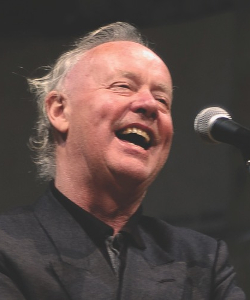
Birth of Brendan Kennelly, Poet & Novelist

Brendan Kennelly, Irish poet and novelist, is born in BallylongfordCounty Kerry, on April 17, 1936. Now retired from teaching, he serves as Professor of Modern Literature at Trinity College, Dublin until 2005. Since his retirement he has been titled “Professor Emeritus” by Trinity College.

Kennelly is educated at the inter-denominational St. Ita’s College, Tarbert, County Kerry, and at Trinity College, Dublin where he edits the student literary magazine Icarus. He graduates from Trinity and writes his PhD thesis there. He also studies at Leeds University. Brendan is married for 18 years to Margaret (Peggy) O’Brien, a colleague in the English Department at Trinity College. They live together in SandymountDublin, with daughter Doodle for 12 years before separating. Brendan and Peggy remain friends and Peggy is now remarried. Peggy is a published poet and Professor of English at the University of Massachusetts Amherst.

Kennelly’s poetry can be scabrous, down-to-earth and colloquial. He avoids intellectual pretension and literary posturing, and his attitude to poetic language can be summed up in the title of one of his epic poems, “Poetry my Arse.” A 400-page long epic poem, “The Book of Judas”, published in 1991, tops the Irish best-seller list.

A prolific and fluent writer, he has more than twenty books of poetry to his credit, including My Dark Fathers(1964), Collection One: Getting Up Early (1966), Good Souls to Survive (1967), Dream of a Black Fox (1968), Love Cry(1972), The Voices (1973), Shelley in Dublin (1974), A Kind of Trust (1975), Islandman (1977), A Small Light (1979) and The House That Jack Didn’t Build (1982).

Kennelly has edited several other anthologies, including “Between Innocence and Peace: Favourite Poems of Ireland” (1993), “Ireland’s Women: Writings Past and Present, with Katie Donovan and A. Norman Jeffares” (1994), and “Dublines,” with Katie Donovan (1995).

Kennelly has also written two novels, “The Crooked Cross” (1963) and “The Florentines” (1967), and three plays in a Greek Trilogy, Antigone, Medea and The Trojan Women.

Kennelly is an Irish language speaker, and has translated Irish poems in “A Drinking Cup” (1970) and “Mary” (Dublin 1987). A selection of his collected translations is published as “Love of Ireland: Poems from the Irish” (1989).

Language is important in Kennelly’s work – in particular the vernacular of the small and isolated communities in North Kerry where he grew up, and of the Dublin streets and pubs where he becomes both roamer and raconteur for many years. Kennelly’s language is also grounded in the Irish-language poetic tradition, oral and written, which can be both satirical and salacious in its approach to human follies.

Regarding the oral tradition, Kennelly is a great reciter of verse with tremendous command and the rare ability to recall extended poems by memory, both his own work and others, and recite them on call verbatim.

Kennelly has commented on his own use of language: “Poetry is an attempt to cut through the effects of deadening familiarity and repeated, mechanical usage in order to unleash that profound vitality, to reveal that inner sparkle. In the beginning was the Word. In the end will be the Word…language is a human miracle always in danger of drowning in a sea of familiarity.”


Leave a comment

Kidnapping of Writer Brian Keenan

Irish writer Brian Keenan is taken hostage in BeirutLebanon, on April 11, 1986.

Keenan is born into a working-class family in East Belfast on September 28, 1950. He leaves Orangefield High Schoolearly and begins work as a heating engineer. However, he continues an interest in literature by attending night classes and in 1970 gains a place at the University of Ulster in Coleraine. Other writers there at the time include Gerald Dawe and Brendan Hamill. In the mid-1980s Keenan returns to the Magee College campus of the university for postgraduate study. Afterwards he accepts a teaching position at the American University of Beirut, where he works for about four months.

On the morning of April 11, 1986 Keenan is kidnapped by Islamic Jihad. After spending two months in isolation, he is moved to a cell shared with the British journalist John McCarthy. He is kept blindfolded throughout most of his ordeal, and is chained by his hands and feet when taken out of solitary.

The British and American governments at the time have a policy that they will not negotiate with terrorists and Keenan is considered by some to have been ignored. Because he is travelling on both British and Irish passports, the Irish government makes numerous diplomatic representations for his release, working closely with the Iranian government. Throughout the kidnap the government also provides support to Keenan’s two sisters, Elaine Spence and Brenda Gillham, who are spearheading the campaign for his release.

Keenan is released from captivity to Syrian military forces on August 24, 1990 and is driven to Damascus. There he is handed over by the Syrian Foreign Ministry to the care of Irish Ambassador, Declan Connolly. His sisters are flown by Irish Government executive jet to Damascus to meet him and bring him home to Northern Ireland.

An Evil Cradling is an autobiographical book by Keenan about his four years as a hostage in Beirut. The book revolves heavily around the great friendship he experiences with fellow hostage John McCarthy, and the brutality that is inflicted upon them by their captors. It is the 1991 winner of The Irish Times Literature Prize for Non-fiction and the Christopher Ewart-Biggs Memorial Prize.

Keenan returns to Beirut in 2007 for the first time since being released 17 years earlier, and describes “falling in love” with the city. He now lives in Dublin.

(Pictured: Brian Keenan arrives at Dublin Airport after his release from captivity in Beirut in August 1990)


Leave a comment

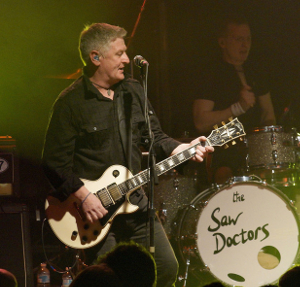
Birth of Davy Carton, Co-Founder of The Saw Doctors

Davy Carton, singer, songwriter, and rhythm guitarist, is born in IslingtonLondon, on April 10, 1959. He is best known as a core member of The Saw Doctors, the folk-rock band he co-founds with Leo Moran and others in 1987.

Carton moves permanently to TuamCounty Galway, with his family in 1966. As a teenager he attends Tuam’s Christian Brothers school, where he forms the punk band Blaze X with fellow students Paul Cunniffe, Paul Ralph, and Ja Keating. He works in a local textile factory after leaving school but continues to play with Blaze X until the band dissolves in 1981, the year Carton marries his girlfriend, Trisha.

Working full-time in the textile factory throughout Ireland’s economically bleak 1980s, Carton largely puts his musical career on hold to support his wife and three young sons.

In the late 1980s, Carton gets together for a pint with Leo Moran, formerly of Irish reggae band Too Much for the White Man. Carton and Moran begin gigging around Galway with a handful of their own rootsy-rock compositions.

The duo adopts the name Saw Doctors — travelers who earn money by sharpening saws in old Ireland — until they can think of something better. As the band grows, the opportunity to find a better name never arises.

Carton finally gives up his day job in 1989, when the Saw Doctors rise to prominence and begin touring with bands including The WaterboysHothouse Flowers, and The Stunning.

Carton’s achievements with the Saw Doctors include six studio albums, two live albums, a concert DVD, several compilation albums, and extensive tours throughout Europe and the United States. Noted for his witty, rapacious lyrics, Carton has co-written almost all of the band’s songs, including “I Useta Lover,” one of the all-time best-selling singles in Ireland.

The Saw Doctors’ lyrics tend to stay out of political issues. “I’m not a politician, and I never will be a politician,” Carton tells the website PopMatters in 2003. “What I like to do is go into a room of people and make them sing along and whatever. I’m not going to tell them how to vote – there’s enough people doing that already. I’d rather talk about girlfriends and football. We don’t like to write about things we don’t really know about. We know about rejection from girls and all that, so we can write about that.”


Leave a comment

Birth of Labour Party Leader Frank Cluskey

Frank Cluskey, Irish politician and leader of the Irish Labour Party from 1977 to 1981, is born in Dublin on April 8, 1930.

Cluskey is educated at St. Vincent’s C.B.S. in Glasnevin. He works as a butcher and then joins the Labour Party. He quickly becomes a branch secretary in the Workers’ Union of Ireland. At the 1965 general election he is elected as a Labour Party Teachta Dála (TD) for the Dublin South-Central constituency. In 1968 he is elected Lord Mayor of Dublin. In 1973 he is appointed Parliamentary Secretary to the Minister for Social Welfare, Brendan Corish. He introduces sweeping reforms to the area while he holds that position. He plays a leading role in initiating the EU Poverty Programmes.

The Fine Gael–Labour Party coalition is defeated at the 1977 general election resulting in the resignation of Brendan Corish as Labour Party leader. Cluskey is elected the new leader of the Labour Party. In 1981, the Labour Party enters into a coalition government with Fine Gael. However, Cluskey has lost his seat in Dáil Éireann at the 1981 general election and with it the party leadership. He is appointed on July 1, 1981, as a Member of the European Parliament (MEP) for Dublin, replacing Michael O’Leary, who had resigned the seat after succeeding Cluskey as Labour leader.

The coalition government falls in January 1982 over a budget dispute, and Cluskey is re-elected to the Dáil at the February 1982 general election. When the coalition returns to office after the November 1982 election, Cluskey is appointed as Minister for Trade, Commerce and Tourism. He then resigns from the European Parliament, to be replaced by Brendan Halligan.

On December 8, 1983, Cluskey resigns as Minister due to a fundamental disagreement over government policy about the Dublin Gas Company. He retains his Dáil seat in the 1987 general election.

Following his re-election Cluskey’s health begins to deteriorate. He dies in Dublin on May 7, 1989, following a long battle with cancer.


Leave a comment

The Sallins Train Robbery

The Sallins Train robbery occurs on March 31, 1976 when the Cork to Dublin mail train is robbed near Sallins in County Kildare. Approximately £200,000 is stolen. Five members of the Irish Republican Socialist Party, Osgur Breatnach, Nicky Kelly, Brian McNally, Mick Plunkett, and John Fitzpatrick, are arrested in connection with the robbery.

After the failure of the authorities to produce a “book of evidence” against them, the four are released but are immediately re-arrested. During interrogation in Garda Síochána custody, all except Plunkett sign alleged confessions, presenting with extensive bruising and injuries they claim are inflicted by members of the Gardaí.

While awaiting trial, Fitzpatrick jumps bail and leaves the country. The trial of McNally, Kelly, and Breatnach in the Special Criminal Court becomes the longest-running trial in Irish criminal history, at 65 days, before it collapses due to the death of one of the three judges, Judge John O’Connor of the Circuit Court.

Medical evidence of beatings is presented to the court, both during the initial trial and the second trial. The court rejects this evidence, finding that the beatings have been self-inflicted or inflicted by the co-accused. Anticipating a conviction, Kelly flees before the conclusion of the second trial. The three are found guilty, solely on the basis of their confessions, and sentenced to between nine and twelve years in prison. Kelly is sentenced in absentia.

In May 1980, Breatnach and McNally are acquitted on appeal on the grounds that their statements had been taken under duress. The same month, the Provisional Irish Republican Army claims responsibility for the robbery. Kelly returns to Ireland from the United States in June 1980, expecting to be acquitted. Instead he is incarcerated in the maximum-security Portlaoise Prison and spends the next four years proclaiming his innocence, including a 38-day period on hunger strike.

After a campaign by the Irish Council for Civil LibertiesAmnesty International, and others and a song, Wicklow Boy, by the popular folk singer Christy Moore, Kelly is eventually released on “humanitarian grounds” in 1984. He is given a presidential pardon in 1992 and receives £1,000,000 in compensation. Breatnach and McNally are also given compensation.


Leave a comment

Birth of Actor Ray McAnally

Ray McAnally, Irish actor and winner of four BAFTA awards in the late 1980s, is born on March 30, 1926, in Buncrana, a seaside town located on the Inishowen peninsula of County Donegal.

The son of a bank manager, McAnally is educated at Saint Eunan’s College in Letterkenny where he writes, produces and stages a musical called “Madame Screwball” at the age of sixteen. He enters St. Patrick’s College, Maynooth at the age of 18 but leaves after a short time having decided that the priesthood is not his vocation. He joins the Abbey Theatre in 1947 where he meets and marries actress Ronnie Masterson.

The couple later forms Old Quay Productions and present an assortment of classic plays in the 1960s and 1970s. McAnally makes his theatre debut in 1962 with A Nice Bunch of Cheap Flowers and gives a well-received performance as George in Who’s Afraid of Virginia Woolf?, opposite Constance Cummings, at the Piccadilly Theatre.

On television he is a familiar face, often in glossy thriller series like television series The AvengersMan in a Suitcase, and Strange Report. In 1968 he takes the title role in Spindoe, a series charting the return to power of an English gangster, Alec Spindoe, after a five-year prison term. This is a spin-off from another series, The Fellows (1967) in which McAnally had appeared in several episodes as the Spindoe character. He could render English accents very convincingly.

McAnally regularly acts in the Abbey Theatre and at Irish festivals, but in the last decade of life he achieves award-winning notice on TV and films. His impressive performance as Cardinal Altamirano in the film The Mission (1986) earns him Evening Standard and BAFTA awards. He earns a second BAFTA award for his role in the BBC’s A Perfect Spy (1987). In 1988 he wins the BAFTA for Best Actor for his performance in A Very British Coup, a role that also brings him a Jacob’s Award. In the last year of his life, he portrays the father of Christy Brown, played by Daniel Day-Lewis, in the Academy Award-winning film, My Left Foot (1989).

McAnally dies suddenly of a heart attack on June 15, 1989, at the age of 63, at his home in County Wicklow which he shares with Irish actress Britta Smith. He remains married to actress Ronnie Masterson until his death, although they reside in different homes. He receives a posthumous BAFTA award for his last film in 1990.

At the time of his death, McAnally is due to play “Bull McCabe” in Jim Sheridan‘s film The Field. The part eventually goes to Richard Harris who receives an Academy Award nomination for his performance. McAnally had also been cast in the lead role of First and Last, a drama about a man who walked from Land’s End to John o’ Groats. Filming is almost a third of the way done when he dies, but the whole play has to be re-filmed, with Joss Ackland taking the role instead.


Leave a comment

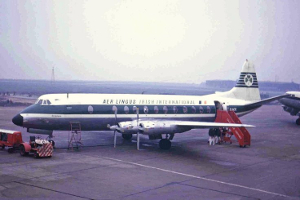
The Crash of Aer Lingus Flight 712

Aer Lingus Flight 712 crashes enroute from Cork to London on March 24, 1968 killing all 61 passengers and crew. The aircraft, a Vickers Viscount 803 named “St. Phelim,” crashes into the sea off Tuskar RockCounty Wexford. Although the investigation into the crash lasts two years, a cause is never determined. There has long been popular speculation that the aircraft was shot down by a British experimental missile. Aberporth in west Wales is at the time the most advanced British missile testing station.

The flight leaves Cork Airport at 10:32 AM for London. The flight proceeds normally until a call is heard with the probable contents “twelve thousand feet descending spinning rapidly.” There is no further communications with the aircraft and London ATC informs Shannon ATC that they have no radio contact with EI-AOM. London ATC requests Aer Lingus Flight EI 362, flying a Dublin to Bristol route, to search west of Strumble. This search at 500 feet in good visibility turns up nothing. At 11:25 AM a full alert is declared. By 12:36 PM there is a report of wreckage sighted at position 51°57′N, 06°10′W. Searching aircraft, however, find nothing and the report is cancelled. Aircraft and ships from the UK resume the search the following day and wreckage is sighted and bodies are recovered 6 nautical miles northeast of Tuskar Rock with more wreckage scattered an additional 6 nautical miles to the northwest.

Thirteen bodies are recovered over the next few days. Another body is recovered later. The main wreckage is located on the sea bed by trawling 1.72 nautical miles from Tuskar Rock at 39 fathoms.

In the years since the crash several witnesses have come forward with evidence to support the missile theory, including a crew member of the British ship HMS Penelope. He alleges that part of the wreckage was recovered by Penelope and removed to the UK.

An investigation report is produced in 1970, a review is undertaken between 1998 and 2000, and an independent study is commissioned in 2000.

However, in 2002 a review process conducted by the Air Accident Investigation Unit (AAIU) discloses that Aer Lingus paperwork relating to a routine maintenance inspection carried out on the aircraft in December 1967 is found to be missing in 1968. Moreover, a large body of research is done by the investigators after the accident, regarding the maintenance operating plan used for EI-AOM and defects on the aircraft found during analysis of the maintenance records. This research is not referred to in the 1970 report. A new board of investigation is set up by the Irish Government and finds that the crash is the consequence of a chain of events starting with a failure to the left tail-plane caused by metal fatigue, corrosion, flutter, or a bird strike, with the most likely cause being a flutter-induced fatigue failure of the elevator trim tab operating mechanism.

In March 2007 retired RAF Squadron Leader Eric Evers, who is previously chief flying instructor with the British military in RAF Little Rissington, makes a claim that the accident is in fact caused by a mid-air collision between the Aer Lingus Vickers Viscount and a French-built  Fouga Magister military aircraft which is training with the Irish Air Corps. Evers maintains that both the French and Irish authorities colluded in a subsequent cover-up, and the Magister wreckage may still be on the seabed. Evers claims have been largely disputed.

Aer Lingus still uses this flight number for a daily flight from Cork to London’s Heathrow Airport, contrary to airline convention of discontinuing a flight number following a crash. The route is operated with an aircraft from the Airbus A320 family.


Leave a comment

Birth of U2 Bassist Adam Clayton

adam-clayton

Adam Charles Clayton, Irish musician best known as the bass guitarist of the rock band U2, is born in Chinnor, Oxfordshire, England, on March 13, 1960.

Clayton is the oldest child of Brian and Jo Clayton. His father is a pilot with the Royal Air Force, who moves into civil aviation, and his mother is a former airline flight attendant. When he is 4 years old his father works in Kenya as a pilot with East African Airways. Clayton regards this as the happiest period of his childhood. In 1965 the family moves to Malahide, County Dublin, where Clayton’s brother Sebastian is born. The Clayton family becomes friends with the Evans family, including their son, David, who later becomes a fellow U2 band-member with Clayton.

When he is eight years old Clayton is sent to the private junior boarding Castle Park School in Dalkey, Dublin, which he did not enjoy because he is not particularly sports orientated. At age 13 he enters the private St. Columba’s College secondary school in Rathfarnham, Dublin. Here he makes friends with other pupils who are enthusiastic about pop/rock music. It is here in the school band where Clayton plays the bass guitar for the first time.

Clayton later changes school to Mount Temple Comprehensive School in Dublin, where he meets future bandmates, Paul Hewson (aka “Bono“) and Larry Mullen Jr., and is reunited with his childhood friend David Evans (aka “The Edge”). In September 1976, Mullen puts an advert onto the school’s bulletin board seeking other musicians to form a band. The original band is a five-piece band known as “Feedback,” consisting of Bono, The Edge, Mullen, Dik Evans, and Clayton. The name is subsequently changed to “The Hype,” but changes to “U2” soon after Dik Evans leaves the band. Clayton stands in as the nearest thing that the band has to a manager in its early life, handing over the duties to Paul McGuinness in May 1978.

In 1981, around the time of U2’s second, spiritually charged October album, a rift is created in the band between Clayton and McGuinness, and the three other band members. Bono, The Edge, and Mullen have joined a Christian group, and are questioning the compatibility of rock music with their spirituality. However, Clayton, with his more ambiguous religious views, is less concerned, and so is more of an outsider, until Bono’s wedding to Alison Hewson (née Stewart), in which Clayton is the best man.

Clayton makes international headlines in August 1989 when he is arrested in Dublin for carrying a small amount of marijuana. He avoids conviction by making a large donation to charity. Clayton also has alcohol problems, which come to a head on November 26, 1993, when he is so hung over that he is unable to play that night’s show in Sydney, the dress rehearsal for their Zoo TV concert film. Bass duties are fulfilled by Clayton’s technician Stuart Morgan. After that incident, however, Clayton gives up alcohol.

In 1995, after the Zoo TV Tour and Zooropa album, Clayton heads to New York City with bandmate Mullen to receive formal training in the bass as until then Clayton has been entirely self-taught. Bono says of Clayton’s early bass playing, “Adam used to pretend he could play bass. He came round and started using words like ‘action’ and ‘fret’ and he had us baffled. He had the only amplifier, so we never argued with him. We thought this guy must be a musician; he knows what he’s talking about. And then one day, we discovered he wasn’t playing the right notes. That’s what’s wrong, y’know?”

In 2011 Clayton becomes an ambassador for the Dublin-based St. Patrick’s Hospital‘s Mental Health Service “Walk in My Shoes” facility.

Clayton and U2 have won numerous awards in their career, including 22 Grammy Awards, including seven times for Best Rock Duo or Group, and twice each for Album of the Year, Record of the Year, Song of the Year, and Best Rock Album.


Leave a comment

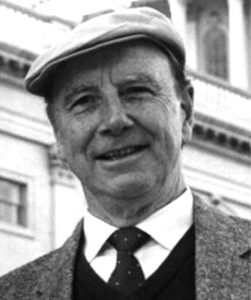
Birth of Patrick Michael Clancy

patrick-michael-clancy

Patrick Michael Clancy, Irish folk singer best known as a member of The Clancy Brothers and Tommy Makem, is born on March 7, 1922, at Carrick-on-Suir, County Tipperary. In addition to singing and storytelling, Clancy plays the harmonica with the group, which is widely credited with popularizing Irish traditional music in the United States and revitalizing it in Ireland. He also starts and runs the folk music label Tradition Records, which records many of the key figures of the American folk music revival.

Clancy is one of eleven children and the eldest of four boys born to Johanna McGrath and Bob Clancy. During World War II he serves as a flight engineer in the Royal Air Force in India. After his demobilization, Clancy works as a baker in London. In 1947 he emigrates to Toronto, Canada with his brother Tom Clancy. The following year, the two brothers move to Cleveland, Ohio to stay with relatives. Later, they attempt to move to California, but their car breaks down and they relocate to the New York City area instead.

After moving to Greenwich Village in 1951, both Patrick and Tom devote themselves primarily to careers in the theater. In addition to appearing in various Off-Broadway productions and television shows, they produce and star in plays at the Cherry Lane Theatre in Greenwich Village and at a playhouse in Martha’s Vineyard. After losing money on some unsuccessful plays, the brothers begin singing concerts of folk songs after their evening acting jobs are over. They soon dub these concerts “Midnight Specials” and the “Swapping Song Fair.” Patrick and Tom are often joined by other prominent folk singers of the day, including Pete Seeger, Woody Guthrie, and Jean Ritchie.

In 1956 their younger brother, Liam Clancy, immigrates to New York, where he teams up with Tommy Makem, whom he had met while collecting folk songs in Ireland. The two begin singing together at Gerde’s Folk City, a club in Greenwich Village. Patrick and Tom sing with them on occasion, usually in informal folk “sing-songs” in the Village. Around the same time, Patrick founds Tradition Records with folk-song collector and heiress Diane Hamilton, and in 1956 the Clancy Brothers and Tommy Makem release their first album, The Rising of the Moon, with only Patrick’s harmonica as musical accompaniment. However, the Clancys and Makem do not become a permanent singing group until 1959.

In the late 1950s, Clancy with his brothers and Makem begin to take singing more seriously as a permanent career, and soon they record their second album, Come Fill Your Glass with Us. This album proves to be more successful than their debut album, and they begin receiving job offers as singers at important nightclubs, including the Gate of Horn in Chicago and the Blue Angel in New York City. The group garners nationwide fame in the United States after an appearance on The Ed Sullivan Show, which leads to a contract with Columbia Records in 1961. Over the course of the 1960s, the Clancy Brothers and Tommy Makem record approximately two albums a year for Columbia. By 1964, Billboard magazine reports that the group was outselling Elvis Presley in Ireland.

The group performs together on stage, recordings, and television to great acclaim in the United States, Ireland, the United Kingdom, Canada, and Australia until Tommy Makem leaves to pursue a solo career in 1969. They continue performing first with Bobby Clancy and then with Louis Killen until Liam leaves in 1976 also to pursue a solo career. In 1977 after a short hiatus, the group reforms with Patrick, Tom, and Bobby Clancy and their nephew Robbie O’Connell. Liam returns in 1990 after the death of Tom Clancy.

In 1968, after two decades in North America, Clancy returns to live in Carrick-on-Suir, where he purchases a dairy farm and breeds exotic cattle. When not on tour or working on his farm, he spends much of his time fishing, reading, and doing crossword puzzles. In the late 1990s, he is diagnosed with a brain tumor. The tumor is successfully removed, but he is also stricken with terminal lung cancer around the same time. He continues performing until his failing health prevents him from doing so any longer.

Patrick Clancy dies at home of lung cancer on November 11, 1998, at the age of 76. He is buried, wearing his trademark white cap, in the tiny village of Faugheen, near Carrick-on-Suir.