seamus dubhghaill

Promoting Irish Culture and History from Little Rock, Arkansas, USA


Leave a comment

The Sinking of John F. Kennedy’s PT-109

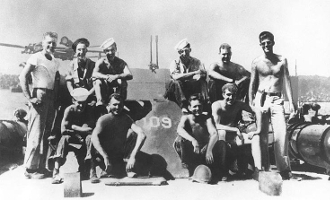
pt-109-crew

In the early morning hours of August 2, 1943, three small American torpedo boats are moving just west of New Georgia in the Solomon Islands. In command of PT-109 is a young Irish American destined to one day be the first Catholic president of the United States, Lieutenant John Fitzgerald Kennedy.

On a moonless night, Kennedy’s boat is idling on one engine to avoid detection of her wake by Japanese aircraft when the crew realizes they are in the path of the Japanese destroyer Amagiri, which is returning to Rabaul from Vila, Kolombangara, after offloading supplies and 900 soldiers. Amagiri is traveling at a relatively high speed of between 23 and 40 knots in order to reach harbor by dawn, when Allied air patrols are likely to appear.

The crew of PT-109 has less than ten seconds to get the engines up to speed. The commander of the Amagiri, Kohai Hanami, spots the tiny ship but it is too close to fire upon. Instead, Hanami decides to ram it. PT-109 is cut in half and bursts into flames. Seamen Andrew Jackson Kirksey and Harold W. Marney are killed, and two other members of the crew are badly injured. PT-109 is gravely damaged, with watertight compartments keeping only the forward hull afloat in a sea of flames.

PT-169 launches two torpedoes that miss the destroyer and PT-162‘s torpedoes fail to fire at all. Both boats then turn away from the scene of the action and return to base without checking for survivors.

The eleven survivors cling to PT-109’s bow section as it drifts slowly south. By about 2:00 PM, it is apparent that the hull is taking on water and will soon sink, so the men decide to abandon it and swim for land. Since there are Japanese camps on all the nearby large islands, they choose the tiny deserted Plum Pudding Island, southwest of Kolombangara. They place their lantern, shoes, and non-swimmers on one of the timbers used as a gun mount and begin kicking together to propel it. Kennedy, who had been on the Harvard University swim team, uses a life jacket strap clenched between his teeth to tow his badly burned senior enlisted machinist mate, MM1 Patrick McMahon. It takes four hours to cover the 3.5 miles to their destination, which they reach without confrontation by sharks or crocodiles.

The island is only 100 yards in diameter and has no food or water. The crew has to hide from passing Japanese barges. Kennedy swims to Naru and Olasana islands, a round trip of about 2.5 miles, in search of help and food. He then leads his men to Olasana Island, which has coconut trees and drinkable water.

The explosion of PT-109 is spotted by an Australian coastwatcher, Sub-lieutenant Arthur Reginald Evans, who mans a secret observation post at the top of the Mount Veve volcano on Kolombangara, where more than 10,000 Japanese troops are garrisoned below on the southeast portion. Evans dispatches islanders Biuku Gasa and Eroni Kumana in a dugout canoe to look for possible survivors after decoding news that the explosion he had witnessed was likely from the lost PT-109.

Kennedy and his men survive for six days on coconuts before they are found by the scouts. The small canoe is not big enough for passengers. Kennedy quickly carves a note on a coconut for Gasa and Kumana to deliver to Evans. Evans gets word back to the U.S. Navy and, on the night of August 8, all eleven survivors of PT-109 are rescued by PT-157.

John F. Kennedy keeps that carved coconut on his desk in the Oval Office at the White House until the day he is assassinated.
Leave a comment

Birth of Seán Ó Riada, Composer of Irish Traditional Music

seán-o-riada

Seán Ó Riada, Irish composer and arranger of Irish traditional music, is born John Reidy in Cork City on August 1, 1931. Through his incorporation of modern and traditional techniques he becomes the single most influential figure in the revival of Irish traditional music during the 1960s.

Ó Riada receives his primary education at St. Finbarr’s College, Farranferris. He moves to St. Munchin’s College in Limerick where he completes his Leaving Certificate in 1948. He plays violin, piano, and organ, and studies Greek and Latin classics at University College Cork, with Aloys Fleischmann and graduates in 1952. While at College, Ó Riada is the auditor of the UCC Philosophical Society.

Ó Riada’s career begins in 1954 as a music director at Radio Éireann, after which he works at the Abbey Theatre from 1955 to 1962. He lectures in music at University College Cork from 1963 until his death in 1971. He leaves a lasting influence as founder and director of the ensemble Ceoltóirí Chualann beginning in 1961. Ó Riada becomes a household name in Ireland through his participation in Ceoltóirí Chualann, compositions, writings, and broadcasts. His best-known pieces in the classical tradition include Nomos No. 1: Hercules Dux Ferrariae (1957), but he becomes particularly famous for his film scores Mise Éire (1959) and Saoirse? (1960).

In 1963 Ó Riada is appointed lecturer in music at University College Cork. He moves to Cúil Aodha in West Cork, an Irish-speaking area, where he establishes Cór Chúil Aodha, a male voice choir.

He becomes involved in Irish politics and is a friend of several influential leaders. Ó Riada drinks regularly at a local pub which still advertises itself as being his local. He develops cirrhosis of the liver. He is flown to King’s College Hospital in London for treatment and dies there on October 3, 1971, two months after his 40th birthday. He is buried in St. Gobnait‘s graveyard, Baile Bhuirne, County Cork. Willie Clancy played at his funeral.

Two schools are named “Scoil Uí Riada” after him – a Gaelscoil in Kilcock, County Kildare, and another in Bishopstown, Cork City. In 2008, a life-sized statue is erected in the grounds of Sépéil Naomh Gobnait, Cúil Aodha.


Leave a comment

Death of Antarctic Explorer Tom Crean

Tom Crean

Thomas “Tom” Crean, Irish seaman and Antarctic explorer, dies on July 27, 1938 from complications of appendicitis.

Crean was born 1877 in the farming area of Gurtuchrane near the village of Annascaul on the Dingle Peninsula in County Kerry. He leaves the family farm to enlist in the Royal Navy at the age of fifteen. In 1901, while serving on Ringarooma in New Zealand, he volunteers to join Captain Robert Falcon Scott‘s 1901–04 Discovery Expedition to Antarctica, thus beginning his exploring career.

He is a member of three major expeditions to Antarctica during the Heroic Age of Antarctic Exploration, including Captain Scott’s 1911–13 Terra Nova Expedition. This sees the race to reach the South Pole lost to Roald Amundsen and ends in the deaths of Scott and his polar party. During this expedition, Crean’s 35 statute miles solo walk across the Ross Ice Shelf to save the life of Edward Evans leads to him receiving the Albert Medal for Lifesaving.

After his Terra Nova experience, Crean’s third and final Antarctic venture is as second officer on Ernest Shackleton‘s Imperial Trans-Antarctic Expedition, on Endurance. After Endurance becomes beset in the pack ice and sinks, Crean and the ship’s company spend months drifting on the ice before a journey in boats to Elephant Island. He is a member of the crew which makes an open boat journey of 800 nautical miles from Elephant Island to South Georgia, to seek aid for the stranded party.

Crean’s contributions to these expeditions seals his reputation as a polar explorer and earns him a total of three Polar medals. After the Endurance expedition, he returns to the navy. When his naval career ends in 1920 he moves back to County Kerry. In his home town of Annascaul, Crean and his wife Ellen live quietly and unobtrusively and open a pub called The South Pole Inn.

In 1938 Crean becomes ill with a ruptured appendix. He is taken to the nearest hospital in Tralee, but as no surgeon is available to operate, he is transferred to the Bon Secours Hospital in Cork where his appendix is removed. Because of the delay of the operation an infection develops and after a week in the hospital he dies on July 27, 1938, shortly after his sixty-first birthday. He is buried in his family’s tomb at the cemetery in Ballynacourty.

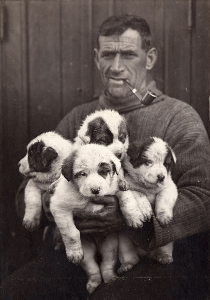
Crean’s name is commemorated in at least two places – 8,630 foot Mount Crean in Victoria Land and the Crean Glacier on South Georgia. A one-man play, Tom Crean – Antarctic Explorer, has been widely performed since 2001 by its author Aidan Dooley, including a special showing at the South Pole Inn, Annascaul, in October 2001. In July 2003, a bronze statue of Crean is unveiled across from his pub in Annascaul. It depicts him leaning against a crate whilst holding a pair of hiking poles in one hand and two of his beloved sled dog pups in the other.


Leave a comment

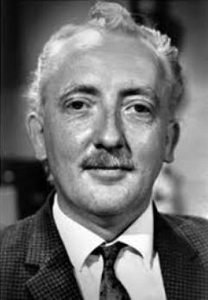
Death of Frank McCourt, Author of “Angela’s Ashes”

frank-mccourt

Francis “Frank” McCourt, Irish American teacher and writer, dies of cancer in Manhattan, New York City, on July 19, 2009.

A New York city schoolteacher for more than thirty years, McCourt achieves literary fame later in life with his best-selling childhood memoir of the misery and squalor of his childhood, Angela’s Ashes. With a first printing of just 25,000 copies, the book becomes an instant favourite with critics and readers and is perhaps the ultimate case of the non-celebrity memoir, the extraordinary life of an ordinary man.

McCourt wins the annual Pulitzer Prize for Biography or Autobiography in 1997 and one of the annual National Book Critics Circle Awards for the book, which is eventually published in 25 languages and 30 countries. It is a bestseller and makes him a millionaire. Three years later, a movie version of Angela’s Ashes opens to mixed reviews with Northern Irish actor Michael Legge playing McCourt as a teenager.

McCourt is also the author of ‘Tis (1999), which continues the narrative of his life, picking up from the end of Angela’s Ashes and focusing on his life after returning to New York. He subsequently writes Teacher Man (2005) which details his teaching experiences and the challenges of being a teacher.

McCourt writes the book for a 1997 musical entitled The Irish…and How They Got That Way, which features an eclectic mix of Irish music – everything from the traditional Danny Boy to U2‘s I Still Haven’t Found What I’m Looking For.

It is announced in May 2009 that McCourt has been treated for melanoma and that he is in remission, undergoing home chemotherapy. On July 19, 2009, he died from the cancer, with meningeal complications, at a hospice in Manhattan.


Leave a comment

Nelson Mandela Awarded the Freedom of the City of Dublin

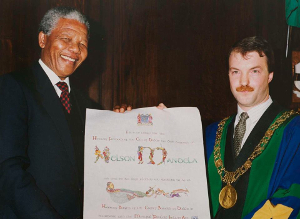
nelson-mandela-freedom-of-dublin

Nelson Rolihlahla Mandela, the first president of South Africa to be elected in a fully representative democratic election, is awarded the Freedom of the City of Dublin on his 70th birthday, July 18, 1988. Mandela is not available to receive his award on the date it is conferred, however, as he is a prisoner in South Africa at the time. On July 1, 1990, after his release from prison, Mandela  finally receives the Freedom of the City of Dublin at a ceremony in the Mansion House Dublin.

The Freedom of the City of Dublin is awarded by Dublin City Council after approving a person nominated by the Lord Mayor of Dublin. Eighty people have been honoured under the current process introduced in 1876. Most honourees have made a contribution to the life of the city or of Ireland in general, including politicians, public servants, humanitarians, artists, and entertainers. Others have been distinguished members of the Irish diaspora and foreign leaders, honoured visiting Dublin. Honourees sign the roll of freedmen in a ceremony at City Hall or the Mansion House and are presented with an illuminated scroll by the Lord Mayor.

Mandela is honoured with the Freedom of Dublin city for his contribution to society and commitment to the study and promotion of Human Rights and also his work in the area of development and social inclusion, which has enhanced the lives of local communities in Ireland and fostered global links with institutions and organisations.

Among the notable recipients of this award are American presidents John F. Kennedy and Bill ClintonMikhail Gorbachev, Éamon de Valera, Mother Teresa, Pope John Paul II, Aung San Suu Kyi, all four members of U2, Bob Geldof, and Ronnie Delaney.

Holders of this award have some ancient privileges and duties such as the right to bring goods into Dublin through the city gates without paying customs duties, the right to pasture sheep on common ground within the city boundaries including College Green and St. Stephen’s Green (this right is exercised as a publicity stunt by U2 members the day after their 2000 conferring), and the right to vote in municipal and parliamentary elections. Some of the ancient duties are that freemen/women must be ready to defend the city of Dublin from attack and, at short notice, can be called up to join a city militia. Also a law which was passed in 1454 states that freemen/women must own a bow, a coat of mail, a helmet, and a sword.


Leave a comment

The Abbey Theatre Destroyed by Fire

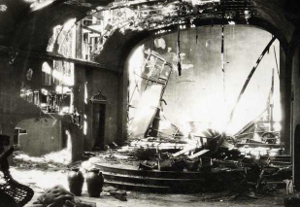
abbey-theatre-fire-1951

Fire destroys the Abbey Theatre in Dublin on July 17, 1951, with only the Peacock, a small experimental theatre in the ground floor of the main theatre surviving intact. The play earlier in the evening closes with soldiers on stage singing Keep the Home Fires Burning.

In February 1961, the ruins of the Abbey are demolished. The board has plans for rebuilding with a design by the Irish architect Michael Scott. On September 3, 1963, the President of Ireland, Éamon de Valera, lays the foundation stone for the new theatre. The Abbey reopens on July 18, 1966, at its new location at 26 Lower Abbey Street, Dublin 1.

The Abbey Theatre first opens its doors to the public on December 27, 1904. Despite the loss of the original building to the 1951 fire, it has remained active to the present day. The Abbey is the first state-subsidized theatre in the English-speaking world. From 1925 onwards it receives an annual subsidy from the Irish Free State.

In its early years, the theatre is closely associated with the writers of the Irish Literary Revival, many of whom are involved in its founding and most of whom have plays staged there. The Abbey serves as a nursery for many of the leading Irish playwrights and actors of the 20th century, including William Butler Yeats, Lady Gregory, Seán O’Casey, and John Millington Synge. In addition, through its extensive programme of touring abroad and its high visibility to foreign, particularly American, audiences, it has become an important part of the Irish tourist industry.


Leave a comment

Birth of Irish Dancer & Choreographer Michael Ryan Flatley

michael-flatley

Michael Ryan Flatley, Irish American dancer, choreographer, and musician, is born to Irish parents in Chicago, Illinois on July 16, 1958. He becomes internationally known for Irish dance shows Riverdance, Lord of the Dance, Feet of Flames, and Celtic Tiger.

Flatley begins dancing lessons at age 11 and, at age 17, is the first American to secure a World Irish Dance title at the World Irish Dance Championships, the Oireachtas Rince na Cruinne. He is also an accomplished flautist, having won twice in the All-Ireland Fleadh Cheoil Concert Flute competitions from 1975-1976.

Flatley is taught dance by Dennis Dennehy at the Dennehy School of Irish Dance in Chicago. After graduating from Brother Rice High School, on Chicago’s Southwest Side, he opens a dance school but later closes it to focus on performing.

In 1978 and 1979 Flatley tours with Green Fields of America and then with The Chieftains in the 1980s. In May 1989, Flatley sets a Guinness Book world record for tapping speed at 28 taps per second, and subsequently breaks his own record in 1998 with 35 taps per second.

Flatley creates and choreographs the original Riverdance and leads the show to great success as the intermission act in the Eurovision Song Contest staged in Ireland on April 30, 1994. Flatley abruptly leaves the show over creative control disputes in October 1995.

Shortly after the Riverdance split, Flatley creates Lord of the Dance, which plays mostly in arenas and stadiums instead of stage theaters. He also puts together a dance production called Feet of Flames in 1998. Flately’s Irish dance show Celtic Tiger opens in July 2005. The show explores the history of the Irish people and Irish emigration to the United States, fusing a wide range of dance styles, including jazz.

Flatley returns to the stage in 2009 for a limited run of the “Hyde Park” version of Feet of Flames in Taiwan. His return is met with multiple standing ovations and the run of shows has to be extended to meet the demand for tickets.

Flatley premiers Lord of the Dance: Dangerous Games at the celebrated Palladium Theatre on London’s West End in 2014 and moves to the Dominion Theatre in 2015 where he makes his final appearance on the West End stage before revisiting another sold out Wembley Arena for his final performance in the United Kingdom.

Flatley embarks on his final tour on February 19, 2016 and performs on stage for the last time at The Colosseum at Caesar’s Palace in Las Vegas, NV, on March 17, 2016. He continues as the show’s creator, producer, and choreographer.


Leave a comment

Reopening of General Post Office, Dublin

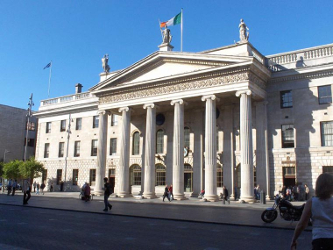
general-post-office

The restored General Post Office, Dublin, which had been destroyed during the 1916 Easter Rising, is opened by President W. T. Cosgrave on July 11, 1929.

The General Post Office (GPO) is the headquarters of the Irish postal service. The offices are first located at College Green, but in August 1814, construction of a purpose-built headquarters begins. The building on Sackville Street is completed in January 1818 at a cost of £50,000.

According to An Post “The statues on the roof are of Hibernia, a classical representation in female form of the island of Ireland, with Fidelity to one side and Mercury, the messenger of the gods, to the other.”

Five members of the Provisional GovernmentPatrick Pearse, James Connolly, Tom Clarke, Seán MacDiarmada, and Joseph Plunkett — are located at the GPO during the Easter Rising in a 350-strong garrison which also includes Cumann na mBan and Irish Citizen Army members. James Connolly is in charge of the defence of the GPO and directs operations. The GPO garrison barricades surrounding streets and occupies adjoining buildings.

On Monday afternoon the garrison repulses a cavalry attack while, with the breakdown of law and order, many of the stores in Sackville Street are looted. From Wednesday, the GPO and other buildings in Sackville Street come under artillery fire, mostly from the Helga gunboat at anchor in the River Liffey. Connolly believes the British will not use artillery in city areas. By Friday night the GPO is on fire, at which point it is evacuated.

At a Dublin Corporation meeting in 1884 a motion is called to change the name of Sackville Street to O’Connell Street. After forty years of argument, it is changed to O’Connell Street in May 1924.


Leave a comment

Cathal Brugha Fatally Wounded by Sniper

cathal-brugha

Cathal Brugha, a leading figure in the Anti-Treaty Irish Republican Army (IRA), is shot by a sniper on July 5, 1922, as he appears in the doorway of the Hammam Hotel during the Irish Civil War. He dies two days later.

Brugha is born in Dublin of mixed Roman Catholic and Protestant parentage. He is the tenth of fourteen children and is educated at the Jesuit Belvedere College but is forced to leave at the age of sixteen because of the failure of his father’s business.

In 1899, Brugha joins the Gaelic League, and subsequently changes his name from Charles Burgess to Cathal Brugha. He becomes actively involved in the Irish Republican Brotherhood (IRB) and in 1913 he becomes a lieutenant in the Irish Volunteers. He leads a group of twenty Volunteers to receive the arms smuggled into Ireland in the Howth gun-running of 1914.

Brugha is second-in-command at the South Dublin Union under Commandant Éamonn Ceannt in the Easter Rising of 1916. On the Thursday of Easter Week, being badly wounded, he is unable to leave when the retreat is ordered. Brugha, weak from loss of blood, continues to fire upon the enemy and is found by Éamonn Ceannt singing God Save Ireland with his pistol still in his hands. Initially not considered likely to survive, he recovers over the next year but is left with a permanent limp.

During the War of Independence, Brugha organises an amalgamation of the Irish Volunteers and the Irish Citizen Army into the Irish Republican Army (IRA). He proposes a Republican constitution at the 1917 Sinn Féin convention which is unanimously accepted. In October 1917, he becomes Chief of Staff of the Irish Republican Army and holds that post until March 1919.

Brugha is elected speaker of Dáil Éireann at its first meeting on January 21, 1919, and he reads out the Declaration of Independence in Irish. On the following day, he is appointed president of the ministry pro tempore and retains this position until April 1, 1919, when Éamon de Valera takes his place.

In the months between the Anglo-Irish Treaty debates and the outbreak of Civil War, Brugha attempts to dissuade his fellow anti-treaty army leaders, including Rory O’Connor, Liam Mellows, and Joe McKelvey, from taking up arms against the Free State. When the IRA occupies the Four Courts, he and Oscar Traynor call on them to abandon their position. When they refuse, Traynor orders the occupation of the area around O’Connell Street in the hope of easing the pressure on the Four Courts and of forcing the Free State to negotiate.

On 28 June 1922, Brugha is appointed commandant of the forces in O’Connell Street. The outbreak of the Irish Civil War ensues in the first week of July when Free State forces commence shelling of the anti-treaty positions.

Most of the anti-Treaty fighters under Oscar Traynor escape from O’Connell Street when the buildings they were holding catch fire, leaving Brugha in command of a small rearguard. On 5 July, he orders his men to surrender but refuses to do so himself. He then approaches the Free State troops, brandishing a revolver. He sustains a bullet wound to the leg which severs a major artery, ultimately causing him to bleed to death on July 7, 1922, eleven days before his 48th birthday. He is buried in Glasnevin Cemetery.


Leave a comment

Anti-Treaty Forces Abandon the Four Courts

free-state-troops-fire-on-the-four-courts

Anti-Treaty forces abandon the Four Courts in Dublin on June 30, 1922, after two days of bombardment under the orders of Michael Collins.

The occupation of the Four Courts by Anti-Treaty forces in April 1922 makes real the threat of violence that has existed only as a subtext to the treaty debates. That real fighting does not break out until the subsequent decision by the Pro-Treaty forces to forcibly retake the position in June 1922 shows just how reluctant the parties are to engage in more violence.

However, once the decision to fight is made neither side show much restraint. The shelling of the Four Courts and the ferocity of the fighting around the rest of Dublin during the initial phase of the war shows that neither side will balk at killing former friends if that is what is required.

Tragically, on the morning of June 30, a massive explosion destroys the western wing of the Four Courts and the Irish Public Records Office which houses official documents, archives, and artifacts from almost 1,000 years of Irish history. The explosion is thought to have been caused by fires from the artillery bombardment setting off munitions stored there. Free State troops, however, claim that the building is mined.

After two days of heavy fighting that sees the complex more or less destroyed, the Anti-Treaty forces, at this point under the command of Ernie O’Malley after Paddy O’Brien is wounded by shrapnel, surrenders. Their surrender is at the order of the senior commander of Anti-Treaty forces in the city, Oscar Traynor, who sends word that he cannot break through to help them.

They march out of a burning and wrecked Four Courts a compelling symbol for the damage the Civil War is to bring to the young state over the upcoming months and years. Members of the Irish Republican Army (IRA) Army Executive Liam Mellows, Rory O’Connor, Joe McKelvey, and Dick Barret are among the prisoners, but O’Malley himself escapes.