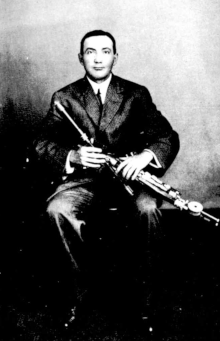
Patrick “Patsy” J. Touhey, a celebrated player of the uilleann pipes, is born on February 26, 1865, in Cahertinny, Bullaun, Loughrea, County Galway. His innovative technique and phrasing, his travels back and forth across the United States to play on the variety and vaudeville stage, and his recordings make his style influential among Irish American pipers. He can be seen as the greatest contributor to a distinctive American piping style.
According to Chief Francis O’Neill of the Chicago Police Department, in his seminal work O’Neill’s Irish Minstrels and Musicians, Touhey is the third generation of accomplished pipers stemming from his grandfather, Michael Twohill (the original spelling, b. ca. 1800), his father James and his uncle Martin, who are considered accomplished players. The family arrives in Boston around 1868, and his father arranges for his instruction from Bartley Murphy of County Mayo. However, at the age of ten Patsy loses his father and later lays the pipes aside.
In his late teens Touhey strays into a Bowerymusic hall where John Eagan, the “White Piper” of Galway, is engaged. Enthralled by Eagan’s virtuosity, he takes up the pipes again, and under the instruction of Eagan and Billy Taylor of Philadelphia soon becomes a master.
Touhey and Eagan tour the northeastern United States with “Harrigan’s Double Hibernian Co., Irish and American Tourists” in 1885 and 1886. This is his apparent introduction to theatrical life. Harrigan’s company stars Jeremiah “Jere” Cohan, the father of George M. Cohan, later a famous songwriter and showman. Despite a persistent legend, there is no evidence that Touhey plays publicly for the step-dancing of George M. Cohan, who is seven or eight years old at the time. Between 1886 and 1895 he appears in several theatre productions including “Inshavogue” and “The Ivy Leaf.” At the 1893 World’s Columbian Exposition in Chicago, he plays at the Irish Village, one of two rival Irish pavilions, and is later engaged for the 1904 World’s Fair in St. Louis (Louisiana Purchase Exposition). From about 1896 until 1921 he plays in vaudeville skits, trading jokes with his wife, Mary, and their on and off partner Charles Henry Burke. The shows include slapstick, low-brow gags, Irish nostalgia, and a piping finale to which Mary Touhey dances.
Chicago Police Chief Francis O’Neill, a prominent compiler of Irish dance tunes, calls Touhey “the genial wizard of the Irish pipers . . . A stranger to jealousy, his comments are never sarcastic or unkind, neither does he display any tendency to monopolize attention in company when other musicians are present.”
Touhey lives on Bristow Street in the Bronx, New York City, from at least 1900 until 1908. He and Mary live in rural East Haddam, Connecticut from 1908 to 1919, then in Freeport, New York from 1919 to 1922. In 1922 he moves back to the Bronx. He dies suddenly in his home at 1175 Concourse, New York, on January 10, 1923. He is buried in Saint Raymond’s Cemetery in the Bronx.
A statue of Patsy Touhey is unveiled in 2008 in Loughrea, near the place where he was born. It is a bronze sculpture by James MacCarthy that shows Touhey sitting on a limestone block and playing his pipes. Behind him, on the wall, there are three plaques with portraits of Peter and Vincent Broderick, two other local musicians, and Touhey himself. The statue is a tribute to the musical heritage of Loughrea and Galway, and a reminder of the connection between Ireland and its diaspora.
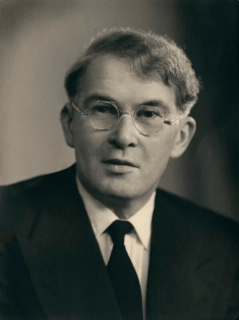
O’Donnell is the youngest among six sons and three daughters of Biddy and James O’Donnell. He is greatly influenced by his upbringing in the Rosses, in northwest Donegal, one of the poorest and most remote parts of Ireland. His father, a popular local fiddler, earns a living through his smallholding, seasonal labouring in Scotland, and winter work in a local corn mill. His mother, who comes from a radical labour and nationalist political background, works in a local cooperative store. He attends Rampart national school and Roshine national school, near Burtonport, where he is a monitor for four years. In 1911 he wins a scholarship to attend St. Patrick’s College in Drumcondra, Dublin, and returns in 1913 to the Rosses, where he spends two years teaching on the islands of Inishfree. In 1915 he is appointed head of Derryhenny national school, near Dungloe, and the following year becomes principal of a national school on the island of Arranmore, where he begins to write.
O’Donnell had long been concerned by the poor conditions of the local ‘tatie-hokers’ (potato pickers) who migrate annually to Scotland. In the summer of 1918, he travels there to help organise the Scottish Farm Servants’ Union. While there he is influenced by left-wing radicals such as Willie Gallacher, later a communistMember of Parliament (MP), and Emanuel ‘Manny’ Shinwell, later Baron Shinwell. In September 1918, against a background of rising labour militancy, he leaves teaching to become a full-time organiser for the Irish Transport and General Workers’ Union (ITGWU) in the west Ulster area. The following year he organises one of Ireland’s first “soviets” when the attendants and nurses of the Monaghan District Lunatic Asylum occupy the grounds and appoint O’Donnell as governor until their demands are met.
In early 1919 O’Donnell joins the Irish Republican Army (IRA) in Monaghan, resigning from the ITGWU for full-time IRA service in late 1920. He leads the 2nd Battalion, Donegal IRA, from the summer of 1920. In December 1920 he goes “on the run” and leads a flying column in west Donegal until May 1921, when he is wounded. Regarded as insubordinate and militarily inexperienced, he is unpopular among the other senior officers of the 1st Northern Division. He, in turn, is disappointed by the lack of social radicalism among the nationalist leadership. He opposes the Anglo-Irish Treaty, is placed in command of the minority anti-treaty 1st Northern Division and is a member of the IRA executive that occupies the Four Courts in Dublin in defiance of the provisional government.
Arrested in June 1922, O’Donnell shares a prison cell with Liam Mellows and influences his radical “Notes from Mountjoy,” an important document for subsequent left-wing republicans. He spends the next two years in various prisons and internment camps. His execution is widely expected to follow those of December 8, 1922. In August 1923, he is elected as a Sinn FéinTeachta Dála (TD) for Donegal in the general election called after the end of the Irish Civil War. He goes on hunger strike for forty-one days in late 1923 and succeeds in escaping from the Curragh in March 1924. In June 1924, while on the run, he marries Lile O’Donel, a wealthy Cumann na mBan activist who had smuggled communications for republican prisoners. O’Donel, a radical and member of the Communist Party, is the daughter of Ignatius O’Donel, a prominent landowner from Mayo. They have no children but raise their nephew, Peadar Joe, as their own son after the death in New York of O’Donnell’s brother Joe.
O’Donnell begins writing seriously while in jail and remains a prolific writer, journalist, and editor until the 1960s. His first novel, Storm, set in the Irish War of Independence, is published in 1925. One of his most highly regarded books, Islanders, is published in 1928. Adrigoole, like Islanders a story of poverty and starvation in rural Ireland, is published the following year. The Knife (1930) and On the Edge of the Stream (1934) soon follow. The most significant of his later novels is probably The Big Windows (1954). Foremost among his qualities as a writer is his empathy for the people, life, and landscape of rural Ireland. But his novels have been criticised for their slow pace, excessive detail, and didactic nature. He claims his writing is incidental to his political activism. His trilogy of autobiographical non-fiction, The Gates flew Open (1932), Salud! An Irishman in Spain (1936), and There Will Be Another Day (1963), which respectively concern the Irish Civil War, his activism during the Spanish Civil War, and his role in the land annuities agitation, remain highly regarded. His other important literary achievement is with The Bell, an innovative literary and political magazine which plays a useful dissenting role in an insular and conservative period. He founds The Bell with the writer Seán Ó Faoláin in 1940 and edits it from 1946 until it ceases publication in 1954.
O’Donnell exercises an influential role in the interwar IRA, particularly through his editorship of An Phoblacht (1926–29), which he attempts to divert from militarism to socialist agitation. His ultimate aim is for a thirty-two-county socialist republic. His most successful campaign is organising small farmers against the payment of land annuities to the government in the late 1920s and early 1930s. This campaign is later adopted by Fianna Fáil and contributes to their electoral success in 1932. He is less successful in radicalising the IRA. After the failure of Saor Éire, a left-wing IRA front which provokes clerical and popular hostility against the IRA, increasing tensions between the IRA’s left-wing and the leadership lead O’Donnell, along with Frank Ryan and George Gilmore, to split from the IRA to establish the short-lived Republican Congress in 1934.
Although O’Donnell claims he was never a Communist Party member, he plays a central role in forging links between republicans and the revolutionary left both in Ireland and internationally and invariably supports the communist party line at critical junctures. After the failure of Republican Congress, he takes up the cause of the Spanish republic. His championing of unpopular causes such as communism and Spain entail a good deal of frustration. He is physically attacked at political meetings and in 1932, despite having never visited the Soviet Union, loses a high-profile libel action against the Dominican Irish Rosary, which claim he had studied in Moscow‘s Lenin College. He is banned from entering the United States for several decades, although he maintains: “My relations with all the great powers continue to be friendly.”
O’Donnell continues to support radical campaigns until his death. He is an outspoken advocate of Irish emigrants. He is prominent in the Irish Campaign for Nuclear Disarmament and serves as its president in the early 1960s. He is a leading protester against the Vietnam War and a supporter of African anti-colonial movements such as that against apartheid. In later years he is involved in the “Save the west” campaign, highlighting the problems of the west of Ireland.
After several months of ill-health following a heart attack, O’Donnell dies in Dublin, aged 93, on May 13, 1986. He leaves instructions that there are to be “no priests, no politicians and no pomp” at his funeral, and those wishes are granted. He is cremated in Glasnevin Cemetery and his ashes are buried at his wife’s home in Swinford, County Mayo. Although he once remarked that every cause he fought for was a failure, he is now regarded as one of the most influential socialist republican theorists and an important voice of dissent in twentieth-century Ireland.
(From: “O’Donnell, Peadar” by Fearghal McGarry, Dictionary of Irish Biography, http://www.dib.ie)
Bracken is the third child and second of three sons of Joseph Kevin (J. K.) Bracken and Hannah Bracken (née Ryan). The family moves to Kilmallock, County Limerick, in 1903, the year before his father’s death. By 1908, his mother takes the family to live in Glasnevin, a new suburb in north Dublin, and subsequently off the North Circular Road. He is educated in St. Patrick’s National School, Drumcondra, and at the Christian Brothers‘ O’Connell School in North Richmond Street. He is a mischievous, delinquent child, one time throwing a schoolfellow into the Royal Canal. In February 1915 he is sent to Mungret College, a Jesuit boarding school near Limerick. He is not amenable to the regime and runs away on several occasions, finding accommodation in local hotels under a false name.
At the end of 1915 Bracken goes to Australia with £14 in his pocket. He is first based in Echuca, Victoria, where he is put up in a convent. Later he moves to other houses run by religious orders. A voracious reader, he claims that he is doing research for a life of CardinalPatrick Francis Moran, and signs himself “Brendan Newman Bracken.” He seeks admission as a pupil to Riverview, the fashionable Jesuit school in Sydney, claiming that he had been educated at Clongowes Wood College. Unfortunately for him, a priest who had just come out from Clongowes exposes him. Opinionated and argumentative, he does not conceal his skepticism about the Catholic religion. For a time, he teaches in a Protestant school in Orange, New South Wales.
Bracken returns to Ireland in 1919. By this time his mother has remarried and is living with her new husband, Patrick Laffan, on a farm in Beauparc, County Meath. After a short stay there, he moves to Liverpool and finds employment as a teacher at the Liverpool Collegiate School, claiming that he had been to the University of Sydney. He teaches at the school for two terms in 1920, earning extra money as tutor to a young boy. With his savings he is able to gain admission to Sedbergh School, a public school in the town of Sedbergh in Cumbria, North West England, giving his name as Brendan Rendall Bracken, born 1904, and stating that his parents had perished in a bush fire in Australia, leaving him money to complete his education. He remains only one term but distinguishes himself by winning a prize for history. After Sedbergh, Bracken teaches at Rottingdean preparatory school and then at Bishops Stortford School. He cuts a flamboyant figure and drops the name of famous acquaintances with gay abandon. He stands over 6 feet and has a powerful presence and a domineering personality; his mop of red hair and pale freckled skin combine with black teeth to give him a bizarre appearance.
In 1922 Bracken moves to London. He takes charge of the Illustrated Review when its editor, Hilaire Belloc, resigns. Renamed English Life and covering political and social events, it affords Bracken an opportunity to meet prominent people, including J. L. Garvin, editor of The Observer. In autumn 1923 Garvin introduces him to Winston Churchill, who had lost his parliamentary seat in 1922 and decided to contact Leicester West in the 1923 United Kingdom general election. Bracken offers his services as campaign manager. The friendship between Churchill and Bracken is soon so close that Bracken is rumoured to be Churchill’s natural son. Churchill’s wife Clementine dislikes Bracken and discourages the friendship.
Meanwhile Bracken enjoys the life of a ubiquitous socialite and builds up his career in publishing. He becomes a director of Eyre & Spottiswoode in 1926, starting The Banker, a monthly magazine, for them, and acquiring the Financial News in 1928 and a half-share in The Economist. To these are added in due course the Investors Chronicle and The Practitioner. His success in business enables him to acquire a home in North Street in 1928, near the Houses of Parliament. He is driven about in a chauffeured Hispano-Suiza car.
In 1929, Bracken has himself adopted as conservative candidate for Paddington North, a marginal seat. After a hard-fought campaign characterised by minor violence provoked by Bracken’s intemperate language, he wins the seat by 528 votes. At one point a rumour is put about that Bracken is in reality a Polish Jew, which he has to disprove by exhibiting a copy of his birth certificate. His background is a subject of speculation among acquaintances, and in throwaway remarks he gives different fictitious versions of it, Ireland figuring in none of them. He does however remain in constant touch with his mother, to whom he seems to have been deeply devoted, until her death in 1928. However, he has as little contact as possible with his brother and sisters, although he does give assistance to some of them and their families at various times.
In parliament Bracken voices right-wing views on economic issues and is an enthusiastic imperialist. After Churchill resigns from the conservative front bench in 1930 because they would not oppose the Labour government’s proposal for Indian self-government, he is supported by Bracken. During the 1930s, when Churchill is in the wilderness, disagreeing with the party leadership on India and on what he sees as a policy of appeasement toward Hitler‘s Germany, Bracken is his sole political ally. Stanley Baldwin calls him Churchill’s “faithful chela.”
In September 1939, Churchill joins Neville Chamberlain‘s war cabinet as First Lord of the Admiralty. Bracken is appointed his parliamentary private secretary, continuing in that role when Churchill becomes Prime Minister. Despite the king’s opposition, Churchill insists in June 1940 that Bracken should be appointed a privy councillor. Bracken shuts up his house and moves to the Prime Minister’s residence for the duration of the war. As a confidant of the Prime Minister, he often acts as a go-between with other politicians and newspapermen. He is allowed to oversee patronage and takes a special interest in ecclesiastical appointments. In July 1941, he is persuaded by Lord Beaverbrook and Churchill to become Minister for Information. He wins over most of the proprietors by giving them more news, often on a confidential basis, and censorship is kept to a minimum. The BBC is also allowed a fair measure of freedom as long as it behaves responsibly; under the leadership of Cyril Radcliffe, the civil service head of the ministry, it operates more smoothly. Bracken was generally acclaimed for that success.
After the resignation of the Labour ministers from the government at the end of the war in Europe, Bracken joins the cabinet as First Lord of the Admiralty. He is prominent in the general election campaign that follows and is the only conservative minister apart from Churchill to give more than one radio broadcast. He is accused, probably unjustly, of provoking Churchill to take extreme positions, and blamed when the conservatives are heavily defeated at the polls. Bracken himself loses Paddington North to Lt. Gen. Sir Noel Mason-MacFarlane. However, he is soon back in parliament representing Bournemouth, and as front-bench spokesman is an uncompromising opponent of the nationalisation measures of the Labour government (1945–51). He is out of sympathy with the leftward drift of the conservative party associated with Rab Butler and Harold Macmillan.
In December 1951, when Churchill is again Prime Minister, Bracken declines an invitation to serve as Colonial Secretary, pleading that his recurring sinusitis makes it impossible. He resigns his seat in the House of Commons and is created a peer, Viscount Bracken of Christchurch in Hampshire, but never takes his seat in the House of Lords. Although he retires from politics, he remains close to political events through his friendship with Churchill. He is deeply involved in concealing the severe stroke that Churchill suffers in 1953, so that he can carry on as Prime Minister.
In the postwar period, Bracken has important business interests. The Financial News group acquires the Financial Times in 1945, and he is returned as chairman of the expanded company. He writes a weekly Financial Times column until 1954. He oversees the building near St. Paul’s of a new head office, named “Bracken House” after his death. He is also chairman of the Union Corporation mining house, with interests in South Africa, which he frequently visits. From 1950 he is chairman of the board of governors of Sedbergh School, where he goes frequently and often walks for miles across the fells. He organises and finances the restoration of the eighteenth-century school building as a library, with a commemoratory inscription, “Remember Winston Churchill.”
From 1955 Bracken is a trustee of the National Gallery. He is an unrelenting opponent of the proposal to return to Ireland the impressionist paintings bequeathed to it by Hugh Lane, because a codicil willing them to Dublin has not been witnessed. Throughout the postwar period he carries on a prolific correspondence with friends such as Lord Beaverbrook, the American ambassador Lewis Douglas, and the Australian entrepreneur W. S. Robinson. These are a valuable and entertaining source on the political history of the time.
In January 1958, Bracken, who has always been a heavy smoker, is diagnosed with throat cancer. He lingers on until August 8, 1958, when he dies at the flat of his friend Sir Patrick Hennessy in Park Lane. He resists efforts made to reconcile him to the church of Rome. By his own wish he is cremated, and his ashes are scattered on Romney Marsh, Kent. On his instructions his papers are burned by his chauffeur. His estate comes to £145,032.
(From: “Bracken, Brendan” by Charles Lysaght, Dictionary of Irish Biography, www. dib.ie, October 2009 | Pictured: Brendan Bracken, bromide print by Elliott & Fry, January 13, 1950, National Portrait Gallery, London)
Margaret Brady is born to Patrick Brady, a coal merchant whose family are from County Meath, and Brigid Brady (née Savage) of Oldtown, Dublin. She is baptised in St. Lawrence O’Toole’s parish. At the time, her parents are living at 1 Clarence Street. She has three known siblings and is educated by the Sisters of St. Vincent de Paul. She is employed as a stationery shop assistant where she meets her future husband, James Pearse.
In 1877, she marries James Pearse at St. Agatha’s Church, off the North Strand. James is born in Bloomsbury, Middlesex, on December 8, 1839, and later lives in Birmingham. He comes to Ireland to work as a sculptor in the late 1850s with his first wife, Emily Susanna Fox, who dies in 1876. They have four children together. The first three children are Margaret Mary (born on August 4, 1878), Patrick (born on November 10, 1879) and William (born on November 15, 1881). All three children are born while the family lives in 27 Great Brunswick Street. Their youngest child, Mary Brigid, is born on September 29, 1888, by which time the family has moved to Newbridge Avenue, Sandymount. Pearse’s aunt, Margaret Brady, an Irish speaker, is a frequent visitor to the family home and encourages the children’s interest in the Irish language and culture. Her husband dies in 1900. Pearse does not permit her children to play with other children, however, she supports her children in all their aspirations. She has a very strong relationship and consequent effect on her eldest son, Patrick, who founds St. Enda’s School in 1908 and is the headmaster up until the time of his execution. She takes over the responsibility of Housekeeper at the school.
Pearse supports her sons’ political beliefs. After their execution, she wishes to maintain their legacy and becomes involved in political life. She joins Sinn Féin after the Rising and gives support and endorsement to candidates during the 1918 Westminster election. During the 1920 Poor Law Elections for the Rathmines area of Dublin, she stands as a Sinn Féin candidate and is elected on the first count. She is elected to Dáil Éireann as a Sinn Féin Teachta Dála (TD) for the Dublin County constituency at the 1921 Irish elections.
Pearse strongly opposes the Anglo-Irish Treaty, as do all the female TDs. She states during the Treaty debate that:
“I rise to support the motion of our President for the rejection of the Treaty. My reasons for doing so are various, but my first reason for doing so I would like to explain here today is my son’s account. It has been said here on several occasions that Patrick Pearse would have accepted this Treaty. I deny it. As his mother I deny it, and on his account, I will not accept it.”
Later she continues in a similar vein:
“Always we had to be on the alert. But even the Black and Tans alone would not frighten me as much as if I accepted this Treaty; because I feel in my heart – and I would not say it only I feel it – that the ghosts of my sons would haunt me.”
Following the ratification of the Treaty Pearse leaves the Dáil with the other anti-Treaty deputies. She is defeated at the 1922 Irish general election. She supports those who oppose the Treaty during the Irish Civil War and continues to be a member of Sinn Féin until 1926. In 1926 she leaves the party conference with Éamon de Valera and becomes a founder member of Fianna Fáil. She never stands for election again.
At the launch of The Irish Press newspaper, Pearse is asked to press the button to start the printers rolling. At many public occasions she states that were her sons alive they too would have joined Fianna Fáil. Accordingly, Patrick Pearse is recognised as the spiritual figurehead of the party to this day.
After Patrick’s death, the responsibility for running the school falls to Pearse and her two daughters. As Patrick Pearse had died without a will, the school is left in a precarious financial position. In May 1924, when she is aged 70, she undertakes a trip to the United States to raise funds for the school, alongside showing support for Éamon de Valera and the Irish Republic. At an event in Brooklyn on May 19, 1924, when referencing the execution of her two sons, she declares herself the “proudest mother in Ireland.” She also states that Michael Collins had attempted to “bribe” her with an offer to subsidise the school, which she refused. During a meeting in Seattle on August 11, 1924, she again discusses her sons and how she believes “the best way to honour their memory was to carry on their work for Ireland.” She raises over $10,000 in donations for the school during the trip. Notwithstanding her fundraising activities, St. Enda’s continues to decline and eventually closes in 1935. Great Brunswick Street, where she and the Pearse family originally lived, is renamed Pearse Street in 1920 by a resolution passed at the Dublin City Council meeting.
Pearse dies on April 22, 1932. She is honoured with a large state funeral and a motion is passed at the meeting of Dublin City Council expressing sympathy with the Pearse family. On April 26, 1932, sizeable crowds pay their respects as her funeral procession makes its way through the streets of Dublin. At the General Post Office (GPO), where Patrick and William fought during the Easter Rising, the funeral cortege pauses for a minute of silence before proceeding to Glasnevin Cemetery. Éamon de Valera gives an oration as she is laid to rest, which praises her inspiring courage, charity and cheerfulness during the years after her son’s death.
After Pearse’s death, her daughter, Mary Margaret, continues to reside at St. Enda’s. She also joins Fianna Fáil, and serves as a TD from 1933 to 1937 and later serves in Seanad Éireann as a Senator from 1938 until her death in 1968. Upon her death, as per her mother’s request, she passes St. Enda’s on to the people of Ireland.
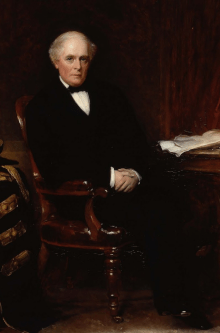
Madden is born at Wormwood Gate, Dublin, on August 22, 1798, to Edward Madden, a silk manufacturer, and his wife Elizabeth (née Corey). His father marries twice and fathers twenty-one children.
In 1828, Madden marries Harriet Elmslie, daughter of John Elmslie of Jamaica, a slave-owner. He then practises medicine in Mayfair, London, for the next five years.
Madden becomes a recruit to the abolitionist cause. The transatlantic slave trade has been illegal in the British Empire since 1807, but slavery itself remains legal.
From 1833, Madden is employed in the British civil service, first as a justice of the peace in Jamaica, where he is one of six Special Magistrates sent to oversee the eventual liberation of Jamaica’s slave population, according to the terms of the Slavery Abolition Act 1833. From 1835 he is Superintendent of the freed Africans in Havana, Cuba. In 1839 he leaves Cuba for New York, where he provides important evidence for the defense of the former slaves who had taken over the slave ship La Amistad.
In 1840 Madden becomes Her Majesty’s Special Commissioner of Inquiry into the British Settlements on the West Coast of Africa. His task is to investigate how the slave trade is continuing to operate on the west coast of Africa, despite the shipping of African slaves across the Atlantic Ocean now being illegal. He finds that London-based merchants (including WhigMPMatthew Forster) are actively helping the slave traders, and that crudely disguised forms of slavery exist in all the coast settlements. He particularly condemns the actions of George Maclean, the Governor of Gold Coast.
In 1847 Madden becomes the Colonial Secretary of Western Australia and arrives in the colony in 1848. After receiving news of their oldest son’s death back in Ireland, he and Harriet return to Dublin in 1849. In 1850 he is named secretary of the Office for Loan Funds in Dublin.
Madden also campaigns against slavery in Cuba, speaking to the General Anti-Slavery Convention in London on the topic of slavery in Cuba.
Madden dies at his home in Booterstown, just south of Dublin, on February 5, 1886, and is interred in Donnybrook Cemetery.
Besides several travel diaries (Travels in Turkey, Egypt etc. in 1824–27, 1829, and others (1833)), his works include the historically significant book The United Irishmen, their lives and times (1842-1860, 11 Vols.), which contains numerous details on the Irish Rebellion of 1798, including testimonies collected from veteran rebels and from family members of deceased United Irishmen.
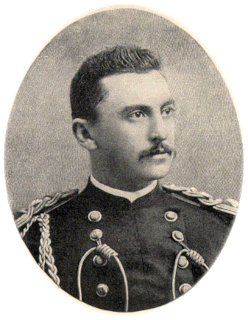
During the first part of 1879, O’Neill responds to an item in The Washington Star calling for men to migrate to the Arizona Territory. He arrives in Phoenix, riding a burro, in September of the same year. Upon his arrival in town, he is hired as a printer by the Phoenix Herald. By late 1880, he has become bored with the position and seeks to experience the “Real West” in the boomtown of Tombstone, Arizona.
In Tombstone, O’Neill takes the opportunity to experience the local saloons before taking a job with The Tombstone Epitaph. By mid-1881 he again feels a wanderlust and leaves town. Where he goes next is unknown, one story having him journey to Hawaii, unlikely due to the travel time, and then traveling through California. He is known to visit Santa Fe before going to Albuquerque, New Mexico and works briefly as a court reporter. In early 1882, he is back in Phoenix working as a deputy to Marshal Henry Garfias. Several weeks later he moves to Prescott, his home for the next fifteen years.
In Prescott O’Neill rapidly progresses in his journalistic career. Starting as a court reporter, he soon founds his own newspaper, Hoof and Horn, a paper for the livestock industry. He becomes the editor of the Arizona Miner weekly newspaper in 1884 to February 1885.
In 1886, O’Neill becomes captain of the Prescott Grays, the local unit of the Arizona Militia. On February 5, 1886, Dennis Dilda, a convicted murderer, is hanged. O’Neill and the Prescott Grays stand honor guard for the event. When the trap drops, O’Neill faints, which causes him severe embarrassment. He later writes a story called “The Horse of the Hash-Knife Brand.” In it, a member of a posse admits to nearly fainting at the hanging of a horse thief.
On April 27, 1886, O’Neill marries Pauline Schindler. They have a son, but he dies shortly after being born premature.
On March 20, 1889, four masked men, William Sterin, John Halford, Daniel Harvick, and J. J. Smith, rob the Atlantic and Pacific Railroad passenger train in Canyon Diablo. A four-man posse, made up of O’Neill, Jim Black, Carl Holton, and Ed St. Clair, is soon formed and they take off after the robbers. On April 1, the posse catches up with the robbers. After exchanging rifle shots, the posse captures the four men. During the fight, no men are injured, but one of the robber’s horses is killed. All four are sent to the Yuma Territorial Prison but are pardoned eight years later. There is unfounded speculation that, in 1898, Sterin enlists under a false name in the Rough Riders and is killed in action in the Battle of San Juan Hill.
After his term is up, O’Neill is unanimously elected mayor of Prescott. In 1894 and 1896 he runs for Delegate to the United States House of Representatives from Arizona Territory, running on the People’s Party ticket.
In 1897, after years of speculating on mines, O’Neill sells a group of claims near the Grand Canyon to Chicago backers, who also propose building a railroad from Williams to the mines and the South Rim. He becomes a director of the development companies, and soon begins railroad surveys, mine developments, and building a smelter. He also uses profits to begin building rental buildings, leading him to financial independence.
O’Neill also helps introduce a bill allowing women to vote in municipal elections in 1897. Although he convinces his Populist friends to sign the bill into law, the high court dismisses the bill in 1899.
In 1898, war breaks out between the United States and Spain. O’Neill joins Theodore Roosevelt‘s Rough Riders and becomes Captain of Troop A. First Lieutenant Frank Frantz serves as O’Neil’s Deputy Commander. Along with Alexander Brodie and James McClintock, he tries to make an entire regiment made up of Arizona cowboys. Eventually though, only three troops are authorized.
The Rough Riders land at Daiquirí on June 22, 1898. Two Buffalo Soldiers of the 10th Cavalry Regiment fall overboard. Upon seeing this, O’Neill jumps into the water in full uniform and sabre. He searches for the men for two minutes before having to come up for breath.
On June 25, 1898, the Rough Riders see their first action. O’Neill leads his men at the front of the line in the Battle of Las Guasimas, capturing the Spanish flank. During the action he sees several men, who he believes to be Spaniards, across the road from him, and shouts “Hostiles on our right, fire at will!” He learns after the firing ceases that the men he exchanged shots with were Cuban rebels.
On July 1, 1898, at about 10:00 a.m., the Rough Riders and the 10th Cavalry are stationed below Kettle Hill. The Spaniards, who are on top of the hill, pour Mauser rifle fire down on the Americans. O’Neill is killed in action.
Before the fighting is over, O’Neill’s men bury him on the slope of San Juan Hill. After the war, his family and friends enlist help from the United States Department of War to find and recover his body. After six men fail to find the site, the War Department sends Henry Alfred Brown, the Rough Riders’ Chaplain, to find him. Despite it being eight months since O’Neill’s death, Chaplain Brown locates the site within two hours after arriving in Santiago de Cuba. The well-preserved body is exhumed, placed in a coffin, and returned to the United States on the Army transport Crook. He is buried at Arlington National Cemetery, in Arlington County, Virginia. The epitaph on his gravestone reads, “Who would not die for a new star on the flag?”
On July 3, 1907, a monument by sculptor Solon Borglum is dedicated to O’Neill and the other Rough Riders in their memory in Prescott, Arizona. Seven thousand people gather to witness the unveiling.
Corrigan is born in Thomas Street, Dublin, on December 2, 1802, the son of a dealer in agricultural tools. He is educated in St. Patrick’s College, Maynooth, which then has a department for secular students apart from the ecclesiastical seminary. He is attracted to the study of medicine by the physician in attendance and spends several years as an apprentice to the local doctor, Edward Talbot O’Kelly. He studies medicine in Dublin later transferring to Edinburgh Medical School where he receives his degree as MD in August 1825.
Corrigan returns to Dublin in 1825 and sets up a private practice at 11 Ormond Street. As his practice grows, he moves to 12 Bachelors Walk in 1832, and in 1837 to 4 Merrion Square West. Apart from his private practice, he holds many public appointments; he is a physician to St. Patrick’s College, Maynooth, the Sick Poor Institute, the Charitable Infirmary Jervis Street (1830–43) and the House of Industry Hospitals (1840–66). His work with many of Dublin’s poorest inhabitants leads to him specialising in diseases of the heart and lungs, and he lectures and publishes extensively on the subject. He is known as a very hard-working physician, especially during the Great Famine. At the 1870 Dublin City by-election he is elected a LiberalMember of Parliament for Dublin City. In parliament he actively campaigns for reforms to education in Ireland and the early release of Fenian prisoners. He does not stand for re-election in 1874. His support for temperance and Sunday closing of pubs apparently antagonises his constituents and alcohol companies.
In 1847, Corrigan is appointed physician-in-ordinary to the Queen in Ireland. Two years later he is given an honorary MD from Trinity College Dublin (TCD). In 1846 his application to become a fellow of the Royal College of Physicians of Ireland (RCPI) is blocked. In 1855 he gets around this opposition by sitting the college’s entrance exam with the newly qualified doctors. He becomes a fellow in 1856, and in 1859 is elected president, the first Catholic to hold the position. He is re-elected president an unprecedented four times. There is a statue of him in the Graves’ Hall of the college by John Henry Foley.
Corrigan is President of the Royal Zoological Society of Dublin, the Dublin Pathological Society, and the Dublin Pharmaceutical Society. From the 1840s he is a member of the senate of the Queen’s University and in 1871 becomes its vice-chancellor. In 1866 he is created a baronet, of Cappagh and Inniscorrig in the County of Dublin and of Merrion Square in the City of Dublin, partly as a reward for his services as Commissioner of Education for many years. He is a member of the board of Glasnevin Cemetery and a member of the Daniel O’Connell Memorial Committee. Armand Trousseau, the French clinician, proposes that aortic heart disease should be called Corrigan’s disease.
Corrigan marries Joanna Woodlock, the daughter of a wealthy merchant, and sister of the Bishop Dr. Bartholomew Woodlock, in 1827. They have six children, three girls and three boys. His eldest son, Captain John Joseph Corrigan, Dragoon Guards, dies on January 6, 1866, and is interred at the Melbourne General Cemetery, Melbourne, Australia.
Corrigan dies at Merrion Square, Dublin, on February 1, 1880, having suffered a stroke the previous December. He is buried in the crypt of St. Andrew’s Church, Westland Row, Dublin. His grandson succeeds him to the baronetcy.
The Corrigan Ward, a cardiology ward in Beaumont Hospital, Dublin, is named in his honour. Part of his family crest is also part of the Beaumont Hospital crest.
Brigid GanlyHRHA, Irish painter and sculptor, is born Rosaleen Brigid O’Brien on January 29, 1909, in Dublin.
Ganly is one of five children born to Dermod O’Brien and his wife Mabel Smiley. Her father is a painter. His grandfather is the Irish republicanWilliam Smith O’Brien. She grows up in Country Limerick at a farm in Cahirmoyle until the family moves to Fitzwilliam Square in Dublin. She goes on to attend the Metropolitan School of Art where she has the opportunity to study under Patrick Tuohy, Seán Keating and Oliver Sheppard. She is a talented sculptor and wins several awards, including the Taylor scholarship in 1929, for her allegorical male nude, Pity. She spends time in Paris in 1951 where she trains with André Lhote. She travels to Greece where Lhote continues to influence her work.
Ganly also studies painting in the Royal Hibernian Academy School where she has Margaret Clarke and Seán O’Sullivan as teachers. She is made an associate of the Royal Hibernian Academy in 1928 and becomes a member in 1935, though in 1969 she resigns her membership in protest at the lack of young artists being given the opportunity to exhibit. In 1972 she is made an honorary member and returns.
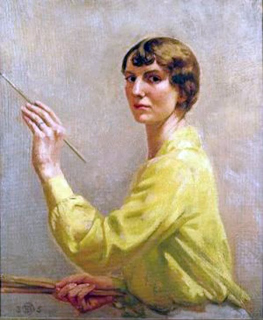
Ganly is a representational artist and while known as a portrait artist, she also paints landscapes, interiors and may be best known for her still lifes. Some of her best works are portraits of her husband, her sister Ethel, her father, and her friend Sheila Pim. She illustrates the book-jackets of Pym’s works. She has many exhibitions, with the RHA and the Water Colour Society of Ireland. There is a retrospective of her life in 1998 in the Hugh Lane Gallery and her works are in the collections there. She is also in the collections of the Waterford Municipal Gallery, Crawford Art Gallery, Cork and in The National Self-Portrait Collection of Ireland. She is part of the 2014 exhibition “Irish Women Artists: 1870-1970.”
Ganly’s sister-in-law is Kitty Wilmer O’Brien with whom she often exhibits. She marries Andrew Ganly, a dental surgeon and writer, in 1936. He dies in 1982. They have two children, Eoghan and Phillida.
Davidson is the sixth of ten children of clerk of petty session, Edward Ellice Davidson, and Lucy Rising Davidson (née Doe). Her mother dies in 1888, and it is presumed that she receives a private education but as the family are not affluent, the details are unclear. She goes on to attend the Dublin Metropolitan School of Art (DMSA) from 1895 to 1905. While at the DMSA, she wins prizes in 1895 and 1896 and is awarded a scholarship and free studentship at the Royal Dublin Society (RDS) in 1897, the same year her father dies. She completes her studies in 1905. In the early 1910s, she is living in Rathmines and spends some time in England and Wales.
Davidson is commissioned by Switzer’s department store on Grafton Street to draw costumes in 1899. In 1909, her painting After Rain is exhibited by the Dublin Sketching Club, with her continuing to show work there until 1920. She exhibits The Bonfire with the Water Colour Society of Ireland in 1912, becoming a committee member in 1934 and continuing to exhibit with them until 1954. In 1914, she is one of the artists included in a sale of paintings to aid Belgian refugees. She is first exhibited at the Royal Hibernian Academy (RHA) in 1914, with The Student. Her painting exhibited by the RHA in 1916, The Harbour, St. Ives, demonstrates an influence from Stanhope Forbes and the Newlyn School, with a bright palette and contrasting illumination, which become characteristic of her work. She illustrates C. H. Bretherton’s collection of humorous poems and recollections about London Zoo, A Zoovenir (1919).
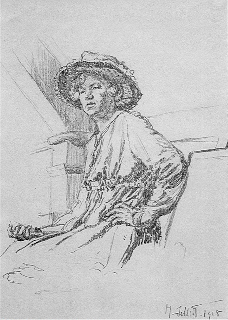
Davidson holds a joint exhibition with Mainie Jellett in 1920, at Mill’s Hall, Merrion Row, Dublin. Jellett produces a pencil portrait of Davison (pictured above), which shows her in a straw hat she frequently wears. The RHA exhibits Davidson’s oil painting, The Flax Pullers, in 1921. This work shows an influence from Paul Henry and French Impressionism in her use of colour-blocking. In the early 1920s, she travels to Switzerland, Belgium, and France, producing works such as Fish Market, Bruges. She lives in Paris in the late 1920s, exhibiting at the Salon de la Societé Nationale in 1924 and 1930. She places a self-portrait in her depiction of a peasant gathering, The Country Races. Reproductions of her drawing of Leinster House and Christ Church Cathedral by Bulmer Hobson are included in A Book of Dublin (1929). Her landscape, Low Tide, Wicklow, which is exhibited at the RHA in 1934, and Boats at Wicklow, Dusk show her ability to depict reflections in water. She continues to paint scenes of rural life, including Cottages – Keel, Achill, which shows an influence from Jack Butler Yeats in her use of space and colour. The fact that her family is not wealthy likely influences her choice of poorer people as her subjects, depicting them in a sympathetic manner. Her work is part of the painting event in the art competitions at the 1928 Summer Olympics.
Davidson’s paintings are exhibited at the Contemporary Picture Galleries, Dublin in 1930, alongside Yeats, Evie Hone, and Harry Kernoff. She is a member of the Picture Hire Club, 24 Molesworth Street, Dublin from 1941 to 1942, and is a frequent contributor to the Munster Fine Arts Club. Her work is exhibited at the Salon des Beaux Arts, Paris, the Royal Academy of Arts, London, and in Amsterdam. A large number of her works from the 1930s show the Irish-speaking area of Galway, Claddagh, such as Night in Claddagh, exhibited with the RHA in 1933. Her Irish landscapes, such as Claddagh Cottages, are included in the Oireachtas Art Exhibitions from 1932 to 1946. From around 1934, she is a member of the Society of Dublin Painters, exhibiting with them from 1939 to 1954. She influences the Society’s move toward the avant-garde in the 1940s. She is elected associate to the RHA in 1940 and continues to exhibit there until her death. Her 1946 work, Gorta, shows influence from Zola, Rilke, Dostoyevsky and Picasso.
Davidson teaches drawing at her studio at 1 Earlsfort Terrace, Dublin. Her pupils include Bea Orpen, Anne Yeats, and Mo Irwin. She also is a teacher at a number of Dublin schools, such as Belgrave school, Rathmines, Wesley College, St. Stephen’s Green, and Castle Park School, Dalkey. She travels to Abbeyleix, County Laois, once a week to teach at Glenbawn boarding school.
As well as painting, Davidson writes a number of plays, short stories, and monologues under a pseudonym, “Ulick Burke.” In 1927, a collection of her poems and Donegal rhymes is published. In 1931, Hilton Edwards directs her stage play Bride, at the Gate Theatre. Her short story, Her Only Son, is published in The Bell under a pseudonym in 1942. In 1935, she is a founder-member of the Torch Theatre, Dublin. She designs scenery, and is the co-director with Hugh Hyland in 1936, under the stage name “Jennifer Maude.”
Davidson dies at her home at 4 Wilton Terrace, Dublin on March 29, 1954. She is buried in an unmarked grave in Mount Jerome Cemetery. The National Gallery of Ireland (NGI) holds her 1938 portrait of Yeats, as well as her crayon drawing of Sarah Purser. She is a regular attendee at Purser’s “Second Tuesdays” gatherings. The Abbey Theatre holds her portrait of Joseph Holloway. She bequeaths The Golden Shawl to the Hugh Lane Gallery, which is a large self-portrait. Two of her works are included in the NGI’s 1987 exhibition, Irish Women Artists from the Eighteenth Century to the Present Day.
Byrne is born on March 20, 1780, at Ballylusk, Monaseed, County Wexford, the eldest son of Patrick Byrne, a middling Catholic farmer, and Mary (née Graham). He joins the United Irishmen in the spring of 1797 and, although only seventeen, becomes one of the organisation’s most active agents in north Wexford.
When rebellion engulfs his home district on May 27, 1798, Byrne assumes command of the local Monaseed corps and rallies them at Fr. John Murphy‘s camp on Carrigrew Hill on June 3. They fight at the rebel victory at Tubberneering on June 4 and the unsuccessful attempt to capture Arklow five days later. After the dispersal of the main rebel camp at Vinegar Hill on June 21, he accompanies Murphy to Kilkenny but begins the retreat to Wexford four days later. Heavily attacked at Scollagh Gap, he is one of a minority of survivors who spurn the proffered amnesty and join the rebel forces in the Wicklow Mountains. He is absent when the main force defeats a cavalry column at Ballyellis on June 30 but protects the wounded who are left in Glenmalure when the rebels launch a foray into the midlands the following week. He takes charge of the Wexfordmen who regain the mountains and fight a series of minor actions in the autumn and winter of 1798 under the militant Wicklow leader Joseph Holt. On November 10, he seizes an opportunity to escape into Dublin, where he works as a timber-yard clerk with his half-brother Edward Kennedy.
Byrne is introduced to Robert Emmet in late 1802 and immediately becomes a prominent figure in his insurrection plot. He is intended to command the many Wexford residents of the city during the planned rising of 1803. On July 23, 1803, he assembles a body of rebels at the city quays, which disperse once news is received that the rising has miscarried. At Emmet’s request, he escapes to Bordeaux in August 1803 and makes his way to Paris to inform Thomas Addis Emmet and William James MacNeven of the failed insurrection. In his Paris diary, the older Emmet recalls passing on “the news brought by the messenger” to Napoleon Bonaparte‘s military advisors.
Byrne enlists in the newly formed Irish Legion in December 1803 as a sub-lieutenant and is promoted to lieutenant in 1804 but only sees garrison duty. The regiment eventually moves to the Low Countries, and is renamed the 3rd Foreign Regiment in 1808, the year he is promoted to captain. He campaigns in Spain until 1812, participating in counterinsurgency against Spanish guerillas. He fights in Napoleon’s last battles and is appointed Chevalier de la Légion d’Honneur on June 18, 1813. With Napoleon’s defeat in 1815, the former Irish Legion, with its undistinguished and somewhat unfortunate history, is disbanded.
Though a supporter of Napoleon during the Hundred Days, Byrne is not involved in his return, yet he is included in an exclusion order from France which he successfully appeals. In November 1816, he swears the oath of loyalty to the now Royal Order of the Legion of Honour and becomes a naturalised French subject by royal decree on August 20, 1817. He becomes a half-pay captain but is recalled for active service in 1828 and serves as a staff officer in the French expeditionary force in Morea in support of Greek independence (1828–1830). His conduct on this campaign leads to his promotion as chef de bataillon (lieutenant-colonel) of the 56th Infantry Regiment in 1830.
After five years of service in garrisons around France, including counterinsurgency duty in Brittany, Byrne retires from the army in 1835. On December 24, 1835, he marries a Scottish woman, Frances “Fanny” Horner, at the British Embassy Chapel in Paris. They live in modest circumstances in various parts of Paris and remain childless. Though it is unclear when he is awarded the Chevalier de St Louis, having initially applied for it unsuccessfully in 1821, this distinction is mentioned in his tomb inscription, under his Legion of Honour. John Mitchel, who visits him regularly in Paris in the late 1850s, recalls Byrne sporting the rosette of the Médaille de Sainte Hélène, awarded in 1857 to surviving veterans of Napoleon’s campaigns.
An early list of Irish Legion officers describes Byrne as an upright and disciplined man, with little formal instruction but aspiring to improve himself. He becomes fully fluent in French but also learns Spanish and his language skills are a useful asset in various campaigns. Because of his suspected Bonapartist leanings, he is under police surveillance for some time after the Bourbon Restoration. He does, however, cultivate a wide social circle in Paris over the years. Various references throughout his writings testify to an inquisitive and cultured mind. He intended publishing a lengthy criticism of Gustave de Beaumont‘s Irlande, sociale, politique et religieuse (1840), claiming that it misrepresented the 1798 rebellion, but he withdraws it after meeting the author, not wishing to prejudice the reception of such an important French work on “the sufferings of Ireland.”
A lifelong nationalist, Byrne acts as Paris correspondent of The Nation in the 1840s and is a well-known figure in the Irish community there. He works in the 1850s on his notably unapologetic and candid Memoirs, an early and significant contribution to the Irish literature of exile. This autobiography is acclaimed by nationalists when published posthumously by his wife in 1863, with a French translation swiftly following in 1864. His detailed testimony of key battles of the 1798 rebellion in the southeast and Emmet’s conspiracy are written with the immediacy of an eyewitness and make them an invaluable contribution to that period of Irish history.
Byrne dies on January 24, 1862, in Paris, and is buried in Montmartre Cemetery. On November 25, 1865, John Martin writes of him: “In truth he was a beautiful example of those natures that never grow old. A finer, nobler, gentler, kindlier, gayer, sunnier nature never was than his, and to the last he had the brightness and quickness and cheeriness of youth”.
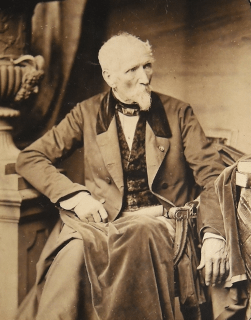
Byrne’s engaging and dispassionate Memoirs have ensured his special status among Irish nationalists. Because of his longevity he is the only United Irishman to have been photographed. His wife had sketched him in profile in middle age, and the photograph taken almost three decades later shows the same, strong features though those of a frail, but dignified man of 79 years.
(From: “Byrne, Miles” by Ruan O’Donnell and Sylvie Kleinman, Dictionary of Irish Biography, http://www.dib.ie, October 2009, last revised August 2024 | Pictured: Photograph of Miles Byrne taken in Paris in 1859)




 seamus dubhghaill