seamus dubhghaill

Promoting Irish Culture and History from Little Rock, Arkansas, USA


Leave a comment

Birth of Explorer Robert O’Hara Burke

robert-o'hara-burke

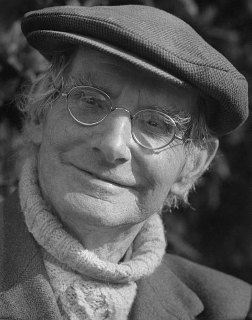
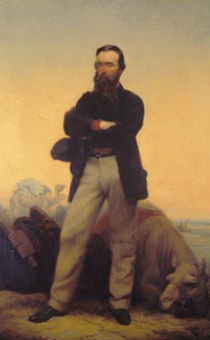
Robert O’Hara Burke, Irish soldier and police officer who achieves fame as an Australian explorer, is born in St. Clerens, County Galway on May 6, 1821. He is the leader of the ill-fated Burke and Wills expedition which is the first expedition to cross Australia from south to north.

Burke is the second of three sons of James Hardiman Burke, an officer in the British army 7th Royal Fusiliers, and Anne Louisa Burke (nee O’Hara).

Burke enters the Royal Military Academy, Woolwich in May 1835. In December 1836 he fails his probationary exam and goes to Belgium to further his education. In 1841, he enters the Austrian army and spends most of his time posted to northern Italy. Towards the end of 1847 he suffers health problems and ultimately resigns from the Austrian army in June 1848.

After returning to Ireland in 1848, he joins the Irish Constabulary (later the Royal Irish Constabulary). He does his cadet training at Phoenix Park Depot in Dublin between November 1849 and January 1850. At the end of 1850 he transfers to the Mounted Police in Dublin.

Burke emigrates to Australia, arriving in Hobart, Tasmania on February 12, 1853, and promptly sails for Melbourne. On April 1, 1853, he joins the recently established Victoria Police force.

After the South Australian explorer John McDouall Stuart reaches the centre of Australia, the South Australian parliament offers a reward of £2,000 for the promotion of an expedition to cross the continent from south to north, generally following Stuart’s route. In June 1860, Burke is appointed to lead the Victorian Exploring Expedition with William John Wills, his third-in-command, as surveyor and astronomical observer.

The expedition leaves Melbourne on August 20, 1860, with a total of 19 men, 27 camels and 23 horses. They reach Menindee on September 23, 1860, where several people resign.

Cooper Creek, 400 miles further on, is reached on November 11, 1860, by the advance group, the remainder being intended to catch up. After a break, Burke decides to make a dash to the Gulf of Carpentaria, leaving on December 16, 1860. William Brahe is left in charge of the remaining party. The small team of Burke, William Wills, John King and Charley Gray reach the mangroves on the estuary of the Flinders River, near where the town of Normanton now stands, on February 9, 1861. They never see open ocean due to flooding rains and swamps.

Already weakened by starvation and exposure, progress on the return journey is slow and hampered by the tropical monsoon downpours of the wet season. Gray dies four days before they reach the rendezvous at Cooper Creek. The other three rest for a day when they bury him. They eventually reach the rendezvous point on April 21, 1861, nine hours after the rest of the party had given up waiting and left, leaving a note and some food, as they have not been relieved by the party supposed to be returning from Menindee.

Burke’s party attempts to reach Mount Hopeless, the furthest outpost of pastoral settlement in South Australia, which is closer than Menindee, but fail and return to Cooper Creek. While waiting for rescue Wills dies of exhaustion and starvation. Soon after, Burke also dies, at a place now called Burke’s Waterhole on Cooper Creek in South Australia. The exact date of Burke’s death is uncertain but has generally been accepted to be June 28, 1861.

King survives with the help of Aborigines until he is rescued in September by Alfred William Howitt. Howitt buries Burke and Wills before returning to Melbourne. In 1862 Howitt returns to Cooper Creek and disinters Burke and Wills, taking them first to Adelaide and then by steamer to Melbourne where they are laid in state for two weeks. On January 23, 1863, Burke and Wills receive a State Funeral and are buried in Melbourne General Cemetery. Ironically, on that same day John McDouall Stuart and his companions, having successfully completed the south-north crossing, are received back at a large ceremony in Adelaide.


Leave a comment

Birth of Bing Crosby

bing-crosby

Harry Lillis “Bing” Crosby Jr., American singer and actor and descendant of Irish immigrants, is born on May 3, 1903, in Tacoma, Washington. His trademark warm bass-baritone voice makes him one of the best-selling recording artists of all time, selling over one billion analog records and tapes, as well as digital compact discs and downloads around the world.

Crosby’s parents are Harry Lillis Crosby Sr. (1870–1950), a bookkeeper of English descent, and Catherine Helen “Kate” (née Harrigan; 1873–1964), a second-generation Irish American. An ancestor, Simon Crosby, emigrates to America in the 17th century, and one of his descendants marries a descendant of Mayflower passenger William Brewster.

The first multimedia star, from 1931 to 1954 Crosby is a leader in record sales, radio ratings, and motion picture grosses. His early career coincides with technical recording innovations such as the microphone. This allows him to develop a laid-back, intimate singing style that influences many of the popular male singers who follow him, including Perry Como, Frank Sinatra, Dick Haymes, and Dean Martin. Yank, the Army Weekly magazine says that he is the person who has done the most for American soldiers’ morale during World War II.

The biggest hit song of Crosby’s career is his recording of Irving Berlin‘s “White Christmas,” which he introduces on a Christmas Day radio broadcast in 1941. The song then appears in his 1942 movie Holiday Inn. His record hits the charts on October 3, 1942, and rises to No. 1 on October 31, where it stays for eleven weeks.

In 1948, American polls declare him the “most admired man alive,” ahead of Jackie Robinson and Pope Pius XII. Also in 1948, Music Digest estimates that his recordings fill more than half of the 80,000 weekly hours allocated to recorded radio music.

Crosby wins an Academy Award for Best Actor for his role as Father Chuck O’Malley in the 1944 motion picture Going My Way and is nominated for his reprise of the role in The Bells of St. Mary’s opposite Ingrid Bergman the next year, becoming the first of six actors to be nominated twice for playing the same character. In 1963, he receives the first Grammy Global Achievement Award. He is one of 33 people to have three stars on the Hollywood Walk of Fame, in the categories of motion pictures, radio, and audio recording.

Crosby influences the development of the postwar recording industry. After seeing a demonstration of an early Ampex reel-to-reel tape recorder he places a large order for their equipment and convinces ABC to allow him to tape his shows. He becomes the first performer to pre-record his radio shows and master his commercial recordings onto magnetic tape. Through the medium of recording, he constructs his radio programs with the same directorial tools and craftsmanship (editing, retaking, rehearsal, time shifting) used in motion picture production, a practice that becomes an industry standard. In addition to his work with early audio tape recording, he helps to finance the development of videotape, purchases television stations, breeds racehorses, and co-owns the Pittsburgh Pirates baseball team.

On October 13, 1977, Crosby flies alone to Spain to play golf and hunt partridge. The following day, at the La Moraleja Golf Course near Madrid, he plays 18 holes of golf. As Crosby and his party head back to the clubhouse, Crosby says, “That was a great game of golf, fellas.” At about 6:30 PM, he collapses about 20 yards from the clubhouse entrance and dies instantly from a massive heart attack. At Reina Victoria Hospital he is administered the last rites of the Catholic Church and is pronounced dead. On October 18, following a private funeral Mass at St. Paul’s Catholic Church in Westwood, he is buried at Holy Cross Cemetery in Culver City, California. A plaque is placed at the golf course in his memory.


Leave a comment

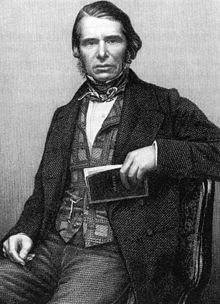
Birth of Biblical Scholar James Henthorn Todd

james-henthorn-todd

James Henthorn Todd, biblical scholar, educator, and Irish historian, is born in Rathfarnham, a Southside suburb of Dublin, on April 23, 1805. He is noted for his efforts to place religious disagreements on a rational historical footing, for his advocacy of a liberal form of Protestantism, and for his endeavours as an educator, librarian, and scholar in Irish history.

Todd is the son of Charles Hawkes Todd, a professor of surgery, and Eliza Bentley, and is the oldest of fifteen children. Noted physician Robert Bentley Todd is among his younger brothers. His father dies a year after he receives a B.A. from Trinity College, Dublin in 1825, diminishing his prospects for success. However, he is able to remain at the college by tutoring and editing a church periodical.

Todd obtains a premium in 1829, and two years later is elected Fellow, taking deacon’s orders in the same year. From that time until 1850, when he becomes a Senior Fellow, he is among the most popular tutors in Trinity College.

Todd takes priest’s orders in 1832. He begins publishing in earnest, including papers on John Wycliffe, church history, and the religious questions of his day. He is Donnellan Lecturer in 1838 and 1839, publishing works related to the Antichrist in which he opposes the views of the more extreme of his co-religionists who apply this term to the Roman Catholicism and the Pope. In 1840 he graduates Doctor of Divinity.

In 1837 Todd is installed Treasurer at St. Patrick’s Cathedral in Dublin and becomes Precentor in 1864. His style of preaching is described as simple and lucid, and his sermons interesting. He co-founds Saint Columba’s College in 1843, a school which promotes the Irish language for those who intend to take orders, as well as promoting the principles of the Church of Ireland.

In 1849 Todd is made Regius Professor of Hebrew at Trinity, and a Senior Fellow the following year. In 1852 he is appointed Librarian, and working alongside John O’Donovan and Eugene O’Curry, he classifies and arranges the collection of manuscripts. When his office receives money, he spends it on the acquisition of manuscripts and rare books, and he deserves much credit for the library’s high ranking as one of the chief libraries of Europe.

Todd’s secular achievements are no less remarkable. In 1840 he co-founds the Irish Archaeological Society and acts as its honorary secretary. He is elected a member of the Royal Irish Academy and strives actively to acquire transcripts and accurate accounts of Irish manuscripts from foreign libraries. He is honorary secretary from 1847 to 1855, and president from 1856 to 1861. In 1860 he is given an ad eundem degree at the University of Oxford.

Todd is a notable person among notable people. His work is widely respected and cited. Among his friends and acquaintances are lawyer and poet Sir Samuel Ferguson, Conservative Member of Parliament (MP) and Roman Catholic convert Edwin Wyndham-Quin, fellow historian William Reeves, artist Sir George Petrie, and the Stokes family (physician father William, future lawyer and Celticist son Whitley, and future antiquarian daughter Margaret).

James Henthorn Todd dies at his house in Rathfarnham on June 28, 1869, and is buried in the churchyard of St. Patrick’s Cathedral.


Leave a comment

Birth of Minister William Dool Killen

william-dool-killen

William Dool Killen, a minister of the Presbyterian Church in Ireland and church historian, is born at Church Street, Ballymena, County Antrim, on April 16, 1806.

Killen is the third of four sons and nine children of John Killen (1768–1828), a grocer and seedsman in Ballymena, by his wife Martha, daughter of Jesse Dool, a farmer in Duneane. His paternal grandfather, a farmer at Carnmoney, marries Blanche Brice, a descendant of Edward Brice. A brother, James Miller Killen (1815–1879), is a minister in Comber, County Down. Thomas Young Killen is his father’s great-nephew.

After attending local primary schools, Killen goes to Ballymena Academy around 1816, and in November 1821 enters the collegiate department of the Royal Belfast Academical Institution, under James Thomson. In 1827, he is licensed to preach by the Presbytery of Ballymena, and on November 11, 1829 he is ordained minister at Raphoe, County Donegal.

In July 1841 Killen is appointed, by the General Assembly of the Presbyterian Church in Ireland, its professor of church history, ecclesiastical government, and pastoral theology, in succession to James Seaton Reid. He concentrates on history. When Assembly’s College, Belfast is set up in 1853, he becomes one of the professors there. In 1869 he is appointed president of the college, in succession to Henry Cooke, and undertakes fundraising for professorial endowments and new buildings. In 1889 he resigns his chair but continues as president.

During his career Killen receives the degrees of D.D. (1845) and of LL.D. (1901) from the University of Glasgow. His portrait, painted by Richard Hooke, hangs in the Gamble library of the college.

William Dool Killen dies on January 10, 1902, and is buried in Balmoral Cemetery, Belfast, where a monument marks his resting place.


Leave a comment

Birth of Surgeon Edward Hallaran Bennett

edward-hallaran-bennett

Edward Hallaran Bennett, surgeon, is born at Charlotte Quay, Cork, County Cork on April 9, 1837, the son of a barrister. He is best remembered for describing Bennett’s fracture.

Bennett attends Hamblin and Porter’s School in Cork, and the Academic Institute in Hardcourt Street. He enrolls in medical school at Trinity College, Dublin in 1854 at the age of 17. At college he studies under professor Robert Smith, under whom he develops an interest in bone fractures. He gains the degrees of BA and MB before graduating with a M.Ch. in 1859 and MD in 1864. He is conferred with a fellowship of the Royal College of Surgeons in Ireland (RCSI) in 1863.

Following a period as an anatomy demonstrator Bennett is appointed as Surgeon to Sir Patrick Dun’s Hospital in 1864. He succeeds Robert Smith as Professor of Surgery in 1873 following his death. He studies fractures, joint dislocations and bone diseases, recording them at the Pathology Museum at Trinity College. He describes his eponymous fracture at the British Medical Association meeting in Cork in 1880 and today he is best remembered for the fracture he describes which still bears his name. Perhaps more importantly, however, he is accredited with having introduced antiseptic techniques to Dublin hospitals. Bennett also serves as President of the RCSI.

Edward Hallaran Bennett dies in Dublin on June 21, 1907.


Leave a comment

Birth of Sir Charles Edward Trevelyan

charles-edward-trevelyan

Sir Charles Edward Trevelyan, 1st Baronet, KCB, British civil servant and colonial administrator, is born in Taunton, Somerset, United Kingdom on April 2, 1807.

Trevelyan is the son of a Cornish clergyman, the Venerable George Trevelyan, who becomes Archdeacon of Taunton, and his wife Harriet, daughter of Sir Richard Neave. As a young man, he works with the colonial government in Calcutta, India. In the late 1850s and 1860s he serves there in senior-level appointments.

Trevelyan’s most enduring mark on history may be the quasi-genocidal anti-Irish racial sentiment he expresses during his term in the critical position of administrating relief to the millions of Irish peasants suffering under the Great Famine, an Gorta Mór, as Assistant Secretary to HM Treasury (1840–1859) under the Whig administration of Lord John Russell.

During the height of the famine Trevelyan deliberately drags his feet in disbursing direct government food and monetary aid to the Irish due to his strident belief in laissez-faire economics and the free hand of the market. In a letter to an Irish peer, Thomas Spring Rice, 1st Baron Monteagle of Brandon, a former Chancellor of the Exchequer, he describes the famine as an “effective mechanism for reducing surplus population” as well as “the judgement of God” and writes that “The real evil with which we have to contend is not the physical evil of the Famine, but the moral evil of the selfish, perverse and turbulent character of the people.”

Trevelyan never expresses remorse for his comments, even after the full dreadful scope of the Irish famine becomes known. His defenders claim that other factors than Trevelyan’s personal acts and beliefs are more central to the problem.

Sir Charles Trevelyan dies at the age of 70 at 67 Eaton Square, London, on June 19, 1886.

Trevelyan is referred to in the modern Irish folk song The Fields of Athenry about an Gorta Mór. For his actions, or lack thereof, during the Great Famine, he is commonly considered one of the most detested figures in Irish history, along with the likes of Oliver Cromwell.


Leave a comment

Birth of Playwright Seán O’Casey

sean-ocasey

Seán O’Casey, Irish playwright renowned for realistic dramas of the Dublin slums in war and revolution, in which tragedy and comedy are juxtaposed in a way new to the theatre of his time, is born at 85 Upper Dorset Street in Dublin on March 30, 1880.

Born as John Casey into a lower middle-class Irish Protestant family, his father dies when he is six, and thereafter the family becomes progressively poorer. With only three years of formal schooling, he educates himself by reading. He starts work at 14, mostly at manual labour, including several years with the Irish railways.

O’Casey becomes caught up in the cause of Irish nationalism, and he changes his name to its Irish form and learns the Irish language. His attitudes are greatly influenced by the poverty and squalor he witnesses in Dublin’s slums and by the teachings of the Irish labour leader Jim Larkin. He becomes active in the labour movement and writes for The Irish Worker. He also joins the Irish Citizen Army, a paramilitary arm of the Irish labour unions, and draws up its constitution in 1914. At this time, he becomes disillusioned with the Irish nationalist movement because its leaders put nationalist ideals before socialist ones. He does not take part in the 1916 Easter Rising against the British authorities.

Disgusted with the existing political parties, he turns his energies to drama. His tragicomedies reflect in part his mixed feelings about his fellow slum dwellers, seeing them as incapable of giving a socialist direction to the Irish cause but at the same time admirable for their unconquerable spirit.

After several of his plays have been rejected, the Abbey Theatre in Dublin produces The Shadow of a Gunman (1923), set during the guerrilla warfare between the Irish Republican Army and British forces. In 1924 the Abbey stages Juno and the Paycock, his most popular play, set during the period of civil war over the terms of Irish independence. The Plough and the Stars (1926), with the 1916 Easter Rising as its background, causes riots at the Abbey by patriots who think the play denigrates Irish heroes. When first produced in the 1920s, these plays have an explosive effect on the audiences at the Abbey and help to enlarge the theatre’s reputation.

O’Casey goes to England in 1926, meets the Irish actress Eileen Carey Reynolds, marries her, and henceforth makes England his home. His decision to live outside Ireland is motivated in part by the Abbey’s rejection of The Silver Tassie, a partly Expressionist antiwar drama produced in England in 1929. Another Expressionist play, Within the Gates (1934), follows, in which the modern world is symbolized by the happenings in a public park. The Star Turns Red (1940) is an antifascist play, and the semiautobiographical Red Roses for Me (1946) is set in Dublin at the time of the Irish railways strike of 1911.

O’Casey’s later plays, given to fantasy and ritual and directed against the life-denying puritanism he believes has beset Ireland, include Cock-a-Doodle Dandy (1949), The Bishop’s Bonfire (1955), and The Drums of Father Ned (1958). His last full-length play is a satire on Dublin intellectuals, Behind the Green Curtains, published in 1961.

O’Casey’s three indisputably great plays are The Shadow of a Gunman, Juno and the Paycock, and The Plough and the Stars. All are tragicomedies set in the slums of Dublin during times of war and revolution. Violent death and the everyday realities of tenement life throw into relief the blustering rhetoric and patriotic swagger of men caught up in the struggle for Irish independence. The resulting ironic juxtapositions of the comic and tragic reveal the waste of war and the corrosive effects of poverty. His gifts are for vivid characterization and working-class language and, though he portrays war and poverty, he writes some of the funniest scenes in modern drama. His later plays are not considered as powerful or moving as his earlier realistic plays. In his later plays he tends to abandon vigorous characterization in favour of expressionism and symbolism, and sometimes the drama is marred by didacticism.

Six volumes of O’Casey’s autobiography appeared from 1939 to 1956. They are later collected as Mirror in My House (1956) in the United States and as Autobiographies (1963) in Great Britain. O’Casey’s letters from 1910 to 1941 are edited by David Krause in two volumes (1975, 1980).

Sean O’Casey dies of a heart attack at the age of 84 on September 18, 1964, in Torquay, Devon. He is cremated at the Golders Green Crematorium.


Leave a comment

Birth of Peig Sayers, Author & Seanchaí

peig-sayers

Peig Sayers, Irish author and seanchaí, is born in the townland of Vicarstown, Dunquin, County Kerry, on March 29, 1873. Seán Ó Súilleabháin, the former archivist for the Irish Folklore Commission, describes her as “one of the greatest woman storytellers of recent times.”

Sayers is born Máiréad (Margaret) Sayers, the youngest child of the family. She is called Peig after her mother, Margaret “Peig” Brosnan, from Castleisland. Her father Tomás Sayers is a renowned storyteller who passes on many of his tales to Peig. At age 12, she is taken out of school and goes to work as a servant for the Curran family in the nearby town of Dingle. She spends two years there before returning home due to illness.

She spends the next few years as a domestic servant working for members of the growing middle class produced by the Land War. She plans to join her best friend, Cáit Boland, in the United States, but Boland writes that she has had an accident and can not forward the cost of the fare. Peig moves to the Great Blasket Island after marrying Pádraig Ó Guithín, a fisherman and native of the island, on February 13, 1892. She and Pádraig have eleven children, of whom six survive.

The Norwegian scholar Carl Marstrander, who visits the island in 1907, urges Robin Flower of the British Museum to visit the Blaskets. Flower is keenly appreciative of Sayers’ stories and tales. He records them and brings them to the attention of the academic world.

In the 1930s, a Dublin teacher, Máire Ní Chinnéide, who is a regular visitor to the Blaskets, urges Sayers to tell her life story to her son Micheál. She is illiterate in the Irish language, although she receives her early schooling through the medium of English. She dictates her biography to Micheál. He then sends the manuscript pages to Máire Ní Chinnéide in Dublin, who edits them for publication. It is published in 1936.

Over several years beginning in 1938 she dictates 350 ancient legends, ghost stories, folk stories, and religious stories to Seosamh Ó Dálaigh of the Irish Folklore Commission.

Sayers continues to live on the island until 1942, when she leaves the Island and returns to her native Dunquin. She is moved to a hospital in Dingle, County Kerry where she dies on December 8, 1958. She is buried in the Dún Chaoin Burial Ground on the Dingle Peninsula. Her surviving children, except for her son Micheál, emigrate to the United States and live with their descendants in Springfield, Massachusetts.


Leave a comment

Birth of Harry Furniss, Artist & Illustrator

harry-furniss

Harry Furniss, artist and illustrator, is born in Wexford, County Wexford on March 26, 1854. His father is English and his mother Scottish, Furniss identifying himself as English. He is educated at Wesley College in Dublin.

Furniss’s first job as an illustrator is for the Illustrated Sporting and Dramatic News, and when it is purchased by the owner of The Illustrated London News he moves to that magazine. There he produces illustrations of social events such as the The Boat Race, Goodwood Racecourse and even the annual fancy dress ball at Brookwood Asylum, as well as acting as a special correspondent reporting on less pleasant aspects of life in contemporary England, such as the scandalous divorce trial of Lady Colin Campbell.

After some years Furniss moves to The Graphic, initially writing and illustrating a series of supplements titled “Life in Parliament,” and he comments that “from this time forward it would be difficult to name any illustrated paper with which I have not at some time or other been connected.”

Furniss’s most famous humorous drawings are published in Punch, for which he starts working in 1880, and to which he contributes over 2,600 drawings. He leaves Punch in 1894 when its owners discover that he has sold one of his Punch drawings to Pears Soap for use in an advertising campaign.

He illustrates Lewis Carroll‘s novel Sylvie and Bruno in 1889 and Sylvie and Bruno Concluded in 1893. Carroll and Furniss sometimes produce both pictures and text simultaneously. Carroll exerts strong control over Furniss’s illustration, to such an extent that Furniss pretends to be out when Carroll calls at his home. After completing Sylvie and Bruno Concluded Furniss vows never to work for the author again. In 1890, he illustrates the Badminton Library‘s volume on Golf.

Upon leaving Punch, Furniss brings out his own humorous magazine, Lika Joko, but when this fails, he moves to the United States where he works as a writer and actor in the fledgling film industry and where, in 1914, he pioneers the first animated cartoon film for Thomas Edison.

His two-volume autobiography, titled The Confessions of a Caricaturist is published in 1902, and a further volume of personal recollections and anecdotes, Harry Furniss At Home, is published in 1904.

Furniss writes and illustrates 29 books of his own, including Some Victorian Men and Some Victorian Women and illustrates 34 works by other authors, including the complete works of Charles Dickens and William Makepeace Thackeray. On some projects, like his illustrations for G. E. Farrow‘s Wallypug books, Furniss collaborates with his daughter, fellow artist Dorothy Furniss.

Harry Furniss dies on January 14, 1925, in London, England.


Leave a comment

Birth of Boxer Jack McAuliffe

jack-mcauliffe

Jack McAuliffe, Irish American boxer who fights mostly out of Williamsburg, Brooklyn, is born in Cork, County Cork, on March 24, 1866. Nicknamed “The Napoleon of the Ring,” he is one of only fifteen world boxing champions to retire without a loss. He is the World Lightweight champion from 1886 to 1893. He is posthumously inducted into The Ring magazine Hall of Fame in 1954 and the International Boxing Hall of Fame in 1995.

McAuliffe’s parents are Cornelius McAuliffe and Jane Bailey, who are living at 5 Christ Church Lane, Cork, at the time of Jack’s birth. He emigrates to the United States in 1871, where he spends his early years in Bangor, Maine.

McAuliffe makes his first appearance as an amateur boxer in 1883. He turns professional soon after, fighting Jem Carney 78 rounds to a draw at Revere Beach, Massachusetts. He fights Billy Dacey for the lightweight championship and a $5,000 purse in 1888, knocking him out in eleven rounds. He is known as a strong two-handed fighter with “cat-like” reflexes.

McAuliffe is married twice, both times to stage actresses. His first wife is Katie Hart, who plays in farce comedies. After her death, he marries Catherine Rowe in 1894, whose stage name is Pearl Inman, of the song and dance team The Inman Sisters. Between marriages he dates a third actress, Sadie McDonald. McAuliffe and Rowe move back to Bangor, Maine, in 1894, where he undertakes preliminary training for a fight later that year at the Seaside Athletic Club on Coney Island.

McAuliffe retires in 1897. According to the International Boxing Hall of Fame, he has 36 professional fights. He finishes his career with 30 victories with 22 by knockout, five draws and one no decision.

Jack McAuliffe dies on November 5, 1937, at his home on Austin Street in Forest Hills, Queens.