seamus dubhghaill

Promoting Irish Culture and History from Little Rock, Arkansas, USA


Leave a comment

Birth of Sir Arnold Bax, Composer, Poet & Author

arnold-bax

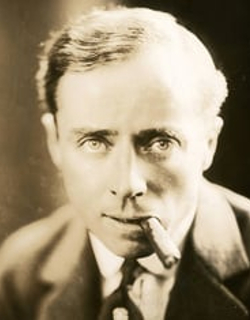
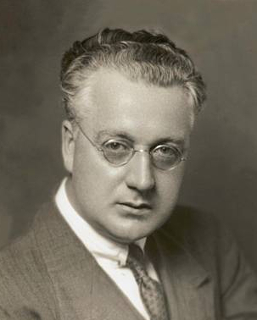
Sir Arnold Edward Trevor Bax, English composer, poet, and author, is born to a prosperous family in the London suburb of Streatham on November 8, 1883. His prolific output includes songs, choral music, chamber pieces, and solo piano works, but he is best known for his orchestral music. In addition to a series of symphonic poems he writes seven symphonies and is for a time widely regarded as the leading British symphonist.

Bax is encouraged by his parents to pursue a career in music, and his private income enables him to follow his own path as a composer without regard for fashion or orthodoxy. Consequently, he comes to be regarded in musical circles as an important but isolated figure.

After a preparatory school in Balham, Bax attends the Hampstead Conservatoire during the 1890s. In 1900 he moves on to the Royal Academy of Music, where he remains until 1905, studying composition with Frederick Corder and piano with Tobias Matthay.

While still a student at the Royal Academy of Music, Bax becomes fascinated with Ireland and Celtic culture, which become a strong influence on his early development. In the years before World War I he lives in Ireland and becomes a member of Dublin literary circles, writing fiction and verse under the pseudonym Dermot O’Byrne. Later, he develops an affinity with Nordic culture, which for a time supersedes his Celtic influences in the years after World War I.

Between 1910 and 1920 Bax writes a large amount of music, including the symphonic poem Tintagel, his best-known work. During this period he forms a lifelong association with the pianist Harriet Cohen – at first an affair, then a friendship, and always a close professional relationship. In the 1920s he begins the series of seven symphonies which form the heart of his orchestral output.

In 1942 Bax is appointed Master of the King’s Music, but composes little in that capacity. In his last years he maintains a contented retirement for much of the time but finds his music regarded as old-fashioned, and after his death it is generally neglected.

Celebrations are planned by the Hallé Orchestra and others to celebrate Bax’s seventieth birthday in November 1953. However, the celebrations become memorials as while visiting Cork in October 1953 he dies suddenly of heart failure. He is interred in St. Finbarr’s Cemetery, Cork.

From the 1960s onwards, mainly through a growing number of commercial recordings, his music is gradually rediscovered, although little of it is heard with any frequency in the concert hall. In more recent years, his music has been rediscovered enthusiastically by a new generation via online distribution services such as YouTube.

(Picture credit to Alan Patient of http://www.plaquesoflondon.co.uk)


Leave a comment

Birth of Actress Sara Ellen Allgood

sara-allgood

Sara Ellen Allgood, Irish American actress,is born to a Catholic mother and Protestant father in Dublin on October 31, 1879.

Allgood joins Inghinidhe na hÉireann (“Daughters of Ireland”), where she first begins to study drama under the direction of Maud Gonne and William Fay. She begins her acting career at the Abbey Theatre and is in the opening of the Irish National Theatre Society. Her first big role is in December 1904 at the opening of Lady Gregory‘s Spreading the News. By 1905 she is a full-time actress, touring England and North America.

In 1915 Allgood is cast as the lead in Peg o’ My Heart which tours Australia and New Zealand in 1916. She marries her leading man, Gerald Henson, in September 1916 in Melbourne, however, her happiness is short lived. She gives birth to a daughter named Mary in January 1918, who dies just a day later. Her husband dies of influenza during an outbreak in November 1918. After her return to Ireland, she continues to perform at the Abbey Theatre. Her most memorable performance is in Seán O’Casey‘s Juno and the Paycock in 1923. She wins acclaim in London when she plays Bessie Burgess in O’Casey’s The Plough and the Stars in 1926.

Allgood is frequently featured in early Alfred Hitchcock films, such as Blackmail (1929), Juno and the Paycock (1930), and Sabotage (1936). She also has a significant role in Storm in a Teacup (1937).

After many successful theatre tours in the United States, she settles in Hollywood in 1940 to pursue an acting career. She is nominated for the Academy Award for Best Supporting Actress for her role as Beth Morgan in the 1941 film How Green Was My Valley. She also has memorable roles in the 1941 retelling of Dr. Jekyll and Mr. Hyde, It Happened in Flatbush (1942), Jane Eyre (1943), The Lodger (1944), The Keys of the Kingdom (1944), The Spiral Staircase (1946), The Fabulous Dorseys (1947), and the original Cheaper by the Dozen (1950).

Allgood becomes a United States citizen in 1945 and dies of a heart attack on September 13, 1950, in Woodland Hills, California.

(Note: Many accounts give October 31, 1879, as her date of birth. Her headstone also gives 1879 as her year of birth. However, her sister Margaret is born on August 1, 1879, meaning she could not have been born in that year. Sara Allgood may have been born on October 31, 1880, but her parents may have been late registering her.)


Leave a comment

Birth of Rose Maud Young, Writer & Scholar

rose-maud-young

Rose Maud Young (Irish: Róis Ní Ógáin), writer, scholar and collector of Irish songs, is born in Galgorm Castle, Ballymena, County Antrim, in what is now Northern Ireland, on October 30, 1866. She is best known for her work to preserve the Irish language. Her books make lyrics from the Gaelic tradition accessible to the general public and are used in the Irish classroom for several decades.

Young is the daughter and seventh of twelve children born to Grace Charlotte Savage and John Young, who is a prosperous unionist and high sheriff. Despite his position he is a believer in tenant rights. Her younger sister is the writer Ella Young and her brother Willie Young is secretary of the Ulster Unionist League.

Young is educated by governesses until 1884 before completing training as a teacher through the University of Cambridge. She also attends Gaelic League classes in 1903 in London while visiting her sister who is living in the city at the time. After visiting the Bodleian Library she becomes committed to the study of the Irish language.

In the early 1900s Young returns to Ireland and continues her study of the Irish language in Belfast at Seán Ó Catháin‘s Irish College and in Donegal at Coláiste Uladh in Gort an Choirce. She also stays in Dublin and becomes friends with members of the Gaelic League and meets Margaret Dobbs. She works with Dobbs on the Feis na nGleann (The Glens Festival), a gathering dedicated to the Irish language.

Young is not involved in nationalism though she is strongly supportive of creating and maintaining a sense of “Irishness” through language and culture. She is also a friend and patron of Roger Casement. She also works with Ellen O’Brien and contributes to O’Brien’s book, The Gaelic Church. She keeps meticulous diaries and becomes interested in Rathlin Island and the Gaelic spoken there.

Rose Young dies on May 28, 1947 in Cushendun, County Antrim, where she resides with Dobbs. She is buried in the Presbyterian churchyard at Ahoghill, County Antrim.


Leave a comment

Birth of Poet John Harold Hewitt

john-harold-hewitt

Poet John Harold Hewitt is born in Belfast on October 28, 1907. He is the most significant Belfast poet to emerge prior to the 1960s generation of Northern Irish poets that includes Seamus Heaney, Derek Mahon and Michael Longley.

After attending Agnes Street National School, Hewitt attends the Royal Belfast Academical Institution from 1919 to 1920 before moving to Methodist College Belfast, where he is a keen cricketer. In 1924, he starts an English degree at Queen’s University Belfast, obtaining a BA in 1930, which he follows by obtaining a teaching qualification from Stranmillis College, Belfast.

From November 1930 to 1957, Hewitt holds positions in the Belfast Museum & Art Gallery. His radical socialist ideals prove unacceptable to the Belfast Unionist establishment and he is passed over for promotion in 1953. Instead in 1957 he moves to Coventry, a city still rebuilding following its devastation during World War II. He is appointed Director of the Herbert Art Gallery & Museum where he works until retirement in 1972.

Hewitt is appointed the first writer-in-residence at Queen’s University Belfast in 1976. His collections includes The Day of the Corncrake (1969) and Out of My Time: Poems 1969 to 1974 (1974). He is also made a Freeman of the City of Belfast in 1983, and is awarded honorary doctorates at the University of Ulster and Queen’s University Belfast.

Hewitt has an active political life, describing himself as “a man of the left,” and is involved in the British Labour Party, the Fabian Society and the Belfast Peace League. He is attracted to the Ulster dissenting tradition and is drawn to a concept of regional identity within the island of Ireland, describing his identity as Ulster, Irish, British and European. He officially opens the Belfast Unemployed Resource Centre (BURC) Offices on May Day 1985.

John Hewitt dies in Belfast on June 22, 1987. His life and work are celebrated in two prominent ways – the annual John Hewitt International Summer School and, less conventionally, the John Hewitt Bar and Restaurant, a Belfast pub is named after him. The bar is named after him as he officially opens the Belfast Unemployed Resource Centre, which owns the establishment. It is a popular meeting place for local writers, musicians, journalists, students and artists. Both the Belfast Festival at Queen’s and the Belfast Film Festival use the venue to stage events.


Leave a comment

Birth of Painter Nathaniel Hone the Younger

nathaniel-hone-the-younger

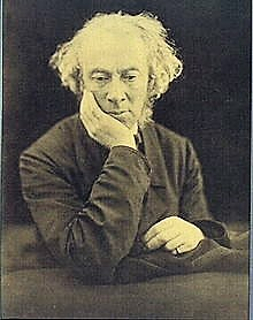
Nathaniel Hone the Younger, Irish painter and great-grand-nephew of painter Nathaniel Hone the Elder, is born in Fitzwilliam Place, Dublin on October 26, 1831. He is the son of Brindley Hone, a merchant and director of the Midland Great Western Railway.

Though a member of a very artistic family, Hone’s initial training is as an engineer at Trinity College Dublin followed by a brief period of work for the Irish Railway before going to Paris in 1853 to study painting. He first studies under Adolphe Yvon, the French military painter, and later Thomas Couture, who is one of the earliest exponents of realism and from whom he learns principles which influence his work throughout his career.

Most of Hone’s later paintings are landscapes, very often enlivened with animals and occasionally with figures. In France he is influenced by the painter Gustav Courbet who is taking a new and quite revolutionary realistic approach. His closest painting tips are, however, from another French impressionist, Jean-Baptiste-Camille Corot. He becomes a close friend of one of Corot’s followers at the Barbizon school of landscape painting. At Barbizon he learns to appreciate colour, texture and tone in the landscape and applies it in strong and confident brushworks to the painting of Irish subjects on his return. In Paris he also works closely with artist Édouard Brandon, also a follower of Corot.

Hone’s paintings which are completed in France have many similarities to those that he completes at his country farm in County Dublin, but the finish is perhaps more polished and professional in the later Irish works.

From 1876, except for four years, Hone exhibits at the Royal Hibernian Academy (RHA). He is elected a full member in 1880 and in 1894 becomes Professor of Painting. His exhibition with John Butler Yeats in 1901 is one of the turning points for the history of Irish art as it is their paintings which convince Sir Hugh Lane that Dublin should have a gallery of modern art.

Nathaniel Hone dies in Dublin on October 14, 1917. After his death his widow bequeaths the contents of his studio to the National Gallery of Ireland. He rarely dates his work, so it is difficult to establish chronology. The similarity of many of his motifs and subjects often make it difficult to tell whether a view is Irish or French. Equally it is difficult to chart his developments on stylistic grounds alone.

(Pictured: Nathaniel Hone, the younger, self-portrait as an old man)


Leave a comment

Execution of Thomas Russell, United Irishmen Co-founder

thomas-russell

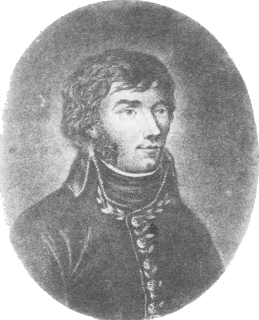
Thomas Paliser Russell, co-founder and leader of the Society of United Irishmen, is executed for his part in Robert Emmet‘s rebellion on October 21, 1803.

Born in Dromahane, County Cork to an Anglican family, Russell joins the British army in 1783 and serves in India. He returns to Ireland in 1786 and commences studies in science, philosophy and politics. In July 1790 he meets Theobald Wolfe Tone in the visitors’ gallery in the Irish House of Commons and they become firm friends.

In 1790 Russell resumes his military career as a junior officer in the 64th Regiment of Foot and is posted to Belfast. The French Revolution in 1789 is warmly greeted in Belfast as are its ideals of liberty, equality, and fraternity. With his keen mind and radical ideas, Russell soon becomes a confidante of Henry Joy McCracken, James Hope, Samuel Neilson and others who are to play a prominent role in the United Irish movement. With them he develops ideas of parliamentary reform, to include the bulk of the people, and Catholic emancipation.

Russell leaves the army in July 1791 and attends a convention of the Whig Club in Belfast to mark Bastille Day. The convention is addressed by William Drennan, who proposes a brotherhood promoting separation from England and co-operation with the increasingly radical Cisalpine Club in the pursuit of political and social reforms. However, Russell notes the lack of trust between Dissenters and Catholics which is due to fears that Catholic radicalism can be bought off by religious concessions. Informing Wolfe Tone of his observations, within weeks leads to Wolfe Tone’s publication of Argument on Behalf of the Catholics of Ireland to address these suspicions. The pamphlet is extremely well received and provides the impetus for the founding of the Society of United Irishmen in Belfast on October 18, 1791.

Pressure from Dublin Castle later forces the United Irish movement to become a clandestine organisation as the would-be revolutionaries seek to continue their slow progress towards challenging the occupying British.

In 1795 Russell, Andrew Henderson, Henry Joy McCracken and Samuel Neilson lead a band of United Irishmen to the top of Cavehill overlooking the town of Belfast where they swear an oath “never to desist in our effort until we have subverted the authority of England over our country and asserted her independence” prior to Wolfe Tone’s exile to the United States. The event is noted in Dublin Castle although there is no immediate move to disband or arrest the members of the United Irishmen.

In 1796, Russell publishes an ambitious and far-sighted document, Letter to the People of Ireland, which lays out his vision of social and economic reform for the Irish nation. In addition to his stance on religious freedom, he makes clear his anti-slavery views in the Northern Star on March 17, 1792.

Russell takes an active part in organising the Society of United Irishmen becoming the United Irish commander in County Down. However, the outbreak of the French Revolution in 1793 leads to an ongoing campaign against the United Irishmen and in 1796 he is arrested and imprisoned as a “state prisoner” in Dublin. In March 1799 he and the other state prisoners are transferred to Fort George in Scotland, an extensive fortress some miles north of Inverness built in the wake of the failed Jacobite rebellion of 1745-46. He is released on condition of exile to Hamburg in June 1802 following a brief cessation in the war with France.

Not content to sit things out in Hamburg, Russell soon makes his way to Paris where he meets Robert Emmet who is planning another insurrection pending the French renewal of the war against England. He agrees to return to Ireland in March 1803 to organise the North in conjunction with James Hope. However, he meets with little success as much of the north is subdued following the suppression of the Irish Rebellion of 1798 and displays little appetite for a renewed outbreak. Finally, finding some support in the vicinity of Loughinisland, he prepares to take to the field on July 23, 1803, the date set by Emmett.

However, the plan is badly thought out and quickly collapses, forcing Russell to flee to Dublin before a shot is fired in anger. He manages to hide for a number of weeks, but Dublin is a hard place in which to hide in the days following the failure of Emmett’s rebellion as the shocked authorities have launched a massive campaign of raids and arrests in an effort to finally eradicate the United Irishmen.

Thomas Russell is promptly arrested and sent to Downpatrick Gaol where he is executed by hanging then beheaded on October 21, 1803.


Leave a comment

Death of Composer Michael William Balfe

michael-william-balfe

Michael William Balfe, Irish composer best remembered for his opera The Bohemian Girl, dies in Dublin on October 20, 1870.

Balfe is born in Dublin on May 15, 1808, where his musical gifts become apparent at an early age. He receives instruction from his father, a dancing master and violinist, and the composer William Rooke. His family moves to Wexford when he is a child.

In 1817, Balfe appears as a violinist in public, and in this year composes a ballad, first called “Young Fanny” and afterwards, when sung in Paul Pry by Lucia Elizabeth Vestris, “The Lovers’ Mistake”. In 1823, upon the death of his father, he moves to London and is engaged as a violinist in the orchestra of the Theatre Royal, Drury Lane. He eventually becomes the leader of that orchestra. While there, he studies violin with Charles Edward Horn and composition with Charles Frederick Horn.

While still playing the violin, Balfe pursues a career as an opera singer. He debuts unsuccessfully at Norwich in Carl Maria von Weber‘s Der Freischütz. In 1825, Count Mazzara takes him to Rome for vocal and musical studies and introduces him to Luigi Cherubini. In Italy, he also pursues composing, writing his first dramatic work, a ballet, La Perouse. He becomes a protégée of Gioachino Rossini‘s, and at the close of 1827, he appears as Figaro in The Barber of Seville at the Italian opera in Paris.

Balfe soon returns to Italy, where he is based for the next eight years, singing and composing several operas. In 1829 in Bologna, he composes his first cantata for the soprano Giulia Grisi, then 18 years old. He produces his first complete opera, I rivali di se stessi, at Palermo in the carnival season of 1829—1830.

Balfe returned to London in May 1835. His initial success takes place some months later with the premiere of The Siege of Rochelle on October 29, 1835, at Drury Lane. Encouraged by his success, he produces The Maid of Artois in 1836, which is followed by more operas in English. In July 1838, Balfe composes a new opera, Falstaff, for The Italian Opera House, based on The Merry Wives of Windsor, with an Italian libretto by S. Manfredo Maggione.

In 1841, Balfe founds the National Opera at the Lyceum Theatre, but the venture is a failure. The same year, he premieres his opera, Keolanthe. He then moves to Paris, presenting Le Puits d’amour in early 1843, followed by his opera based on Les quatre fils Aymon for the Opéra-Comique and L’étoile de Seville for the Paris Opera. Meanwhile, in 1843, he returns to London where he produces his most successful work, The Bohemian Girl, on November 27, 1843, at the Theatre Royal, Drury Lane. The piece runs for over 100 nights, and productions are soon mounted in New York, Dublin, Philadelphia, Vienna, Sydney, and throughout Europe and elsewhere.

From 1846 to 1852, Balfe is appointed musical director and principal conductor for the Italian Opera at Her Majesty’s Theatre. There he first produces several of Giuseppe Verdi‘s operas for London audiences. He conducts for Jenny Lind at her opera debut and on many occasions thereafter.

In 1851, in anticipation of The Great Exhibition in London, Balfe composes an innovative cantata, Inno Delle Nazioni, sung by nine female singers, each representing a country. He continues to compose new operas in English, including The Armourer of Nantes (1863), and writes hundreds of songs. His last opera, nearly completed when he dies, is The Knight of the Leopard and achieves considerable success in Italian as Il Talismano.

Balfe retires in 1864 to Hertfordshire, where he rents a country estate. He dies at his home in Rowney Abbey, Ware, Hertfordshire, on October 20, 1870, and is buried at Kensal Green Cemetery in London, next to fellow Irish composer William Vincent Wallace. In 1882, a medallion portrait of him is unveiled in Westminster Abbey.

In all, Balfe composes at least 29 operas. He also writes several cantatas and a symphony. His only large-scale piece that is still performed regularly today is The Bohemian Girl.


2 Comments

Birth of Activist Mary Ellen Spring Rice

mary-ellen-spring-rice

Mary Ellen Spring Rice, Irish nationalist activist during the early 20th century, is born into an aristocratic Anglo-Irish family in London, England on October 14, 1880.

Spring Rice is the daughter of Thomas Spring Rice, 2nd Baron Monteagle of Brandon, and a great-granddaughter of the British Chancellor of the Exchequer, Thomas Spring Rice, 1st Baron Monteagle of Brandon. Her maternal grandfather is the bishop, Samuel Butcher. She is brought up on the family’s Mount Trenchard estate overlooking the River Shannon. It is a progressive, liberal household and independence of thought is encouraged. So too is the Gaelic culture and, at home, she and her brothers are taught how to fluently speak the Irish language.

Before World War I, Spring Rice hosts many Irish nationalist and Conradh na Gaeilge meetings at her home, and she becomes a close friend of Douglas Hyde and her cousin Nelly O’Brien. During 1913 and 1914, she is actively involved in gun-running, most notably the Howth gun-running.

This involves helping to ship weapons to be used in an Irish uprising from Germany into Ireland. Together with Molly Childers, she raises £2,000 towards the purchase of 900 Mauser rifles from Germany, many of which are used in the 1916 Easter Rising. She sails on the Asgard to collect the guns and helps to unload them in Ireland.

During the Irish War of Independence, Spring Rice allows her Mount Trenchard home to be used as a safe house by Irish Republican Army fighters and the family boat is used to carry men and arms over the Shannon Estuary.

Con Collins stays with Spring Rice regularly. She helps train local women as nurses to tend to wounded nationalists and acts as an IRA message carrier between Limerick and Dublin. Throughout this time, she maintains her aristocratic façade and society connections, inviting senior Liberal Party politicians to Mount Trenchard to pressure them to support Irish independence.

Spring Rice starts to suffer from tuberculosis in 1923, and dies unmarried in a sanatorium in Clwyd, Wales, on December 1, 1924. She is buried in Ireland, where her coffin is draped in the Irish tricolour and escorted by an IRA guard of honour.

(Pictured: Mary Ellen Spring-Rice and Molly Childers with the German guns on board Asgard, 1914.)


Leave a comment

Birth of Charles Monck, 1st Governor General of Canada

charles-stanley-monck

Charles Stanley Monck, 4th Viscount Monck GCMG PC, the last Governor-General of the Province of Canada and the first Governor General of Canada after Canadian Confederation, is born on October 10, 1819 in Templemore, County Tipperary. Prior to Confederation he is concurrently Lieutenant Governor of both Canada West and Canada East. He is the son of Charles Monck, 3rd Viscount Monck, and his wife Bridget née Willington.

Monck obtains a law degree from Trinity College, Dublin. He marries his first cousin Lady Elizabeth Louise Mary Monck on July 24, 1844, and in 1849 he inherits his father’s title of Viscount Monck. In 1852 he is elected MP for Portsmouth, and from 1855 to 1858 he serves as Lord of the Treasury under Henry John Temple, 3rd Viscount Palmerston.

In 1861 Monck is appointed Governor General of British North America as well as Governor of the Province of Canada. During this time, the Canadian colonies are beginning to organise themselves into a confederation. The American Civil War has just broken out, and the Trent Affair causes diplomatic tension between the United States and Britain. The Canadian government is eager to gain some measure of independence during this turbulent period. The Quebec Conference, the Charlottetown Conference, and the London Conference, at which the details of confederation are discussed, all take place during Monck’s time as governor. Monck supports the idea, and works closely with John A. Macdonald, George Brown, George-Étienne Cartier, and Étienne-Paschal Taché, who form the “Great Coalition” in 1864.

In 1866 Monck becomes a peer with the title Baron Monck. When the Canadian colonies become a semi-independent confederation the next year, he becomes the country’s first Governor General. He is also responsible for establishing Rideau Hall as the residence of the Governor General in Ottawa.

In 1869 Monck is succeeded by John Young, 1st Baron Lisgar. He returns home to Ireland, where he becomes Lord Lieutenant of Dublin in 1874. He dies in Enniskerry, County Wicklow on November 29, 1894.


Leave a comment

Birth of Richard D’Alton Williams, Physician & Poet

richard-dalton-williams

Richard D’Alton Williams, physician and poet, is born in Dublin on October 8, 1822. He is the son of James and Mary Williams, who come from County Westmeath. He grows up in Grenanstown, a townland near the Devil’s Bit in County Tipperary, where his father farms for Count Dalton. He is educated at Tullabeg Jesuit College and St. Patrick’s, Carlow College.

Williams becomes a member of the Young Ireland movement and contributes poetry to The Nation under the pseudonym “Shamrock.” He is immediately successful. In the January 21, 1843 edition there appears: “Shamrock is a jewel. He cannot write too often. His verses are full of vigour, and as natural as the harp of Tara.”

Later in 1843 Williams goes to Dublin to study medicine at Saint Vincent’s Hospital. In 1848 he brings out a newspaper, the Irish Tribune, to take the place of the suppressed United Irishman, founded by John Mitchel. Before the sixth weekly publication, it is seized by the Government, and proceedings are instituted against the editors, Williams and his friend Kevin Izod O’Doherty. On October 30, 1848, at a third trial, O’Doherty is convicted of treason and transported to Australia while Williams is successfully defended by lawyer and fellow poet Samuel Ferguson two days afterwards on the same charge. He then resumes his medical studies, takes out his degree at Edinburgh, Scotland in 1849 and emigrates to the United States in 1851.

Williams is married to Elizabeth Connolly on September 8, 1856, with whom he has four children of whom the youngest is commemorated in Lines on the Death of his Infant Daughter, Katie.

In the United States Williams practises medicine until he becomes ill and dies of tuberculosis in Thibodaux, Louisiana on July 5, 1862. He is buried there in St. Joseph’s Cemetery. His headstone is later erected that year by Irish members of the 8th New Hampshire Volunteer Infantry, then encamped in Thibodaux.