seamus dubhghaill

Promoting Irish Culture and History from Little Rock, Arkansas, USA


Leave a comment

The Hanging of IRA members Reginald Dunne & Joseph O’Sullivan

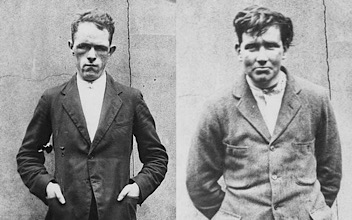
Reginald Dunne and Joseph O’Sullivan, members of the London Battalion of the Irish Republican Army (IRA), are hanged at Wandsworth Prison on August 10, 1922, for the assassination of Field Marshal Sir Henry Wilson on June 22, 1922.

Wilson, a senior British Army officer and military advisor to the Belfast Government (Stormont), is shot dead on the steps of his Eaton Square home in London as he returns from an unveiling ceremony at Liverpool Street station. Dunne and O’Sullivan, both former British Army soldiers, have joined the London IRA and are active in the anti-Treaty republican movement. O’Sullivan lost a leg at Ypres, Belgium, in 1917, while Dunne served in the Irish Guards during World War I.

The killing is widely seen as a political act, with Dunne and O’Sullivan claiming to have acted in defence of Irish nationalist principles, blaming Wilson for the “Orange Terror” and the deployment of the Ulster Special Constabulary (USC). Some historians suggest the assassination may have been intended to pressure Michael Collins to attack the Four Courts garrison, though no conclusive evidence of orders was ever established.

After the shooting, Dunne escapes but O’Sullivan is captured by a hostile crowd. Dunne attempts to rescue him but is himself arrested after wounding two police officers and a passerby. Both are tried quickly, found guilty after just three minutes of deliberation, and sentenced to death by Justice Montague Shearman.

Despite petitions from 45,000 people and appeals from figures like George Bernard Shaw, both men are executed on August 10, 1922, and buried within the prison grounds.

The executions are a major political flashpoint. It is only after the abolition of hanging that the law is changed and Joseph’s brother, with the assistance of the Irish National Graves Association, is able to arrange for the bodies of the two men to be repatriated to Ireland.

In 1967, the British government allows the bodies of Dunne and O’Sullivan to be exhumed and returned to Ireland. Former comrades accompany the bodies from England to Dublin Airport, where they place an Irish tricolour flag on Dunne’s coffin. This is the same flag that Dunne had placed on the coffin of Terence MacSwiney at Euston railway station when his body was returned to Cork in 1920.

Graveside orations are held in Dublin, attended by former comrades, Michael Collins’s associates, and representatives of Éamon de Valera, the president of Ireland. The bodies are reinterred in Dean’s Grange Cemetery outside Dublin in 1967.

Dunne’s trial speech, reprinted in the Irish Independent, remains a notable piece of republican political rhetoric, framing the act as a necessary stand for Irish rights.

(Pictured: Joseph O’Sullivan (left) and Reginald Dunne (right))


Leave a comment

The Free State Seaborne Landings in Cork

On the morning of August 8, 1922, the National Army of the Irish Free State launches a decisive seaborne assault on Cork, County Cork, the Free State’s second largest city, which is held by anti-Treaty Irish Republican Army (IRA) forces. The operation begins at Passage West, a ferry port and fishing village on the estuary of the River Lee, where the steamship Arvonia docks. The anti-Treaty IRA garrison in Cobh across the bay opens fire with three machine guns, but the National Army troops on deck respond with silence, surprising the sentry who had fired a warning shot.

Over 200 pro-Treaty soldiers disembark, quickly securing the town. The Arvonia is unloaded with 450 troops, an 18-pounder field gun, and several armoured cars. Simultaneously, landings are made at Youghal in east County Cork and Union Hall near Skibbereen in west County Cork, disgorging another 350 troops. This is part of Michael Collins’s plan to seize Cork and end the Irish Civil War swiftly.

Cork is a flashpoint of the Treaty split. While the majority of IRA fighters in the county oppose the Anglo-Irish Treaty, the majority of civilians support it. There are also strong neutral tendencies and peace calls within Cork’s civil and military communities. The Free State’s move aims to break the “Munster Republic” stronghold and force a rapid political settlement.

The landing marks the start of the Battle for Cork, which intensifies over the next days. National Army forces advance toward Cork city, encountering fierce resistance from anti-Treaty IRA positions in areas like Rochestown, Oldcourt Wood, and Garryduff. The fighting is brutal, with estimates of up to 20 fatalities and many wounded. The conflict also produces poignant moments, such as the death of Free State soldier Flood, shot by a former Irish War of Independence comrade, Frank O’Donoghue.

The August 8 landings are the decisive military stroke of the Irish Civil War. They re-take Cork for the Irish Free State, dismantle the Munster Republic, and end the conventional phase of the conflict, paving the way for a prolonged guerrilla war until the anti-Treaty side’s defeat. The event remains a key moment in Irish revolutionary history, remembered for its scale, the use of armoured units, and the deep divisions it exposes in Cork.


Leave a comment

Death of IRA Volunteer Joe Hudson

On August 7, 1922, Joe Hudson (also known as “Sonny” Hudson), an anti-Treaty Irish Republican Army (IRA) volunteer from Glasthule, Dún Laoghaire, is shot dead in his garden at 3 Carrolls Cottages by an Irish Free State Army (National Army) officer. He is in command of a small anti‑Treaty IRA group active in the area, operating from Glasthule down to Bray and across to Deansgrange.

Free State Army officers, acting on intelligence that a meeting is in progress at Hudson’s home, leave Portobello Barracks (now Cathal Brugha Barracks) in two cars. As they approach, a Fianna Éireann member on sentry duty blows his whistle, alerting the occupants. The group scatters through the back garden, and Hudson is injured, dropping his weapon. A Free State Army officer approaches him at point‑blank range and shoots him.

At the time of his death, Hudson reportedly has his hands up, and he makes a deathbed declaration to that effect. An automatic pistol is found with him, but it is loaded with the wrong calibre ammunition, suggesting he could not have fired it.

Hudson’s killing occurs during a period of intense guerrilla warfare in south County Dublin. The area had seen earlier clashes between pro‑ and anti‑Treaty forces, and by August 1922, anti‑Treaty IRA columns are active in Dún Laoghaire and surrounding towns. His death is part of a broader campaign by Irish Free State forces to suppress anti‑Treaty resistance in the region.

Hudson’s case is remembered as one of the more controversial incidents of the Irish Civil War, reflecting the brutality and political divisions of the conflict. His father, Joseph Hudson Snr, was also an IRA volunteer.


Leave a comment

Anti-Treaty IRA Attempts to Isolate Dublin

In the early morning of August 5, 1922, during the Irish Civil War, around 200 anti-Treaty Irish Republican Army (IRA) volunteers are mobilised around Dublin. Their mission is to isolate the city by destroying all bridges and road crossings leading into it, cutting off Free State forces and supplies.

The anti-Treaty IRA, opposed to the Anglo-Irish Treaty and the newly established Irish Free State, aim to dismantle the stone bridges over Dublin’s rivers and canal, lay explosives on road and railway bridges, dig trenches in roads to block movement and scout the surrounding countryside for Free State troops.

They are organised in groups of 5–40, some armed with handguns and grenades, others with explosives and tools like spades and picks. Parties are sighted in the hills south of the city (from Kilakee to Roundwood) and across villages north of Dublin (from Raheny to Blanchardstown).

The Free State’s intelligence service intercepts the plan when Liam Clarke, a captured anti-Treaty officer, reveals the details to Free State Intelligence officers. This intelligence allows the Free State to anticipate and counter the operation.

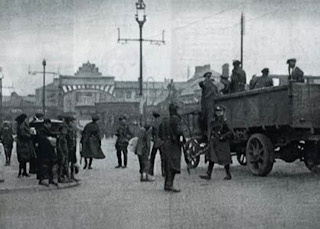
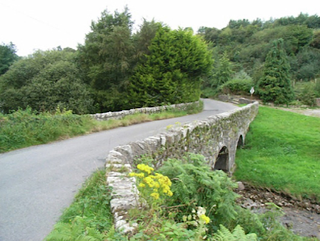
On August 6, Free State forces move quickly to intercept the IRA. They capture 31 anti-Treaty irregulars at Glencullen Bridge (pictured) and later take 104 fighters in County Dublin, including officer Pat Sweeney. These actions cripple the remnants of the anti-Treaty IRA in Dublin and prevent the city from being isolated.

The “Bridges Job” is a major anti-Treaty attempt to cut off Dublin during the Irish Civil War. Its failure marks a turning point, as Free State forces can now move freely into the city, accelerating the end of the conventional phase of the conflict.


Leave a comment

The Body of Harry McEntee of the IRA Dublin Brigade is Found

On August 3, 1923, the body of Captain Henry Hugh “Harry” McEntee is found at Dubber Cross near Jamestown Road, Finglas, County Dublin. McEntee, 26, is a carpenter and a member of the Irish Republican Army’s Dublin Brigade, serving on the active service unit (ASU) during the Irish Civil War.

McEntee is abducted by members of the Criminal Investigation Department (CID), based at Oriel House, Westland Row, who are linked to National Army Intelligence and the Protective Corps. He is reportedly threatened by CID officers before his death. The abduction occurs on July 31, 1923, near his home on Gloucester Street (now Seán McDermott Street).

On the morning of August 3, his body is discovered in a field at Maher’s farm, close to Jamestown Road in Finglas. He had been shot dead. The exact details of his capture and killing are later ordered to be destroyed in 1932 by the Pro-Treaty government.

McEntee is buried in the Republican Plot at Glasnevin Cemetery, Dublin. A National Graves Association memorial plaque is placed there around 1932 and is maintained by the Fianna Sluagh in Finglas during the 1950s–60s. In 2023, his family and community commemorate the centenary of his death, remembering him as a skilled carpenter, devoted father, and soldier of the Irish Citizen Army.

In summary, Henry McEntee’s abduction and murder in August 1923 are part of the violent post-war repression of anti-Treaty IRA members, and his case remains a poignant example of the personal toll of Ireland’s Civil War.


Leave a comment

Irish Free State Army’s Seaborne Landing at Fenit, County Kerry

On Wednesday, August 2, 1922, the Irish Free State’s National Army launches a seaborne landing at Fenit pier, County Kerry, marking the first of a series of amphibious assaults in the Cork and Kerry campaign. The operation is conceived by Major General Emmet Dalton as a way to strike at the anti-Treaty Irish Republican Army’s (IRA) “Munster Republic” from the rear, exploiting the element of surprise to shorten the war.

By mid-July 1922, the Free State has re-taken counties Limerick and Waterford, but the IRA still controls counties Cork and Kerry, as well as much of the west under Liam Lynch’s command. A purely land-based advance into these areas risks long, attritional battles. Dalton’s plan is to create a second front by landing troops along the County Kerry and County Cork coasts, isolating republican strongholds like Tralee.

The SS Lady Wicklow carries 450 soldiers of the Dublin Guard brigade under Paddy Daly, along with a field gun and an armoured car nicknamed the Ex-Mutineer. The Dublin Guards are considered the most disciplined and politically reliable unit in the Army, and Daly is one of Michael Collins’ trusted lieutenants. The landing is intended to secure Fenit as a base for an amphibious assault on Tralee, a key republican stronghold.

The surprise attack catches the IRA forces off guard, taking their left flank in the rear. The Free State quickly advances, and by the following days, much of County Kerry is freed from republican control. The operation is part of a broader offensive that culminates in the capture of Tralee on August 2, one of the bloodiest single days of combat for the National Army.

While the initial landings are successful, the IRA mounts counterattacks over August and September, regaining some ground. However, the Free State’s superior resources, better equipment, and lack of popular support for the republicans allows them to consolidate control in County Kerry over time. The Fenit landing is a turning point, shifting the momentum in favour of the Free State and contributing to the eventual republican defeat in the Irish Civil War.

In summary, the August 2, 1922, naval landing at Fenit is a bold, surprise amphibious operation that disrupts republican defenses, opens County Kerry to Free State advance, and alters the course of the Irish Civil War.

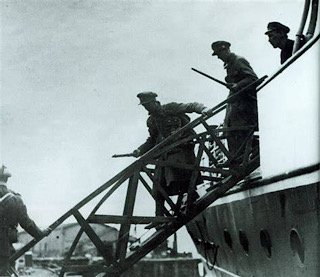
(Pictured: Free State troops landing at Fenit, County Kerry, on August 2, 1922)


Leave a comment

The Capture of Frank Aiken by Free State Forces

On July 16, 1922, Free State forces under General Dan Hogan storm Dundalk Gaol in County Louth, capturing Frank Aiken, the Chief of Staff of the Anti-Treaty Irish Republican Army (IRA), and a large number of his men from the Fourth Northern Division. This is part of a broader Free State military campaign to suppress anti-Treaty resistance following the Anglo-Irish Treaty and the establishment of the Irish Free State.

The Irish Civil War (June 1922–May 1923) pits pro-Treaty Free State forces against anti-Treaty IRA units who oppose the Treaty’s terms. Aiken is a key republican commander, and Dundalk is a stronghold for his forces. By mid-July 1922, Free State troops have taken several towns, and Dundalk is next in line for reoccupation.

General Hogan’s forces enter Dundalk, engaging republican snipers and irregulars. The attack targets the Gaol, where Aiken and many of his men are held. The Free State troops overpower the defenders, leading to Aiken’s arrest and the capture of a significant portion of the Fourth Northern Division.

Aiken and about 104 other prisoners escape on July 27, 1922, through a narrow gap in the jail wall, later dubbed the “Hole in the Wall.” This escape is a major republican success, temporarily reoccupying Dundalk. However, Free State forces retake the town on August 14, 1922, and the jail remains under military control until 1924.

The capture is significant as it marks a turning point in the Free State’s campaign in County Louth, weakening republican resistance in the area. Aiken’s arrest underscores the Free State’s determination to dismantle anti-Treaty leadership. The events in Dundalk become a symbol of republican resilience, as the escape through the “Hole in the Wall” is widely reported and commemorated.

In summary, the July 16, 1922, capture of Frank Aiken in Dundalk is a decisive Free State action in the Irish Civil War, leading to a notable republican escape and a prolonged military standoff in the town.

(Pictured: Frank Aiken and the 4th Northern Division)


Leave a comment

Capture of Enniscorthy During the Irish Civil War

On July 4, 1922, Enniscorthy in County Wexford is captured by Republican forces during the early phase of the Irish Civil War. The town has been a key Free State (pro-Treaty) stronghold, but by mid-July, anti-Treaty Irish Republican Army (IRA) units, bolstered by reinforcements from Tipperary and members of the Four Courts garrison who have escaped Dublin’s fighting, seize control of the main towns in County Wexford and force the surrender of National Army positions at Enniscorthy and Ferns.

Wexford had been relatively quiet during the Irish War of Independence, but the Treaty split in 1921 creates deep divisions. The South Wexford Brigade under Thomas O’Sullivan is overwhelmingly anti-Treaty, while the North Wexford Brigade under Joseph Cummins is nominally pro-Treaty but contains a significant anti-Treaty minority. This division means that when the Irish Civil War breaks out on June 28, 1922, Wexford becomes one of the most violent counties, with Republican forces rapidly moving to secure strategic towns.

On July 4, anti-Treaty IRA units, including Tipperary volunteers and escaped Four Courts fighters, move into Enniscorthy, take over key positions and force the surrender of Free State troops. In the opening fighting, three combatants are killed — two IRA and one National Army — marking the first major Republican gains in the county. James Roche, an IRA member, is fatally wounded in an accident outside Newtownbarry (now Bunclody) on the same day, one of several accidental deaths among IRA personnel in Wexford during the Irish Civil War.

The capture of Enniscorthy is part of a broader Republican offensive in County Wexford in early July 1922. However, the balance of power shifts quickly. By July 6, a large relief force of government troops sets out from Dublin to retake the town. This marks the beginning of a protracted and bloody campaign in County Wexford, which sees the county become one of the most violent in the Irish Civil War.

In summary, the capture of Enniscorthy on July 4, 1922, is a significant Republican victory in County Wexford, driven by the Treaty split and reinforced by external IRA units. It reflects the rapid escalation of violence in the county and sets the stage for a prolonged and destructive phase of the Irish Civil War in County Wexford.

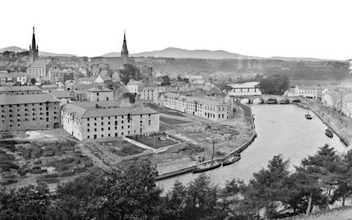
(Pictured: Enniscorthy at the turn of the last century, National Library of Ireland collections)


Leave a comment

Death of Tom Barry, Prominent Irish Republican Leader

Thomas Bernadine Barry, prominent guerrilla leader in the Irish Republican Army (IRA) during the Irish War of Independence and the Irish Civil War, dies in Cork, County Cork, on July 2, 1980, the day after his 83rd birthday.

Barry is born on July 1, 1897, in KillorglinCounty Kerry, the second child and son among eleven children of Thomas Barry, small farmer, Royal Irish Constabulary (RIC) member and shopkeeper, and his wife, Margaret Donovan, daughter of a Liscarroll businessman. Educated at Ardagh Boys’ National School and Mungret College, near Limerick, he leaves school at 17, is employed as a clerk for a Protestant merchant in Bandon, County Cork, and joins the British Army in 1915 after falsifying his age. More committed, it appears, to the British Army than he is later to admit, he is mentioned in dispatches and serves in MesopotamiaAsiatic Russia (where he is wounded), EgyptItaly, and France.

Barry returns to Bandon in early 1919. He describes in his guerilla days in Ireland a Damascus-like conversion to Irish nationalism on hearing of the Easter Rising while with the Mesopotamian expeditionary force, but he is only accepted into the IRA with considerable caution. Initially tested in intelligence and training work, in mid-1920 he takes charge of the new brigade flying column, which is used both to train officers and to stage offensive actions.

Barry adapts his military experience successfully to the demands of guerrilla warfare, becoming the most famed of column leaders during the Irish War of Independence. In his memoirs, he pours scorn on the obsession of many with military titles and orthodox procedure, complaining of a “paper army.” He stresses the need for spontaneity, initiative, and knowledge of local conditions. “The reality,” he writes, “was a group of fellows, mostly in caps and not-too-expensive clothing, wondering how to tackle their job and where they would sleep that night or get their supper.” (The Reality of the Anglo–Irish War (1974)). He well realises that the war’s character does not permit any close control from the IRA’s GHQ in Dublin, hence increasing the importance of local leaders. His tactics put strong emphasis on speed of movement and on the need to attack the enemy at his weakest point. The column’s ambush successes are small in number but among the best-remembered of the war. He admits, however, that his own and his column’s lack of experience with mines frequently weakened their offensives.

The column’s first successful ambush is at Tooreen on October 22, 1920, followed on November 28 by the dramatic ambushing of a patrol of auxiliaries at Kilmichael while traveling from their Macroom base. A column of thirty-six men, divided into three sections, kill sixteen auxiliaries, with one captured and later shot, suffering two fatalities of their own. Controversy has raged since over whether a false surrender by the British force caused the brutality of some of the deaths. Together with the Bloody Sunday killings of a week earlier in Dublin, Kilmichael has a profound effect on the British military and political establishment, with the declaration in December of martial law for much of Munster and the implementation of wide-ranging internment, together with the authorisation of official reprisals.

After a short period in hospital with a heart condition, in early 1921 Barry leads unsuccessful attacks on KilbrittainInnishannonDrimoleague, and Bandon barracks. The seizure of Burgatia House, outside Rosscarbery, in early February, and the successful resistance made there to British troops, wins much publicity but has little military significance. He is a leading figure in the brutal final stage of the war in the first six months of 1921, which sees widespread shooting of suspected spies and destruction of loyalist property. By March 1921, his flying column, with 104 men, is easily the largest in Ireland, and an explosives expert, Capt. McCarthy, has joined them.

The protracted engagement between Barry’s column and encircling British forces at Crossbarry on March 19, 1921, comes at a time when large-scale sweeps are making life increasingly difficult for the IRA. It consists of a daring and courageous breakout. Crossbarry is the largest action of the war, and Barry is to regard it as even more important than Kilmichael. Soon afterwards, Rosscarbery barracks is successfully attacked by a Barry-led party, representing one of the few successful such initiatives in 1921. Isolated triumphs, however, cannot hide the fact that pressure is increasing on the column, and he becomes increasingly critical of inactive regions. He is later to say that all County Kerry does during the war is to shoot one decent police inspector at Listowel Racecourse and a colleague of his. He is strongly critical also of the lack of assistance from GHQ and of the divisionalisation policy. He visits Dublin in May, travels around with Michael Collins, and is present when two American officers demonstrate the Thompson submachine gun. He is more aware than most of his 1st Southern Division colleagues of the scarcity of arms and ammunition at the war’s end.

During the truce, Barry becomes liaison officer for Munster, riling the British by insisting on his military rank, and criticising the IRA liaison men in Dublin for being overly deferential. He joins the overwhelming majority of the Cork IRA in opposing the Anglo–Irish Treaty but plays a characteristically maverick role throughout the treaty split. His independent attitude is heightened by his dislike of Liam Lynch, the republican IRA’s Chief of Staff, and his continuing respect for Michael Collins. He shows impatience at the long-drawn-out peace initiatives. In March 1922, therefore, he advocates armed confrontation with pro-treaty units over the occupation of barracks in Limerick, and on June 18 he submits a resolution, which only narrowly fails, at the army convention, giving British troops seventy-two hours to leave Dublin.

At the beginning of the Irish Civil War, Barry is arrested entering the Four Courts disguised as a woman. He escapes from an internment camp at Gormanston in early September 1922. For the rest of the war his actions mirror its confused nature. In late October 1922, he leads successful raids on the small towns of Ballineen and Enniskean, and later on Inchigeelagh and Ballyvourney. In December his column takes Carrick-on-Suir, demonstrating the weakness of the Free State army, but his talk of advancing on the Curragh and of large-scale actions does not materialise. There is no evidence that he is acting in accordance with any coordinated plan. By February 1923, he realises that the Republican IRA cause is hopeless and he is involved with Fr. Tom Duggan in efforts to get 1st Southern Division to declare a ceasefire. He journeys to Dublin to put pressure on the intransigent Lynch in this connection, telling Lynch, “I did more fighting in one week than you did in your whole life.”

Barry avoids capture in roundups after the war, remaining on the run until 1924. Unlike many republicans, he does not turn to constitutionalism, remaining strongly militaristic. He is always an unreconstructed republican, though by no means a naive one. In 1924 he becomes attached to Cleeves Milk Co., based in Limerick and Clonmel, and from 1927 to retirement in 1965 is general superintendent with the Cork harbour commissioners. He strongly advocates preserving the independence of the IRA army executive during the republican split of 1925–27. He is instrumental in continuing the drilling of IRA members and is a strong supporter of armed opposition to the Blueshirts.

During the 1930s Barry is arrested at various times for possession of arms and seditious utterances. He promotes an attack against a Freemasons’ meeting in Cork in 1936 and gives the orders for the killing on March 4 of that year of Vice-Admiral Henry Boyle Somerville. He is opposed to the use by Frank Ryan of IRA volunteers to support the republican cause in the Spanish Civil War and to the proposals of Seán Russell for a bombing campaign in England. To maintain the link with traditional republicanism, he is elected IRA chief of staff in 1937. His plan, however, for the seizure of Armagh city, as part of a direct northern offensive, quickly collapses due to a leak of information, and he soon resigns his position. He forcefully attacks the bombing of English cities in 1938, regarding attacks on innocent civilians as immoral and counterproductive. He enlists in the National Army on July 12, 1940, only to be demobilised a month later. In 1946, he stands as an independent candidate in a by-election in the Cork Borough constituency, finishing at the bottom of the poll. He is more comfortable the following year touring the United States on an anti-partition platform.

In 1949 his Guerilla Days in Ireland is published. It proves a best-seller and has frequently been reprinted. It is well written in a forceful and direct style, one memoir needing no assistance from a ghost writer. Age does not mellow him: lawyers and bank managers are threatened by him over matters relating to his own column, and in 1974 he publishes a fierce pamphlet, angry at perceived slights in the Irish War of Independence memoir of Liam Deasy. He does strive to achieve a public reconciliation with Collins’s memory by unveiling the memorial to Collins at Sam’s Cross in 1966. On the outbreak of the Northern Ireland crisis in the late 1960s, he takes a militant line, castigating the argument that the Six Counties can be brought into the Republic by peaceful means, and asking when had peaceful means existed there. At the memorial meeting in Carrowkennedy, County Mayo, in 1971, he claims that there is a perfect right at the opportune time to take the Six Counties by force. He remains opposed to IRA bombing of civilian targets.

Barry dies in Cork on July 2, 1980. He is buried in St. Finbarr’s Cemetery, Cork. Early in the truce of 1921 he marries Leslie Price, one of the most active of Cumann na mBan members during and after the rising. They have no children.

While Barry always remains an influential figure in republican circles, he will be remembered best as the pioneer of guerrilla warfare, the hero of Kilmichael and Crossbarry. His military flair, individualism, and ruthlessness are well suited to the 1919–21 conflict. After that, his strained relations with colleagues and his lack of flexibility reduce his importance. While his life after the revolutionary era appears anti-climactic, he retains much of his charisma. In later years, he is ever willing to remind politicians and historians how far Ireland has retreated from republican ideals. He is often prickly and autocratic yet could be generous to old colleagues of either side of the treaty split. He is arguably the most intelligent but also the most intolerant of the revolutionary leaders.

(From: “Barry, Thomas Bernadine (‘Tom’)” by M. A. Hopkinson, Dictionary of Irish Biography, http://www.dib.ie, October 2009)


Leave a comment

Death of George Gilmore, IRA Leader & Communist

George Frederick Gilmore, a Protestant Irish republican and communist who becomes an Irish Republican Army leader during the 1920s and 1930s, dies in HowthCounty Dublin, on June 29, 1985. During his period of influence, he attempts to shift the IRA to the political left, but alongside Peadar O’Donnell and Frank Ryan he is expelled for his efforts. After leaving the IRA, he attempts to unite Irish republicanism under the banner of the Republican Congress, but ideological debates split the group apart. Afterward, he removes himself from public life.

Born at Hillside Terrace in Howth, County Dublin, on May 5, 1898, Gilmore is the second son of Philip Gilmore, an accountant originally from County Antrim, and Fanny Angus. Despite his father primarily working for Unionist landlords, and being educated at home, George and his brothers Harry and Charlie all turn toward Irish republicanism. By 1916, Gilmore has become a member of Fianna Éireann, the Republican boy scouts, and later a member of the South County Dublin battalion of the Irish Volunteers.

Gilmore fights in the Irish Republican Army in the Irish War of Independence and in the Irish Civil War on the Anti-Treaty IRA side. During the civil war he is captured and imprisoned, but manages to escape custody in August 1923, the aftermath of which causes riots as the remaining prisoners are placed in solitary confinement.

Following the end of the civil war, Gilmore serves as the secretary of future Taoiseach Seán Lemass, as well alongside Frank Aiken. During the early 1920s, he, Lemass and Aiken regularly meet with the IRA army council to represent the emerging political leadership of Irish republicanism that coalesces as Fianna Fáil in 1926. The trio regularly sits opposite IRA leaders Frank Ryan, Peadar O’Donnell, and Seán Russell.

In October 1925, Gilmore and Lemass organise the escape of nineteen IRA prisoners from Mountjoy Prison in Dublin. As part of the jailbreak, Gilmore impersonates a member of Garda Síochána. None of the nineteen escapees are subsequently recaptured, and their escape serves as a major propaganda coup. However, the following month, Gilmore is involved in a riot that takes place on Armistice Day and he is subsequently arrested and sentenced to eighteen months in prison. He resists the entire duration; first resisting the arrest and then, once imprisoned, refusing to wear a prison uniform and going on hunger strike. Early in 1928, members of the IRA attack Mountjoy Prison where he is being held and shoot the warden after a story emerges that Gilmore had previously been the victim of a vicious beating by the guards. He is released in 1929 but re-arrested and re-imprisoned almost immediately, resulting in a retaliatory beating by the guards that leaves him unconscious.

Sometime between 1929 and 1930, Gilmore is sent by the IRA to Russia to receive military training and to seek aid.

Gilmore is arrested yet again upon his return to Ireland in April 1931, charged with having resisted arrest ten months previously. In October he tries to escape with the help of his brother Charlie and almost succeeds, using a plot involving mock pistols wrapped in silver to intimidate the guards. In the aftermath of the failed escape, his treatment in Arbour Hill Prison from 1931-32 is abysmal. He once again refuses to wear prison clothing because of his political status and remains naked in a windowless cell from October 1931 until February 1932. In June 1931, of a cache of weapons are discovered near his home at Killakee in the Dublin Mountains, which results in him and his brother Charlie being placed before a military tribunal which sentences him to five years in prison and Charlie to three (in 1932 Fianna Fail comes to power and the brothers are released). Neither recognises the authority of the court, with George stating, “I do not want anybody to think I excuse myself for such a charge as having arms, I am admittedly hostile to British imperialism and international capitalism.”

Gilmore’s fortunes are dramatically altered when Fianna Fáil emerges victorious in the 1932 Irish general election. In the aftermath, Frank Aiken, former Chief of Staff of the IRA and new Minister for Defence goes to see Gilmore on March 9 and on the next day all republican prisoners are released as part of a general amnesty. Thirty thousand supporters greet the prisoners at College Green, Dublin.

Finally out of long-term imprisonment, Gilmore is eager to resume working toward a socialist Ireland. He has supported Peadar O’Donnell’s shortlived socialist republican group Saor Éire from prison, but in the aftermath of its demise, he concludes that the group has spent too much time imagining what it might do if in government, and not enough time considering what the immediate aims of the IRA should be. With his close personal ties to their leadership, Gilmore has a positive view of Fianna Fáil, and at this point in time believes their goals differ little from his own and those of the IRA. Nevertheless, He encourages the IRA to not become too closely associated with Fianna Fáil, fearing the IRA will become a subservient body. He himself has ascended to the IRA’s army council upon his release, and in March 1932 is among representatives of the Army Council that liaises with Éamon de Valera about a possible partnership between the IRA and Fianna Fáil.

On August 14, 1932, Gilmore and fellow Irish republican T. J. Ryan are beaten badly, shot and wounded by plain-clothes members the Garda Síochána (Criminal Investigation Department) in KilrushCounty Clare. This incident is blamed on the police by an official Tribunal of Inquiry report one month later.

In March 1934, Gilmore, alongside Frank Ryan and Peadar O’Donnell, refuse to continue on as members of the IRA executive as part of a deepening rift over the direction of the IRA. Left-wing members of the IRA such as Gilmore, Ryan and O’Donnell insist that the IRA needs to tie their activity to social agitation in addition to their military aims, but this is a minority viewpoint, with the majority believing the IRA should have a “strictly military” outlook. The rift ultimately spirals into Gilmore, Ryan and O’Donnell being court-martialed and expelled in April.

In the aftermath, Gilmore works with Roddy ConnollyNora Connolly O’Brien and Peadar O’Donnell to found the Republican Congress, a left-wing socialist Irish republican group. The group breaks up in 1935 over internal differences. Gilmore, Ryan and O’Donnell believe that the Republican Congress should be a united front, an alliance of all republican groups in Ireland. Roddy Connolly and other members of the Communist Party of Ireland believe that the Congress should be a vanguard party. A conference is held by the Republican Congress in Rathmines, Dublin, in September 1934 to vote on the issue. Before the vote is taken, Gilmore gives a speech in which he accuses Fianna Fáil of using republicanism as a means to promote Irish capitalism. When the votes are taken on whether the Republican Congress should be a united front or a vanguard party, Gilmore’s united front faction wins. However, supporters of the vanguard party concept such as Roddy Connolly immediately resign from the Congress in protest and walk out on the group. It proves to be a blow that the Congress never recovers from and the group is defunct by 1936. Gilmore makes a last-ditch effort to save the Congress by traveling to the United States to seek funds from Irish American groups but is not successful.

Upon the outbreak of the Spanish Civil War in July 1936, Gilmore and O’Donnell become supporters of the International Brigades. Both men travel to Spain personally, during which they are involved in a plane crash and Gilmore’s leg is broken.

Following the outbreak of World War II in September 1939, Gilmore writes an appeal pleading with the IRA to dump arms until the war in Europe is over and denounces them for flirting with fascism by seeking aid from Germany.

During the 1960s, when the republican movement once again moves to the left, Gilmore and O’Donnell are once again in demand as speakers and as writers in republican publications. In 1966, for the 50th anniversary of the Easter Rising, Gilmore releases a pamphlet entitled “Labour and the republican movement” in which he espouses the principles of James Connolly. Additionally, he appeals to young republicans not to repeat the mistake older republicans had made in being too rigid in their views and too short on policy.

Gilmore dies on June 29, 1985, at the age of 87, in a nursing home in Howth, County Dublin.