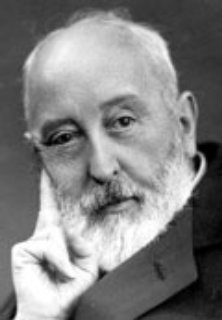
Healy is the second son of Maurice Healy, clerk of the Bantry Poor Law Union, and Eliza Healy (née Sullivan). His elder brother, Thomas Healy (1854–1924), is a solicitor and Member of Parliament (MP) for North Wexford and his younger brother, Maurice Healy (1859–1923), with whom he holds a lifelong close relationship, is a solicitor and MP for Cork City.
Healy then moves to England in 1871, working first as a railway clerk and then from 1878 in London as parliamentary correspondent of The Nation, writing numerous articles in support of Charles Stewart Parnell, the newly emergent and more militant home rule leader, and his policy of parliamentary obstructionism. Healy takes part in Irish politics and becomes associated with Parnell and the Irish Parliamentary Party. After being arrested for intimidation in connection with the Irish National Land League, he is promptly elected as member of Parliament for Wexford Borough in 1880.
In Parliament, Healy becomes an authority on the Irish land question. The “Healy Clause” of the Land Law (Ireland) Act 1881, which protects tenant farmers’ agrarian improvements from rent increases imposed by landlords, not only makes him popular throughout nationalist Ireland but also wins his cause seats in ProtestantUlster. He breaks with Parnell in 1886 and generally remains at odds with subsequent leaders of the Irish Parliamentary Party, though he is a strong supporter of proposals for Irish Home Rule. Meanwhile, he is called to the Irish bar in 1884 and becomes a queen’s counsel in 1899.
Healy believes that he has been awarded the Governor-Generalship for life. However, the Executive Council of the Irish Free State decides in 1927 that the term of office of Governors-General will be five years. As a result, he retires from the office and public life in January 1928 and publishes his extensive two volume memoirs later in that year. Throughout his life he is formidable because he is ferociously quick-witted, because he is unworried by social or political convention, and because he knows no party discipline. Towards the end of his life, he becomes more mellowed and otherwise more diplomatic.
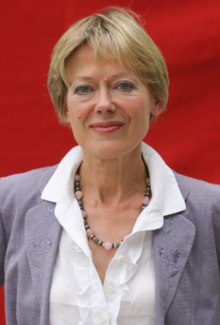
Boylan is born in Dublin on April 21, 1948, the youngest of three daughters of Patrick Boylan, a clerk, and his wife Evelyn (née Selby). Her mother feels trapped by the limitations that domesticity imposes on women in 1950s Ireland, and had wanted to have a writing career. She encourages her daughter to send off stories and poems to newspapers. The first piece is published when she is 14, and she wins a prize in the national Texaco Children’s Art Competition when she is about 10 years old.
The family lives in the Dublin suburb of Terenure. Boylan goes to school in the Presentation convent, then St. Louis convent in Rathmines, and does her leaving certificate in Rathmines College.
After leaving St. Louis convent, Boylan takes a job as a sales assistant in a bookshop before beginning her career as a journalist at The Irish Press, now defunct. She marries Alan Wilkes, a journalist who is a colleague at The Irish Press, in St. Patrick’s Church in Straffan, County Kildare, on September 18, 1970. In 1974 she wins the Journalist of the Year award when working in the city for the Evening Press. Later in her career she edits the glossy magazine Image, before largely giving up journalism to focus on a career as an author.
Boylan’s novels are Holy Pictures (1983), Last Resorts (1984), Black Baby (1988), Home Rule (1992), Beloved Stranger (1999), Room for a Single Lady (1997), which wins the Spirit of Light Award and is optioned for a film, and Emma Brown (2003). The latter work is a continuation of a 20-page fragment written by Charlotte Brontë before her death.
Boylan’s short stories are collected in A Nail on the Head (1983), Concerning Virgins (1990) and That Bad Woman (1995). The film Making Waves, based on her short story “Some Ladies on a Tour”, is nominated for an Oscar in 1988.
Boylan’s non-fiction includes The Agony and the Ego (1994) and The Literary Companion to Cats (1994). She writes introductions to the novels of Kate O’Brien and Molly Keane and adapts Keane’s novel Good Behaviour as the classic serial for BBC Radio 4 (2004). Her work has been translated as far afield as Russia and Hong Kong.
In later life, Boylan lives in County Wicklow with her husband. When she is diagnosed with ovarian cancer, she faces her illness with characteristic strength. She takes up kickboxing and spends time in France, shopping, cooking and entertaining friends. She succumbs to cancer at the age of 58 on May 16, 2006.
Stopford Brooke gives the inaugural lecture to the Society on “The Need and Use of Getting Irish Literature into the English Tongue.” The lecture is published by Bloomsbury House on March 11, 1893, its delivery delayed allowing for the start of the National Literary Society in Ireland. Although the business of the ILS has always been conducted in English, the Society is influential in nurturing the revival of the Irish language by programming language classes even before the Gaelic League was formed in 1893. It also sponsored the Petrie Collection of Irish Music and twelve-volume Irish library of history and literature published between 1893 and 1904.
A Book of Irish Verse, designed to publicise the new societies, is published in 1895, edited by Yeats and dedicated “To the Members of the National Literary Society of Dublin and the Irish Literary Society of London.” It features poetry by Rolleston, Hyde, Katharine Tynan, Lionel Johnson, George William Russell (Æ) and several others, with notes and an introduction by Yeats. In addition, the Society brings Irish actors to London in 1903 and 1904 to present plays by Lady Gregory, Yeats and others.
By 1910 the Society has grown to comprise nearly 400 members and helps to bring into existence the English Folk Dance and Song Society (EFDSS). The Society develops a proposal for a New Irish Library, a series of books to honor Irish culture, with Rolleston and Douglas Hyde as editors.
Its objects are ‘to afford a centre of social and literary intercourse for persons of Irish nationality, and to promote the study of the Irish language, Irish history, literature, music, and art.’ Honorary membership is originally available for those of other nationalities, today full membership is available to all.
Arthur Conan Doyle, of Irish descent, and with a keen interest in Ireland, chaired the Irish Literary Society’s dinner on February 13, 1897. He spoke on ‘The Irish Brigade.’
(From: The website of the Irish Literary Society, Cumman Éireannach na liteardhachta, irishlitsoc.org)
Roddy Doyle, novelist, dramatist and screenwriter known for his unvarnished depiction of the working class in Ireland, is born in Dublin on May 8, 1958. His distinctively Irish settings, style, mood, and phrasing make him a favourite fiction writer in his own country as well as overseas.
Doyle grows up in a middle-class family in Kilbarrack. His mother, Ita Bolger Doyle, is a first cousin of the short story writer Maeve Brennan. After majoring in English and geography at University College Dublin, he teaches those subjects for fourteen years at Greendale Community School, a Dublin grade school. During the summer break of his third year of teaching, he begins writing seriously. In the early 1980s he writes a heavily political satire, Your Granny’s a Hunger Striker, but it is never published.
Doyle publishes the first editions of his comedy The Commitments (1987; film 1991) through his own company, King Farouk, until a London-based publisher takes over. The work is the first installment of his internationally acclaimed The Barrytown Trilogy novels, which also include The Snapper (1990; film 1993), and The Van (1991; film 1996). The series centres on the ups and downs of the never-say-die Rabbitte family, who temper the bleakness of life in an Irish slum with familial love and understanding.
Doyle’s fourth novel, Paddy Clarke Ha Ha Ha (1993), wins the 1993 Booker Prize. Set in the 1960s in a fictional working-class area of northern Dublin, the book examines the cruelty inflicted upon children by other children. The protagonist, 10-year-old Paddy Clarke, fears his classmates’ ostracism, especially after the breakup of his parents’ marriage. In 1994 he writes the BBC miniseries Family, which generates heated controversy throughout conservative Ireland. The program sheds harsh light on a family’s struggle with domestic violence and alcoholism and portrays the bleaker side of life in a housing project, the same venue he had used in the more comedic Barrytown novels. The Woman Who Walked into Doors (1996) and its sequel, Paula Spencer (2006), concern the ramifications of domestic abuse and alcoholism.
A Star Called Henry (1999) centres on an Irish Republican Army (IRA) soldier named Henry Smart and his adventures during the Easter Rising. Smart’s further adventures are detailed in Oh, Play That Thing (2004), which follows him as he journeys through the United States, and The Dead Republic (2010), which chronicles his return to Ireland. In Smile (2017) a lonely middle-aged man looks back on his life, especially his troubled childhood. His next novel, Love (2020), follows two old friends as they spend a night drinking and looking back at their lives. The Deportees and Other Stories (2007), Bullfighting (2011), and Life Without Children (2021) are short-story collections. He also writes a number of books for children, including Wilderness (2007) and A Greyhound of a Girl (2011).
In 1987 Doyle marries Belinda Moller, granddaughter of former Irish PresidentErskine Childers. They have three children – Rory, Jack and Kate.
In the television series Father Ted, the character Father Dougal Maguire‘s unusual sudden use of (mild) profanities, such as saying “I wouldn’t know, Ted, you big bollocks!,” is blamed on his having “been reading those Roddy Doyle books again.”
Rolleston is the youngest child among three sons and a daughter of Charles Rolleston-Spunner, barrister and county court judge for Tipperary, and his wife Elizabeth, daughter of John Richards, judge and baron of the Court of Exchequer, Ireland. He attends St. Columba’s College, Rathfarnham, where he is head boy, and Trinity College Dublin (TCD), graduating with an MA in 1878. His literary ambitions first emerge at university, where he wins the vice-chancellor’s prize for English verse in 1876.
In 1879 Rolleston marries Edith Caroline, daughter of Rev. William de Burgh of Naas, County Kildare. She suffers from rheumatism, and this encourages the couple to live in Germany from 1879 to 1883. During this period, he develops a fascination for German philosophy and literature and begins a correspondence with the American poet Walt Whitman, whose work he knows through Edward Dowden. In 1881 he offers to translate into German, with S. K. Knortz, Whitman’s Leaves of Grass. This is published as Grashalme in 1889. In that year he also publishes a biography of the German philosopher Gotthold Lessing, and in 1892 delivers the Taylorian Lectures at the University of Oxford on this subject.
In the meantime, Rolleston has returned to Ireland and co-founds the Dublin University Review (DUR) with Charles Hubert Oldham in February 1885. In March 1885, under their stewardship the DUR is the first to publish W. B. Yeats. The poetry of Katharine Tynan and the first English translations of Ivan Turgenev also appear in the magazine. He has a fondness for clubs and at this time is associated with the Contemporary Club, where he becomes friendly with fellow member Douglas Hyde, and the Young Ireland Society, where he is vice-president and a disciple of John O’Leary. He writes the dedication to O’Leary in Poems and ballads of Young Ireland (1888) and is encouraged by the older man in his editing of The prose writing of Thomas Davis (1890). Under O’Leary’s influence he flirts with Fenianism, perhaps even joining the Irish Republican Brotherhood (IRB) for a time and is strongly critical of the prominent involvement of Catholic clergy in the home rule movement.
After the demise of the DUR in December 1886 Rolleston moves to London but remains involved in Irish literary activity. Although unenthusiastic in his assessment of The Wanderings of Oisín (1889), he is friendly with Yeats, and they instigate the Rhymers’ Club (1890). He is a much better critic and organiser than poet but contributes to The Book of the Rhymers’ Club (1892) and The Second Book of the Rhymers’ Club (1894). His work appears in a number of contemporary journals and anthologies, and he has one collection published, Sea Spray (1909).
Rolleston is first secretary of the Irish Literary Society (1892) and attends the foundation of its sister organisation in Dublin, the National Literary Society. These societies are soon riven by a dispute for control between Yeats and Charles Gavan Duffy, centred on the political and literary agenda of the movement. Rolleston at least acquiesces in, if not actively contributes to, Yeats’s defeat. They remain on reasonable terms, but Yeats is resentful. Rolleston edits the famous anthology, Treasury of Irish Poetry (1900), with the Rev. Stopford Augustus Brooke, whose daughter, Maud, he had married in October 1897. They have four children. His first marriage also produces four children, and he is godfather to Robert Graves, whose father, Alfred Perceval Graves, is a friend.
In 1894 Rolleston returns to Dublin, becoming managing director and secretary of the Irish Industries Association (1894–7) and honorary secretary of the Arts and Crafts Society of Ireland (1898–1908). A central figure in the latter as an organiser, propagandist, and critic rather than a practitioner, lecturing regularly and editing the journal of the society, he seeks to integrate the arts and crafts revival with other contemporary developments, cooperating with the Congested Districts Board for Ireland to organise classes. He is a supporter of the co-operative movement of Horace Plunkett, and a member of the Recess Committee. On the foundation of the Department of Agriculture and Technical Instruction (DATI), he is employed by Plunkett and T. P. Gill as organiser of lectures (1900–05). In this capacity he manages the Irish historic collection at the St. Louis exhibition of 1904 and publicly supports Plunkett in his dispute with the DATI in 1908. Convinced that the development of Irish industry is central to national progress, he believes that the Irish Parliamentary Party (IPP) failed to offer a clear practical programme for Irish nationalism. By 1900, however, his own nationalism is tempered by a belief in the importance of the imperial connection, and he opposes the pro-Boer stance taken by many Irish nationalists. In later years he publishes pamphlets urging economic development as a means of quelling Irish demands for home rule.
Rolleston is a sporadic member of the Gaelic League, writing the lyrics for the ‘Deirdre cantata,’ which wins first prize at the first Feis Ceoil in Dublin in 1897. At one point he suggests the foundation of a separate Gaelic League for Protestants and provokes controversy in 1896 by suggesting that scientific ideas cannot be represented in the Irish language. Later, he concedes that he is wrong. In 1909 he settles in London when offered the job of editor of the German language and literature section of The Times Literary Supplement, a position he holds until his death. He reinvolves himself in the Irish Literary Society and publishes a number of volumes based on Irish myth, including the influential Myths and Legends of the Celtic Race (1911), and Richard Wagner‘s Der Ring des Nibelungen. He is a founder of the India Society of London (1910). During the World War I he is librarian for the ministry of information and utilises his knowledge of Irish in the Obscure Languages section of the censor’s department.
Like many involved in cultural activities at this time Rolleston is satirised by George Moore in Hail and Farewell, but he remains very friendly with Moore, who dedicates the 1920 edition of Esther Waters to him. Rolleston dies suddenly on December 5, 1920, at his home in Hampstead, London. His widow donates many of his books to Cork Public Library.
(From: “Rolleston, Thomas William Hazen (T. W.)” contributed by William Murphy, Dictionary of Irish Biography, http://www.dib.ie)
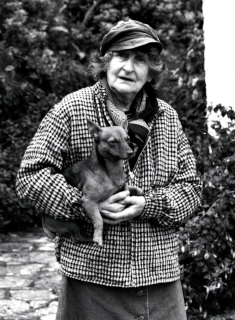
Keane is born Mary Nesta Skrine on July 20, 1904 in Ryston Cottage, Newbridge, County Kildare. Her mother is a poet who writes under the pseudonym Moira O’Neill. Her father is a fanatic for horses and hunting. She grows up at Ballyrankin House on the banks of the River Slaney, a few miles southeast of Bunclody, County Wexford and refuses to go to boarding school in England as her siblings had done. She is educated by her mother, governesses, and at a boarding school in Bray, County Wicklow. Relationships between her and her parents are cold and she states that she had no fun in her life as a child. Her own passion for hunting and horses is born out of her need for fun and enjoyment. Reading does not feature much in her family, and, although her mother writes poetry, it is of a sentimental nature, “suitable to a woman of her class.”
Keane claims she had never set out to be a writer, but at seventeen she is bed bound due to suspected tuberculosis, and turns to writing out of sheer boredom. It is then she writes her first book, The Knight of Cheerful Countenance, which is published by Mills & Boon. She writes under the pseudonym “M. J. Farrell,” a name over a pub that she had seen on her return from hunting. She explains writing anonymously because “for a woman to read a book, let alone write one was viewed with alarm: I would have been banned from every respectable house in County Carlow.”
In her teenage years Keane spends much of her time in the Perry household in Woodruff, County Tipperary. Here she befriends the two children of the house, Sylvia and John Perry. She later collaborates with John in writing a number of plays. Among them is Spring Meeting, directed by John Gielgud in 1938, and one of the hits of the West End that year. She and Gielgud become life long friends.
It is through the Perry family that Keane meets Bobby Keane, whom she marries in 1938. He belongs to a Waterford squirearchical family, the Keane baronets. The couple goes on to have two daughters, Sally and Virginia.
Keane loves Jane Austen, and like Austen’s, her ability lay in her talent for creating characters. This, with her wit and astute sense of what lay beneath the surface of people’s actions, enables her to depict the world of the big houses of Ireland in the 1920s and 1930s. She “captured her class in all its vicious snobbery and genteel racism.” She uses her married name for her later novels, several of which (including Good Behaviour and Time After Time) have been adapted for television. Between 1928 and 1956, she writes eleven novels, and some of her earlier plays, under the pseudonym “M. J. Farrell.” She is a member of Aosdána.
Keane’s husband dies suddenly in 1946, and, following the failure of a play, she publishes nothing for twenty years. In 1981 Good Behaviour comes out under her own name. The manuscript, which had languished in a drawer for many years, is loaned to a visitor, the actress Peggy Ashcroft, who encourages Keane to publish it. The novel is warmly received and is short-listed for the Booker Prize.
Following the death of her husband, Keane moves to Ardmore, County Waterford, a place she knows well, and lives there with her two daughters. She dies on April 22, 1996 in her Cliffside home in Ardmore at the age of 91. She is buried beside the Church of Ireland church, near the centre of the village.
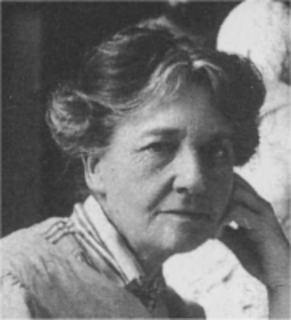
Praeger is born on April 15, 1867, in Holywood, County Down. She is the daughter of Willem Emilius Praeger, a Dutch linen merchant who had settled in Ireland in 1860, and Marie Patterson. She has five brothers of who Robert goes on to become a distinguished naturalist. Within months of her birth the family moves to Woodburn House, Croft Road, Holywood, where they have as a neighbour Rev. Charles McElester, a Non-subscribing Presbyterian minister who runs a day school in his church. She both attends this school, and later teaches there. She receives her secondary education at Sullivan Upper School, Holywood, the Belfast School of Art, and the Slade School of Fine Art, London. Before returning to Ireland to open a studio in Belfast and then in Holywood, she studies art in Paris.
Praeger writes and illustrates children’s books but achieves fame with her sculpture The Philosopher which is exhibited at the Royal Academy of Arts in London, bought by an American collector, and is now on display in the Colorado Springs Museum and Art Gallery. She mostly works in plaster, but also uses stone, marble, terracotta and bronze, and her work includes relief panels, memorial plaques and stones. She exhibits in London and Paris, at the Royal Hibernian Academy, as well as at the Irish Decorative Art Association Exhibitions. She is a member of the Guild of Irish Art Workers.
Among Praeger’s other works are The Wai, Johnny the Jig, These Little Ones, St. Brigid of Kildare and The Fairy Fountain. For the Causeway School near Bushmills, County Antrim, she carves Fionnula the Daughter of Lir in stone. She models a heraldic figure for the Northern Bank in Donegall Square West, Belfast, and bronze plaques for the front door of the Carnegie library, Falls Road, Belfast, as well as the angels on Andrews Memorial Hall in Comber, County Down, and some work in St. Anne’s Cathedral, Belfast. She illustrates three books for her brother, Robert Praeger. She is President of the Royal Ulster Academy, an honorary Fellow of the Royal Hibernian Academy, and she receives an honorary doctorate from Queen’s University, Belfast. In 1939 she is awarded the MBE.
Praeger maintains her studio in Hibernian Street, Holywood, up until 1952, at the age of 85. She dies at Rock Cottage, County Down, on April 17, 1954. She is buried in the Priory Cemetery, Holywood. Her work in included in the collections of the Ulster Museum and the National Gallery of Ireland, and some private collections around the world
(From: “Sophia Rosamond Praeger (1867 – 1954): Sculptor” by Kate Newmann and Richard Froggatt, Dictionary of Ulster Biography, http://www.newulsterbiography.co.uk)
Russell is the second son of Thomas Russell and Mary Armstrong. His father, the son of a small farmer, becomes an employee of Thomas Bell and Co., a prosperous firm of linen drapers. The family relocates to Dublin, where his father has a new offer of employment, when he is eleven years old.
Following his time at the Metropolitan School of Art, Russell becomes an accounts clerk in a drapery store but leaves in 1897 to organize agricultural cooperatives. Eventually he becomes editor of the periodicals Irish Homestead (1905–23) and The Irish Statesman (1923–30). In 1894 he publishes the first of many books of verse, Homeward: Songs by the Way, which establishes him in what is known as the Irish Literary Revival. His first volume of Collected Poems appears in 1913 and a second in 1926. He maintains a lifelong interest in theosophy, the origins of religion, and mystical experience. Candle of Vision: Autobiography of a Mystic (1918) is the best guide to his religious beliefs.
At the turn of the 20th century, Russell is considered by many to be the equal of Yeats, but he does not continue to grow and develop as Yeats does. He is prolific and versatile, but many critics find his poetry facile, vague, and monotonous, with “rather too much of the Celtic Twilight” in it.
Russell, who had become increasingly unhappy in the Irish Free State which, according to Yeats, he called “a country given over to the Devil,” moves to England soon after his wife’s death in 1932. Despite his failing health he goes on a final lecture tour in the United States but returns home utterly exhausted. He dies of cancer in Bournemouth, England, on July 17, 1935. His body is brought back to Ireland, and he is interred in Mount Jerome Cemetery, Dublin.
Reid is the son of the Rev. Thomas Mayne Reid, a Presbyterian minister and later a senior clerk of the General Assembly of the Presbyterian Church in Ireland, and his wife, a daughter of the Rev. Samuel Rutherford. Educated at the Royal Belfast Academical Institution, he rebels against his father’s plans for him and decides not to pursue a career in the church. He briefly runs a school at Ballyroney before emigrating to the United States in 1839. Arriving in New Orleans, Louisiana, he finds a job as a corn factor’s clerk in the corn market. After six months he leaves because he refuses to whip slaves. Travelling across America, he works as a teacher, a clerk and an Indian-fighter, and anonymously publishes his first poem in August 1843. Later that year he meets Edgar Allan Poe in Philadelphia and the two become close friends. Poe later admits that Reid was ‘a colossal but most picturesque liar,’ but was impressed by his brilliant story-telling abilities.
With the outbreak of the Mexican-American War in 1846 Reid enlists in the 1st New York Infantry Regiment and is commissioned second lieutenant. Contributing a series of reports from the front under the pseudonym ‘Ecolier,’ he performs with great bravery in the Battle of Chapultepac on September 13, 1847. Wounded during the battle, he is promoted to first lieutenant three days later. Following his discharge from the army in 1848 he claims to have reached the rank of captain, but this is another of his inventions.
Reid’s first play, Love’s Martyr, is staged at the Walnut Street Theatre, Philadelphia, for five nights in October 1848, and the following year he publishes an embellished account of his experiences in Mexico entitled War Life. All of his works are published under the name ‘Captain Mayne Reid.’ In July 1849 he sails to England with a group of Hungarian radicals but decides against accompanying them to the Continent. Returning briefly to Ireland, he settles in London in 1850 and writes a novel, The Rifle Rangers. It is an immediate success and is followed quickly by The Scalp Hunters (1851), The Desert Home (1852), and The Boy Hunters (1853). While in England in 1851 he meets and falls in love with a 13-year-old girl, Elizabeth Hyde, daughter of his publisher, G. W. Hyde, an English aristocrat. When he discovers her age, he tells her that she is ‘getting old enough to have a lover, and you must have me.’ Two years later he continues with his suit, and this time is successful as they marry in 1853. He is immensely proud of his young bride, and later writes a semi-autobiographical novel The Child Wife (1868), based on their relationship.
Establishing a reputation as one of the most popular novelists of his generation, Reid does much to enhance the romantic image of the American West. His internationally successful books include The White Chief (1855), Bush Boys (1856), Oceola (1859), and The Headless Horseman (1865), and his novel about miscegenation, The Quadroon (1856), is later plagiarised by Dion Boucicault for The Octoroon (1859). A champion croquet player, he writes a treatise on the subject in 1863.
Disaster strikes in November 1866 when Reid is declared bankrupt. He had squandered all his money on the construction of ‘The Ranche,’ a Mexican-style hacienda in England. To raise money, he returns to the United States and embarks on a successful lecturing tour. Settling at Newport, Rhode Island, he writes another novel, The Helpless Hand (1868), which is a huge success and alleviates some of his difficulties. His wife hates America, however, and after he is briefly hospitalised in 1870, they decide to return to England.
Ill health, artistic doubts, and financial insecurity plagued Reid’s final years. Diagnosed with acute depression, he is unable to recapture his earlier audience and, despite a pension from the U.S. government, he struggles for money. He dies at Ross in Herefordshire on October 22, 1883, and is buried at Kensal Green Cemetery in London.
Although not regarded as an important novelist, Reid none the less has a significant influence on subsequent writers. The young Vladimir Nabokov is deeply impressed by his adventure stories, and one of his own first works is a poetic recreation of The Headless Horseman in French alexandrine. Both Robert Louis Stevenson and Arthur Conan Doyle are admirers, and politicians as diverse as Theodore Roosevelt and Leon Trotsky also make reference to his varied output. In total, Reid publishes over sixty novels, which are printed in ten languages.
Eugene Rutherford Watters is the eldest of two sons and two daughters born to Thomas Watters, a soldier, and his wife, Maud Sproule. His second name comes from his grandfather, Rutherford Sproule. He is educated at Garbally College. He enters St. Patrick’s Teacher Training College, Drumcondra, Dublin, in 1939, graduating with a Diploma in Education in 1945. He is awarded an MA, by University College Dublin in 1947.
Ó Tuairisc writes novels, verse, drama and criticism in both Irish and English. His first major publication is his controversial novel Murder in Three Moves (1960), followed by the Irish-language prose epic L’Attaque (1962), which wins an Irish Book Club award. Both works have a strong poetic flavour. His next book is a volume of verse entitled Week-End. His narrative poem The Weekend of Dermot and Grace (1964), an Irish version of Venus and Adonis, is considered his finest work.
Ó Tuairisc’s first wife, the Irish artist Una McDonnell, dies in 1965. He produces little during the five years following McDonnell’s death, which is an unsettled period of limited productivity, changing residence and jobs, and, ultimately, serious depression. In 1972 he marries the writer Rita Kelly, also of Ballinasloe. They live in the lock house at the Maganey Lock on the River Barrow that he had bought near Carlow, County Carlow.
In 1981 Ó Tuairisc publishes The Road to Brightcity: and other stories (Swords: Poolbeg Press, 1981), a translation of nine of the best short stories written originally in Irish by Máirtín Ó Cadhain. Also in 1981, he and Rita Kelly publish a joint collection of their poems, Dialann sa Díseart.
Like Diarmaid Ó Súilleabháin, Ó Tuairisc “challenged the critical orthodoxy by openly proclaiming that their standards could not be those of the Gaeltacht and by demanding a creative freedom that would acknowledge hybridity and reject the strictures of the linguistic purists.”
Ó Tuairisc is an inaugural member of Aosdána, when it is founded in 1981, and the first of its members to die. He is a recipient of an Arts Council of Ireland prize, as well as an Abbey Theatre prize for a Christmas pantomime in Irish.
Ó Tuairisc dies on August 24, 1982. He is survived by his second wife, Rita. A bibliography of his work, together with biographical information, is published in Irish in 1988.





 seamus dubhghaill