seamus dubhghaill

Promoting Irish Culture and History from Little Rock, Arkansas, USA


Leave a comment

The Glasdrumman Ambush

glasdrumman-ambush-ni-map

The Glasdrumman ambush, an attack by the South Armagh Brigade of the Provisional Irish Republican Army (IRA) against a British Army observation post, takes place on July 17, 1981, at a scrapyard in Glasdrumman, County Armagh, southwest of Crossmaglen.

The crisis, triggered by the 1981 Irish hunger strike of Provisional IRA and Irish National Liberation Army (INLA) prisoners, leads to an increase in militant Irish republican activity in Northern Ireland. British intelligence reports unveil IRA intentions of mounting illegal checkpoints and hijacking vehicles on the IRA-controlled roads in South County Armagh, near the Irish border. To counter it, the British Army deploy the so-called COPs (close observation platoons), small infantry sections acting as undercover units, a tactic introduced by Major General Richard Trant in 1977.

On May 6, 1981, a day after the death of hunger-striker Bobby Sands, one IRA member from a three-man unit is arrested while trying to set up a roadblock east of the main Belfast-Dublin road by twelve members of the Royal Green Jackets, divided in three teams. A second volunteer crosses the border, only to be arrested by the Irish Army. The third IRA man escapes apparently injured. A total of 689 rounds are fired by the soldiers.

After this initial success, the British Army continues these tactics. On July 16, another operation is carried out by eighteen Royal Green Jackets soldiers. That night, four concealed positions – Alpha, Bravo, Charlie and Delta – are inserted into the Glassdrumman area, around a scrapyard along the border. The plan is that another unit, called the triggering team, would ambush any IRA unit on sight, while the other four would block the expected escape routes. On July 17, the commanders in charge of Alpha and Delta teams, suspecting that the operation has been compromised by the presence of local civilians, orders the withdrawal of their men. Shortly thereafter, Bravo team is suddenly engaged by automatic fire from an M60 machine gun and AR-15 rifles fired by six or seven IRA members. The concealed position, emplaced inside a derelict van, is riddled by more than 250 bullets. The team’s leader, Lance Corporal Gavin Dean, is killed instantly and one of his men, Rifleman John Moore, is seriously wounded. Moore is later awarded the Military Medal. The IRA members fire their weapons from across the border, 160 yards away.

British army commanders conclude that “it was not worth risking the lives of soldiers to prevent an IRA roadblock being set up.” The incident also exposes the difficulties of concealing operations from local civilians in South Armagh, whose sympathy with the IRA is manifest. Several years later, the IRA would repeat its success against undercover observation posts in the course of Operation Conservation in 1990.

Leave a comment

The Falls Curfew

falls-curfew

The Falls Curfew, also called the Battle of the Falls, a British Army operation in the Falls Road district of Belfast, Northern Ireland takes place on July 3-5, 1970.

The Northern Ireland riots of August 1969 mark the beginning of the Troubles. In Belfast, Catholic Irish nationalists clash with Protestant Ulster loyalists and the mainly-Protestant Royal Ulster Constabulary (RUC), Northern Ireland’s police force. Hundreds of Catholic homes and businesses are burned and more than 1,000 families, mostly Catholics, are forced to flee. The rioting ends with Operation Banner, the deployment of British troops.

A week before the Falls Curfew, on Saturday, June 27, 1970, there is severe rioting in Belfast following marches by the Protestant/unionist Orange Order. At the Short Strand, a Catholic enclave in a Protestant part of the city, the Provisional Irish Republican Army (IRA) fights a five-hour gun battle with loyalists. Three people are killed, and the loyalists withdraw. The Provisional IRA presents itself as having successfully defended a vulnerable Catholic enclave from armed loyalist mobs.

Meanwhile, the Official IRA arranges for a large number of weapons to be brought into the mainly nationalist and Catholic Lower Falls area for distribution. The area is a stronghold of the Official IRA.

The operation begins at about 4:30 PM on Friday, July 3, as a search for weapons in the staunchly Irish nationalist district. As the search ends, local youths attack the British soldiers with stones and petrol bombs and the soldiers respond with CS gas. This quickly develops into gun battles between British soldiers and the Irish Republican Army (IRA). After four hours of continuous clashes, the British commander seals off the area, which comprises 3,000 homes, and imposes a curfew which lasts 36 hours. Thousands of British troops move into the curfew zone and carry out house-to-house searches for weapons, while coming under intermittent attack from the IRA and rioters. The searches cause much destruction, and a large amount of CS gas is fired into the area. Many residents complain of suffering abuse at the hands of the soldiers. On July 5, the curfew is brought to an end when thousands of women and children from Andersonstown march into the curfew zone with food and groceries for the locals.

During the operation, four civilians are killed by the British Army, at least 78 people are wounded and 337 are arrested. Eighteen soldiers are also wounded. Large quantities of weapons and ammunition are captured. The British Army admits afterwards that some of its soldiers had been involved in looting.

The Falls Curfew is a turning point in the Troubles. It is seen as having turned many Catholics/Irish nationalists against the British Army and having boosted support for the IRA.

(Pictured: British soldiers on the Falls Road during the 1970 curfew)


Leave a comment

David Trimble Resigns as NI’s First Minister

david-trimble

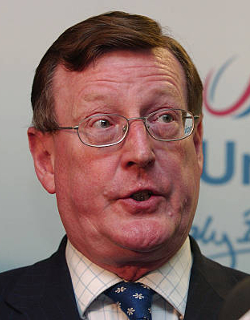
Protestant leader David Trimble resigns as Northern Ireland‘s First Minister on June 30, 2001, plunging the British province into a political vacuum and threatening a hard-won peace deal with minority Roman Catholics.

In the hours leading up to Trimble’s midnight resignation, there are minor clashes between the two sides as the Protestant “marching season,” an annual flashpoint for trouble, starts in Belfast.

Trimble, recipient of the Nobel Peace Prize with Catholic leader John Hume for their part in the 1998 Good Friday Agreement, precipitates the crisis by submitting a post-dated resignation letter several weeks earlier in protest of the Irish Republican Army‘s (IRA) refusal to disarm as part of the deal.

Trimble, who is attending a commemoration of the World War I Battle of the Somme in France when the resignation comes into effect at midnight, appoints Trade Minister Reg Empey, a member of his Ulster Unionist Party (UUP), to take over his duties.

Under the landmark Good Friday Agreement, the power-sharing government of Catholics and Protestants that Trimble has headed has a six-week period to either re-install Trimble or replace him before the Northern Irish Assembly and Northern Ireland Executive are suspended. If such steps fail, Britain can call new provincial elections or re-impose direct rule from London.

As Trimble leaves the province, police and British troops mount a strong presence to head off trouble during a parade by the Protestant Orange Order institution. There are only minor scuffles between police and residents as a concrete and steel barrier is put up by security forces to seal off the Catholic enclave ahead of the march.

A spokesman for Trimble’s UUP says Empey’s appointment is intended to “shore up the political institutions and ensure its representation in the government.” Empey says his role is to perform the functions of First Minister but not take the title or salary. He says his party will not share power with the Irish Republican Army’s (IRA) political arm Sinn Féin unless the guerrilla group starts to disarm.

Sinn Fein leaders denounce Trimble’s resignation as an evasion of responsibility for peace in the province. The IRA says it wants a permanent peace and security sources say there is no sign of a return-to-war mood in the ranks of the guerrilla group. It has twice opened up arms dumps for international inspection to prove that the weapons have not been used, but Protestant politicians say that is not enough.


2 Comments

Birth of Robert Nugent, Civil War and Indian Wars Officer

robert-nugent

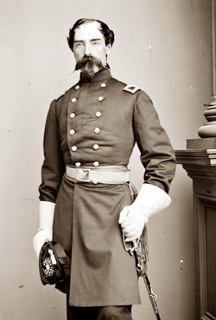
Brigadier General Robert Nugent, Irish-born American United States Army officer during the American Civil War and the American Indian Wars, is born on June 27, 1824, in Kilkeel, County Down, in what is now Northern Ireland.

Nugent serves with the Irish Brigade‘s 69th Infantry Regiment, from its days as a National Guard unit and into its incorporation into the Union Army at the start of the war. He is one of its senior officers at the First Battle of Bull Run.

When the unit is originally mustered out of service, the 90-day enlistment terms having expired, Nugent accepts a commission as a captain in the regular army. He is immediately assigned to the 13th Infantry Regiment whose commanding officer, Colonel William Tecumseh Sherman, personally requests. Taking a leave of absence to return to New York, he assists Thomas Francis Meagher in organizing the Irish Brigade. The newly reformed 69th Infantry Regiment is the first unit assigned to the Irish Brigade and, with Nugent as its colonel, he leads the “Fighting 69th” at the Battles of Fair Oaks, Gaines’ Mill, Savage’s Station, White Oak Swamp, Glendale and Malvern Hill.

Nugent is shot in the stomach at the Battle of Fredericksburg and is eventually forced to resign his command. He is appointed acting assistant provost marshal for the southern district of New York, which includes New York City and Long Island, by the United States War Department. An Irishman and Democrat, his appointment is thought to assure the Irish American population that conscription efforts would be carried out fairly. The Irish American, a popular Irish language newspaper, writes that the selection is a “wise and deservedly popular one.” He encounters resistance from city officials wanting to remain uninvolved, however by mid-June reports to his superior officer and provost marshal general Colonel James Barnet Fry that conscription efforts are “nearing completion without serious incident.”

Understanding the seriousness of the situation, Nugent attempts to keep the draft selections quiet and in isolated parts of the city. In Manhattan however, lotteries are placed in the heart of Irish tenement and shanty neighborhoods where the draft is most opposed.

In the ensuing New York City draft riots, Nugent takes command of troops and attempts to defend the city against the rioters. Despite issuing the cancellation of the draft, the riots continue for almost a week. His home on West 86th Street is looted and burned by the rioters during that time, his wife and children barely escaping from their home. Upon breaking into his house, furniture is destroyed, and paintings of Nugent and Meagher are slashed, although a painting of Brigadier General Michael Corcoran is reportedly left untouched.

On October 28, Nugent is relieved of his post and succeeded by General William Hays. Returning to active duty, he assumes command of the Irish Brigade in November 1864, shortly after the death of Corcoran. He is present at the battle of Battle of Spotsylvania Court House, the Siege of Petersburg and the Appomattox Campaign. As its last commanding officer, he and the Irish Brigade also march in the victory parade held in Washington, D.C. following Robert E. Lee‘s surrender at Appomattox Court House.

Nugent is brevetted Brigadier General for distinguished leadership of the 69th Regiment on March 13, 1865. The veterans of the Irish Brigade are honorably discharged and mustered out three months later. Nugent remains in the regular U.S. Army for the next twenty years, a formidable “Indian fighter” during the American Indian Wars with the 13th and 24th Infantry Regiments. In 1879, he retires at the rank of major and resides in New York where he is involved in the Grand Army of the Republic, the War Veterans’ Association of the 7th Regiment and an honorary member of The Old Guard.

Nugent becomes ill in his old age, complications arising from his wounds suffered at Fredericksburg, and remains bedridden for two months before his death at his McDonough Street home in Brooklyn on June 20, 1901. In accordance with his last wishes, he is buried at Cypress Hills National Cemetery.


Leave a comment

Assassination of Activist Miriam Daly

miriam-daly

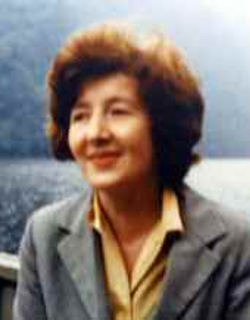
Miriam Daly, Irish republican activist and university lecturer, is assassinated by the loyalist Ulster Defence Association (UDA) on June 26, 1980.

Daly is born in the Curragh Irish Army camp, County Kildare in 1928. She grows up in Hatch Street, Dublin and attends Loreto College on St. Stephen’s Green and University College, Dublin, graduating in history. She goes on to teach economic history in UCD for some years before moving to Southampton University with her husband, Joseph Lee. Two years after her first husband dies, she marries James Daly and returns to Ireland with him in 1968. They both are appointed lecturers in Queen’s University Belfast.

Daly soon becomes an activist in the civil rights movement, particularly following the introduction of internment without trial by the Government of Northern Ireland. She is active in the Northern Ireland Civil Rights Association and the Northern Resistance Movement.

Daly is a militant member of the Prisoners’ Relatives Action Committee and the national Hunger Strike Committee. In that campaign, she works with Seamus Costello and soon joins him in the Irish Republican Socialist Party (IRSP) and the Irish National Liberation Army (INLA). After Costello is assassinated, she becomes chairperson, leading the party for two years. During this time, she and her husband are instrumental in opposing Sinn Féin‘s drift towards federalism.

On June 26, 1980, Daly is shot dead at her home in the Andersonstown area of west Belfast. At the time of her assassination, she is in charge of the IRSP prisoners’ welfare.

According to reports in The Irish Times, members of the Ulster Defence Association gain entry to her home with the intention of killing her husband, who is also a republican activist. Daly is captured and tied up while they wait for him to return home. However, he is in Dublin at the time and so does not arrive. After a considerable time, the UDA men decide to kill Daly instead. Muffling the sound of the gun with a cushion, they shoot her in the head and cut the phone lines before fleeing. Her body is discovered when her ten-year-old daughter arrives home from school.

Daly is buried in Swords, County Dublin. Mourners at her funeral, which features the firing of a volley of shots over her coffin, includes Seán Mac Stíofáin and Ruairí Ó Brádaigh. She is included as a volunteer on the INLA monument in Milltown Cemetery and is one of several commemorated by an IRSP mural on the Springfield Road, Belfast.


Leave a comment

Death of Inventor Alexander Mitchell

alexander-mitchell

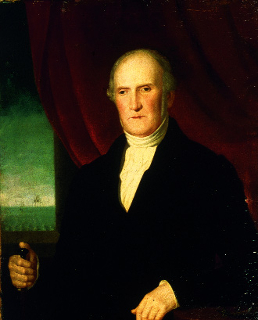
Alexander Mitchell, Irish engineer who from 1802 is blind, dies on June 25, 1868. He is known as the inventor of the screw-pile lighthouse.

Mitchell is born in Dublin on April 13, 1780. His family moves to Belfast while he is a child. He receives his formal education at Belfast Academy where he excels in mathematics. He begins to notice that his eyesight is failing. By the age of 16 he can no longer read and by the age of 22 he is completely blind.

Undeterred, Mitchell borrows £100 and starts up a successful business making bricks in the Ballymacarrett area of Belfast. This enables him to start building his own houses and he completes approximately twenty in the city. It is during this period that his talent for inventing comes to the fore and he fabricates several machines for use in brickmaking and the building trade.

Mitchell patents the screw-pile in 1833, for which he later gains some fame. The screw-pile is used for the erection of lighthouses and other structures on mudbanks and shifting sands, including bridges and piers. His designs and methods are employed all over the world from the Portland, Maine breakwater to bridges in Bombay. Initially it is used for the construction of lighthouses on Maplin Sands in the Thames Estuary in 1838, at Fleetwood Lancashire (UK) Morecambe Bay in 1839 and at Belfast Lough where his lighthouse is finished in July 1844.

In 1848 Mitchell is elected member of the Institution of Civil Engineers (ICE) and receives the Telford Medal the following year for a paper on his invention.

In May 1851 Mitchell moves to Cobh to lay the foundation for the Spit Bank Lighthouse. The success of these undertakings leads to the use of his invention on the breakwater at Portland, the viaduct and bridges on the Bombay, Baroda and Central India Railway and a broad system of Indian telegraphs.

Mitchell becomes friendly with astronomer John Thomas Romney Robinson and mathematician George Boole.

Alexander Mitchell dies at Glen Devis near Belfast on June 25, 1868, and is buried in the old Clifton graveyard in Belfast. His wife and daughter predecease him.


Leave a comment

Birth of John Hughes, 1st Archbishop of New York

john-joseph-hughes

John Joseph Hughes, prelate of the Roman Catholic Church in the United States and the fourth Bishop and first Archbishop of the Archdiocese of New York, is born in the hamlet of Annaloghan, near Aughnacloy, County Tyrone in Northern Ireland on June 24, 1797.

Hughes is the third of seven children of Patrick and Margaret (née McKenna) Hughes. He and his family suffer religious persecution in their native land. He is sent with his elder brothers to a day school in the nearby village of Augher, and afterwards attends a grammar school in Aughnacloy. The family emigrates to the United States in 1816 and settles in Chambersburg, Pennsylvania. Hughes joins them there the following year.

After several unsuccessful applications to Mount St. Mary’s College in Emmitsburg, Maryland, he is eventually hired as a gardener at the college. During this time, he befriends Mother Elizabeth Ann Seton, who is impressed by Hughes and persuades the Rector to reconsider his admission. Hughes is subsequently admitted as a regular student of Mount St. Mary’s in September 1820.

On October 15, 1826, Hughes is ordained to the priesthood by Bishop Henry Conwell at St. Joseph’s Church in Philadelphia. His first assignment is as a curate at St. Augustine’s Church in Philadelphia, where he assists its pastor by celebrating Mass, hearing confessions, preaching sermons, and other duties in the parish.

Hughes is chosen by Pope Gregory XVI as the coadjutor bishop of the Diocese of New York on August 7, 1837. He is consecrated bishop at St. Patrick’s Old Cathedral on January 7, 1838, with the title of the titular see of Basilinopolis, by the Bishop of New York, John Dubois, his former Rector.

Hughes campaigns actively on behalf of Irish immigrants and attempts to secure state support for parochial schools. Although this attempt fails, he founds an independent Catholic school system which becomes an integral part of the Catholic Church’s structure at the Third Plenary Council of Baltimore (1884), which mandates that all parishes have a school and that all Catholic children be sent to those schools. In 1841, Hughes founds St. John’s College in New York City which is now Fordham University.

Hughes is appointed Apostolic Administrator of the diocese due to Bishop Dubois’ failing health. As coadjutor, he automatically succeeds Dubois upon the bishop’s death on December 20, 1842, taking over a diocese which covers the entire state of New York and northern New Jersey. He is a staunch opponent of Abolitionism and the Free-Soil movement, whose proponents often express anti-Catholic attitudes. Hughes also founds the Ultramontane newspaper New York Freeman to express his ideas.

Hughes becomes an archbishop on July 19, 1850, when the diocese is elevated to the status of archdiocese by Pope Pius IX. As archbishop, he becomes the metropolitan for the Catholic bishops serving all the dioceses established in the entire Northeastern United States. To the dismay of many in New York’s Protestant upper-class, Hughes foresees the uptown expansion of the city and begins construction of the current St. Patrick’s Cathedral on Fifth Avenue between 50th and 51st Street, laying its cornerstone on August 15, 1858. At the request of President Abraham Lincoln, Hughes serves as semiofficial envoy to the Vatican and to France in late 1861 and early 1862. Lincoln also seeks Hughes’ advice on the appointment of hospital chaplains.

Hughes serves as archbishop until his death. He is originally buried in St. Patrick’s Old Cathedral, but his remains are exhumed in 1882 and re-interred in the crypt under the altar of the new cathedral he had begun.


Leave a comment

The 1994 Shankill Road Killings

trevor-king-mural

The 1994 Shankill Road killings take place on June 16, 1994. The Irish National Liberation Army (INLA) shoot dead Ulster Volunteer Force (UVF) members Trevor King, Colin Craig and David Hamilton on the Shankill Road in Belfast, close to the UVF headquarters.

On June 16, 1994, high-ranking UVF Commander volunteer Trevor King is standing on the Shankill Road about one hundred yards from “The Eagle,” the UVF’s Belfast GHQ, talking to fellow UVF members David Hamilton and Colin Craig. A car drives past them and as it does so Irish National Liberation Army (INLA) gunmen inside the vehicle open fire on the three men. The car is later found burning close to Divis Tower.

David Lister and Hugh Jordan claim that Gino Gallagher, who is himself shot dead in 1996 during an internal dispute, is the main gunman in the attack. However, Henry McDonald and Jack Holland say that Gallagher is inside the car, which is scouting the area for UVF members, and not one of the gunmen.

Colin Craig is killed on the spot. King and David Hamilton lay in the street, seriously wounded as panic and chaos erupt on the Shankill in the wake of the shooting. Presbyterian minister Roy Magee is in “The Eagle” discussing an upcoming Combined Loyalist Military Command (CLMC) meeting and the possibility of a loyalist ceasefire with the UVF Brigade Staff when the attack takes place. He and the others race out of the building after hearing the gunfire.

King is rushed to the hospital where he is put on a life-support machine. The shooting has left him paralysed from the neck down. He dies on July 9 with Reverend Magee at his bedside. According to Magee, King himself makes the decision to turn off the machine.

The killings are a blow for the Northern Ireland peace process and a morale boost for the INLA. The attack is the INLA’s most notorious since the Droppin Well bombing in 1982 which killed seventeen people, eleven British soldiers and 6 civilians.

The following day, the UVF launches two retaliatory attacks. In the first, UVF members shoot dead a Catholic civilian taxi driver in Carrickfergus. In the second, they shoot dead two Protestant civilians in Newtownabbey, whom they believe to be Catholics. Two days after the killings the UVF decide to launch another revenge attack when they kill six Catholic civilians in a bar while they are watching the Ireland vs. Italy 1994 FIFA World Cup game opener in what becomes known as the Loughinisland massacre. The tit-for-tat attacks continue during the spring and summer of 1994 until the Provisional Irish Republican Army ceasefire of August 31, 1994, and the Combined Loyalist Military Command ceasefire in October. The attacks on the Shankill are the INLA’s deadliest attacks of the 1990s.

When interviewed for Boston College for research on the conflict, Progressive Unionist Party leader David Ervine suggests the INLA might have been working in cahoots with the Provisional IRA in targeting prominent Loyalists, as the month after the Provisional IRA kill three leading Ulster Defence Association (UDA) men.

(Pictured: Trevor King mural, Disraeli Street, May 2012)


Leave a comment

Death of Musician William (Billy) Brown

william-billy-brown

William (Billy) Brown, a musician and artist from Northern Ireland, dies on June 6, 1999 of a heart attack at his home in Johnstown, County Kildare. He is best remembered as a singer, saxophonist, and pianist with The Freshmen, one of Ireland’s most popular showbands of the 1960s and 1970s.

Brown is born in Larne, County Antrim in Northern Ireland. While studying at the Belfast College of Art he joins Billy McFarland’s Showband. Later he forms The Freshmen with some friends. Through Brown’s skillful arrangements, the band is able to reproduce sophisticated vocal harmonies in their covers of songs such as “Papa-Oom-Mow-Mow,” “The Little Old Lady from Pasadena,” and “Carpet Man.”

Brown leaves The Freshmen in the mid-1970s to pursue other musical challenges, albeit with limited success. He later rejoins the band and, in 1977, they have one of their biggest hits with his composition, “Cinderella.” Following the breakup of The Freshmen, he has a minor solo hit in 1980 with his own song, “Look What Jerry Lee Did To Me.”

In his latter years, Brown develops his interest in wildlife, becoming a successful painter of nature scenes, as well as contributing his insights into the natural world on RTÉ 2fm‘s children’s show, Poporama.

Billy Brown dies of a heart attack on June 6, 1999, at his home in Johnstown, County Kildare. In its obituary, the Irish Independent refers to him as “one of the most gifted musicians of his generation.”

In a tribute to Brown following his death, Freshmen founder-member, Maurice Henry, describes his late friend’s pivotal role in the band:

“You could say Billy was The Freshmen and without his talent and innovative musical skills we would certainly not have achieved as much, either as a showband or in our recordings.”


Leave a comment

The Hull of the RMS Titanic is Launched

titanic-launch-at-belfast-1911

The hull of the RMS Titanic, is launched at 12:15 PM on May 31, 1911 at the Harland & Wolff shipyard in Belfast, Northern Ireland in the presence of Lord William Pirrie, J. Pierpoint Morgan, J. Bruce Ismay and 100,000 onlookers. Twenty-two tons of soap and tallow are spread on the slipway to lubricate the ship’s passage into the River Lagan. In keeping with the White Star Line‘s traditional policy, the ship is not formally named or christened with champagne. The ship is towed to a fitting-out berth where, over the course of the next year, her engines, funnels and superstructure are installed and her interior is fitted out.

The construction of RMS Olympic and RMS Titanic take place virtually in parallel. The sheer size of the RMS Titanic and her sister ships pose a major engineering challenge for Harland and Wolff. No shipbuilder has ever before attempted to construct vessels this size. RMS Titanic‘s keel is laid down on March 31, 1909. The 2,000 hull plates are single pieces of rolled steel plate, mostly up to 6 feet wide and 30 feet long and weigh between 2.5 and 3 tons.

Some of the last items to be fitted on RMS Titanic before the ship’s launch are her two side anchors and one centre anchor. The anchors themselves are a challenge to make with the centre anchor being the largest ever forged by hand and weighing nearly 16 tons. Twenty Clydesdale draught horses are needed to haul the centre anchor by wagon from the N. Hingley & Sons Ltd. forge shop in Netherton, near Dudley, United Kingdom to the Dudley railway station two miles away. From there it is shipped by rail to Fleetwood in Lancashire before being loaded aboard a ship and sent to Belfast.

The work of constructing the ships is difficult and dangerous. For the 15,000 men who work at Harland and Wolff at the time, safety precautions are rudimentary at best. Much of the work is dangerous and is carried out without any safety equipment like hard hats or hand guards on machinery. As a result, deaths and injuries are to be expected. During RMS Titanic‘s construction, 246 injuries are recorded, 28 of them “severe,” such as arms severed by machines or legs crushed under falling pieces of steel. Six people die on the ship herself while she is being constructed and fitted out, and another two die in the shipyard workshops and sheds. Just before the launch a worker is killed when a piece of wood falls on him.

(Pictured: Launch of the hull of the RMS Titanic with an unfinished superstructure in 1911)